AI Branding: How to Build a Real Brand with Artificial Intelligence
08/12/2026
Branding / Technology
Discover how to use AI branding to accelerate strategy, identity, and execution without sacrificing the originality, consistency, and human judgment that build lasting brand value.
AI branding is the use of ai tools across every layer of brand building, from strategy and visual identity to brand voice and ongoing management. It is not just about generating a logo in seconds. It is about creating a complete, coherent brand system powered by artificial intelligence.
.png)


What is AI branding (and why it matters in 2026)
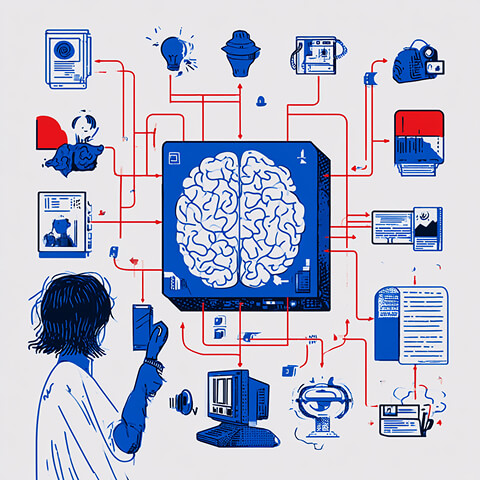
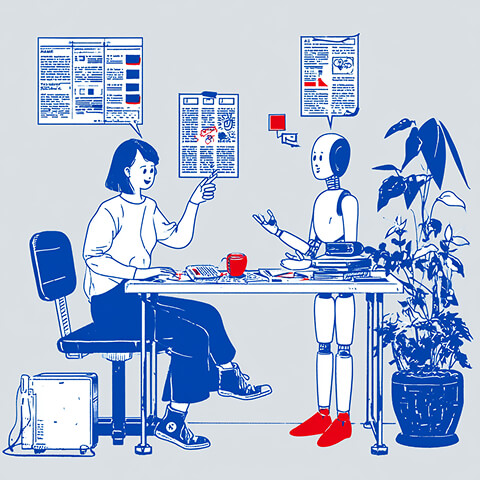
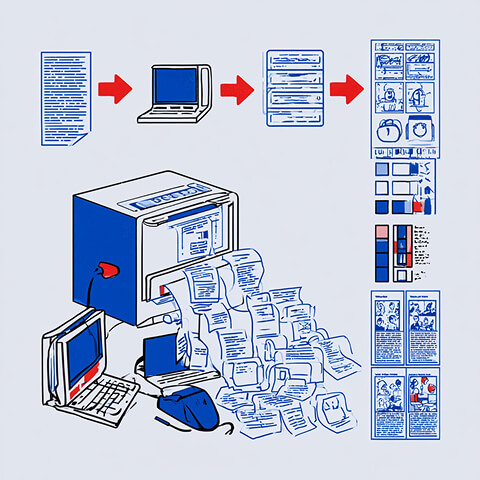
For example, input "sustainable skincare brand for Gen Z in London" and AI can propose names like "EcoMuse," logo ideas with leafy minimalist motifs, muted green palettes, and a brand voice described as friendly, irreverent, and scientific. AI tools can generate logos, taglines, and customer personas from a single prompt session.
AI does not understand a brand the way humans do. It predicts likely outputs from training data, which is why human oversight remains crucial to refine and evaluate every result.
Benefits and drawbacks of using AI in branding
The core trade-off is speed and scale versus potential sameness and brand dilution.
Benefits:
- AI can complete branding tasks in 50–70 minutes that previously took weeks
- AI can provide data-driven insights on consumer behavior, helping marketers instantly understand market trends and consumer insights
- AI automates time-consuming tasks to improve operational efficiency for marketing teams, including sending customer surveys and lead follow-ups
- Predictive analytics helps brands forecast future sales and consumer behavior
- AI allows for micro-segmentation of audience groups for better engagement
- AI enhances customer engagement by providing immediate personalized service through chatbots
- AI can boost creativity by providing design inspiration across every touchpoint
Drawbacks:
- Risk of generic visuals and copy if prompts are vague
- Difficulty protecting originality when many users rely on similar tools
- Legal and ethical concerns around ownership and bias
AI branding should be a collaborator, not a replacement. Human founders still define vision, brand values, and final decisions, especially as they navigate emerging branding trends for 2026 like authenticity, sustainability, and immersive experiences.
Free Brand Health Audit
Make sure your brand is built to sell
Search has changed. Your customers aren't just Googling anymore. They're asking ChatGPT, Perplexity, Gemini and other AI platforms what to buy, who to trust and which brands they should consider.
If your brand isn't showing up clearly in those answers, you're already losing opportunities. Our free Brand Health Audit shows you where your brand stands across traditional search, AI search and brand positioning.

Sample brand audit
Live preview
Traditional search
72
AI search (GEO)
34
Brand positioning
58
Core elements of brand identity AI can help you build
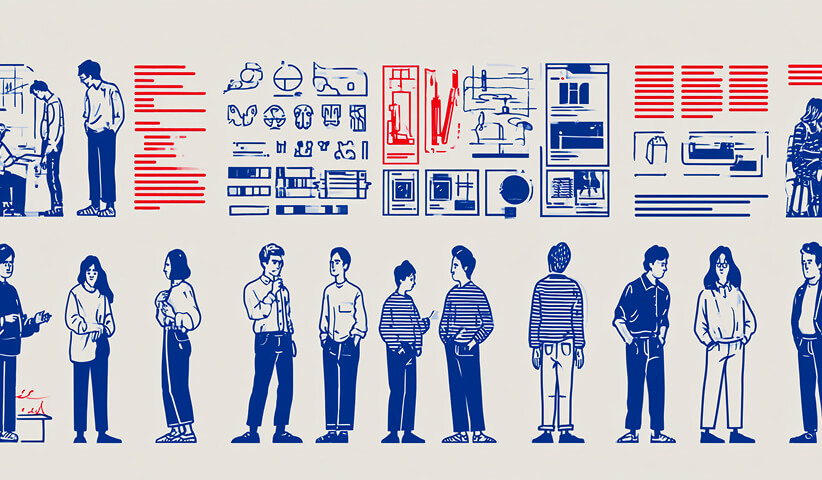
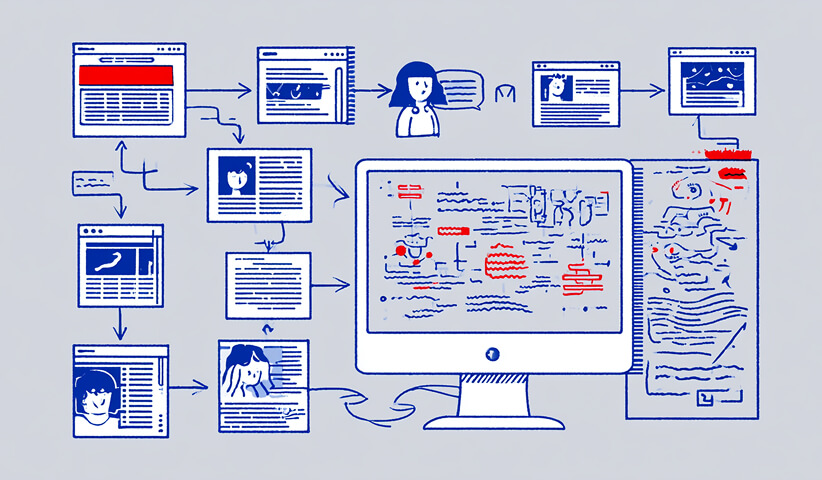
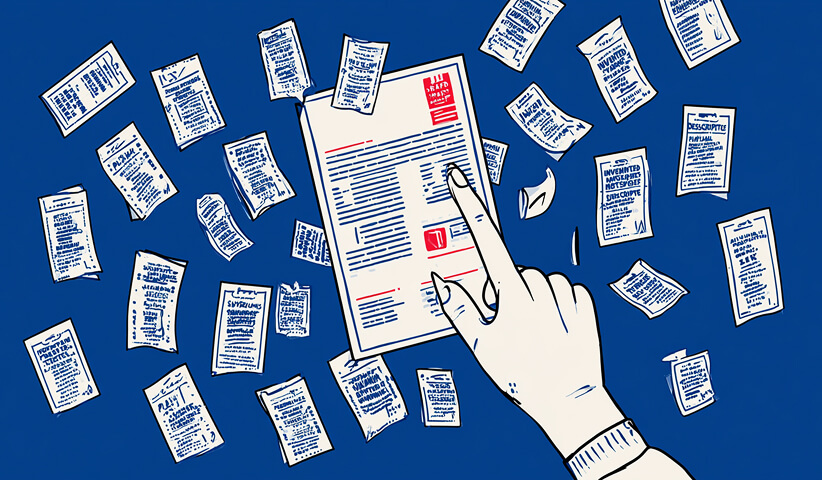
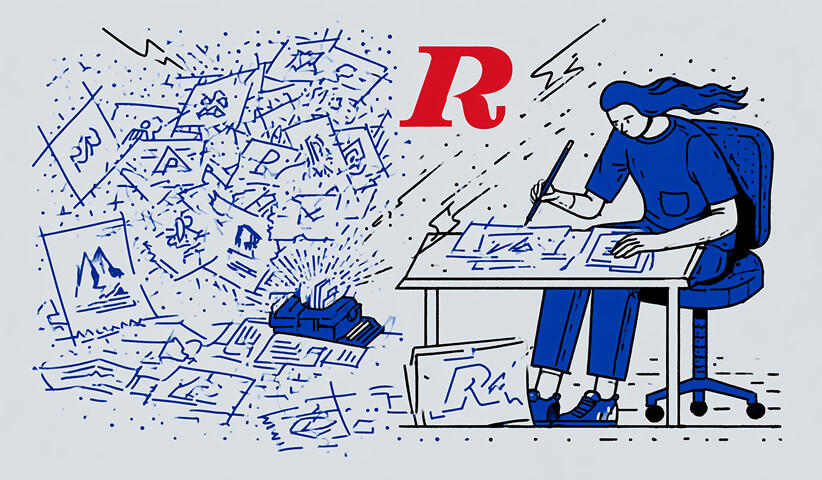
Brand identity is the combination of visuals, voice, and behavior customers recognize over time. Key components include brand name, logo, color system, typography, imagery, brand voice and tone, tagline, and messaging pillars.
AI can brainstorm 100 name ideas, propose color palettes with hex codes, write elevator pitches, and generate sample campaigns. Dedicated partners like an AI content creation agency can help connect these outputs into ongoing content systems. AI ensures that messaging remains consistent among different team members and machines. The key is connecting all elements into a coherent system rather than treating each output as a disconnected experiment.
AI in the branding process: step-by-step workflow
- Discovery and research - Use AI to summarize market trends for branding decisions, scan competitor websites, and analyze customer reviews. Combine different models in a hybrid workflow, as outlined in this AI prompting guide for marketing and branding, to balance creative exploration with grounded research. AI-powered platforms can monitor competitors and market shifts effectively, replacing hours of manual research.
- Positioning - Prompt AI for brand positioning statements and differentiators. AI assists marketers by quickly analyzing market trends and consumer opinions to sharpen your brand strategy.
- Visual direction - Generate moodboards, logo concepts, and color directions aligned with your strategy.
- Brand voice - Draft brand voice descriptors and sample copy. AI aids in ensuring brand voice and visuals are consistent across channels.
- Brand guidelines - Compile decisions into living brand guidelines that evolve with the brand.
- Implementation - Create real brand assets (website sections, social media designs, decks) and test with users to gather feedback.
Choosing the right AI tools for branding
No single platform covers everything. You need a stack: naming, design, writing, and documentation tools.
Evaluate tools based on data privacy, integration with workflows (Figma, Notion, browser extensions), prompt control, and cost. Categories include logo and visual generators, copy and voice assistants, AI research tools, and brand guideline generators, as well as broader AI tools to boost website traffic once your brand is ready to scale online. Start with two or three core tools before expanding. Run small tests: create two mini-brand concepts in one week and compare results before committing.
Want to learn more about brand platforms, Brand Strategy and Brand Identity? Keep reading!
If you need help with your companies brand strategy and identity, contact us for a free custom quote.
Using AI for brand naming and taglines
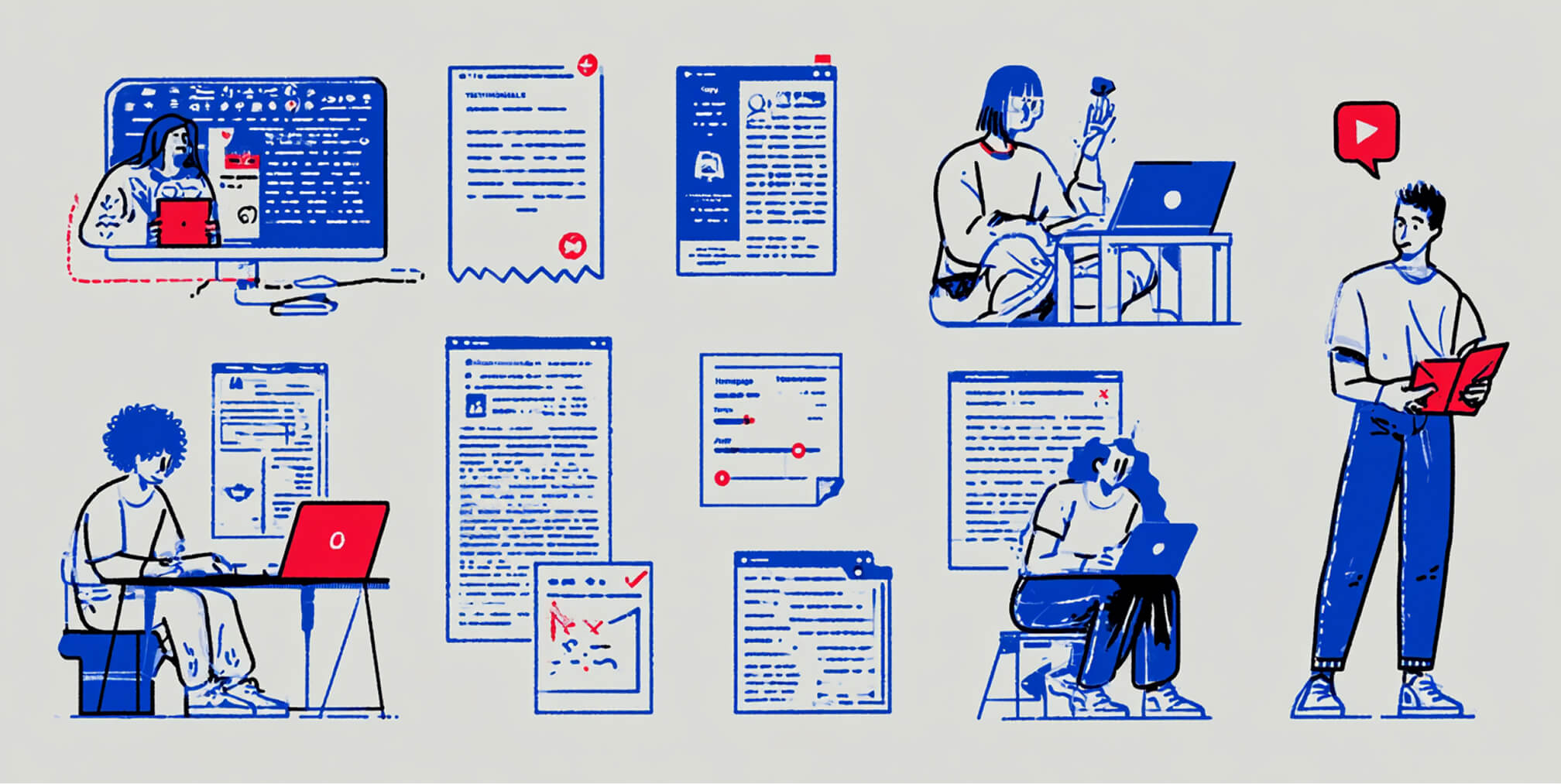
AI excels at volume. Supply industry, audience, tone, and domain preferences, then ask for name clusters: metaphorical, descriptive, and invented names. AI helps generate various types of content for marketing purposes, including 20–30 tagline ideas you can shortlist and A/B test with real customers. Always check trademark databases and international pronunciation before locking in a name.
Generating logo ideas with AI
AI is a fast ideation partner for logo design, not a complete substitute for a designer. AI tools can generate logo ideas in seconds, and Design.com offers over 430,000 AI-generated logos with full commercial usage rights. AI logo generation can produce thousands of variations quickly based on user prompts.
Include brand values, preferred style (minimalist, abstract, vintage), colors, and usage context in your prompts. Iterate to improve legibility at small sizes, ensure black-and-white versions work, and avoid clichés. Request vector files (SVG, EPS, PDF) rather than only raster images, and always get a designer review before finalizing.
Developing a cohesive visual identity with AI
A brand personality needs more than a logo. Use AI to propose color palettes with accessible contrast ratios, typography pairs with specific font families, and icon styles that align with your brand, grounded in clear visual branding guidelines. AI creates personalized product recommendations by analyzing consumer preferences, and the same logic applies to visual identity: it matches style to audience.
Generate sample applications like Instagram tiles, landing pages, and packaging mockups to evaluate how the system behaves in real use cases.
Crafting your brand voice with AI
Brand voice is your stable personality. Tone shifts by context. Feed AI your founder story, existing copy, and customer testimonials to infer an authentic baseline. Describe voice across dimensions like formal–casual and playful–serious, then generate sample copy for your website, email sequences, and social posts.
AI enables brands to tailor messages and content based on individual customer behavior. Create messaging pillars (trust, innovation, sustainability) with supporting proof points, and test the sound of your voice across channels using templates or a dedicated set of step-by-step brand voice guidelines.
Creating AI-assisted brand guidelines
Brand guidelines are living systems, not static PDFs. AI can create brand guidelines in under an hour, including logo usage rules, color codes (hex, RGB, CMYK), typography rules, imagery direction, and brand voice description. For a deeper foundation on what brand guidelines are and why they matter, treat AI as an accelerator rather than a replacement for strategic thinking. Brand guidelines can include auto-compiled microsites for easy sharing, and AI tools can generate structured brand guidelines in minutes. Brand guidelines ensure consistency across all brand assets, and AI can help refine brand guidelines based on user feedback.
Include "do vs. don't" examples so your team and future AI agents understand context.
From AI concepts to production-ready files
There is a gap between AI mockups and files a printer or developer can use. Production requires clean vector files for scale, high-resolution rasters, and proper color profiles. A designer should redraw or refine AI-generated logos to ensure vector accuracy. AI tools can help prepare export presets for social, web, and print layout needs.
Implementing your AI-built brand across touchpoints
AI tools can auto-generate on-brand templates for social media, pitch decks, business cards, and email signatures. AI can handle social media posting and performance tracking automatically. Many brands partner with AI-powered creative services in 2026 to orchestrate these templates, campaigns, and experiments while keeping strategy and storytelling human-led. AI continuously improves digital advertising by testing different elements and adjusting bids, and it adjusts digital ad bids and media buying in real-time for better performance.
Generative AI helps marketing teams produce various forms of content efficiently. Create a starter brand kit with reusable components and make it accessible to the whole team. Use periodic audits where AI scans assets for inconsistencies, similar to how Mercado Libre built its Brand ID compliance tool across 18 countries.
Ensuring your AI-assisted brand is unique
The fear of "AI sameness" is real. Among 210,000 UI design prompts analyzed in 2026, blue gradients on dark backgrounds emerged as the default AI aesthetic. Start from your own story, vision, and constraints rather than generic prompts. Use AI to map competitor visuals and deliberately steer away from their patterns. Commission custom photography or illustration where possible, and run qualitative tests with real customers before locking in your identity.
Ethical, legal, and copyright considerations in AI branding
The U.S. Copyright Office has published guidance confirming that purely AI-generated works typically lack copyright protection without substantial human authorship. A Clutch survey found 55% of consumers view a brand less favorably when they can tell creative was produced by AI.
Perform trademark searches early. When budgets allow, consult IP attorneys before a large public launch. Avoid biased or stereotypical visuals, and maintain transparency about AI's role in your branding process. Artificial intelligence is revolutionizing branding and marketing strategies, but ethical guardrails matter.
Practical AI prompts for branding tasks
Use these prompt templates as starting points, and consider standardizing them with a structured marketing prompt framework for 2026 so teams get consistent, on-brand outputs:
- "Generate 5 brand positioning statements for a [industry] brand targeting [audience], emphasizing [differentiators]. Start each with 'We exist to…'"
- "Create 20 brand name options for a [adjective] [industry] brand. Include invented, metaphorical, and descriptive names under 10 characters."
- "Write 30 tagline ideas for a brand with voice described as [tone axes] and values [list]."
- "Develop 3 logo concept briefs using values [list], style [e.g., minimalist], and preferred palette [colors]."
- "Propose 3 accessible color palettes (primary + secondary + accent) with hex, RGB, and CMYK codes."
- "Define brand voice along 4 axes and write sample copy for a homepage hero, email campaign, and social post."
- "Rewrite this copy [paste] into the new brand voice described as [dimensions]."
- "Generate 5 Instagram and LinkedIn posts introducing a new brand identity with these messaging pillars [list]."
Iterate prompts by adding audience, region, and constraints to refine outputs.
Case example: building an AI-assisted brand in 30 days
A climate-tech startup in Berlin uses AI in week one to summarize 2024–2026 trend reports and run competitor analysis, arriving at a "Sage + Creator" archetype. Week two: AI generates 50+ name options, 10 logo ideas per style, and a color palette. A human designer refines the top concept into production-ready vector files. Week three: AI drafts brand voice axes, messaging pillars, and a complete guidelines document. Week four: the team creates websites sections, social posts, and packaging mockups, tests with early users, collects feedback, tweaks the identity, and launches with confidence.
Common mistakes when using AI for branding (and how to avoid them)
- Skipping strategy - Write a one-page brand brief before generating any visuals
- Accepting first output - Always iterate; early rounds contain clichés
- Mixing conflicting styles - Keep one coherent direction
- Ignoring accessibility - Check color contrast and font readability
- Skipping legal checks - Run trademark and domain searches early
- No user testing - Validate with real customers before you launch
AI analyzes customer sentiment and feedback to help brands respond quickly to issues, but it cannot replace human judgment on what your brand should stand for.
How AI will shape the future of branding
By 2027–2030, expect brand "operating systems" where guidelines, performance data, and creative tools are interconnected. AI agents will enforce brand consistency in real time across channels. AI enables hyper-personalized, real-time consumer experiences and allows brands to be more agile and precise in their marketing. AI enhances targeting and segmentation by analyzing audience demographics and behaviors, and AI enables brands to deliver customized experiences to thousands or millions of customers. AI evaluates and prioritizes sales leads according to their likelihood to convert, and AI analyzes customer behavior to automate personalized customer journeys. AI can forecast future outcomes such as expected sales trends and consumer preferences.
The possibilities are enormous, but differentiation will still come from human storytelling, ethics, and truth in your origin story. Start small with AI branding today. Document your brand decisions. Refine as tools mature. The world of branding has changed, and the brands that move now will set the industry standard.

Quincy Samycia
As entrepreneurs, they’ve built and scaled their own ventures from zero to millions. They’ve been in the trenches, navigating the chaos of high-growth phases, making the hard calls, and learning firsthand what actually moves the needle. That’s what makes us different—we don’t just “consult,” we know what it takes because we’ve done it ourselves.
Want to learn more about brand platform?
If you need help with your companies brand strategy and identity, contact us for a free custom quote.
We do great work. And get great results.
+2.3xIncrease in revenue YoY
+126%Increase in repurchase rate YoY



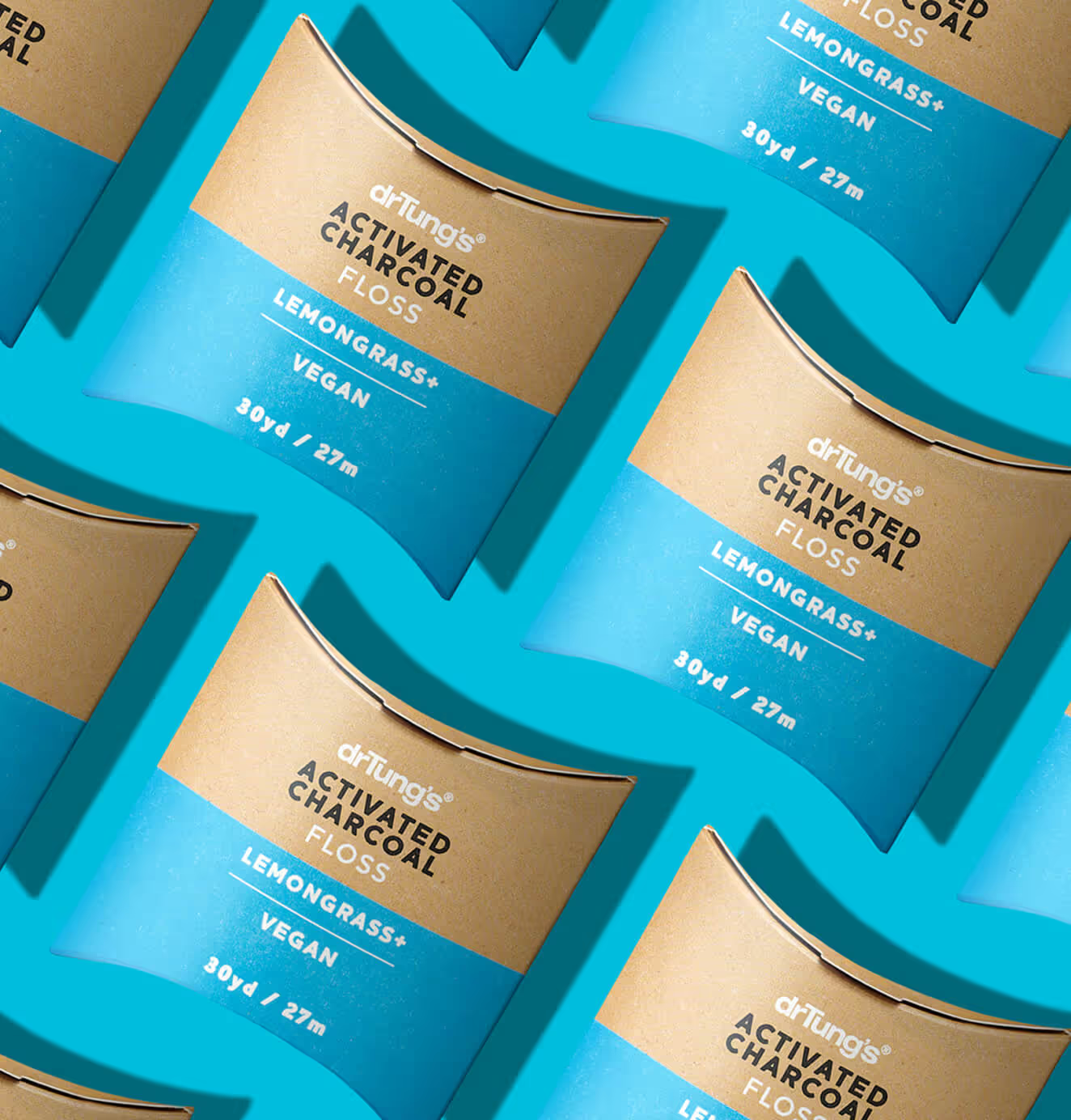
+93%Revenue growth in first 90 days
+144% Increase in attributed revenue




+91%Increase in conversion rate
+46%Increase in AOV


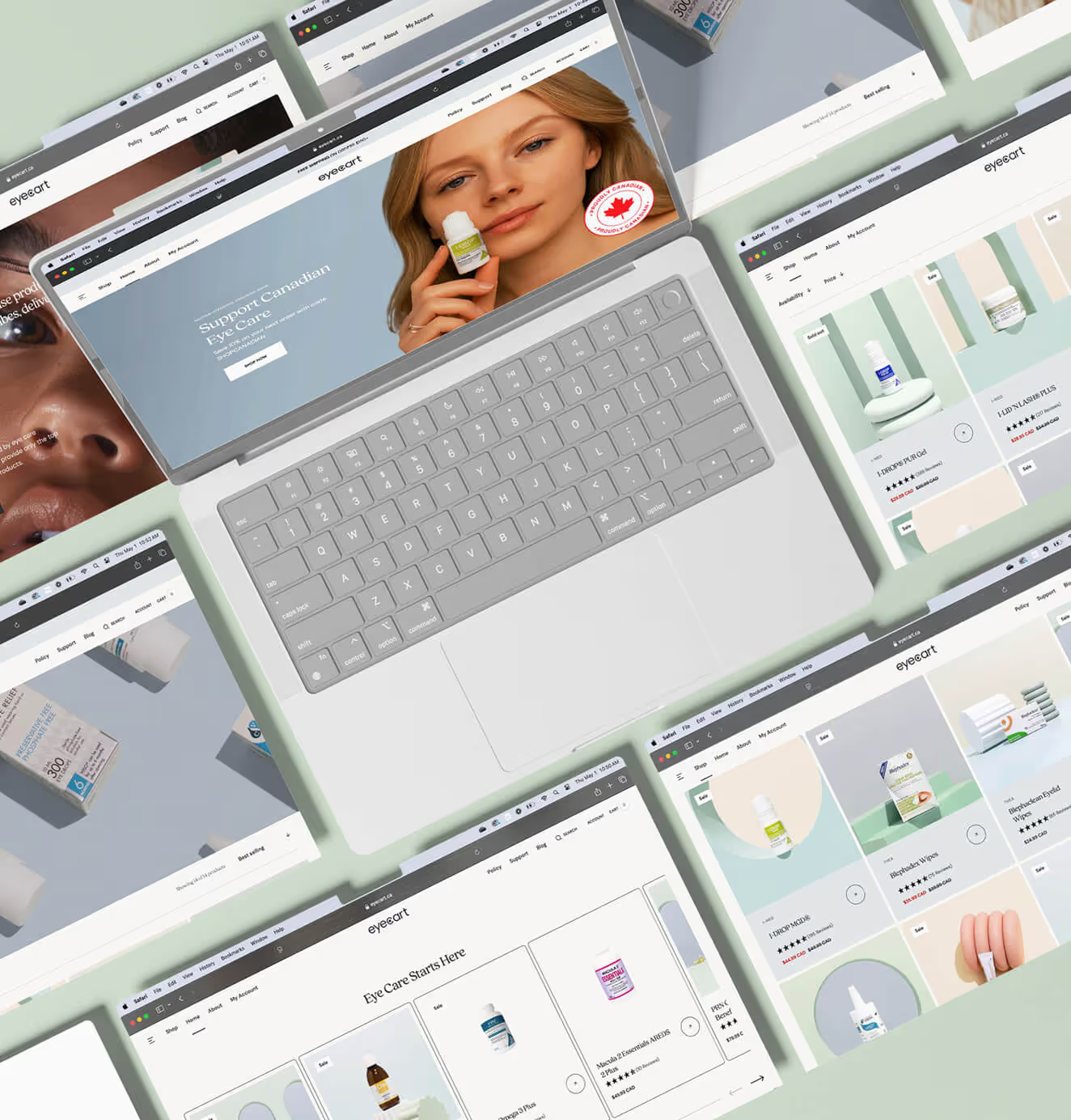
+200%Increase in conversion rate
+688%Increase in attributed revenue