B2B SMS Marketing: How to Use Text Messaging Well in 2026
11/12/2026
Marketing Strategy
Learn how permission-based B2B text messaging can speed up sales follow-ups, improve onboarding and strengthen retention without overwhelming your contacts.
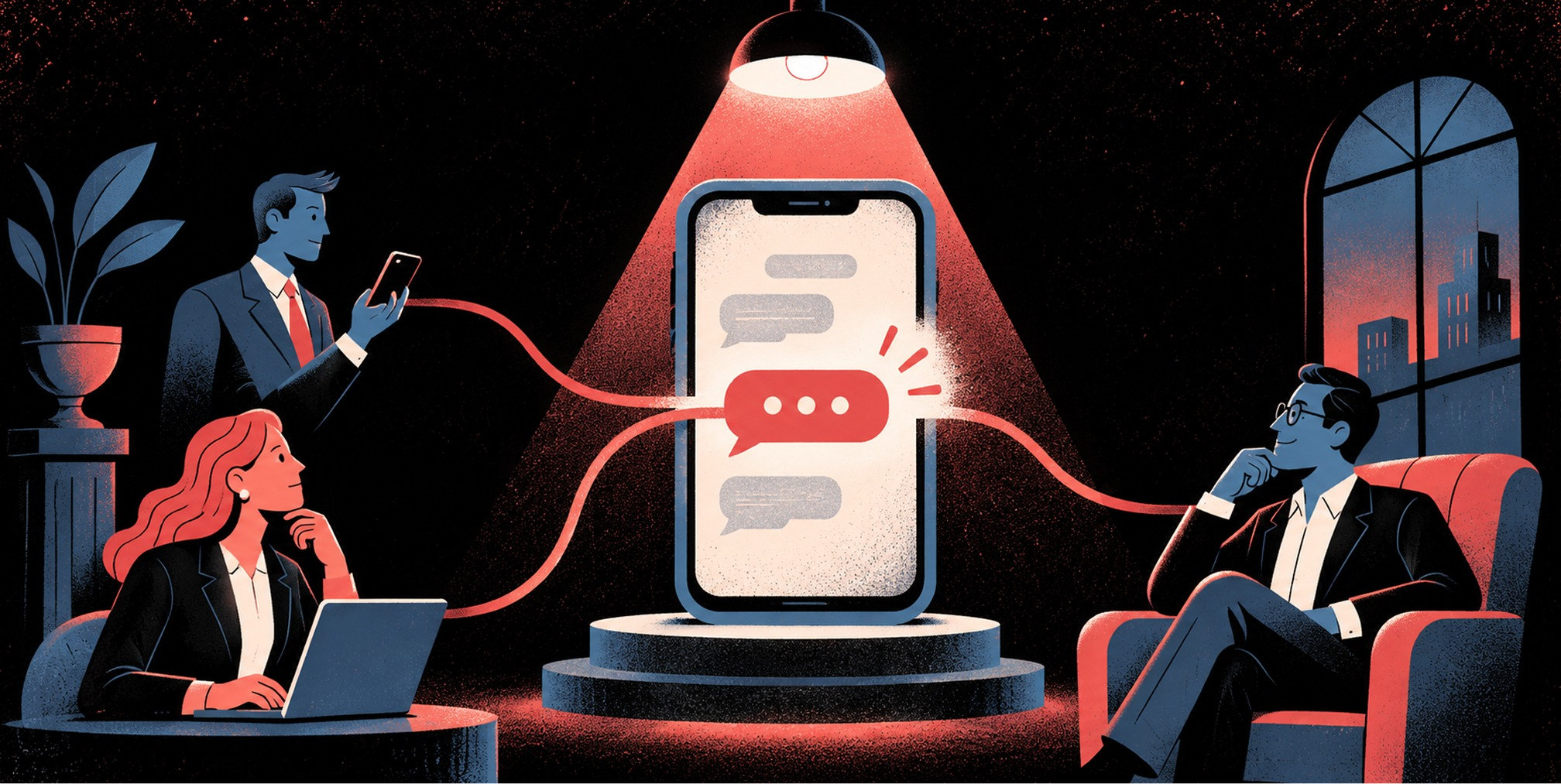
B2B SMS marketing is the practice of sending permission-based text messages to business contacts: prospects, customers and partners. It works best as a short, timely layer on top of email, tied to a real moment in the buying or customer journey: a meeting reminder, a demo follow-up, a renewal notice, an onboarding nudge. It fails when it is used as a broadcast channel. In the United States, it also carries legal obligations that a “B2B” label does not remove. Our view is that SMS earns its place in a full-funnel growth system when it is planned together with email, lifecycle and brand messaging, not bolted on as a one-off blast.


What B2B SMS marketing actually is
This guide covers when SMS is the right channel, which use cases pay off, what U.S. consent rules require, how to plan cadence and copy, and how to measure results.
B2B SMS marketing is opt-in text messaging between a company and the business contacts who asked to hear from it. That is the main difference from the B2C version. In B2C, a retailer may send a flash sale to a large list. In B2B, the list is smaller, each contact is worth more, and the relationship usually runs through a salesperson or an account manager.
That changes what a good message looks like. A buyer at a mid-market software company does not want a discount code. They want to know the demo moved to 3 p.m., that the contract they asked about is ready, or that their onboarding call is waiting on one item from their side. Think of SMS as part of account communication, not as an advertising channel.
It also changes who owns the channel. In a B2B company, sales, marketing and customer success all want to text the same contact. Without one owner and one calendar, a prospect can receive three messages from three teams in a day. That is the quickest way to turn a high-attention channel into an unsubscribe.
When SMS is the right channel for B2B
A simple rule works: if the message is time-sensitive, the person asked for it, and one action will resolve it, text it. If it needs explanation, attachments or a record, email it.
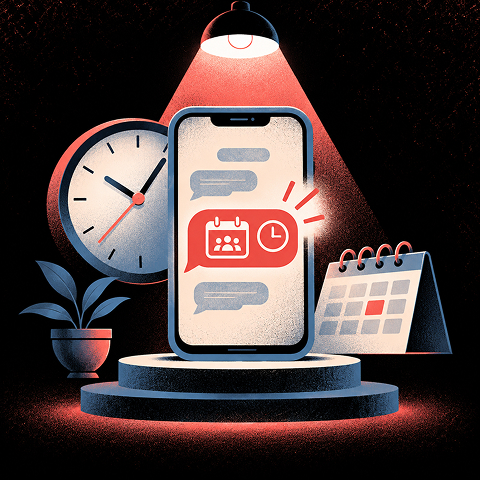
- Demo and meeting reminders: confirm a time, location or meeting link after the contact has requested the appointment.
- Post-demo follow-ups: prompt a prospect to review a proposal or answer one outstanding question.
- Onboarding steps: request a missing integration, document or approval that is delaying activation.
- Customer success check-ins: alert opted-in users to an important service milestone or support update.
- Renewal and event reminders: surface a timely next action without reproducing the details already in email.
SMS is a poor fit for newsletters, long-form content promotion, cold outreach to purchased lists and “just checking in” nudges. Those belong in email, where an ignored message costs little and the consent standard is different.
SMS and email work better together
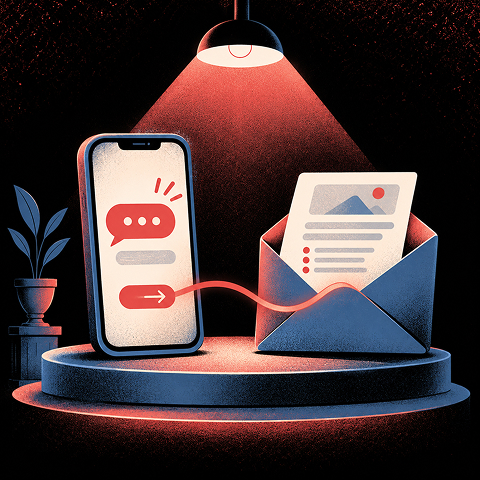
The question is rarely SMS or email. The workable pattern is a text that prompts the next action and an email that carries the detail. A proposal goes by email; a text tells the buyer it has arrived. A demo confirmation goes by email with the agenda; a text reminds them an hour before.
That sequencing is exactly where retention and lifecycle programs earn their keep. If you are deciding who should run the email side of that pairing, our comparison of in-house versus outsourced B2B email marketing lays out the trade-offs. For the wider picture of how channels fit together, see our guide to B2B marketing strategies that drive real growth.
The rules: consent and compliance in the U.S.
This is the section most B2B marketers want to skip and the one that matters most. The Telephone Consumer Protection Act (TCPA) and the FCC’s rules under 47 CFR 64.1200 treat text messages as calls. The law draws no line between a consumer’s personal cell and a business contact’s work cell. Automated marketing texts to a mobile number require prior express written consent.
That has practical consequences:
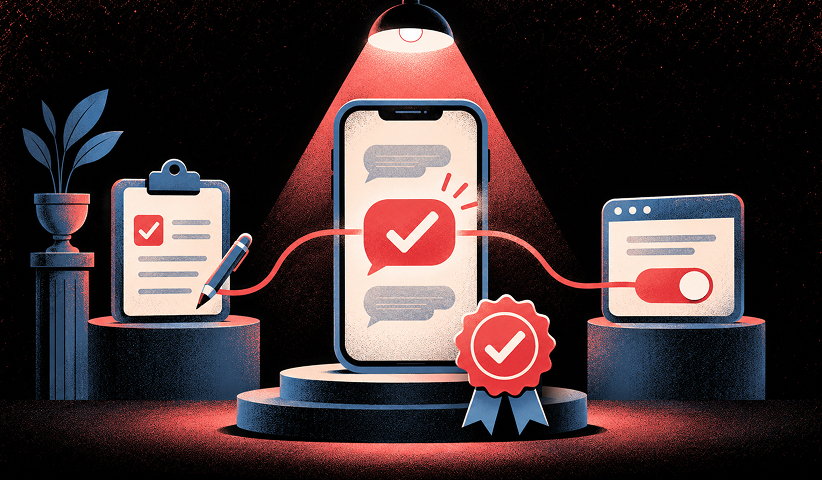
- Obtain and retain the appropriate consent before marketing texts. Prior express written consent is required for certain automated telemarketing texts under federal TCPA rules; other texting and state-law requirements may also apply.
- Explain who is texting, the kinds of messages recipients can expect, and how they can revoke permission. Do not treat a collected business card as an SMS opt-in.
- Maintain timestamped consent records, store the disclosure presented and record the number and source used to subscribe.
- Honor reasonable opt-out requests, including STOP and plain-language revocations, promptly and across every connected sending system.
- Confirm carrier registration and campaign requirements for A2P 10DLC traffic before sending; registration is separate from legal permission.
One point of confusion deserves a flag. The FCC adopted a “one-to-one” consent rule that would have required each consent to name a single seller. A federal appeals court vacated that rule before it took effect. The practical lesson still stands: do not rely on a blanket checkbox that covers many companies. Collect consent for your own company, in your own words, and keep the record.
TCPA violations carry statutory damages per message, which is why class actions in this area are common. Before launching a program, have a lawyer review your consent language, your opt-out handling and your list sources. This is a legal question, and a marketing agency is not a substitute for your counsel.
Where your consent comes from
- An unchecked opt-in checkbox on a demo request or event-registration form with clear SMS disclosure.
- A keyword sign-up initiated by a prospect who sees your business-specific invitation to subscribe.
- A customer portal preference center where the contact affirmatively enables the relevant text category.
- A documented electronic agreement that identifies the sender, the phone number and the message purpose.
- What does not work: buying a list of mobile numbers, scraping numbers from a directory, or treating a business card as written consent.
Free Brand Health Audit
Make sure your brand is built to sell
Search has changed. Your customers aren't just Googling anymore. They're asking ChatGPT, Perplexity, Gemini and other AI platforms what to buy, who to trust and which brands they should consider.
If your brand isn't showing up clearly in those answers, you're already losing opportunities. Our free Brand Health Audit shows you where your brand stands across traditional search, AI search and brand positioning.

Sample brand audit
Live preview
Traditional search
72
AI search (GEO)
34
Brand positioning
58
How to plan a B2B SMS program
1. Start with the moment, not the message
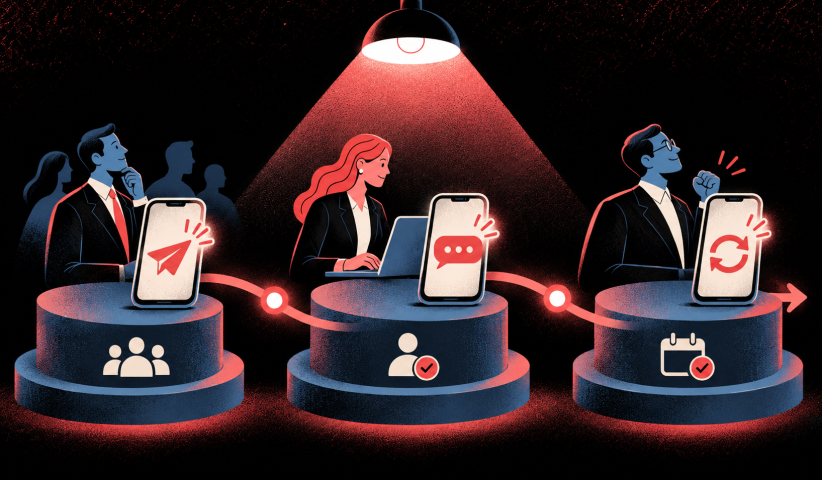
List the five or six moments in your customer journey where a delay costs you money or momentum: a demo no-show, an unsigned order form, a stalled trial, a missed onboarding step, a looming renewal. Each is a candidate for a text. If you cannot name the moment, you do not have a use case.
2. Segment before you send
A cold lead from a paid ad and a warm contact who sat through a demo need different first touches. Segment by lifecycle stage first, then by account size, industry or role. The segment decides the content, the sender and the timing.
3. Assign one owner and one calendar
Decide which team can text which contact at which stage, and put it in a shared calendar or your CRM rules. A prospect in an active sales cycle hears from the rep. A customer in onboarding hears from customer success. Marketing sends only to people who opted in for marketing and are not in either of those states.
4. Set timing and frequency
Send during the recipient’s business hours in their time zone. Mid-morning on Tuesday through Thursday is a sensible starting point to test, not a law of nature. As for frequency, B2B contacts tolerate far less than consumers. A reasonable starting range is a few messages a month, with transactional and logistics texts (reminders, confirmations) not counted as promotion. Let the opt-out rate tell you when you have gone too far.
5. Choose your sending number type deliberately
How you send affects deliverability and the experience on the recipient’s phone. We cover the differences in our guide to SMS short code versus long code, which is worth reading before you register a campaign.
Writing B2B texts that get read
- Identify the sender immediately. Use a recognizable company name or an account manager the recipient already knows.
- Lead with the reason for the message and one specific action. Avoid multiple asks or a long sales pitch.
- Keep links recognizable and relevant to the promised destination, and avoid unnecessary attachments or sensitive account details.
- Personalize using accurate CRM data, but do not expose confidential business information in an SMS preview.
- Include an easy way to stop messages where required, and ensure replies reach a monitored inbox or assigned owner.
Examples
Demo reminder: “Hi Dana, this is Alex at Northwind. Reminder: your demo is today at 2:00 p.m. ET. Join here: [link]. Reply STOP to opt out.”
Onboarding gap: “Hi Marcus, Priya at Northwind here. Your workspace is ready but the data connection isn’t finished. Want a 15-minute call tomorrow to complete it? Reply YES and I’ll send times.”
Renewal heads-up: “Hi Elena, Northwind billing here. Your annual plan renews on the 15th. Review or update details here: [link]. Questions? Reply and your account manager will respond.”
These are illustrative templates, not client results. Replace names and details with your own, and have your counsel approve the opt-out wording.
Want to learn more about Digital Marketing and Strategy? Keep reading!
If you need help with your company’s marketing, contact us for a free custom quote.
What to measure
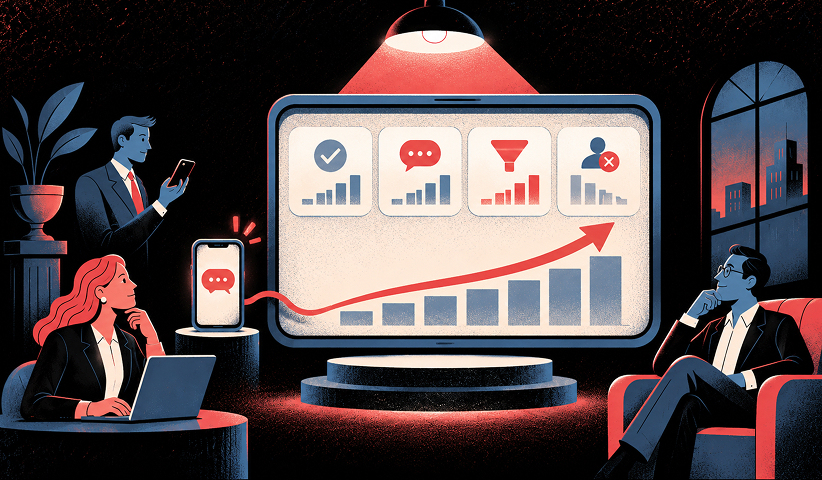
Open rates for texts are very high, which makes them nearly useless as a decision metric. Measure what the business cares about:
- Delivery rate: confirms whether registration, number reputation and list hygiene are supporting successful sends.
- Click-through or reply rate: shows whether recipients understand the next step and find it relevant.
- Conversion rate: tracks concrete outcomes, such as booked meetings, demo attendance, onboarding completion or renewal.
- Opt-out and complaint rate: highlights excessive cadence, weak targeting or messaging that misses expectations.
- Incremental pipeline or revenue: compare an SMS-enabled group with a suitable control to estimate the added business value.
The hard part is attribution. A prospect who got a text and then booked a call may have booked anyway. Where you can, hold out a small randomized control group that receives only email, and compare. That gives you incremental lift, which is the number a CFO will believe. Track cost per booked meeting, show rate before and after adding SMS reminders, and renewal rate for accounts that received renewal texts versus those that did not.
Review every opt-out. Patterns (a spike after one campaign, or after a particular sender) point to the fix.
Where SMS fits in a retention and growth system
Most B2B revenue is made after the first sale. Onboarding completion, adoption, renewals and expansion all depend on timely, relevant contact. SMS is one of the few channels that reaches a busy executive in the moment, which is why it belongs in a lifecycle plan next to email, in-app messages and account management, with each channel assigned the job it does best.
It also depends on brand. A text is the most compressed expression of your company anyone will see. If your positioning and tone of voice are unclear, a 160-character message exposes it. The messaging has to sound like you, carry a clear reason to act, and match what the prospect saw on your site and in your emails.
Our Perspective
Most B2B SMS programs fail for the same reason: they start with the tool and not the customer journey. A team picks a platform, imports a list and sends a promotion, then concludes that texting “doesn’t work for B2B.”
We build it the other way around. Start with the brand and the buyer: who they are, what they expect from a company like yours, and the handful of moments where a short, well-timed message helps them. Then connect SMS to email, paid media and the website so the same story runs through every touchpoint. That is what we mean by brand-backed performance™: messaging that sounds like you and can be traced to a business result.
Retention is where this pays off most. A text that rescues a stalled onboarding or confirms a renewal is not glamorous, but it turns one-time buyers into repeat customers. For growth-stage and VC-backed companies, that compounding effect on retention rate matters more than any single campaign.
- Quincy Samycia
How we can help
SMS and email marketing are core parts of our retention work for growth-stage companies. We align the messaging, creative and platform setup with your brand, then measure outcomes against the business goals you set. Our retention marketing service starts from 6,500 USD per month, and you can see the full range of engagements on our pricing page.
If you want a second opinion on your lifecycle messaging before you text a single contact, talk to our team.
Frequently Asked Questions
Is SMS a legitimate channel for B2B marketing?
Yes, when the contact has opted in and the message is useful and timely. It is strongest for reminders, follow-ups, onboarding and renewals, and weakest for cold outreach or long-form promotion. Treat it as a complement to email.
Do TCPA rules apply to B2B texts?
Yes. The TCPA covers texts to mobile numbers and does not exempt work phones or business contacts. Automated marketing texts require prior express written consent, and recipients must be able to opt out. Have your attorney review your consent language and list sources.
How often should I text B2B contacts?
Less often than you would a consumer list. Start with a few promotional or nurture messages a month at most, and send reminders and confirmations when events call for them. Watch the opt-out rate and reduce frequency if it climbs.
What is the best time to send a B2B text?
Send during the recipient’s business hours in their local time zone. Mid-morning on weekdays is a common starting point to test. Avoid early mornings, evenings and weekends unless the message is a logistics update the person needs.
Should I use SMS or email for B2B follow-up?
Use both. Email carries the proposal, the agenda or the case study. A short text prompts the person to read it or take the next step. Let the content decide: if it needs detail, email; if it needs speed, text.
Sources

Quincy Samycia
As entrepreneurs, they’ve built and scaled their own ventures from zero to millions. They’ve been in the trenches, navigating the chaos of high-growth phases, making the hard calls, and learning firsthand what actually moves the needle. That’s what makes us different—we don’t just “consult,” we know what it takes because we’ve done it ourselves.
Want to learn more about brand platform?
If you need help with your companies brand strategy and identity, contact us for a free custom quote.
We do great work. And get great results.
+2.3xIncrease in revenue YoY
+126%Increase in repurchase rate YoY



+93%Revenue growth in first 90 days
+144% Increase in attributed revenue



+91%Increase in conversion rate
+46%Increase in AOV


+200%Increase in conversion rate
+688%Increase in attributed revenue