Brand Asset Management Process: 7 Steps for Growing Teams
11/12/2026
Brand Strategy
Build a faster, more consistent brand with a seven-step asset management process that helps growing teams find approved files, cut rework, and scale confidently.
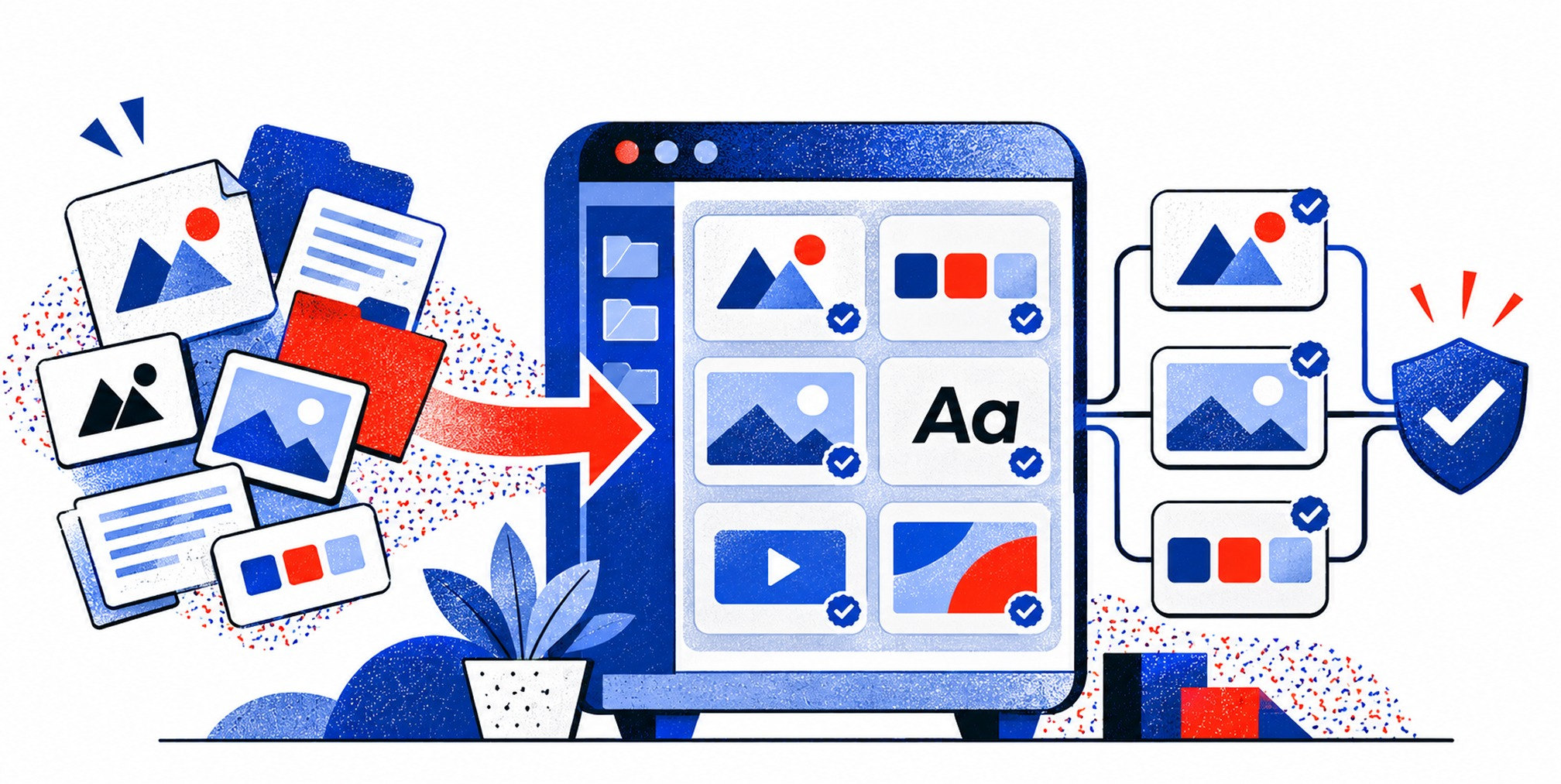
A brand asset management process is a repeatable way to decide which brand files are approved, store them in one place, control who can use them, and retire them when they expire. The workflow that holds up as a company scales has seven steps: audit, structure, tag, set permissions, build approval paths, distribute through templates, and measure. This guide walks through each step, who should own it, and which numbers show it is working.


What brand asset management covers

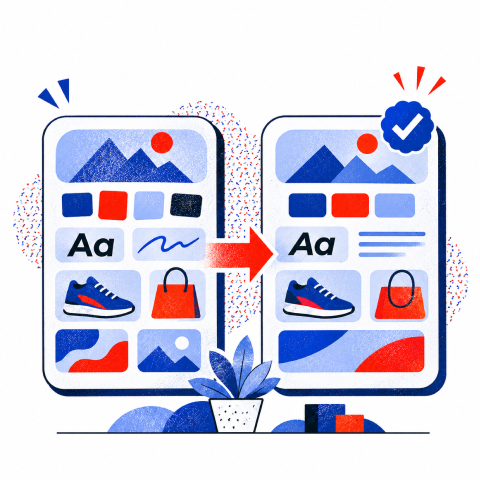
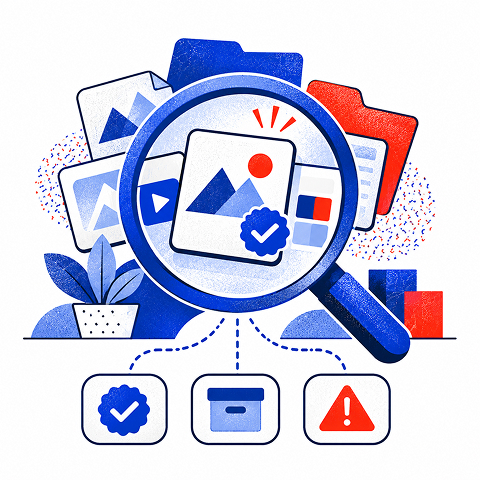
Brand asset management (BAM) is the process of organizing, storing, controlling access to and retiring the files that represent your brand. Cloudinary’s guide lists logos and variations, color palettes, typography, approved photography and video, templates, brand guidelines and approved messaging such as taglines and boilerplate copy. The goal is simple: anyone who needs an asset finds the current, approved version in seconds, without digging through old folders or pinging the design team.
BAM is a narrower discipline than digital asset management. Canto’s glossary describes DAM as covering every digital file in an organization, while BAM covers only curated, finalized and approved brand materials.
The category is also wider than most teams assume. Templafy’s guide sorts brand assets into five groups:
- Visual assets: approved logos and variants, colors, typography, icons, images, and layout systems.
- Verbal assets: messaging frameworks, tone of voice, value propositions, taglines, and approved copy.
- Documents and templates: sales presentations, proposals, reports, stationery, and email signatures.
- Digital and marketing assets: videos, social templates, web graphics, banners, and campaign files.
- Governance materials: brand guidelines, usage restrictions, approval policies, and playbooks.
If you sell physical products, add packaging, which Canto’s overview of brand assets places under experiential assets alongside store layout and uniforms.
Why growing companies need a process, not just a folder
The failure pattern is familiar. MarketingProfs describes teams where guidelines live in PDFs, logos are buried in Slack threads, and every region has its own version of the pitch deck. The result is a brand that feels stitched together rather than strategically led.
The cost is operational as well as visual. Marq notes that as teams grow, shared drives and PDFs lead to outdated files, inconsistent messaging and constant requests to the creative team. TDS DaaS makes the point plainly: every hour a designer recreates an asset that already exists is an hour not spent creating something new.
For a CEO or CMO at a funded, fast-moving company, this matters at specific moments: a new sales team onboarding, a launch in a new region, a rebrand, a fundraising deck that must look as strong as the product. A process built before those moments costs far less than cleanup after them.
The brand asset management workflow, step by step
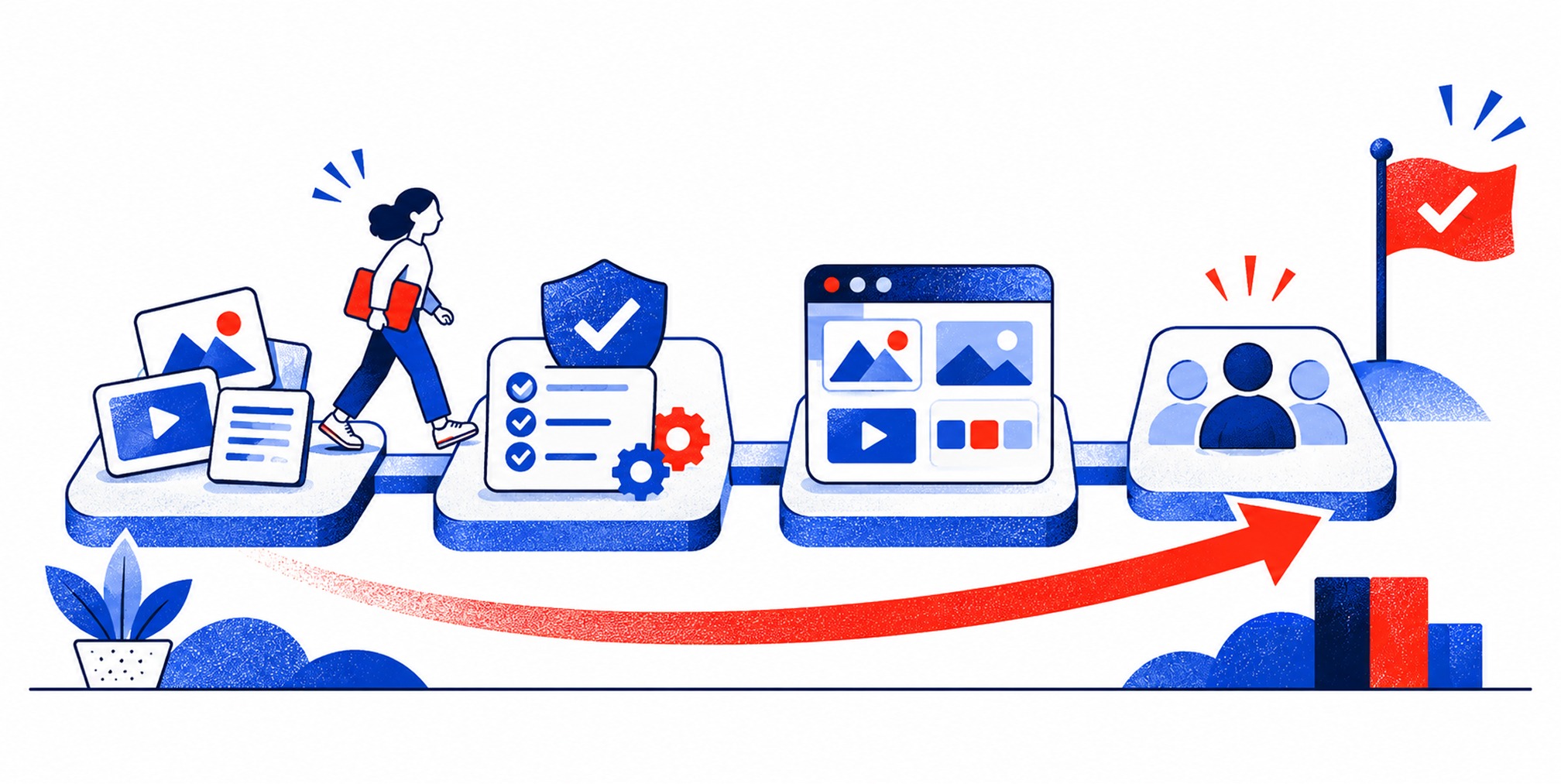
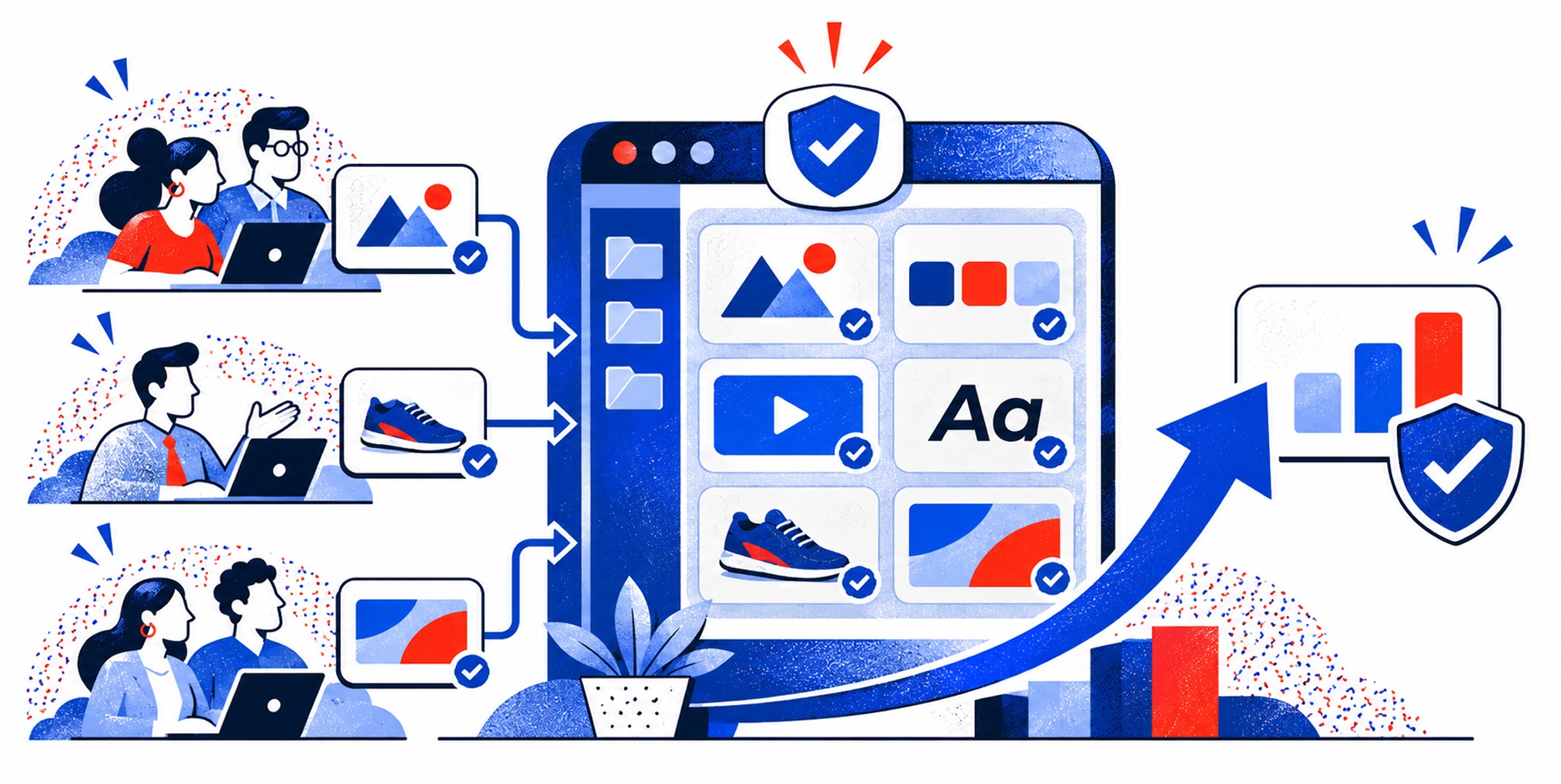
Several published guides converge on the same sequence. Marq outlines five steps (audit, centralize with metadata, govern access, set approval workflows, track adoption), and Ansira’s guide follows nearly the same arc. The version below expands that into seven steps that fit a growth-stage team.
Step 1: Audit what you have
Start by finding every asset in circulation: shared drives, email attachments, sales decks, agency handoffs, social accounts, the website. Sort each into keep, archive or discard. Duplicates, old logo versions and expired campaign photos go first.
Audit deliverable: an inventory showing file name, owner, status, source location, rights, next review date and keep/archive/discard decision.
An asset audit is easier when it sits inside a broader review of how the brand actually shows up. Our guide to conducting a brand audit covers that wider lens, and the brand audit for rebranding piece is useful if a refresh is on the horizon.
Step 2: Build one source of truth with a clear structure
Choose a single home for approved assets. Then design the structure before uploading anything: folders by asset group, naming conventions that a new hire can decode, and one rule that nothing is approved unless it lives there. Cloudinary’s rollout advice includes the same ideas: build a structure with folders and naming conventions, then embed guidelines beside the assets they explain.
That last point matters. A logo file without its usage rules invites misuse. Pair every core asset with the relevant standard, such as our logo branding guidelines or your visual brand guidelines.
Step 3: Tag every asset with metadata
Search is what makes a library usable. Marq recommends recording asset type, owner, creation date, approved channels, expiration date and relevant tags. Expiration date and approved channels do the heavy lifting: they tell a salesperson whether a photo can go on a slide, and they tell an admin when to pull it.
Minimum metadata schema: asset ID, descriptive title, brand, type, region, channel, owner, approval status, current version, rights restrictions and expiration date.
Step 4: Set role-based access
Not everyone needs to upload or edit. Marq describes four tiers: Viewer, User, Template Admin and Team Admin, with the rule to give people the lowest level of access they need. A sales rep downloads. A regional marketer personalizes within a template. Only a small group changes the source files.
Step 5: Route approvals by risk
Approving everything the same way slows the business and trains people to work around you. Marq’s risk-based model sets three paths:
- Low risk: routine social graphics created from locked, approved templates. Publish without another formal review when policy permits.
- Medium risk: new creative, sales decks, and partner materials. Route through one designated brand reviewer.
- High risk: regulated claims, sensitive licensing or legal language. Require brand plus legal or compliance approval before distribution.
This maps well to the regulated and growth-stage companies we work with, where a claim on a landing page needs a different check than a LinkedIn graphic.
Step 6: Distribute through templates, not raw files
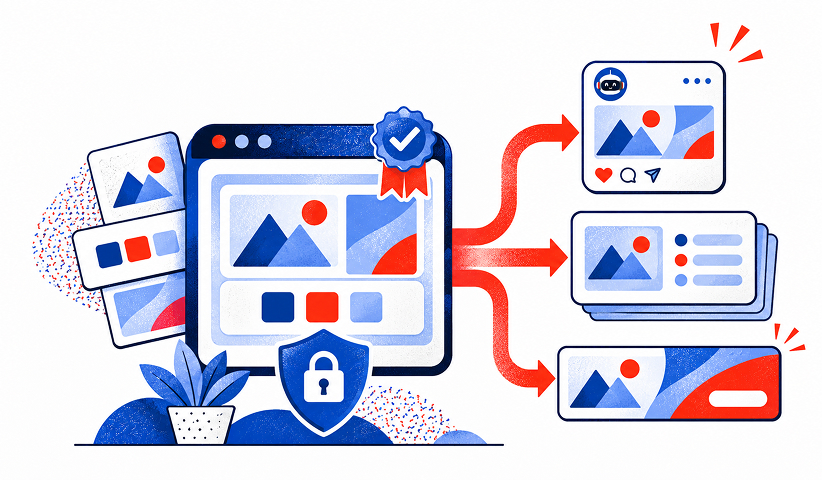
Handing out raw logos and fonts invites improvisation. MarqOps argues that locked templates are the highest-leverage and most overlooked layer: logo, colors and fonts are fixed, only approved fields change, and non-designers can produce on-brand work without opening a ticket. OnBrandify adds a second habit: retire assets on a date so they disappear from what partners can find.
TDS DaaS frames the full lifecycle as four governance workflows:
- Create and approve: a named owner checks quality, rights and brand consistency before release.
- Publish and distribute: make the approved version available through the central library or locked template.
- Update and version: preserve the audit trail and replace obsolete variants without breaking active workflows.
- Archive and expire: unpublish assets at the end of rights, campaign or brand lifecycle while retaining necessary records.
Version history helps here. Ziflow recommends keeping a full history of each asset showing who changed what and when, so approvals are traceable and changes can be rolled back.
Step 7: Measure and review on a schedule
A process that is never reviewed drifts. Put a recurring review on the calendar, check the metrics below, and retire or refresh what the numbers flag.
- Monthly: check adoption, pending approvals, expiring licenses and common searches that returned no results.
- Quarterly: audit a sample of published materials, archive obsolete versions and review permissions with team owners.
Free Brand Health Audit
Make sure your brand is built to sell
Search has changed. Your customers aren't just Googling anymore. They're asking ChatGPT, Perplexity, Gemini and other AI platforms what to buy, who to trust and which brands they should consider.
If your brand isn't showing up clearly in those answers, you're already losing opportunities. Our free Brand Health Audit shows you where your brand stands across traditional search, AI search and brand positioning.

Sample brand audit
Live preview
Traditional search
72
AI search (GEO)
34
Brand positioning
58
Who owns the process
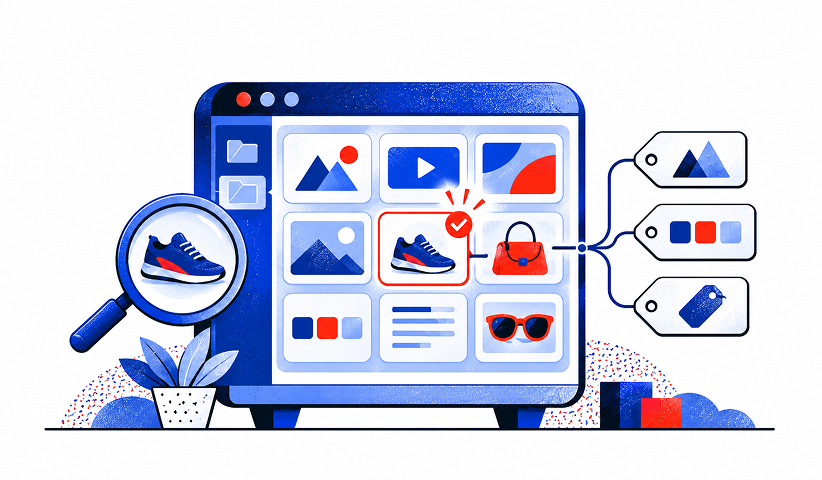
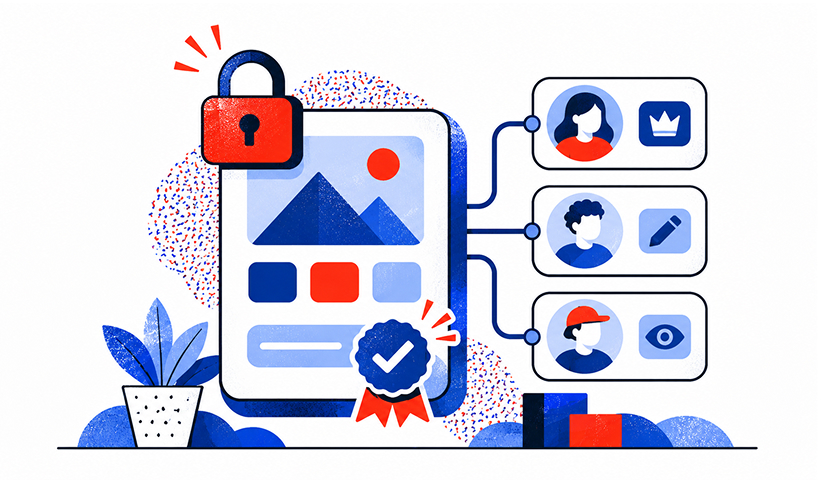
The most common failure is not unclear standards but unclear ownership. Zoomforth’s framework points out that brand and legal each know their own rules, yet nobody owns making sure those rules are applied across every team publishing content.
The model that tends to work is central ownership. Brandlife.io recommends that a brand, marketing or creative ops team owns the policies, workflows, tooling and standards, while execution is cross-functional, with legal, regional marketing, sales enablement and partner ops each holding defined roles. It also suggests a governance council that meets regularly to review exceptions and update standards, plus a clear regional exception process so local needs do not become workarounds.
OnBrandify gives a workable role split:
- Brand owner (accountable): owns the brand standards, exceptions and final approvals.
- Creative operations (responsible): maintains metadata, templates, versions and library hygiene.
- Legal and compliance (consulted): validates regulated statements, licensing and rights-sensitive content.
- Sales, regional teams and partners (users): personalize approved templates and flag missing assets.
- IT or security (support): configures access, identity management and integrations.
To make this concrete per asset, TISSA Consulting suggests a RACI matrix (Responsible, Accountable, Consulted, Informed). A social post, a pitch deck and packaging each deserve their own approval path. For the underlying concept, see our definition of brand governance.
Choosing tools without overbuying
Software is a means, not the process. Still, a good platform gives you the pieces above in one place. Articsledge lists the typical features: a single source of truth, controlled access for viewing, downloading, editing and sharing, version control so outdated logos never resurface, embeddable guidelines, and integrations with creative tools.
A few practical points for a growing team:
- Start with a shared drive only if ownership, permissions, naming and archiving can be enforced reliably.
- Move to dedicated BAM or DAM tooling when multiple regions, agencies, licensing rules or template users create frequent errors.
- Prioritize search, version history, role-based access, expiration dates, templates and approval records over flashy features.
- Pilot with one sales or marketing team before migrating the entire library; measure search time and requests to design.
- Confirm exportability and integration options so the brand remains portable if the vendor changes.
Want to learn more about brand platforms, Brand Strategy and Brand Identity? Keep reading!
If you need help with your companies brand strategy and identity, contact us for a free custom quote.
How to tell whether the process is working
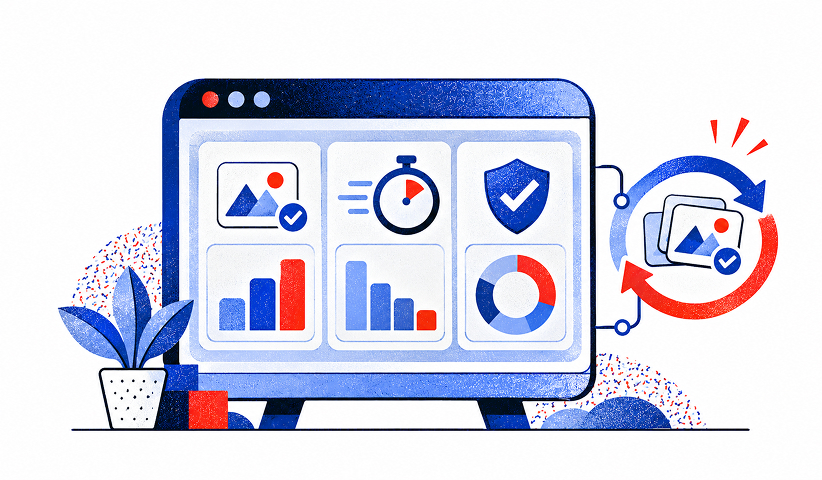
The ANA reports that 77 percent of DAM users said brand consistency improved after adoption, per the MediaValet 2026 DAM Trends Report, and that consistency rose from 77 to 88 percent where DAM sat at the core of the brand ecosystem. Those are survey results from software users, so treat them as directional, then set your own baseline.
A lean scorecard mixes leading and lagging indicators, a split Brandlife.io recommends so you can act before audits surface problems:
- Asset adoption rate (leading, monthly): monthly active users divided by eligible users.
- First-time-right approval rate (leading, weekly or monthly): submissions approved without a revision cycle.
- Approval turnaround time (leading, weekly): median time from submission to approval.
- Average search-to-find time (leading, quarterly): time required to locate the correct approved asset.
- Asset reuse percentage (leading, quarterly): percentage of new deliverables built from approved existing components.
- Duplicate asset rate (lagging, quarterly): duplicate or redundant files found during audits.
- On-brand compliance rate (lagging, quarterly): percentage of sampled published materials meeting standards.
- Exception and override rate (lagging, monthly): percentage of assets approved outside standard policy.
Frontify’s ROI guide calls adoption the number-one predictor of realized ROI, because benefits only appear when people actually use the system. Brandlife.io notes that many organizations set internal targets around 90 to 95 percent of audited assets being fully on-brand. Treat that as a reference point and set a target that fits your risk profile.
A 90-day rollout for a growth-stage team
You do not need a year-long program. A sequence that works:
- Days 1–15: Inventory and baseline: gather files, identify duplicates, measure current search time and note common off-brand errors.
- Days 16–30: Governance design: agree on owners, metadata, naming conventions, permissions, risk tiers and an archive policy.
- Days 31–45: Set up the library: upload approved masters, attach usage notes, label permissions and configure expiry alerts.
- Days 46–60: Launch templates and workflows: publish priority sales, marketing and social templates; test review and versioning.
- Days 61–75: Pilot and train: onboard one team and a partner, monitor search problems, support tickets and template usability.
- Days 76–90: Scale and measure: expand access, retire old versions, compare adoption and approval speed with baseline, and assign a quarterly audit.
Start with the assets that cause the most friction: the sales deck, the logo pack, and the social templates. Quick wins build the adoption the metrics depend on.
Our perspective
Most brand asset problems are not file problems. They are alignment problems. When a company grows, the brand stops living in one person’s head and starts living in dozens of hands, and every hand needs the same clear starting point.
We build brand-backed performance™: branding, creative, web and marketing tactics that are aligned so results are measurable. That only works if the assets behind every ad, email, landing page and sales deck are consistent. A strong paid campaign built on an outdated logo or a stale deck wastes the brand equity you paid to create.
Our advice is to treat asset management as part of brand strategy, not an admin task. Define the identity first, document it in guidelines people can actually use, then build the system that keeps it in circulation. The teams that do this move faster, because creative decisions stop being re-litigated on every project.
- Quincy Samycia
Where we can help
If your assets are scattered or your brand has outgrown its first identity, the fastest fix is usually to clarify the brand and then systematize it. We work with growth-stage and established companies on brand strategy, creative design and the digital platforms that carry them, so guidelines, templates and campaigns line up from the start.
Our branding services cover identity and guidelines, and our creative services start from $4,000 per month for ongoing design and template production. See all services and pricing or talk to us about the right starting point.
Frequently Asked Questions
What is the first step in a brand asset management process?
Audit what exists. Collect every logo, template, photo and document in circulation, then decide what to keep, archive or discard. Doing this before choosing a tool or structure prevents you from migrating clutter into a new system.
Who should be responsible for managing brand assets?
A central brand, marketing or creative ops team should own the system, including policies, workflows, tooling and standards. Legal or compliance owns regulated wording, and regional teams and creators work within defined roles. A RACI matrix per asset type keeps responsibilities clear.
How is brand asset management different from digital asset management?
Digital asset management covers every digital file across an organization. Brand asset management is the subset focused on curated, finalized and approved brand materials such as logos, color palettes, templates and guidelines. Many teams run BAM inside a broader DAM platform.
How often should we review our brand assets?
Review on a recurring schedule, with rights and licensing audits at least quarterly. Retire assets on a set date so expired material drops out of search. Check adoption and approval metrics monthly so problems surface before an audit does.
Do we need software to manage brand assets?
Not on day one. Clear ownership, naming, metadata and approval rules matter most, and a well-organized shared space can carry a small team briefly. As teams, regions and campaigns multiply, a dedicated platform with permissions, version history and templates makes the process far easier to enforce.
Sources

Quincy Samycia
As entrepreneurs, they’ve built and scaled their own ventures from zero to millions. They’ve been in the trenches, navigating the chaos of high-growth phases, making the hard calls, and learning firsthand what actually moves the needle. That’s what makes us different—we don’t just “consult,” we know what it takes because we’ve done it ourselves.
Want to learn more about brand platform?
If you need help with your companies brand strategy and identity, contact us for a free custom quote.
We do great work. And get great results.
+2.3xIncrease in revenue YoY
+126%Increase in repurchase rate YoY



+93%Revenue growth in first 90 days
+144% Increase in attributed revenue




+91%Increase in conversion rate
+46%Increase in AOV



+200%Increase in conversion rate
+688%Increase in attributed revenue