Brand Managers: 8 Positioning Statements That Survive Rollout
11/04/2026
Brand Strategy
Discover eight brand positioning statement examples and learn how to create, test, and implement a strategy that strengthens differentiation and drives consistent growth.
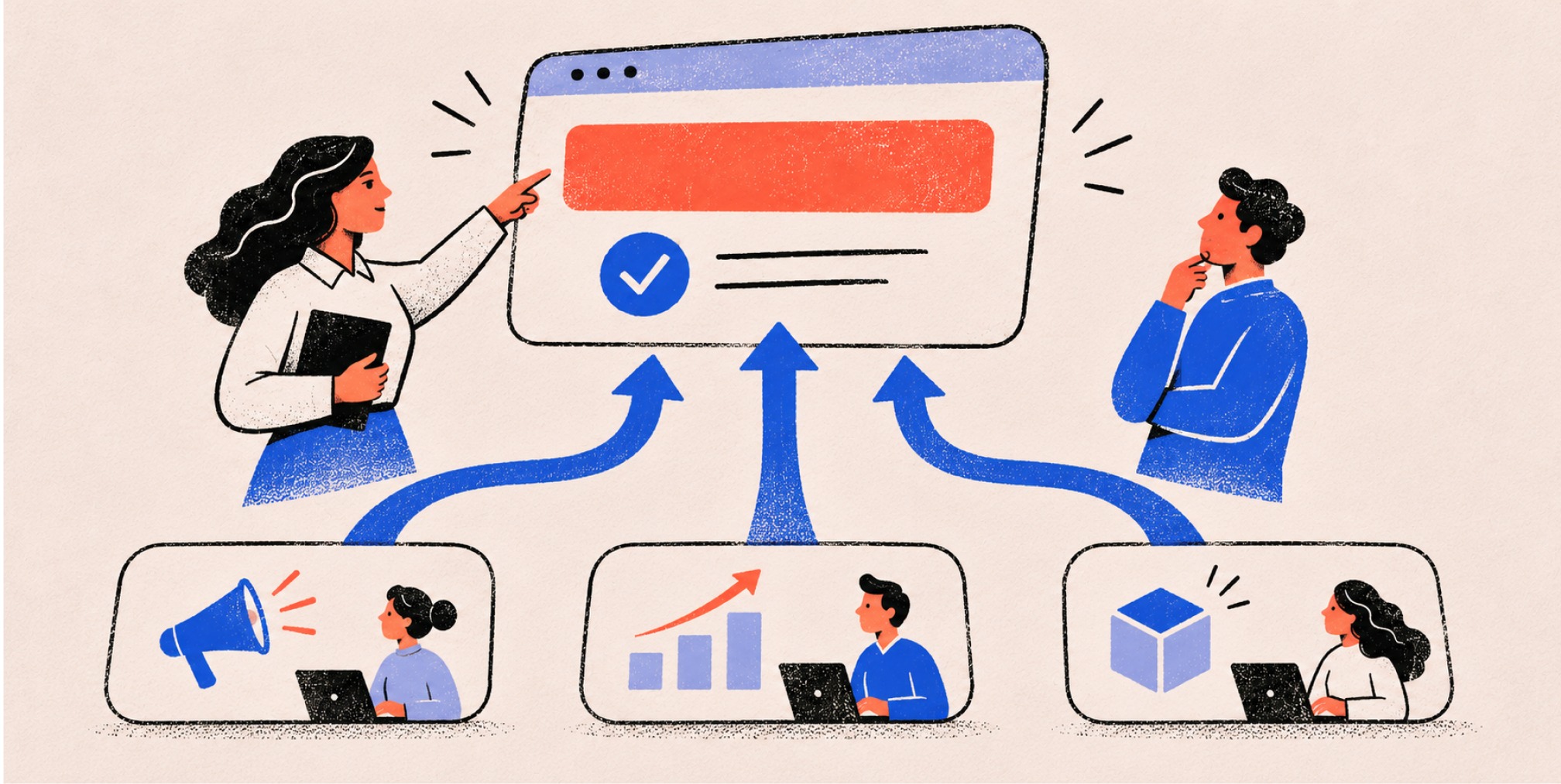
A brand positioning statement is an internal, one to four sentence document that defines your target audience, your market category, your unique benefit, and your reason to believe. The canonical formula: For [target audience], [brand name] is the [category] that [unique benefit] because [reason to believe]. It is not a tagline, and it never appears in an ad. It exists to guide every decision your team makes about what to build, say, and sell next.


What Is a Brand Positioning Statement and Why Does It Matter?
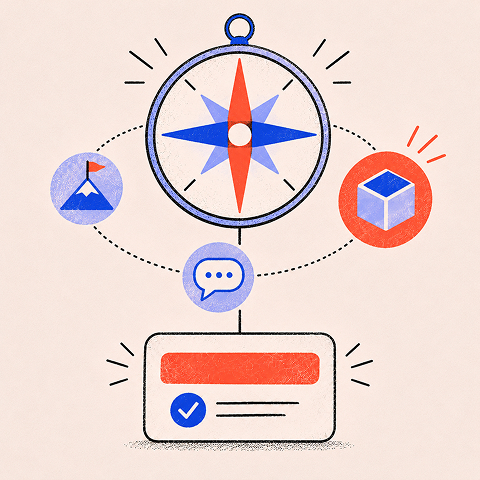


Marketing teams confuse three documents constantly: the mission statement, the tagline, and the positioning statement. They are not the same thing, and mixing them up is why so many brand decks read like motivational posters instead of strategic tools.
A mission statement answers why your company exists. A tagline is the polished, external phrase customers see. A positioning statement sits underneath both of those. It is the internal reference document that tells your team exactly where you sit in the market relative to every alternative a buyer could choose instead. HBS Online’s guidance frames this as your brand’s North Star, the fixed point everything else orbits around.
That distinction has real consequences. When a positioning statement is sharp, it changes how fast decisions get made. A product team debating a new feature can ask, “Does this reinforce our stated benefit or dilute it?” A marketing team writing ad copy has a filter for tone and claims. A sales rep facing a tough objection has language ready, because the reason to believe was already defined months earlier.
Vague positioning creates the opposite problem: every meeting becomes a debate from scratch, because nobody agreed on the starting premise.
Here’s what a working positioning statement actually does inside an organization:
1. Gives product teams a filter for roadmap decisions that reinforce the primary benefit.
2. Gives creative and paid media teams a shared message hierarchy instead of conflicting claims.
3. Gives sales a consistent answer to why the offer matters and why buyers should believe it.
4. Helps leadership reject adjacent opportunities that weaken differentiation.
Most credible guides converge on the same structural point: this statement runs one to four sentences, not a paragraph, not a page. Brandsholder’s step-by-step framework treats brevity as a feature, not a limitation. A positioning statement that needs a slide deck to explain isn’t a positioning statement. It’s a strategy document pretending to be one.
What Are the Core Components of a Positioning Statement?
The canonical formula has four load-bearing parts, and each one fails in a specific, predictable way when teams get lazy. Here’s how to fill each slot so it actually holds weight.
Target audience: Identify a specific buyer and context, not everyone who could theoretically purchase.
Category: Name the comparison set buyers already use and can understand.
Unique benefit: State one outcome a real buyer would prioritize.
Reason to believe: Give a substantiated mechanism, demonstration or evidence source.
Brandsholder’s research on drafting statements makes the point directly: a strong statement is internal, specific, and relative. It names a real audience, states a real problem, and stakes out a competitive frame. Generic statements fail for a structural reason: they’re trying to be true for everyone, and a sentence that’s true for everyone convinces no one.
Here’s the difference in practice:
Weak: “For businesses, our software is the best solution for productivity because it has great features.”
Strong: “For operations managers at 50 to 200 person logistics companies, [Brand] is the dispatch platform that cuts routing errors in half because it recalculates routes in real time using live traffic data.”
The second version could only describe one company. That’s the test.
Pro Tip: Write your first draft, then delete every adjective that isn’t backed by a number, a mechanism, or a named proof point. If the sentence still makes sense without it, it was never doing any work.
Positioning Statement Templates and Annotated Examples
Once you understand the four slots, the fastest way to draft is to work from templates and adapt real examples rather than starting from a blank page.
For [target audience], [brand] is the [category] that [unique benefit] because [reason to believe].
(useful for B2B or complex categories):
[Brand] serves [target audience] who need [core problem solved]. Unlike [primary alternative], [brand] delivers [unique benefit] through [reason to believe].
(classic and still widely taught):
For [target audience] who [statement of need], [brand] is a [category] that [statement of benefit]. Unlike [primary competitive alternative], our product [statement of primary differentiation].
(strong when the real competitor is inertia, not another vendor):
For [target audience] still relying on [status quo/manual process], [brand] is the [category] that [unique benefit] without [the cost or friction of the old way].
Now the examples. Each pulls from a different business model, and each annotation explains the choice, not just the result. Zendesk’s example bank makes a similar point: seeing multiple worked versions side by side speeds up drafting far more than staring at a single formula.
Example 1, B2B logistics (illustrative): For operations directors at regional carriers, RoutePilot is the dispatch platform that reduces manual route changes because dispatchers can adjust routes from one live operations board. Annotation: A narrow buyer and operational mechanism make the claim testable.
Example 2, DTC skin care (illustrative): For people with easily irritated skin, ClearCalm is the skincare line that simplifies daily care because every product follows a short, fragrance-free formulation standard. Annotation: Ingredient rules support the benefit without unverified clinical claims.
Example 3, Accounting services (illustrative): For growing e-commerce owners, LedgerNorth is the accounting partner that brings clarity to inventory-related cash flow because its monthly reports connect sales, stock and margin. Annotation: The RTB describes a concrete service process.
Example 4, Healthcare SaaS (illustrative): For clinic administrators with complex schedules, CareRoster is the scheduling platform that reduces administrative handoffs because it connects shift requests and approvals in one workflow. Annotation: This avoids unsubstantiated time-savings percentages.
Example 5, Consumer food (illustrative): For busy home cooks, Weeknight Pantry is the meal-starter brand that makes simple dinners easier because each kit combines a measured sauce base and step-by-step instructions. Annotation: The proof is visible in the product itself.
Example 6, Cybersecurity (illustrative): For IT leaders at mid-market firms, SignalFence is the security monitoring platform that makes incident triage clearer because it brings related alerts and ownership into a single investigation view. Annotation: A technical buyer can verify the mechanism during a demo.
Example 7, Education (illustrative): For teachers supporting mixed reading levels, LessonBridge is the planning resource that makes differentiation more manageable because each lesson includes alternate reading and activity paths. Annotation: It identifies a daily job, not a vague mission.
Example 8, Status-quo alternative (illustrative): For procurement teams still reviewing contracts in email, PactFlow is the contract review workspace that keeps decisions visible without scattered approval threads. Annotation: The primary alternative is the current process, not another vendor.
A statement built for a 12-person startup should read differently than one built for a buying committee at an enterprise account. Sophisticated B2B buyers expect the RTB to reference process, data, or mechanism. Consumer buyers respond more to outcome and timeframe. Keep the formula fixed. Adjust the vocabulary to match how your buyer actually evaluates claims.
For a deeper set of worked templates, The Branded Agency’s example library walks through additional annotated versions across categories.
Free Brand Health Audit
Make sure your brand is built to sell
Search has changed. Your customers aren't just Googling anymore. They're asking ChatGPT, Perplexity, Gemini and other AI platforms what to buy, who to trust and which brands they should consider.
If your brand isn't showing up clearly in those answers, you're already losing opportunities. Our free Brand Health Audit shows you where your brand stands across traditional search, AI search and brand positioning.

Sample brand audit
Live preview
Traditional search
72
AI search (GEO)
34
Brand positioning
58
How Do You Develop a Positioning Statement Step by Step?
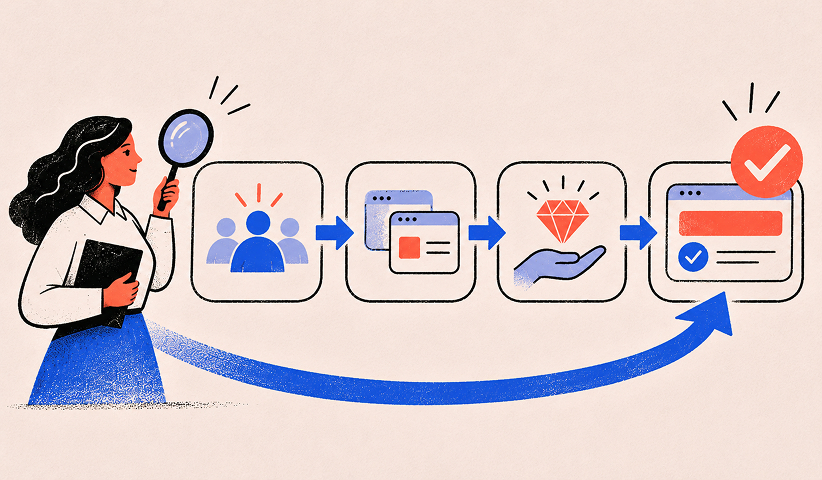
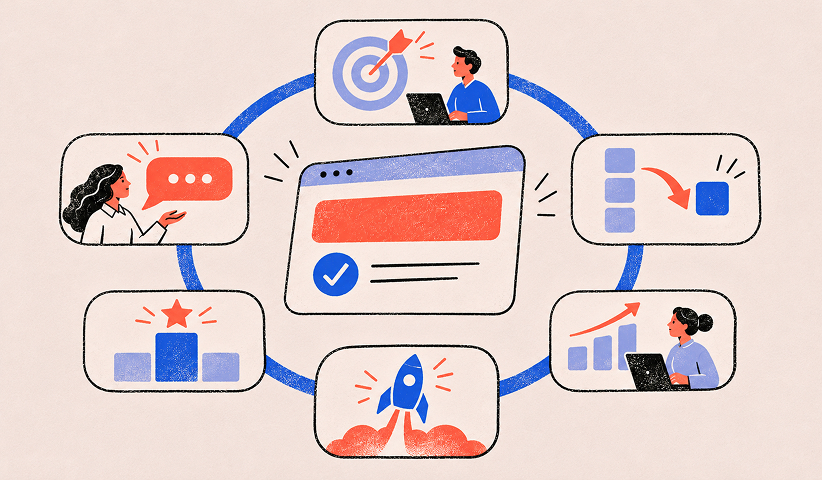
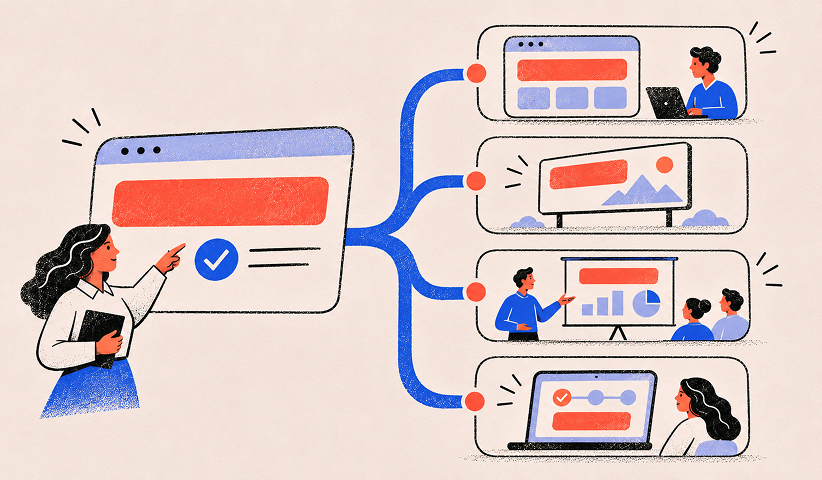
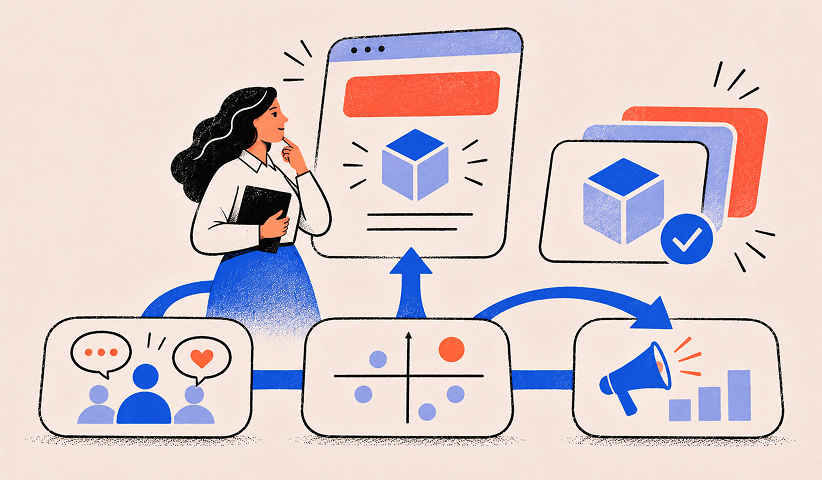
Drafting a positioning statement without research produces a guess dressed up as strategy. Here’s the workflow that turns a guess into something defensible.
1. Interview customers and sales teams to identify the specific job and buying trigger.
2. Map the alternatives buyers use, including doing nothing or keeping the current workaround.
3. Select an audience and one consequential benefit rather than a list of features.
4. Gather evidence for the reason to believe before asserting it externally.
5. Draft two or three versions, test them with buyers and objections, then select one owner-approved statement.
6. Translate it into a messaging hierarchy, proof deck and quarterly adoption check.
The activation piece is where most positioning work quietly dies. A statement with no owner and no KPI attached rarely survives past the launch meeting where it was unveiled.
Five Tests to Know Your Positioning Statement Will Work
A positioning statement earns its place by surviving scrutiny, not by sounding good in the room where it was written. Run these five checks before anything goes into a brief.
Clarity test: Can a teammate restate the intended audience and benefit without explanation?
Subtraction test: Does removing a phrase change the meaning or is it empty decoration?
Competitive test: Could a direct competitor truthfully claim the exact same benefit and proof?
Proof test: Is every meaningful benefit backed by an observable mechanism or approved evidence?
Rollout test: Can sales, product, web and creative apply it consistently to real assets?
Pro Tip: Run the subtraction test and the proof test together. A phrase that survives deletion but has no evidence behind it is the most common way a positioning statement quietly turns into marketing fluff.
How Do You Turn a Positioning Statement Into Messaging?
An internal sentence does nothing until someone converts it into language customers actually see. That translation step separates positioning work that changes outcomes from positioning work that sits in a slide deck.
Start by pulling a single headline directly from the unique benefit slot; it should read like the punchiest possible version of that one claim. Then build three supporting messages, each tied to a piece of your reason to believe. Shopify’s guidance on activation frames this as building a messaging hierarchy: one headline claim, backed by specific, provable statements underneath it, all traceable back to the original internal sentence.
From there, build a proof deck: a working document that maps every RTB to its actual evidence, whether that’s a case study, a benchmark, or a technical explainer. Sales and marketing both pull from this deck so nobody improvises claims live on a call.
Apply the hierarchy across concrete assets:
Website: Use the benefit as a lead headline and connect supporting claims to case studies or demonstrations.
Ads: Test one pain-point angle at a time while keeping the same strategic promise.
Sales deck: Lead with the buyer problem, show alternatives and present proof before product details.
Product onboarding: Reinforce the benefit through the first-value task and activation messaging.
Want to learn more about brand platforms, Brand Strategy and Brand Identity? Keep reading!
If you need help with your companies brand strategy and identity, contact us for a free custom quote.
How Does The Branded Agency Apply This Framework in Practice?
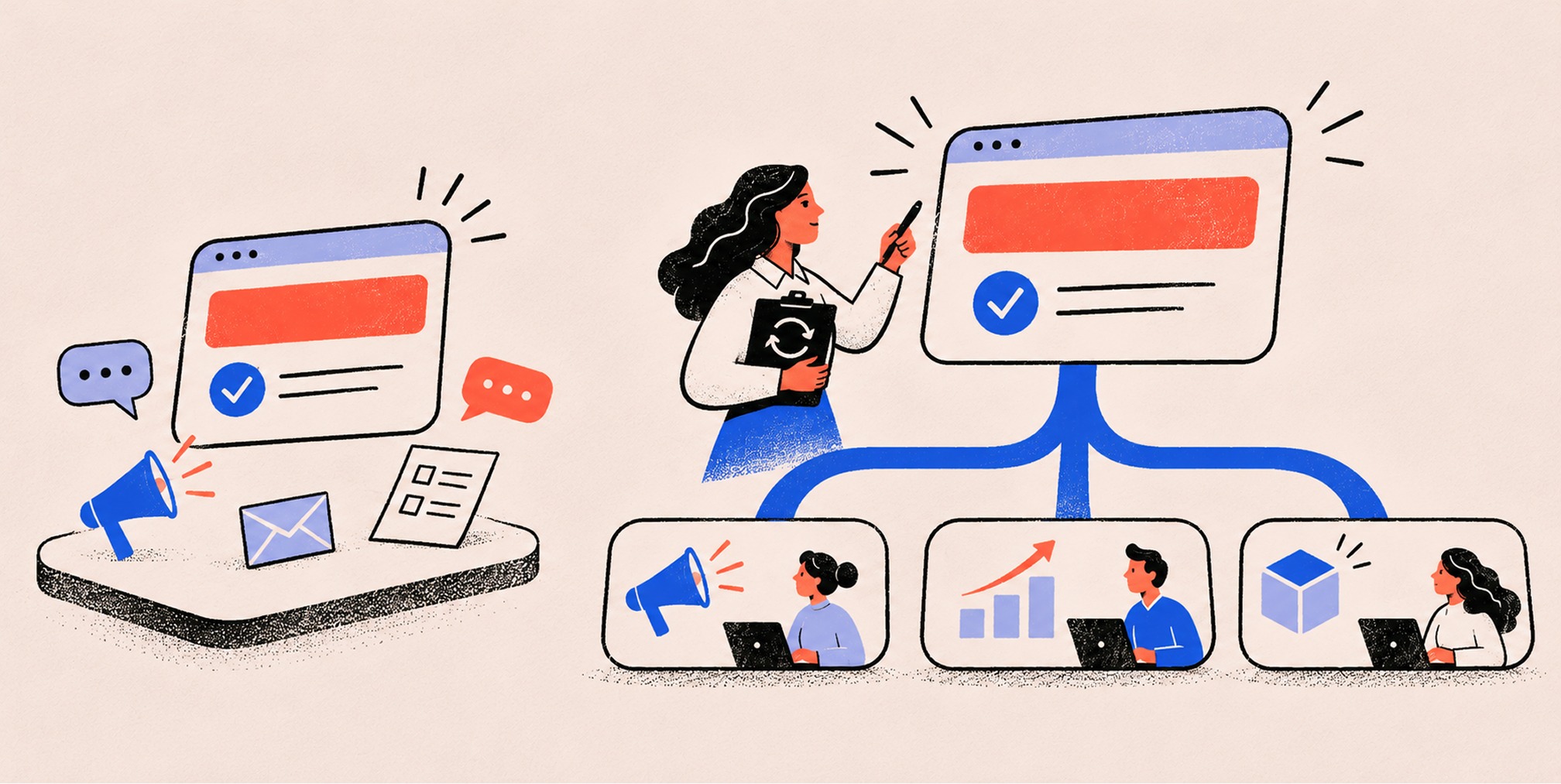
We run positioning engagements in three stages: research and interviews, competitive mapping and drafting, then activation planning with named KPIs before a single asset gets built. Clients typically arrive with a positioning statement that’s technically written but never tested, which is the most common gap we see. Committees write statements that try to satisfy every stakeholder, which produces language nobody outside the room can repeat back.
We address that by running the clarity and proof tests before finalizing anything, and by handing off a proof deck alongside the statement itself, not just the sentence in isolation. That deck becomes the reference every downstream team, creative, web, and paid media, works from.
Why Most Positioning Statements Never Get Used
The research behind this framework points to a consistent failure pattern, and it’s not the sentence itself. Most positioning statements are written competently and then abandoned within a quarter. The formula isn’t hard to fill in. Getting an organization to actually reference the sentence six months later is the real challenge, and that’s an accountability problem more than a wordsmithing one.
Conventional advice spends most of its energy on drafting technique: pick better adjectives, sharpen the benefit, tighten the RTB. That’s necessary but insufficient. The pattern worth prioritizing first is activation ownership. A mediocre statement with a named owner and a quarterly review outperforms a brilliant statement that lives in a Google Doc nobody opens again.
If you take one thing from this framework, make it the subtraction test paired with a named accountability owner. Draft the sentence, strip it down to what survives deletion, then assign someone whose job includes checking whether the organization still uses it in ninety days. Skip that step, and you’ve written a nice sentence. Include it, and you’ve built a working strategic tool.
Get a Validated Positioning Statement Built for Your Brand
Writing the sentence is the easy part. Making it hold up against real competitors, real customer objections, and a marketing team under deadline pressure is where most positioning work quietly falls apart. Positioning is often built as part of a full branding engagement, meaning the statement is accompanied by tools such as a perceptual map, a proof deck backing each reason to believe, and a rollout plan with owners and KPIs from the start.
That’s the practical difference between a DIY draft and a done-for-you engagement: you’re not just getting a sentence, you’re getting the research, the stress-testing, and the activation plan that makes the sentence survive contact with your actual market. If your team has a draft that’s never been tested, or no positioning statement at all, our executive-level branding service is built to take you from research through a validated statement to a full rollout across creative, web, and paid channels. Start by requesting a review of where your current positioning stands.
Frequently Asked Questions
What Is an Example of a Brand Positioning Statement?
A worked example: “For operations managers at mid-size logistics companies, [Brand] is the dispatch platform that cuts routing errors in half because it recalculates routes in real time using live traffic data.” It names a specific audience, one benefit, and a concrete mechanism as proof.
What Is Nike’s Positioning Statement?
Nike’s positioning centers on serving athletes and aspiring athletes as the performance brand that helps them achieve their potential, backed by continuous innovation in athletic footwear and apparel technology. The exact internal wording isn’t publicly published, since positioning statements are strategic documents, not marketing copy.
What Is Tesla’s Brand Positioning Statement?
Tesla’s positioning centers on serving drivers who want high-performance vehicles without the environmental tradeoff, framed as the automaker that makes electric vehicles desirable rather than a compromise, backed by proprietary battery technology and software-driven performance. As with most companies, the exact internal sentence Tesla uses hasn’t been made public.
What Are the Five Elements of a Positioning Statement?
The four core pillars are target audience, category or frame of reference, unique benefit, and reason to believe. Some frameworks add a fifth: the competitive alternative you’re positioned against, which sharpens the differentiation even further.
How Is Positioning Different From a Value Proposition?
A positioning statement is internal and defines where you sit relative to competitors for your own team’s reference. A value proposition is often customer-facing and focuses narrowly on the specific value a buyer receives, sometimes used interchangeably but built for a different audience.
Sources
Harvard Business School Online brand-positioning resources: https://online.hbs.edu/blog/
Shopify marketing and positioning guides: https://www.shopify.com/blog/brand-positioning
Zendesk customer-service and messaging resources: https://www.zendesk.com/blog/

Quincy Samycia
As entrepreneurs, they’ve built and scaled their own ventures from zero to millions. They’ve been in the trenches, navigating the chaos of high-growth phases, making the hard calls, and learning firsthand what actually moves the needle. That’s what makes us different—we don’t just “consult,” we know what it takes because we’ve done it ourselves.
Want to learn more about brand platform?
If you need help with your companies brand strategy and identity, contact us for a free custom quote.
We do great work. And get great results.
+2.3xIncrease in revenue YoY
+126%Increase in repurchase rate YoY



+93%Revenue growth in first 90 days
+144% Increase in attributed revenue




+91%Increase in conversion rate
+46%Increase in AOV



+200%Increase in conversion rate
+688%Increase in attributed revenue