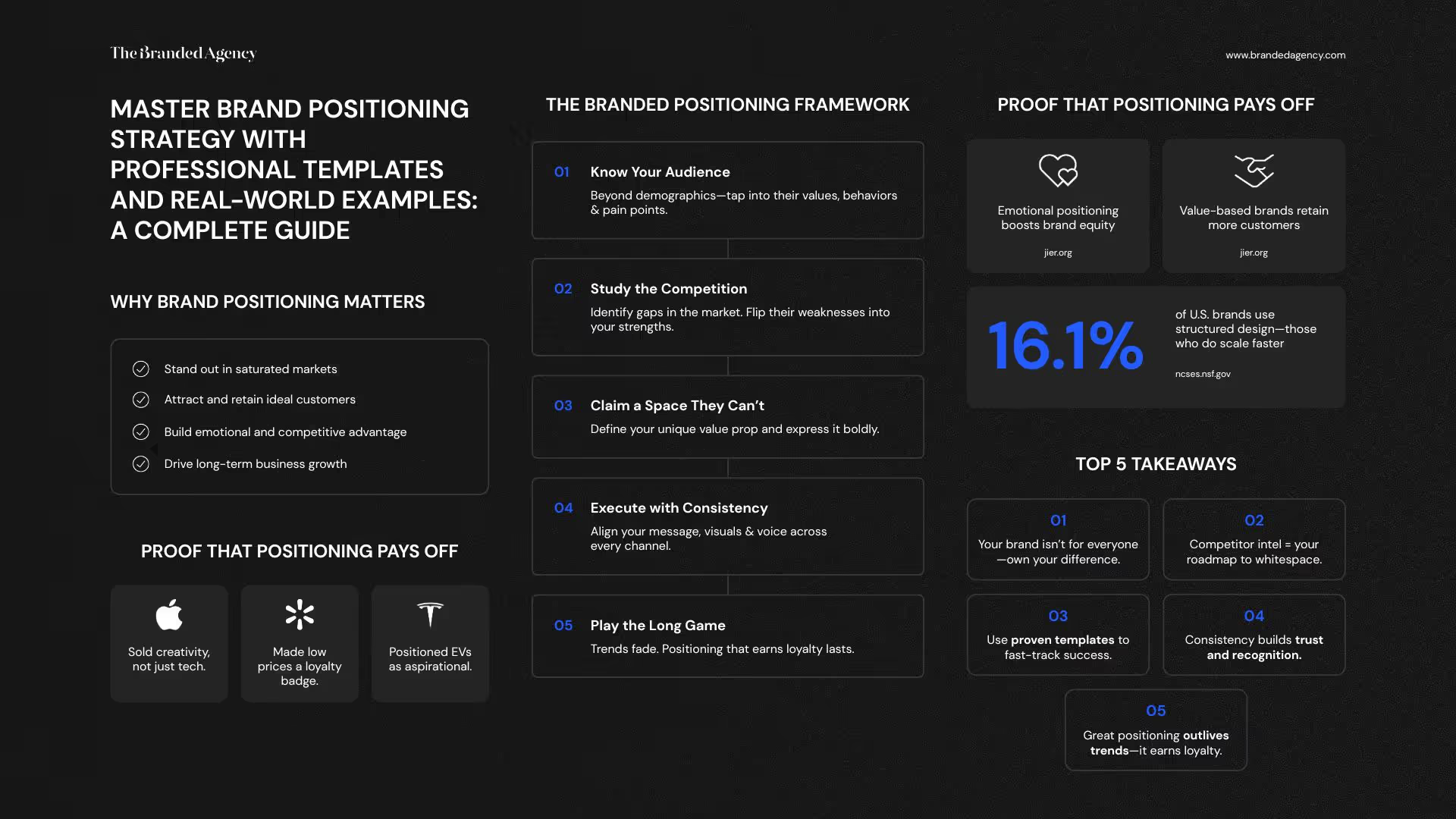
Master Brand Positioning Strategy With Professional Templates and Real-World Examples: A Complete Guide

07/22/2025

Brand Strategy

How Do Iconic Brands Claim the Unclaimable?

A modern, abstract gallery wall featuring framed geometric art in bold red, blue, black, and white, with vases and small furniture accenting the scene.

Clear brand positioning starts with knowing who you serve, what they value and why they should choose you. At The Branded Agency, we help businesses turn those insights into a focused direction for messaging, design and customer experience. This guide provides a copyable positioning template, a filled example and real-world projects to help you apply the process to your own brand.

Master Brand Positioning Strategy
Quincy Samycia
Play IconPause Icon
0:00
0:00
https://cdn.prod.website-files.com/673ec61d219571e72b3eba03/68ade4f7d73c2693c25ba4c2_266_Audio%20File_Master%20Brand%20Positioning%20With%20Proven%20Templates%20%26%20Real%20Examples.mp3

Define How You Want Customers to Understand Your Brand

A diverse team of five professionals collaborating around a table covered in printed marketing charts and notebooks in a bright, modern office.
A group of people kneeling around a large white poster paper with hand-drawn diagrams, notes, and sticky notes during a creative planning session.
A well-organized design workstation with a desktop monitor displaying colorful UI mockups, surrounded by modern accessories and office tools.
No items found.

Customers form impressions of your business through your products, pricing, communications and experiences. Brand positioning gives those decisions a shared direction: who you serve, what value you deliver and why that value matters.

Start by comparing how you want to be understood with how customers describe you today. If your team sees specialist expertise but customers see an interchangeable service, investigate what is missing. The issue may be unclear messaging, insufficient evidence or an offering that does not yet support the intended position.

This guide provides a practical framework for making those decisions, including:

  • A copyable template for documenting your positioning strategy.
  • A filled example showing how the individual choices fit together.
  • Real-world projects illustrating how positioning informs execution.
  • Questions to help you test your assumptions before committing to a direction.

The template organizes your thinking. Customer research, competitive analysis and evidence give the answers substance.

Five Principles to Guide Your Positioning

1. Prioritize a Clear Audience

Identify the customers you are best equipped to serve and the circumstances that lead them to buy. A useful audience definition explains their needs, priorities and decision criteria.

2. Understand the Alternatives

Find out what customers would choose if your business were unavailable. That may be a direct competitor, an internal process or postponing the purchase. Evaluate your offering against the alternatives customers actually consider.

3. Connect Your Difference to Customer Value

A difference matters when it helps customers achieve something they care about. Explain how your expertise, product features or service model delivers a relevant benefit, and support that explanation with evidence.

4. Deliver the Position Across the Business

Your website, sales conversations, pricing and customer experience should reinforce the same promise. Give each team practical guidance on what the positioning means for its work.

5. Review the Position as Conditions Change

Keep your direction consistent while checking whether it remains relevant. Revisit your assumptions when customer needs, competitive alternatives or your own capabilities materially change.

What Is Brand Positioning Strategy?

Brand positioning strategy defines the place you intend to occupy in your target customers’ minds relative to the alternatives. It establishes whom you serve, the need you address, the value you offer and the reasons customers should believe you.

A useful strategy connects five elements:

  • Audience: Who is the offering primarily for?
  • Need: What problem or goal brings those customers to you?
  • Category and alternatives: How should customers understand the offering, and what will they compare it with?
  • Benefit and difference: What value do you deliver, and what makes your approach worth choosing?
  • Evidence: What supports your promise?

You do not need to invent an entirely new category to develop meaningful positioning. You may offer a more relevant combination of specialization, convenience, service or product capabilities for a particular audience.

Your positioning statement summarizes these choices for internal use. The broader strategy explains the research behind them and how they should influence your business. Customers’ actual perceptions then provide the test of whether that intended position is being understood and experienced.
Free Brand Health Audit

Make sure your brand is built to sell

Search has changed. Your customers aren't just Googling anymore. They're asking ChatGPT, Perplexity, Gemini and other AI platforms what to buy, who to trust and which brands they should consider.

If your brand isn't showing up clearly in those answers, you're already losing opportunities. Our free Brand Health Audit shows you where your brand stands across traditional search, AI search and brand positioning.

checkmark icon
AEO Health
checkmark icon
GEO Visibility
checkmark icon
Brand Health

Sample brand audit

Live preview

Traditional search

72

AI search (GEO)

34

Brand positioning

58

Build Your Positioning Around Customer Needs and Evidence

Two coworkers seated at a conference table discussing ideas while working on laptops covered with colorful stickers in a high-rise office setting.
A man in a denim jacket using a tablet while standing in a bright workspace filled with plants, shelves, and minimal wooden furniture.
A man in a striped sweater analyzing a wall covered in sketches, wireframes, and marketing strategy documents arranged with tape and pins.
A person sketching on a tablet with a stylus while seated at a laptop showing a content management dashboard, in a cozy and informal setting.

Once you understand the components of positioning, the next step is to gather the evidence needed to make clear choices. Focus on how customers buy, what they compare and which strengths your business can consistently deliver.

Understand What Drives the Purchase

Demographics and company profiles help describe an audience, but they rarely explain the full buying decision. Investigate the circumstances that make customers seek a solution and the criteria they use to choose one.

Use customer interviews, sales conversations, reviews and support requests to explore:

  • The trigger: What happened that made them start looking?
  • The desired outcome: What do they want to accomplish?
  • The hesitation: What concerns could delay or prevent the purchase?
  • The decision criteria: What matters most when comparing options?
  • The experience: What do they value or find frustrating after buying?

Look for recurring patterns and differences between customer groups. A first-time buyer may need reassurance and education, while an experienced buyer may prioritize specific capabilities or implementation support.

Compare the Alternatives Customers Actually Consider

Build your competitive analysis around the customer’s decision. Include direct competitors alongside alternatives such as doing the work internally, using a simpler tool or maintaining the current process.

For each alternative, document:

  • Who it appears to serve.
  • The main benefit it promises.
  • The evidence it provides.
  • Its pricing or service model, where available.
  • The strengths and limitations customers describe.

Separate what competitors claim from what you can verify. An opportunity becomes useful when it connects an underserved customer need with something your business can credibly deliver.

Choose a Difference You Can Support

Translate your strongest capabilities into customer value.

For example, “specialist onboarding” describes a service. Its potential benefit is helping customers navigate a complex setup. Supporting evidence could include a documented onboarding process, relevant expertise and customer feedback about the experience.

Keep three things distinct:

  • Capability: What your business does.
  • Benefit: Why that capability matters to the customer.
  • Proof: What supports the connection between them.

This helps prevent broad claims such as “better service” or “industry-leading quality” from becoming the foundation of your strategy without sufficient evidence.

Use a Template to Record Decisions

A positioning template gives your team a consistent way to document the audience, need, alternatives, benefit, difference and proof. Its value comes from the quality of those decisions.

Record the source behind each important finding and label unresolved assumptions. If your team disagrees about why customers choose you, identify what research would help resolve the question before polishing the statement.

Real-World Examples: How Positioning Informs Execution

Forkin’ Good: Giving a Growing Portfolio a Shared Direction

Arbutus Foods had expanded across multiple food categories and needed a cohesive consumer-facing identity. The Branded Agency developed Forkin’ Good through positioning, naming, brand architecture, visual identity and packaging work.

The strategic direction centred on bringing joy to convenient family meals, grounded in real ingredients and globally inspired flavours. That idea informed the playful name, colour system and packaging across Dips and Meal Makers.

What this illustrates: Positioning can provide a shared basis for decisions across an expanding product portfolio. Explore the Forkin’ Good case study.

Glass Lewis: Making Established Expertise Easier to Navigate

Glass Lewis needed a digital experience that reflected its corporate governance expertise and evolving technological capabilities. The Branded Agency refined its visual system and reorganized its website around audience needs, clearer navigation and information hierarchy.

The work focused on helping people access and understand the company’s expertise while retaining its established identity.

What this illustrates: Supporting a brand’s position can require improvements to how customers experience its knowledge and services. Explore the Glass Lewis case study.

These examples show the connection between strategic direction and execution. They do not establish that positioning alone caused changes in revenue or customer loyalty.

Turn Your Positioning Into Practical Requirements

Once your direction is agreed, explain what it requires from each part of the business.

Messaging: Define the main customer need, the benefit to emphasize and the evidence that supports it. Adapt the detail to each audience without changing the underlying promise.

Design: Give designers a brief that explains the intended audience, desired associations and practical requirements. Evaluate creative work against those criteria.

Sales: Build discovery questions around the needs you have prioritized. Help the team recognize suitable customers and explain where the offering may not fit.

Customer experience: Check whether onboarding, service delivery and support match the expectations your communications create.

Assign an owner to the approved positioning and make it accessible to the teams using it. Review customer feedback after implementation to see whether people understand the offering as intended and whether the experience supports the promise.

With that evidence assembled, you can use the positioning template below to turn your findings into a clear working strategy.

Want to learn more about brand platforms, Brand Strategy and Brand Identity? Keep reading!

If you need help with your companies brand strategy and identity, contact us for a free custom quote.

How to Measure Whether Your Positioning Is Working

A team of four individuals engaged in a focused discussion in a bright, industrial-style office with glass walls and natural lighting.

Evaluate positioning against your own objectives and customer evidence. Start with a baseline, define what you expect to change and choose measures that connect customer understanding with business performance.

Customer Understanding: Is the Message Clear?

Ask prospective customers to explain what your business offers, who it serves and why they would consider it. Compare their answers with your intended positioning.

Track recurring misunderstandings and whether customers identify the benefits you want to emphasize. Use consistent questions and comparable audience groups when reviewing changes over time.

Relevance and Credibility: Does the Value Matter?

A clear message still needs to address a meaningful need. Ask customers which benefits influence their decision, what alternatives they consider and what evidence makes your promise believable.

Explore emotional responses alongside practical requirements. Confidence, reassurance or excitement may matter to your audience, but research should establish their relevance rather than assume it.

Commercial Performance: Are You Attracting Suitable Customers?

Choose measures that reflect the purpose of the positioning work, such as:

  • Qualified enquiries: Are more prospects a good fit for your offering?
  • Sales conversion: Are suitable prospects becoming customers?
  • Sales objections: Are misunderstandings about your value becoming less frequent?
  • Retention and repeat purchases: Does the experience give customers a reason to return?

Review the explanations behind these results. Lost-deal feedback and customer interviews can help identify whether the issue concerns positioning, price, product fit or service delivery.

Execution: Is the Promise Reflected in the Experience?

Review your website, sales materials and customer interactions against the approved positioning. Check whether teams communicate the same core value and provide relevant supporting evidence.

Use a focused set of brand health metrics to track perceptions alongside these behavioural and operational measures.

Interpret Changes Carefully

An improvement after new positioning launches does not prove that positioning caused it. Advertising spend, promotions, seasonality, pricing and product changes can also influence results.

Record what else changed during the measurement period. Where practical, test specific messages with comparable audiences. Use the combined evidence to decide whether to retain the direction, refine its expression or revisit an underlying assumption.

A Copyable Brand Positioning Strategy Template
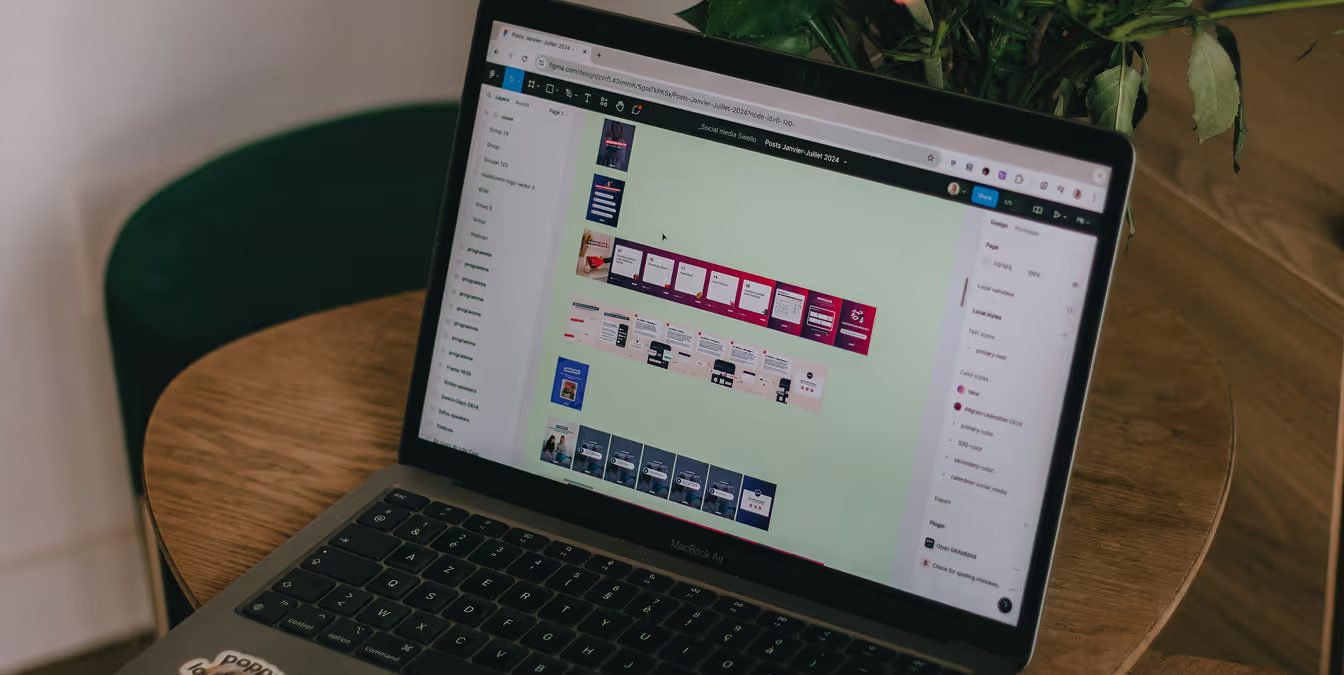
A laptop on a round wooden table displaying a Figma design file for a social media content calendar, with a plant and soft natural light in the background.

Use this template to turn your research into a working strategy. Keep your answers specific, record the evidence behind important claims and mark assumptions that still need testing.

Brand or offering:
[Name the business, product or service you are positioning.]

Business objective:
[What does this strategy need to support—for example, a product launch, a new audience or clearer differentiation?]

Priority audience:
[Who are you best equipped to serve? Describe their needs and buying circumstances.]

Purchase trigger:
[What makes these customers start looking for a solution?]

Primary customer need:
[What problem are they trying to solve or outcome are they seeking?]

Category:
[What familiar category helps customers understand your offering?]

Alternatives:
[What competitors, tools, services or existing processes do customers consider? Include doing nothing where relevant.]

Core benefit:
[What valuable outcome does your offering help customers achieve?]

Meaningful difference:
[What about your approach makes it worth choosing for this audience?]

Reasons to believe:
[What product capabilities, documented processes, customer evidence or relevant credentials support your promise?]

Trade-offs:
[Which audiences, features or service expectations are you choosing not to prioritize?]

Positioning statement:
For [priority audience] who need [primary need], [brand] is a [category] that helps them [core benefit]. Compared with [relevant alternative], it offers [meaningful difference], supported by [reasons to believe].

Execution priorities:
[What should this direction change about your messaging, website, design, sales process or customer experience?]

Validation plan:
[What needs testing, with which customers, and how?]

Success measures and ownership:
[Choose relevant measures, record your baseline, set targets and assign an owner and review date.]

Filled Example: Positioning an Appointment-Booking Tool

The following example is hypothetical. Cedar Booking and its capabilities are invented to demonstrate how the template works.

Brand or offering:
Cedar Booking, an online appointment-booking tool.

Business objective:
Attract solo service providers who currently arrange appointments through email or direct messages.

Priority audience:
Independent service providers who manage their own bookings and customer communication without administrative support.

Purchase trigger:
Coordinating appointments is becoming difficult to manage alongside paid client work.

Primary customer need:
Allow customers to reserve available times without repeated scheduling conversations.

Category:
Online appointment-booking software.

Alternatives:
Email, direct messages, paper calendars and broader business-management platforms.

Core benefit:
Let customers book available appointments through a dedicated booking page.

Meaningful difference:
A focused workflow for solo operators, combining self-service booking with guided setup.

Reasons to believe:
For this example, assume the product provides calendar synchronization, configurable availability, automated reminders and one-to-one setup assistance. These capabilities support the proposed benefit. Specific claims about time saved would require measurement.

Trade-offs:
The product does not prioritize payroll, multi-location scheduling or complex team management.

Positioning statement:
For solo service providers who need an easier way to coordinate appointments, Cedar Booking is online booking software that lets customers reserve available times themselves. Compared with arranging appointments through email and direct messages, it provides a dedicated booking page, calendar synchronization and automated reminders, with guided setup for the business owner.

Execution priorities:
Demonstrate the booking process on the homepage, explain setup clearly and show relevant solo-business use cases. Focus onboarding on publishing the first booking page.

Validation plan:
Interview prospective customers about their scheduling process, test whether they understand the proposition and observe them setting up the product. Compare competing tools before treating guided setup as a meaningful competitive difference.

Success measures and ownership:
Track booking-page publication, trial-to-paid conversion and continued use. The product lead records initial performance, agrees targets with the team and reviews results after a complete trial and renewal cycle.

For help refining your completed template into a concise internal statement, learn how to write a brand positioning statement.

Brand Positioning Questions Answered

What Is the Difference Between Positioning and Branding?

Positioning defines the audience, value and competitive context your business prioritizes. Branding expresses that direction through your name, messaging, visual identity and customer experience. Positioning gives those choices a shared basis.

Is a Positioning Statement the Same as a Tagline?

A positioning statement is primarily an internal decision-making tool. It explains who you serve, what you offer and why customers should believe your promise. A tagline is a short public-facing expression that may communicate one aspect of that strategy.

Can a Template Replace Customer Research?

A template organizes findings and reveals gaps in your thinking. Its usefulness depends on the evidence behind the answers. Treat unsupported assumptions as questions to investigate before approving the strategy.

How Do You Know Whether Your Difference Is Meaningful?

Check whether customers value it, whether your business can deliver it and how it compares with the alternatives they consider. A capability does not have to be exclusive to matter, but you should explain why your particular offering is a relevant choice.

Can One Brand Serve Multiple Audiences?

Yes. Identify the value those audiences share, then adapt supporting messages and proof to their different needs. If the audiences require conflicting promises or substantially different offerings, review whether separate product positioning or a different brand structure would provide more clarity.

How Long Does a Positioning Project Take?

The timeline depends on the research required, the number of audiences and markets involved, and the decisions stakeholders need to resolve. Allow time for discovery, strategy development, customer validation and internal approval. Completing the template is only one part of that work.

What Can Real-World Examples Tell You?

Examples show how strategic choices inform messaging, design and customer experience. They can help you understand the process, but they do not prove that the same approach will work for another business or that positioning alone caused a commercial result.

What Are Common Positioning Mistakes?

Common mistakes include defining the audience too broadly, relying on generic claims, overlooking the customer’s actual alternatives and promising benefits without evidence. Another is approving a strategy without explaining what teams need to do differently.

When Should You Revisit Your Positioning?

Review it when customer needs, competitive alternatives or your offering materially change. Persistent misunderstanding or poor-fit enquiries may also warrant investigation. Establish whether the problem is the strategy, its communication or the experience before changing direction.

Turn Your Positioning Into a Clear Direction

A completed positioning strategy should help your team make decisions: which customers to prioritize, what benefits to emphasize, what proof to provide and which opportunities to decline.

Start with the template, identify the unanswered questions and gather the evidence needed to resolve them. Once the direction is agreed, translate it into practical requirements for marketing, sales, design and service delivery.

The Branded Agency helps businesses develop positioning and apply it across messaging, visual identity, packaging and digital experiences.

Book a discovery call to discuss your audience, offering and what your brand needs to communicate more clearly.

An image of the author Quincy Samyica

Quincy Samycia

As entrepreneurs, they’ve built and scaled their own ventures from zero to millions. They’ve been in the trenches, navigating the chaos of high-growth phases, making the hard calls, and learning firsthand what actually moves the needle. That’s what makes us different—we don’t just “consult,” we know what it takes because we’ve done it ourselves.

Want to learn more about brand platform?

If you need help with your companies brand strategy and identity, contact us for a free custom quote.

We do great work. And get great results.

DrTung’s
Breathed new life into a storied oral care brand with a smarter site and marketing for scalable growth.

+2.3x
Increase in revenue YoY

+126%
Increase in repurchase rate YoY

READ MORE
DrTung’s oral care product image with a smiling man, tooth powder tabs, and activated charcoal floss.
Smartphone on a textured blue surface displaying a DrTung’s ad with the text “Make the Switch” and an image of a woman holding herbal tooth powder tabs.
Flat lay of DrTung’s oral care products, arranged with a blue pouch on white tile.
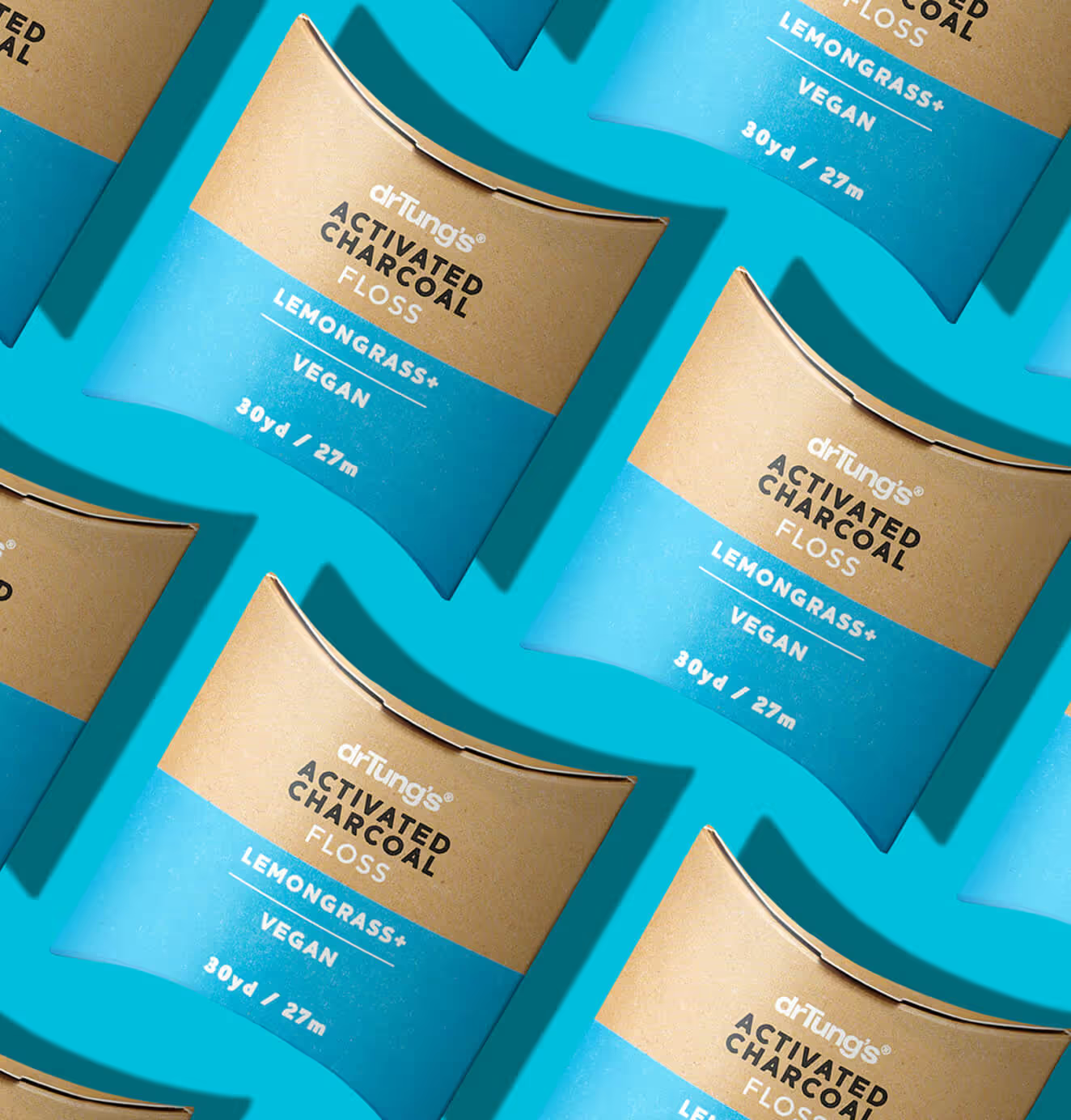
DrTung’s Activated Charcoal Floss packaging arranged in a repeating pattern on a bright blue background.
DrTung’s oral care product image with a smiling man, tooth powder tabs, and activated charcoal floss.
Smartphone on a textured blue surface displaying a DrTung’s ad with the text “Make the Switch” and an image of a woman holding herbal tooth powder tabs.
Flat lay of DrTung’s oral care products, arranged with a blue pouch on white tile.
DrTung’s Activated Charcoal Floss packaging arranged in a repeating pattern on a bright blue background.
Mary Louise Cosmetics
Scaled a heritage-inspired clean beauty brand with modern performance marketing and farm-to-face storytelling.

+93%
Revenue growth in first 90 days

+144%
Increase in attributed revenue

READ MORE
Mary Louise Lilac & Shea Body Butter jar with creamy texture and lavender sprigs on a beige surface.
A Mary Louise Miracle Serum bottle with a dropper cap, lying on a bed of small yellow flowers.
Mary Louise body butter promotional print materials with product photography and skincare application imagery.
Mary Louise Miracle Serum bottles arranged in a close-up pattern with pale yellow dropper caps.
Mary Louise Lilac & Shea Body Butter jar with creamy texture and lavender sprigs on a beige surface.
A Mary Louise Miracle Serum bottle with a dropper cap, lying on a bed of small yellow flowers.
Mary Louise body butter promotional print materials with product photography and skincare application imagery.
Mary Louise Miracle Serum bottles arranged in a close-up pattern with pale yellow dropper caps.
Eyecart
Made eye care feel modern, then marketed it like a DTC darling—with the results to match.

+91%
Increase in conversion rate

+46%
Increase in AOV

READ MORE
Eyecart optical care campaign image with a smiling woman holding a branded magnifying lens over one eye.
Eyecart billboard campaign featuring Blephaclean eye care wipes and healthy eye care messaging.
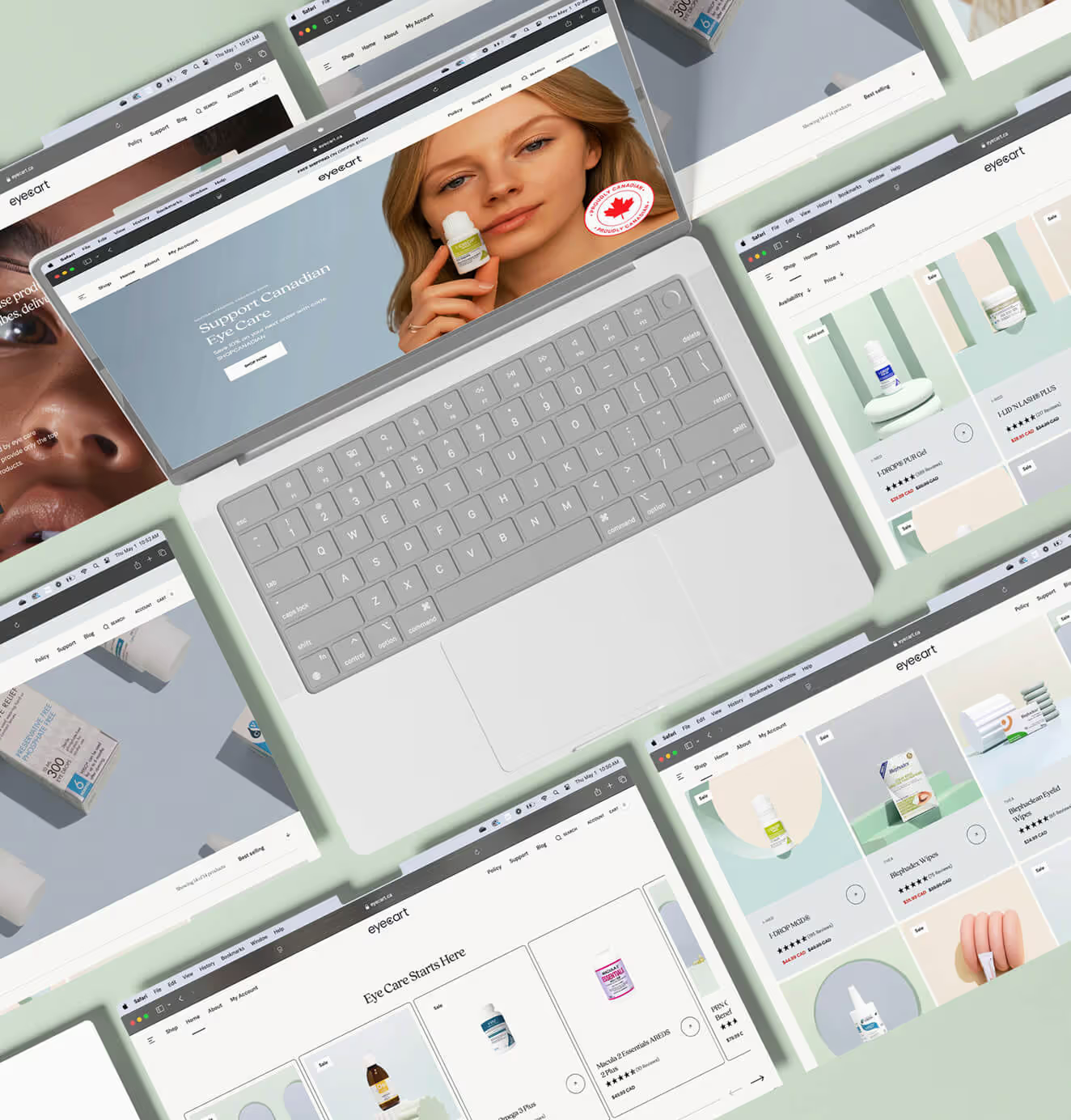
Multiple laptop screens display the Eyecart website, showcasing product pages and banners promoting eye care items.
Eyecart outdoor campaign posters featuring eye care products, skincare visuals, and modern branding.
Eyecart optical care campaign image with a smiling woman holding a branded magnifying lens over one eye.
Eyecart billboard campaign featuring Blephaclean eye care wipes and healthy eye care messaging.
Multiple laptop screens display the Eyecart website, showcasing product pages and banners promoting eye care items.
Eyecart outdoor campaign posters featuring eye care products, skincare visuals, and modern branding.
Lucky Girl Rosé
We turned a zero-carb rosé into a lifestyle brand that makes every moment worth celebrating.

+200%
Increase in conversion rate

+688%
Increase in attributed revenue

READ MORE
A bottle of Lucky Girl rosé wine nestled among pink and white flowers in a rustic outdoor setting.
Lucky Girl rosé picnic setup with wine bottle, fruit, sunglasses, and The Lucky Club booklet.
Lucky Girl rosé campaign visual with a wine glass, gold tray, red nails, and Pour Yourself Some Luck text.
Lucky Girl rosé wine bottle with floral label design and soft pink lifestyle styling.
A bottle of Lucky Girl rosé wine nestled among pink and white flowers in a rustic outdoor setting.
Lucky Girl rosé picnic setup with wine bottle, fruit, sunglasses, and The Lucky Club booklet.
Lucky Girl rosé campaign visual with a wine glass, gold tray, red nails, and Pour Yourself Some Luck text.
Lucky Girl rosé wine bottle with floral label design and soft pink lifestyle styling.