What Are Brand Guidelines?
08/11/2025
Branding
Give your team a clear reference for how your brand looks, sounds, and is used. Learn what brand guidelines should include, with a practical checklist covering design, messaging, approved assets, and ongoing updates.

Brand guidelines are documented rules and examples for using a brand’s visual identity, messaging, and voice. They give employees, agencies, and partners a shared reference for creating branded materials, reviewing work, and making everyday communication decisions. Useful guidelines answer practical questions. A designer should know which logo to use on a dark background. A writer should understand how to adapt the brand’s tone when responding to a customer complaint. Both should know where to find approved assets and who can clarify a rule or approve an exception. Keeping that guidance usable also requires clear ownership, version dates, and a reliable place to access current files. These details help teams understand which instructions apply and what has changed. This overview explains what to include in brand guidelines, with a practical checklist and usage examples. It covers visual and verbal standards alongside the responsibilities and processes needed to maintain them.
.png)
A Guide to Brand Guidelines


Brand guidelines are practical standards for using your brand’s visual identity, messaging, and voice. They explain which elements are approved, how to apply them, and where people can find the resources they need.
Your brand strategy establishes the direction. Your identity provides the visual and verbal elements that express it. Brand guidelines turn those decisions into instructions people can use when creating and reviewing work.
What Is the Purpose of Brand Guidelines?
Brand guidelines give teams a shared reference for representing the business. They help people choose appropriate assets, communicate clearly, adapt materials for different formats, and resolve questions about brand usage.
Their usefulness depends on whether someone can follow them. Specific instructions, approved templates, and realistic examples make the guidance easier to apply.
Who Uses Brand Guidelines?
Anyone creating, approving, or distributing branded materials may need access:
- Designers and developers: Logo files, colour specifications, typography, imagery, and application rules.
- Writers and marketers: Key messages, voice, tone, terminology, and examples of approved copy.
- Sales and customer service teams: Presentation templates, product descriptions, and guidance for customer communication.
- Agencies, freelancers, and suppliers: Current assets, production requirements, and an approval contact.
- New employees: An introduction to how the brand should look, communicate, and be represented.
A small business can begin with a concise reference covering its most frequent needs. A larger organization may need additional guidance for product lines, regions, partners, or sub-brands.
Brand Guidelines, Visual Guides, and Brand Bibles
Terms such as brand guidelines, style guide, brand book, and brand bible often overlap. Define the scope of your resource clearly so people know what it contains.
This article provides a general overview and checklist. A visual guide concentrates on design specifications, while a brand bible may bring strategy, identity, messaging, and usage guidance together in a broader document.
For the process of assembling that document, see our guide to creating a brand bible.
Brand Consistency Across Channels
Brand consistency means maintaining recognizable identity elements and a coherent message as the brand appears in different contexts. The format, level of detail, and tone can change to suit the audience and situation.
Guidelines should identify both the elements that remain stable and the choices people can adapt.
For example:
- Logo application: Use an approved compact mark for a small profile image and the full wordmark where space allows.
- Written communication: Keep the brand’s plain-language voice while using an encouraging tone in a welcome message and a calm, direct tone when resolving a problem.
- Presentation design: Adapt the layout to the content while retaining the approved typography, colours, and information hierarchy.
These are illustrative applications. Your own guidelines should show examples drawn from the materials your team actually produces.
Consistent presentation can support recognition, but customer trust also depends on whether the business delivers the experience its communication promises.
Visual Brand Guidelines and Brand Communication Guidelines
Visual and communication guidance cover complementary parts of the brand. They can sit in one document or in connected resources, provided people can find the relevant instructions and current assets.
Visual Brand Guidelines
Visual brand specifications explain how the identity should appear across its intended applications. They typically cover:
- Approved logo versions, clear space, minimum sizes, and background treatments.
- Colour values and the roles of primary and supporting colours.
- Typography for headings, body copy, and other recurring uses.
- Photography, illustration, iconography, patterns, and graphic elements.
- Templates and examples for relevant digital and printed materials.
- Relationships between the master brand, product lines, and sub-brands.
Each rule should help someone make a decision. For example, show which logo version to use on a dark background and provide access to the corresponding file.
Brand Communication Guidelines
Communication guidelines explain what the brand says and how it says it. They typically include:
- A concise summary of the audience and positioning.
- Core messages and supporting evidence.
- Brand voice and tone guidance.
- Preferred terminology, spelling, naming, and formatting.
- Examples for common situations, including customer questions and service problems.
Explain how tone changes with context. A playful brand may still need straightforward language when communicating a delay or answering a serious concern.
Ownership, Versions, and Asset Access
Include the practical details people need to use and maintain the guidance:
- Named owner: Who answers questions, coordinates updates, and approves exceptions.
- Version information: The current edition, update date, and a short record of changes.
- Asset access: A maintained location for approved logos, templates, images, and other resources.
- Approval process: Which materials need review and who makes the decision.
- Archived materials: Clear separation between current resources and superseded versions.
Make these details easy to find, including for external partners. Review recurring questions to identify instructions or examples that need clarification.
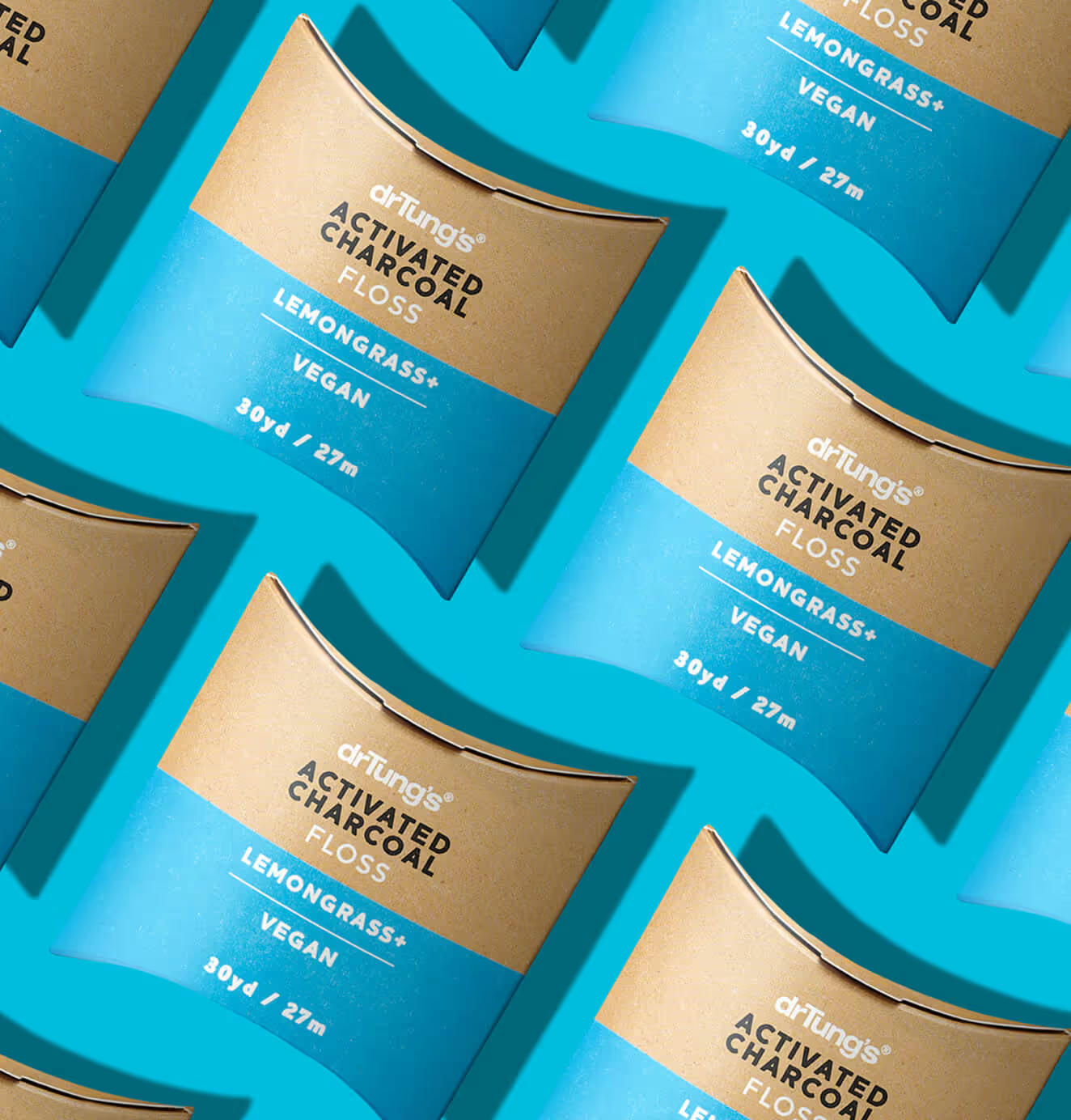
Brand Guidelines in Practice: Forkin’ Good
Our work for Forkin’ Good, a Vancouver Island food producer formerly known as Arbutus Foods, connected brand positioning, naming, identity, and packaging across an expanding product portfolio.
The identity system includes:
- Shared naming logic: Product lines and individual products sit within a common brand architecture.
- Defined typography roles: An expressive display typeface handles headlines and product names, while a neutral sans serif supports longer information.
- A coordinated colour system: Green anchors the master brand, with other colours distinguishing product lines and varieties.
- Format-specific packaging: Dips and Meal Makers use different layouts while retaining shared identity elements.
The project also included a style guide bringing the verbal and visual elements together for future use by partners and designers.
For teams developing guidelines, this illustrates a useful approach: document what stays consistent across the brand, define what can vary, and show those decisions in actual applications.
Free Brand Health Audit
Make sure your brand is built to sell
Search has changed. Your customers aren't just Googling anymore. They're asking ChatGPT, Perplexity, Gemini and other AI platforms what to buy, who to trust and which brands they should consider.
If your brand isn't showing up clearly in those answers, you're already losing opportunities. Our free Brand Health Audit shows you where your brand stands across traditional search, AI search and brand positioning.
Sample brand audit
Live preview
Traditional search
72
AI search (GEO)
34
Brand positioning
58
Brand Identity and Guidelines


Brand identity provides the visual and verbal elements that represent your business. Brand guidelines document how to use those elements, giving employees, agencies, and partners a shared reference for creating branded materials.
Effective guidelines connect strategic decisions to everyday tasks: writing a product description, designing packaging, preparing a presentation, or responding to a customer. They combine clear instructions with approved assets and practical examples.
Start With Clear Brand Positioning
Your brand positioning establishes who your brand serves, the value it offers, and why that value matters compared with available alternatives.
Before documenting usage rules, clarify these questions:
- Audience: Who are you trying to reach, and what matters to them?
- Category: How should customers understand your product or service?
- Difference: What relevant benefit distinguishes your offer?
- Evidence: What features, capabilities, or verified results support that benefit?
- Commitment: What can customers reasonably expect from your business?
Use customer interviews, reviews, competitor research, and feedback from sales and support teams to inform these answers. Positioning maps and SWOT analysis can help organize findings, but the research should lead to decisions your team can apply.
For example, a service positioned around clear, accessible advice should reflect that commitment in its language, information hierarchy, and customer communications.
What Should Be Ready Before You Create Brand Guidelines?
Start with approved strategic decisions and the identity elements your team needs to use. These typically include:
- Brand foundation: Your audience, positioning, purpose, values, and core messages.
- Visual identity: Approved logos, colours, typography, and supporting graphics or imagery.
- Verbal identity: Voice characteristics, tone guidance, preferred terminology, and evidence for customer-facing claims.
- Priority applications: The formats people produce most often, such as website pages, packaging, presentations, or social posts.
You can document approved elements while other parts of the identity are still being developed. Clearly distinguish draft material from approved guidance and update the document as decisions become final.
Visual Brand Guidelines: Turn Design Choices Into Instructions
Visual brand guidelines explain which design choices apply in different situations. Pair each rule with an example and access to the relevant asset.
Useful instructions include:
- Logo applications: Show approved versions on light, dark, and photographic backgrounds, alongside minimum sizes and clear space.
- Colour applications: Specify colour values, their intended roles, and approved foreground and background combinations.
- Typography: Identify fonts, heading levels, body styles, and appropriate fallback fonts.
- Imagery and graphics: Explain how to select, crop, and use photography, illustrations, icons, or patterns.
- Channel examples: Demonstrate how the identity works in the formats your team actually produces.
For digital colour combinations, follow the WCAG text-contrast requirements. At Level AA, ordinary text generally needs a contrast ratio of at least 4.5:1; large text needs 3:1. Large text is at least 18-point regular or 14-point bold. Text within logos and logotypes is exempt from this specific requirement, but that exemption does not extend to ordinary headings, body copy, or button text using brand colours.
Document tested colour pairings and specify where each can be used. This gives teams practical choices when creating new materials.
Brand Communication Guidelines: Turn Strategy Into Usable Language
Brand communication guidelines explain what your brand says, how it sounds, and how its tone adapts to different situations.
Connect important messages to audience needs and supporting evidence. Then show how writers should express those messages in product pages, emails, advertisements, presentations, and support replies.
Include practical direction on:
- Messaging priorities: Which benefits to explain first for each audience.
- Claims and proof: Which statements are approved and where their supporting evidence is recorded.
- Voice and tone: How the brand’s character carries through different situations, including enquiries, announcements, and complaints.
- Writing conventions: Preferred terminology, product names, spelling, capitalization, and words to avoid.
- Copy examples: Short demonstrations of appropriate and inappropriate wording.
Our guide to brand voice guidelines explains how to translate personality traits into writing instructions.
Illustrative example: a clear, helpful service brand
- Principle: Explain the next step in concrete language.
- Do: “Send us your project brief, and we’ll explain the next steps.”
- Don’t: “Let’s unlock limitless possibilities.”
- Application: Use direct instructions in enquiry forms, onboarding emails, and customer support.
Brand Communication in Practice: PepsiCo’s Data Science & Advanced Analytics Team
For PepsiCo’s Data Science & Advanced Analytics (DSAA) team, The Branded Agency developed messaging, a communication strategy, and an identity system designed to make the department more approachable to colleagues and potential recruits.
We organized the messaging around four pillars: Supportive, Genuine, Expressive, and Purposeful. These informed how the team explained its work and presented the value of data across internal communications.
The work connected strategic direction to practical applications:
- Voice and messaging: Approachable, encouraging language that connected technical capabilities to decisions colleagues needed to make.
- Communication resources: Onboarding materials, presentation templates, and storytelling frameworks that helped explain complex information.
- Visual and digital applications: A coordinated identity across presentations, emails, dashboards, and the DSAA app.
This example shows how communication guidance can support an internal department as well as a customer-facing brand. For your own guidelines, connect each principle to something the team produces, such as a presentation introduction, an onboarding message, or an explanation of a technical feature.
Keep those examples and approved assets in a shared location. Assign an owner, display the current version date, and record changes so everyone knows which guidance to follow.
Want to learn more about brand platforms, Brand Strategy and Brand Identity? Keep reading!
If you need help with your companies brand strategy and identity, contact us for a free custom quote.
Brand Identity System

A brand identity system brings your logo, colours, typography, imagery, and verbal style into one coordinated set of tools. These elements should work together across the materials your business produces, from packaging and presentations to websites and customer communications.
Your brand guidelines should explain how to select, combine, and apply those elements, with examples that make the instructions easy to follow.
From Creative Concept to Approved Brand Assets
During brand design and development, creative concepts help explore possible directions for your identity. Moodboards and sample applications can show how typography, colours, imagery, and logo styles might work together.
Once a direction is approved, develop the assets and test them in relevant formats. A concept that works on a presentation cover also needs to function in the smaller or more demanding spaces where your brand appears.
Record approved decisions as the system develops. Each guideline should help someone choose the right asset or make a consistent design decision.
Brand Identity System Checklist
Use the following checklist to identify what your guidelines need to cover. Include elements your team uses and expand the document as new applications become necessary.
1. Logo Usage Guidelines
Logo guidelines explain which version to use, where it belongs, and how to preserve its readability.
Include:
- Approved versions: The primary logo, alternate arrangements, monochrome versions, and any approved standalone symbol.
- Clear space and minimum size: Requirements for keeping the logo readable in digital and printed materials.
- Background treatment: Examples on light, dark, and photographic backgrounds.
- Usage restrictions: Examples of stretching, recolouring, cropping, or adding effects that would alter the approved design.
- Asset access: Links to current files, labelled by their intended use.
Show the correct choice in context. For example, demonstrate which approved logo version fits a narrow website header or a small social profile image.
2. Brand Colours
Define your palette by the role each colour plays. Your team should understand which colours identify the brand, which support layouts, and which distinguish products or categories.
Document:
- Primary, secondary, and neutral colours, where applicable.
- HEX and RGB values for digital use.
- CMYK or spot-colour references for relevant print applications.
- Approved foreground and background combinations.
- Restrictions on combinations that make information difficult to read.
For digital text, identify colour pairings that meet the WCAG text-contrast requirements at their intended text size. The exemption for text within logos does not extend to ordinary headings, body copy, or button labels using brand colours.
Set the size of your palette according to the applications it needs to support.
3. Fonts and Typography
Typography guidelines should explain how to organize information clearly and maintain a recognizable style.
Specify:
- Approved typefaces, weights, and styles.
- Roles for headings, body text, captions, and buttons.
- Size, spacing, and hierarchy examples for common formats.
- Fallback fonts for environments where the preferred typeface is unavailable.
- Where to obtain approved fonts and check usage permissions.
Choose the number of typefaces around your communication needs. A simple identity may use one family with several weights; a more complex system may require additional families or language support.
4. Photography and Illustration
Give people a clear basis for selecting or creating imagery.
Cover subject matter, composition, lighting, backgrounds, cropping, and editing style. Include examples that show what fits the brand and what does not.
For recurring photoshoots, add production guidance that helps teams reproduce the intended look. Depending on the work, this might include product angles, backgrounds, props, or lighting setups.
Identify approved image sources and record relevant permissions, usage restrictions, or expiry dates alongside the files.
5. Icons, Shapes, and Patterns
Supporting graphics need consistent treatment across applications.
Explain:
- Whether icons use outlines, solid shapes, or another approved style.
- How stroke weight, sizing, spacing, and colour should be handled.
- Where brand shapes and patterns can appear.
- How to combine decorative elements with text and photography.
- Which modifications require approval.
Show these elements in actual layouts so users can judge scale, placement, and visual balance.
6. Voice and Messaging References
Connect the visual system to your communication guidance. Templates should use approved product names, messages, and writing conventions.
For example, a presentation template can include a sample introduction, while a product-page template can show how to organize benefits and supporting evidence.
Keep these examples connected to the current communication guidelines so teams can check the wording and its intended use.
7. Brand Applications and Templates
Application examples demonstrate how the system works as a whole. Prioritize materials your team regularly creates.
Illustrative applications include:
- Website page: Heading hierarchy, approved colour combinations, imagery, and button treatment.
- Sales presentation: Cover, content, data, and closing slides.
- Social post: Adaptable layouts for announcements, educational content, and photography.
- Packaging: Product-name hierarchy, category distinctions, and logo placement.
- Customer email: Approved wording, typography, and a clear next step.
Provide editable templates where useful. Label what users can change and which elements should remain fixed.
Make Approved Assets Easy to Find
Each asset or template should have a clear name, intended use, current version, and download location. Assign someone to maintain the files and handle questions or exceptions.
When an asset changes, update its guideline and related templates together. Record the change and separate retired files from the current collection so teams can confidently select the approved version.
Brand Guidelines Template and Identity System

A brand guidelines template gives your team a structure for documenting approved design and communication decisions. It should help someone find the right asset, understand a rule, and apply it to the work in front of them.
The outline below brings the identity checklist into one organized reference. Adapt it to your business and link to existing approved resources where appropriate.
A Copyable Brand Guidelines Template
1. Document Details
Complete: Brand name, document owner, current version, approval date, and contact for questions.
Prompt: Who maintains this guide, and how will readers know they have the current version?
2. Brand Foundation
Complete: A brief summary of your audience, positioning, purpose, and core messages, with links to the approved strategy.
Prompt: What should someone understand about the brand before creating materials?
3. Visual Standards
Complete: Approved logo applications, colour combinations, typography, imagery, and supporting graphics.
Prompt: Which choices are fixed, where is adaptation allowed, and what examples demonstrate correct use?
4. Voice and Messaging
Complete: Voice characteristics, tone guidance, messaging priorities, terminology, and approved claims with supporting evidence.
Prompt: How should the brand communicate in common situations, and which wording should writers avoid?
5. Applications and Templates
Complete: Examples and editable templates for the formats your team produces most often.
Prompt: What can someone change in each template, and which elements should remain consistent?
6. Asset Access and Approvals
Complete: Links to current assets, relevant usage permissions, and the process for requesting new materials or exceptions.
Prompt: Where can employees and external partners find approved files, and who answers questions about their use?
7. Updates and Version History
Complete: A change log, review responsibility, and instructions for replacing outdated assets and templates.
Prompt: What changed, when did it take effect, and which teams need to act on the update?
For a broader walkthrough of assembling strategy, identity, and usage guidance, see our guide to creating a brand bible.
Who Should Create Brand Guidelines?
Brand guidelines usually require input from people responsible for strategy, design, and communication. One person should coordinate the document, with specialists contributing to the areas they understand.
A designer or creative director can document visual standards. A strategist or writer can develop messaging and voice guidance. People who produce presentations, campaigns, packaging, or customer communications can identify the examples they need.
The work can be handled by an internal team, an experienced freelancer, a branding agency, or a combination of these resources. Evaluate potential partners by reviewing their guideline documents, application examples, and handover process. Ask how they handle missing assets, revisions, and future updates.
How Do You Make Brand Guidelines Useful for Your Team?
Test the guide with a real task before rolling it out.
Ask someone who was not involved in creating it to prepare a presentation slide, draft an email, or select a logo for a specific background. Check whether they can find the right files and follow the instructions without repeated clarification.
Use their questions to improve the document. An unclear rule may need a visual example; a difficult download process may need better file organization.
During onboarding, walk new employees through the sections relevant to their role. Show them where the guide lives, how to use the templates, and who can approve an exception.
What Affects the Cost and Timeline?
The scope depends on what already exists and what needs to be developed.
Documenting an approved identity involves different work from creating positioning, messaging, logos, and templates from the beginning. Other factors include the number of brands, product lines, languages, applications, and reviewers involved.
Before commissioning the work, agree on:
- The assets and strategic decisions already approved.
- The new materials and examples required.
- The document format and editable files to be delivered.
- Review rounds, approval responsibilities, and handover support.
Examples of Brand Guidelines in Practice
The following case studies show how coordinated brand systems can support different business needs:
- Forkin’ Good brand identity and packaging: Our work brought naming, visual identity, and packaging together across product lines, supported by a style guide covering verbal and visual elements.
- PepsiCo’s Data Science & Advanced Analytics team: Our work connected messaging and communication strategy with an identity toolkit applied across presentations, internal communications, and the DSAA app.
If you need help organizing an existing identity or developing the missing elements, discuss your brand guidelines project with The Branded Agency.
See more below.
Keoch
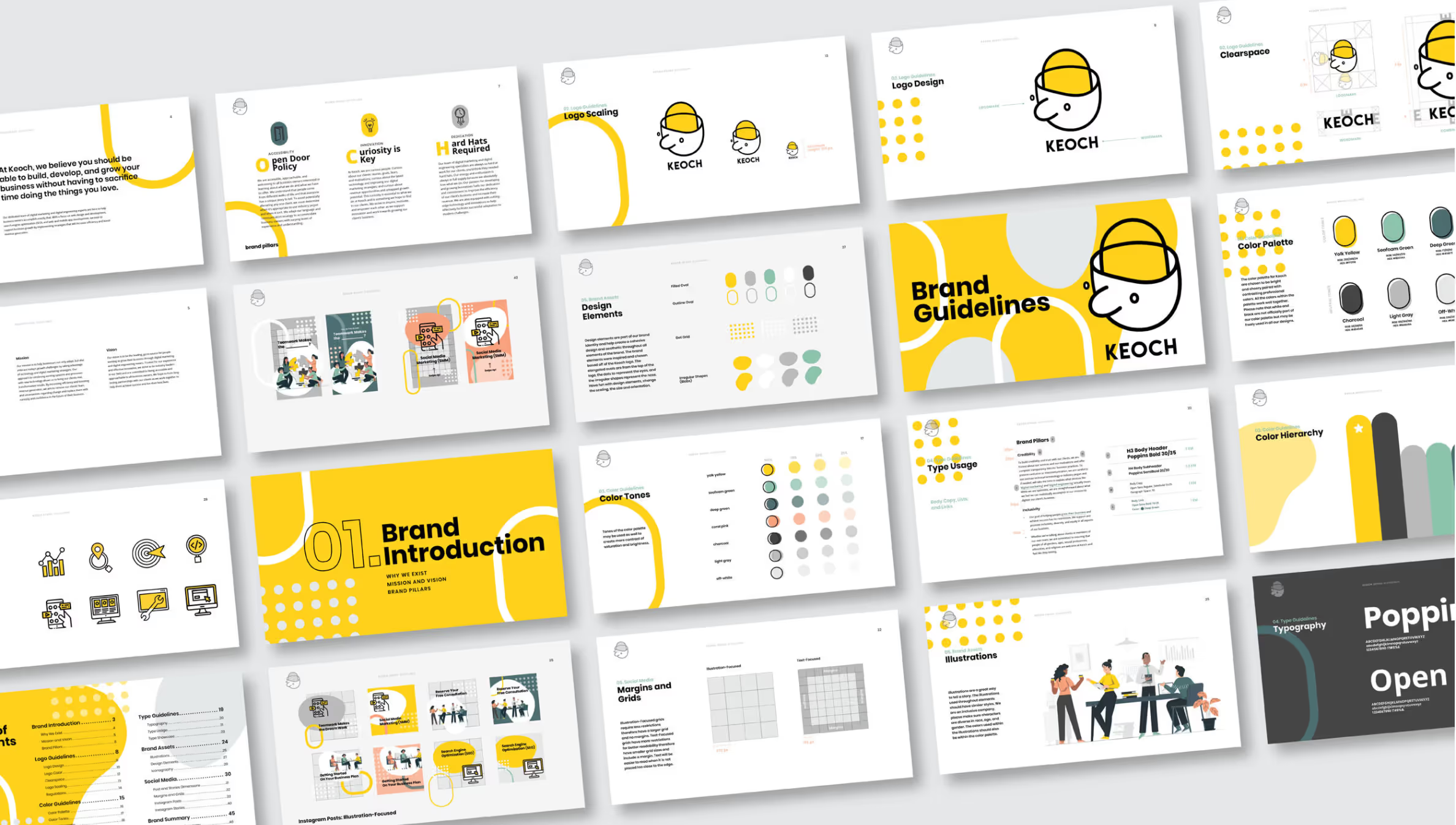
The image above shows the brand identity and guidelines we created for Keoch.
The guidelines cover colour palettes, gradients and tonal variations, typography and font pairings, illustration, iconography, and social media applications.
Practical instructions and examples help Keoch’s team apply these elements consistently across all communication channels.

Pianu Brand Guidelines
The image above shows the brand identity and guidelines we created for Pianu.
Pianu engaged The Branded Agency for a broader repositioning and rebrand. The work covered research and analysis, marketing and product strategy, brand positioning, visual identity, communication strategy, and the redesign of its website and mobile app.
The creative direction connected piano education with play. Black-and-white elements inspired by piano keys, purple accents, and the message “Play With Pianu” provided a shared direction for the brand’s visual and verbal identity.
For businesses developing their own guidelines, the useful lesson is to show how strategic decisions translate into design and communication choices. Include examples that help teams understand how those choices work together.
Dropbox Brand Guidelines
The official Dropbox brand guidelines provide a public example of how a brand can document its visual identity and communication style in one accessible resource.
The guide covers its design framework, voice and tone, logo, typography, iconography, colour, imagery, and motion. Its sections explain the elements and demonstrate how they are used.
Several features make it useful to study:
- Logo applications: Dropbox explains its full logo and its “Tab” treatment, showing how these expressions influence layout.
- Colour organization: The palette is divided into core colours, accents, and greys, with examples connecting colour choices to imagery.
- Typography: The guide introduces the custom DB Sharp Grotesk typeface and demonstrates how variable headline typography supports different compositions.
- Voice guidance: Dropbox describes its tone through four qualities—simple, helpful, human, and magic—and connects them to writing advice and examples.
Use this approach when organizing your own guidelines: explain the principle, show the approved treatment, and demonstrate its application. That structure helps people move from understanding the brand to producing work.
Brand Guidelines FAQs
Does a small business need brand guidelines?
A small business can benefit from a concise guide that documents its logo, colours, fonts, voice, and frequently used templates. Start with the decisions your team and external partners need most often, then expand the guidance as your communication needs grow.
What should be included in brand guidelines?
Brand guidelines should cover the brand’s strategic context, visual standards, messaging, voice, tone, and practical application examples. They should also identify where approved assets are stored, who maintains the guidance, how exceptions are approved, and which version is current.
What is the difference between visual brand guidelines and full brand guidelines?
Visual brand guidelines focus on design elements such as logos, colours, typography, imagery, and layouts. A broader brand guide also covers messaging, voice, tone, and the responsibilities involved in applying and maintaining the brand. State the document’s scope clearly because naming conventions vary.
Do you need separate social media guidelines?
Include social media guidance if your business publishes or responds to people on social platforms. Cover visual templates, tone, audience responses, approvals, and situations that require escalation. This guidance can sit within your main brand document or in a connected resource for the social team.
How often should brand guidelines be updated?
Update the relevant sections when approved decisions change, such as a new logo, revised positioning, updated messaging, or new product architecture. Set a review schedule and assign an owner to check for outdated instructions. Record changes and notify the people who need to apply them.
Who should use and maintain brand guidelines?
Anyone creating materials or communicating on behalf of the business should use the relevant guidance. This includes designers, writers, marketers, sales teams, customer support, agencies, and other partners. Assign a named owner to coordinate updates, with specialists responsible for reviewing their areas.
Where should brand guidelines and assets be stored?
Keep the current guidelines in a shared location that employees and approved partners can access. Link directly to approved assets and editable templates. Separate retired files from current materials, and label downloadable copies with a version or date so readers can check whether they are current.
Create Brand Guidelines Your Team Can Use
The Branded Agency helps businesses connect brand strategy, visual identity, and communication through practical guidelines.
Whether you need to document an established identity or develop missing elements, we can help define the scope, organize the standards, and create examples for the materials your team produces.
Explore our branding services or discuss your brand guidelines project with our team.

Sloane Avery
As entrepreneurs, they’ve built and scaled their own ventures from zero to millions. They’ve been in the trenches, navigating the chaos of high-growth phases, making the hard calls, and learning firsthand what actually moves the needle. That’s what makes us different—we don’t just “consult,” we know what it takes because we’ve done it ourselves.
Want to learn more about brand platform?

If you need help with your companies brand strategy and identity, contact us for a free custom quote.
We do great work. And get great results.
+2.3xIncrease in revenue YoY
+126%Increase in repurchase rate YoY


+93%Revenue growth in first 90 days
+144% Increase in attributed revenue


+91%Increase in conversion rate
+46%Increase in AOV


+200%Increase in conversion rate
+688%Increase in attributed revenue