Branding Building: A Practical Guide to Creating a Strong, Enduring Brand
07/29/2026
Branding
Discover how a strategic brand building process helps your business stand out, strengthen customer loyalty, and create a competitive advantage that drives sustainable growth.

Brand building is the ongoing process of shaping what customers recognize, trust, and choose over time. It brings together brand strategy, positioning, visual identity, messaging, marketing, and customer experience to create a clear and consistent perception in the market. When managed effectively, brand building strengthens awareness, increases loyalty, supports premium pricing, and creates lasting brand equity that competitors cannot easily replicate.
.png)


How Brand Building Creates Long-Term Business Value



Key Takeaways
- Brand building is a long-term investment in a company's brand, combining brand strategy, brand identity, and ongoing brand management.
- A clear brand positioning, distinct brand values, and a good story form the core of any effective brand building strategy.
- Brand consistency across visual identity, verbal identity, marketing campaigns, and customer experience creates brand awareness, trust, and brand equity.
- Monitor performance by gathering feedback and tracking analytics, including brand engagement, branded search, referrals, reviews, and sentiment.
- Review your brand strategy every 12–18 months so your brand stays relevant as customers, markets, and culture change.
Branding building is not just designing a logo or picking a color scheme. It is the brand building process of shaping what people remember, trust, and choose when they compare your business against competitors.
What Is Brand Building?
Brand building is the deliberate, ongoing process of designing and managing what your brand stands for in people’s minds. A brand exists as a perception; branding activities shape that perception; and building a brand means managing that perception over time.
A brand consists of your reputation, offer, visual identity, verbal identity, brand values, brand story, and every customer interaction. Brand identity includes visual and vocal components like logos and colors. Brand identity includes visual elements like logos and colors, but it also includes tone, service standards, and the feeling customers associate with you.
Nike is not just a swoosh and a catchy tagline. Nike’s campaigns often focus on storytelling to inspire. Apple works in the same way: its brand stands for premium simplicity, design, and ecosystem value. A strong brand aligns three areas: brand strategy, brand identity, and brand marketing or management, and data consistently shows that effective branding drives engagement, loyalty, and long-term growth.
Free Brand Health Audit
Make sure your brand is built to sell
Search has changed. Your customers aren't just Googling anymore. They're asking ChatGPT, Perplexity, Gemini and other AI platforms what to buy, who to trust and which brands they should consider.
If your brand isn't showing up clearly in those answers, you're already losing opportunities. Our free Brand Health Audit shows you where your brand stands across traditional search, AI search and brand positioning.

Sample brand audit
Live preview
Traditional search
72
AI search (GEO)
34
Brand positioning
58
Why Brand Building Matters for Long-Term Growth


Why Brand Building Matters for Long-Term Growth
Brand building is a strategic asset, not a design exercise. Over time, an impactful brand can reduce friction in purchase decisions, support premium pricing, and help customers identify your business against competitors.
Strong brand equity allows companies like Apple, IKEA, and coca cola to maintain loyalty even when cheaper options exist. Brand equity reflects the value customers assign based on perceptions. Brand equity is the value customers assign to a business, and brand equity can be positive or negative based on customer perception.
A strong brand can ease customer acquisition in crowded markets. A strong brand can ease customer acquisition in crowded markets because brand recognition makes selection easier. Consistent brand identity improves brand recognition by 80%, while companies with strong brand consistency can increase revenue by 20%.
Key benefits include:
- Recognition: brand awareness helps potential customers remember you.
- Trust: 57% of customers spend more with brands they trust.
- Loyalty: 57% of customers spend more with brands they feel loyal to.
- Pricing power: increased brand equity leads to real revenue growth for companies.
Brand equity impacts customer acquisition, retention, and conversion rates. It also helps build customer loyalty among existing customers and turn loyal customers into advocates.
There are internal benefits too. Clear brand values guide a company's decisions and actions, helping teams choose what is on brand and what is not. 69% of employees want more ownership in brand development, which means brand is not only a marketing function; it also helps attract top talent and align product, sales, hiring, and support.
The Foundations of a Brand Building Strategy
Every strong brand building strategy starts with clarity: who you serve, what you offer, why it matters, and where you can win. A successful brand strategy defines brand purpose, target audience, brand positioning, unique value proposition, and core values before creative assets are made.
Research competitors to understand strengths and weaknesses. Review competitor brands to discover their strengths and weaknesses, then decide what gap your market position can own. Brand differentiation offers unique value that sets a brand apart, and a structured brand positioning framework helps you articulate that value clearly in competitive markets.
Align brand goals with business objectives. For example, a B2C skincare company entering a premium category in 2026 may need a new brand strategy around quality and trust. A B2B software business creating a new category may need clearer brand messaging, proof, and education.
A B2C brand may focus on emotion, lifestyle, and social media. A B2B brand may focus on time savings, risk reduction, proof, and expertise. In both cases, clearly articulate your brand's purpose and unique selling point.
Clarifying Brand Purpose, Vision, and Values
Your purpose explains why the brand exists beyond profit. Your brand vision describes where the business wants to be in 5–10 years. Brand values explain how the company behaves.
Patagonia’s mission statement focuses on saving the planet, which guides product, activism, and supply chain choices. IKEA’s vision of better everyday life influences affordability, design, and accessibility. These are not just words; brand values guide a company's decisions and actions.
Use this quick exercise:
- Write one sentence for your purpose.
- Write one sentence for your brand vision.
- List 3–5 non-generic brand values, such as “radical transparency,” “practical creativity,” or “environmental stewardship.”
- Check whether those values would change hiring, product design, and customer experience standards.
Brand identity should reflect the company's core values. Clarifying foundational brand pillars such as purpose, personality, positioning, perception, and promotion makes it easier to define core values, understand your target audience, and maintain consistency across touchpoints.
Defining Your Target Audience and Market
Define your target audience to tailor your brand message. Without a clear target audience, your brand messaging becomes vague, your marketing activities get scattered, and your campaigns reach people who were never likely to buy.
Identify demographics and psychographics of your ideal customers. Create 2–3 personas that include:
- Demographics: age, location, role, income, company size.
- Psychographics: motivations, fears, values, buying objections.
- Goals: what they want to achieve.
- Frustrations: what blocks them now.
- Channels: search, email marketing, social media, communities, events.
- Purchase triggers: budget approval, life event, product failure, new regulation.
Use interviews, CRM data, analytics, social listening, reviews, surveys, and focus groups instead of assumptions. The clearer the target demographic, the easier it is to create brand positioning, a brand story, and an aligned brand communication strategy that feels like it was written by a real person.
Crafting Distinctive Brand Positioning and Brand Story
Brand positioning defines the space your brand owns in the market. Your brand story explains why that space matters emotionally.
Use this formula:
For [audience], [brand] is the [category] that [unique benefit] because [reason to believe].
For example: “For busy finance teams, Acme is the reporting platform that cuts month-end close time because it automates reconciliation across systems.”
Strong brand positioning is specific, defensible, and emotionally resonant. Avoid generic claims like “best,” “innovative,” or “the perfect solution” unless you can prove them. A brand promise assures customers what to expect from products, and that promise needs evidence, all of which sit inside a cohesive brand strategy framework.
Stories connect people on a personal level. 64% of consumers want brands to connect with them. Storytelling can explain why your brand exists, why customers should care, and what transformation you help create. Coca-Cola's 'Share a Coke' campaign used storytelling effectively by turning a product into a personal connection.
Developing a Memorable Brand Story
A useful brand story puts the customer at the center:
- Hero: the customer.
- Problem: the pain they need to solve.
- Guide: your brand.
- Plan: your product, service, or process.
- Transformation: the better outcome.
- Proof: results, reviews, or lived customer experience.
Develop a narrative that connects with your audience emotionally. Create campaigns and advertisements that convey your brand story, not just product features.
Mini template:
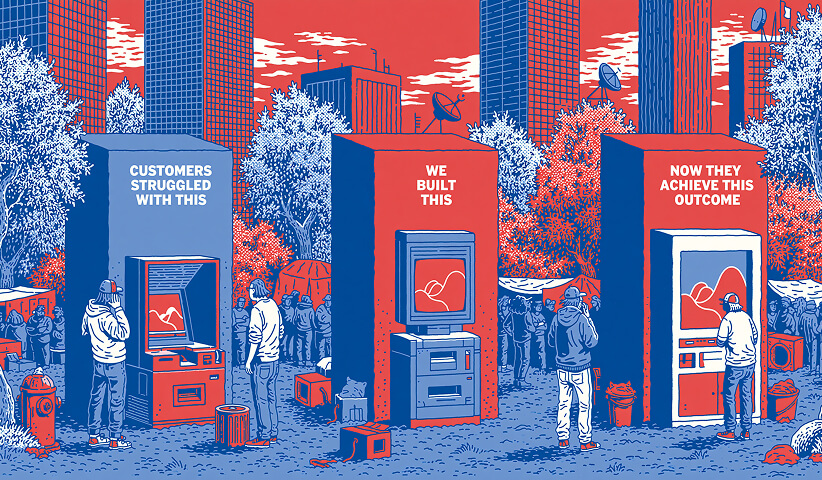
“Our customers used to struggle with [problem]. We built [solution] because [belief]. Now they can [outcome] with [proof].”
Effective brand stories show values in action. A sustainability brand must show sourcing and packaging proof. A craftsmanship brand must show process. A successful brand does not just say what it believes; it demonstrates it.
Want to learn more about brand platforms, Brand Strategy and Brand Identity? Keep reading!
If you need help with your companies brand strategy and identity, contact us for a free custom quote.
Designing a Cohesive Brand Identity (Look, Feel, and Voice)

Brand identity is the tangible expression of strategy. Building a strong brand identity requires a strategic and customer-centric approach, not a mood board first and research later.
Create the tangible elements of your brand, such as a name and logo. Design brand assets including logo and color palette as part of broader brand design and development. The different components of brand identity include logo, color palette, typography, imagery, iconography, brand voice, and experience cues.
A strong brand identity helps differentiate from competitors by going far beyond a logo; understanding the difference between a logo and full brand identity makes it easier to invest in the right elements. Developing a brand identity takes time and consistent effort, because recognition grows through repeated exposure across different channels.
Visual Identity: Logo, Color, and Typography
A good logo should be simple, scalable, recognizable in monochrome, and suited to your category while still feeling distinct. If a branding project includes a new logo, test it at small sizes, on mobile, in black and white, and beside competitors, and capture those decisions inside clear visual brand guidelines.
Choose a color palette that reflects brand personality. Bold contrast can signal disruption; muted tones can suggest premium quality; warm colors can feel accessible. Netflix uses red and dark backgrounds to signal entertainment and energy, while IKEA’s blue and yellow support democratic design and familiarity.
Designer checklist:
- Keep the logo clear at small sizes.
- Use 1–2 typefaces for consistency.
- Prioritize mobile readability.
- Treat color scheme as a memory asset.
- Use a visual metaphor only when it supports positioning.
Verbal Identity: Brand Voice and Messaging
Brand voice is how your brand sounds across website copy, sales scripts, email marketing, support replies, and content creation. Decide how your brand communicates through brand voice before scaling marketing, and document it using structured brand voice guidelines.
Pick 3–5 voice traits, such as:
- Confident, but not arrogant.
- Warm, but not casual.
- Data-backed, but not cold.
- Direct, but not harsh.
Then build a simple messaging framework:
- Core promise.
- Three proof points.
- Short elevator pitch.
- Phrases to repeat.
- Words to avoid.
A playful consumer brand may sound witty and bold. A cybersecurity company may sound precise, calm, and credible. Write a style guide to maintain a unified visual and verbal identity, including tone examples, naming rules, approved claims, and other elements that keep communication consistent.
From Strategy to Execution: Brand Management in Practice
Brand management is the ongoing discipline of protecting, measuring, and growing the brand across all touchpoints. Brand managers and marketing leads turn strategy into habits, assets, templates, and decisions.
Brand guidelines help achieve consistency across all marketing efforts, and a periodic brand audit shows whether those guidelines are still being applied effectively. A central brand hub should include your strategy summary, logo files, color palette, typography, voice rules, templates, photography style, sales decks, and examples of work that is on brand.
Brand experience encompasses customer engagement across multiple touchpoints. Brand experience should appear in sales calls, support scripts, onboarding, product UX, events, partnerships, packaging, and hiring ads. Launch a high-performing website and establish social media profiles, but make sure each touchpoint reflects the same promise and that you deliver on it consistently through support, quality, and customer experience, which is how a good brand earns trust over time.
Building Brand Awareness and Engagement
Brand awareness means people recognize or recall you. Brand engagement means they interact meaningfully: reading, saving, replying, attending, sharing, reviewing, or referring.
For 2024–2026, the most useful channels for building brand awareness include search, social media, PR, events, community, and content marketing. Choose the channels your customers actually use instead of trying to be everywhere.
Repeatable tactics include:
- Monthly thought leadership articles.
- Quarterly webinars or live sessions.
- Consistent email newsletters.
- Customer stories that show outcomes.
- Useful guides that support purchase decisions.
Measure brand engagement with time on page, social saves, social shares, replies, event attendance, community participation, and branded search volume. A 2024 B2B report noted that brand building became the top priority for B2B brands, ahead of demand generation, because buyers want confidence and trust from suppliers (Marketing Interactive).
Maintaining Brand Consistency Across Channels
Inconsistent logos, tones, claims, and offers confuse customers. Brand consistency leads to increased brand recognition and loyalty. Consistent branding can improve customer acquisition and retention.
Use templates for presentations, social posts, email signatures, ad creatives, landing pages, and proposals. Train new hires, agencies, and partners on the brand’s non-negotiables.
Run a quarterly brand audit, and make sure your long-term budgeting reflects what branding should cost for your stage and scope:
- Is the website still aligned with current positioning?
- Are marketing campaigns using approved claims?
- Do sales decks match the visual identity?
- Are support replies using the right tone?
- Are product pages promising what the product delivers?
A brand audit reveals how customers perceive your brand. It also shows whether your creative assets, messaging, and customer experience are drifting away from the strategy, and can highlight when partnering with an agency branding expert would help you execute more effectively.
Measuring Brand Equity and Evolving Your Brand Over Time
What gets measured gets managed. Brand building needs metrics beyond short-term campaign performance.
Brand equity is the extra value your name adds to a product or service. In a study of more than 6,500 consumer packaged goods brands, only about 20% commanded a revenue premium over private labels, showing how difficult true equity is to build (ResearchGate).
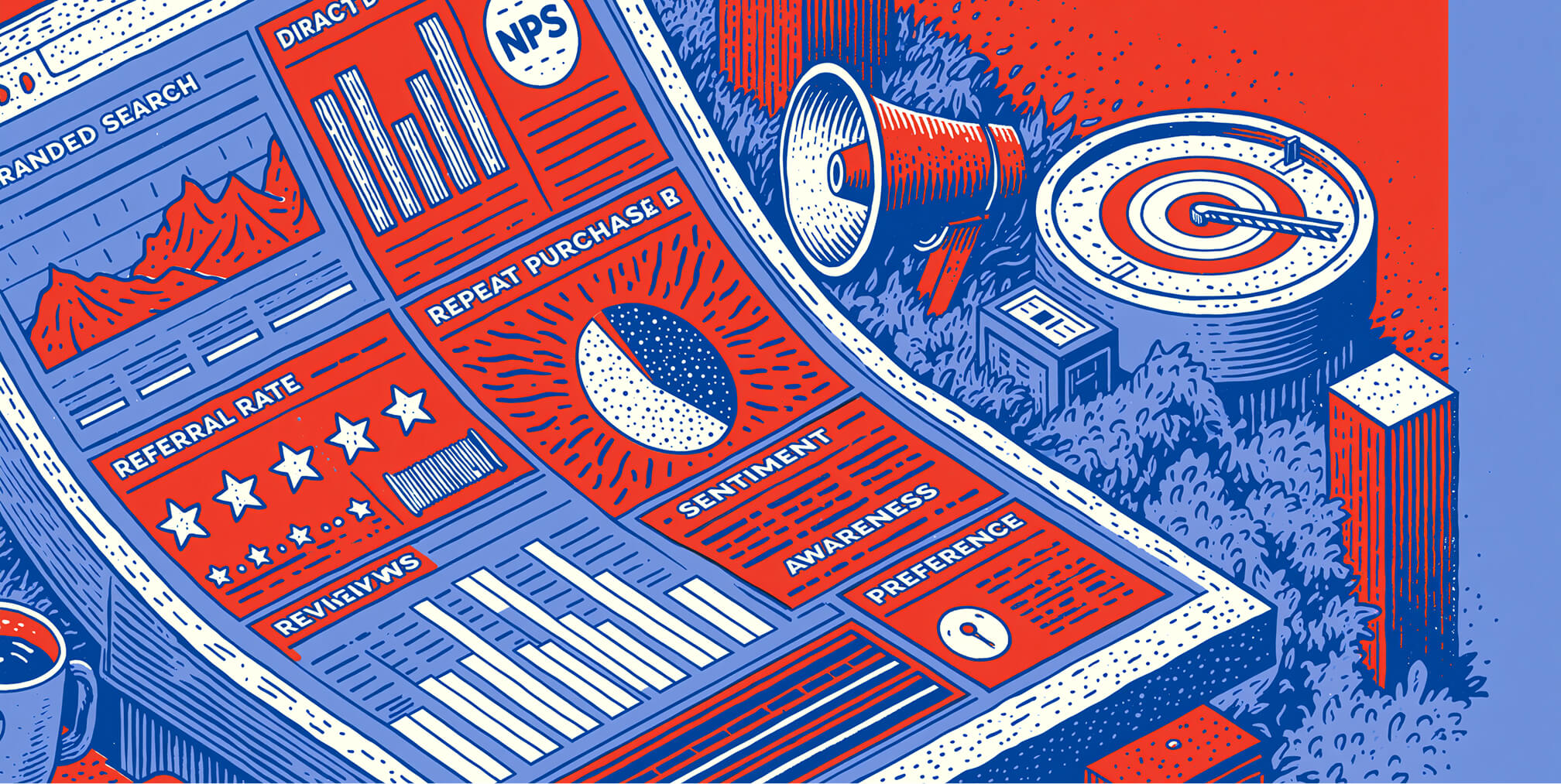
Track both numbers and perception:
- Branded search volume.
- Direct traffic.
- Net Promoter Score.
- Repeat purchase rate.
- Referral rate.
- Reviews and sentiment.
- Surveyed awareness and preference.
Review results quarterly and run deeper research annually. Markets change, products evolve, and new audiences appear. A successful brand building program keeps the core stable while refining positioning, story, and identity when needed.
Key Brand Metrics to Track
Start simple:
- Brand awareness: how many people recognize or recall you.
- Consideration: whether potential customers would include you in their shortlist.
- Preference: whether customers choose you over alternatives.
- Brand engagement: meaningful interactions across channels.
- Sentiment: whether perception is positive, neutral, or negative.
- Loyalty: repeat purchases, referrals, and advocacy.
Use analytics platforms, survey tools, social listening tools, customer interviews, and review monitoring. Small businesses can start with quarterly surveys, review tracking, and simple branded search reporting.
Compare your metrics over time. Competitor numbers are rarely fully visible, but your trend line will show whether successful brand building is happening.
FAQ: Common Questions About Brand Building
How long does effective brand building usually take?
Initial brand strategy and identity work often takes 4–12 weeks for a small business. Real brand awareness and meaningful brand equity usually take 12–24 months of consistent effort.
Timelines depend on budget, competition, category size, product quality, and how focused the brand building strategy is. Brands are never finished, so review and refine yours regularly.
What’s the difference between rebranding and brand refresh?
Rebranding is a major change in positioning, identity, name, category, or reputation strategy. It is useful after mergers, strategy shifts, major audience changes, or reputation problems.
A brand refresh is lighter. It may update visuals, tone, messaging, or templates while keeping core brand values and positioning intact. Refresh when the brand still works but feels dated; rebrand when the business has fundamentally changed.
Do small businesses and startups really need a formal brand strategy?
Yes. Even a one-page strategy can prevent wasted spend and unclear decisions. At minimum, define your audience, positioning, values, promise, and voice.
As the company grows, raises funding, or enters new markets, expand the strategy. A clear foundation helps teams move faster and stay aligned.
How much should a company invest in brand building?
Investment varies by stage and industry, but companies should set aside a consistent part of the marketing budget for long-term brand work.
Also budget non-monetary resources: leadership time, staff training, customer research, and internal alignment. Start with a realistic annual budget, then use brand metrics to justify more investment.
Can you build a strong brand without paid advertising?
Yes. You can build a powerful brand through organic content, PR, partnerships, community, referrals, and excellent customer experience.
Paid media can accelerate reach, but it cannot fix weak positioning, poor service, or inconsistent identity. Focus first on clarity and consistency, then use paid campaigns to amplify messages that already work.

Quincy Samycia
As entrepreneurs, they’ve built and scaled their own ventures from zero to millions. They’ve been in the trenches, navigating the chaos of high-growth phases, making the hard calls, and learning firsthand what actually moves the needle. That’s what makes us different—we don’t just “consult,” we know what it takes because we’ve done it ourselves.
Want to learn more about brand platform?
If you need help with your companies brand strategy and identity, contact us for a free custom quote.
We do great work. And get great results.
+2.3xIncrease in revenue YoY
+126%Increase in repurchase rate YoY



+93%Revenue growth in first 90 days
+144% Increase in attributed revenue




+91%Increase in conversion rate
+46%Increase in AOV



+200%Increase in conversion rate
+688%Increase in attributed revenue