Branding and Design Studio: Strategy, Identity & Execution
04/27/2026
Branding
Learn what to expect from a branding and design studio, from strategy and identity deliverables to budgets, timelines and choosing the right partner for your business.

A branding and design studio helps businesses define their positioning and translate it into messaging, visual identity and practical brand applications. Depending on the scope, deliverables may include a strategy framework, logo system, brand guidelines, packaging, website design and reusable templates. Choosing the right studio means looking beyond its portfolio. You need to understand how it approaches your business challenge, what you will receive and whether your team can confidently use the work after handover. This guide explains how to evaluate capabilities, compare proposals and set clear expectations for scope, budget and collaboration.
.png)


How Branding Studios Turn Ideas Into Usable Brand Systems



A brand system gives your team the direction, assets and guidance needed to communicate consistently as the business grows. It should work across the applications you actually need, from sales presentations and packaging to websites and customer communications.
When evaluating a studio, ask how its proposed work will support those applications. A polished logo presentation is one deliverable; editable templates, practical guidelines and clear ownership of the files make the identity usable after handover.
What This Guide Will Help You Evaluate
- Scope: Which strategy, identity and implementation services your business needs.
- Deliverables: What files, documentation and finished applications you should receive.
- Team: Who will lead the work and who will complete it.
- Commercial terms: How timelines, fees, revisions and additional requests are handled.
- Handover: Whether your team can confidently apply and maintain the brand.
What a Branding and Design Studio Actually Does
A branding and design studio connects business goals with how a company presents itself and communicates its value. The engagement may involve defining a new brand, refining an established identity or applying an existing system to new products and channels.
Capabilities vary. Some studios specialize in strategy and identity, while others also provide copywriting, packaging design, website design and development. Confirm which services are included, which are delivered by external partners and which require a separate engagement.
Who Should Be on the Project Team?
The team should match the scope. Common responsibilities include:
- Brand strategist: Leads research and defines the audience, positioning and messaging direction.
- Creative director: Translates the strategy into a creative direction and reviews work for consistency and quality.
- Brand designer: Develops the visual identity and its applications.
- Copywriter: Creates the verbal identity, key messages and any agreed content.
- UX/UI designer: Designs website or product experiences when digital work is included.
- Project manager or producer: Coordinates schedules, feedback, approvals and delivery.
- Technical specialists: Handle development or production requirements where these form part of the scope.
One person may cover several roles, particularly in a smaller studio. Ask who will be assigned to your project, how involved senior team members will be and who has final responsibility for quality.
What Deliverables Should You Expect?
The proposal should name each deliverable and explain its format, depth and intended use. Depending on your needs, these may include:
- Strategy: Research findings, audience priorities, positioning and a messaging framework.
- Visual identity: Logo variations, typography, colour specifications, imagery direction and supporting graphics.
- Brand guidelines: Instructions and examples showing how to apply the identity.
- Templates: Editable files for agreed uses, such as presentations, social posts or sales documents.
- Finished applications: Packaging artwork, website designs, signage or other specifically scoped materials.
- Handover: Organized source files, export formats, licensing information and team training where included.
Evaluate brand guidelines by how well they answer your team’s practical questions. Page count alone does not establish whether the guidance is sufficient.
Clarify the boundaries between design and production. Website designs do not automatically include development, and packaging concepts do not automatically include production-ready artwork for every product.
How Should Collaboration Work?
Agree on a primary contact, approval responsibilities, review stages and feedback deadlines before kickoff. The studio should explain how decisions will be recorded, how revisions are counted and what happens when the scope changes.
Tools such as Figma or a project-management platform can support collaboration, but the working agreement matters more than the software. Ask to see a sample project schedule and handover structure so you can assess how the engagement will work for your team.
Free Brand Health Audit
Make sure your brand is built to sell
Search has changed. Your customers aren't just Googling anymore. They're asking ChatGPT, Perplexity, Gemini and other AI platforms what to buy, who to trust and which brands they should consider.
If your brand isn't showing up clearly in those answers, you're already losing opportunities. Our free Brand Health Audit shows you where your brand stands across traditional search, AI search and brand positioning.

Sample brand audit
Live preview
Traditional search
72
AI search (GEO)
34
Brand positioning
58
Core Capabilities of a Modern Branding & Design Studio


Core Capabilities of a Modern Branding and Design Studio
Evaluate a studio by the decisions it can help you make and the deliverables it can produce. A project may require strategy, identity and digital expertise, but the proposal should explain how those capabilities connect to your specific needs.
Strategy & Positioning
For an established business, a brand audit provides a discovery starting point. It examines existing assets, customer perceptions, messaging and competitive context to identify what needs to change and what deserves to stay.
For a new business, discovery focuses on the audience, offering, market alternatives and assumptions that need testing.
Look for clearly defined outputs, such as:
- Research findings and their implications.
- Priority audiences and buying considerations.
- Positioning and a value proposition.
- Supporting evidence for key claims.
- A messaging framework.
- Brand architecture recommendations, if your portfolio requires them.
Ask how the studio gathers customer evidence and resolves conflicting stakeholder views. A strategy presentation should explain the reasoning behind its recommendations and guide later design decisions.
Brand Identity Systems
A visual identity should work across the formats your business uses. Evaluate proposed concepts on packaging, presentations, mobile screens or other relevant applications.
A well-scoped identity engagement may include:
- Logo variations for different sizes and backgrounds.
- Typography and colour specifications.
- Photography, illustration and graphic direction.
- Layout principles and reusable templates.
- Usage guidelines and organized source files.
Ask what is custom, what requires third-party licensing and what your team will be able to edit. Our guide to creating a brand identity explains how these elements fit together.
Digital & Experience Design
Digital work should connect the identity with how people find information, evaluate an offering and complete tasks. Confirm whether the scope covers UX research, copywriting, interface design, development, content migration and launch support.
For website design and development, ask the studio to specify:
- The pages, templates and user journeys included.
- Responsive behaviour across screen sizes.
- CMS structure and editing responsibilities.
- Integrations, forms and ecommerce functionality.
- Accessibility and performance acceptance criteria.
- Testing, training and post-launch support.
Use the WCAG 2.2 accessibility criteria to establish a shared accessibility reference. Specify the intended conformance level, such as AA, and how implementation will be evaluated. Relevant checks include keyboard access, visible focus, colour contrast, form labels and error handling.
Accessibility depends on design, development and content working together. Ask who performs automated and manual testing, how findings are addressed and what guidance your team receives for maintaining accessible content.
What to Confirm From Discovery to Launch
A proposal should make the approval points and dependencies clear. Rather than judging the process by the number of workshops or concepts, check what each stage needs to resolve.
Discovery: What research will be completed, who needs to participate and what findings will inform the brief?
Strategy: Which positioning, messaging and audience decisions must be approved before creative development?
Creative development: How many directions are included, and which real applications will demonstrate them?
Refinement: How many revision rounds are covered, who consolidates feedback and what constitutes a change in direction?
Implementation: Which final assets will be produced, tested and handed over? Does the engagement end at identity approval, or include website launch and production support?
Set Timelines Around the Actual Scope
There is no single schedule that applies equally to an identity refresh, a full rebrand and a rebrand with website development.
Ask for a milestone schedule that distinguishes strategy and identity completion from production and launch. It should account for research access, stakeholder reviews, copywriting, naming decisions, development and external production lead times.
Compare proposals using the same endpoint. “Brand complete” may mean approved guidelines in one proposal and a fully launched website with packaging artwork in another.
Evaluate Creative Leadership and Accountability
Creative leadership should be visible in the working arrangement. Ask who will translate the approved strategy into the creative brief, review concepts and check the final applications.
A creative director should be able to explain how recommendations support the audience, positioning and practical requirements. Their role also includes resolving inconsistencies across the work and giving designers clear feedback.
Confirm when that person participates and who covers day-to-day decisions. Senior involvement is most useful when it is tied to specific responsibilities and review stages.
Decide Whether You Need a New Identity
A launch, expansion or change in business direction may justify a new identity, but the scale of change should follow the evidence.
A focused refresh may be sufficient when your positioning remains relevant but the identity is inconsistent, difficult to use or poorly suited to digital formats.
A broader identity change may be appropriate when the existing name or visual associations no longer fit the audience, offering or portfolio.
Ask the studio to explain:
- Which problems require design changes.
- Which existing assets retain value.
- Whether messaging or experience improvements could resolve part of the problem.
- How customers will recognize the connection during the transition.
A new identity needs support from the offering and customer experience. Include those dependencies in the brief before committing to a rollout.
Choosing a Studio for Local and International Markets
Location matters when it affects customer understanding, collaboration or production. Evaluate a studio’s ability to serve your market through relevant experience and a practical delivery plan.
For a project in New York or any other competitive market, ask how the studio will research local customers, assess alternatives and validate its recommendations. A location listed on a website does not establish those capabilities.
For work across multiple markets, confirm how the team will handle:
- Language: Naming, translation and copy adaptation.
- Local relevance: Imagery, messaging and customer expectations.
- Production: Packaging formats, signage requirements and local suppliers.
- Collaboration: Time-zone overlap, review schedules and access to decision-makers.
- Consistency: Which brand elements stay shared and which can adapt.
Prioritize evidence of comparable work, clear responsibilities and a credible plan for your markets. The right partner should explain both what it can deliver directly and where local specialists are needed.
You can also visit Agency Review Guide to assist you with your search.
Want to learn more about brand platforms, Brand Strategy and Brand Identity? Keep reading!
If you need help with your companies brand strategy and identity, contact us for a free custom quote.
How to Choose the Right Branding and Design Studio

Choose a studio based on its ability to solve your business problem, deliver the required work and collaborate effectively with your team. A portfolio helps you assess design quality, but the proposal and conversations should explain how the studio would approach your specific challenge.
Look for Relevant Project Experience
Review projects with comparable requirements, such as a complex product portfolio, an established brand with recognition to preserve or a website with substantial content.
Ask the studio to explain the original problem, its responsibilities and the decisions behind the work. Relevant experience can come from another industry if the team has addressed similar audiences, constraints or implementation needs.
Examine the Evidence Behind Case Studies
Look for a clear connection between the brief, the work delivered and the reported outcome.
When a case study includes performance figures, ask about the measurement period, starting point and other changes made during the project. A revenue increase following a rebrand does not establish that design alone caused it.
For projects without commercial results, assess the quality of the deliverables, implementation and client feedback. Those can still provide useful evidence of capability.
Ask How Recommendations Are Made
A studio should be able to explain how customer research, competitive context and business goals influence its recommendations.
Ask how the team would investigate your challenge, what information it needs from you and how it evaluates creative directions. Look for a process that connects evidence with decisions and gives stakeholders a clear basis for approval.
Meet the People Doing the Work
Confirm who will lead strategy, creative direction and project management. Understand their involvement at each stage and whether external partners will handle any deliverables.
Discuss feedback, disagreements and changes in direction. A productive working relationship needs clear communication, constructive challenge and an agreed approval process.
Compare Proposals on the Same Basis
Before comparing fees, check that each proposal addresses the same requirements:
- Research depth and stakeholder involvement.
- Strategy and messaging deliverables.
- Creative directions and revision rounds.
- Number of applications, templates, pages or product variants.
- Copywriting, development and production responsibilities.
- Source files, licensing, training and handover.
- Exclusions and the process for additional work.
A lower price may reflect a narrower scope. Ask each studio to make those differences explicit.
Timelines, Budgets & Collaboration Models
A useful estimate connects the fee and schedule to specific deliverables, assumptions and approval points. Broad ranges provide limited value unless you know what they include.
How to Assess the Timeline
Ask for a schedule that separates strategy, identity approval, production and launch. These may have different completion dates.
The main scheduling factors include:
- Research: Access to customers, stakeholders and existing information.
- Decision-making: Number of approvers and agreed feedback deadlines.
- Creative scope: Naming, identity development and application requirements.
- Content: Responsibility for copywriting, photography and asset collection.
- Implementation: Website development, integrations, migration or packaging production.
- Rollout: Training, supplier coordination and launch sequencing.
For example, an identity refresh using an existing name and approved messaging has fewer dependencies than a rebrand involving naming, new copy, packaging and a website build. Compare schedules against the same scope and launch endpoint.
How to Evaluate the Budget
Request a breakdown that shows what the fee covers and which costs sit outside it. Separate strategy and design fees from items such as photography, font licences, printing, software subscriptions and ongoing maintenance.
Clarify the currency, payment milestones and how additional requests are priced. Confirm whether changes to approved work consume revision allowances or require a separate estimate.
If the proposed scope exceeds your budget, ask the studio to identify a viable first phase. Prioritize the decisions and applications needed for your next business milestone, with later work priced separately.
Choose a Collaboration Model That Fits the Work
Fixed-scope project
Suitable when the deliverables and completion criteria can be defined upfront. The agreement should specify revisions, dependencies, exclusions and how scope changes affect fees and timing.
Strategy sprint
Useful for resolving a focused question, such as audience priorities, positioning or the brief for a future identity project. Confirm the research included and whether the output is a recommendation, a validated strategy or a starting point for further work.
Retainer or ongoing support
Suitable for recurring brand applications, campaign creative, website improvements or continued implementation. Agree on capacity, priorities, turnaround expectations and how unused time or excess requests are handled.
Phased engagement
Useful when discovery needs to establish the scope of later work. Each phase should have defined outputs, a review point and a clear basis for pricing the next stage.
The right arrangement gives both teams clarity about what will be delivered, what decisions are required and how the brand will be supported after handover.
Latest Projects & Real-World Outcomes

Real-World Projects: What to Look for in the Work
Case studies help you assess how a studio translates a brief into finished work. Look for a clear explanation of the business problem, the studio’s responsibilities and how the deliverables address the original need.
Two projects from The Branded Agency illustrate different requirements buyers may encounter.
Forkin’ Good: Connecting a Growing Product Portfolio
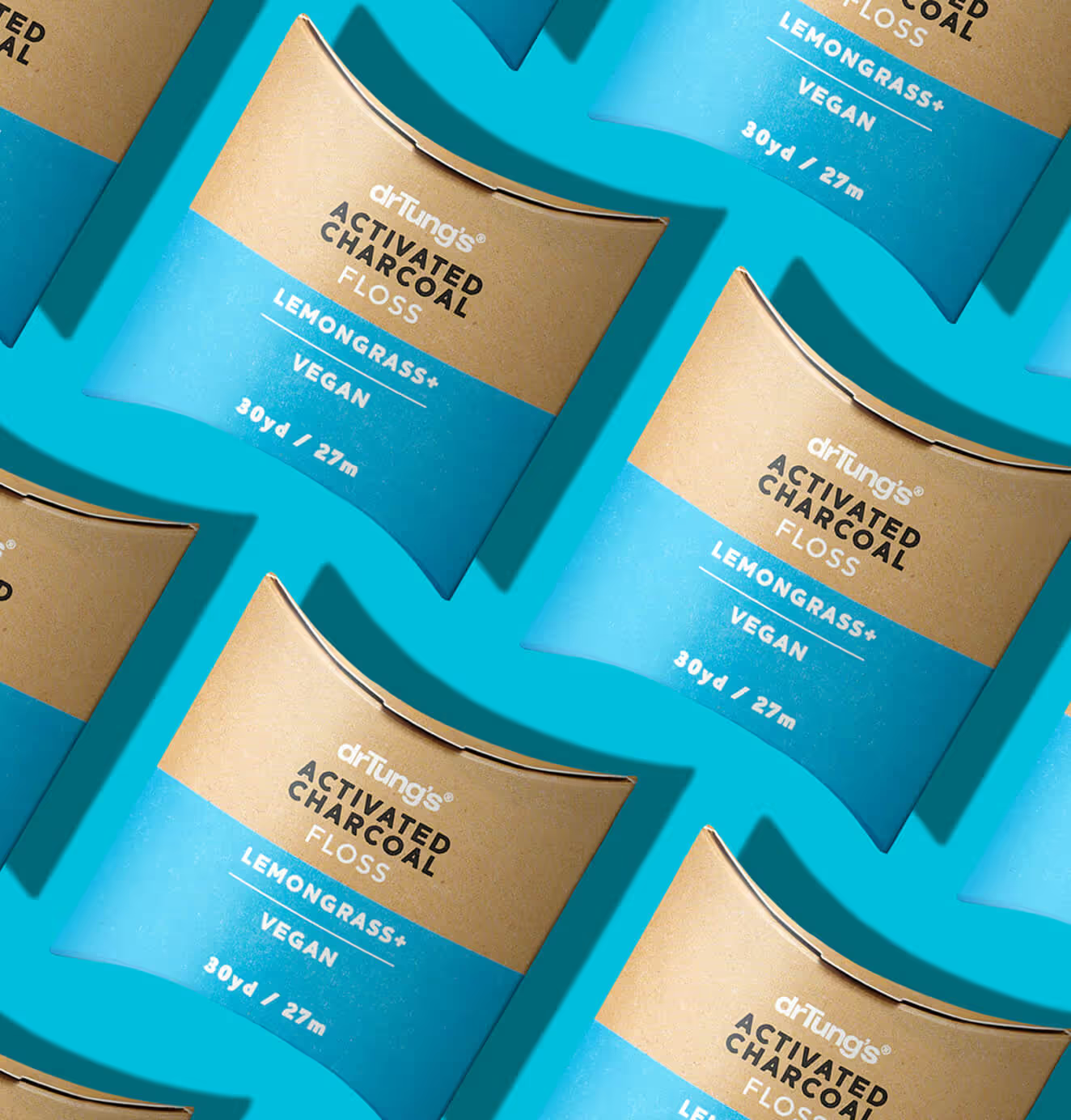
Arbutus Foods needed a cohesive consumer-facing brand for an expanding range of food products. The Branded Agency developed Forkin’ Good through positioning, naming, brand architecture, visual identity and packaging for Dips and Meal Makers.
The project shows how a shared identity can accommodate different product names, formats and information requirements.
What to assess: Does the studio demonstrate the system across actual applications? Can you see how additional products would fit within it?
Explore the Forkin’ Good case study.
Glass Lewis: Refining an Established Brand and Digital Experience
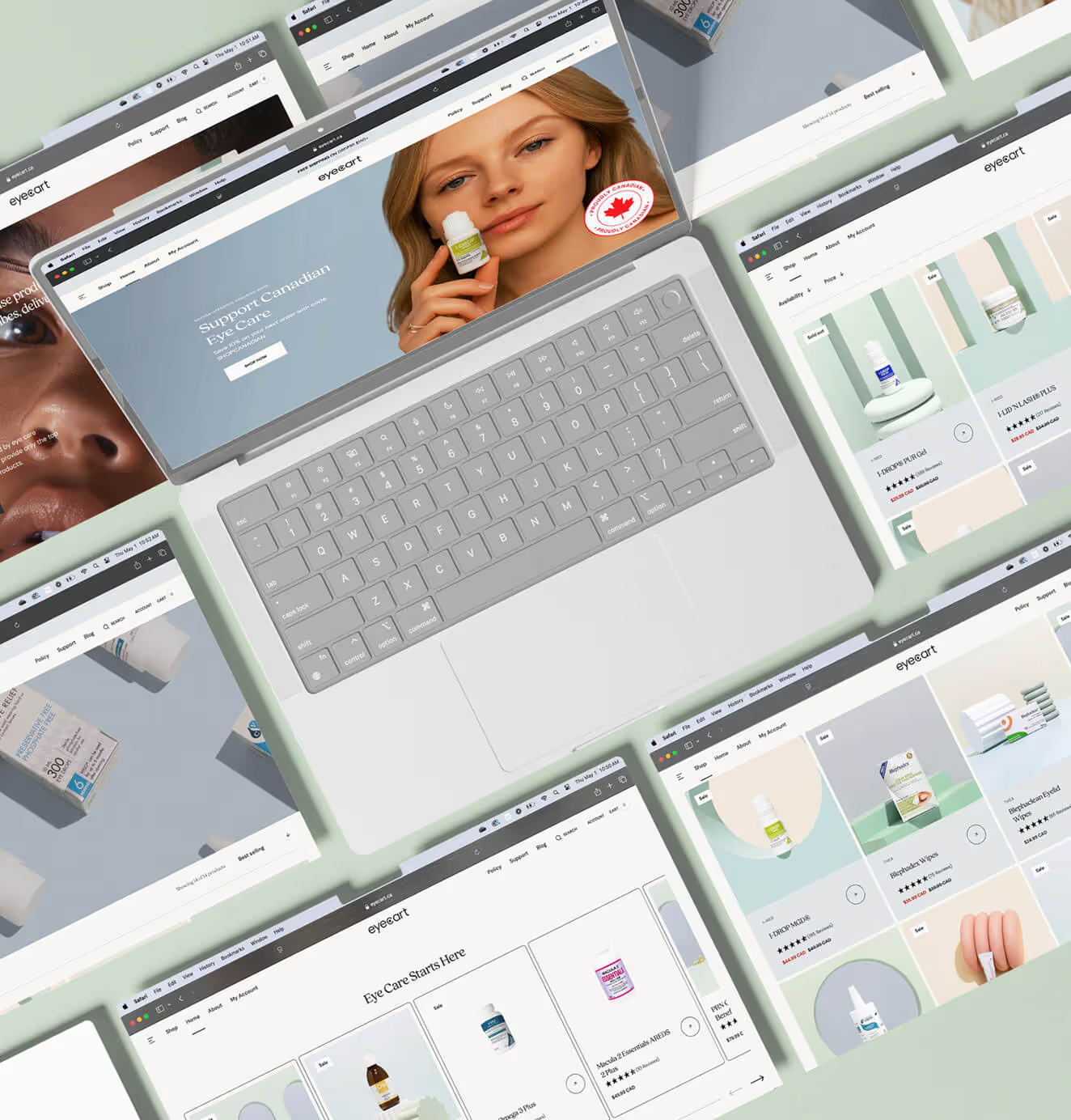
Glass Lewis needed a digital presence that reflected its corporate governance expertise while making complex information easier to navigate. The Branded Agency refined the visual identity, restructured the website and migrated it to Webflow.
The project illustrates the combined requirements of brand continuity, information design and technical implementation.
What to assess: Can the studio explain what it preserved, what it changed and how its design decisions supported different users?
Explore the Glass Lewis case study.
Use these examples to evaluate relevant capabilities and delivery quality. Commercial results require additional context, including the measurement period and other business or marketing changes made alongside the project.
Ongoing Brand Management After Launch
After launch, your team needs a practical way to apply the brand, maintain its assets and resolve questions. Agree on those responsibilities before the engagement ends.
Make Handover Part of the Scope
Confirm that your team will receive:
- Organized files: Approved source files, exports and editable templates.
- Usage guidance: Examples covering the applications your team produces regularly.
- Access and licensing details: Ownership, permissions and any ongoing third-party costs.
- Training: Instruction for the people maintaining the website or creating brand materials.
- Support terms: A clear distinction between correcting delivery issues and commissioning new work.
Ask the studio to demonstrate how an internal team member would complete a routine task, such as updating a presentation or publishing a website page. This can reveal gaps that a file checklist misses.
Assign Internal Ownership
Name someone responsible for maintaining the approved assets and guidelines. Establish where files live, who can update them and when new applications need review.
For digital work, include responsibility for content quality, accessibility and technical maintenance. A well-designed launch still needs care as pages, products and contributors are added.
Review the Brand When There Is a Reason to Act
Set review intervals that suit how often your business produces or changes materials. Also review the system when you introduce a new offering, enter a market or repeatedly encounter limitations.
Use customer feedback and a focused brand audit to distinguish between inconsistent application, missing guidance and a deeper positioning issue. Update the parts that need attention while preserving what continues to work.
Ongoing support can come from your internal team, a studio retainer or individual projects. Choose the arrangement according to the volume and complexity of the work.
Choose a Studio That Can Deliver—and Help You Use—the Work
The right branding and design studio should give you a clear connection between your business goals, its recommendations and the final deliverables. Its proposal should explain the scope, team, schedule, costs and handover in terms you can evaluate.
At The Branded Agency, we help businesses connect strategy and positioning with identity, packaging and digital experiences. We work with your team to define what is needed and how it will be applied.
Book a discovery call to discuss your project, priorities and the support your team needs.

Quincy Samycia
As entrepreneurs, they’ve built and scaled their own ventures from zero to millions. They’ve been in the trenches, navigating the chaos of high-growth phases, making the hard calls, and learning firsthand what actually moves the needle. That’s what makes us different—we don’t just “consult,” we know what it takes because we’ve done it ourselves.
Want to learn more about brand platform?
If you need help with your companies brand strategy and identity, contact us for a free custom quote.
We do great work. And get great results.
+2.3xIncrease in revenue YoY
+126%Increase in repurchase rate YoY



+93%Revenue growth in first 90 days
+144% Increase in attributed revenue




+91%Increase in conversion rate
+46%Increase in AOV



+200%Increase in conversion rate
+688%Increase in attributed revenue