How Does Purchasing a Domain Name Work: A Guide
04/04/2025
Web Design / Web Dev
Buying a domain name is one of the first and most important steps in building your online presence. Whether you're starting a business or launching a personal website, understanding how domain names work can help you make smarter, more confident decisions.

Before you can launch a website, you need a domain name—a unique address that allows people to find you online. From choosing the right name and extension to understanding how registration works, the process can feel overwhelming at first. With so many options available, it’s important to know how domain names function, what makes one effective, and how your choice can impact your brand. In this guide, we’ll walk you through everything you need to know about purchasing a domain name and setting your website up for success.



A Comprehensive Guide to Buying a Domain Name for Your Business



All domain names must be unique from each other and there can be no duplicates. The global management of these assigned names is overseen by an internet corporation, such as ICANN, which coordinates and keeps track of who owns and manages each domain name. Luckily, domain name extensions can help differentiate web addresses that want to use the same name.
The most popular domain name extension of course is .com.
Unfortunately, it’s likely that the domain name you want is already registered when paired with the .com extension.
Some people also purchase what they predict will be sought after domain names and just sit on them with no intention of using them for themself. The reason for this is because they’re hoping that someone will come along who wants it bad enough to purchase it from them.
The good news is that there is a huge selection of other domain name extensions available for people to choose from. Some domain name extensions such as .gov have certain restrictions on who can use them, but most extensions are available to the public.
To understand how domain names work, it's important to know that the Domain Name System (DNS) translates human-friendly domain names into an IP address, which acts like a street address for your website, allowing users to easily find and access your site online.
Once you start learning about all of the different options, it might begin to feel overwhelming. Having too many choices will sometimes make selecting things more difficult than if you were faced with limited options. So, where do you start?
One thing that you want to consider when deciding on a domain name extension is how it will reflect on your business or your brand’s image. Choosing the right extension and a custom domain is essential for building a strong online presence, especially if you are establishing a business online.
When possible, domain name extensions should give your audience an idea of what it is that you do.
Think about whether your business or personal brand is better suited with a popular and commonly known domain name extension or whether you should opt for a more creative extension that relates to your business.
For example, if you’re running a flower shop or flower delivery service, perhaps using the domain name extension .florist instead of .com will help you to stand out from the crowd.
The popular and more commonly used domain name extensions are considered to be premium domains because they are easier to remember and brand.
Also known as top-level domains (TLDs), these will often cost you a little more to register than other, less common domain name extensions. The main, memorable part of your domain name before the extension is called the second level domain (SLD), which plays a key role in branding and recognition.
Do some research when buying a domain name and compare the prices of various extensions offered by different domain name registrars to find the one that best represents your business. When registering, make sure to verify ownership and keep track of your domain expiration date to avoid losing your domain.
Introduction to Domain Names
A domain name is the unique web address that identifies your website on the internet, making it easy for users to find and access your site by typing it into their browser’s address bar. Every domain name consists of two main parts: the actual name you choose (such as your brand or business name) and the top-level domain (TLD) extension, like .com, .org, or .net. Selecting the right domain is a foundational step in building your online presence, as it not only represents your brand but also helps users remember and revisit your site. To secure your chosen domain, you’ll need to register it through a domain registrar—a company authorized to manage domain name registrations. The process is straightforward: once you’ve decided on the right domain name and TLD, you simply register it with a reliable domain registrar, ensuring your website has a unique and professional address on the web.
Examples of Domain Name Extensions
Let’s take a look at a handful of domain name extensions that are out there for use. Some of these are available to the general public, while others have certain restrictions associated with them.
.com - This one is obviously the most popular, premium domain name extension available and is the most sought after by businesses. Originally created to be used by commercial businesses, the .com domain name extension is now available for use by anyone. When possible, .com is usually the best option to go with, unless you’re looking for a more niche domain name extension.
.org - The .org domain name extension was originally intended for nonprofit organizations, but has since become nearly as popular and commonly used as .com. Anybody can register for a .org domain name extension.
.net - This domain name extension was intended for use by networks or “umbrella” sites that act as a portal to a set of smaller websites, but ultimately the .net extension can be registered and used by anyone.
.int - The .int domain name extension is short for “international” and is strictly limited to international organizations, offices, and programs endorsed by treaty-related purposes. NATO was the first organization to use the .int extension.
.edu - This domain name extension is limited to specific higher educational institutions such as trade schools and universities.
.biz - Created as the short, phonetic spelling of “business”. While not restricted, this domain name extension was created to be used by, you guessed it, businesses.
.gov - The .gov is restricted for use by official government organizations only.
It’s also important to note that there are country-specific domain name extensions and that most countries have one of their own. For example, Canada has .ca, the United States has .us, South Korea has .kr, etc.
Having your own domain not only enhances your brand’s professionalism and trust, but also provides easy access for users to find and remember your site. Additionally, a unique domain can improve your website’s visibility in search engines, making it easier for potential visitors to discover your business online.
As mentioned above, if available, try to register with a .com domain name extension. It’s by far the most easily recognizable and while not necessarily always true, tends to give the impression of being an established company with a strong professional image.
Free Brand Health Audit
Make sure your brand is built to sell
Search has changed. Your customers aren't just Googling anymore. They're asking ChatGPT, Perplexity, Gemini and other AI platforms what to buy, who to trust and which brands they should consider.
If your brand isn't showing up clearly in those answers, you're already losing opportunities. Our free Brand Health Audit shows you where your brand stands across traditional search, AI search and brand positioning.

Sample brand audit
Live preview
Traditional search
72
AI search (GEO)
34
Brand positioning
58
Domain Name Registrars and Web Hosting Platforms


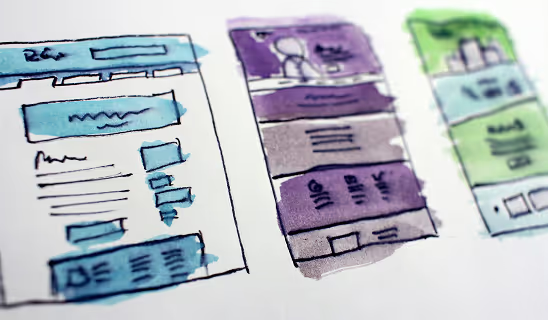

There are many domain name registrars out there for you to choose from and there are even more web hosting platforms. There are even companies that provide both these services in one. When purchasing a domain, it's crucial to select a reliable registrar, especially for small business owners who need ongoing support and security for their online presence.
How convenient! Here is a list of some popular domain name registrars and web hosting platforms for you to take a look at if you’re thinking of buying a domain.
- GoDaddy.com is an American, publicly traded domain name registrar and web hosting platform. As of June 2020, GoDaddy has more than 20 million customers.
- HostGator.com is a Houston-based provider of shared, reseller, virtual private server, and dedicated web hosting.
- Wix.com is an Israeli software company, providing cloud-based web development services. It allows users to create HTML5 websites and mobile sites through the use of online drag and drop tools.
- Namecheap.com is a domain name registrar, which provides both domain name registration as well as web hosting services. Namecheap is a budget web hosting provider with 11 million registered users and 10 million domains.
- Bluehost.com is a web hosting company owned by Endurance International Group. It is one of the 20 largest web hosts, collectively hosting well over 2 million domains.
- Domain.com is another domain name registrar and web hosting company owned by Endurance International Group. The company Domain is based out of Vancouver, Washington.
- Webnames.ca provides domain registrations, web hosting, SSL certificates, email hosting, website builders and more for small businesses and enterprises. Webnames is Canada’s original domain name registrar and was founded by the team behind the creation of the .ca domain.
- Register.com offers domain name registration, web hosting and website design services, and online marketing - all in one place.
When you purchase a domain, keep in mind that email services are not automatically included, but most registrars offer the option to add custom email addresses for enhanced professionalism and better communication.
It’s worth mentioning that many web hosting platforms provide free domain names for you to use. Free domain names are usually customizable, but typically also incorporate the name of the web hosting company in the web address. When comparing providers, be sure to review domain pricing, including the annual fee and any additional costs, to make an informed decision.
That means that if people want to visit your website they will need to also type out the company that is hosting your page.
This can make it difficult for people to remember your domain name and may also diminish your professional image. All things to consider if you’re planning on buying a domain name.
Want to learn more about brand platforms, Brand Strategy and Brand Identity? Keep reading!
If you need help with your companies brand strategy and identity, contact us for a free custom quote.
Choosing a Domain Name Extension

All domain names must be unique from each other and there can be no duplicates. Luckily, domain name extensions can help differentiate web addresses that want to use the same name.
The most popular domain name extension of course is .com.
Unfortunately, it’s likely that the domain name you want is already registered when paired with the .com extension.
Some people also purchase what they predict will be sought after domain names and just sit on them with no intention of using them for themself. The reason for this is because they’re hoping that someone will come along who wants it bad enough to purchase it from them.
The good news is that there is a huge selection of other domain name extensions available for people to choose from. Some domain name extensions such as .gov have certain restrictions on who can use them, but most extensions are available to the public.
Once you start learning about all of the different options, it might begin to feel overwhelming. Having too many choices will sometimes make selecting things more difficult than if you were faced with limited options. So, where do you start?
One thing that you want to consider when deciding on a domain name extension is how it will reflect on your business or your brand’s image.
When possible, domain name extensions should give your audience an idea of what it is that you do.
Think about whether your business or personal brand is better suited with a popular and commonly known domain name extension or whether you should opt for a more creative extension that relates to your business.
For example, if you’re running a flower shop or flower delivery service, perhaps using the domain name extension .florist instead of .com will help you to stand out from the crowd.
The popular and more commonly used domain name extensions are considered to be premium domains because they are easier to remember and brand.
Also known as top-level domains (TLDs), these will often cost you a little more to register than other, less common domain name extensions.
Do some research when buying a domain name and compare the prices of various extensions offered by different domain name registrars to find the one that best represents your business.
Examples of Domain Name Extensions
Let’s take a look at a handful of domain name extensions that are out there for use. Some of these are available to the general public, while others have certain restrictions associated with them.
.com - This one is obviously the most popular, premium domain name extension available and is the most sought after by businesses. Originally created to be used by commercial businesses, the .com domain name extension is now available for use by anyone. When possible, .com is usually the best option to go with, unless you’re looking for a more niche domain name extension.
.org - The .org domain name extension was originally intended for nonprofit organizations, but has since become nearly as popular and commonly used as .com. Anybody can register for a .org domain name extension.
.net - This domain name extension was intended for use by networks or "umbrella" sites that act as a portal to a set of smaller websites, but ultimately the .net extension can be registered and used by anyone.
.int - The .int domain name extension is short for “international” and is strictly limited to international organizations, offices, and programs endorsed by treaty-related purposes. NATO was the first organization to use the .int extension.
.edu - This domain name extension is limited to specific higher educational institutions such as trade schools and universities.
.biz - Created as the short, phonetic spelling of “business”. While not restricted, this domain name extension was created to be used by, you guessed it, businesses.
.gov - The .gov is restricted for use by official government organizations only.
It’s also important to note that there are country-specific domain name extensions and that most countries have one of their own. For example, Canada has .ca, the United States has.us, South Korea has .kr, etc.
As mentioned above, if available, try to register with a .com domain name extension. It’s by far the most easily recognizable and while not necessarily always true, tends to give the impression of being an established company with a strong professional image.
Domain Name Registrars and Web Hosting Platforms
There are many domain name registrars out there for you to choose from and there are even more web hosting platforms. There are even companies that provide both these services in one.
How convenient! Here is a list of some popular domain name registrars and web hosting platforms for you to take a look at if you’re thinking of buying a domain.
- GoDaddy.com is an American, publicly traded domain name registrar and web hosting platform. As of June 2020, GoDaddy has more than 20 million customers.
- HostGator.com is a Houston-based provider of shared, reseller, virtual private server, and dedicated web hosting.
- Wix.com is an Israeli software company, providing cloud-based web development services. It allows users to create HTML5 websites and mobile sites through the use of online drag and drop tools.
- Namecheap.com is a domain name registrar, which provides both domain name registration as well as web hosting services. Namecheap is a budget web hosting provider with 11 million registered users and 10 million domains.
- Bluehost.com is a web hosting company owned by Endurance International Group. It is one of the 20 largest web hosts, collectively hosting well over 2 million domains.
- Domain.com is another domain name registrar and web hosting company owned by Endurance International Group. The company Domain is based out of Vancouver, Washington.
- Webnames.ca provides domain registrations, web hosting, SSL certificates, email hosting, website builders and more for small businesses and enterprises. Webnames is Canada's original domain name registrar and was founded by the team behind the creation of the .ca domain.
- Register.com offers domain name registration, web hosting and website design services, and online marketing - all in one place.
It’s worth mentioning that many web hosting platforms provide free domain names for you to use. Free domain names are usually customizable, but typically also incorporate the name of the web hosting company in the web address.
That means that if people want to visit your website they will need to also type out the company that is hosting your page.
This can make it difficult for people to remember your domain name and may also diminish your professional image. All things to consider if you’re planning on buying a domain name.
How to Choose a Domain Name
Selecting the right domain name is a crucial decision that can make all the difference for your online business or personal brand. The perfect domain should be easy to remember, simple to spell, and clearly reflect what your website or business is about. Key factors to consider include making your domain name relevant to your brand, keeping it short and straightforward, and ensuring it stands out from competitors. Using a domain name generator can help spark creative ideas if your desired domain name is already taken. It’s also wise to check the availability of your chosen name across different domain extensions, as the right domain extension can enhance your brand’s credibility and reach. By carefully considering these key factors, you’ll be well on your way to securing a strong domain that supports your goals and helps users find your site with ease.
How to Buy a Domain Name
Conducting the research, coming up with a domain name, and selecting a domain name extension is the hard part in the process of buying a domain name.
Once you’ve come up with the perfect domain name for your website (and it’s still available!), completing the actual process of purchasing a domain name is fairly quick and easy. Let’s go through the steps:
Step 1: Visit the website of the domain name registrar you’ve chosen. Typically, there will be a search bar for you to use front and center of their webpage.
Step 2: Type in your desired domain name in the search bar and press enter. The website will check the registry to see if the domain name you want is still available. If it is, congratulations! Otherwise, the website should provide you with available alternatives and variations as well as extension suggestions.
Step 3: Once you’ve chosen the domain name and extension that you want, select it and add it to your cart.
Step 4: Go to your cart and complete the transaction.
That’s it!
Your new domain is now saved to your account. Be sure to verify ownership of your new domain by following any email verification steps provided by your registrar, and make a note of your domain expiration date to ensure you renew it on time.
Once your website is up and running, you’ll be able to connect your domain name to it. This involves setting up DNS records so your domain points to the correct web server, with the DNS server translating your domain name into the appropriate IP address for visitors. If you’re unsure about these technical steps, a web developer can help configure your DNS records and ensure your site is accessible.
To avoid losing your domain, consider setting it to automatically renew through your registrar’s management dashboard. This helps maintain continuous ownership and prevents accidental expiration.
Finding a Reliable Domain Registrar with Privacy Protection
It's also important to make sure you're purchasing from a reliable domain registrar with privacy protection. That way, you know that the contact information associated with the domain remains confidential and secure.
How to Get a Free Domain Name
There are some web hosting services that provide complimentary domains when you sign up for their service.
For example, Wix and Namecheap both offer free domains when you purchase one of their yearly web hosting packakages.
How does buying a domain work?
The first step to setting up your website or blog is to purchase a domain name. You can shop around, compare prices and features, and find the best fit for you.
Once you've settled on the perfect domain name, it's time to make the purchase.
Domain Buyer Service
Domain buyer service is a great option for purchasing a domain name.
It's fast and secure, plus you get additional features like hosting services and email accounts.
The next step is to register your domain with the provider.
This means entering key information such as your contact details, payment method, and DNS settings.
Ve Domain Registration
If you're looking for a budget-friendly option, then Ve Domain Registration is a great choice.
It provides free domain name registration and discounts on hosting plans.
Once your domain has been registered, it's important to keep track of its renewal date.
A .web.ve domain is only valid for two years, so be sure to renew the domain before it expires!
The Ve domain zone is also subject to specific registration policies, so be sure to check out their terms and conditions before registering.
So to book domain name with Ve's Domain Registration services, just select your desired domain and make the purchase.
Domain Name Pricing and Costs

Domain name pricing can vary widely based on several factors, including the domain registrar you choose, the type of top-level domain (TLD), and the popularity of the specific domain name. Generic TLDs like .com, .net, and .org are typically more affordable, while specialty or country code domains may come at a premium. Many registrars offer introductory discounts for the first year or for multi-year domain registration, but it’s important to review renewal fees to avoid surprises when your domain comes up for renewal. Some domain registration packages include valuable extras such as DNS management, email hosting, or SSL certificates, which can add value and convenience. When comparing options, consider both the upfront and ongoing costs, as well as the included services, to ensure you’re getting the best deal for your needs.
Domain Ownership and Transferring Domain Ownership
Owning a domain name means you have the exclusive right to use that web address for a set period, usually between one and ten years. To maintain domain ownership, you must renew your registration before the domain expires; otherwise, your domain could become available for someone else to register. If you need to transfer your domain—whether to a different registrar, a new web hosting provider, or another owner—the process involves obtaining an authorization code from your current registrar and initiating the transfer with the new provider. It’s essential to keep your contact details up to date and monitor your domain’s expiration date to avoid losing access. Staying on top of these details ensures your online business or personal website remains secure and accessible.
The Importance of Domain Name Security
Protecting your domain name is vital for maintaining your website’s integrity and your brand’s reputation. Using a reliable domain registrar that offers robust security features—such as domain locking and two-factor authentication—can help prevent unauthorized changes or domain theft. Enabling auto-renewal and keeping your payment information current reduces the risk of accidental domain expiration. Regularly reviewing your domain settings and being alert to phishing attempts targeting domain owners are also important steps. Understanding your registrar’s policies on domain disputes and transfers adds another layer of protection. By prioritizing domain name security, you safeguard your online presence and ensure your website address remains under your control.
Connecting your Domain Name
Connecting your domain name with your website is usually a two-part process that involves some work with both your domain name provider and your web hosting provider. Before connecting, check if your domain is currently a parked domain or already linked to your own website, as this can affect the steps you need to take.
Depending on the providers you’ve chosen to use, the process can vary slightly.
Regardless of which company you’re working with, most have made it super simple to integrate with each other and have created some level of automation to make the process stress-free for you.
Also, if your domain name and web hosting service is provided by the same company, the process might be even easier.
For example, with web hosting companies like Shopify or Squarespace, you have the option of buying your domain name directly through them.
This eliminates the issue and the added step of having to connect your domain name to your web hosting platform as it would be completed automatically and almost seamlessly.
The only issue that may arise in the future from purchasing your registered domain name through the same platform that you’re hosting your website with is the process of migration.
That is, transferring or switching over to a different web hosting company. If you are purchasing a domain from another party, consider using an escrow service to ensure a secure transaction and protect both buyer and seller during the transfer process.
It’s definitely possible; there just may be some additional steps involved in the process.
If you are looking to start a new business and need help creating a brand name, purchasing the domain using the correct registration process, branding the business and designing and developing a website for your online business, contact us here at The Branded Agency.
Our full-service agency approach will ensure you are set up for success.
We provide a premium quality service at an affordable price point for small businesses.
Understanding the structure of a URL
The structure of a URL scheme is part of a larger, standardized format designed to facilitate the identification and access of resources across the internet. A URL can be broken down into several components, each serving a distinct purpose in guiding web traffic to its destination.
Here's a closer look at how URL scheme structure fits into the overall architecture of a URL:
- Scheme/Protocol: This is the beginning part of the URL, indicating the protocol to be used for accessing the resource. It is followed by a colon and, in most cases, two forward slashes. For example, in https://www.example.com, https is the scheme, which tells the browser to connect using HTTPS (HTTP Secure).
- Host/Domain Name: Following the scheme, the host or domain name specifies the server where the resource is located. In the same example, www.example.com is the domain name, directing the browser to the server named www within the example.com domain.
- Port (optional): The port, when specified, follows the domain name, separated by a colon. Most URLs do not require this component explicitly because they use the default port of the protocol (e.g., port 80 for HTTP and port 443 for HTTPS).
- Path: After the domain name, the path specifies the specific resource or page on the server to be accessed. For instance, in https://www.example.com/blog, /blog is the path, pointing to a specific page or directory named blog on the example.com website.
- Query (optional): The query string starts with a question mark (?) and is used to provide additional parameters to the server, typically for searches, filters, or other data retrieval purposes. For example, https://www.example.com/search?q=domain has a query of q=domain, which might tell the server to search for content related to "domain".
- Fragment (optional): A fragment, indicated by a hash symbol (#), points to a specific part of the resource, like an anchor within a page. It is processed by the client (the web browser) rather than the server. For example, https://www.example.com/#section1 would direct the browser to a specific section labeled section1 on the example.com homepage.
The URL scheme, along with these components, forms a comprehensive address system that not only specifies how to access a resource (via the protocol) but also precisely locates the resource on the internet through a combination of domain names, paths, and optional elements like query strings and fragments. This structure ensures that users and applications can reliably locate and interact with web resources worldwide.
Conclusion
Purchasing a domain name is an important step in establishing your presence online, but it’s only the beginning. Your domain is just one piece of a much bigger picture—one that includes your brand identity, website design, and the overall experience you create for your audience.
If you’re starting a new company or looking to build a stronger online presence, having the right strategy behind your brand and website can make all the difference. From choosing a name that resonates to designing and developing a site that converts, every detail matters.
If you’re ready to take the next step and want expert support with branding, website design, and development, get in touch with us. We’d love to connect, learn more about your goals, and provide a custom quote to help bring your vision to life.

Sloane Avery
As entrepreneurs, they’ve built and scaled their own ventures from zero to millions. They’ve been in the trenches, navigating the chaos of high-growth phases, making the hard calls, and learning firsthand what actually moves the needle. That’s what makes us different—we don’t just “consult,” we know what it takes because we’ve done it ourselves.
Want to learn more about brand platform?
If you need help with your companies brand strategy and identity, contact us for a free custom quote.
We do great work. And get great results.
+2.3xIncrease in revenue YoY
+126%Increase in repurchase rate YoY




+93%Revenue growth in first 90 days
+144% Increase in attributed revenue




+91%Increase in conversion rate
+46%Increase in AOV




+200%Increase in conversion rate
+688%Increase in attributed revenue