How We Built a Cannabis Marketing Funnel That Converted 15% of Cold Traffic
09/10/2026
Marketing Strategy
How The Branded Agency built a compliant cannabis marketing funnel — sponsored content, a risk-free offer, and a dedicated landing page — that converted 15% of cold traffic for Acknowledge.
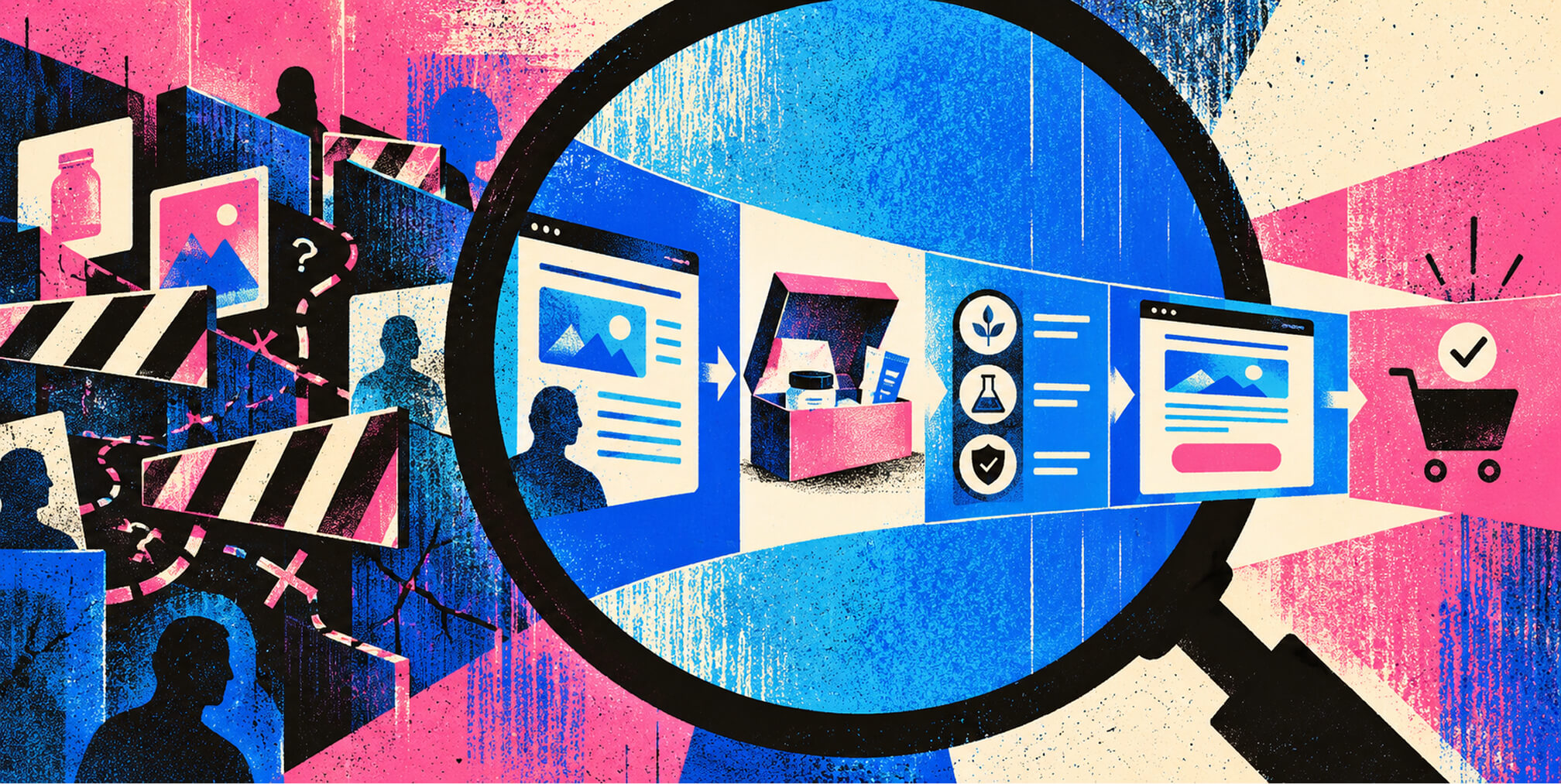
Advertising a cannabis brand online presents a problem that conventional digital marketing playbooks were never designed to solve.
.png)


Why Cannabis Advertising Loses Trust, and How Brand-Backed Performance™ Fixes It
A cannabis company may operate legally, manufacture compliant products and ship to eligible customers, yet still be unable to advertise those products through major digital platforms in the same way as an ordinary consumer brand. Google generally prohibits ads promoting recreational drugs, including marijuana, although limited exceptions and market-specific programs exist. Certain topical CBD products may also be eligible in approved jurisdictions when advertisers meet certification requirements. Policies vary by product, platform and location, and they change frequently. Advertisers should always review the current Google Ads recreational-drug policy and other applicable advertising standards before launching a campaign.
For cannabis and CBD brands, these restrictions create an unusually difficult marketing environment: ads cannot always explain what the product is, product packaging may trigger an advertising rejection, certain ingredients, claims and product categories cannot be promoted, advertising platforms may review the destination website alongside the ad, accounts can be restricted when ads or landing pages violate platform policies, and approved campaigns can still be affected by automated enforcement.
This creates more than a media-buying problem. It creates a customer-trust problem. When Acknowledge, a regenerative farm and plant-based gummy brand based in Maryland, needed a better customer-acquisition strategy, The Branded Agency developed a different type of marketing funnel. Instead of asking an intentionally vague advertisement to educate and convert the customer, we created a sponsored editorial experience with an established news publication, followed by a dedicated campaign landing page and carefully structured introductory offer.
The resulting campaign achieved a 15% purchase conversion rate from cold traffic, with 20% of purchasers selecting an upgraded offer. Here is how we built it.
Why Conventional Cannabis Advertising Funnels Lose Trust
A traditional ecommerce funnel is relatively simple: Advertisement → Product page → Checkout. The advertisement introduces the product. The product page provides the details. The customer decides whether to purchase. Regulated brands frequently cannot follow that sequence.
Cannabis advertisers may be unable to explicitly show or describe their products in paid campaigns. Ads are often reduced to generalized lifestyle language about relaxation, balance, mood or "good vibes." This can leave the consumer with several unanswered questions: What is being advertised? What ingredients does it contain? What will it do? Is the company legitimate? Is the product legal where I live? Why is the brand being so vague?
To separate their advertising activity from restricted website content, some regulated brands create simplified secondary websites with product terminology, claims and imagery removed. For example, Acknowledge had a separate, simplified brand destination at acknowledge.farm. This type of site can provide visitors with a high-level introduction to the company, but it cannot communicate the complete product story as effectively as the main Acknowledge ecommerce website. Other campaigns rely on a basic gateway page asking visitors to confirm that they are over 21 before proceeding.
The resulting journey can become: Vague advertisement → Simplified website → Age gateway → Main website → Product page → Checkout. Every additional step creates friction. More importantly, the experience can feel evasive. The customer is being asked to trust a company that cannot immediately identify its product, explain its ingredients or substantiate its value. Even if the underlying business is completely legitimate, the marketing experience can make it appear otherwise.
Advertisers should also be careful not to use alternate websites, coded language or redirects to disguise an offer or circumvent platform review. Every advertisement, website and destination must comply with the platform policies and laws that apply to the campaign. We needed an approach that could operate within the realities of the category while improving customer trust.
Applying Brand-Backed Performance™
At The Branded Agency, we call our methodology Brand-Backed Performance™. It is based on a straightforward principle: performance marketing works better when the conversion system is supported by a compelling brand, a credible story and meaningful proof.
Most performance funnels focus heavily on mechanics: audience targeting, media costs, click-through rates, landing-page layouts, offers, upsells, and checkout conversion. Those elements matter, but they cannot compensate for a lack of trust. Before optimizing the campaign, we used our Golden Spiral™ methodology to align three critical components.
1. The brand truth: Acknowledge controls its products from seed to gummy on its own regenerative farm.
2. The customer problem: customers want predictable, approachable plant-based products but are skeptical about sourcing, potency, ingredients and how the products will make them feel.
3. The market opportunity: most competing brands sell gummies. Acknowledge could sell confidence in the source, process and experience.
That positioning became the foundation of the entire funnel.
Free Brand Health Audit
Make sure your brand is built to sell
Search has changed. Your customers aren't just Googling anymore. They're asking ChatGPT, Perplexity, Gemini and other AI platforms what to buy, who to trust and which brands they should consider.
If your brand isn't showing up clearly in those answers, you're already losing opportunities. Our free Brand Health Audit shows you where your brand stands across traditional search, AI search and brand positioning.

Sample brand audit
Live preview
Traditional search
72
AI search (GEO)
34
Brand positioning
58
Turning a Sponsored Article Into the Education Layer, and Why the Publication Mattered


The Strategy: Turn a Sponsored Article Into the Education Layer
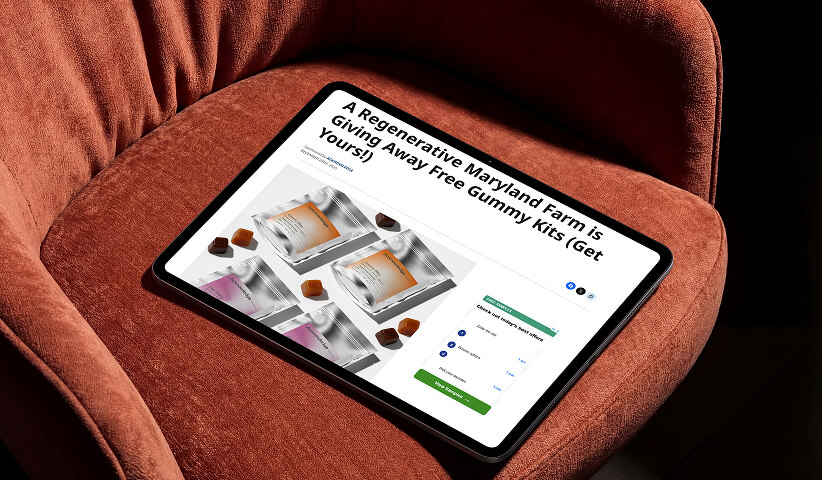
We partnered with Washington City Paper to publish a sponsored brand collaboration titled "A Regenerative Maryland Farm Is Giving Away Free Gummy Kits". Acknowledge paid for the placement, and the article was clearly labelled as advertiser content. The publication's news and editorial team did not participate in creating the story. That transparency is important. The campaign was not designed to disguise advertising as independent editorial coverage. It was a disclosed brand collaboration distributed through an established publication. The Branded Agency wrote the article so we could control the narrative, introduce the offer and communicate Acknowledge's differentiators accurately.
The sponsored article became the education layer that was missing from the conventional funnel. Rather than sending people from a short, generalized advertisement directly to the simplified Acknowledge bridge website, the article gave interested consumers enough room to understand what the introductory offer included, how the product experiences differed, when someone might choose each option, how Acknowledge grows and manufactures its products, why the company's single-source model matters, and what made the introductory offer low-risk.
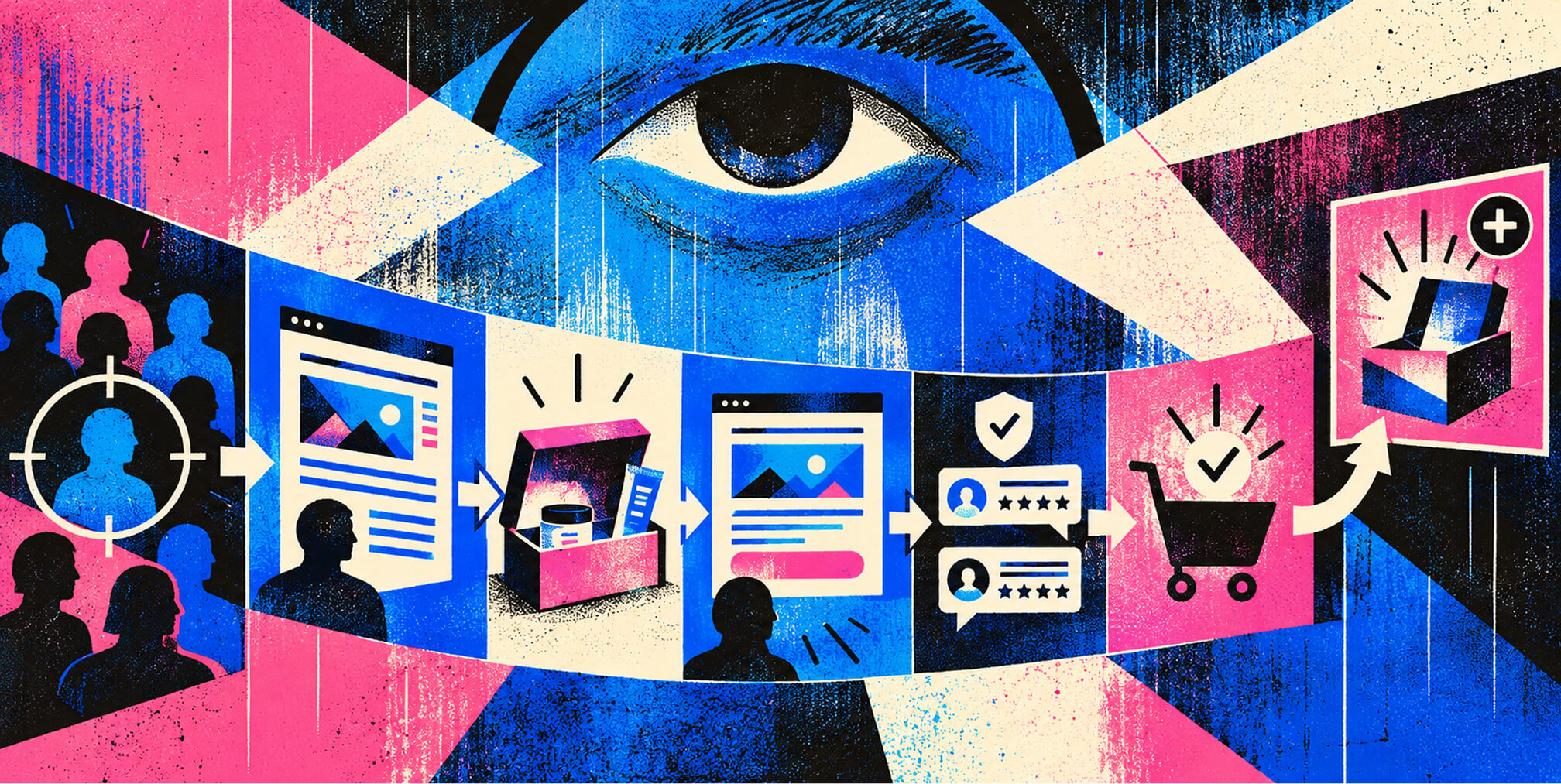
The article then directed readers to a dedicated Acknowledge gummy campaign landing page, where they could review the full offer and make a purchase. The new customer journey became: Cold audience → Sponsored article → Dedicated landing page → Introductory purchase → Upgrade offer. This gave us enough space to tell the story without forcing the advertisement or bridge website to establish the entire brand relationship.
Why the Publication Partnership Mattered
Acknowledge was a growing brand without widespread name recognition. That made credibility one of the most important challenges in the funnel. Consumers encountering the company for the first time had no existing reason to trust it. The Washington City Paper collaboration helped address that challenge in four ways.
It created borrowed credibility
The article appeared within the familiar digital environment of an established publication, with the paid relationship clearly disclosed. The publication did not independently endorse the product. However, its recognizable format and existing audience provided a more credible setting for the introduction than an unfamiliar gateway or bridge website.
It gave the story room to breathe
A paid social advertisement provides limited space. The article allowed us to explain the offer, farm, sourcing standards, product experiences and brand philosophy before asking the customer to purchase.
It replaced mystery with context
The goal was not merely to generate curiosity. It was to answer enough questions that visitors understood why the offer was relevant before they reached the campaign landing page.
It aligned brand and performance
The campaign was structured to produce an immediate conversion, but the story also reinforced what made Acknowledge different: Regenerative Organic Certified™ farming, Maryland-grown ingredients, seed-to-gummy control, single-source extracts, small-batch production, lab testing, and traceability and transparency. The campaign was not simply promoting free samples. It was introducing a reason to believe in the brand.
Marketing a regulated brand and struggling to earn trust? Keep reading!
If you need a compliant funnel that turns restricted advertising into real conversions, contact us for a free custom quote.
The Risk-Free Offer and the Six-Step Landing Page That Continued the Story
The Offer: Reduce the Risk of Trying Something New
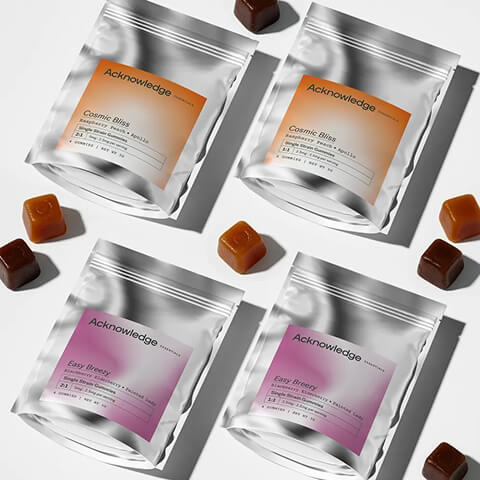
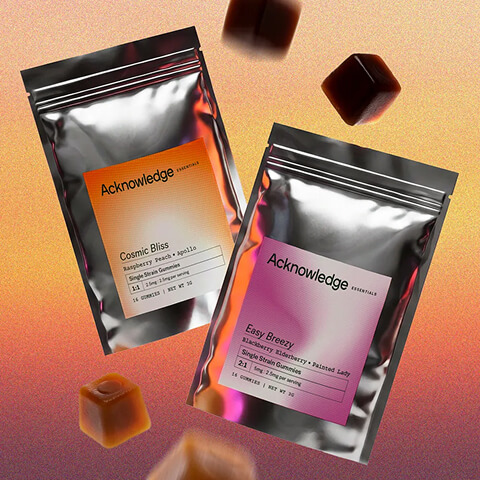
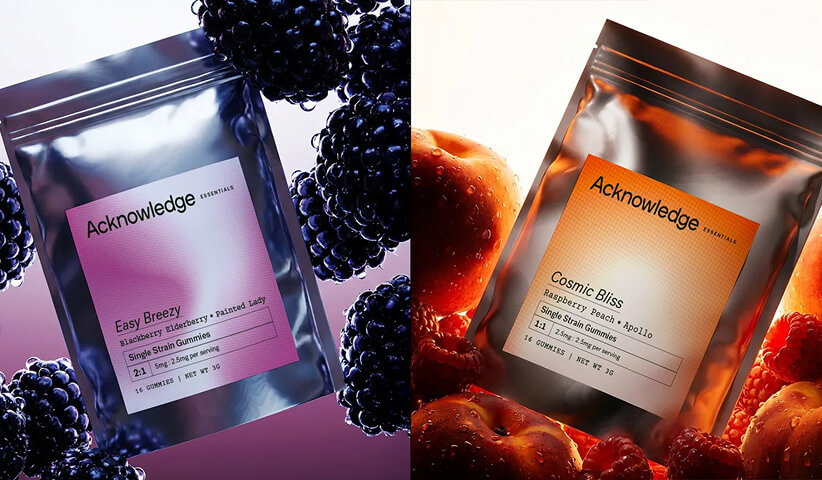
Cold audiences are unlikely to pay a premium for a product they do not understand from a company they have never encountered. We therefore created a low-risk entry offer: "Get a free Garden Gummy Kit. Just cover shipping." The sampler included four mini bags and 16 gummies: Cosmic Bliss 1:1, Cosmic Bliss 2:1, Easy Breezy 1:1, and Easy Breezy 2:1.
The structure solved an important customer problem. New customers did not necessarily know which experience, ratio or potency would be right for them. Instead of forcing them to choose a full-size product immediately, the sampler allowed them to try both product experiences in two different strengths. The offer transformed uncertainty into discovery: Try everything → Compare the experiences → Find what feels right → Purchase a preferred product later. This was more compelling than a conventional percentage discount because the offer was designed around the customer's uncertainty.
The Landing Page Continued the Story
Readers who clicked a call to action in the sponsored Washington City Paper article arrived at a dedicated Acknowledge campaign landing page, rather than the brand's homepage or a generic collection page. The page opened by continuing the same offer: "Your Good Vibes Starter Kit. On Us. Two vibes. Two strengths. Sixteen gummies to figure out what feels right. Yours free. Just cover shipping." The Washington City Paper logo created visual continuity between the article and landing page, reassuring visitors that they had arrived at the intended destination. The rest of the page followed a deliberate conversion sequence.
Step 1: Present two clear purchase paths. Visitors could choose between the Sampler (four mini bags free, with the customer covering shipping) and the Full Experience (the samplers plus full-size products for a reduced introductory price). This gave price-sensitive customers an easy entry while allowing higher-intent customers to upgrade immediately.
Step 2: Introduce social proof. Verified customer reviews translated the product's benefits into familiar situations, such as navigating a work event, unwinding in the evening, feeling relaxed without feeling disconnected, and enjoying a social experience without feeling overwhelmed. The testimonials helped make the experience more tangible.
Step 3: Explain what was included. The page identified both product experiences, the available ratios and the intended differences between them. This answered the questions that could not be addressed effectively in the initial advertisement.
Step 4: Sell the experience. The copy connected the products to everyday customer moments: social plans, creative work, afternoon fatigue, post-work decompression, Sunday stress, and relaxing without feeling foggy. Customers do not purchase a formulation or ingredient list in isolation. They purchase the experience they believe the product will help create.
Step 5: Establish the proof. The landing page then explained why Acknowledge could credibly deliver that experience: the plants were grown on Acknowledge's Maryland farm, the company controlled the process from cultivation through production, strains were selected for their specific profiles, products were made using traceable, single-source extracts, and Acknowledge emphasized organic, regenerative and transparent practices. This is where our Golden Spiral™ methodology became especially important. The customer's desired experience, the product's functional characteristics and the brand's proof all supported one another.
Step 6: Repeat the offer at each decision point. Calls to action appeared throughout the landing page. We did not rely on a single button at the top or bottom. Each major section addressed a different question or objection and then gave the visitor an opportunity to act.
The Upgrade Increased Initial Order Value
Free-plus-shipping offers can be effective for customer acquisition, but the economics depend on more than the initial conversion rate. The funnel therefore included an upgraded option featuring the sampler and additional full-size products at a reduced introductory price. This was not an unrelated checkout add-on. It was the logical next level of the same experience. That distinction matters.
A strong upgrade answers a simple question: if the customer already wants the entry offer, what additional purchase would make that experience more complete? It should increase value without distracting from the original decision or making the introductory offer feel misleading. In this campaign, 20% of purchasers selected the upgrade. That additional revenue helped improve the economics of acquiring new customers while giving higher-intent buyers a more complete introduction to the brand.
The Results, Why the Funnel Worked, and the Playbook for Other Regulated Brands
The Results
The campaign produced two significant results: a 15% purchase conversion rate from cold campaign traffic, and 20% of purchasers selected the upgraded offer. At that conversion rate, every 1,000 qualified campaign visitors would translate into approximately 150 new customers and 30 customers selecting the upgraded offer.
The complete economics of any campaign also depend on media costs, publisher fees, shipping revenue, product costs, payment processing, repeat purchases and customer lifetime value. A high conversion rate does not guarantee profitability on its own. However, converting 15% of cold traffic demonstrated that this combination of storytelling, third-party distribution, proof, offer design and landing-page optimization could overcome significant customer-acquisition friction.
Why This Cannabis Marketing Funnel Worked
This campaign did not succeed because of one clever advertisement or landing-page tactic. It succeeded because every stage had a specific responsibility.
| Funnel Stage | Primary Responsibility |
|---|---|
| Paid distribution | Reach a qualified cold audience |
| Sponsored article | Create context, interest and credibility |
| Introductory offer | Reduce the risk of trying the brand |
| Dedicated landing page | Explain the products and resolve objections |
| Brand proof | Establish quality, sourcing and differentiation |
| Upgrade option | Increase initial order value |
| Product experience | Create the opportunity for repeat purchases |
Most underperforming funnels ask one asset to do too much. A short advertisement is expected to attract attention, explain the product, establish credibility, answer objections and generate a purchase simultaneously. We separated those responsibilities and designed a connected customer journey. That is Brand-Backed Performance™ in practice: brand positioning, storytelling, offer architecture and conversion mechanics operating as one system.
What Other Regulated Brands Can Learn From This Campaign
The lesson is not that every cannabis or CBD company should purchase the same sponsored article or recreate this exact funnel. The larger lesson is that regulated brands must compensate for the information and trust that can be lost at the advertising stage.
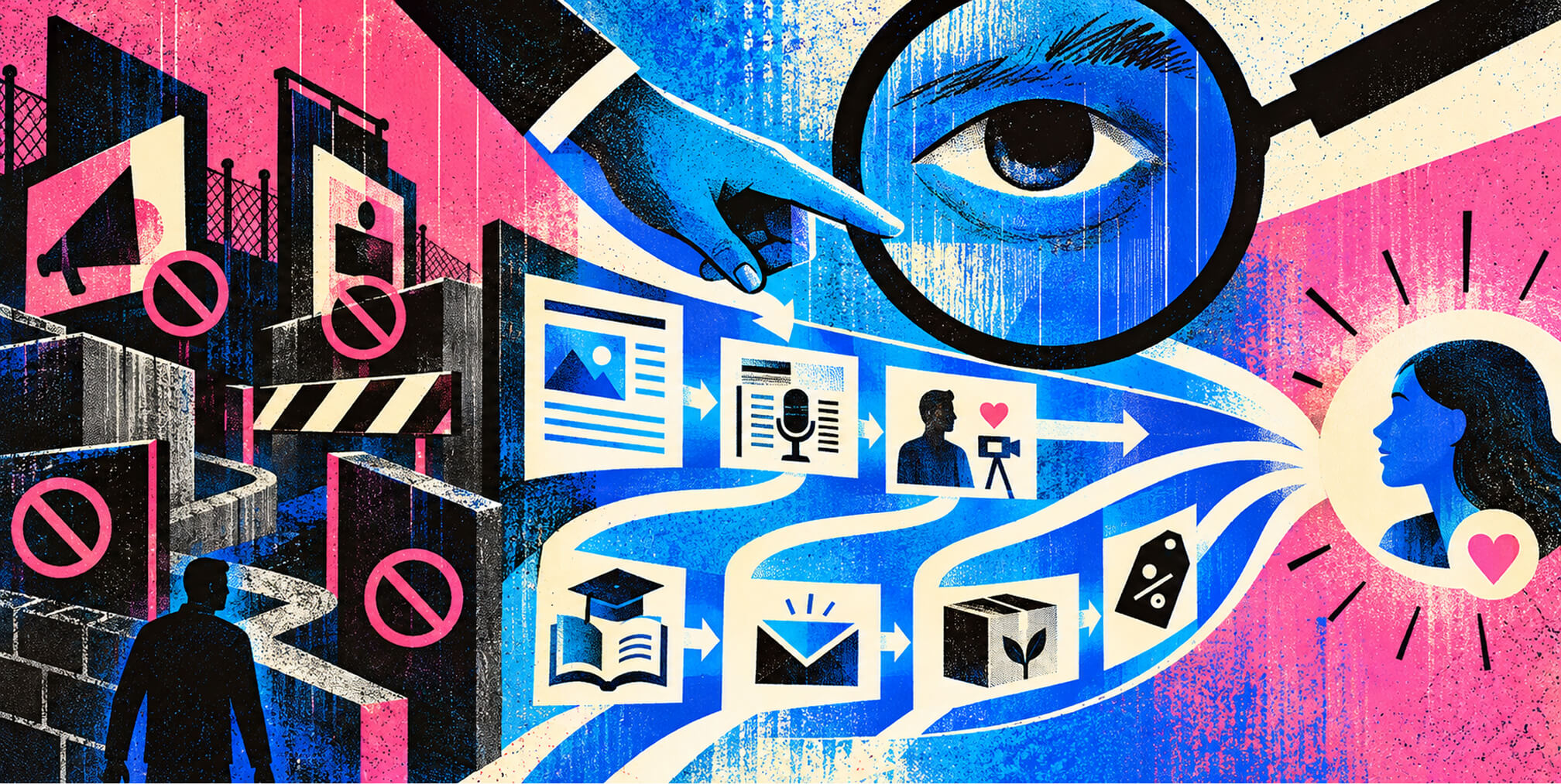
Depending on the brand, product and jurisdiction, that may involve compliant sponsored content, public relations, creator partnerships, educational organic content, affiliate relationships, email and SMS retention, first-party audience development, stronger landing-page education, more transparent sourcing and testing information, low-risk introductory offers, and search advertising where specifically permitted.
Sponsored content remains advertising. Publisher partnerships, partnership ads, landing pages and promoted posts must still comply with applicable platform policies, publisher standards and local laws. A publication or alternate website should never be used to disguise a prohibited offer or bypass advertising review. The strategic opportunity is to create a compliant customer journey that restores clarity, confidence and trust—even when conventional advertising options are limited.
Regulated Brands Need a Different Marketing Playbook
Cannabis, CBD and other regulated brands cannot simply copy the customer-acquisition strategy of an ordinary CPG company. They need a system built around their actual constraints.
At The Branded Agency, we combine brand positioning, creative strategy, sponsored-content development, offer architecture, landing-page design, paid distribution and conversion optimization to create strategies for brands operating in complicated categories. If your cannabis, CBD or regulated brand is struggling to advertise, explain its products or convert cold audiences, contact The Branded Agency. We can help you develop a distinctive, compliance-conscious marketing strategy built around your category, customer and growth goals.
Results are based on a specific Acknowledge campaign and are not a guarantee of future performance. Advertising eligibility varies by product, platform, market and jurisdiction. Brands should obtain appropriate legal and platform-policy guidance before launching campaigns for regulated products.

Quincy Samycia
As entrepreneurs, they’ve built and scaled their own ventures from zero to millions. They’ve been in the trenches, navigating the chaos of high-growth phases, making the hard calls, and learning firsthand what actually moves the needle. That’s what makes us different—we don’t just “consult,” we know what it takes because we’ve done it ourselves.
Want to learn more about brand platform?
If you need help with your companies brand strategy and identity, contact us for a free custom quote.
We do great work. And get great results.
+2.3xIncrease in revenue YoY
+126%Increase in repurchase rate YoY

+93%Revenue growth in first 90 days
+144% Increase in attributed revenue



+91%Increase in conversion rate
+46%Increase in AOV



+200%Increase in conversion rate
+688%Increase in attributed revenue