ChatGPT Ads for B2B: Lead Generation and Campaign Strategy for 2026
09/09/2026
Marketing Services
A 2026 guide to ChatGPT Ads for B2B — audience limitations, targeting, costs, campaign structure, and lead-generation strategy for agencies and software companies.
ChatGPT Ads could become an important B2B advertising channel-but they are not a direct replacement for Google Search Ads or LinkedIn Ads.
.png)


What ChatGPT Ads for B2B Are, Who's Eligible, and Why the Channel Could Work

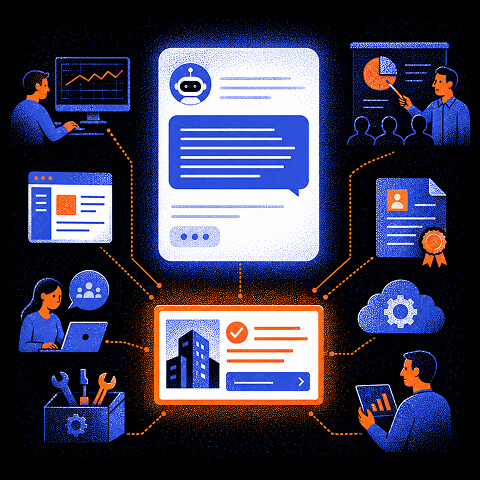
The opportunity comes from conversational intent. A prospective customer may ask ChatGPT: "We need to migrate a 50-page B2B website from WordPress to Webflow. We have an internal marketing team but need an agency for UX, development and SEO migration. What should we look for?" That conversation reveals project type, website platform, scope, internal capabilities, required services, potential buying stage, and evaluation criteria. A relevant agency advertisement could appear below the ChatGPT response while that person is exploring options.
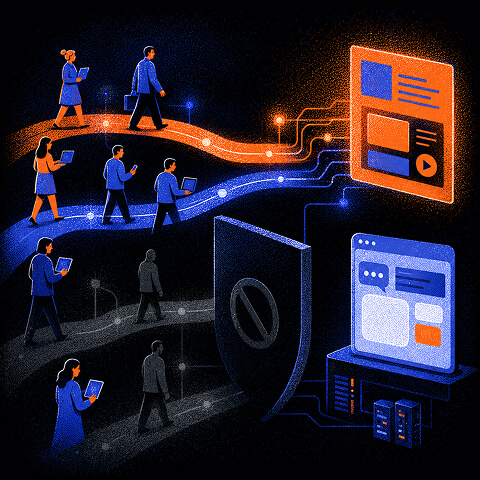
However, B2B advertisers must also consider an important limitation: ads currently appear primarily to eligible ChatGPT Free and Go users. Plus, Pro, Business, Enterprise and Edu accounts are ad-free. Many senior business users and organizations may use one of these paid plans. This means ChatGPT Ads can provide access to meaningful business intent, but the current advertising audience is not identical to ChatGPT's total professional audience. In this guide, we explain how ChatGPT Ads can support B2B lead generation, which companies are most likely to benefit and how to build campaigns around conversational business needs.
What Are ChatGPT Ads for B2B?
ChatGPT Ads are sponsored placements displayed below eligible ChatGPT responses. For B2B advertisers, an ad may promote business software, professional services, agencies, education, business tools, events, online courses, technology products, operational services, or other eligible business offerings. An ad can include a business name, logo, headline, description, image and landing-page link. The advertisement is labelled as sponsored and separated from the organic ChatGPT answer. OpenAI states that advertisers cannot pay to influence ChatGPT's answers or receive access to private conversations.
Can B2B Companies Advertise on ChatGPT?
Yes, provided the advertiser is located in a supported country, the business completes OpenAI's verification process, the service complies with OpenAI's ad policies, the advertiser has an approved landing page, billing is configured, and the campaign and ads pass review. OpenAI Ads Manager is currently available to advertisers in Australia, Canada, Japan, Korea, New Zealand, the United Kingdom and the United States. B2B software, education, technology and general business services may be eligible. Certain regulated sectors, including legal, financial and healthcare services, face additional restrictions and may require case-by-case approval.
Who Sees B2B Ads in ChatGPT?
Ads may appear to eligible ChatGPT Free and Go users. OpenAI currently does not show ads to Plus, Pro, Business, Enterprise or Edu users, users identified or predicted to be under 18, users in Temporary Chats, or conversations involving certain sensitive topics. This is particularly relevant for B2B advertisers: a large organization using ChatGPT Enterprise will not see ChatGPT Ads in that workspace, a consultant using ChatGPT Pro will not see them in that account, and a marketing team using ChatGPT Business will also have an ad-free experience.
However, many professionals use free or lower-cost personal accounts for initial research, career development, side businesses, vendor comparisons, learning, business planning, exploring new tools, and evaluating possible solutions. Advertisers should judge the channel by actual lead quality rather than assuming ChatGPT Ads reach every enterprise decision-maker. OpenAI's advertising FAQ explains which plans currently receive ads.
Why ChatGPT Ads Could Work for B2B
B2B purchasing decisions are often complicated. A buyer may need to consider business requirements, team size, integrations, budget, implementation, security, geography, compliance, existing systems, internal resources, contract terms, and return on investment. These requirements are difficult to communicate through one short search query. ChatGPT allows the buyer to explain the situation conversationally. For example: "We are a Canadian consumer-products company doing approximately $10 million in annual revenue. We use Shopify Plus and Klaviyo, but our Meta reporting is inconsistent. Which attribution tools should we compare?" A relevant software advertisement could potentially align with a highly specific need. The advertiser does not receive this private conversation. OpenAI uses its own system to determine whether an eligible ad matches the context.
Free Brand Health Audit
Make sure your brand is built to sell
Search has changed. Your customers aren't just Googling anymore. They're asking ChatGPT, Perplexity, Gemini and other AI platforms what to buy, who to trust and which brands they should consider.
If your brand isn't showing up clearly in those answers, you're already losing opportunities. Our free Brand Health Audit shows you where your brand stands across traditional search, AI search and brand positioning.

Sample brand audit
Live preview
Traditional search
72
AI search (GEO)
34
Brand positioning
58
ChatGPT Ads vs. Google and LinkedIn, and Which B2B Companies Should Test It
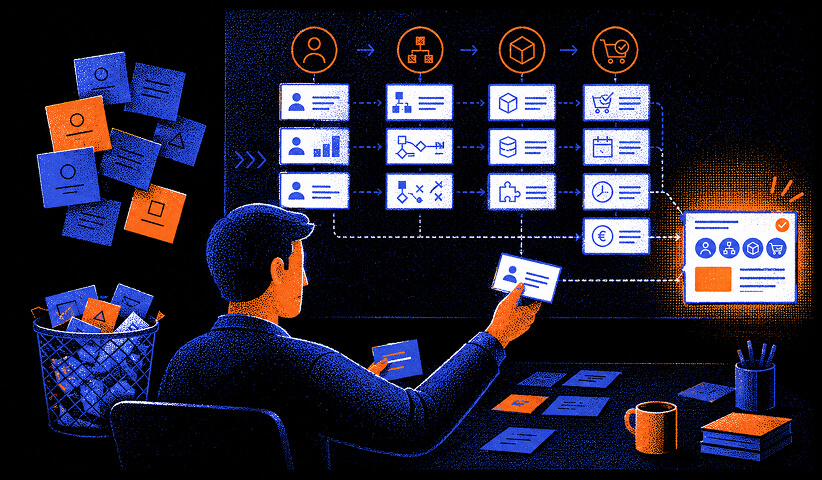
ChatGPT Ads vs. Google Ads for B2B
| ChatGPT Ads | Google Ads |
|---|---|
| Uses conversational context | Uses search queries, keywords and other signals |
| New beta platform | Mature advertising ecosystem |
| Can reach detailed research journeys | Strong for established search demand |
| Does not expose individual conversations | Provides more mature search-term reporting |
| Limited advertising audience | Enormous search audience |
| Fewer campaign objectives | Extensive campaign and bidding options |
| Context hints guide matching | Keywords and AI-powered matching guide delivery |
| Limited historical benchmarks | Extensive historical benchmarks |
Google Search will generally remain the strongest starting point when prospective customers already search for a defined service. ChatGPT may add value when the buyer is still determining what type of solution is needed, which features matter, how to compare alternatives, which provider category is appropriate, or what the project should include.
ChatGPT Ads vs. LinkedIn Ads for B2B
| ChatGPT Ads | LinkedIn Ads |
|---|---|
| Based primarily on conversation relevance | Strong professional and firmographic targeting |
| Limited job-title controls | Job title, industry, company size and seniority targeting |
| Reaches research and decision moments | Reaches users in a professional social environment |
| Newer measurement capabilities | Established lead-generation tools |
| May reveal detailed situational intent | Uses profile and audience data |
| Ads limited to eligible Free and Go users | Broad access across LinkedIn users |
| Lower platform maturity | Mature B2B advertising product |
LinkedIn is generally better when precise firmographic targeting is essential. ChatGPT may be stronger when situational intent matters more than a job title. A founder, operations manager and marketing director may all research the same software problem using different professional profiles. ChatGPT can potentially identify the shared need expressed in the conversation.
Which B2B Companies Should Test ChatGPT Ads?
B2B software companies: software buyers often ask detailed questions about integrations, pricing, features, team size, security, implementation, alternatives, and industry suitability. Examples include CRM software, project-management platforms, marketing technology, analytics, accounting software, HR tools, customer-support software, e-commerce applications, productivity products, and developer tools.
Agencies: agency buyers frequently need help deciding which type of agency to hire, whether to select a specialist or full-service partner, how much a project should cost, which deliverables are necessary, which platform to use, and whether a rebrand is required. Potential advertisers include branding agencies, web-design agencies, development agencies, paid-media agencies, SEO agencies, content agencies, public-relations firms, and packaging-design studios.
Business education: educational products can align with conversations about professional development, certifications, marketing skills, leadership, software training, entrepreneurship, and industry knowledge. Eligible products may include online courses, cohort programs, professional certificates, workshops, business books, and training subscriptions.
Technology and equipment: B2B buyers may use ChatGPT to compare laptops, office equipment, production tools, commercial machinery, point-of-sale systems, communication systems, security tools, and technical hardware.
Professional services: some professional services may be eligible, but regulated categories require caution. General consulting, design, research and operational services may be easier to approve than legal, medical or financial services. OpenAI currently restricts legal services advertising and applies tighter controls to financial and healthcare categories. Review the latest OpenAI advertising policies before building a campaign.
B2B Companies That May Not Be a Strong Fit
ChatGPT Ads may be less attractive when the addressable market is extremely small, the company requires precise account-based targeting, most buyers use ad-free ChatGPT plans, the sales process begins through procurement-only channels, the service is prohibited or restricted, the website lacks a strong lead-conversion path, the business cannot track qualified opportunities, the offer is too vague to match with a clear need, or the sales team cannot follow up promptly. A niche enterprise service targeting 500 named global companies may be better served by account-based marketing, direct outreach, partnerships and LinkedIn.
Want a disciplined way to test ChatGPT Ads for B2B leads? Keep reading!
If you need help building a qualified B2B pipeline across ChatGPT, Google, and LinkedIn, contact us for a free custom quote.
Targeting, Context Hints, Account Structure, and B2B Costs
How ChatGPT B2B Targeting Works
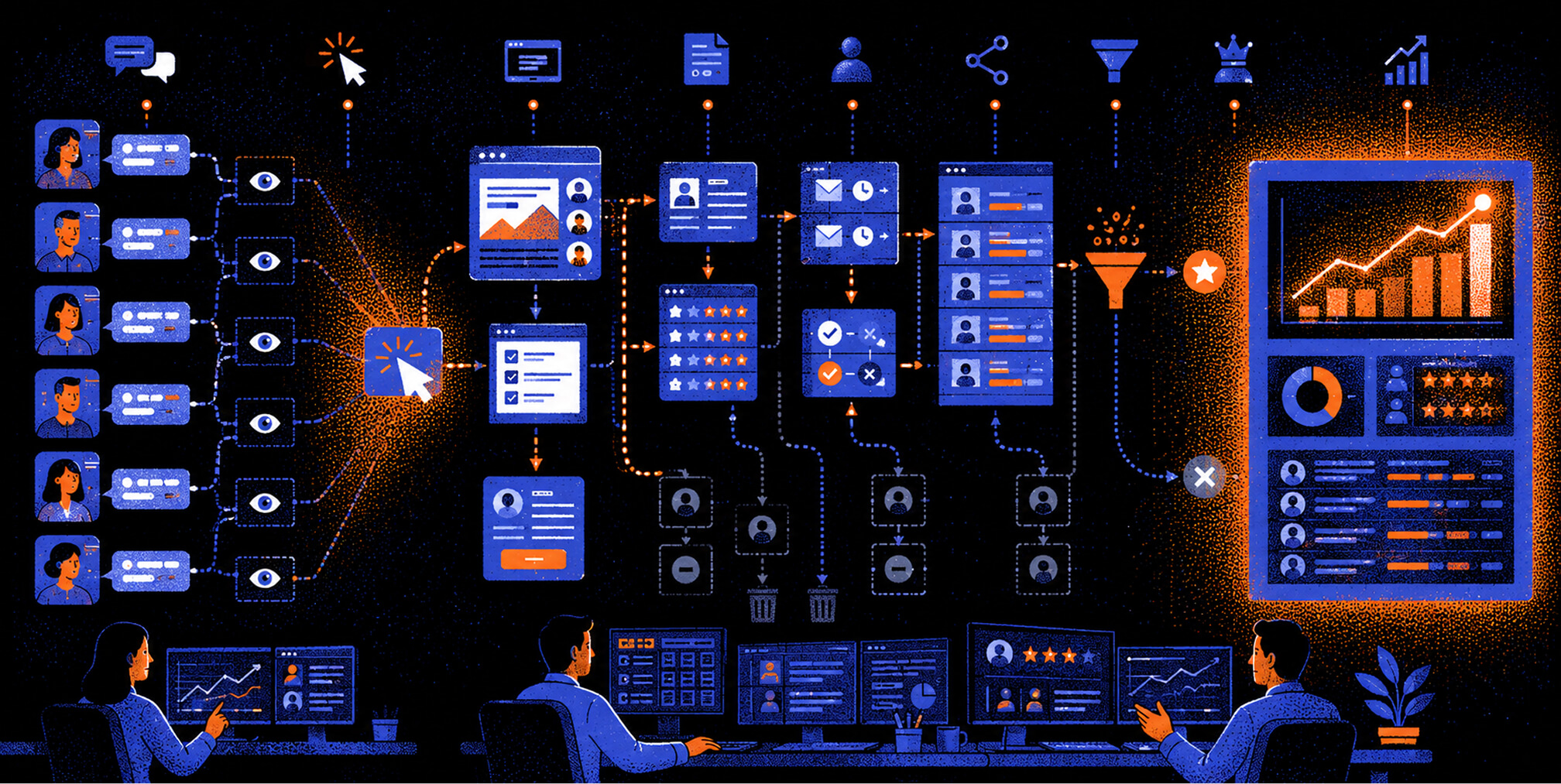
ChatGPT Ads primarily use conversational relevance. OpenAI says ad selection can consider the context of the current conversation, context hints, ad title, ad description, landing page, geographic targeting, bid, custom audiences, and other eligible campaign signals. OpenAI does not provide advertisers with individual ChatGPT prompts, search terms or conversation transcripts. The advertiser must therefore create campaign structure that makes intent categories visible through aggregate performance.
What Are Context Hints?
Context hints are phrases describing the conversations, problems or situations in which the advertisement may be relevant. They are not exact-match keywords. Weak B2B context hints like "marketing," "software," "branding," "agency" or "business growth" are too broad. Stronger B2B context hints include "marketing leaders comparing attribution software for Shopify," "established consumer brands looking for a rebranding agency," "companies planning to migrate from WordPress to Webflow," "operations teams comparing project-management software for remote employees," "founders looking for a fractional creative director," "retail brands preparing several packaging SKUs for production," and "businesses comparing CRM software for a ten-person sales team." The stronger hints describe the customer, situation, need, product or service, and buying context. OpenAI recommends using descriptive phrases rather than isolated terms and keeping each ad group focused on one theme or intent area, per OpenAI's context-hint guidance.
How to Structure a B2B ChatGPT Ads Account
Do not place every service or software feature into one campaign. At the campaign level, separate by country, objective, major service category, customer type, budget, funnel stage, and business initiative. At the ad-group level, separate by customer problem, use case, product, service, audience, and intent theme. At the ad level, create several advertisements testing expertise, outcome, process, proof, differentiator, customer type, and use case.
B2B campaign example: branding agency
Campaign: Canada – Branding Leads – Clicks
Ad group 1: Brand positioning — context hints: founders looking for help clarifying brand positioning; established companies preparing to enter a new market; brands struggling to explain what makes them different; leadership teams comparing brand-strategy consultants; consumer companies repositioning before a website redesign.
Ad group 2: Packaging design — context hints: CPG brands looking for packaging design across several SKUs; frozen-food companies preparing retail packaging; brands that need production artwork from manufacturer dielines; consumer products preparing for Amazon or retail launch; companies extending an approved packaging direction across a product line.
Ad group 3: Shopify design — context hints: established brands planning a Shopify website redesign; companies migrating from WordPress to Shopify; Shopify Plus brands looking for UX and conversion optimization; consumer brands seeking a Shopify design and development agency; e-commerce teams that need brand strategy and website implementation.
This structure allows the agency to determine which service themes generate interest and qualified leads.
Choosing a Campaign Objective
ChatGPT Ads currently support Views, optimized for impressions using CPM pricing, with potential B2B uses including category awareness, product launch, brand positioning, reaching buyers during early research, and building familiarity before a sales campaign. Clicks is optimized for traffic using CPC pricing, with potential B2B uses including demo requests, consultations, free trials, assessments, event registration, report downloads, and service inquiries. For most initial B2B lead-generation tests, the Clicks objective provides a clearer path to measuring website activity. However, OpenAI's current optimization is based on clicks rather than a dedicated lead-generation objective, so conversion tracking remains essential.
ChatGPT Ads B2B Costs
ChatGPT Ads use CPM pricing for Views campaigns and CPC pricing for Clicks campaigns. Advertisers set a maximum bid at the ad-group level. OpenAI currently recommends beginning Clicks campaigns with a maximum CPC bid of approximately $3-$5 USD, although actual costs vary. The current minimum daily campaign budget is $25. A B2B advertiser should not determine affordability based on CPC alone.
A simplified calculation is: Allowable CPC = Lead Conversion Rate × Lead-to-Customer Rate × Allowable CAC. If 5% of visitors become leads, 10% of leads become customers, and the allowable customer acquisition cost is $2,000, then 0.05 × 0.10 × 2,000 = $10. This suggests a theoretical break-even CPC of $10 before accounting for other costs and measurement uncertainty. Use actual funnel data whenever possible.
Writing Ads, Landing Pages, Tracking, Testing, Mistakes, and B2B GEO
How to Write B2B ChatGPT Ads
OpenAI recommends ads that are clear, specific, benefit-focused, useful, accurate, and relevant to the conversation. Avoid empty B2B language such as "transform your business," "unlock growth," "future-proof your company," "innovative solutions," "take your brand to the next level," or "empower your organization" — these phrases do not explain what is being offered. A weak ad might use the title "Unlock Your Growth" with copy "Innovative solutions that transform your business." A stronger ad uses the title "Clarify Your Position" with copy "Brand strategy for established consumer companies" — the stronger version describes the service and intended customer.
B2B Advertising Angles to Test
Expertise: "Shopify strategy, UX and development for established consumer brands." Business outcome: "Reposition your brand before entering a new market." Problem: "Your company has grown. Your brand still looks like a startup." Process: "Positioning, identity and rollout led by one senior agency team." Proof: "A brand-first agency built by founders who have scaled their own consumer company." Specialization: "Packaging design for CPG brands launching across retail and e-commerce." Every claim must be supportable.
B2B Landing-Page Strategy
Do not send every B2B ad to the homepage. Create pages around the specific need. A strong landing page should include a clear headline, the intended customer, the problem, the service or product, differentiation, process, deliverables, relevant proof, case studies, frequently asked questions, timeline, pricing guidance where appropriate, and a direct call to action. If the advertisement is about Shopify migration, the page should explain platforms supported, migration process, SEO preservation, content migration, design, development, integrations, QA, timelines, and relevant examples. A generic "We Help Businesses Grow" page will lose the contextual relevance that made the ad useful.
Choosing the Right B2B Offer
"Contact us" may create too much friction for an early-stage buyer. Test offers such as book a consultation, request a demonstration, start a free trial, get a website audit, download a research report, take an assessment, request a project estimate, view a case study, compare plans, or attend a webinar. The offer should match the customer's readiness — a buyer asking an early educational question may not be ready for a sales call, and a practical guide or assessment may be more appropriate.
Using Custom Audiences for B2B
OpenAI supports custom audiences created from email addresses or phone numbers. Advertisers can use them for campaign inclusion (limiting eligibility to selected customer or prospect audiences), campaign exclusion (preventing delivery to existing customers, employees, closed-lost accounts, current trial users, or other audiences that should not see the campaign), and bid adjustments (increasing or decreasing bids when an eligible user matches a selected audience, such as bidding more for qualified product users, event attendees, high-value prospects, or existing free users eligible for an upgrade).
However, OpenAI currently requires at least 25,000 matched users before an audience can be used and recommends at least 100,000. This threshold makes custom audiences less practical for small B2B databases, per OpenAI's custom-audience documentation. Advertisers must have appropriate permission and legal grounds to use customer information.
B2B Conversion Tracking
OpenAI Ads Manager supports a JavaScript Pixel, Conversions API, UTM parameters, standard events, custom events, and eligible measurement-partner integrations. Potential B2B conversion events include demo request, consultation booking, form submission, free-trial registration, account creation, report download, webinar registration, qualified lead, sales opportunity, and closed customer. Do not optimize reporting around every form submission equally — a student downloading a guide and a qualified enterprise prospect requesting a demonstration do not have the same value.
Connect Marketing and Sales Data
ChatGPT Ads reporting should be connected with your CRM, lead-scoring system, marketing automation, call tracking, sales-opportunity data, closed-revenue reporting, and offline conversion process. Track the complete funnel:
| Funnel Stage | Example Metric |
|---|---|
| Ad exposure | Impressions |
| Engagement | Clicks and CTR |
| Website behaviour | Engaged sessions |
| Lead | Form submission |
| Qualified lead | MQL or SQL |
| Opportunity | Sales pipeline created |
| Customer | Closed-won |
| Business value | Revenue and gross profit |
B2B platforms should be judged by qualified pipeline, not only lead volume.
Can Advertisers See the ChatGPT Conversations?
No. OpenAI does not expose the individual conversations, prompts or search terms that generated an ad click. Advertisers receive aggregate campaign performance information. This protects user privacy but makes account structure important — if one ad group contains six unrelated services, the advertiser will not know which conversational theme caused the click. Focused ad groups make the aggregate results more interpretable.
Recommended B2B Test Plan
Phase 1: Select one use case with clear value, existing proof, strong margins, a dedicated landing page, known customer demand, and reliable tracking. Phase 2: Build three intent themes, such as problem-aware, solution comparison, and provider selection. Phase 3: Create several ads testing genuinely different angles — problem, expertise, outcome, proof, and process. Phase 4: Use a controlled budget, beginning with enough to generate signals without treating the channel as proven. Phase 5: Review lead quality, assessing company fit, role, need, budget, timeline, opportunity value, and sales outcome. Phase 6: Scale selectively, increasing investment only when performance supports it.
Sample B2B ChatGPT Ads
B2B software — Title: "Unify Your Reporting." Copy: "E-commerce attribution across Meta, Google and Shopify."
Branding agency — Title: "Position Before Scale." Copy: "Brand strategy for established consumer companies."
Shopify agency — Title: "Rebuild on Shopify." Copy: "Strategy, UX and development for scaling brands."
Packaging agency — Title: "Launch Retail-Ready." Copy: "Packaging design and production artwork for CPG."
Business education — Title: "Learn Paid Search." Copy: "Practical Google Ads training for in-house teams."
These examples still require adaptation to the brand, audience, landing page and OpenAI's current character requirements.
Common B2B ChatGPT Ads Mistakes
Common mistakes include targeting every business problem instead of keeping campaigns focused; assuming all ChatGPT professionals see ads, when paid-plan and enterprise users do not currently receive them; measuring leads without qualification, since a low CPL can hide poor pipeline quality; using vague corporate language instead of making the service understandable immediately; sending traffic to the homepage instead of intent-specific landing pages; ignoring the sales cycle, since B2B conversions may occur weeks or months after the click; uploading small customer lists that don't meet the match-volume requirement; advertising restricted services without reviewing OpenAI's policies; expecting Google-level search-term reporting, since individual ChatGPT conversations are not disclosed; and scaling before tracking pipeline, rather than verifying lead quality and revenue before increasing spend.
ChatGPT Ads and B2B GEO
Paid ChatGPT Ads do not influence ChatGPT's organic answers. A company can pursue both paid ChatGPT visibility (sponsored placements created through Ads Manager) and organic ChatGPT visibility (mentions and citations influenced by clear website content, technical accessibility, third-party coverage, digital PR, case studies, reviews, authoritative backlinks, consistent brand information, structured data, and original expertise). A B2B buyer may see an ad, research the brand separately and then ask ChatGPT to compare it with competitors. Paid advertising, brand authority and GEO should support one another while remaining independent.
FAQ
Can B2B companies advertise on ChatGPT? Yes. Eligible B2B companies can create campaigns through OpenAI Ads Manager in supported countries.
Are ChatGPT Ads good for B2B lead generation? They may be useful when buyers research complex problems or compare solutions. Performance depends on audience availability, offer, relevance, landing page and sales follow-up.
Do ChatGPT Business or Enterprise users see ads? No. OpenAI currently says ChatGPT Business and Enterprise accounts are ad-free.
Can ChatGPT Ads target job titles? ChatGPT Ads do not currently provide the same job-title targeting associated with LinkedIn. Matching is based primarily on conversational relevance and available campaign signals.
What are context hints? Context hints are descriptive phrases explaining the conversations, needs and situations in which an ad may be relevant. They are not exact-match keywords.
What is the minimum budget? OpenAI currently lists a minimum daily campaign budget of $25.
How much do B2B ChatGPT Ads cost? ChatGPT Ads support CPC and CPM buying. OpenAI recommends an initial maximum CPC bid of approximately $3-$5 USD for Clicks campaigns, but actual costs vary.
Can advertisers see the questions users asked ChatGPT? No. OpenAI does not provide advertisers with individual conversations or search terms.
Are ChatGPT Ads better than LinkedIn Ads? ChatGPT offers conversational intent, while LinkedIn provides stronger professional and firmographic targeting. The right choice depends on whether situational intent or audience precision is more important.
Final Thoughts
ChatGPT Ads introduce a new type of B2B intent. Instead of relying only on job titles or short search queries, advertisers may reach people while they describe a business problem, evaluate alternatives and decide what kind of solution they need. That is valuable — but it comes with limitations. The current platform is new, reporting is less mature, and many high-value business users are on ad-free plans.
B2B advertisers should therefore treat ChatGPT Ads as a disciplined experiment: select one strong offer, build around a specific customer need, use focused context hints, create clear ads, use an intent-specific landing page, track qualified pipeline, compare results with Google and LinkedIn, and scale only when business outcomes support it.
At The Branded Agency, we combine brand strategy, B2B campaign development, paid-media management and conversion optimization to help businesses test emerging channels without losing sight of qualified growth. Contact The Branded Agency to discuss whether ChatGPT Ads are a fit for your B2B marketing strategy.

Quincy Samycia
As entrepreneurs, they’ve built and scaled their own ventures from zero to millions. They’ve been in the trenches, navigating the chaos of high-growth phases, making the hard calls, and learning firsthand what actually moves the needle. That’s what makes us different—we don’t just “consult,” we know what it takes because we’ve done it ourselves.
Want to learn more about brand platform?
If you need help with your companies brand strategy and identity, contact us for a free custom quote.
We do great work. And get great results.
+2.3xIncrease in revenue YoY
+126%Increase in repurchase rate YoY

+93%Revenue growth in first 90 days
+144% Increase in attributed revenue




+91%Increase in conversion rate
+46%Increase in AOV

+200%Increase in conversion rate
+688%Increase in attributed revenue