Predictive AI: 6 Steps to Creative Strategy for Ads for Marketers
10/29/2026
Marketing Strategy
Learn how to use predictive AI and a six-step creative strategy to identify winning ads, reduce wasted spend, and improve campaign performance.
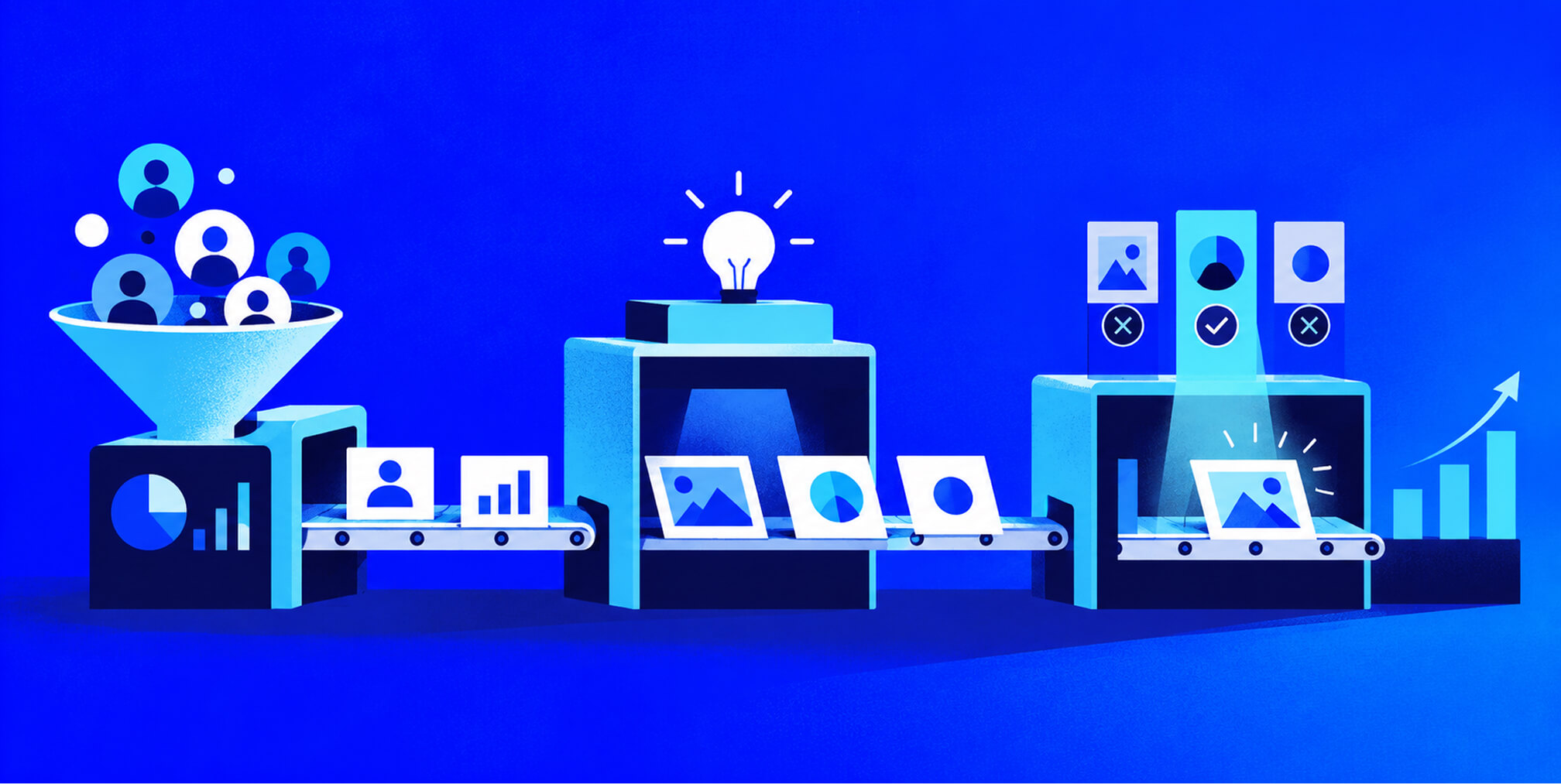
A creative strategy for ads is a repeatable plan that aligns message, format, and testing so ad performance improves predictably instead of by accident. Get it right and you cut wasted media spend, shorten the path from idea to winning variant, and give every campaign a measurable reason to work. This guide breaks that process into a stepwise framework, from research through scaled production, built for teams who need results they can defend in a budget meeting.


What Does Creative Strategy for Ads Actually Mean?


A creative strategy for ads is the framework connecting what you say to how you say it, and both halves have to move together. Content is the proposition, the offer, the emotional hook. Execution is the format, the visual language, the pacing of the cut. A brilliant proposition delivered in a flat, generic format underperforms, and a gorgeous execution wrapped around a weak proposition just burns impressions.
Advertising research backs a specific balance here. A Journal of Marketing meta-analysis covering 93 datasets and 878 effect sizes found advertising creativity works through two distinct dimensions: originality and appropriateness. Originality alone doesn’t move sales; it has to stay relevant to the brand and the audience’s expectations. That single finding should reshape how you brief creative teams, because “make it more original” without an appropriateness check is how brands end up with viral ads nobody remembers buying anything from.
A working creative strategy needs to address, at minimum:
• Audience and context: define the buying stage, customer pain point, and what the person already believes.
• Proposition and offer: state the specific benefit, proof, and reason to act.
• Creative execution: specify the format, hook, visual treatment, placement, and call to action.
• Test design: explain what will vary, what will stay constant, and the intended learning.
• Success measures: select one primary business metric, supporting diagnostics, and clear brand guardrails.
Skip any one of those and you’re not running a strategy. You’re running a guess with a media budget attached.
A Practical 6-Step Framework to Build and Operate Creative Strategy
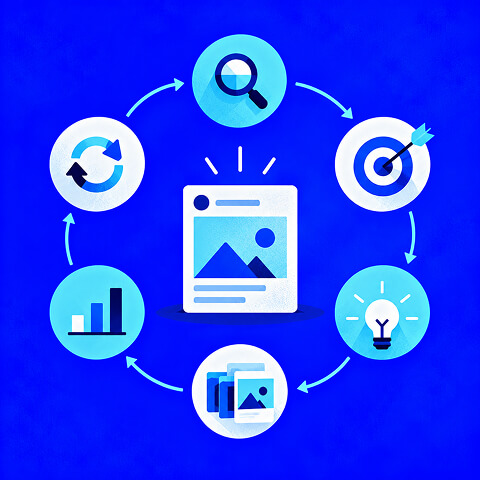
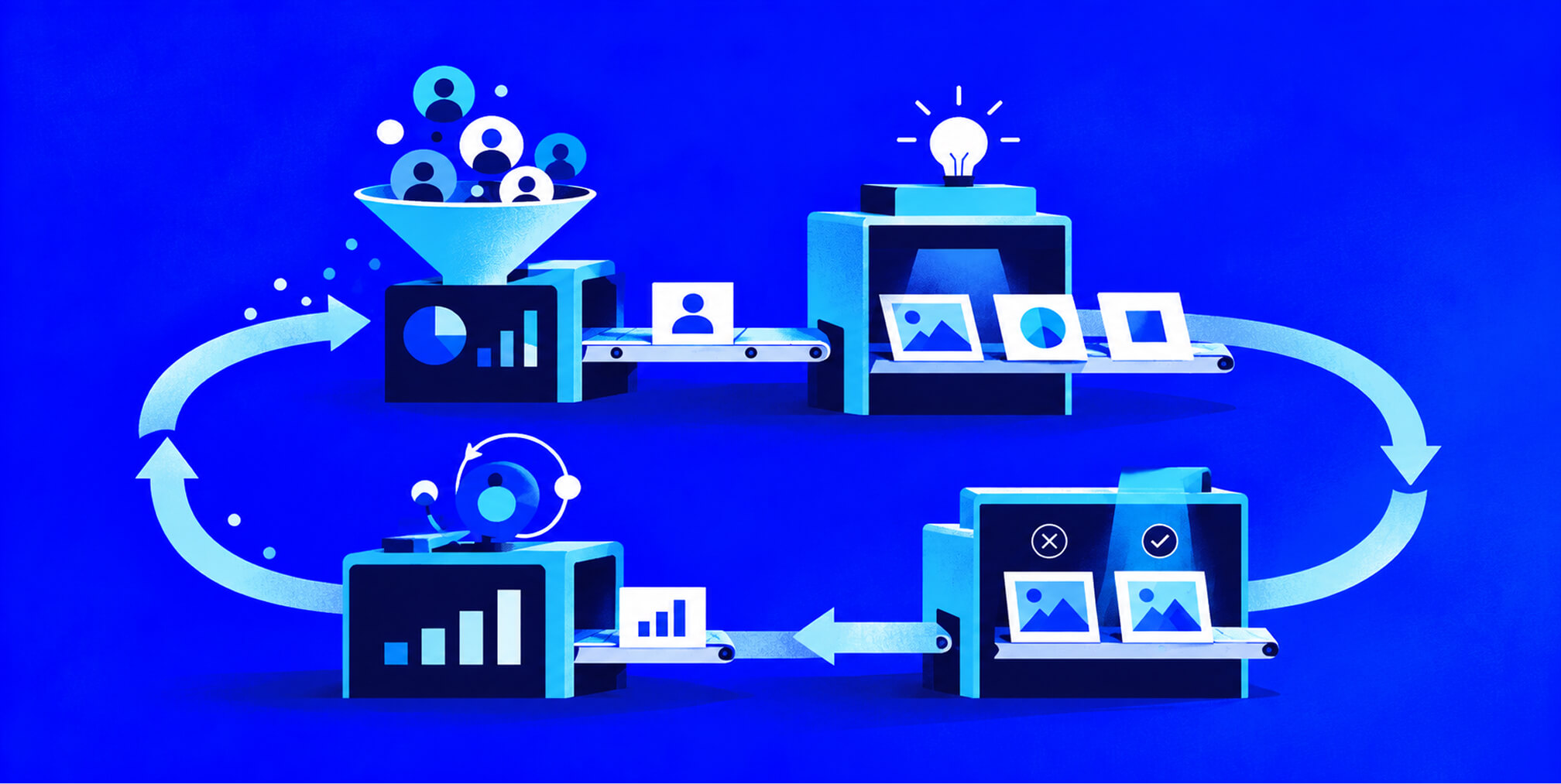
Most creative programs fail not because the ideas are bad, but because there’s no operating system connecting research to launch to iteration. Here’s the six-step loop that turns creative from a one-off request into a scale creative production engine.
• Step 1. Research the audience and the baseline. Review customer language, objections, previous ads, competitor positioning, and conversion quality. Identify one high-value problem to solve.
• Step 2. Write the strategy and hypotheses. Choose the audience, offer, message, emotional angle, and desired action. Predict what a single creative change should improve.
• Step 3. Generate and prioritize concepts. Develop distinct hooks and formats, then rank them by business relevance, brand appropriateness, production effort, and testability.
• Step 4. Produce controlled variants. Build platform-ready assets with consistent tracking. Change one primary creative element per test when causal learning is the goal.
• Step 5. Launch and measure. Agree on the primary outcome, guardrails, minimum data requirements, and stopping rule before going live. Check lead quality or sales impact, not engagement alone.
• Step 6. Learn, scale, and refresh. Record results and limitations, scale validated concepts carefully, and use audience feedback to inform the next research cycle.
Pro Tip: Treat step 6 as the start of the next research phase, not the end of the process. The creative that wins this cycle is your best research input for the next one.
Realistic expectations matter here. Industry experience suggests only a small fraction of new creative concepts beat the existing control, often a small fraction. That’s not a reason to slow down. It’s the reason volume and a clear decision rule matter more than trying to guess the single perfect ad in advance.
• Keep a testing backlog of unproven concepts, recently validated winners, and new variations of proven angles.
• Review the backlog weekly so creative production responds to evidence instead of subjective requests.
How Do You Measure Whether Creative Is Actually Working?
Creative impact should connect to a business outcome, not just an engagement metric. Click-through rate tells you the hook worked. It doesn’t tell you whether the resulting customer stuck around or bought again. Advertising effectiveness research pushes marketers to link creative quality to sales through field experiments or econometric approaches like marketing mix modeling, rather than stopping at impressions or clicks, a shift from vanity reporting to outcome-based measurement.
There’s a technical trap worth knowing before you trust any platform A/B test. A 2025 AMA study identified “divergent delivery,” where ad platform algorithms show different creative variants to different mixes of users rather than a truly randomized split. The result: your A and B groups might not be comparable, which quietly biases the reported winner in a platform’s own test.
Mitigating that takes a few deliberate habits:
• Prefer a randomized split or dedicated experiment design where the platform supports it, and keep audience eligibility, placements, budgets, and timing comparable.
• Audit delivery differences by age, location, device, placement, and frequency before attributing every outcome to creative alone.
• Pre-register the primary metric and decision threshold; do not change the winner criteria after the results appear.
• Use downstream conversion quality, holdouts, or independent measurement when the budget and decision stakes justify it.
• Label ambiguous results as inconclusive rather than declaring a winner from small or uneven samples.
Divergent delivery is a measurement bias risk, not a testing failure. It means the test itself can be structurally uneven before you ever look at a result, which is exactly why cross-platform validation belongs in every serious creative review process.
Where Does AI Fit Into Creative Testing Now?
AI’s biggest current contribution to creative strategy is speed, not judgment. Platforms using Vision AI can compress creative performance prediction from weeks of live testing down to hours, giving teams accurate directional reads before spending real media dollars, according to Think with Google’s research on AI-driven marketing effectiveness. That timeline compression changes how many concepts you can realistically test in a quarter.
Adoption is real but uneven. Reports from Google and Kantar show 57% of marketers already use AI for creative production and 45% for generating variants, yet fewer than 25% use a single tech-enabled tool for creative measurement. That gap between production adoption and measurement adoption is where most teams are leaving performance on the table.
The split that works in practice:
• AI supports: audience signal analysis, idea generation, rapid copy and visual variants, tagging, pattern detection, and prioritizing concepts for live testing.
• Humans own: strategy, claims verification, brand fit, cultural nuance, legal review, and the final budget decision.
• Live experiments validate: whether predicted attention and engagement translate into qualified actions, revenue, or incremental lift.
• Governance protects quality: document prompts and inputs, review usage rights, inspect outputs, and restrict sensitive customer data.
Pro Tip: Don’t let AI-generated predictive scores replace your holdout tests entirely, use them to prioritize which concepts get real budget first. An AI-assisted content workflow that keeps a human decision point at brand fit and appropriateness tends to outperform either a fully manual or fully automated approach.
Free Brand Health Audit
Make sure your brand is built to sell
Search has changed. Your customers aren't just Googling anymore. They're asking ChatGPT, Perplexity, Gemini and other AI platforms what to buy, who to trust and which brands they should consider.
If your brand isn't showing up clearly in those answers, you're already losing opportunities. Our free Brand Health Audit shows you where your brand stands across traditional search, AI search and brand positioning.

Sample brand audit
Live preview
Traditional search
72
AI search (GEO)
34
Brand positioning
58
How Should You Structure a Team to Scale Creative Production?



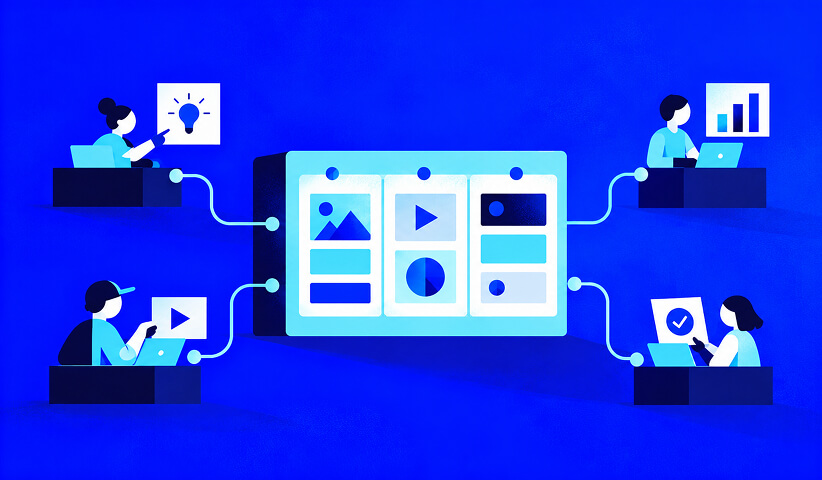
Creative operations, not creative talent alone, is what separates teams that scale output from teams that burn out their best designer. The roles that make this repeatable: a strategist who owns the brief and the test plan, a creative producer who manages batching and format adaptation, an analyst who owns the measurement loop, and a reviewer with final sign off on brand and appropriateness. A simple RACI clarifies this fast: the strategist is Accountable for the brief, the producer is Responsible for output, the analyst is Consulted on every launch decision, and brand leadership is Informed before anything ships to a sensitive audience.
Process primitives matter more than most teams admit:
• One shared intake form: capture campaign objective, audience, offer, creative request, due date, and hypothesis before production begins.
• One creative backlog: rank opportunities by expected impact, production cost, and strength of evidence.
• One asset naming system: identify channel, concept, format, version, and date so reports map back to actual ads.
• One approval sequence: strategist checks the hypothesis, brand reviewer checks quality, and media owner checks tracking and specifications.
• One weekly review: evaluate winners, fatigue, losses, and the next set of variations without restarting the strategy each sprint.
Backlog prioritization should weigh expected impact against production cost, and budgets should separate testing spend from big-production spend explicitly. Pairing a creative analyst with the creative team, rather than treating measurement as a downstream report, is one of the more reliable ways to surface winning concepts faster.
Copy-Ready Templates for Briefs and Test Plans
A one-paragraph creative brief should cover: the audience segment, the core proposition in one sentence, the hook direction, the required format(s), the call to action, and the metric defining success. Keep it to five sentences. If your brief runs longer than that, the concept probably needs to be split in two.
A test-plan checklist worth copying into your creative review process:
• Hypothesis: write one sentence predicting what change should improve which outcome and for whom.
• Control and treatment: specify the existing baseline and the single variable being tested.
• Audience and placement: record targeting, exclusions, format, landing page, and intended delivery conditions.
• Primary metric: choose one business-relevant outcome and define exactly how it is calculated.
• Guardrails: monitor conversion quality, customer acquisition cost, negative feedback, and brand or compliance risk.
• Sample and duration: estimate the data needed, account for conversion delay, and agree on a stopping rule before launch.
• Decision and documentation: record launch dates, owner, result, limitations, next action, and where the learning will be reused.
Two heuristics worth memorizing: the 70:20:10 split for allocating creative budget across proven, adjacent, and experimental ideas, and the 3:3:3 rule, three seconds to earn attention, three key messages maximum per ad, three variations tested before you commit budget at scale. Neither is a law of physics. Both are useful defaults when a team is deciding fast and needs a shared shorthand.
Who’s Behind This Playbook
This guide draws on advertising effectiveness research spanning peer reviewed meta-analysis, AMA practitioner reporting, and Google’s own creative measurement studies, the same body of evidence marketing teams should be checking before trusting a single platform dashboard. The Branded Agency operationalizes this exact framework for growth-stage clients: research-driven briefs, batched production, and a measurement loop that treats every launch as an input to the next one.
Two services map directly onto the steps above. The agency’s AI Content Studio handles the variant generation and rapid prototyping described in steps two and four, with a human reviewer keeping brand fit intact. Paid media management closes the loop from launch through evaluation, connecting creative performance back to the business metrics that actually justify the spend.
Why Consumer Psychology Belongs in Every Brief
Behavioral patterns predict ad response more reliably than gut instinct, and the strongest creative strategies build those patterns into the brief itself rather than layering psychology on after the fact. Loss aversion, the tendency to weigh a potential loss more heavily than an equivalent gain, tends to outperform pure benefit statements in categories where risk is the real barrier, insurance, financial products, health. Social proof, seeing other people already using or endorsing something, works because humans default to group behavior as a shortcut for judging quality under uncertainty.
Attention itself is a behavioral bottleneck, not just a creative one. The first three seconds of any feed-based ad compete against a scroll reflex that’s become nearly automatic, which is exactly why hook quality gets weighted so heavily in the 3:3:3 heuristic above. A proposition that’s technically true but emotionally flat loses to a weaker proposition delivered with a stronger hook, because attention is the gate everything else has to pass through first.
The practical move is building a short behavioral checklist into the brief template: which bias or heuristic is this creative leaning on, and does the visual execution actually support it, or just state it. An ad claiming urgency without any visual or copy cue reinforcing scarcity is asking the psychology to do work the execution isn’t backing up. That mismatch between claimed behavioral lever and actual execution is one of the quieter reasons creative underperforms even when the strategic thinking behind it was sound.
Want to learn more about Digital Marketing and Strategy? Keep reading!
If you need help with your company’s marketing, contact us for a free custom quote.
Where Creative Strategies for Ads Usually Break Down
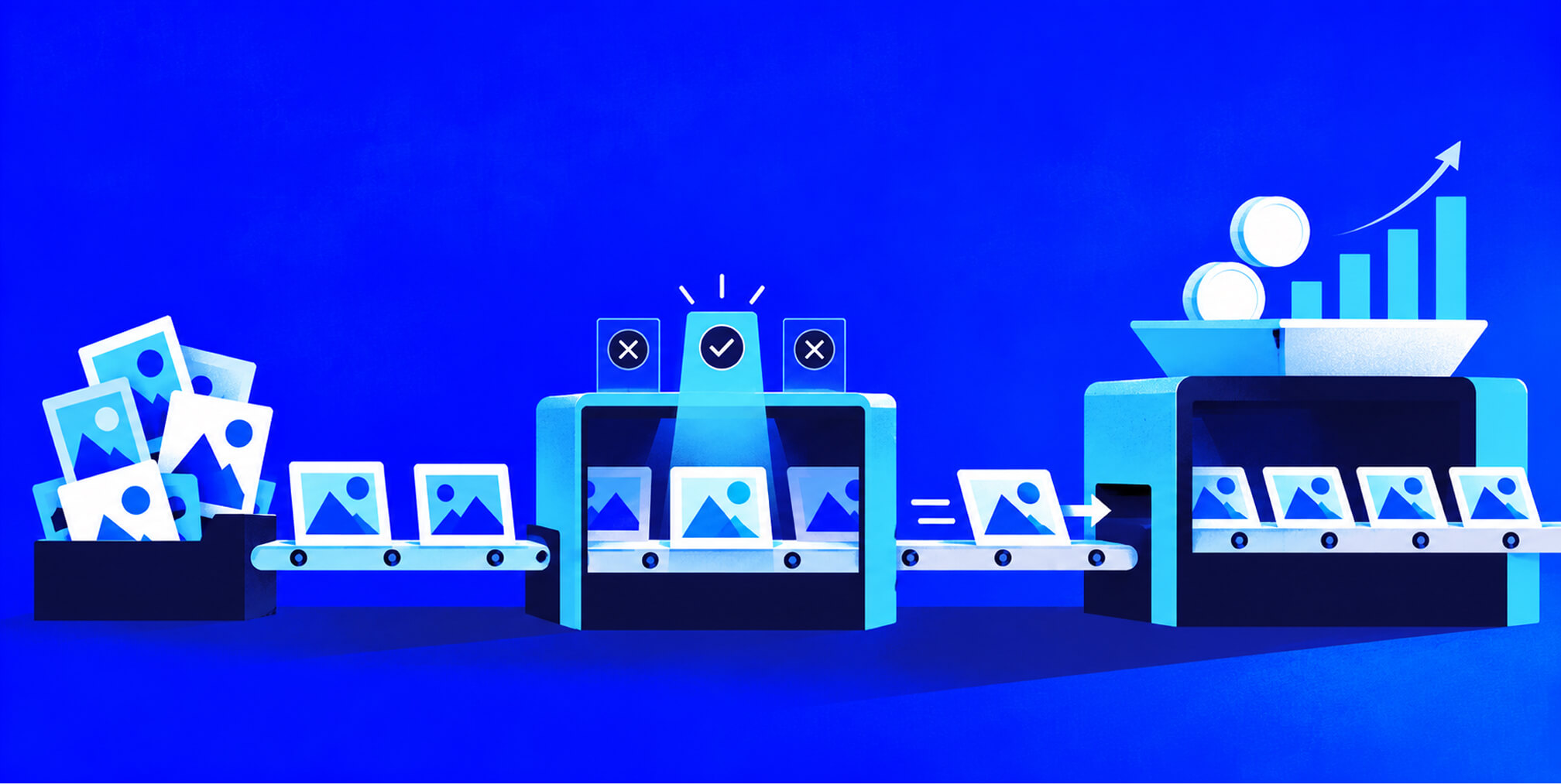
Most creative strategy failures trace back to a handful of repeatable mistakes, not a lack of talent or budget. The most common one is skipping the brief’s acceptance criteria, launching a concept without defining what success looks like, then arguing about the result after the fact instead of before it.
A second common pitfall is confusing originality with performance. Teams chase novelty because it’s more fun to produce and easier to get internal buy-in on, but the meta-analysis on advertising creativity is clear that originality without appropriateness doesn’t reliably move outcomes. A wildly creative ad that ignores what the audience actually expects from the category can win awards and lose sales in the same quarter.
Third, teams frequently test too few variants to draw a real conclusion, then treat a single platform’s A/B result as final, without accounting for divergent delivery bias. Fourth, creative and media teams operate in silos, with the media team optimizing delivery against creative assets they had no input on and no context for, which wastes the strategic thinking that went into the brief.
Fifth, and easy to underestimate, is fatigue. A winning ad gets left running unchanged until performance quietly decays, because nobody owns the pulsing and refresh cadence. Build refresh checkpoints into the iteration schedule from the start, not as an afterthought once metrics start slipping.
How Creative Strategy Connects to the Broader Brand
Creative strategy that runs disconnected from brand strategy produces ads that perform in isolation and confuse everywhere else. A performance ad promising something the brand experience doesn’t deliver generates short-term clicks and long-term churn, because the gap between the ad’s promise and the actual product surfaces the moment someone converts.
The fix is integrating content and execution planning into the same loop as brand positioning, not treating creative as a downstream execution function that receives brand guidelines as a constraint rather than a resource. Research on advertising elasticity supports this directly: when what you say and how you say it move together, and both stay tethered to the same underlying positioning, creative is far more likely to shift actual customer perception and behavior, not just ad-level engagement metrics.
In practice, that means brand and performance marketing teams reviewing the same brief, not two separate ones. It means every creative concept gets checked against brand voice and positioning before it gets checked against predicted click-through rate. And it means the metrics that matter to brand, awareness lift, perception shift, aren’t treated as a “nice to have” layered on top of a purely performance-driven review process. Brands trying to scale past their early growth stage tend to hit this wall specifically: the performance engine that worked when the brand was small starts producing creative that technically converts but slowly erodes the positioning that made the brand distinct in the first place.
How Much Should You Budget for Creative Testing vs. Production?
Most teams overspend on hero production and underspend on testing volume, then wonder why they run out of fresh angles by month three. A workable split allocates a defined testing budget, funding the volume of rough variants needed to find winners, separately from a production budget for scaling the concepts that already proved themselves.
The 70:20:10 allocation from the ideation step doubles as a rough budgeting guide: the majority of spend goes toward proven, already-validated formats and angles, a meaningful slice toward adjacent variations, and a small deliberate slice toward genuinely experimental swings that might not pay off this cycle but keep the concept pipeline from going stale.
Resource allocation should also account for production cost per variant, not just total budget. A format that’s cheap to adapt, swapping copy on an existing static template, supports far more test volume than a fully bespoke video shoot, and testing budgets stretch further when early-stage concept validation happens in the cheaper format before committing to expensive production value. Reserve the higher-cost production for concepts that have already cleared a predictive or small-scale test, rather than betting full production budget on an unvalidated idea.
Smaller teams and growth-stage companies often benefit from treating creative testing as its own line item, separate from media spend, precisely because it’s the easiest budget to cut when a quarter gets tight, and it’s usually the wrong one to cut first.
The Near Future of Creative Strategy Is Predictive, Not Reactive
The shift already underway is from AI as a pilot project to AI embedded directly into daily creative operations, with predictive testing and scaled variant production feeding one continuous data loop instead of separate, occasional exercises. Teams that treat this as optional will keep testing fewer concepts, slower, while competitors compress that same cycle to days. The one move worth making this quarter: adopt a single, standardized test-plan template across every campaign, so measurement stops being an afterthought and starts being the thing that makes every future creative decision faster than the last one.
Ready to Turn This Framework Into Results?
Building the framework is one thing. Running it consistently, with the right people, the right cadence, and a measurement loop that doesn’t fall apart under divergent delivery bias, is where most internal teams get stuck. The Branded Agency exists at exactly that intersection: brand strategy, creative production, and performance marketing built into one integrated system instead of three disconnected vendors.
Rather than handing you a deck and walking away, the agency’s Creative Services team can audit your last two quarters of ad performance and identify where your brief process, testing cadence, or measurement loop is leaving money on the table. If you’re specifically looking to pair that creative work with managed media execution, the paid media management offering starts at $5,500 per month and folds directly into the six-step framework above, from research through scaled iteration. Growth-stage teams evaluating AI-assisted variant production at scale can also compare notes with platforms like Baby Love Growth, which focuses specifically on AI content scaling.
The next step is simple: request a creative audit through the pricing page and get a clear read on where your current process is actually losing performance before you spend another dollar guessing.
Frequently Asked Questions
What Is an Example of Creative Strategy?
A creative strategy for a subscription skincare brand might pair a loss-aversion hook (“your skin barrier is breaking down without you noticing”) with user-generated video format and a clear CTA, then test that against a benefit-led angle before scaling the winner. The strategy is the plan connecting message, format, and audience, the ad itself is just the execution of that plan.
What Is the 3-3-3 Rule for Marketing?
The 3:3:3 rule is a shorthand heuristic: three seconds to capture attention, three key messages maximum per ad, and three variations tested before committing significant budget. It’s a practical default for teams that need a shared standard for pacing creative decisions, not a strict scientific formula.
What Does the 70:20:10 Rule Mean in Advertising?
It balances protecting current performance with continuing to search for the next breakout creative.
• 70% goes to proven messages and formats that reliably meet the campaign objective.
• 20% goes to adjacent iterations, such as a new hook or format built on an established winning proposition.
• 10% goes to unproven concepts that might unlock the next meaningful performance gain.
• Treat the split as a planning heuristic, not a fixed industry standard; adjust it for campaign maturity, budget, and risk tolerance.
What Is a Creative Strategy in Marketing?
A creative strategy in marketing is the framework aligning what a brand says, its proposition and message, with how it says it, the format and execution, against a specific audience and a defined measurement plan. It’s the layer that sits between brand positioning and the individual ad, ensuring every execution ties back to a testable business outcome.
How Does The Branded Agency Approach Creative Strategy?
The Branded Agency builds creative strategy around the same research to production to measurement loop outlined in this guide, combining brand strategy with performance execution. Pricing for Creative Services and Paid Media Management, starting at 4000 USD and 5500 USD per month respectively, are listed on the pricing page.

Quincy Samycia
As entrepreneurs, they’ve built and scaled their own ventures from zero to millions. They’ve been in the trenches, navigating the chaos of high-growth phases, making the hard calls, and learning firsthand what actually moves the needle. That’s what makes us different—we don’t just “consult,” we know what it takes because we’ve done it ourselves.
Want to learn more about brand platform?
If you need help with your companies brand strategy and identity, contact us for a free custom quote.
We do great work. And get great results.
+2.3xIncrease in revenue YoY
+126%Increase in repurchase rate YoY



+93%Revenue growth in first 90 days
+144% Increase in attributed revenue




+91%Increase in conversion rate
+46%Increase in AOV



+200%Increase in conversion rate
+688%Increase in attributed revenue