One Hypothesis, One Metric: Creative Testing for Paid Media Teams
10/27/2026
Marketing Strategy
Learn how to build a creative testing strategy that identifies winning ads, reduces wasted spend, and improves campaign performance.

The best creative testing strategy is hypothesis-driven, not exploratory: pick one primary metric, build a control against a single focused variant, and run it inside a defined test window before touching another variable. Layer in platform experiments for speed and contextual pre-testing for high-stakes launches. Document every result. That discipline is what turns creative testing from guesswork into a repeatable growth engine.


What Is a Creative Testing Strategy That Actually Works?



A working creative testing framework starts before you touch an ad account. Most teams skip straight to launching variants, then wonder why results contradict each other three weeks later. The fix is procedural, not creative: treat every test like an experiment with a written prediction attached to it.
Here’s the workflow that The Branded Agency uses on paid media accounts, adapted from Google’s own testing guidance:
• Write a testable hypothesis. Name the audience, the creative element being changed, the expected direction of improvement, and why that change should work.
• Choose one primary metric. For example, use cost per qualified lead for B2B lead generation, while tracking click-through rate and lead quality as diagnostics.
• Keep a genuine control. Compare the new ad against a stable baseline with the same offer, destination, audience, and conversion goal wherever the platform allows.
• Change one meaningful variable. Test a headline, visual concept, opening hook, format, or offer framing rather than several changes that make the result hard to interpret.
• Set the decision rule before launch. Define the minimum practical improvement, acceptable guardrails, budget, duration, and evidence needed to act.
• Run, document, and apply the result. Record outcomes and limitations, then use the learning to write the next hypothesis.
Pro Tip: Write the decision rule as a sentence you’d be comfortable defending in a meeting: “If Variant B beats Control by X% on [metric] with no drop in [guardrail], we scale it.” That sentence is what keeps a test honest.
How Do You Test Ad Creatives on Each Platform?
Platform mechanics differ enough that a generic testing playbook falls apart in execution. Here’s how to test ad creatives without fighting each platform’s delivery system.
• Google Ads: Use campaign experiments where supported, with a defined traffic or budget split and one primary conversion goal. Keep bid strategy, targeting, and landing page conditions comparable.
• Meta Ads: Use the platform’s A/B test capability for a controlled comparison. Avoid changing audience, placement, or budget partway through the experiment; separate formal tests from routine creative rotation.
• LinkedIn Ads: Compare focused variants in matched campaign conditions and judge them by downstream lead quality when CRM data is available. Small B2B audiences may require longer observation windows.
• TikTok and other short-form video channels: Test the opening hook or storytelling format while keeping the offer consistent. Check both attention metrics and the downstream outcome.
• Across all platforms: Save test dates, audience conditions, creative versions, spend, and any delivery changes so conclusions remain interpretable.
For cross-platform validation, run incrementality tests when budget allows. Platform-reported conversions and true lift often diverge, and an incrementality testing framework catches the gap.
What Metrics Should You Track During a Creative Test?
Pick one metric that answers the business question, then surround it with diagnostics that catch problems the primary metric can’t see on its own.
Your primary metric depends entirely on campaign objective. A prospecting campaign might live or die on cost per click; a bottom-funnel campaign should be judged on cost per acquisition or return on ad spend. Never let the primary metric shift mid-test because a secondary number looks more flattering.
• Primary outcome: Cost per qualified lead, cost per acquisition, conversion rate, or return on ad spend, selected to match the campaign goal and available volume.
• Diagnostic metrics: Click-through rate, cost per click, thumb-stop or video hold rate, landing page engagement, and frequency. These help explain the outcome but do not replace it.
• Guardrails: Lead quality, sales acceptance, brand suitability, conversion volume, and customer acquisition efficiency. A better click rate is not a win if qualified pipeline declines.
• Interpretation: Report the observed difference, sample sizes, spend, test dates, and uncertainty. Mark inconclusive tests as inconclusive rather than declaring a winner.
Contextual pre-testing can add predicted attention, comprehension, emotional response, or short-term sales likelihood. Use these scores to identify creative risk before launch, not as proof of real-world conversions.
That’s a meaningful signal for creative quality, but it’s a predictive indicator, not a replacement for live platform data.
When platform metrics and brand signals disagree, don’t average them. Ask which one actually answers the question you asked in your hypothesis, and treat the other as context for the next round of creative experimentation.
When Should You Use Pre-Launch Contextual Testing?
Contextual pre-testing earns its cost when the stakes are high enough that guessing wrong is expensive: a major brand launch, a six-figure media buy, or creative you plan to run across multiple markets. It measures things platform data can’t: attention, emotional response, comprehension, and short-term sales likelihood, often summarized as STSL scores.
Reach for a pre-test when:
• The campaign is a high-profile brand or product launch where misunderstanding would be costly.
• The same asset will appear in several markets, languages, channels, or audience contexts.
• The media commitment is large enough that an early creative mistake would consume substantial budget.
• The message depends on subtle distinctions, complex benefits, or a potentially confusing offer.
• The team needs evidence about attention, comprehension, or brand response that ad-platform conversion metrics cannot provide.
Turnaround is typically fast, often within days, which makes pre-testing a filter before spend, not a replacement for it. Kantar’s own analysis pairs pre-test data with live platform response precisely because neither method alone tells the full story. Fold a strong pre-test score into your hypothesis as supporting evidence, then still run the platform experiment to confirm it holds under real audience behavior.
Free Brand Health Audit
Make sure your brand is built to sell
Search has changed. Your customers aren't just Googling anymore. They're asking ChatGPT, Perplexity, Gemini and other AI platforms what to buy, who to trust and which brands they should consider.
If your brand isn't showing up clearly in those answers, you're already losing opportunities. Our free Brand Health Audit shows you where your brand stands across traditional search, AI search and brand positioning.

Sample brand audit
Live preview
Traditional search
72
AI search (GEO)
34
Brand positioning
58
What Mistakes Ruin a Creative Test?
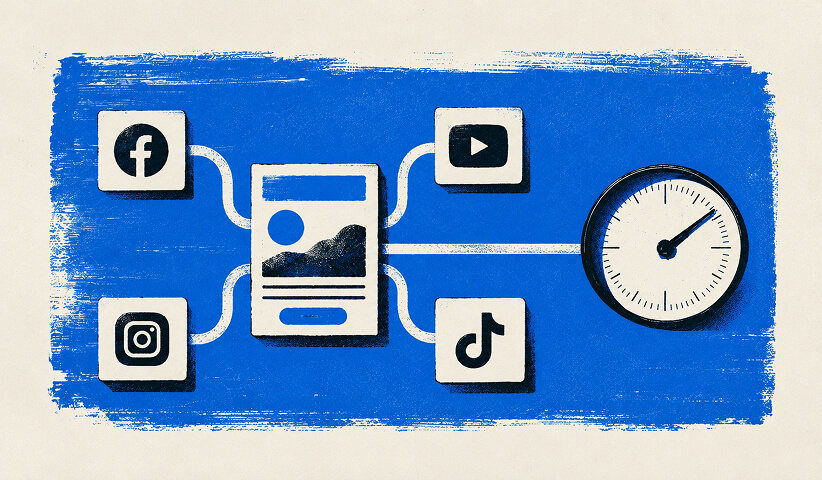



Most failed tests aren’t failures of creativity. They’re failures of discipline.
• Changing several creative elements at once, then claiming to know which element drove the result.
• Ending an experiment as soon as an early trend looks favorable, without adequate sample size or a predefined stopping rule.
• Changing budgets, targeting, bids, or landing pages during the test, which introduces confounding variables.
• Selecting the winning metric after results arrive instead of committing to a primary metric beforehand.
• Calling a statistically or practically inconclusive difference a win, or ignoring lead quality and brand guardrails.
• Failing to log the result, causing other campaigns to repeat the same experiment.
Pro Tip: Keep a shared test registry with hypothesis, primary metric, threshold, start and end dates, and outcome for every experiment. It takes five minutes to fill out and saves entire quarters of redundant testing.
How Do You Run One Creative Test From Start to Finish?
1. Diagnose the problem. Identify the specific funnel constraint: weak attention, low click-through, poor landing page conversion, or low-quality leads.
2. State the hypothesis. Example: “A proof-led headline will reduce cost per qualified lead compared with the current benefit-led headline.”
3. Define the outcome. Choose cost per qualified lead as the primary metric and lead quality and spend as guardrails.
4. Prepare a controlled variant. Keep the same audience, offer, landing page, and measurement setup while changing only the headline.
5. Set the test plan. Agree on traffic split, minimum evidence, budget, observation window, and the decision threshold before launch.
6. Validate tracking. Test the ad links, conversion events, UTMs, and CRM handoff before accepting results.
7. Run without midstream edits. Monitor delivery and tracking problems, but avoid changing test conditions just to improve early performance.
8. Decide and document. Scale a validated winner, iterate when the result is inconclusive, and archive what the test taught the team.
The Branded Agency’s Approach to Creative Testing
The Branded Agency builds every creative test around brand-backed performance™: hypotheses that protect brand equity while chasing a single measurable outcome. That means documentation templates, pre-agreed decision rules, and iteration cycles built into paid media management from day one, so testing compounds instead of restarting each quarter.
— Quincy Samycia
Budget Allocation Strategies for Creative Testing Campaigns
There is no universal testing-budget percentage that fits every account. Reserve enough spend to observe a meaningful difference in the selected outcome, based on historical conversion rates and the minimum effect worth acting on. Treat any fixed budget split as a planning starting point, not a statistical guarantee.
If the allocation is too small, the test may never produce enough outcome data to support a decision. If it is too large, spend stays tied up in uncertain creative instead of proven performers.
Split test budget by confidence, not by creative count. A first-round test with three untested concepts against a proven control deserves a smaller, cheaper slice of spend than a second-round test narrowing between two strong finalists. Front-load budget toward the variant closer to statistical confidence rather than splitting evenly across every idea in the queue.
Account for platform minimums before setting splits. Google Ads experiments and Meta’s dynamic creative both need a baseline level of daily spend to exit the learning phase within a reasonable window; a test starved below that threshold produces noise, not signal, regardless of how clever the creative is.
Separate testing budget from scaling budget in your reporting, even if they draw from the same account. Blending the two makes it look like testing “wastes” spend when in reality it’s protecting the scaling budget from being poured into an untested loser. Teams that ring fence a testing allocation, even a modest one, tend to build a much larger bank of validated creative over a year than teams that test opportunistically whenever budget happens to be idle. That consistency, not the size of any single test, is what compounds into a real creative advantage.
How Do You Read Qualitative Feedback Alongside the Numbers?
Quantitative results tell you what happened. Qualitative feedback, comments, survey responses, sales team pushback, customer service tickets, tells you why. Treat the two as complementary evidence, not competing verdicts.
A variant can win on click-through rate while comment sections fill with confusion about the offer. That’s not a contradiction to ignore; it’s a signal that the click driver and the comprehension problem are two different issues, and both need addressing before you scale spend behind the “winning” creative.
Weight qualitative input by volume and specificity, not by how loud or recent it is. Ten comments pointing at the same confusing phrase in an ad’s copy carry more diagnostic value than one strongly worded complaint. Vague sentiment (“people don’t like it”) is far less useful than a specific pattern (“multiple comments ask what the discount actually applies to”).
Use qualitative signals to shape the next hypothesis, not to overturn the current test’s decision rule. If the numbers say Variant B won on the primary metric, let it win. But if the comments consistently flag friction in the offer, that becomes the hypothesis for the next round rather than a reason to second-guess a result that already cleared its threshold.
Pre-test comprehension data, when you’ve run one, and post-launch comment sentiment often point at the same weak spot from two different angles. When platform data, pre-test scores, and audience comments all flag the same friction point, that’s the strongest possible case for revising the creative before the next spend increase, regardless of how the primary metric read.
How Should Test Results Change Your Broader Marketing Strategy?
A creative test that ends the moment you declare a winner has wasted half its value. The real payoff comes from feeding what you learned back into strategy beyond the campaign it ran in.
Start by separating creative-level learnings from campaign-level learnings. If a UGC-style variant outperformed a studio-produced asset, that’s not just a note for the next ad set. It’s an input for how the content calendar gets briefed, how much budget goes toward polished production versus creator partnerships, and how the ad copy briefs get written going forward.
Build a living creative brief informed by validated patterns rather than starting from a blank page every quarter. Over enough test cycles, patterns emerge: certain hooks consistently outperform in the first three seconds, certain offer framings reduce confusion, certain formats transfer well across platforms and others don’t. Codify those into the next round’s starting hypotheses instead of re-testing settled questions.
Share results across teams that touch the same audience, not just within the paid media function. A finding about what messaging resonates in a Meta test has implications for email subject lines, landing page headlines, and even sales enablement material. Siloed testing programs re-learn the same lessons in isolation; integrated ones compound faster because insight moves in both directions between channels.
Revisit the test registry quarterly, not just per campaign. A pattern invisible in any single test, like a format that underperforms specifically in colder audiences, often only becomes visible once you can compare a dozen tests side by side.
Want to learn more about Digital Marketing and Strategy? Keep reading!
If you need help with your company’s marketing, contact us for a free custom quote.
What Cognitive Biases Distort Creative Testing Results?

Bias creeps into creative testing exactly where teams feel most confident, which is what makes it dangerous.
Confirmation bias shows up when a marketer already likes a creative concept and unconsciously reads ambiguous results as support for it. The fix is the pre-registered hypothesis from earlier in this guide: writing the prediction down before launch removes the wiggle room to reinterpret a mixed result after the fact.
Recency bias convinces teams that the last three days of a test, often the noisiest, most volatile stretch, represent the true trend. This is why a predefined minimum impression threshold matters more than a fixed calendar window; cutting a test short because the last 48 hours looked bad ignores the statistical noise built into small samples.
The sunk cost trap shows up after a creative concept has already absorbed a large production budget. Teams keep testing variations of an underperforming concept rather than admitting the core idea didn’t work, because the upfront cost feels wasted otherwise. A written decision rule, set before you know the outcome, protects against this exact temptation.
HiPPO bias, deferring to the highest-paid person’s opinion regardless of what the data says, kills more valid test results than any statistical error. The countermeasure is procedural: circulate the decision rule and primary metric before launch, so the standard for a win is agreed upon before anyone has a personal stake in a specific creative’s success.
Fast Platform Tests or Contextual Pre-Testing?
Run fast, in-platform experiments when you’re optimizing an existing campaign and need frequent iteration on a tight budget. Reserve contextual pre-testing for brand launches, expensive media buys, or creative crossing into an unfamiliar context, where a wrong guess is costly to unwind. The simplest decision rule: if a bad result is cheap to fix, test in-platform; if it’s expensive to fix, pre-test first.
Scale Creative Testing Without Building a Team From Scratch
Running a genuine creative testing framework, hypothesis registries, platform experiments, layered measurement, takes structure most in-house teams don’t have bandwidth to build alone. The Branded Agency runs this exact discipline inside its paid media management service, pairing performance testing with the brand strategy work that keeps winning creative on message, not just on metrics.
Instead of hiring, training, and managing a testing function internally, you get a team that already runs documented experiments, guardrails, and iteration cycles as a standard part of how campaigns are built. Creative production, from concept through platform-ready variants, is handled through creative services built around the same brand-backed performance™ model referenced throughout this guide. If landing pages are part of the funnel you’re testing against, strategic website development rounds out the loop between ad click and conversion.
Current prices for paid media management and creative services are available on the pricing page. If you’re ready to see how a structured testing program would run against your account, request a scoping conversation through that same page.
Sources
This guide draws on Google’s own documentation for experiment mechanics, ad variations, and creative testing workflow, alongside Kantar’s research on contextual creative testing and sales prediction. Additional context on Google Ads experiment timing comes from Google’s experiments guidance.
Frequently Asked Questions

What Is Creative Testing?
Creative testing is the practice of running controlled experiments between different versions of an ad, comparing them against a fixed primary metric to decide which one performs better. It relies on a documented hypothesis and a predefined decision rule so the result can be trusted rather than reinterpreted after the fact.
What Is the 3-3-3 Rule for Marketing?
Definitions of the “3-3-3 rule” vary across marketing disciplines and it isn’t a standard tied to creative testing specifically, so treat any single version with caution. In the context of paid creative work, the closest useful parallel is testing no more than a few focused variants against a control, over a defined window, against one primary metric, rather than any fixed numeric rule.
What Is an Example of a Creative Strategy?
A common example is testing a benefit-led headline against a curiosity-driven headline on the same visual and offer, measuring cost per acquisition as the primary metric. Another is testing a UGC-style video against a studio-produced version on Meta, since context-aware format changes often move performance more than broad stylistic edits.
What Are the Five Key Marketing Strategies?
There’s no single universally agreed list, but most marketing programs lean on positioning, content and creative strategy, paid media and channel strategy, retention and lifecycle marketing, and measurement or testing strategy. Creative testing sits inside that measurement function, feeding validated learnings back into positioning and content decisions over time.
How Long Should a Creative Test Run?
Length depends on impression volume, but Google recommends allowing at least four to six weeks when results come back undecided or in progress. Cutting a test short based on early data is one of the most common reasons teams scale the wrong variant.
How Much Does Creative Testing Support Cost With The Branded Agency?
The Branded Agency’s Paid Media Management service starts from 5500 USD per month, and Creative Services start from 4000 USD per month. Full details are listed on the pricing page.

Quincy Samycia
As entrepreneurs, they’ve built and scaled their own ventures from zero to millions. They’ve been in the trenches, navigating the chaos of high-growth phases, making the hard calls, and learning firsthand what actually moves the needle. That’s what makes us different—we don’t just “consult,” we know what it takes because we’ve done it ourselves.
Want to learn more about brand platform?
If you need help with your companies brand strategy and identity, contact us for a free custom quote.
We do great work. And get great results.
+2.3xIncrease in revenue YoY
+126%Increase in repurchase rate YoY



+93%Revenue growth in first 90 days
+144% Increase in attributed revenue




+91%Increase in conversion rate
+46%Increase in AOV


+200%Increase in conversion rate
+688%Increase in attributed revenue