Customer Driving Marketing: How to Turn Customer Insight into Sustainable Growth
08/04/2026
Marketing Strategy
.png)


Introduction: Why Customer-Driven Marketing Matters in 2026

You may also see the phrase customer driving marketing used online, but the more common term is customer-driven marketing. It starts with understanding the target audience before tailoring strategy and messaging. It is different from customer centric marketing, which is a broader philosophy, and from product-led marketing, which often starts with features before asking what target customers actually need. Customer driven strategies help brands build loyalty, retain customers, and create competitive advantage by turning customer insights into better decisions.
What Is Customer-Driven Marketing?
Customer-driven marketing is a marketing approach where customer insight, not internal assumptions, decides what you promote, how you frame marketing messages, and which channels customers interact with most effectively.
Traditional campaign-first marketing often optimizes for clicks, impressions, or short-term sales. A customer driven approach looks further ahead. It asks which marketing efforts increase customer lifetime value, repeat business, customer loyalty, and long term relationships.
A customer driven marketing strategy uses customer data from purchase history, website behavior, support conversations, product usage, surveys, and customer feedback to adapt offers and experiences continuously. This includes first party data, zero-party preference data, behavioral signals, and intent signals.
For example, a fashion retailer in 2025 might discover that 40% of Gen Z conversions come from TikTok short-form video. Instead of forcing more display ads, the marketing team shifts budget into creator-style videos, product demos, and customer stories that match consumer behavior on that channel.
That is where customer-driven and customer-centric thinking begin to overlap, but they are not the same thing.
Customer-Driven vs Customer-Centric: Similar but Not the Same
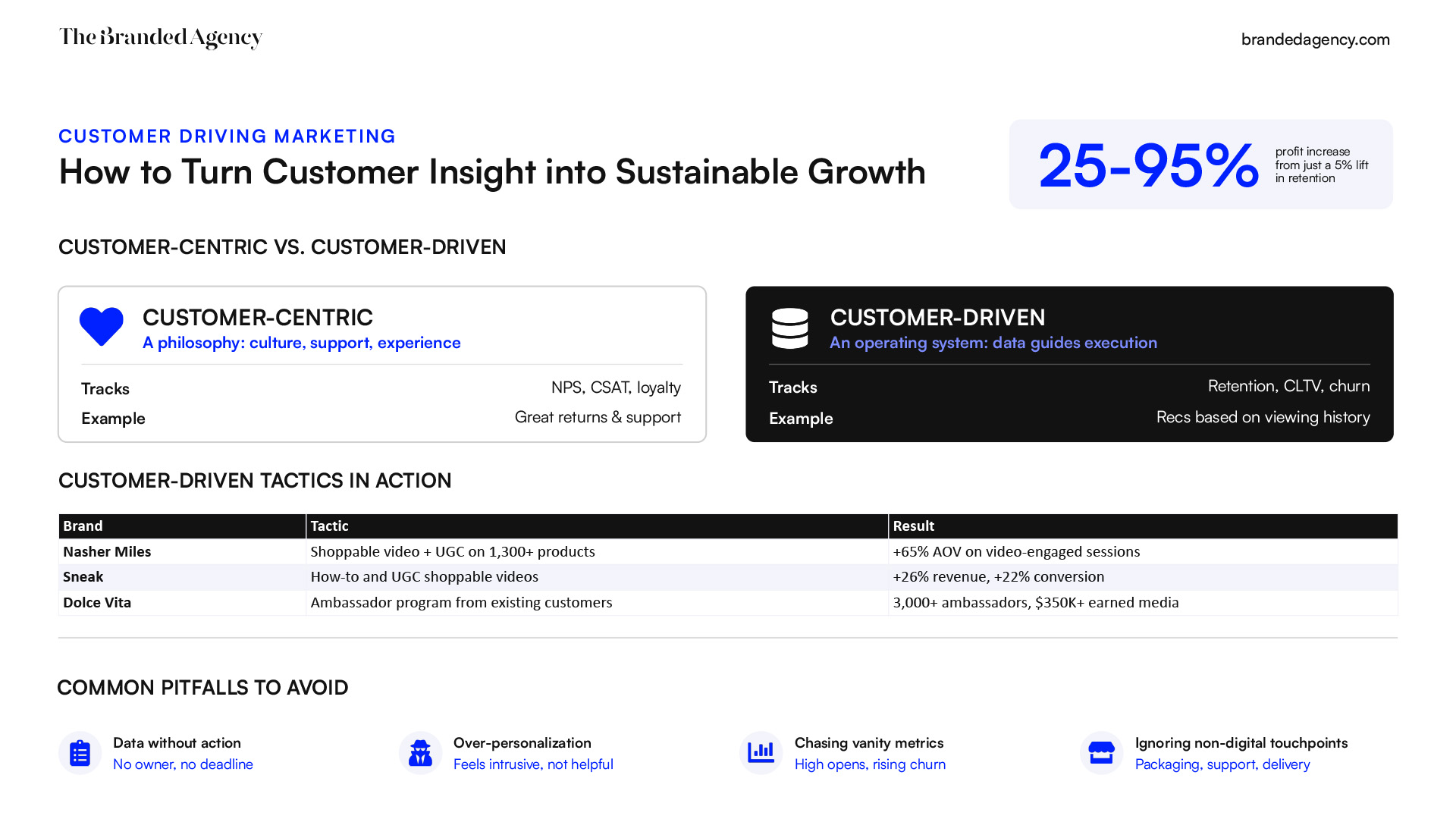
Customer centric means designing your culture, support, products, and processes around the customer. Customer driven means using real customer signals to decide what your marketing strategy should do next.
Both matter. But one is a philosophy, while the other is an operating system.
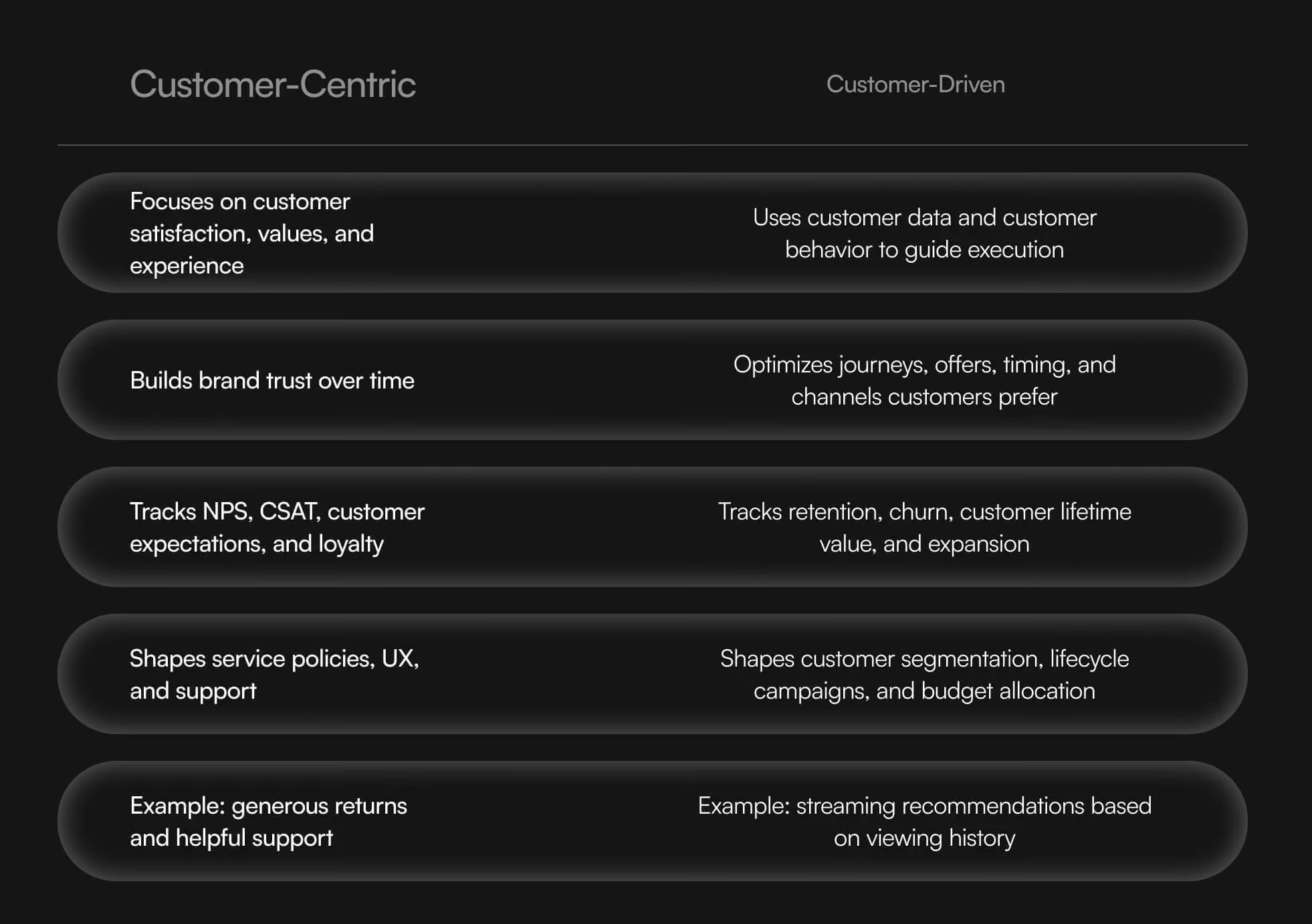
A company can be customer centric but not fully customer driven. For example, a retailer may offer great support but still send the same batch email to every customer base segment. A streaming platform recommending content based on viewing history, engagement, and churn risk is clearly customer driven because it effectively manages the full brand funnel from awareness to advocacy. The best customer centric marketing strategy combines both.
Free Brand Health Audit
Make sure your brand is built to sell

Why a Customer-Driven Marketing Strategy Is Critical for Growth

Economic slowdowns between 2020 and 2024 showed that businesses relying only on new customers were exposed. Brands with strong existing customers, high customer engagement, and predictable repeat purchases were more resilient.
Customer-driven marketing improves three outcomes: higher CLTV, more predictable revenue, and lower churn. Even reallocating 10–20% of your marketing budget from pure acquisition to customer marketing can often produce better ROI within 12–18 months.
- Cost efficiency: acquiring new customers can cost 5–25× more than retaining existing customers. Retention is usually the cheaper growth lever.
- Upsell and cross-sell: current customers already trust you. When you understand customer needs, customer preferences, and purchase history, you can recommend services based on real demand.
- Brand advocacy: satisfied customers become brand advocates. They leave reviews, share user-generated content, refer peers, and make your marketing messages more credible.
- Competitive edge: a deep understanding of consumer preferences and customer requests helps you adapt to market changes faster than rivals.
- Profitability: a 5% lift in retention has been widely linked to profit increases of 25–95%, depending on the model and industry.
The rest of this guide shows how to design and implement a customer driven strategy step by step.
Core Components of a Customer-Driven Marketing Strategy
A strong customer-driven strategy rests on a few key elements. These apply across B2B and B2C, although the examples differ by industry.
Customer data is the non-negotiable foundation and part of the essential tools needed to execute a customer-driven strategy at scale. Without it, advanced analytics, personalization, and lifecycle campaigns are mostly guesswork.
- Customer insight and data: collect first-party, zero-party, transactional, support, and product usage data.
- Journey understanding: map the full customer journey from awareness to advocacy, including onboarding, renewal, and expansion, by optimizing key brand touchpoints across channels.
- Personalized experiences: deliver personalized experiences based on timing, channel, segment, and intent.
- Feedback loops: gather customer feedback, act on it, and tell customers what changed.
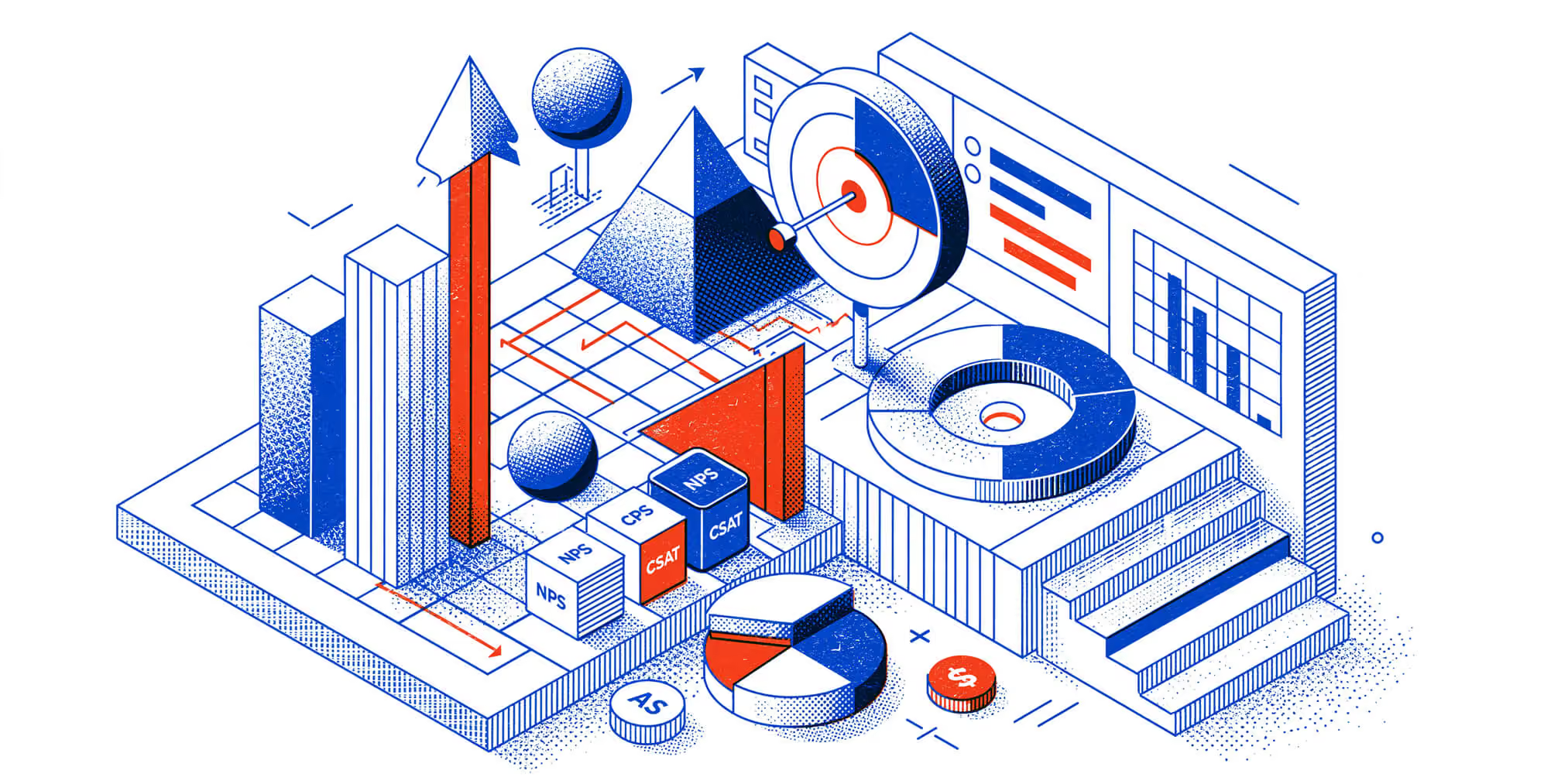
- Measurement: track performance metrics tied to value, including CLTV, churn, NRR, referral rate, and customer retention rate to quantify the business impact of effective branding.
Want to learn more about brand platforms, Brand Strategy and Brand Identity? Keep reading!
Step-by-Step: How to Build a Customer-Driven Marketing Strategy
Think of this as a 6–12 month roadmap. Do not jump into advanced personalization before you have clean data, useful customer segmentation, and a clear view of pain points.
Start with data, define segments, map journeys, personalize experiences, close feedback loops, and measure what matters.
1. Start with Customer Data and Unified Insight
Centralize customer data from Google Analytics 4, Shopify or Stripe transactions, HubSpot or Salesforce CRM records, Zendesk or Intercom tickets, and product usage tools. The goal is a single customer profile.
Identity resolution simply means connecting email addresses, device IDs, logins, and purchase history so you can understand what each customer generates in revenue and engagement over the customer lifetime.
Start with repeat purchase rate, retention by cohort, product usage frequency, net promoter score, and customer satisfaction. A mid-size ecommerce brand in 2024, for example, unified site and purchase data and found repeat buyers were abandoning checkout because of site speed. Fixing the issue lifted repeat purchase rate by about 15% and improved CLTV by roughly 20%.
2. Define Segments, Personas, and High-Value Customers
Move beyond generic market segmentation like age or location by segmenting around your target audience, customer value, and behavior. Useful customer segmentation includes first-time buyers, loyal customers, at-risk subscribers, high value customers, and dormant customers with recent intent signals, and it should be grounded in a clear brand positioning framework for your audience.
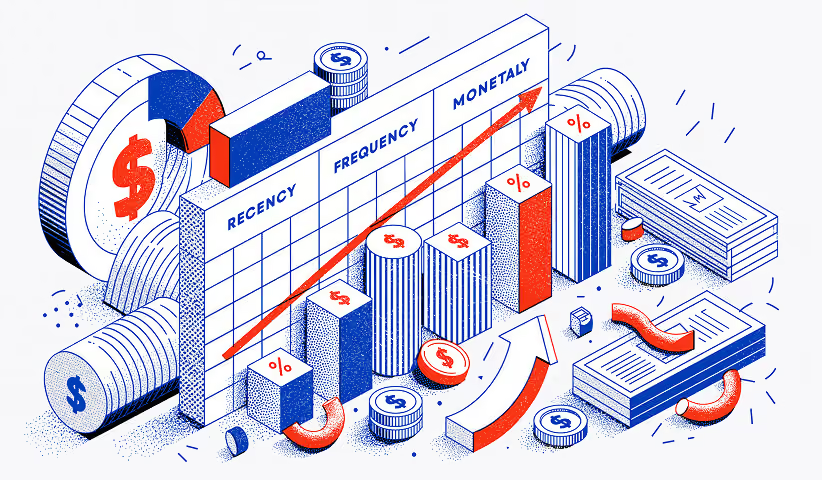
RFM analysis, which stands for recency, frequency, and monetary value, is an accessible way for ecommerce and subscription brands to find high-LTV groups.
Example persona snapshot:
- Emily, 34, London-based ecommerce manager who values fast support and integration guides.
- Marcus, 45, Chicago-based SaaS power user who logs in daily and may be ready for an upgrade.
- Priya, 28, skincare buyer who makes monthly purchases and responds to sustainability content.
3. Map the End-to-End Customer Journey
Map the full customer journey from awareness to advocacy. Many brands stop at purchase, but the moments after purchase often determine retention and repeat purchases because branding powerfully shapes customer behaviour.
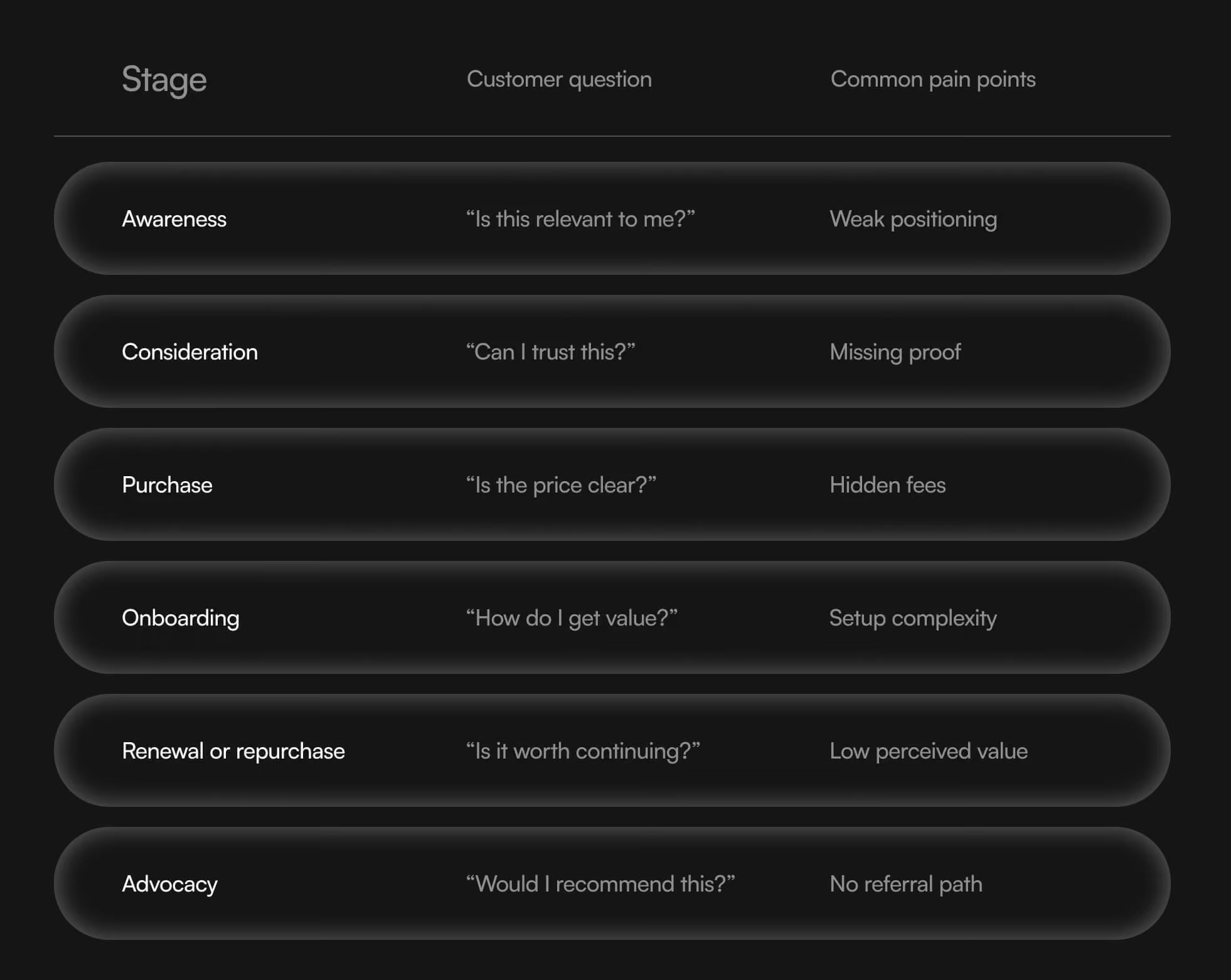
In SaaS, teams often find trial-to-paid drop-off because pricing is unclear or activation is too complex. In DTC, unclear shipping, weak unboxing, or poor delivery updates can damage the customer experience before a second order happens.
4. Design Personalized, Omnichannel Experiences
Personalization is not inserting a first name into an email. It is using customer behavior, customer preferences, and timing to deliver relevant experiences across email, SMS, website, in-app, push, and paid media within a consistent brand communication strategy.
Examples include onboarding emails based on product usage, cart abandonment flows within one hour, recommendations based on browsing history, and renewal reminders 90 days before a contract ends.
Before: every customer gets the same promotion. After: new buyers get education, repeat customers get complementary products, and high-LTV customers get early access. That is omnichannel, not just multi-channel, because channels customers use reinforce the same message.
5. Close the Feedback Loop and Co-Create with Customers
Use NPS, CSAT, review prompts, in-product micro-surveys, Zoom interviews, beta groups, customer advisory councils, and community spaces. Then centralize themes in one backlog shared by marketing, product, support, and sales teams.
The key is action. Customer driven strategies do not just collect customer requests; they show customers what changed because of them.
For example, a SaaS company might discover through usability testing that new users miss one activation step. After rewriting the UI copy and adding a guided checklist, activation could improve by 20–30%.
6. Measure What Matters: Customer-Centric Metrics
Vanity metrics like raw impressions and email opens can be useful signals, but they do not prove lasting loyalty.
- CLTV: shows the total value of a relationship, not one transaction.
- Retention rate: shows whether you retain customers over time.
- Net revenue retention: shows expansion, contraction, and churn in SaaS.
- Churn rate: shows customer or revenue loss.
- NPS and CSAT: show satisfaction and referral potential.
- Expansion revenue: shows upsell and cross-sell success.
- Referral rate: shows whether customer relationships are producing advocacy.
Use cohort analysis, such as customers acquired in Q1 2025, to see whether changes improve outcomes over time.
Customer-Driven Strategies You Can Implement Right Now
You do not need a perfect stack to start. The key tactics below can be launched in 30–90 days if you prioritize by impact and complexity.
Onboarding That Accelerates Time-to-Value
The first 30–90 days are critical for retention in B2B SaaS, consumer subscriptions, and ecommerce. Use welcome sequences, setup checklists, in-app tours, and webinars in the first two weeks.
Tie onboarding to the customer goals discovered during signup or sales calls. A 2024 subscription brand that improved onboarding emails and added interactive tutorials cut early churn by about 15%.
Education and Value-Add Content
Customer centric marketing uses content to help customers do a job, not just understand features, often through compelling brand stories that drive success. Examples include a “2026 ecommerce holiday playbook” for merchants, a “GDPR checklist” for European marketers, or care guides for products customers already bought.
Build journeys by segment. Beginners need setup help. Power users need advanced workflows. Enterprise buyers need governance, reporting, and ROI content. Useful education fosters loyalty because it helps customers get more value.
Lifecycle Messaging: Cross-Sell, Upsell, and Renewal
Lifecycle campaigns should be based on usage and purchase history, not arbitrary dates. Cross-sell when a customer buys product X often but never product Y. Upsell when usage hits 80% of a plan limit.
For renewals, use 90/60/30-day reminders with personalized value summaries. For example: “In the last 12 months, your team closed 42 deals using our platform.” This supports expansion revenue and better net revenue retention.
Loyalty Programs That Go Beyond Discounts
Basic points programs can work, but customer driven loyalty programs reward behaviors that signal engagement. Offer early product access, expert webinars, private communities, co-marketing opportunities, or beta invites.
After 2020, many travel and retail brands refreshed loyalty around experiences, personalization, and status rather than only miles or coupons, often tying them into broader brand marketing campaigns that build loyalty. These programs build loyalty, gather more zero-party data, and strengthen brand loyalty.
Turning Happy Customers into Advocates
Ask for reviews after positive support moments. Invite top users into case study programs. Build referral incentives. Showcase user-generated content and customer stories.
In B2B, a company might turn power users into webinar hosts or event speakers. Advocacy reduces customer acquisition costs because buyers often trust peers more than brand claims.
Organizational and Cultural Foundations for Customer-Driven Marketing
Tools and tactics fail without internal alignment. Customer driven strategies require marketing, product, sales, and support to work from the same view of the customer.
This is not only a technology project. It is a collaboration habit.
Breaking Down Silos and Sharing Customer Truth
Most companies have fragmented customer truth. Sales owns deal notes, support owns complaints, product owns usage, and marketing owns campaigns. The customer feels the gaps.
Helpful practices include:
- Shared dashboards for retention, churn, NPS, and support themes.
- Weekly “customer council” meetings.
- Common access to call notes, survey results, and analytics.
- One feedback backlog with owners and deadlines.
When marketing and support align around the same data, response rates improve and teams can fix recurring issues faster.
Aligning Incentives and KPIs with Customer Outcomes
Traditional KPIs like MQL volume or short-term revenue can conflict with customer driven goals. Add NRR, churn, expansion revenue, retention, and NPS to marketing and sales scorecards.
For example, when bonuses are partly tied to retention, teams become less likely to overpromise in acquisition campaigns and more likely to attract target markets that fit.
Building a Continuous Learning Loop
Run monthly reviews of key metrics, top customer feedback themes, and recent test results. Each cycle, choose two or three experiments.
Quarterly, audit one priority journey. Document learnings in an internal customer playbook so new team members do not relearn the same lessons.
Common Pitfalls in Customer-Driven Marketing (and How to Avoid Them)
One common pitfall is data without action. Many teams build dashboards but never assign ownership. The fix is a monthly decision meeting where every major insight gets an owner, deadline, and expected impact.
Another pitfall is over-personalization. Referencing anonymous browsing behavior too specifically can feel creepy. The fix is transparency, consent, and safer personalization based on clear preferences.
A third mistake is chasing vanity metrics. High opens mean little if churn rises. Rebuild dashboards around customer lifetime value, retention, expansion, and referral quality.
Finally, do not neglect non-digital touchpoints. Packaging, phone support, delivery, sales calls, and in-store moments all shape customer expectations. A retailer that overused retargeting in 2023 hurt trust, then recovered by improving checkout clarity and using helpful cart emails instead of aggressive ad frequency.
Examples of Customer-Driven Marketing in Action

Quincy Samycia
Want to learn more about brand platform?