Customer Strategy: How to Keep Customers Happy and Grow Through Word of Mouth

07/30/2026

Marketing Strategy
Discover how a customer-first strategy helps businesses create exceptional experiences, strengthen customer relationships, and turn loyal customers into long-term advocates.

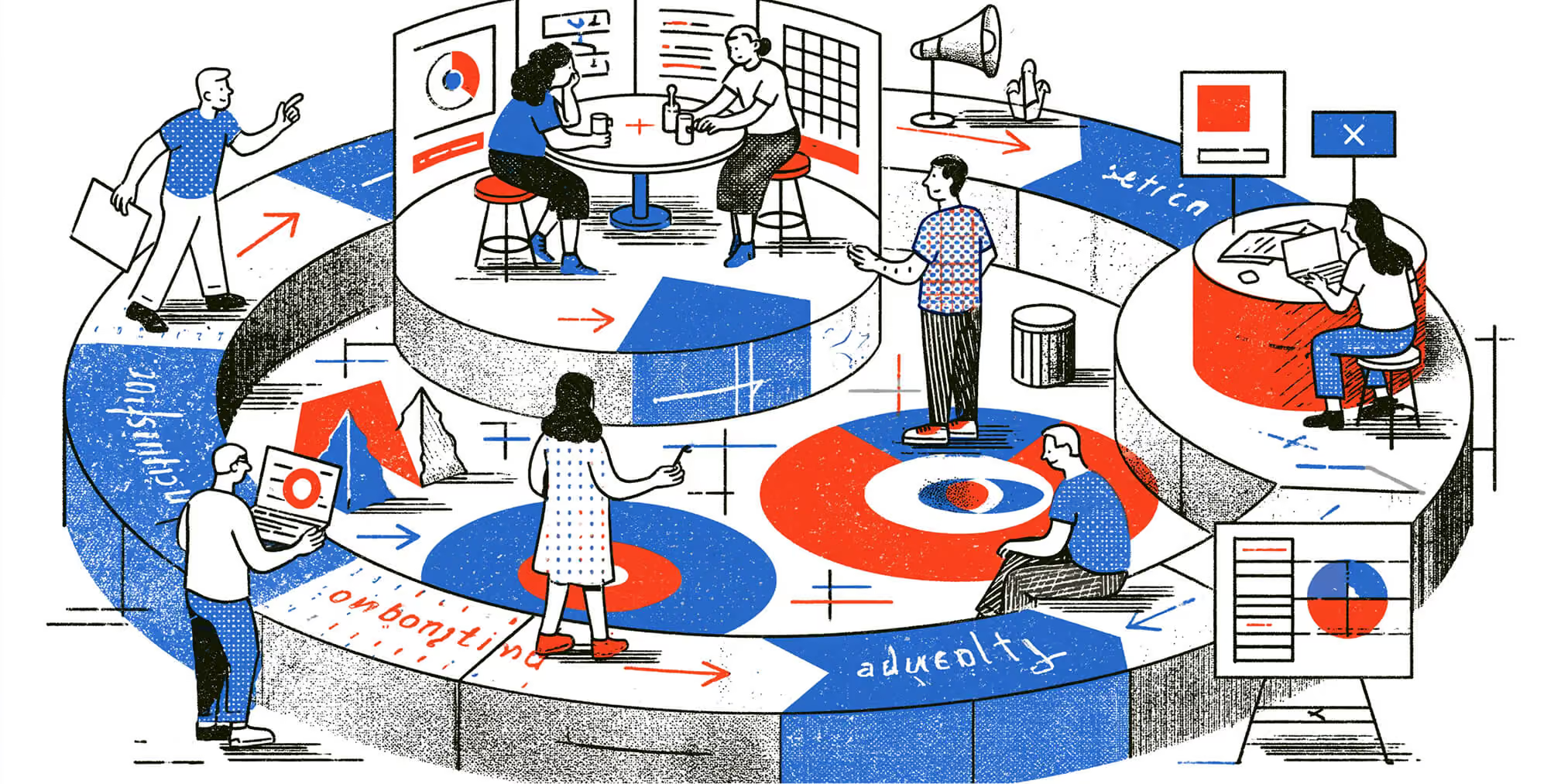
Customer journey strategy illustrated as an interconnected lifecycle from acquisition to advocacy.

A successful business is built on more than acquiring customers—it depends on creating experiences that keep them coming back. In today's competitive, customer-driven marketplace, organizations need a clear strategy that aligns marketing, sales, product, and support around delivering consistent value at every stage of the customer journey. A well-defined customer strategy helps businesses strengthen relationships, improve retention, increase lifetime value, and turn satisfied customers into long-term advocates, creating sustainable growth that extends far beyond the first purchase.

Quincy Samycia
Play IconPause Icon
0:00
0:00

What Is a Customer Strategy?

Omnichannel retail experience connecting physical stores, fulfillment, and customer interactions.
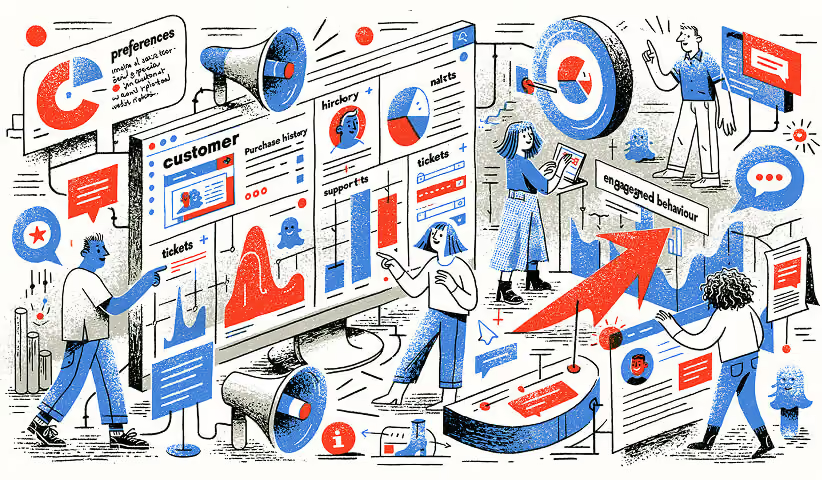
Customer segmentation and targeted marketing strategy with behavioral insights.
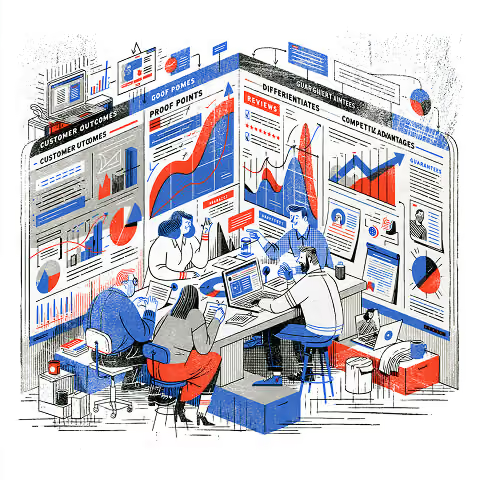
Marketing strategy workshop using customer data, analytics, and performance dashboards.
No items found.

Key Takeaways

  • A customer strategy is a cross-functional plan to win, serve, and retain customers better than competitors.
  • Customer satisfaction and loyalty drive long-term revenue, lower churn, and stronger word of mouth.
  • Data, CRM technology, and social media channels help identify potential customers and improve experiences.
  • In 2026, effective customer strategies combine personalization, omnichannel consistency, and proactive engagement.
  • This article gives you a practical framework for designing, executing, and measuring customer strategy.

Introduction: What Is a Customer Strategy and Why It Matters in 2026

A customer strategy is a deliberate plan for who you serve, how you create value, and how you keep customers happy over time. The simple definition: it refers to the choices a business makes across marketing, sales, product, service, support, and retention to build better customer relationships, even in complex regulated spaces such as cannabis and CBD branding and marketing. A customer is a person who purchases goods or services from a business, making the act of buying central to their role in the business process.

In 2026, the importance is higher because buyers are digital-first, competition is intense, and losing loyal customers is expensive. Random campaigns, disconnected support processes, or a one-off social post will not do the deal. A SaaS company needs activation and renewal plans; a retail brand needs a store, site, and app experience that feels connected, supported by data that shows why strong branding materially moves the numbers. Research on 285 million brand ratings found customer satisfaction is strongly linked to retention, loyalty, and financial performance (SSRN).

Defining Your Ideal Customers and Segments

Customer lifecycle map from awareness and purchase to retention and advocacy.
Customer data platform with audience insights, engagement tracking, and personalization.
Omnichannel customer experience across web, email, social media, mobile, and retail.
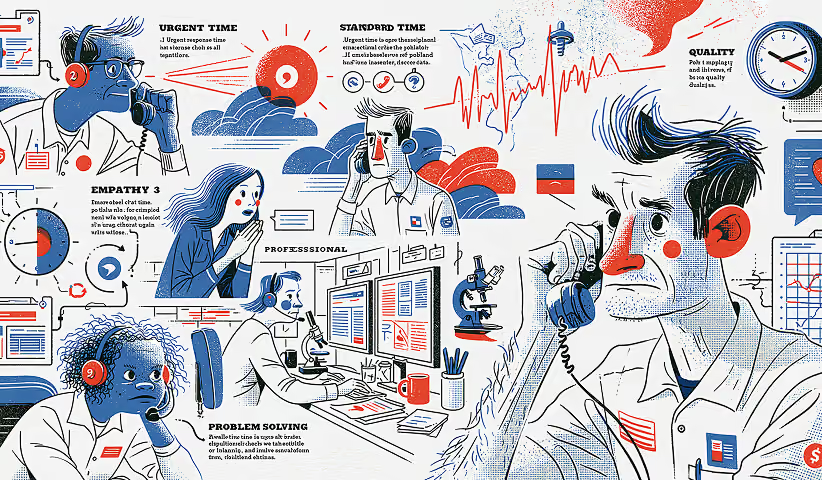
Customer support strategy emphasizing communication, responsiveness, and service quality.

Strategy starts by deciding which potential customers you want to win and keep. In the 21st century, customers are generally categorized into two types: ultimate customers, who purchase goods and may also be consumers, and intermediate customers, who are not consumers at all. In B2B, the buyer, client, users, and decision maker may be different; in B2C, the same person often purchases and uses the product.

Six Sigma doctrine categorizes customers into three classes: active customers, not-customers, and non-customers, highlighting the importance of understanding customer behavior for effective segmentation. Understanding customer preferences, behavior, and attitudes is crucial for identifying and segmenting different types of customers, which can lead to better strategic outcomes for businesses.

Use a combination of:

  • Behavior: purchases, visits, usage, support tickets.
  • Value: loyal customers, low-margin buyers, high-potential accounts.
  • Needs: urgent problems, goals, opinions, and preferred solutions.

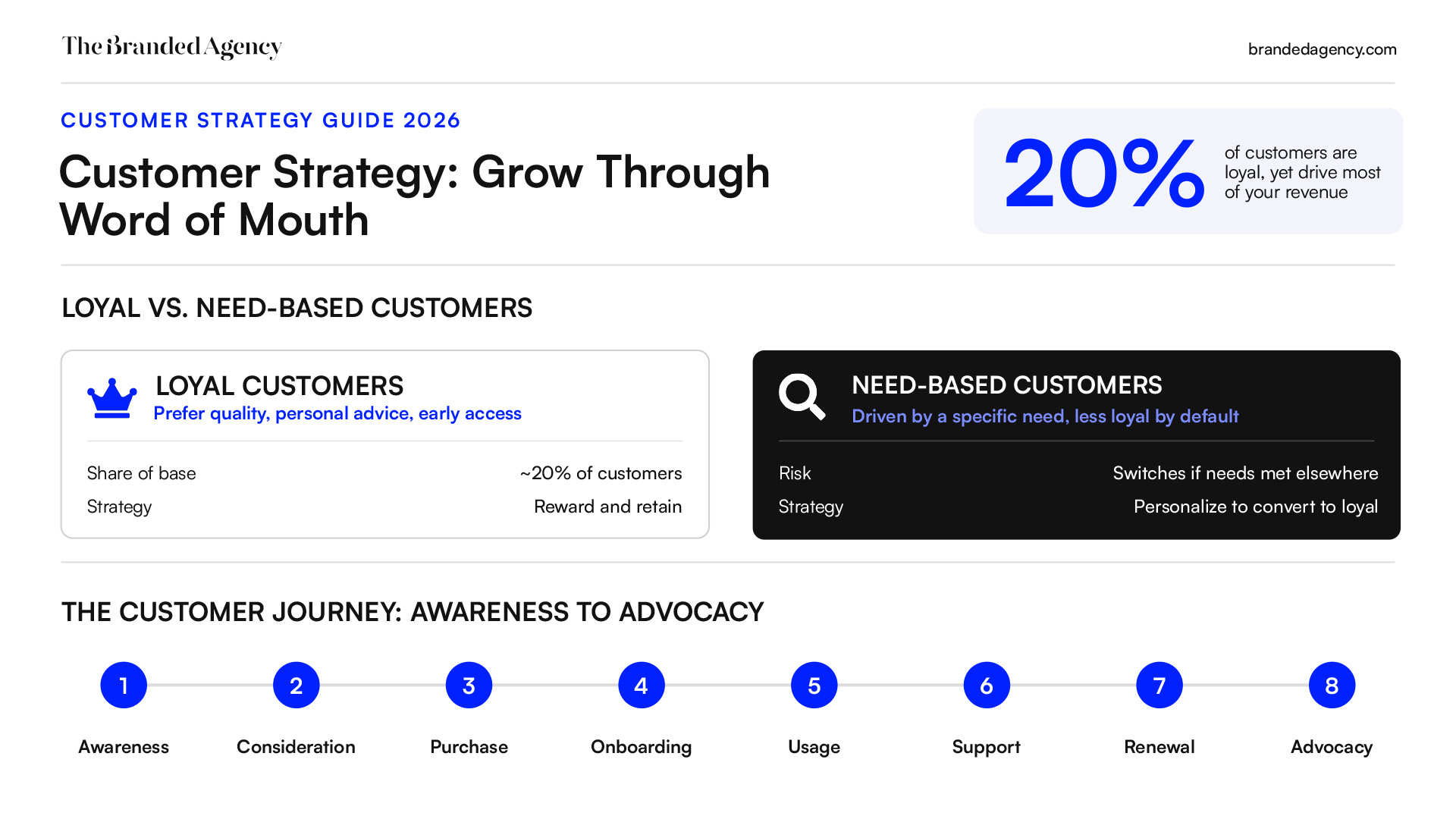
Loyal customers represent about 20% of a customer base but contribute to a significant portion of a company’s revenue, making them a top priority for businesses. Impulse customers make spontaneous purchases without a shopping list, often influenced by recommendations and offers, making them a key segment for upselling. Need-based customers make purchases driven by specific needs and are less loyal, often switching to competitors if their needs are better met elsewhere. However, there is a possibility to convert need-based customers into loyal customers by building stronger relationships through targeted engagement and personalized interactions. Wandering customers browse stores without specific needs or preferences, contributing little to profitability but can be engaged with insightful information to stimulate interest.

For example, “Loyal Laura” may prefer quality, personal advice, and early access, while “Discount Dave” waits for a break in price and may switch when another brand opens the door.

Designing a Customer Value Proposition That Drives Satisfaction

A customer value proposition explains why a customer should choose your company over another. Developing a clear unique selling proposition is critical for competitive differentiation. A Unique Selling Proposition (USP) should clearly define what makes a business unique and be communicated across all channels.

A strong value proposition includes: and should be pressure-tested with a regular strategic brand audit to check perception.

  • Outcomes customers care about, such as speed, trust, savings, or convenience.
  • Proof, such as reviews, case studies, benchmarks, or guarantees.
  • Difference, meaning what your brand does better than the industry average.

Examples for a 2026 SaaS platform or online retailer:

  • “Onboarding completed in under 10 minutes.”
  • “24/7 AI-assisted support with human escalation.”
  • “Transparent pricing with no hidden fees.”

Personalized experiences can be implemented using CRM systems and data to tailor interactions, such as personalized emails and targeted content. Clear promises should guide the website, social media channels, email, and every sales conversation, all anchored in a consistent brand platform defining purpose and values.

Mapping and Improving the Customer Journey

A customer journey shows how people move from awareness to advocacy. Mapping it helps managers find the interaction where customers get stuck, frustrated, or satisfied enough to recommend you.

Core stages are:

  1. Awareness
  2. Consideration
  3. Purchase
  4. Onboarding
  5. Usage
  6. Support
  7. Renewal or repeat purchase
  8. Advocacy

Imagine a marketing director finds a project platform on LinkedIn, books a demo, buys, completes training, invites users, asks an agent for integration help, renews, then recommends it by word of mouth. A rigorous onboarding program is essential to ensure new customers are successful and engaged, which helps decrease churn.

Typical friction points include confusing onboarding, slow communication, rigid renewal terms, or a support team that cannot explain the next step. “Moments that matter” are the first login, first success, support request, renewal window, and the moment someone considers a switch—including physical experiences like unboxing, where data-backed packaging design trends can strongly influence satisfaction.

Channel Strategy: Meeting Customers Where They Are

Customers expect consistent experiences across different channels. An omnichannel approach requires ensuring consistency in experience across all customer touchpoints, linking offline and digital interactions and aligning with evolving branding trends shaping customer expectations in 2026.

Core channels include your site, email, mobile app, live support, physical store, and community platform, which together form your most important brand touchpoints across the journey. Today’s customers expect to receive service through multiple channels, including social media, and businesses must adapt to these expectations to provide effective customer service.

Use social media channels for:

  • Discovery on Instagram, TikTok, or LinkedIn.
  • Support when customers complain or ask questions publicly.
  • Feedback, reviews, and community building.
  • Advocacy that turns positive experiences into mouth-to-mouth referrals.

Choose channels based on where your ideal customers actually interact, not what is trending. If your site serves french, german, japanese, polish, dutch, turkish, norwegian, danish, thai, hindi, vietnamese, or tamil audiences, the words, tone, and meaning should match local expectations as part of a coherent brand communication strategy.

Want to learn more about brand platforms, Brand Strategy and Brand Identity? Keep reading!

If you need help with your companies brand strategy and identity, contact us for a free custom quote.

Building a Strategy for Customer Satisfaction and Loyalty
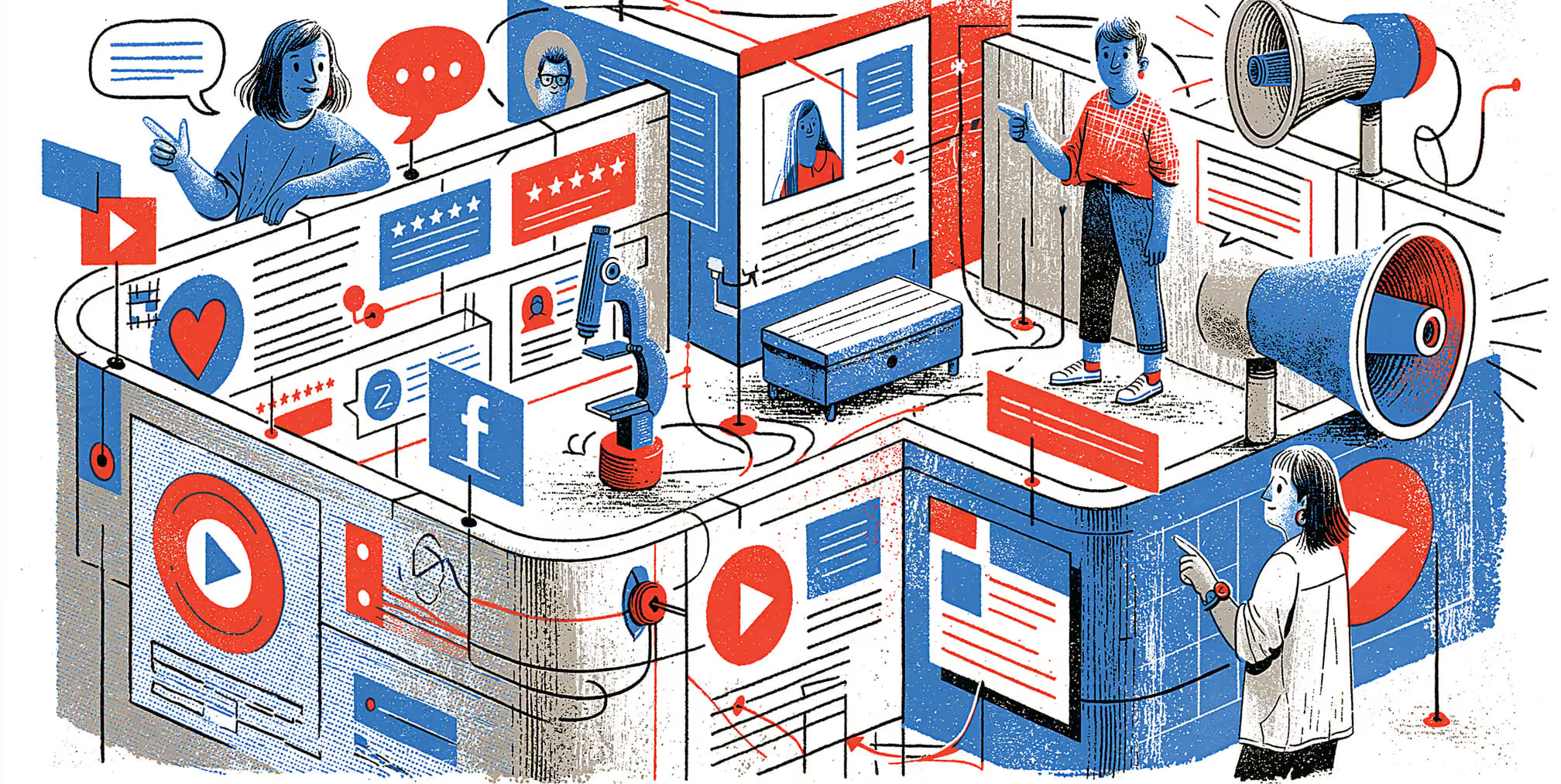
Customer engagement ecosystem connecting content, feedback, social media, and community interactions.

Customer service is the support, assistance, and advice provided by a company to its customers both before and after they buy or use its products or services, and it is critical for ensuring buyer satisfaction and customer retention. Having a good customer service plan in place leads to more sales, increases brand loyalty, generates referrals, helps retain customers, and provides businesses with a competitive advantage over others in the same industry.

Set clear standards: under 1 hour for urgent first response, under 24 hours for standard resolution, and quality checks on every heated interaction. Effective customer service agents are skilled at listening, being empathetic, problem-solving, and maintaining professionalism, especially in heated situations. Bad customer service can lead to negative experiences, such as long wait times and not being heard, which may result in customers providing negative reviews or switching to competitors.

Effective customer strategies in competitive markets focus on deep personalization, omnichannel consistency, and proactive engagement to build loyalty. Proactive service involves using AI and predictive analytics to identify issues before they arise, fostering an empathetic service culture. Building community and loyalty can be achieved by supporting relevant causes or starting loyalty programs that foster genuine brand relationships.

Data, Metrics, and KPIs for a Modern Customer Strategy

Data is not just reporting; it is how you decide where to invest and how your branding influences customer behaviour over time. Key approaches to customer strategies include using CRM systems for personalized experiences, creating seamless journeys across online/offline channels, and using data analytics to anticipate needs.

Track:

  • Customer satisfaction, or CSAT.
  • NPS.
  • Churn and retention.
  • Customer lifetime value.
  • Customer effort score.
  • Referral volume and organic word of mouth.
  • Product usage and engagement.

Utilizing surveys, social media monitoring, and focus groups helps gain detailed feedback and understand evolving customer needs. For example, a fitness brand might notice that users who miss three visits and stop opening the app are at risk. The team can communicate early with personal offers, training reminders, and support before churn happens, which is especially powerful in trust-driven sectors that follow a thoughtful wellness branding and marketing strategy. Predictive churn programs have cut churn by 32% in recent retention examples.

Organization, Culture, and Governance Around the Customer

Customer loyalty strategy showing personalized journeys, retention tactics, and repeat purchase pathways.

Customer strategy fails without aligned teams, processes, and leadership. Assign an owner, such as a Head of Customer Experience, but involve marketing, sales, product, and support.

Frontline training should cover empathy, product knowledge, communication, and how to handle a difficult individual without creating a public complaint. Add customer stories to leadership meetings, review complaints by line of business, and give managers a chapter in the quarterly plan for fixing friction.

Document the strategy, review it annually, and check metrics quarterly. Markets shift fast; billions in revenue can move when customers prefer a better experience.

FAQ

What is the difference between a customer strategy and a marketing strategy?

A marketing strategy focuses mainly on attracting and converting potential customers. A customer strategy is broader: it covers acquisition, onboarding, service, retention, loyalty, and advocacy. A campaign may bring someone in; the customer strategy decides how that person becomes loyal.

How often should a company update its customer strategy?

Review it formally once per year and check key metrics quarterly. Update sooner if customer satisfaction drops, churn rises, new technology changes behavior, or regulation affects data and communication.

Can small businesses afford to build a customer strategy?

Yes. A small business can start with a written one-page plan: define 2–3 segments, map the journey, choose core channels, collect reviews, and track repeat purchases. A local café, for example, can use loyalty cards and review feedback to grow through word of mouth.

How do social media channels fit into a customer strategy beyond marketing?

Social media channels support listening, service, feedback, and community. Quick public responses show accountability, while visible resolutions give potential customers confidence in the brand.

Which metric is most important for judging if my customer strategy is working?

No single metric is enough. Use customer satisfaction, retention rate, and customer lifetime value together. Then choose a north-star metric: renewal rate for subscriptions, repeat purchase rate for ecommerce, or referral volume when advocacy is your goal.

An image of the author Quincy Samyica

Quincy Samycia

As entrepreneurs, they’ve built and scaled their own ventures from zero to millions. They’ve been in the trenches, navigating the chaos of high-growth phases, making the hard calls, and learning firsthand what actually moves the needle. That’s what makes us different—we don’t just “consult,” we know what it takes because we’ve done it ourselves.

Want to learn more about brand platform?
If you need help with your companies brand strategy and identity, contact us for a free custom quote.

We do great work. And get great results.

DrTung’s
Breathed new life into a storied oral care brand with a smarter site and marketing for scalable growth.

+2.3x
Increase in revenue YoY

+126%
Increase in repurchase rate YoY

READ MORE
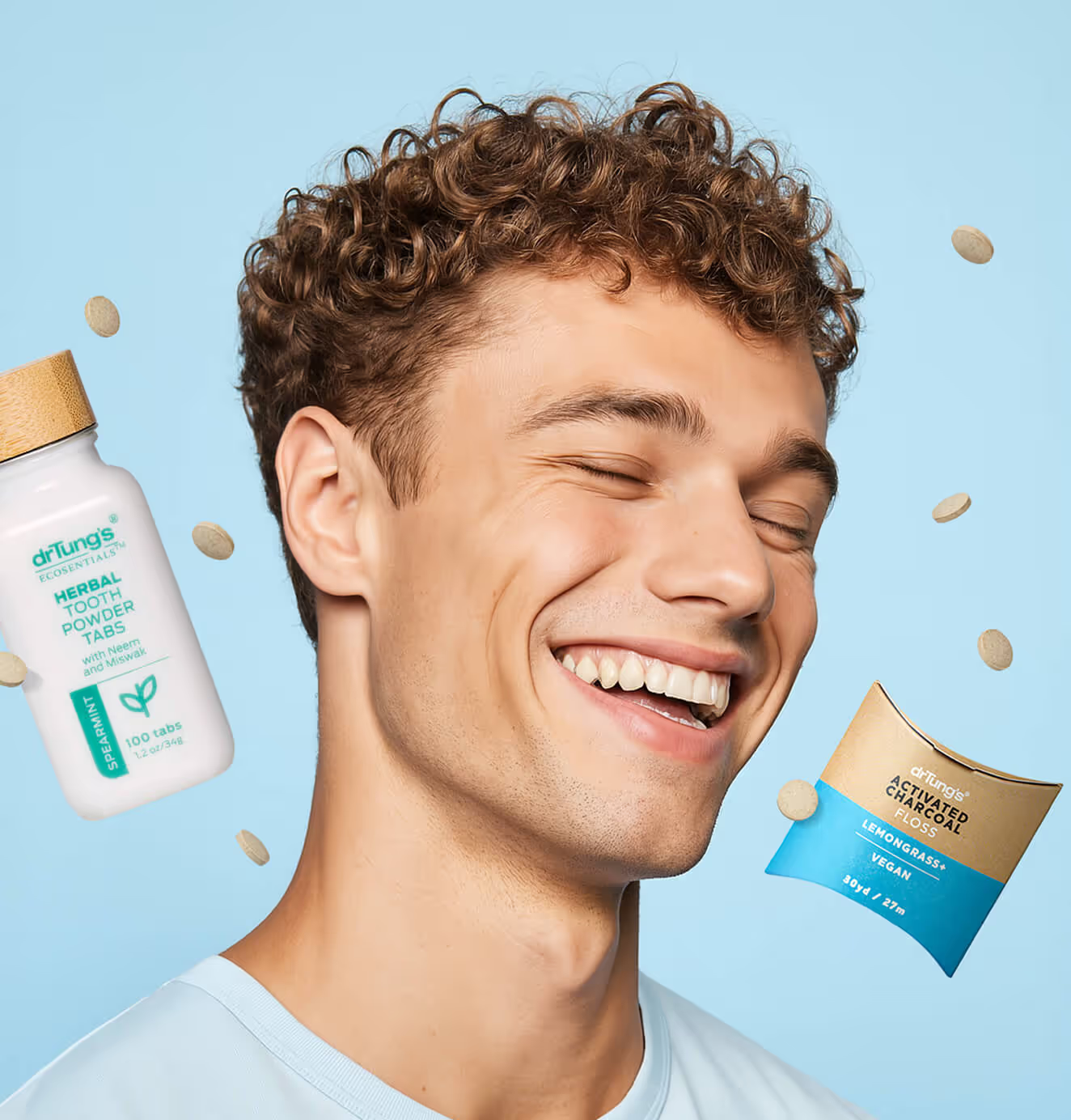
DrTung’s oral care product image with a smiling man, tooth powder tabs, and activated charcoal floss.
Smartphone on a textured blue surface displaying a DrTung’s ad with the text “Make the Switch” and an image of a woman holding herbal tooth powder tabs.
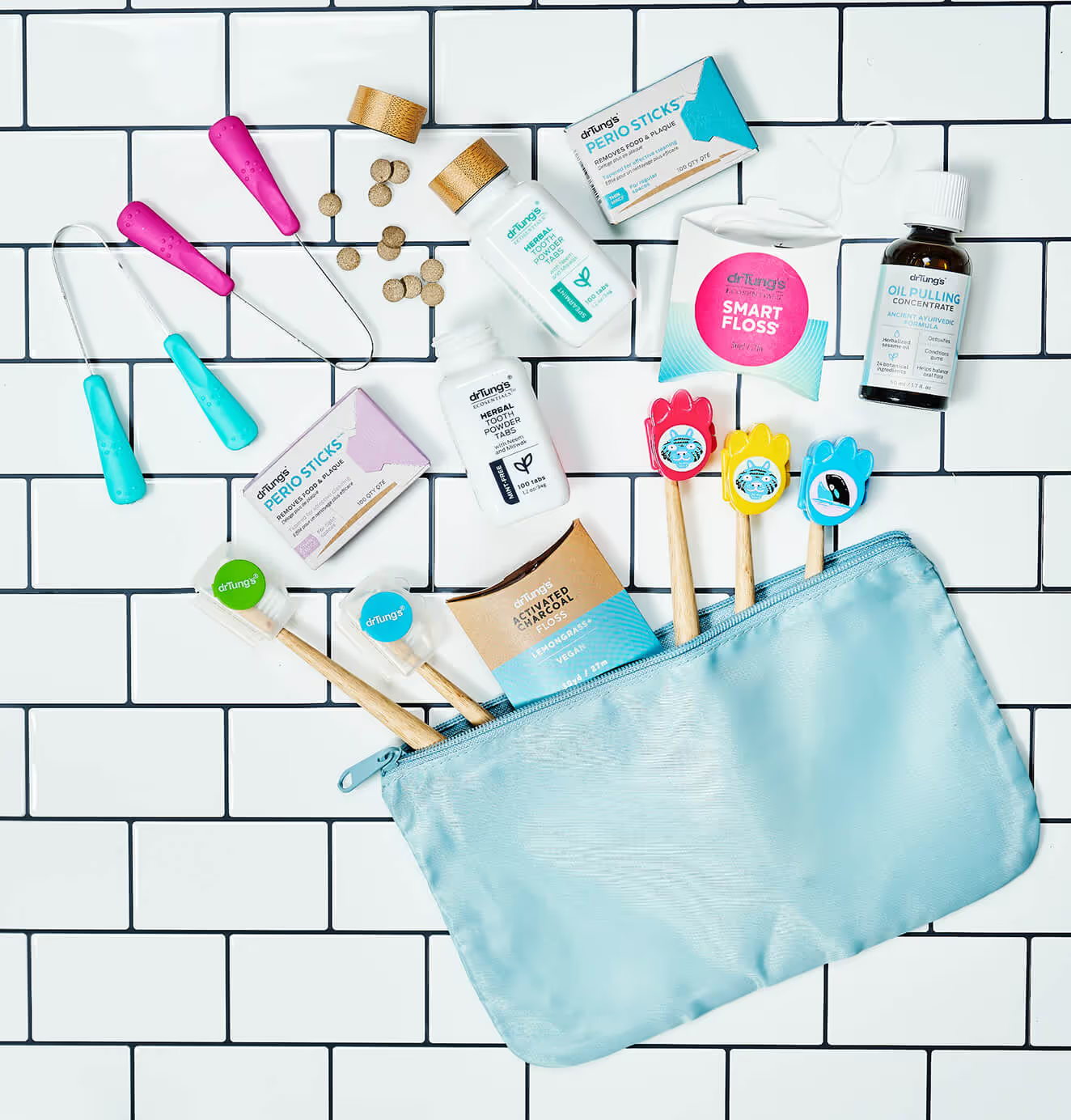
Flat lay of DrTung’s oral care products, arranged with a blue pouch on white tile.
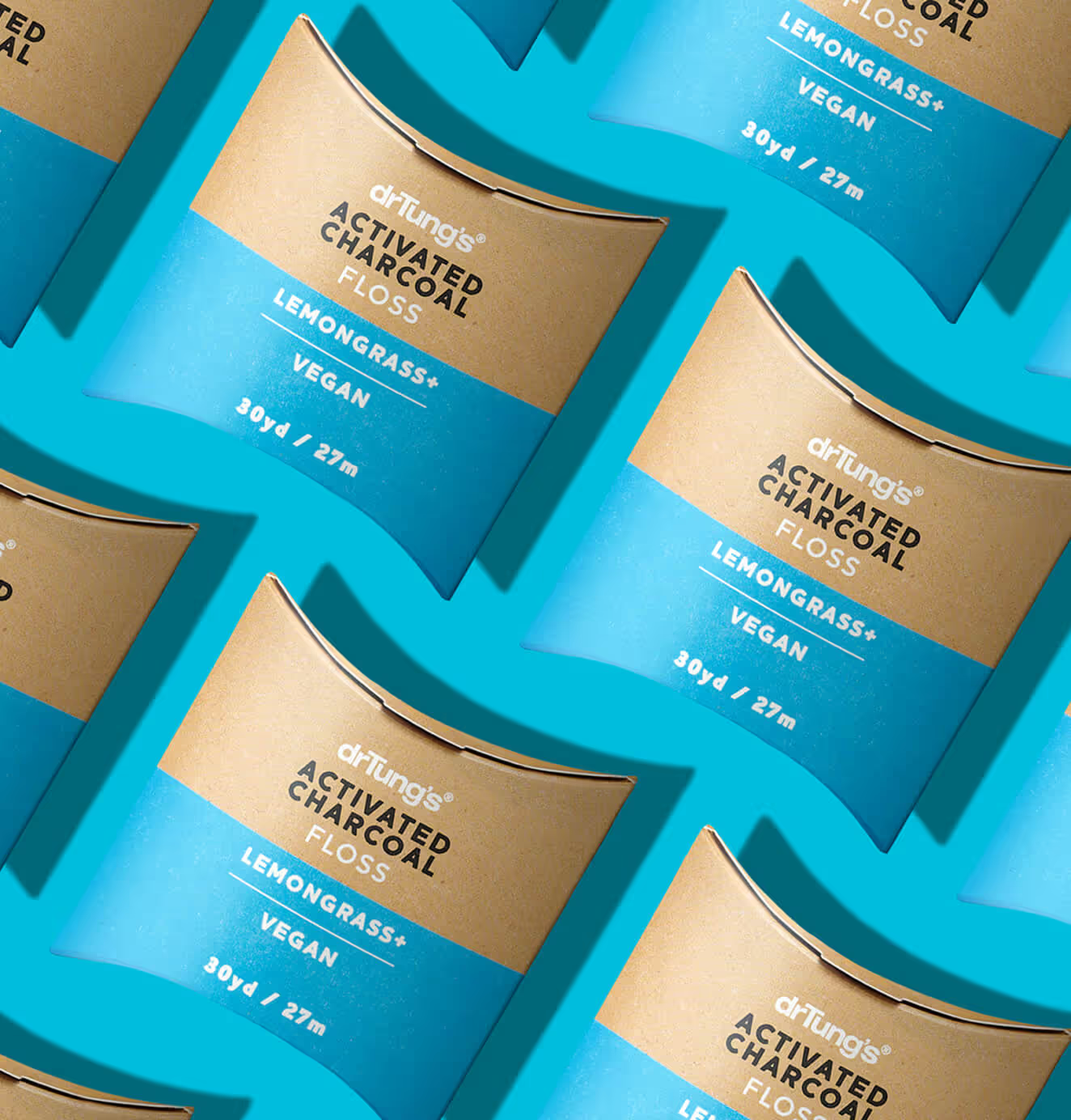
DrTung’s Activated Charcoal Floss packaging arranged in a repeating pattern on a bright blue background.
DrTung’s oral care product image with a smiling man, tooth powder tabs, and activated charcoal floss.
Smartphone on a textured blue surface displaying a DrTung’s ad with the text “Make the Switch” and an image of a woman holding herbal tooth powder tabs.
Flat lay of DrTung’s oral care products, arranged with a blue pouch on white tile.
DrTung’s Activated Charcoal Floss packaging arranged in a repeating pattern on a bright blue background.
Mary Louise Cosmetics
Scaled a heritage-inspired clean beauty brand with modern performance marketing and farm-to-face storytelling.

+93%
Revenue growth in first 90 days

+144%
Increase in attributed revenue

READ MORE
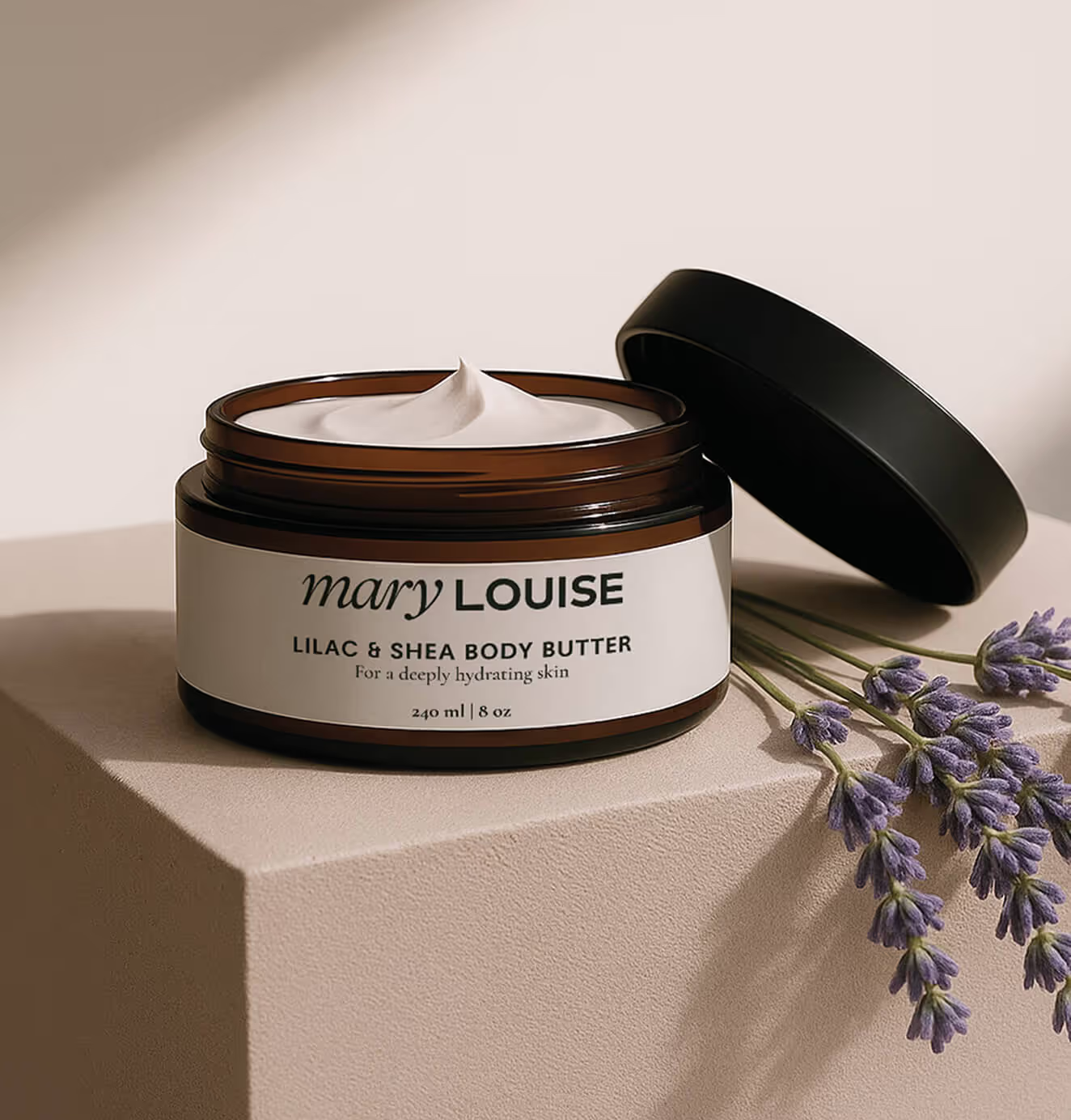
Mary Louise Lilac & Shea Body Butter jar with creamy texture and lavender sprigs on a beige surface.
A Mary Louise Miracle Serum bottle with a dropper cap, lying on a bed of small yellow flowers.
Mary Louise body butter promotional print materials with product photography and skincare application imagery.
Mary Louise Miracle Serum bottles arranged in a close-up pattern with pale yellow dropper caps.
Mary Louise Lilac & Shea Body Butter jar with creamy texture and lavender sprigs on a beige surface.
A Mary Louise Miracle Serum bottle with a dropper cap, lying on a bed of small yellow flowers.
Mary Louise body butter promotional print materials with product photography and skincare application imagery.
Mary Louise Miracle Serum bottles arranged in a close-up pattern with pale yellow dropper caps.
Eyecart
Made eye care feel modern, then marketed it like a DTC darling—with the results to match.

+91%
Increase in conversion rate

+46%
Increase in AOV

READ MORE
Eyecart optical care campaign image with a smiling woman holding a branded magnifying lens over one eye.
Eyecart billboard campaign featuring Blephaclean eye care wipes and healthy eye care messaging.
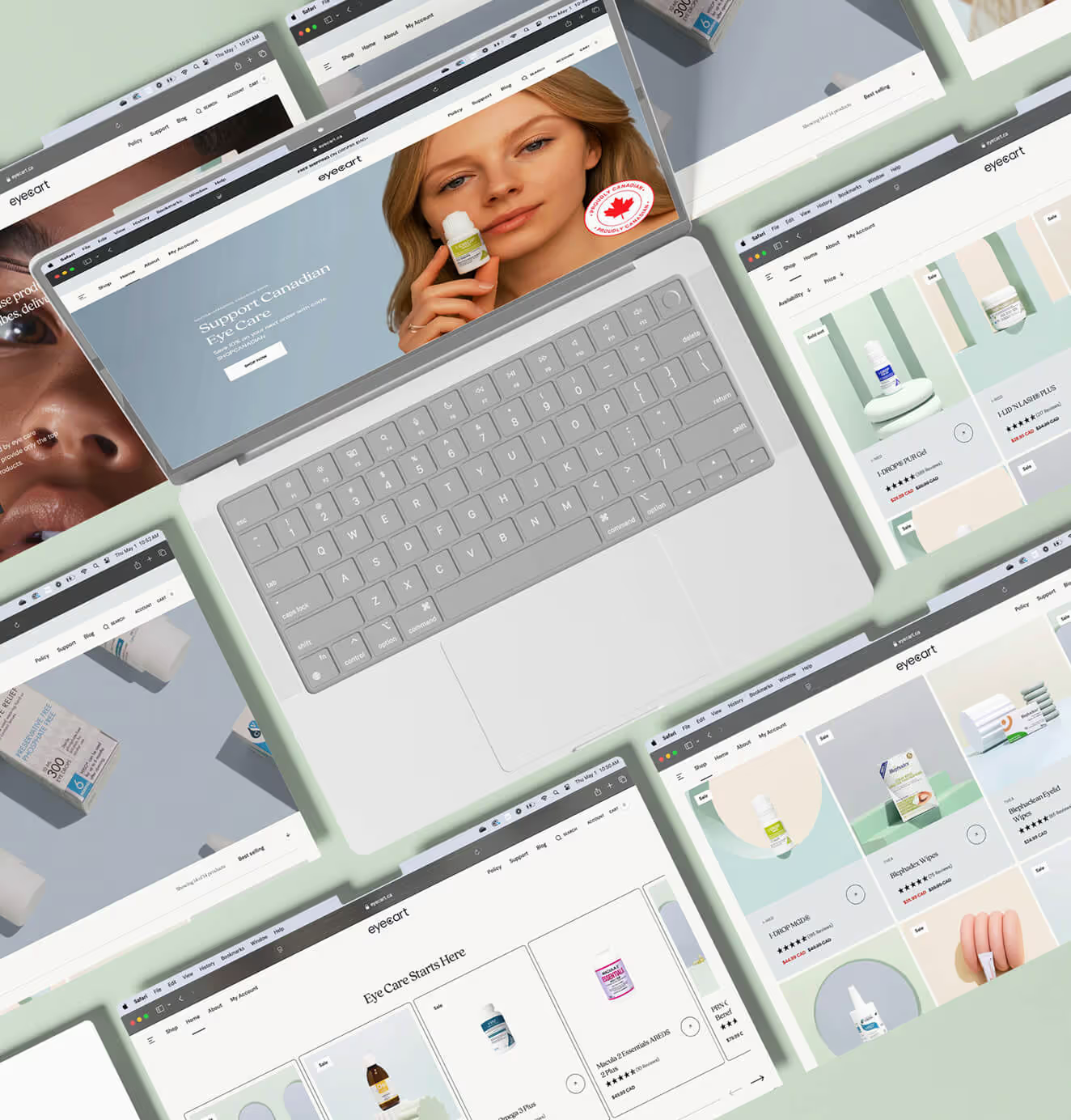
Multiple laptop screens display the Eyecart website, showcasing product pages and banners promoting eye care items.
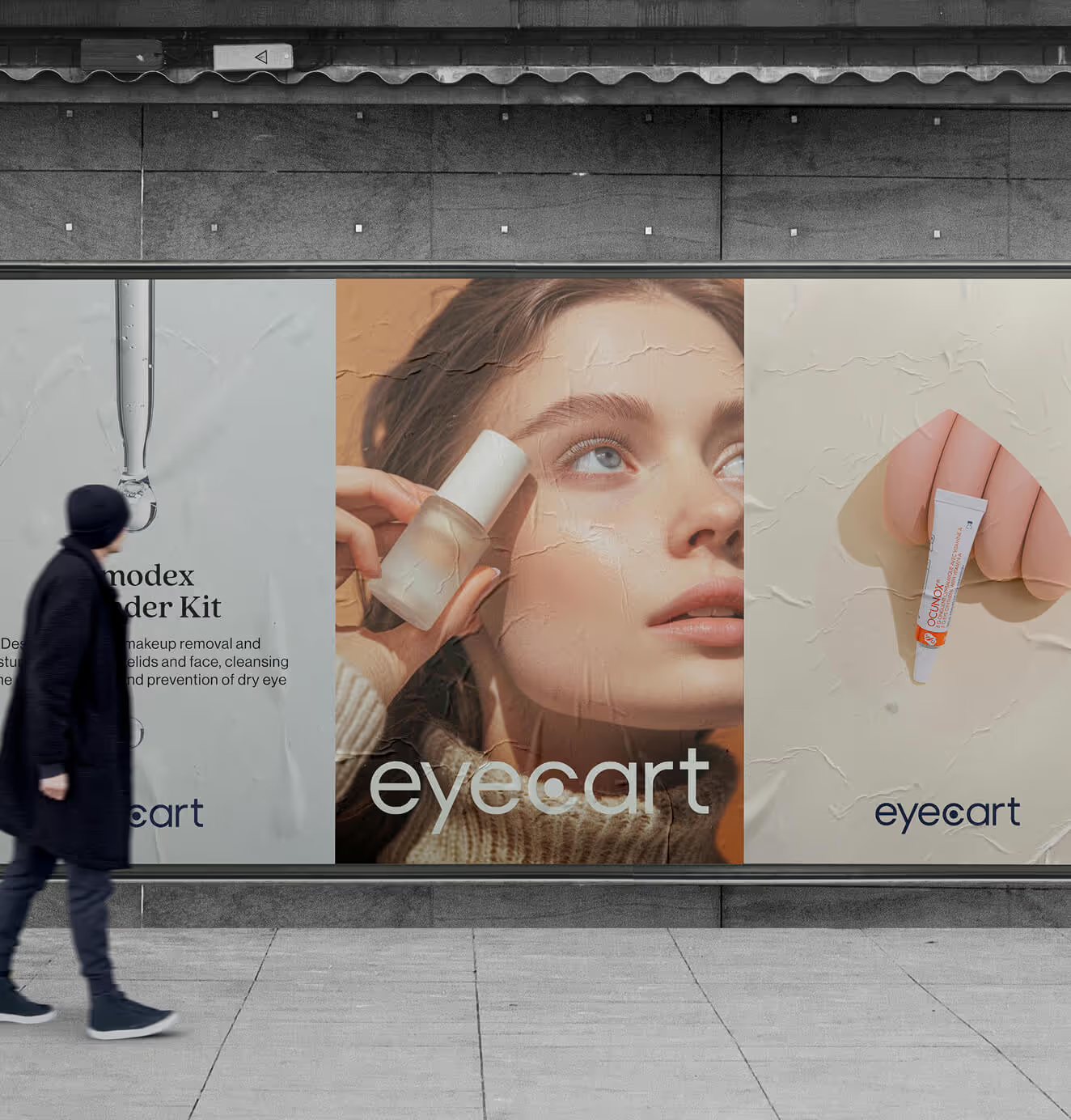
Eyecart outdoor campaign posters featuring eye care products, skincare visuals, and modern branding.
Eyecart optical care campaign image with a smiling woman holding a branded magnifying lens over one eye.
Eyecart billboard campaign featuring Blephaclean eye care wipes and healthy eye care messaging.
Multiple laptop screens display the Eyecart website, showcasing product pages and banners promoting eye care items.
Eyecart outdoor campaign posters featuring eye care products, skincare visuals, and modern branding.
Lucky Girl Rosé
We turned a zero-carb rosé into a lifestyle brand that makes every moment worth celebrating.

+200%
Increase in conversion rate

+688%
Increase in attributed revenue

READ MORE
A bottle of Lucky Girl rosé wine nestled among pink and white flowers in a rustic outdoor setting.
Lucky Girl rosé picnic setup with wine bottle, fruit, sunglasses, and The Lucky Club booklet.
Lucky Girl rosé campaign visual with a wine glass, gold tray, red nails, and Pour Yourself Some Luck text.
Lucky Girl rosé wine bottle with floral label design and soft pink lifestyle styling.
A bottle of Lucky Girl rosé wine nestled among pink and white flowers in a rustic outdoor setting.
Lucky Girl rosé picnic setup with wine bottle, fruit, sunglasses, and The Lucky Club booklet.
Lucky Girl rosé campaign visual with a wine glass, gold tray, red nails, and Pour Yourself Some Luck text.
Lucky Girl rosé wine bottle with floral label design and soft pink lifestyle styling.