Ecommerce Web Design Companies: Your 2026 Hiring Guide
07/13/2026
E-Commerce / Web Design

.png)


What Ecommerce Web Design Companies Actually Do


Free Brand Health Audit
Make sure your brand is built to sell

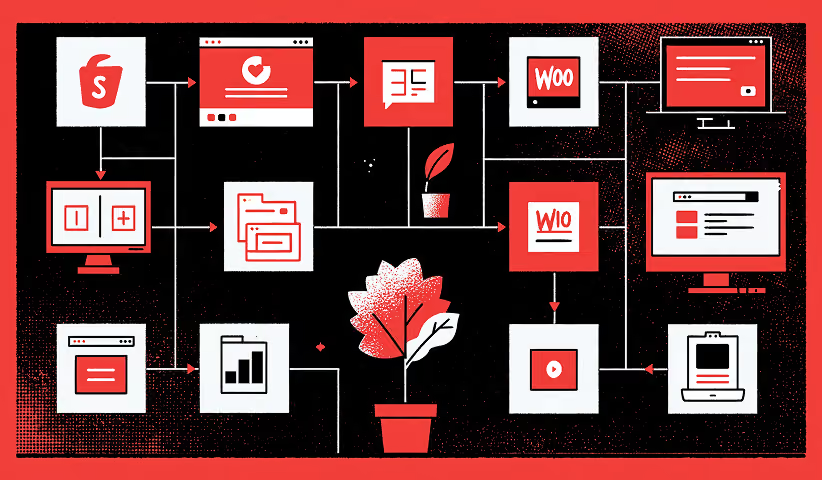
How to evaluate ecommerce web design companies for your business model


Want to learn more about Website Design, Development and E-commerce? Keep reading!
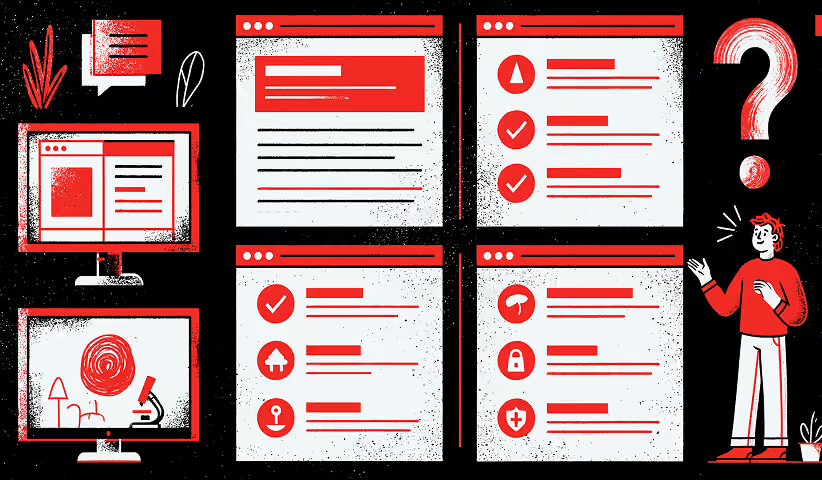
What questions should you ask an ecommerce web design company?
Use the following questions during the agency selection process:
- What ecommerce business models have you worked with?
- Which platform do you recommend for our business, and why?
- What limitations should we expect from that platform?
- Who will work directly on our project?
- Which parts of the work are completed internally?
- How do you approach mobile ecommerce design?
- How do you test checkout and third-party integrations?
- What are your Core Web Vitals targets?
- How do you protect existing SEO performance during a redesign?
- How do you manage product, customer, and order migrations?
- What happens when the project scope changes?
- Who owns the design files, theme, code, data, and accounts?
- What training is included?
- What support is available after launch?
- How do you measure whether the new website is successful?
Detailed answers are more valuable than polished sales presentations.
What technical capabilities matter most in ecommerce site design companies?
Technical performance is not simply another feature. It is the foundation every other part of your store depends on.
Core Web Vitals measure loading performance, interaction responsiveness, and visual stability. These signals influence the quality of the customer experience and contribute to Google’s assessment of page experience.
A firm that does not consider Core Web Vitals during strategy, design, and development may be creating a long-term performance problem.
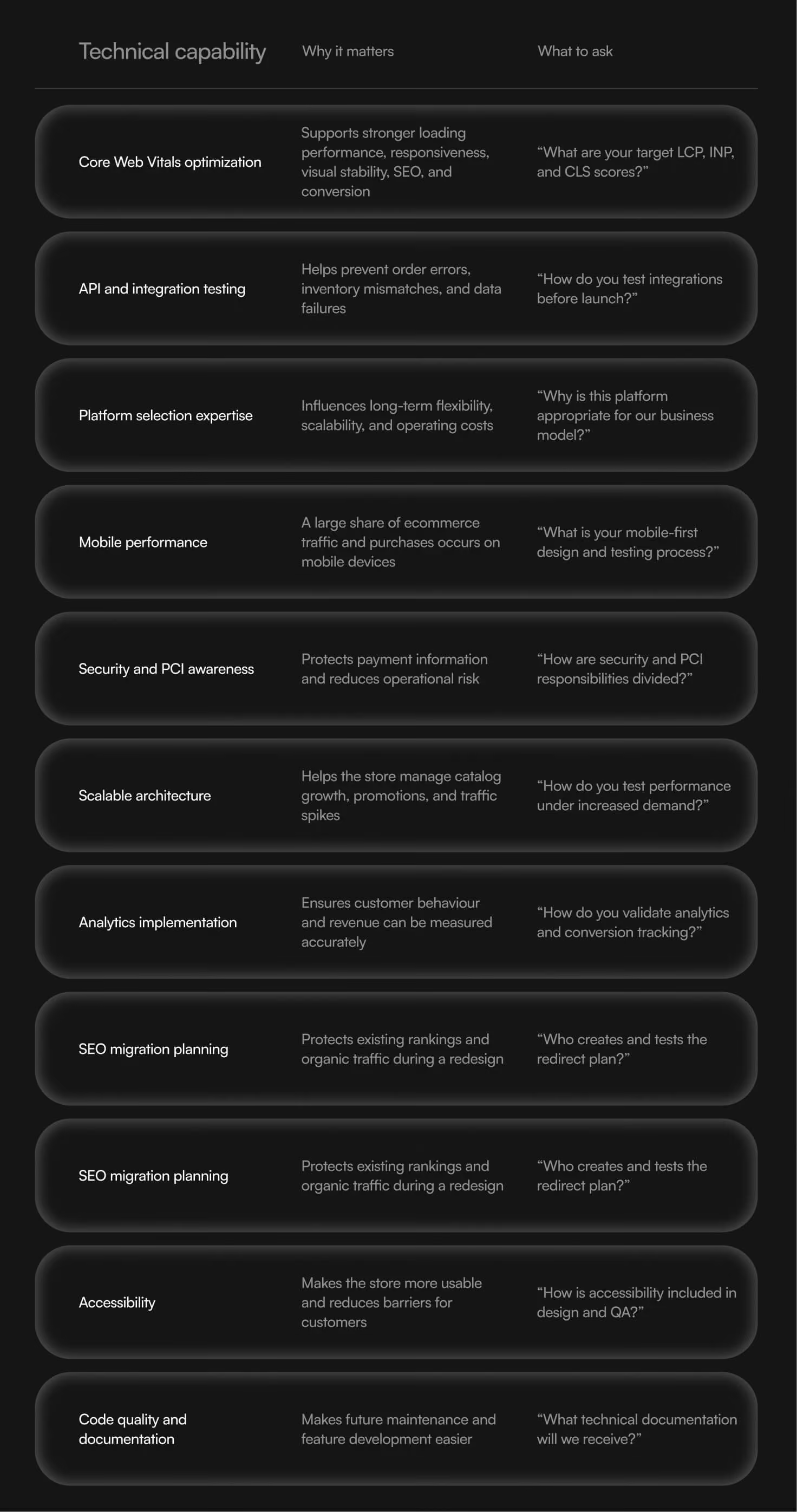
Platform selection deserves particular attention. SaaS platforms typically include hosting, security features, updates, and built-in performance tools. Custom and headless builds can provide greater control but may require more engineering investment and internal technical support.
Neither approach is universally better. The right choice depends on your catalog complexity, integration requirements, growth plans, operating model, and internal resources.
Security is non-negotiable for any store handling payment information. Ask specifically about PCI DSS responsibilities, payment processing, user permissions, SSL certificates, account security, software updates, and incident response.
What should be included in an ecommerce website proposal?
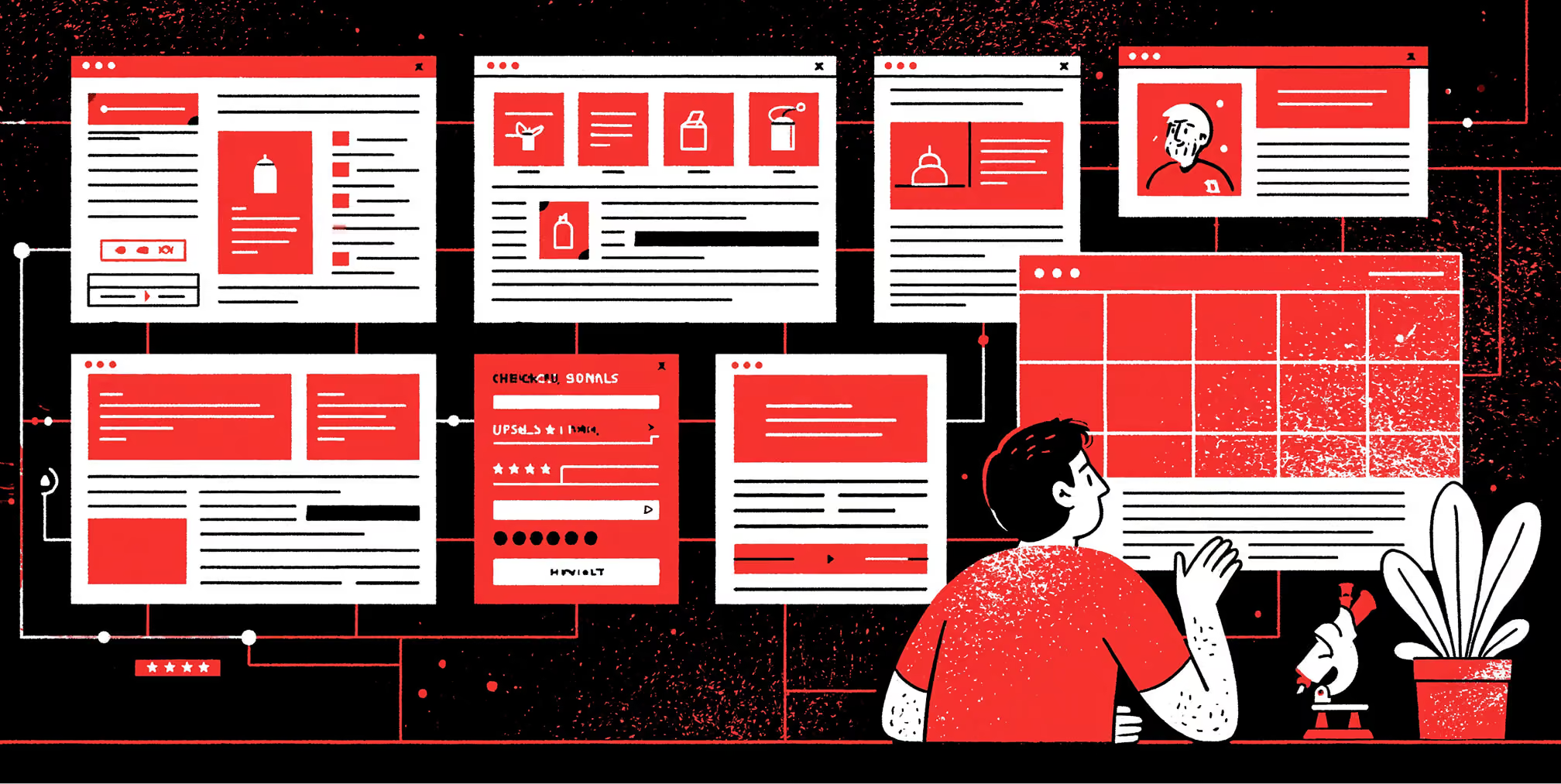
A strong proposal should clearly describe what is and is not included.
At minimum, it should cover:
- Project objectives
- Scope of work
- Discovery activities
- UX deliverables
- Design deliverables
- Development requirements
- Platform and technology
- Integrations
- Migration responsibilities
- Content responsibilities
- SEO responsibilities
- Accessibility requirements
- Quality assurance
- Launch process
- Training
- Post-launch support
- Timeline
- Payment schedule
- Change-request process
- Ownership and licensing
- Assumptions and exclusions
Be cautious of proposals that use broad phrases such as “custom development” or “SEO included” without defining the deliverables.
What does it cost to hire ecommerce web design companies?
Ecommerce website costs range from simple theme configurations to enterprise storefronts costing hundreds of thousands of dollars. That range reflects genuine differences in strategy, complexity, integrations, customization, migration, and technical risk.
The following ranges are general planning estimates. Actual pricing depends on your requirements and the market in which the agency operates.
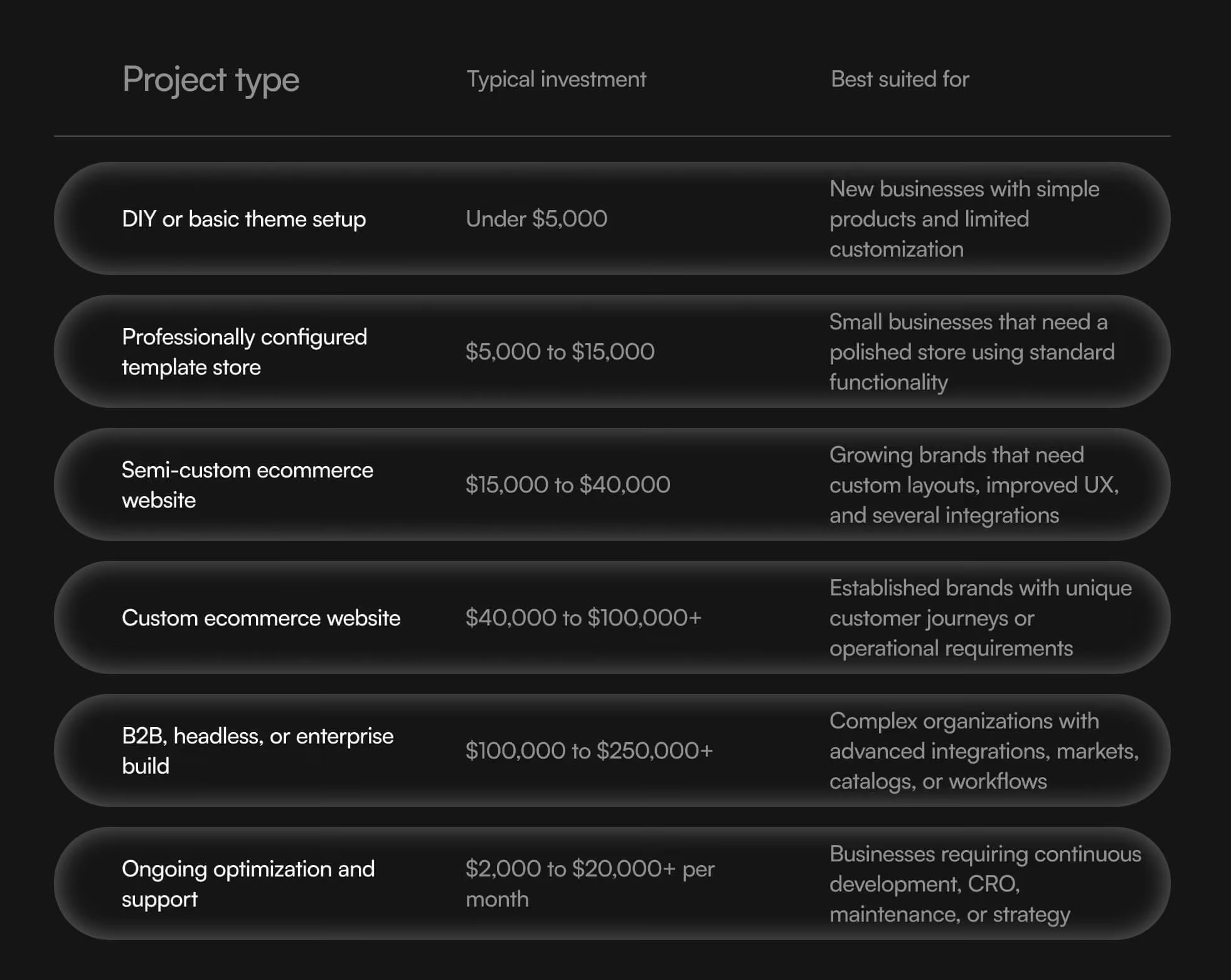
A project estimate may include several cost categories.
Strategy and discovery
This covers research, analytics, technical planning, requirements gathering, workshops, and platform recommendations.
UX and visual design
This includes site architecture, wireframes, prototypes, design systems, page designs, responsive layouts, and interaction planning.
Development
Development costs depend on the number of templates, custom components, integrations, features, and administrative workflows required.
Content and product data
Copywriting, photography, image editing, data cleanup, product entry, and catalog organization may be separate line items.
Migration
Migration expenses depend on the volume and condition of your products, customers, orders, reviews, content, redirects, and historical data.
Applications and integrations
Some tools have setup fees, subscription costs, transaction fees, or usage-based pricing.
Platform and hosting
Your ecommerce platform may charge monthly fees, payment fees, hosting costs, or revenue-based charges.
Post-launch support
Maintenance, updates, conversion optimization, feature development, analytics, and technical support should be included in your long-term budget.
The most expensive mistake is choosing the cheapest option upfront and paying for a rebuild within 18 months. A well-scoped custom ecommerce website built on the right platform can outperform a rushed, low-cost build for years.
How should you calculate total cost of ownership?
The initial design and development fee is only one part of the investment.
Total cost of ownership may include:
- Platform subscriptions
- Hosting
- Payment-processing fees
- Application subscriptions
- Integration fees
- Premium themes or software licenses
- Maintenance retainers
- Internal staff time
- Technical support
- Security updates
- Conversion optimization
- Content production
- Replatforming costs
- Training
- Future feature development
Ask each agency to identify both the initial project cost and the likely recurring expenses associated with its recommended approach.
A platform with a lower monthly fee is not necessarily less expensive if it requires extensive maintenance or custom development.
How long does an ecommerce website project take?
A basic theme-based store may take four to eight weeks. A semi-custom project may require eight to sixteen weeks. Complex custom, B2B, international, or headless builds may take six months or longer.
Timelines are affected by:
- Decision-making speed
- Number of page templates
- Design complexity
- Product-data readiness
- Integration requirements
- Content production
- Migration volume
- Legal or compliance reviews
- Stakeholder availability
- Revision rounds
- Quality assurance
- Platform approvals
An extremely short timeline is not always a competitive advantage. It may indicate that strategy, content, testing, or migration work has been excluded.
Ask the agency to identify which client responsibilities could delay the schedule. Product data and content are two of the most common causes of ecommerce launch delays.
What are the warning signs of a weak ecommerce agency?
Look for these red flags during the selection process.
The agency recommends a platform before discovery
A platform recommendation should follow an evaluation of your requirements.
Its portfolio contains no relevant commerce experience
Strong general website design experience does not automatically translate into ecommerce expertise.
It focuses entirely on appearance
A qualified ecommerce team should discuss customers, operations, integrations, analytics, conversion, and performance.
The proposal is vague
Undefined deliverables create room for disagreements, missed expectations, and added fees.
Testing is treated as a final task
Quality assurance should occur throughout development, not only during the week before launch.
It cannot explain post-launch support
The agency should provide a defined process for bugs, updates, emergencies, and new features.
It avoids discussing ownership
You should understand who owns the design files, theme, custom code, accounts, data, and software licenses.
It guarantees rankings or conversion increases
An agency can improve the conditions for growth, but responsible firms do not guarantee specific search rankings or revenue outcomes without sufficient evidence.
Communication is slow before the contract is signed
Poor communication during the sales process often becomes worse once the project is active.
Who should own the website after launch?
Ownership should be documented in the contract.
Your business should generally control:
- Domain registration
- Ecommerce platform account
- Payment gateway
- Analytics accounts
- Tag management
- Search Console
- Advertising pixels
- Email and SMS platforms
- Customer data
- Product data
- Design source files
- Custom code created for the project
- Third-party subscriptions
Some commercial software, applications, fonts, themes, or code libraries may remain subject to separate licenses. The agency should identify these restrictions before the project begins.
Avoid arrangements in which the agency is the only administrator of business-critical accounts.
Key takeaways
The right ecommerce web design company builds for your specific business model, optimizes performance from the beginning, and treats post-launch support as a core deliverable rather
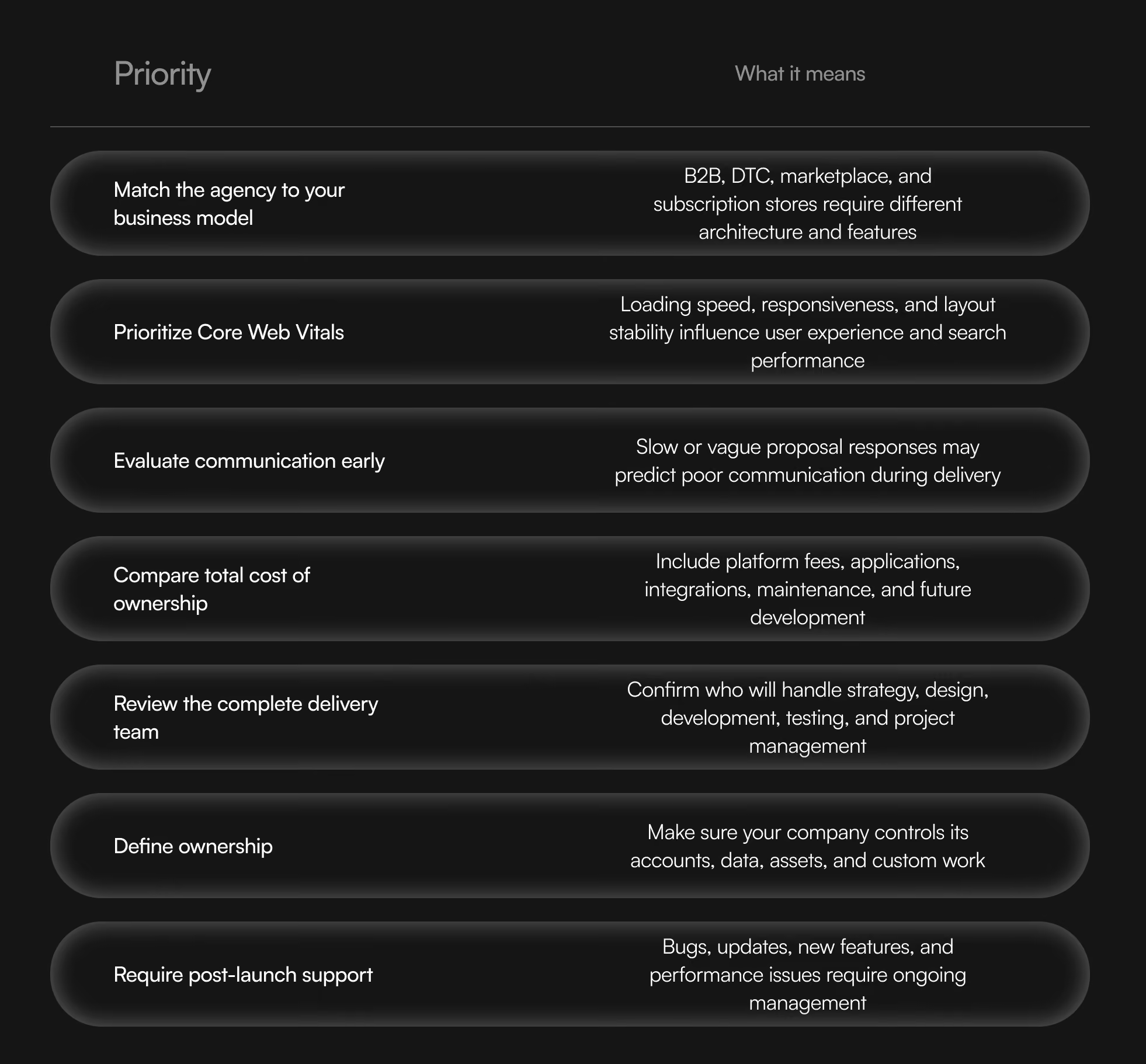
What I have learned from watching ecommerce builds succeed and fail
I have watched business owners make the same avoidable mistake repeatedly. They spend months evaluating design portfolios and almost no time evaluating post-launch support commitments. They are then surprised when their agency becomes difficult to reach after launch day.
Launch day is the starting line, not the finish line.
The real work continues after your store goes live. Platform updates can affect integrations. Traffic spikes can expose performance gaps. New products may require additional templates or merchandising tools. Customer behaviour may reveal friction that was not visible during testing.
An agency that cannot commit to a clear post-launch support structure is not positioned to be a long-term partner. It is completing a one-time transaction.
Another recurring problem is ignoring business-model fit. A company may hire a firm with a beautiful B2C portfolio to build a B2B wholesale portal. The result can be a site that looks polished but functions poorly for the buyers and internal teams using it.
Business-model fit is not a preference. It is a technical requirement.
Communication quality is one of the most reliable early signals. When an agency responds to your initial inquiry with a detailed answer that references your actual business, it demonstrates preparation and attention. When it sends a generic capabilities deck without addressing your questions, it may be optimizing for its sales process rather than your project.
The best ecommerce site design companies treat your growth as a shared performance indicator. They ask about conversion rate, average order value, customer acquisition costs, repeat purchases, margins, operational constraints, and growth goals before they begin discussing visual design.
That is the conversation worth having.
How The Branded Agency approaches ecommerce website development
Building a high-performing online store requires more than good design. It requires a partner that connects your brand, platform, customer experience, and marketing into a single growth system.
The Branded Agency specializes in strategic website development for growth-stage companies that need more than a template. We align UX design, technical architecture, brand positioning, and conversion strategy to build stores that perform.
Our process can include:
- Ecommerce strategy and discovery
- Platform selection guidance
- Customer journey planning
- UX and interface design
- Custom ecommerce development
- Product and collection architecture
- Integration planning
- Content and SEO migration
- Analytics implementation
- Quality assurance
- Launch planning
- Post-launch optimization and support
We also connect your website investment to paid media and retention marketing so your store, campaigns, and customer journeys work together from the beginning.
If you are ready to build an ecommerce store that performs as well as it looks, reach out to The Branded Agency for a consultation.
FAQ
What do ecommerce web design companies actually do?
Ecommerce web design companies build and optimize online stores. Their work can include strategy, UX design, visual design, platform selection, frontend and backend development, product architecture, third-party integrations, migration, testing, launch support, and ongoing optimization.
The best firms tailor the storefront and technical architecture to the company’s specific business model.
How much does a custom ecommerce website design cost?
A professionally configured template store may cost between $5,000 and $15,000, while semi-custom projects may range from $15,000 to $40,000. Fully custom, B2B, headless, and enterprise ecommerce websites can cost $40,000 to $250,000 or more.
Final costs depend on strategy, design, integrations, migration, catalog complexity, and technical requirements.
What is the difference between B2B and B2C ecommerce web design?
B2B ecommerce sites may require customer-specific pricing, account permissions, purchase orders, bulk ordering, approval workflows, tax exemptions, and quote requests.
B2C websites usually focus more heavily on product discovery, merchandising, promotions, emotional brand presentation, and streamlined consumer checkout.
These differences affect the website’s architecture, not only its appearance.
How do I know whether an ecommerce design agency is technically qualified?
Ask about its Core Web Vitals targets, integration testing process, platform recommendation, SEO migration plan, security approach, analytics validation, and post-launch support.
Qualified firms should answer with specific processes, deliverables, tools, and examples.
Why does post-launch support matter for ecommerce sites?
Ecommerce websites require continued management after launch. Platform changes, application updates, new integrations, product launches, traffic growth, and customer feedback may require technical adjustments.
A clear support structure reduces the risk of prolonged bugs, downtime, and unresolved performance problems.
Should I hire a specialized ecommerce agency or a general web design firm?
A specialized ecommerce agency is usually the stronger choice when your website requires payment processing, complex products, integrations, subscriptions, B2B functionality, or significant revenue responsibility.
A general web design firm may be suitable for a simple catalog or informational website, but it should still demonstrate direct ecommerce experience.
What ecommerce platform should my company use?
The right platform depends on your catalog, business model, markets, integrations, customization needs, internal resources, and expected growth.
An agency should evaluate these factors before recommending Shopify, BigCommerce, Adobe Commerce, WooCommerce, Webflow Ecommerce, a headless platform, or a custom solution.
How can I protect SEO traffic during an ecommerce redesign?
Create a complete URL inventory, preserve valuable content, map old URLs to their most relevant new destinations, maintain metadata where appropriate, implement redirects, review canonical tags, validate structured data, and monitor indexation after launch.
SEO migration planning should begin before development is complete.
Recommended reading

Quincy Samycia
Want to learn more about brand platform?