Email List Hygiene: How to Clean and Maintain Your List
10/26/2026
Marketing Services
Learn how to improve email list hygiene, protect sender reputation, boost deliverability, and drive more revenue from your email campaigns.
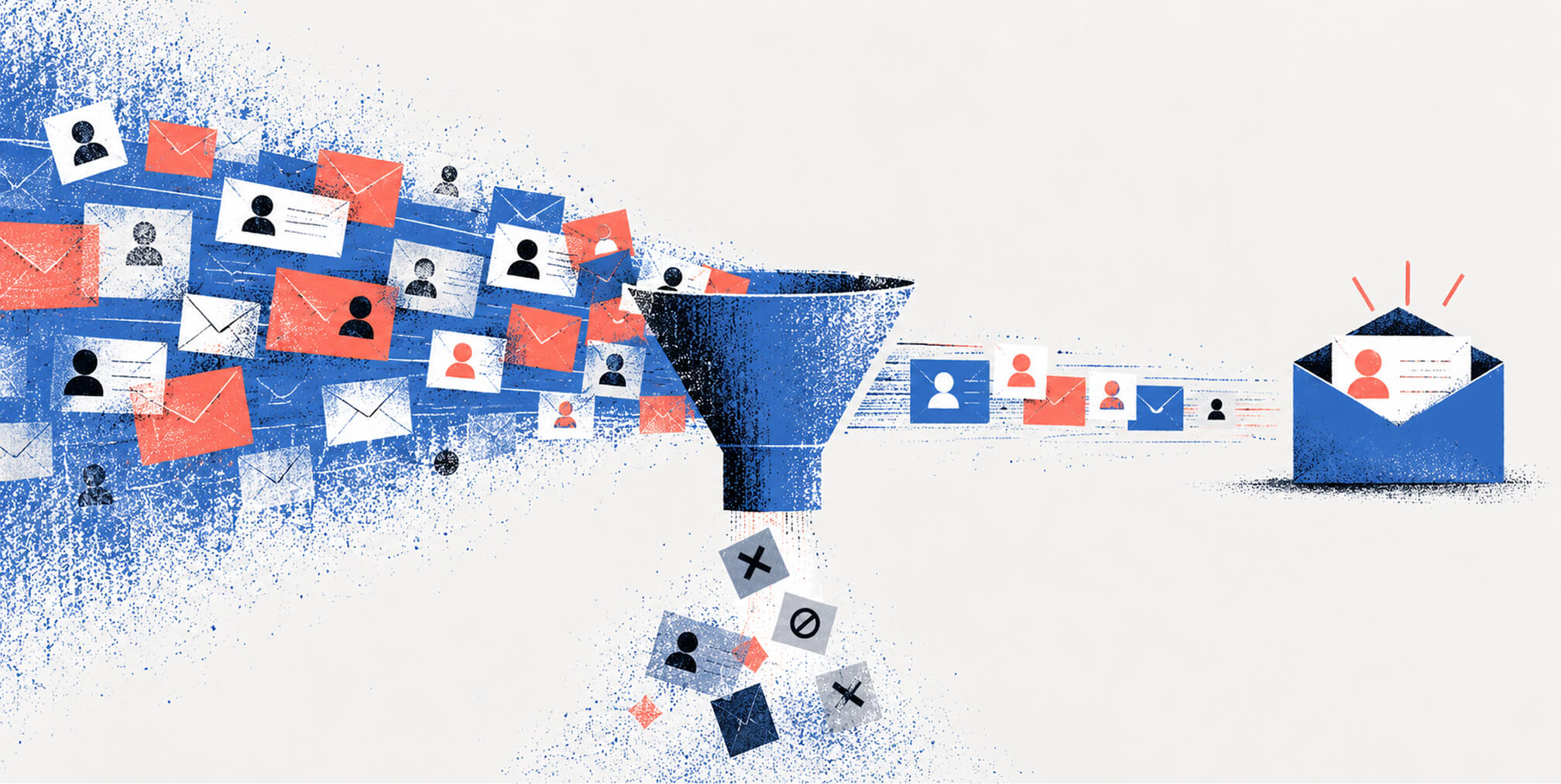
Email list hygiene is the ongoing practice of keeping your list accurate, engaged and free of addresses that hurt your sending. You remove invalid emails, handle bounces, put unengaged contacts through a re-engagement flow, and confirm that the people left actually want your messages. Done well, it protects sender reputation, lifts inbox placement and makes every campaign metric more honest.


Why list hygiene matters for deliverability


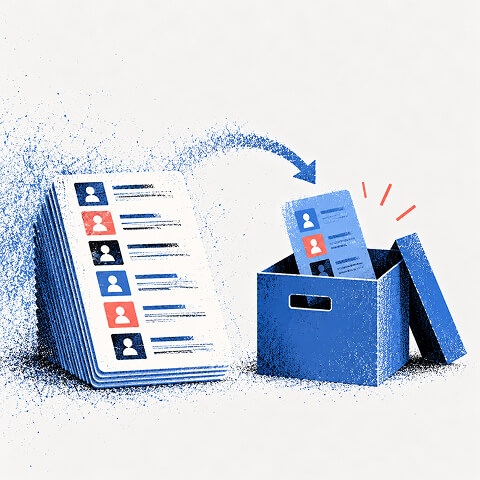
Mailbox providers judge you on how recipients react. HubSpot’s deliverability documentation names spam complaints, high bounce rates and unsubscribes as negative engagement signals that can damage your sending reputation. Every message sent to a dead address or a disinterested contact adds to that pile.
The stakes are concrete. Google’s sender guidelines FAQ tells senders to keep the user-reported spam rate below 0.1% and to prevent it from reaching 0.3% or higher. AWS’s messaging team notes that Google, Yahoo, Microsoft and other mailbox providers have required bulk senders, since February 2024, to keep complaint rates below 0.3%.
A clean list also improves the numbers you report upward. Mailgun says regular maintenance lowers bounce rates, increases engagement and improves deliverability, because you stop sending to people who are not interested. Your open rate, click rate and revenue per send all become more truthful when the denominator is real people.
The mistake we see most often is treating a big list as a growth asset. A list of 200,000 where 60% never engage is not an audience, it is a drag on the 80,000 who do.
What dirty data looks like
Before you clean, know what you are hunting. Most problems fall into six groups:
ProblemWhat it isDefault actionHard bouncesPermanent failures: misspelled addresses, dead or misconfigured domainsRemove or suppress immediatelySoft bouncesTemporary failures such as a full inbox or a server issueMonitor, retry, suppress after repeated failuresInactive subscribersNo opens or clicks over a defined windowRe-engage, then suppress or archiveSpam traps and spammy signupsAddresses that exist to catch bad list practicesRemove immediatelyDuplicatesSame person, multiple recordsMergeComplainers and unsubscribesPeople who asked you to stopSuppress permanently
Twilio’s scrub guide recommends removing hard bounces right away, including invalid addresses, dead or misconfigured domains and permanent spam blocks. Constant Contact adds that duplicates should be merged and that spam traps or spammy signups should come out immediately.
How to clean your email list, step by step
Here is the order we use, from least risky to most judgment-heavy.
1. Export and back up the list
Before touching anything, export the full list with its fields: signup source, signup date, last open, last click, last purchase and bounce status. You need this history to diagnose where bad addresses come from, and to restore anyone you suppress by mistake.
2. Suppress hard bounces
Klaviyo defines a hard bounce as a permanent delivery failure, such as a misspelled address, and its platform automatically suppresses profiles that hard bounce. If your platform does not do this by default, build the rule yourself. There is no scenario where a second send to a permanently invalid address helps you.
3. Deal with soft bounces patiently
Soft bounces are temporary, so treat them that way. The same Klaviyo guide suggests excluding soft-bouncing profiles from campaigns for 90 days before trying again, and says the platform automatically suppresses a profile after seven consecutive soft bounces. GetResponse advises tracking soft bounces across successive campaigns and investigating repeated bounces at a single domain, which can point to a block or a configuration problem rather than a bad contact.
Check soft bounces for typos too. Constant Contact recommends removing them only after repeated bounces.
4. Verify addresses you are unsure about
After a trade show, a webinar or a data import, run the new addresses through verification. Twilio describes the layers: syntax checks, domain validation and mailbox verification, ideally before a major campaign or after you collect addresses at events. Use a reputable verification tool for this step, since it is a data task rather than a creative one.
5. Merge duplicates and remove role accounts
Two records for one person means double sends and distorted metrics. Merge them, keeping the most complete history. Role-based addresses such as info@ or sales@ often reach shared inboxes where nobody feels ownership, so many teams segment or drop them from promotional sends.
6. Segment the unengaged
This is the step with real judgment. Define “unengaged” using more than opens. Twilio warns that Apple Mail Privacy Protection makes open rates less reliable and recommends adding clicks, website visits and purchase history as engagement signals.
Then choose windows. Twilio suggests flagging never-engaged subscribers after 90 days, recently inactive subscribers after three to six months, and subscribers whose engagement is declining. GetResponse gives 180 or more days without opens or clicks as an example threshold. Your sales cycle should set the number: a B2B SaaS buyer with a 9-month evaluation is not dead after four months of silence, while a flash-sale shopper might be.
7. Run a win-back before you remove
Mailchimp recommends archiving inactive contacts instead of immediately deleting them, and using re-engagement, cadence changes, preference collection, personalization and testing first. Constant Contact similarly suggests giving inactive subscribers one final chance to stay.
A good win-back sequence has three emails over about two weeks:
Contacts who click stay. Everyone else is suppressed or archived, not deleted, so you keep the history.
If you want to go beyond email in the win-back, an AI-powered database reactivation campaign is one way to reduce sends to inactive contacts while keeping a chance to win them back through another channel.
Free Brand Health Audit
Make sure your brand is built to sell
Search has changed. Your customers aren't just Googling anymore. They're asking ChatGPT, Perplexity, Gemini and other AI platforms what to buy, who to trust and which brands they should consider.
If your brand isn't showing up clearly in those answers, you're already losing opportunities. Our free Brand Health Audit shows you where your brand stands across traditional search, AI search and brand positioning.

Sample brand audit
Live preview
Traditional search
72
AI search (GEO)
34
Brand positioning
58
How often should you clean your list?
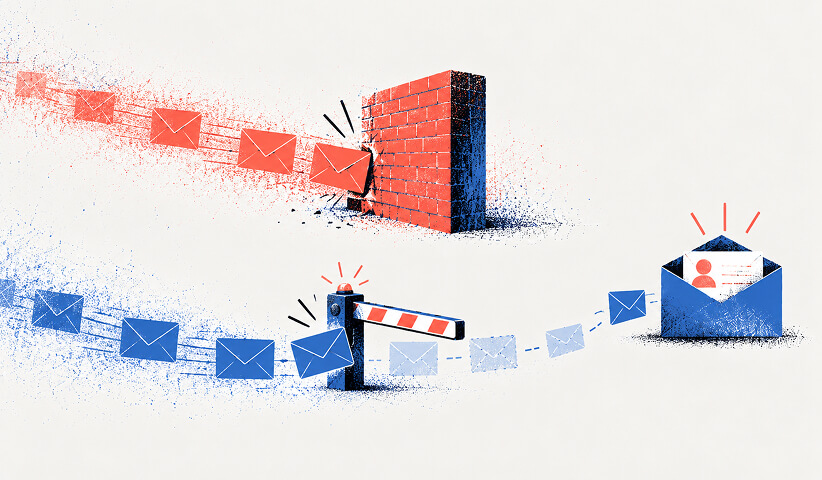
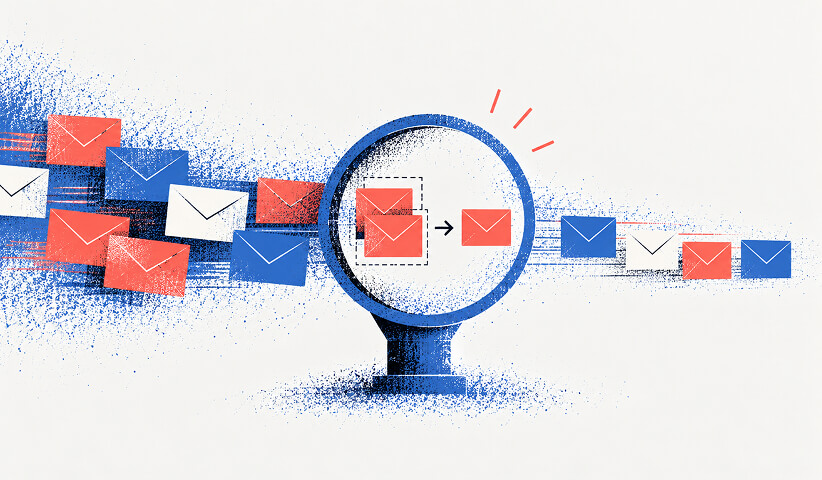
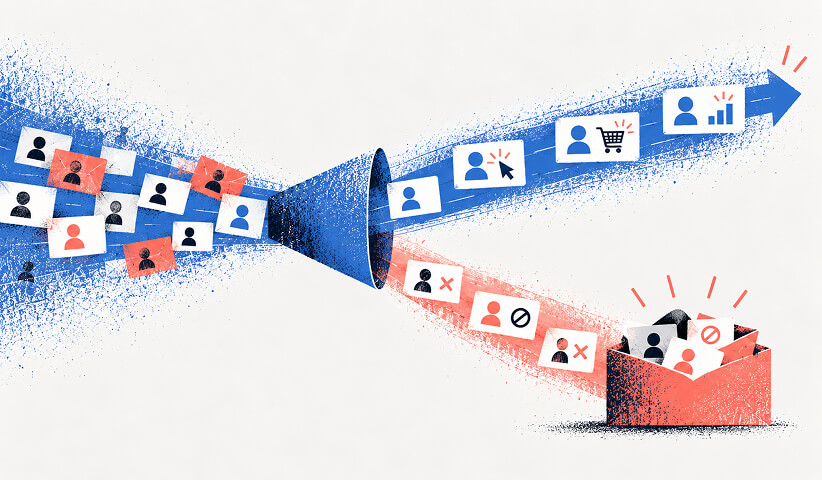
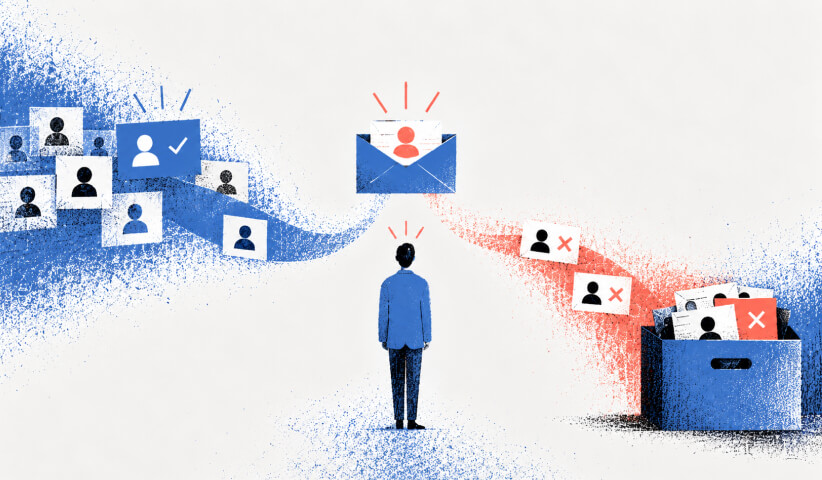
More often than most teams do. Klaviyo recommends cleaning email and SMS lists at least once a month, including removing fake or misspelled addresses and unengaged profiles. Its help center frames the work as ongoing: unengaged contacts are excluded continuously and only selectively re-engaged.
A practical cadence looks like this:
FrequencyTaskEvery sendAuto-suppress hard bounces and complaints; review bounce and complaint ratesMonthlyReview soft bounces, merge duplicates, check new-signup quality by sourceQuarterlyRun the unengaged segment through a win-back, then suppress nonrespondersAfter any import or eventVerify addresses before the first sendAnnuallyAudit signup forms, consent language and list sources
High-volume senders should lean toward the tighter end. Seasonal businesses should clean before their peak, not during it, so the largest sends of the year go to the healthiest audience.
Reduce your bounce rate without losing real subscribers
The fear behind most delayed cleaning is losing legitimate contacts. Three habits solve most of it.
Use double opt-in where the list matters most. AWS describes it as sending a verification email and adding the address only after the recipient clicks to confirm. It catches typos and fake addresses at the door. The tradeoff is fewer signups, but the ones you keep are real.
Watch the thresholds. CM.com’s knowledge center recommends keeping bounce rates below 2%. Mailchimp says an open rate under 30% over the preceding 90 days, or a click-through rate that stays below 1%, may signal a deliverability problem. Treat these as early-warning lights, not verdicts: they vary by industry and list type.
Fix the source, not just the symptom. If one signup form, one event or one partner produces most of your bounces, the cleaning job will recur forever. Tag every record with its source and review bounce rate by source monthly.
Want to learn more about brand platforms, Brand Strategy and Brand Identity? Keep reading!
f you need help with your companies brand strategy and identity, contact us for a free custom quote.
Best practices that keep a list clean
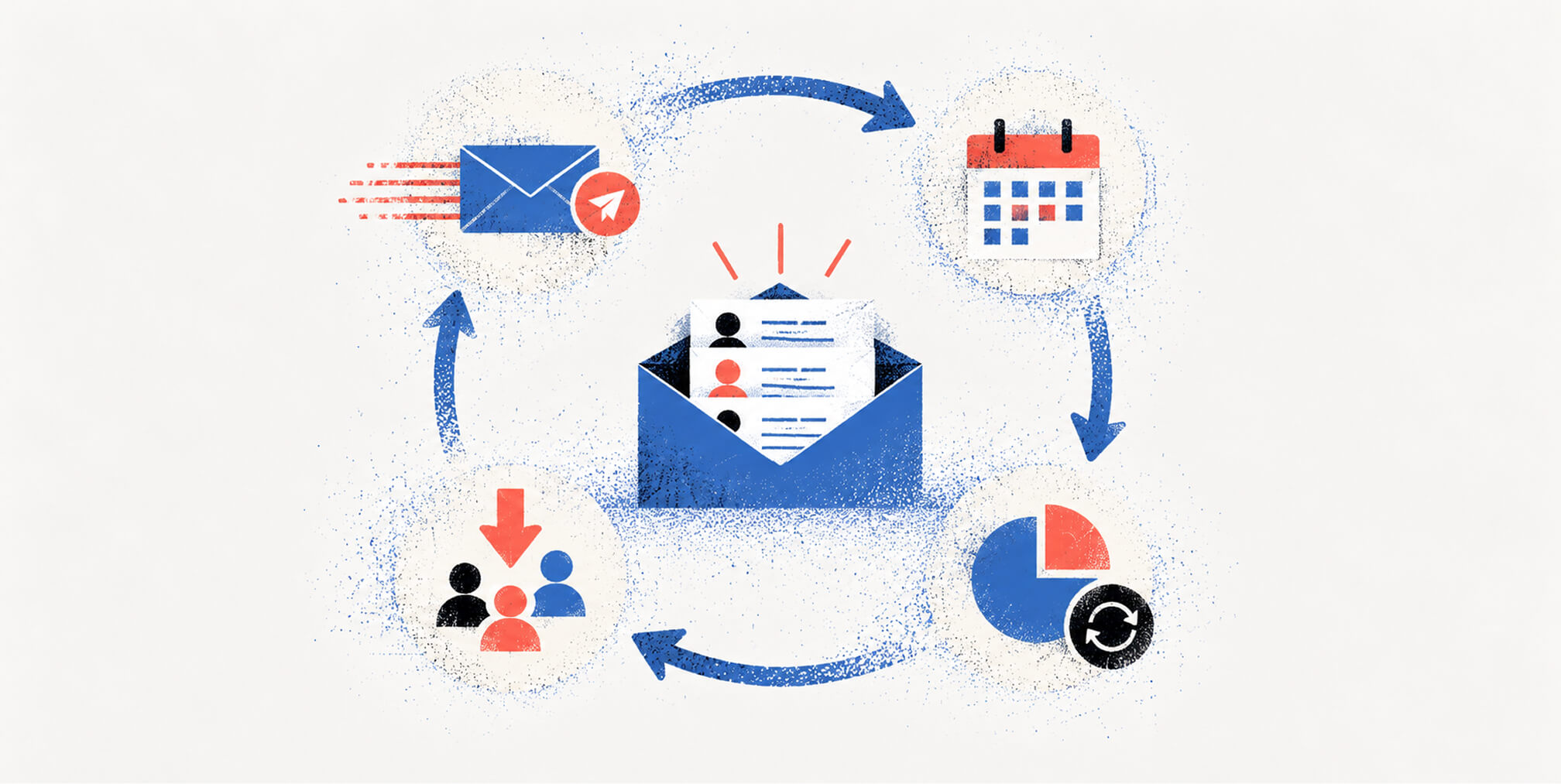
Most hygiene advice is written as defense: avoid the spam folder, avoid penalties. We see it as an offensive move. Brand-backed performance means the same email program has to build the brand and produce traceable revenue, and neither happens when a third of your sends go to people who stopped reading a year ago.
When we audit a retention program, we look at the list before the creative. If engagement is sliding, the cause is usually upstream: a signup incentive that attracts one-time discount hunters, a welcome series that does not set expectations, or a cadence that never adapts to behavior. Scrubbing the list without fixing those just resets the clock.
We also push back on the instinct to treat list size as a vanity metric to protect. A smaller, healthier list gives you cleaner test results, better inbox placement and more reliable attribution, and that is what lets leadership trust the channel. For ecommerce teams on Klaviyo, our Klaviyo email marketing guide shows how suppression rules and engagement segments fit into a full lifecycle program. SaaS teams will find the same logic in our email marketing for SaaS guide.
The teams that win treat hygiene as a monthly operating rhythm owned by someone specific, with thresholds agreed in advance and reported next to revenue.
When to hand list hygiene to a retention partner
If you are cleaning the list yourself and still seeing weak inbox placement, the issue is rarely just addresses. It is usually the combination of acquisition quality, lifecycle flows, segmentation and creative, and that spans several teams.
That is the work our retention marketing service covers: email and SMS programs built around healthy lists, suppression logic, win-back flows and revenue reporting. Retention Marketing starts from $6,500 per month, and you can see the full range of engagements on our pricing page. If you want the day-to-day sends handled as well, read about our managed email marketing campaigns.
A simple hygiene policy you can adopt this week
Write it down so it survives staff changes. One page is enough.
Pair it with a short monthly checklist and the work stays small. The expensive version of hygiene is the one you postpone until a deliverability crisis forces it.
Frequently Asked Questions

What is email list hygiene?
It is the regular practice of keeping your list accurate and engaged by removing invalid addresses, handling bounces, re-engaging or suppressing inactive contacts, and making sure subscribers want your email. The goal is to protect sender reputation and improve inbox placement.
How often should you clean an email list?
At least monthly for bounces, duplicates and obviously bad addresses, according to Klaviyo’s guidance. Run the inactive-subscriber review on a quarterly schedule, and verify addresses after any import or event.
Should I delete inactive subscribers or keep them?
Re-engage first, then suppress or archive those who do not respond. Archiving, rather than deleting, preserves their history in case they come back through another channel.
What is a good bounce rate?
One published benchmark from CM.com says to keep it below 2%. If you exceed that, check your signup sources and verify addresses before the next campaign, and look at hard bounces first.

Quincy Samycia
As entrepreneurs, they’ve built and scaled their own ventures from zero to millions. They’ve been in the trenches, navigating the chaos of high-growth phases, making the hard calls, and learning firsthand what actually moves the needle. That’s what makes us different—we don’t just “consult,” we know what it takes because we’ve done it ourselves.
Want to learn more about brand platform?
If you need help with your companies brand strategy and identity, contact us for a free custom quote.
We do great work. And get great results.
+2.3xIncrease in revenue YoY
+126%Increase in repurchase rate YoY


+93%Revenue growth in first 90 days
+144% Increase in attributed revenue




+91%Increase in conversion rate
+46%Increase in AOV


+200%Increase in conversion rate
+688%Increase in attributed revenue