Email Marketing for SaaS: The 2026 Playbook for Lifecycle-Driven Growth

08/11/2026

Marketing Strategy
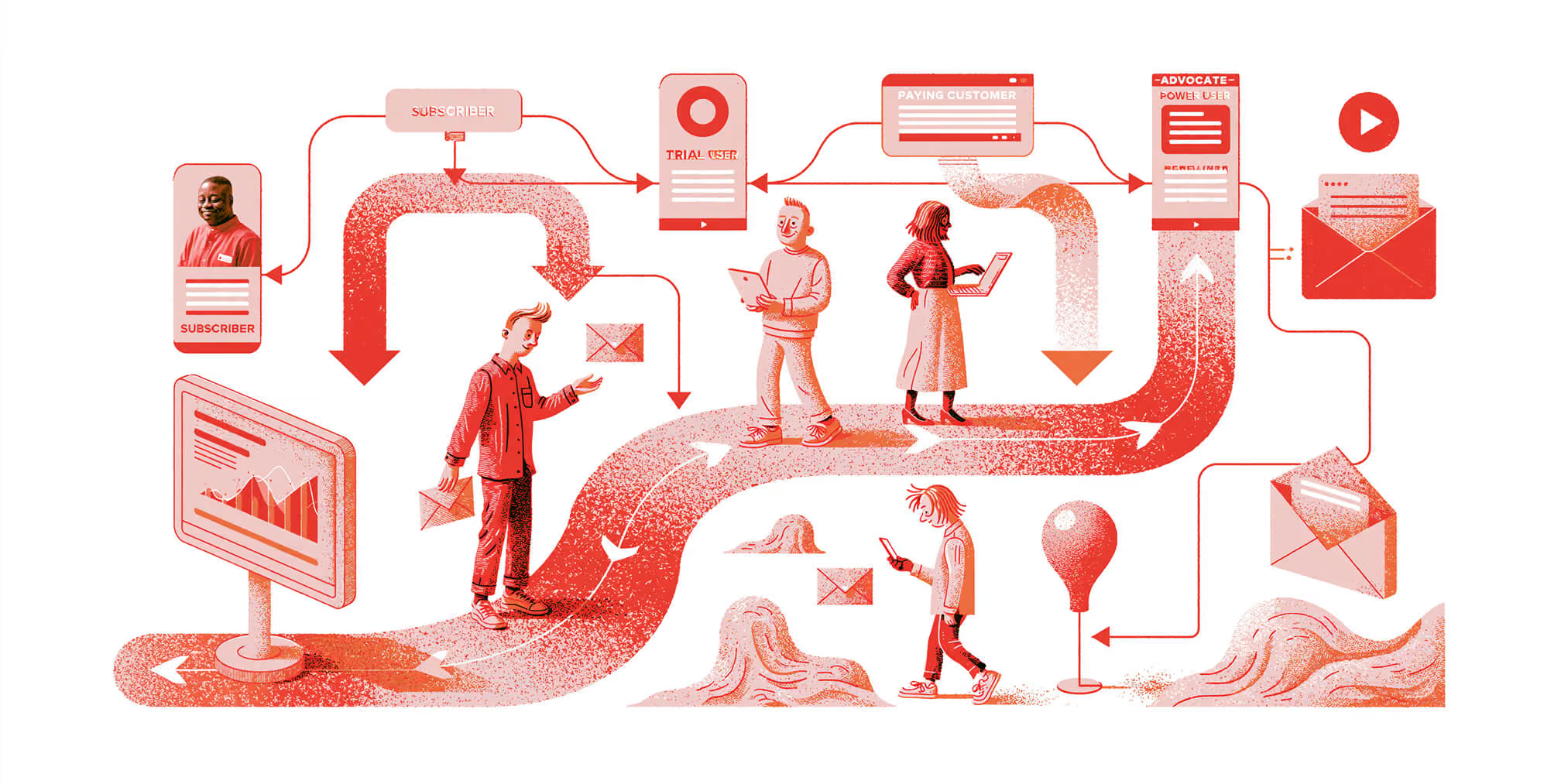
Learn how to build a high-performing SaaS email marketing strategy that turns trial users into loyal customers, reduces churn, and drives predictable recurring revenue through lifecycle-focused automation.

SaaS email marketing customer lifecycle illustration showing subscriber onboarding, free trial nurturing, customer conversion, retention campaigns, and product advocacy.

Email marketing for SaaS is not about sending more newsletters. It is about helping the right user take the next valuable step, whether that means starting a free trial, activating key features, upgrading a plan, or renewing for another year.

Quincy Samycia
Play IconPause Icon
0:00
0:00

How SaaS Email Marketing Drives Growth and Retention

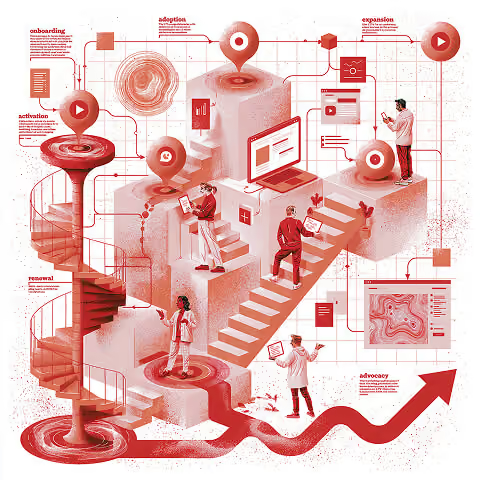
SaaS onboarding journey visualization featuring activation milestones, product adoption, customer expansion, and lifecycle email automation.
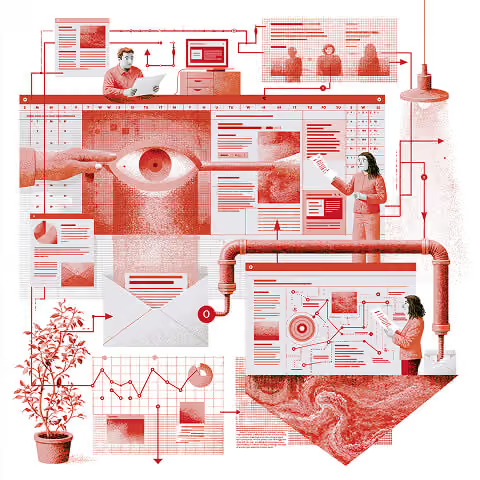
Customer onboarding workflow illustration showing behavior tracking, email triggers, product guidance, analytics, and lifecycle automation.
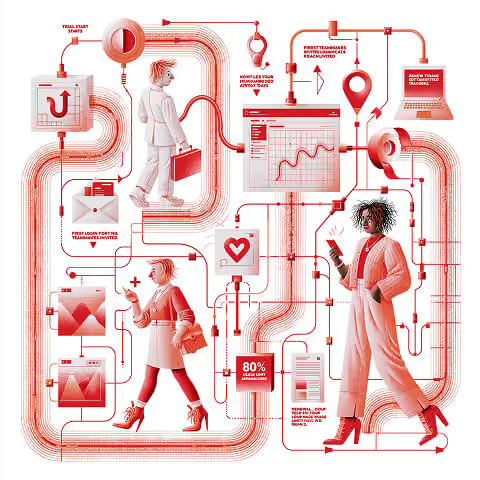
SaaS trial onboarding illustration featuring personalized onboarding emails, feature education, activation milestones, and user engagement workflows.
No items found.

In 2026, the strongest SaaS email programs are built around lifecycle moments, product usage, and customer success outcomes.

Key Takeaways

  • SaaS email marketing works best when it is mapped to the customer journey: lead, trial user, activated user, paying customer, power user, renewal, and advocacy.
  • Behavior-based automated email campaigns usually outperform generic blasts because they respond to user behavior, product usage, and timing.
  • The core of an effective email marketing strategy is educating users with helpful tips, tutorials, customer success stories, and additional resources.
  • Continuous testing of subject lines, CTAs, send timing, content formats, and segmentation keeps email campaigns profitable.
  • Email remains one of the highest-ROI digital marketing channels. SaaS email marketing can average about $36 for every $1 spent, and mature email programs can influence 30–40% of revenue.

What Makes Email Marketing Different for SaaS?

SaaS businesses do not win on one purchase. They win through activation, product adoption, customer retention, upgrades, and renewals. That makes marketing for saas different from eCommerce, where the goal is often to drive the next transaction quickly.

A SaaS customer may first visit your website in 2026, download a report, join a webinar, start a free trial, become one of your paid subscribers, add teammates, upgrade to advanced features, and renew for years. Your email marketing campaigns need to support that entire path.

SaaS companies also have a major advantage: customer data. Logins, plan type, user role, seat count, feature usage, billing history, previous purchases, support tickets, and product interest can all shape tailored messages. Email marketing allows for personalization at scale, enabling companies to address recipients by name and tailor messages to their specific needs or challenges, which enhances engagement and effectiveness.

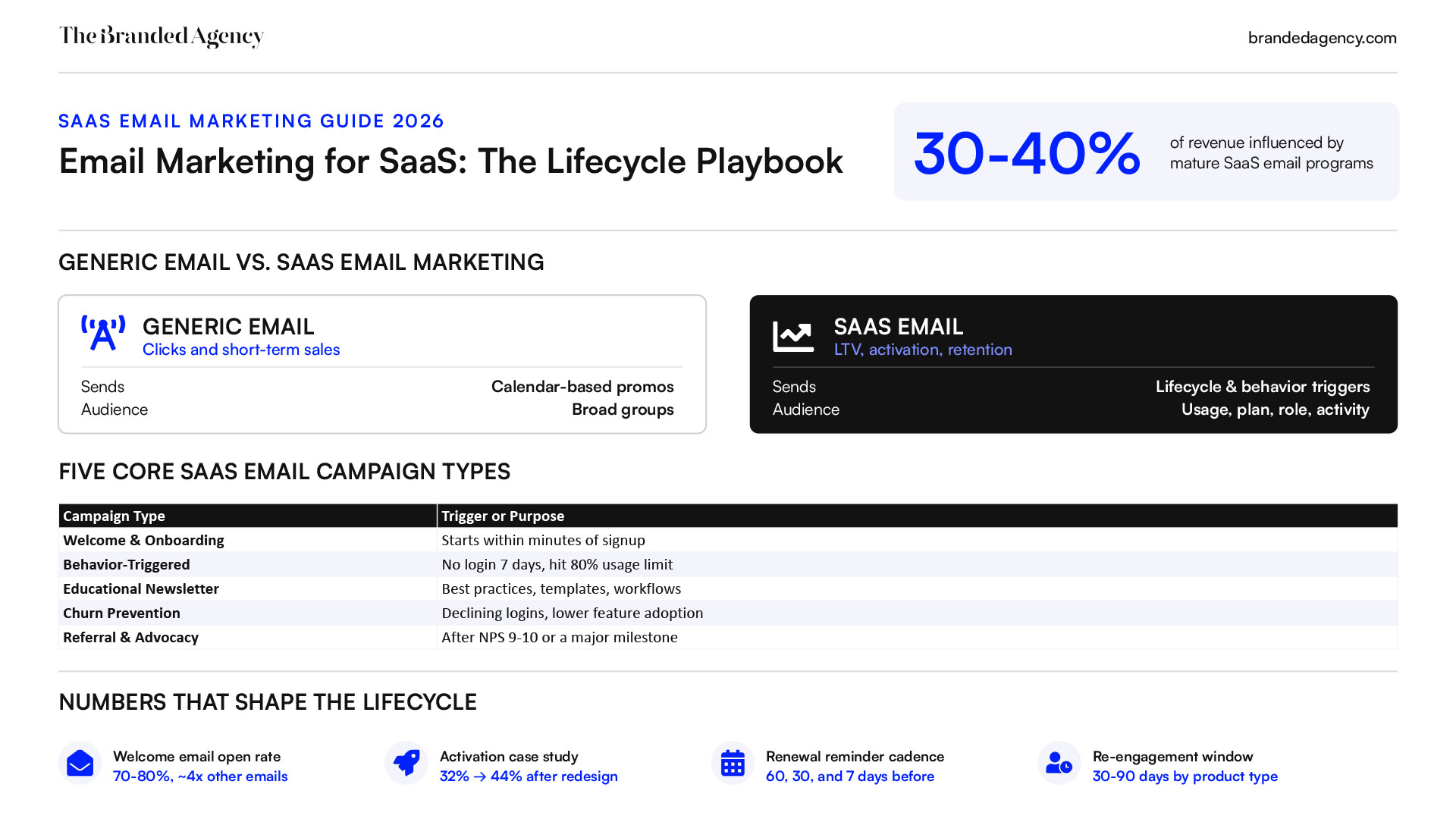
Here is a simple comparison:

The best SaaS marketing should focus on the user's lifecycle stage to drive continuous product adoption and retention.

Map Email to the SaaS Customer Lifecycle
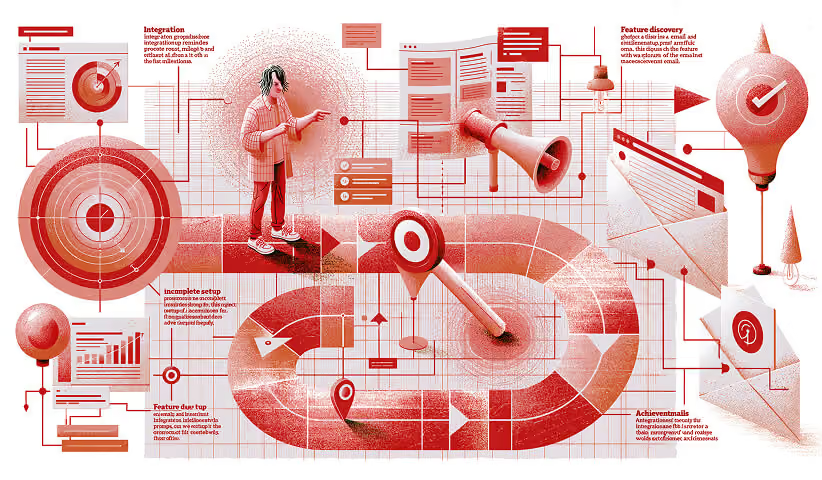
Product adoption email campaign illustration highlighting feature discovery, in-app guidance, onboarding reminders, and customer activation.
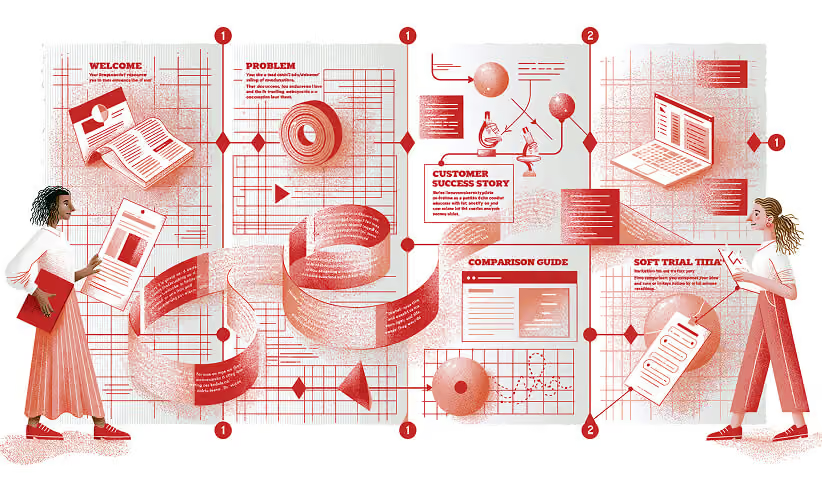
SaaS onboarding email sequence showing welcome emails, educational content, customer success stories, comparison guides, and trial conversion messaging.
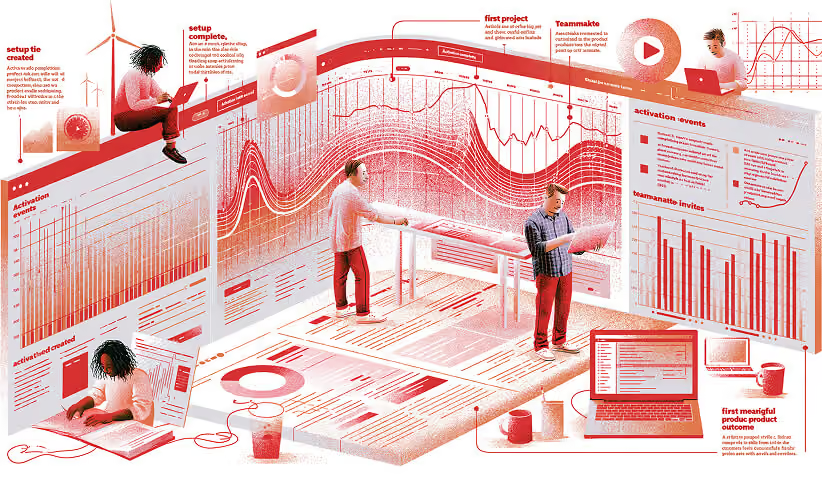
Customer activation dashboard illustrating onboarding progress, product usage analytics, activation events, team collaboration, and user engagement.
Product announcement email campaign featuring launch communications, feature updates, customer engagement, email marketing, and performance analytics.

Effective email marketing in SaaS involves mapping automated campaigns to the customer lifecycle and segmenting audiences by lifecycle stage or usage behavior.

Think of the lifecycle as a flow:

Subscriber → trial user → activated user → paying customer → power user → advocate or churn risk

Each stage needs different saas email campaigns:

  • Lead nurture for potential customers
  • Trial onboarding for new users
  • Activation nudges for existing users who have not completed setup
  • Product education for active users
  • Expansion and cross sell emails for growing accounts
  • Renewal reminders for existing customers
  • Re engagement campaigns for inactive users

For example, imagine a project management SaaS launched in 2020 and optimizing its 2025 email program. A user downloads a benchmark report, receives a welcome email, joins a 14-day trial, creates a first project, invites teammates, hits a usage limit, upgrades, and gets renewal reminders 60, 30, and 7 days before renewal.

Every transition should trigger specific automated email sequences: trial start, first project created, no login for 7 days, 80% usage limit reached, or 30 days before renewal.

Stage 1: From Lead to Trial User

Before you ask for a demo or signup, capture the right target audience with useful free resources. Strong lead magnets include 2025 benchmark reports, ROI calculators, niche webinars, templates, and practical checklists.

For subscribers who are not yet free users, the first emails should not push too hard. Use educational content to explain the problem, share helpful tips, and show how similar teams solved it.

A simple lead-nurture sequence might include:

  1. A welcome email with the promised resource
  2. A problem-focused email educating users on common mistakes
  3. A short customer success story
  4. A comparison guide or checklist
  5. A soft invitation for demo requests or a free trial

Incorporating storytelling elements, such as customer success stories and compelling brand narratives that drive success, in email campaigns can make the content more memorable and engaging, helping potential customers see the value of the product through real-life examples.

Stage 2: Trial Onboarding and Time-to-Value

A strong onboarding process is crucial for SaaS, as it helps new users understand the product's value and increases the likelihood of long-term engagement.

Trial onboarding emails should match the length of the trial. For a 14-day free trial, the first 24–72 hours matter most. Your goal is to reduce time to first value, not explain every feature.

A practical sequence:

  • Day 0: Welcome email with setup expectations, trial end date, support links, and one next step
  • Day 1: Checklist to complete account setup
  • Day 2: Triggered tutorial if the user has not created a project
  • Day 4: Helpful video or GIF showing a core workflow
  • Day 7: Customer success story tied to the user’s use case
  • Day 12: Trial ending reminder with clear upgrade path

Educating users through onboarding emails can significantly reduce the time to first value, ensuring they understand how to effectively use the product and increasing retention rates.

Welcome emails have an average open rate of nearly 70-80%, making them about four times more effective than other email types, which highlights their importance in onboarding new users. Keep them focused. Single-call-to-action emails provide a clearer focus and drive user actions more effectively than multiple CTAs.

Stage 3: Activation and Feature Adoption

A signup is not the same as activation. A user is activated when they complete meaningful actions, such as inviting teammates, connecting an integration, creating a first report, or using key features.

Behavior-triggered emails are ideal here. Send:

  • “Complete your setup” reminders
  • Inactivity nudges
  • Feature discovery prompts
  • Integration tips
  • Milestone emails

Milestone emails should celebrate when users complete significant tasks to reinforce engagement. For example: “Your team completed 10 projects this month” or “You automated 12 reports last month.”

These email messages work because they reinforce value already achieved. They also encourage users to try advanced capabilities without sounding like a sales pitch.

Stage 4: Retention, Expansion, and Advocacy

Once users become paying customers, your email marketing efforts shift from conversion to depth. The goal is to engage users, improve customer satisfaction, and strengthen customer retention, with retention-stage messaging also covering important transactional emails like billing receipts, renewal confirmations, and account notices.

Use consistent communication such as:

  • Monthly power-user tips
  • Workflow recipes
  • Integration spotlights
  • Release notes with new features and bug fixes
  • Customer success stories from 2023–2025
  • Renewal reminders with usage stats

Expansion emails should be tied to product value. If a team hits 80% of its usage limit, suggest a higher plan. If an account adds more departments, recommend extra seats. If users need reporting, send cross sell emails for analytics add-ons.

Renewal reminders should be sent 60, 30, and 7 days before renewal. Clear, on-brand, and useful transactional emails can also reinforce trust. Include usage wins, billing details, and a clear next step. After clear success moments, ask for reviews, testimonials, or referrals.

Want to learn more about brand platforms, Brand Strategy and Brand Identity? Keep reading!

If you need help with your companies brand strategy and identity, contact us for a free custom quote.

Core SaaS Email Campaign Types You Need

SaaS email engagement illustration showing campaign personalization, lifecycle messaging, user behavior tracking, automation workflows, and customer communications.

Every SaaS email marketing strategy should include a few core campaign types. These should be built as email sequences, not one-off blasts, and automated where possible.

Welcome and Onboarding Campaigns

Your welcome series should start within minutes. The first email should feel human: a friendly sender, plain language, support access, quick-start guides, and one clear action.

Using plain text emails can improve personal outreach and deliverability rates in SaaS email marketing. This is especially useful for founder-led messages, customer success check-ins, and automated follow up emails that should feel personal.

A mini case example:

A B2B SaaS company changed its onboarding emails from a feature-heavy sequence to a milestone-based checklist. Activation improved from 32% to 44% because users knew exactly what to do next.

Personalize onboarding by role, plan, and use case. A new admin on Enterprise should not receive the same content as a solo founder on a free plan.

Behavior-Triggered Product Emails

Email marketing automation allows SaaS companies to set up emails that are triggered based on user behaviors, such as specific actions or inactions with the platform.

Behavior-triggered emails, which are sent in response to specific user actions, are a powerful tool in SaaS email marketing strategies, as they engage users at the right time with relevant content. Research from MoEngage found that behavior-based campaigns can dramatically outperform non-personalized broadcasts, according to its 2025 email benchmarks report.

Useful triggers include:

  • No login for 7 days
  • Invited first teammate
  • Hit 80% of usage limit
  • Tried a new feature for the first time
  • Failed to complete setup

Automation tools should send specific helpful tips for each trigger, not generic copy.

Educational Newsletters and Content Series

Newsletters still work when they help users become better at their job. Good topics include:

  • Monthly best practices
  • New templates
  • Industry trend breakdowns
  • Interviews with advanced users
  • Workflow examples
  • Content marketing ideas for the user’s role

Segment by persona. Admins may need governance tips, while end users may need shortcuts. This keeps saas email marketing campaigns relevant and improves click through rates.

Churn Prevention and Re-Engagement Campaigns

Identify churn risk through declining logins, lower feature adoption, support complaints, or billing issues. Inactivity triggers should alert users who stop logging in to encourage re-engagement.

A churn-prevention flow might include:

  1. Empathetic check-in
  2. Usage recap
  3. Short survey
  4. Offer of 1:1 help
  5. Relevant educational content

Emails that proactively offer support and emphasize product value can significantly reduce churn rates.

For inactive users, start re-engagement 14–30 days after last meaningful activity. Re engagement emails can highlight recent improvements, remind users what they achieved, and offer a low-friction return path. Over time, sunset inactive subscribers who never open, click, or log in.

Referral and Advocacy Campaigns

The best time to ask for referrals is after a success event: NPS 9–10, a major milestone, or a strong ROI result.

Keep referral emails simple:

  • Explain the program
  • Include a shareable link
  • Offer credits, a free month, feature unlocks, or a free upgrade
  • Track referrals inside the CRM

Referral campaigns should be automated but still feel personal.

Personalization, Segmentation, and Data-Driven Email Strategy

In 2025, first-name personalization is not enough. Personalization is the second most effective email marketing strategy, increasing transaction rates by six times when tailored to the audience's needs.

The best SaaS teams blend product analytics, CRM data, billing data, and advanced analytics to create personalized campaigns. Hyper-personalization leverages user data such as role, industry, usage patterns, and success metrics to create tailored email communications that feel like a one-to-one experience.

Building Meaningful Segments

Email segmentation should consider user plan type, user role, and activity level to enhance relevance.

Segmenting your audience based on demographics, user behavior, and product interest allows for more targeted and effective email marketing campaigns. Effective audience segmentation can improve engagement rates by ensuring that the right messages reach the right users at the right time, enhancing the overall customer experience.

Core segmentation dimensions include:

  • Lifecycle stage
  • Product usage depth
  • Plan tier
  • Industry
  • Team size
  • Engagement level
  • Role
  • Activity level

Using behavior-based segmentation allows companies to group users based on feature usage, login frequency, or engagement levels, leading to more relevant and personalized messaging.

Using segmentation to track product usage patterns and feature adoption rates helps identify potential customers and those at risk of churning, allowing for timely interventions.

For example, “high-usage but low-seat team on Pro plan” is a strong expansion segment. “Enterprise admin with low seat utilization” may need customer success help.

Static segments are created once. Dynamic segments change as users act. SaaS companies should prioritize dynamic segments because product behavior changes every week.

Hyper-Relevant Personalization in Practice

Personalize beyond name and company. Reference features used, milestones achieved, integrations connected, or success metrics.

Sample subject lines:

  • “You automated 12 reports last month-here’s how to double it”
  • “Your team invited 8 users. Try this admin workflow next”
  • “You’re close to your storage limit. Here are 3 options”

Conditional content blocks can show different tips to admins, end users, agencies, or enterprise teams while keeping design consistent.

Use data respectfully. GDPR, CCPA, consent, unsubscribe options, and clear preference settings matter. Hyper-personalization should feel helpful, not invasive.

Using Email to Educate Users and Drive Customer Success

Educational content in emails can significantly increase user engagement and retention, as it helps users understand how to effectively use a SaaS product, ultimately leading to long-term customer loyalty.

This is where marketing, product, and customer success should work together. The goal is not to promote every feature. The goal is to guide users toward outcomes.

Designing Educational Email Series

Create topic-based mini courses. For example, a 5-email “Automation Fast Start” series delivered over 1–2 weeks.

Use mixed formats:

  • Short text tips
  • GIF walkthroughs
  • 3–5 minute videos
  • Downloadable checklists
  • Links to additional resources

Each email should focus on one outcome, such as “Set up your first automation in 10 minutes.” Add “level up” suggestions for users who want more advanced content.

Showcasing Customer Success Stories in Email

A strong story email includes:

  • Headline metric
  • Short narrative
  • One or two quotes
  • Before/after numbers
  • Subtle CTA

Example:

In Q4 2024, Acme Corp cut reporting time by 60% after automating workflows and using dashboard templates.

Match stories to segments. Send startup examples to startups and enterprise examples to large accounts. Then link to templates, guides, or book-a-call options.

Reducing Support Load with Proactive Education

Support tickets are a content creation goldmine. If users repeatedly ask the same questions, turn those answers into proactive email campaigns.

A quarterly “top 5 questions answered” email can include FAQs, short videos, documentation links, and helpful tips. This improves customer success metrics, lowers support volume, and increases confidence before renewal.

Re-Engaging Inactive and Churned Users

Churn is expensive. Re-engagement email campaigns should remind users of value already achieved, highlight improvements, and reduce friction to return.

Define inactivity by product type:

  • 30 days without login for daily-use tools
  • 60 days for weekly-use tools
  • 90 days for occasional-use tools

Re-engagement emails can reignite interest in your product and bring users back, especially if they create a sense of FOMO and remind users why they signed up in the first place.

Personalization in email marketing, such as referencing user actions and tailoring content to their behavior, can lead to higher engagement and retention, ultimately reducing churn.

Designing Effective Re-Engagement Sequences

A practical sequence:

  1. Gentle reminder: “Still working on this?”
  2. Value recap: projects created, reports built, tasks completed
  3. What’s new: new features, bug fixes, templates
  4. Final permission email: “Should we still send these?”

Use low-friction return paths, such as one-click login links or pre-filled setup. Optional incentives can work, but avoid discounting too quickly.

A/B test subject lines and preview text heavily here because inbox competition is high for inactive users.

Special Flows for Cancelled Accounts

Cancelled accounts need a different flow from inactive users.

Start with a short exit survey. Then send targeted follow-ups based on cancellation reason:

  • Price: explain lower tiers or annual savings
  • Missing features: follow up when the feature ships
  • Low adoption: offer setup help
  • Team change: ask if ownership should transfer

A “what’s new since you left” campaign 3–6 months later can work well if it addresses the original objection. Win-back offers should protect pricing integrity while making return attractive.

Testing, Optimization, and Measurement
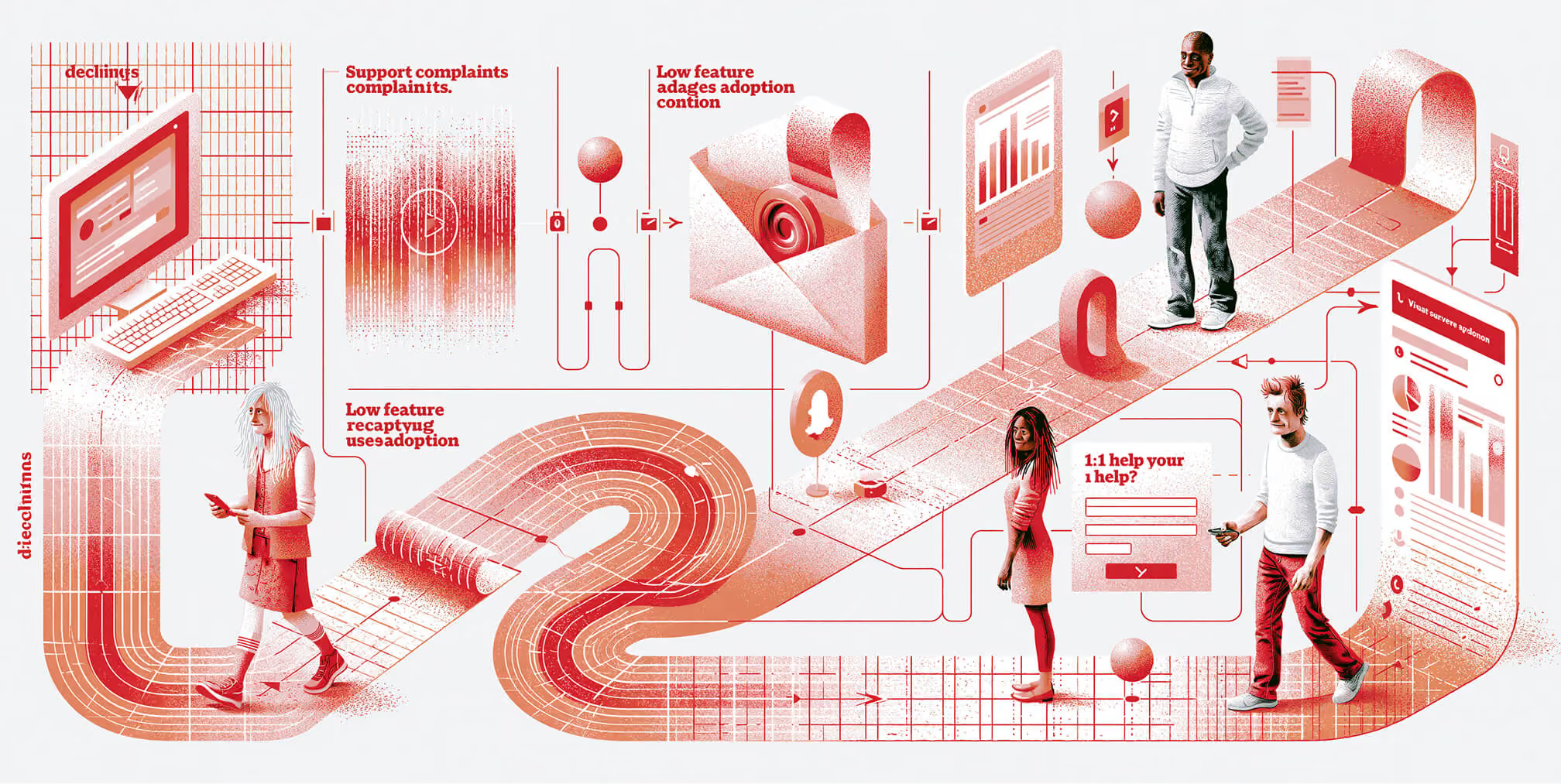
Customer retention email workflow illustrating churn prevention, product adoption campaigns, personalized support, lifecycle automation, and re-engagement strategies.

Even good saas email campaigns need ongoing improvement. Tracking engagement metrics such as open rates, click-through rates, and churn reduction allows SaaS companies to refine their email strategies for maximum effectiveness.

Primary metrics include:

  • Open rate
  • Click-through rate
  • click through rates by segment
  • Click-to-open rate
  • Activation rate
  • Trial-to-paid conversion
  • Expansion revenue
  • Churn
  • Net revenue retention
  • Customer satisfaction

The trial-to-paid conversion rate measures the percentage of trial users becoming paying customers.

Open rates are useful, but privacy changes have made them less reliable. Connect email performance to product outcomes: completed onboarding, integrations added, seats invited, upgrades, and renewals.

Mobile devices account for over 50% of email readings, necessitating mobile-optimized email formats. Also use inbox previews before sending so layouts, links, and CTAs work across devices.

A/B Testing High-Impact Elements

A/B testing should be conducted to optimize subject lines, content formats, and CTAs for improved engagement rates.

Start by testing:

  • subject lines
  • Sender name
  • Preview text
  • CTA copy
  • Email length
  • Plain text vs designed format
  • Send time
  • One CTA vs multiple links

A/B testing should be ongoing to optimize email performance, focusing on metrics that matter most for each campaign type, such as open rates for newsletters and conversion rates for upgrade promotions.

Run tests long enough to matter. Test one variable at a time. Keep a simple testing log so marketing, product, and customer success teams reuse learnings.

Connecting Email Metrics to Revenue and Retention

To monitor campaign performance properly, connect your email platform with product analytics, CRM, billing, and google analytics where relevant.

Track what happens after each touch:

  • Did users activate?
  • Did free users upgrade?
  • Did paid subscribers add seats?
  • Did accounts renew?
  • Did re engagement campaigns bring users back?

Email marketing for SaaS has an average ROI of $36 for every $1 spent, highlighting the importance of tracking performance to optimize campaigns.

Executives care about LTV, churn, net revenue retention, and business growth. Your email program should report against those outcomes, not just opens.

FAQ

How often should a SaaS company email its users without causing fatigue?

Frequency depends on lifecycle stage. New trial users may need 3–5 emails in the first week, while long-term customers may prefer 2–4 emails per month.

Watch unsubscribes, spam complaints, replies, and engagement drops. If complaints rise, your cadence or relevance is off.

Give users preference options such as “product updates only,” “monthly digest,” or “customer education.”

What size email list does a SaaS business need before investing in automation?

Even small SaaS companies with a few hundred contacts can benefit from basic automation, especially welcome, onboarding, and re engagement emails.

Complex branching becomes more useful around 5,000–10,000 contacts, but you do not need a huge list to start. Begin with the highest-impact sequence: onboarding emails for trial users.

How can SaaS teams keep their email content from feeling too salesy?

Use a simple value ratio: send 3–4 educational or helpful emails for every direct promotional offer.

Focus on workflows, checklists, examples, and customer success stories. Instead of saying “our feature is powerful,” say “here’s how you can save two hours this week.”

What tools are essential to support SaaS email marketing in 2025?

You need an email platform with automation, segmentation, A/B testing, a drag and drop editor, reporting, deliverability tools, and support for transactional emails.

You also need CRM or billing data, product analytics, and clean integrations so events like “trial started,” “plan upgraded,” or “user inactive” can trigger email sequences. Password resets, invoices, or confirmation messages should come from the same reliable infrastructure and brand experience.

Predictive analytics can also help identify upgrade likelihood and churn risk before users raise their hand.

How long should a SaaS onboarding email sequence be?

Most SaaS teams do well with 5–10 emails spread across the first 2–4 weeks, depending on product complexity and trial length.

Focus on milestones, not email count: account setup, first project, inviting teammates, integrations, and reviewing early results. Prune the sequence regularly as the product changes.

Start with one lifecycle stage, build the best sequence you can, measure campaign performance, and improve it every quarter. That is how email becomes a growth system instead of another marketing task.

An image of the author Quincy Samyica

Quincy Samycia

As entrepreneurs, they’ve built and scaled their own ventures from zero to millions. They’ve been in the trenches, navigating the chaos of high-growth phases, making the hard calls, and learning firsthand what actually moves the needle. That’s what makes us different—we don’t just “consult,” we know what it takes because we’ve done it ourselves.

Want to learn more about brand platform?
If you need help with your companies brand strategy and identity, contact us for a free custom quote.

We do great work. And get great results.

DrTung’s
Breathed new life into a storied oral care brand with a smarter site and marketing for scalable growth.

+2.3x
Increase in revenue YoY

+126%
Increase in repurchase rate YoY

READ MORE
DrTung’s oral care product image with a smiling man, tooth powder tabs, and activated charcoal floss.
Smartphone on a textured blue surface displaying a DrTung’s ad with the text “Make the Switch” and an image of a woman holding herbal tooth powder tabs.
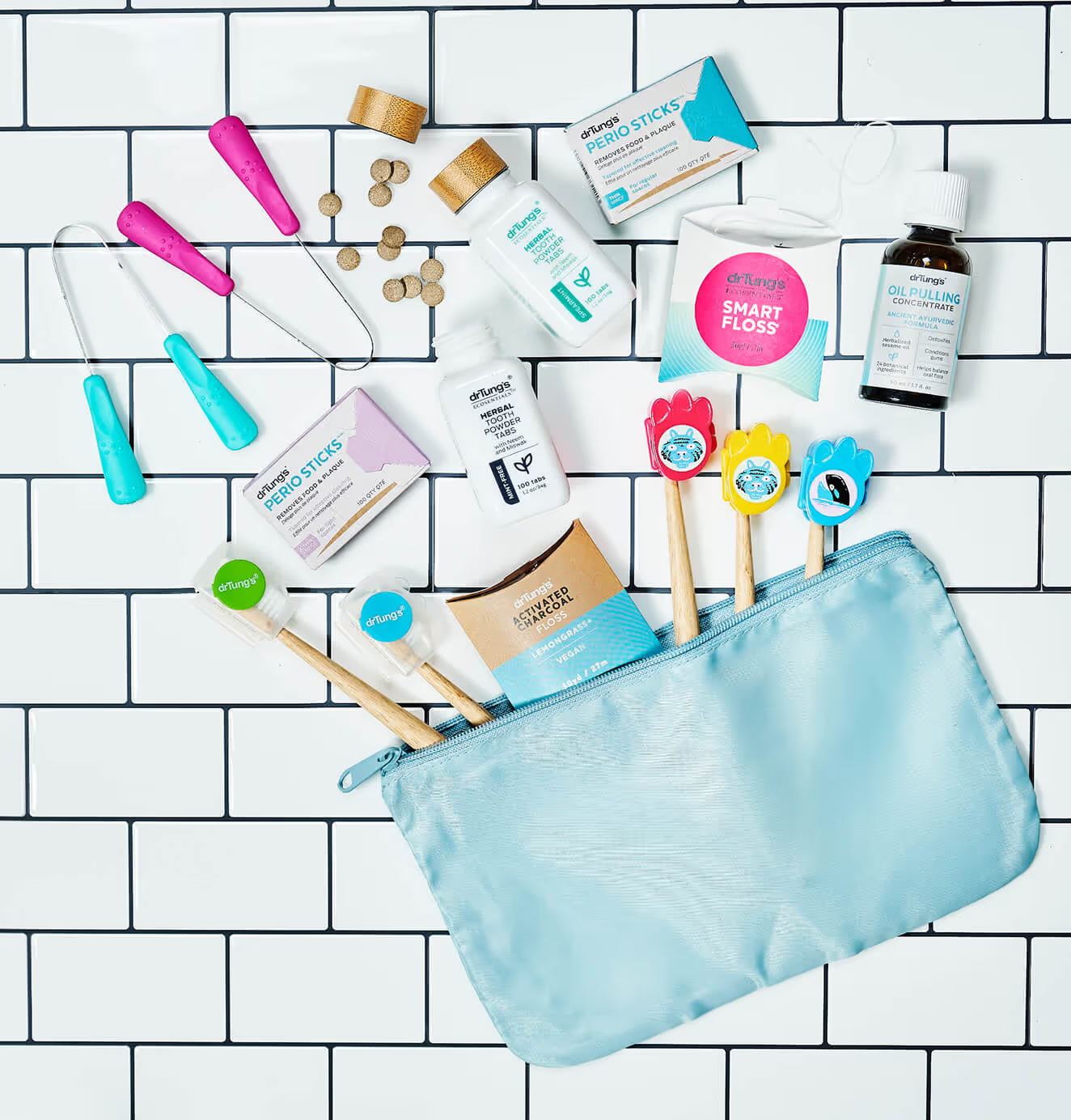
Flat lay of DrTung’s oral care products, arranged with a blue pouch on white tile.
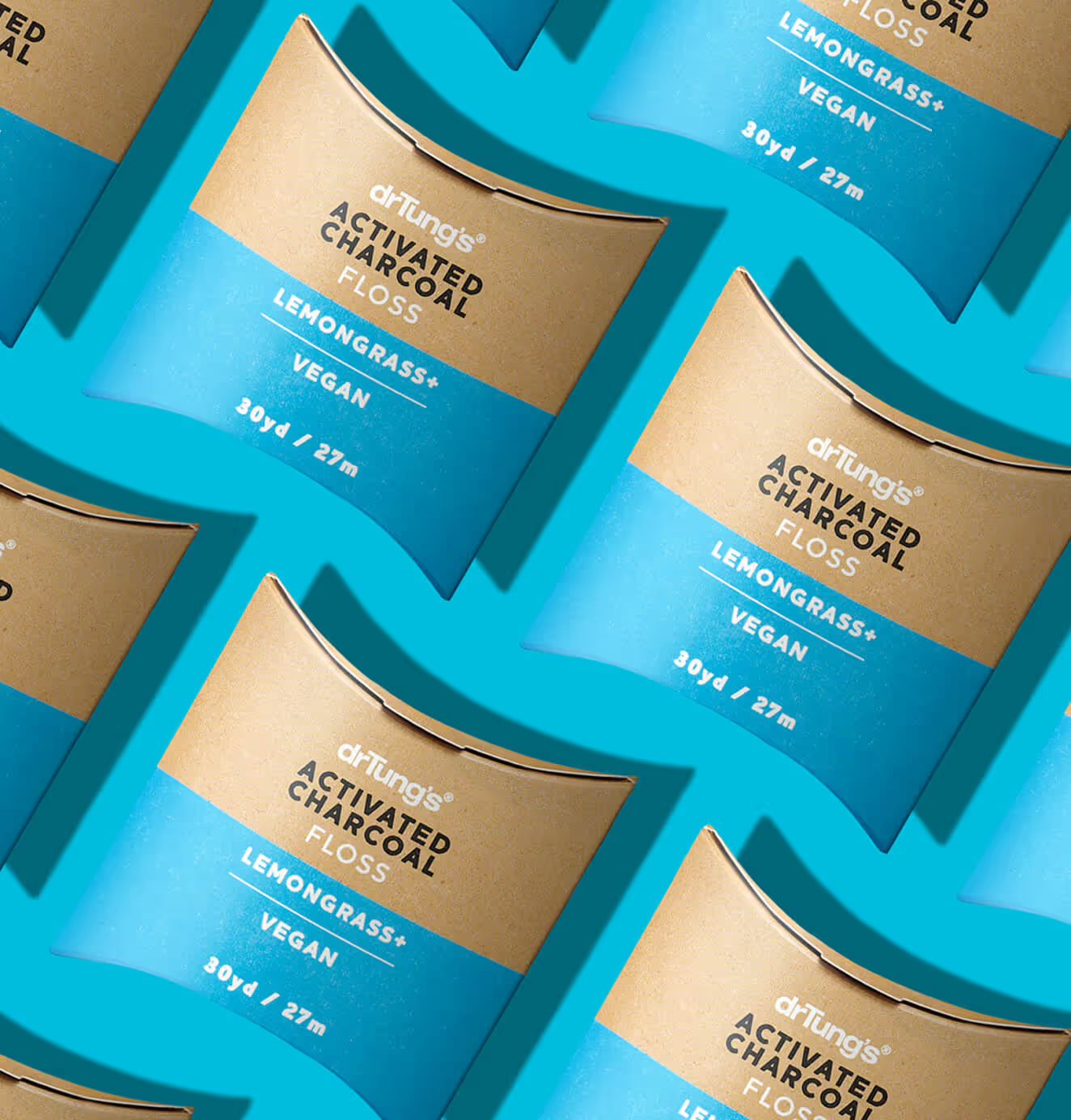
DrTung’s Activated Charcoal Floss packaging arranged in a repeating pattern on a bright blue background.
DrTung’s oral care product image with a smiling man, tooth powder tabs, and activated charcoal floss.
Smartphone on a textured blue surface displaying a DrTung’s ad with the text “Make the Switch” and an image of a woman holding herbal tooth powder tabs.
Flat lay of DrTung’s oral care products, arranged with a blue pouch on white tile.
DrTung’s Activated Charcoal Floss packaging arranged in a repeating pattern on a bright blue background.
Mary Louise Cosmetics
Scaled a heritage-inspired clean beauty brand with modern performance marketing and farm-to-face storytelling.

+93%
Revenue growth in first 90 days

+144%
Increase in attributed revenue

READ MORE
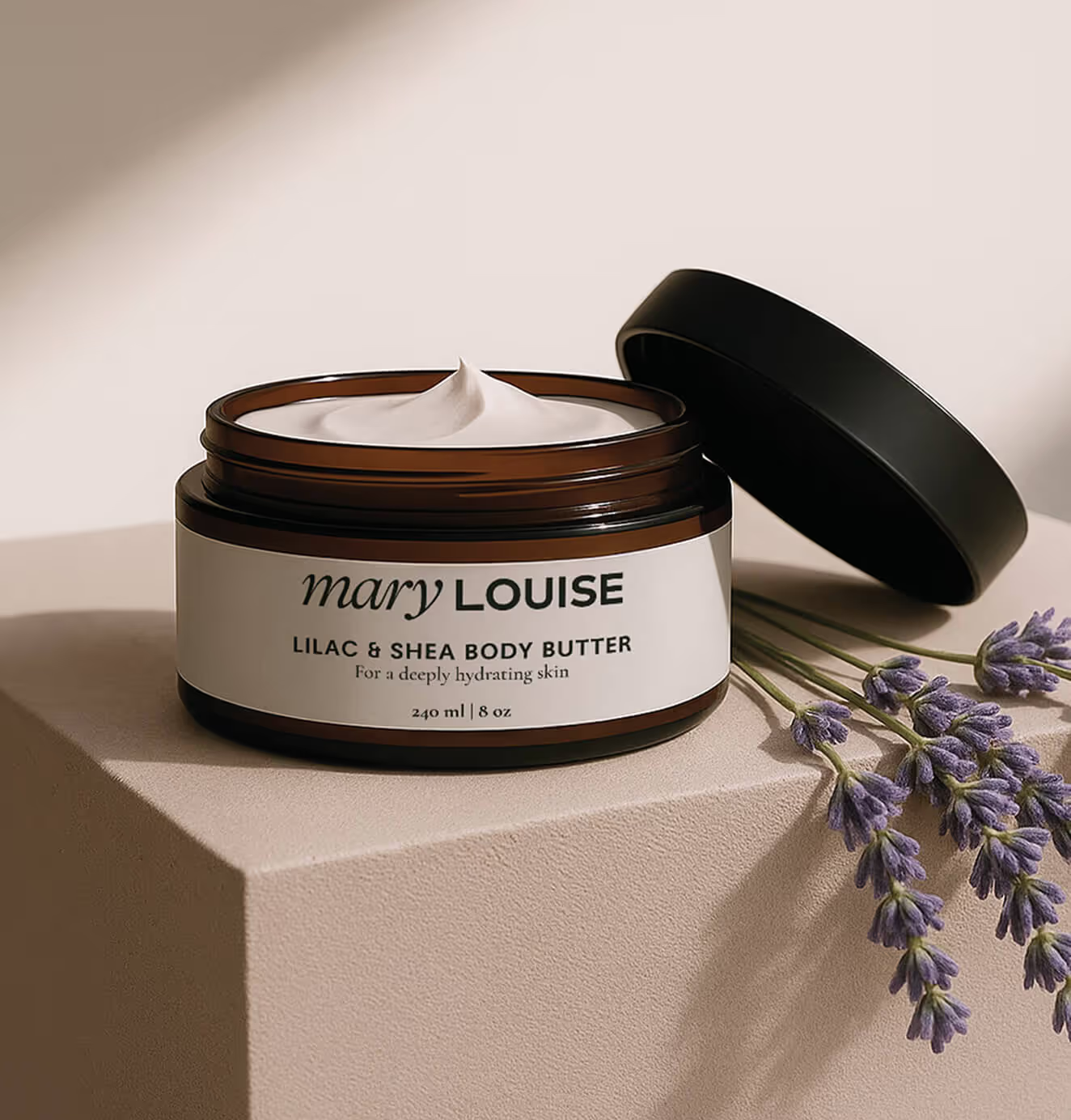
Mary Louise Lilac & Shea Body Butter jar with creamy texture and lavender sprigs on a beige surface.
A Mary Louise Miracle Serum bottle with a dropper cap, lying on a bed of small yellow flowers.
Mary Louise body butter promotional print materials with product photography and skincare application imagery.
Mary Louise Miracle Serum bottles arranged in a close-up pattern with pale yellow dropper caps.
Mary Louise Lilac & Shea Body Butter jar with creamy texture and lavender sprigs on a beige surface.
A Mary Louise Miracle Serum bottle with a dropper cap, lying on a bed of small yellow flowers.
Mary Louise body butter promotional print materials with product photography and skincare application imagery.
Mary Louise Miracle Serum bottles arranged in a close-up pattern with pale yellow dropper caps.
Eyecart
Made eye care feel modern, then marketed it like a DTC darling—with the results to match.

+91%
Increase in conversion rate

+46%
Increase in AOV

READ MORE
Eyecart optical care campaign image with a smiling woman holding a branded magnifying lens over one eye.
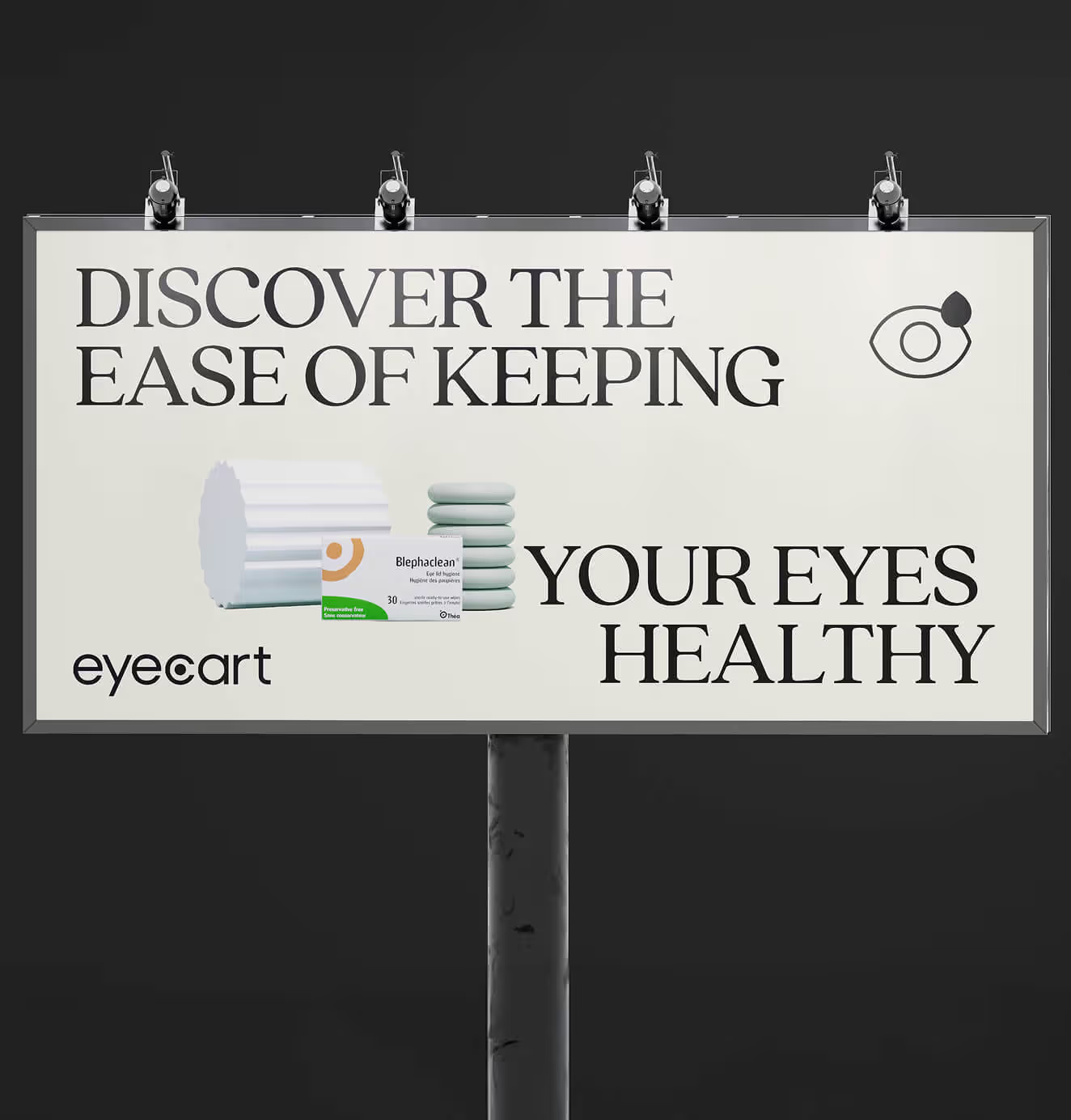
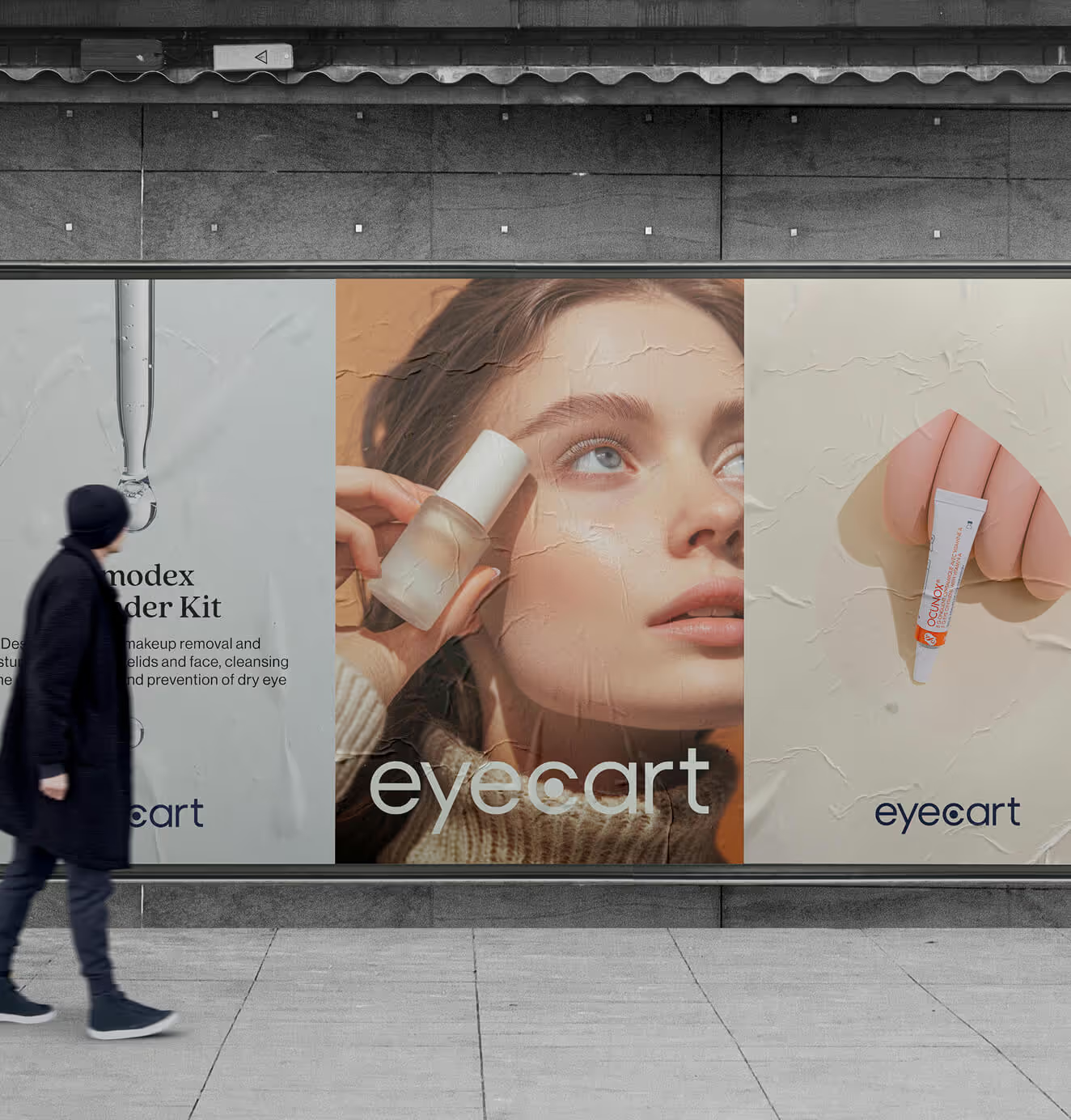
Eyecart billboard campaign featuring Blephaclean eye care wipes and healthy eye care messaging.
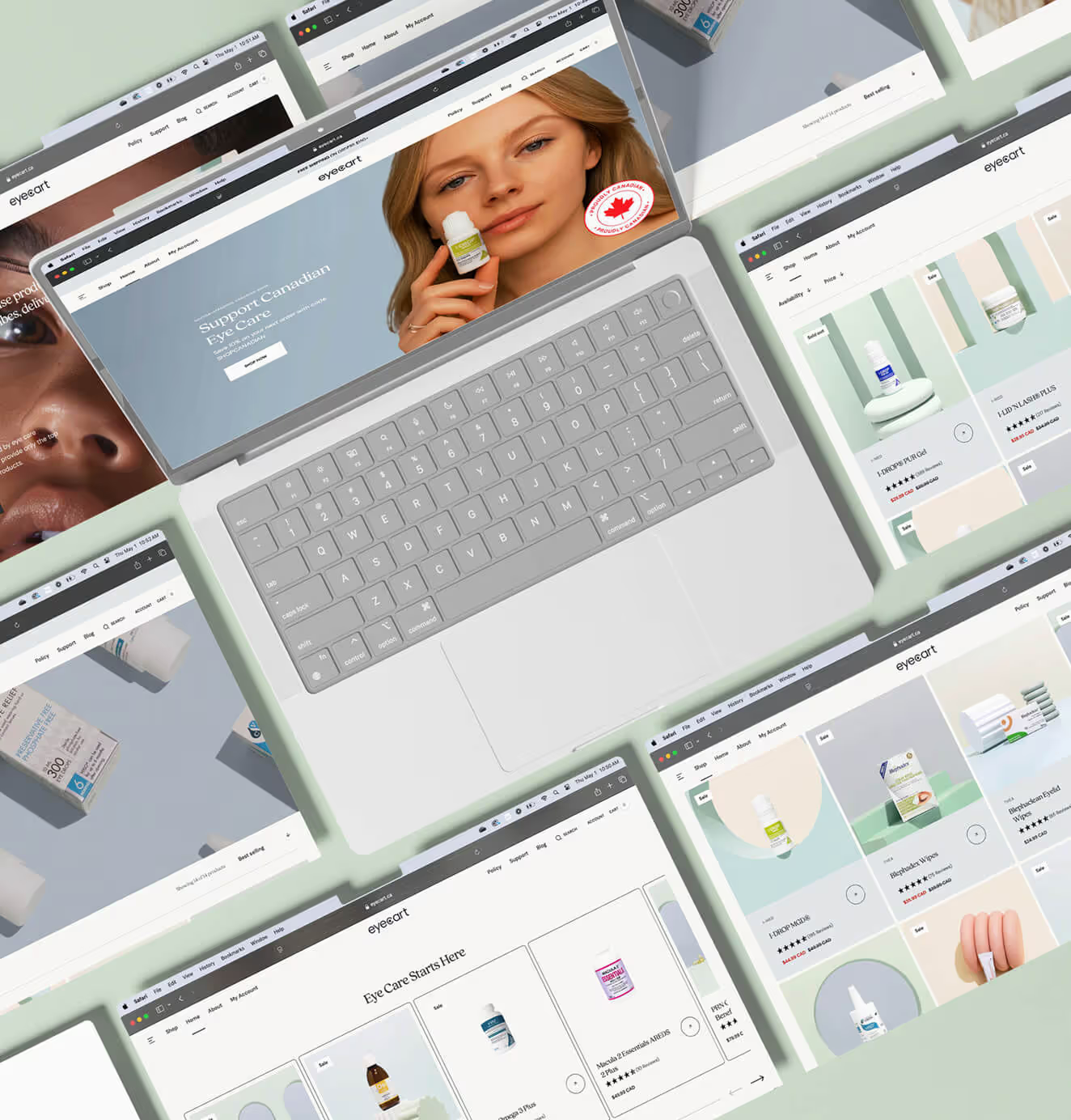
Multiple laptop screens display the Eyecart website, showcasing product pages and banners promoting eye care items.
Eyecart outdoor campaign posters featuring eye care products, skincare visuals, and modern branding.
Eyecart optical care campaign image with a smiling woman holding a branded magnifying lens over one eye.
Eyecart billboard campaign featuring Blephaclean eye care wipes and healthy eye care messaging.
Multiple laptop screens display the Eyecart website, showcasing product pages and banners promoting eye care items.
Eyecart outdoor campaign posters featuring eye care products, skincare visuals, and modern branding.
Lucky Girl Rosé
We turned a zero-carb rosé into a lifestyle brand that makes every moment worth celebrating.

+200%
Increase in conversion rate

+688%
Increase in attributed revenue

READ MORE
A bottle of Lucky Girl rosé wine nestled among pink and white flowers in a rustic outdoor setting.
Lucky Girl rosé picnic setup with wine bottle, fruit, sunglasses, and The Lucky Club booklet.
Lucky Girl rosé campaign visual with a wine glass, gold tray, red nails, and Pour Yourself Some Luck text.
Lucky Girl rosé wine bottle with floral label design and soft pink lifestyle styling.
A bottle of Lucky Girl rosé wine nestled among pink and white flowers in a rustic outdoor setting.
Lucky Girl rosé picnic setup with wine bottle, fruit, sunglasses, and The Lucky Club booklet.
Lucky Girl rosé campaign visual with a wine glass, gold tray, red nails, and Pour Yourself Some Luck text.
Lucky Girl rosé wine bottle with floral label design and soft pink lifestyle styling.