FTC Green Guides: What Marketers Must Know in 2026
11/27/2026
Brand Strategy
Make environmental marketing claims more credible and defensible with this practical FTC Green Guides checklist for brands, packaging and campaigns.
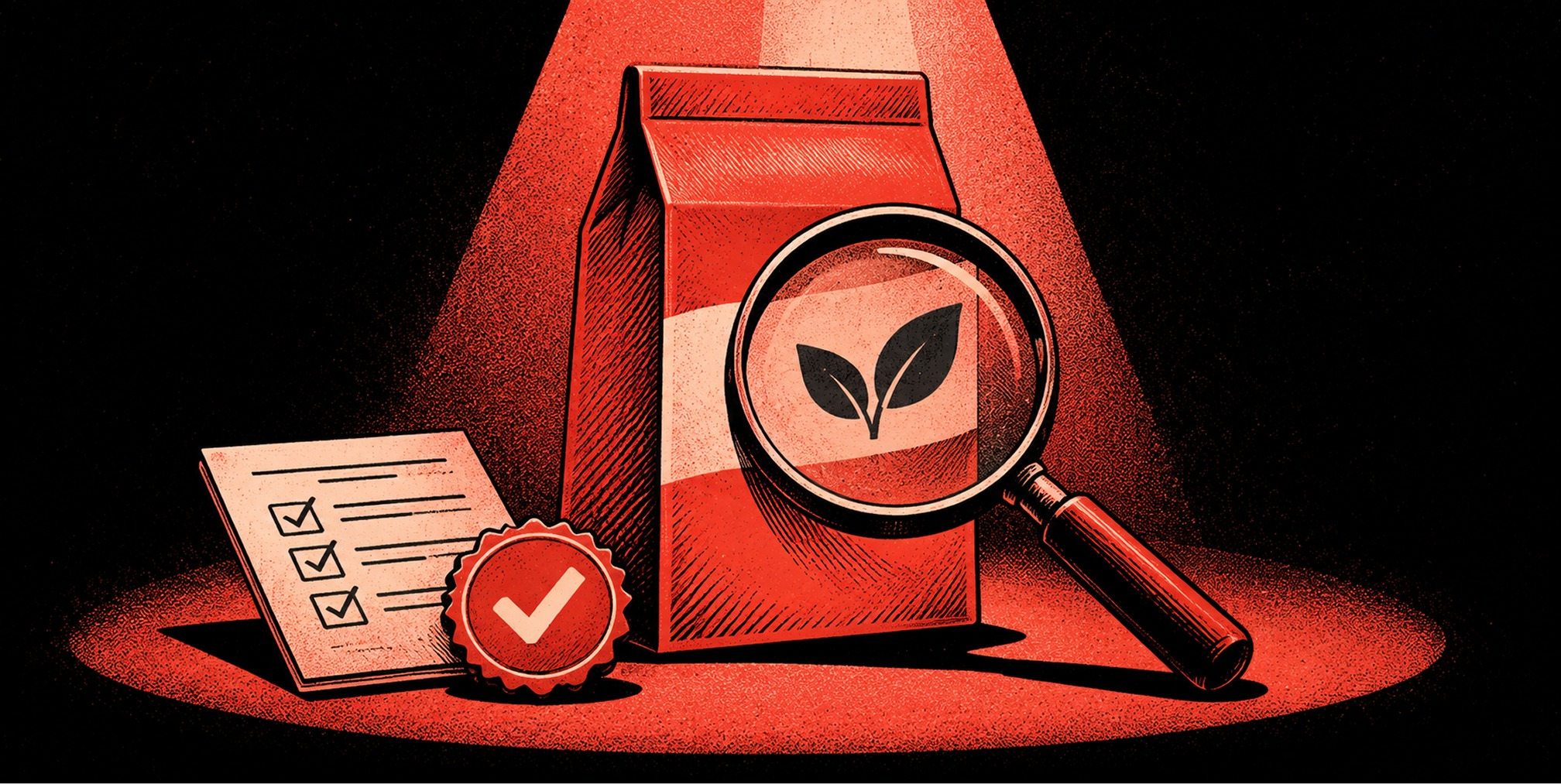
The FTC Green Guides are the Federal Trade Commission’s rulebook-in-spirit for environmental marketing: they explain when claims such as “eco-friendly,” “recyclable” or “carbon neutral” become deceptive under federal law. The Guides themselves are guidance, not a statute, but the law behind them is binding, and the brands that avoid trouble are the ones that build every green claim on evidence before it reaches a label, a landing page or an ad. For a growth-stage company, that means treating sustainability messaging as part of brand strategy, not a late-stage copy edit. This guide walks CEOs, CMOs and marketing directors through what the Guides say, what is changing around them, and how to structure claims so they support growth instead of creating legal exposure.


What the Green Guides are and what they are not

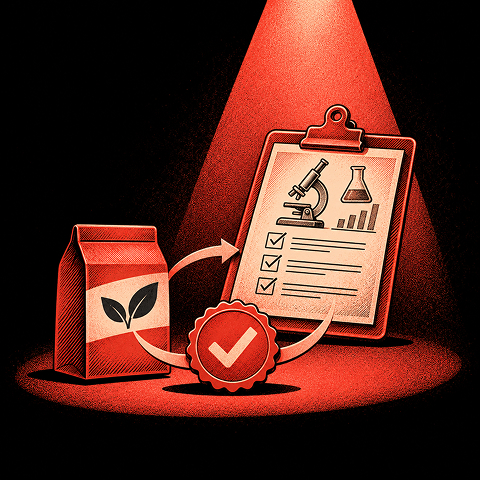
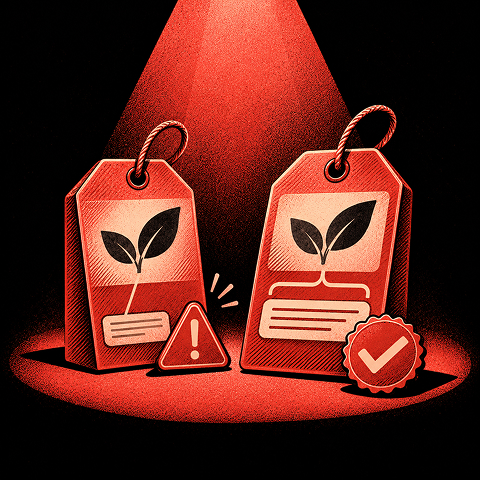
Chair Lina Khan described them 16 CFR Part 260The formal title is Guides for the Use of Environmental Marketing Claims. The FTC has published them since 1992, and then-Chair Lina Khan described them as administrative interpretations of the FTC Act that help companies stay within its ban on deceptive advertising. The current text sits at 16 CFR Part 260 and traces to the October 2012 revision.
Two points matter for planning.
They are guidance. The regulation states that the Guides set out the FTC’s current views and do not confer rights or bind the FTC or the public. Liability arises under Section 5 of the FTC Act when a claim is unfair or deceptive. The Guides show how the Commission is likely to judge that question, which makes them the most practical checklist you have.
They apply widely. Under § 260.1, the Guides cover environmental claims about products, packaging and services in labeling, advertising, promotional materials and all other marketing, in any medium. Claims can be direct or implied through words, symbols, logos, depictions or brand names. They apply to consumer and business-to-business transactions alike, so a SaaS company selling sustainability features to enterprise buyers is covered, and so is a hardware brand with a green-leaf logo. They also do not override federal, state or local laws, which matters more every year.
The core test: substantiate first, then qualify clearly
Identify every reasonable interpretation
Under § 260.2, marketers should identify all express and implied claims a piece of marketing conveys, then make sure every reasonable interpretation is truthful and backed by a reasonable basis. For environmental claims, that basis is often competent and reliable scientific evidence. The practical consequence: your headline is not the only claim. A photo of a forest, a green color palette or a product name can each communicate something that needs support.
Qualify in plain sight
Section 260.3 says qualifications and disclosures should be clear, prominent and understandable. That means plain language, type large enough to read, placement close to the claim, no contradictory statements and no distracting elements around it. An asterisk that leads to a footnote three scrolls down does not meet that standard.
Have the evidence before you publish
The FTC’s long-standing substantiation doctrine expects the proof to exist before the claim goes live, and the Green Guides build that into § 260.2. Gathering a test report after launch is too late. For a marketing team, this is a workflow rule: no claim moves from draft to publication without a named evidence file attached.
Claim-by-claim: where the Guides get specific
16 CFR Part 260The following checklist translates key claims in 16 CFR Part 260 into practical review questions. Each example must be adapted to the evidence, product and markets involved.
• General environmental benefit (“green,” “eco-friendly”): Avoid unqualified broad claims; describe a specific, material, verified benefit and assess implied overall-benefit messages (§ 260.4).
• Certifications and seals: Explain what the seal certifies, disclose relevant material connections and substantiate every implied claim; an outside seal is not a substitute for evidence (§ 260.6).
• Recyclable: Verify that appropriate recycling systems can actually collect and recover the item. An unqualified claim generally requires access for at least 60% of consumers or communities where sold; otherwise use the qualification suited to actual access (§ 260.12).
• Compostable: Keep competent and reliable scientific evidence for safe, timely composting of all materials and say whether the claim applies to home or municipal facilities; qualify limited access (§ 260.7).
• Degradable: Avoid unqualified claims for items normally disposed of in landfills, incinerators or recycling facilities; an unqualified solid-waste claim requires full decomposition within one year after customary disposal (§ 260.8).
• Carbon offsets: Document the accounting and independent verification, prevent double counting, and disclose emission reductions delayed two years or longer; do not claim legally required reductions (§ 260.5).
• Recycled content: State the proportion when only part of a product or package is recycled and clarify whether the claim concerns the package, product or a component (§ 260.13).
• Renewable energy and materials: Identify the specific energy source or material and qualify the portion of manufacturing or content covered by the claim (§§ 260.14–260.15).
• “Free-of” or “non-toxic”: Check implied safety comparisons, trace content and the evidence of safety for both people and the environment (§§ 260.9–260.10).
The common thread is specificity. A narrow claim you can prove is an asset. A sweeping claim you cannot fully prove is the one that gets quoted in a complaint.
How enforcement actually works today
Here is the honest picture for planning. The FTC opened a regulatory review of the Guides with a Request for Public Comment in December 2022, including questions on carbon offsets, climate change claims and compostability. The 2012 text remains the version in force.
Federal litigation has been selective. A Fordham Environmental Law Review analysis notes that the FTC’s Bamboo Cases, involving textiles labeled as bamboo, show a willingness to litigate obvious mislabeling, while its commitment to pursuing greenwashing beyond explicit mislabeling remains unclear.
Meanwhile, others have stepped in. A 2026 Ropes & Gray litigation update reports that state attorneys general and private plaintiffs are driving momentum. It describes a November 2025 settlement of $1.1 million between the New York Attorney General and a meat producer over a net-zero claim, and new class actions filed in April 2026 alleging a coffee-pod maker marketed its pods as recyclable when most U.S. recycling facilities do not accept them.
Product labeling is a target too. A May 2026 Legal 500 analysis describes a $1.5 million class-action settlement in which a paint and coatings maker agreed to remove “non-toxic” claims and add an asterisk to “Earth Friendly” front labels pointing to a back-label qualification. Its advice is to tailor environmental claims to the support you actually hold, because broad claims are easy class-action targets.
The IISD’s April 2026 report adds that the Guides shape practice without creating direct legal obligations by themselves, which is why binding state rules, such as California’s statutes, matter for enforcement. If you sell in California, review those rules with counsel alongside the federal Guides.
What this means: the Guides are a central federal reference for evaluating green claims, but compliance requires checking the FTC Act and any applicable state or sector-specific requirements as well.
Free Brand Health Audit
Make sure your brand is built to sell
Search has changed. Your customers aren't just Googling anymore. They're asking ChatGPT, Perplexity, Gemini and other AI platforms what to buy, who to trust and which brands they should consider.
If your brand isn't showing up clearly in those answers, you're already losing opportunities. Our free Brand Health Audit shows you where your brand stands across traditional search, AI search and brand positioning.

Sample brand audit
Live preview
Traditional search
72
AI search (GEO)
34
Brand positioning
58
Where green claims go wrong in brand and marketing work
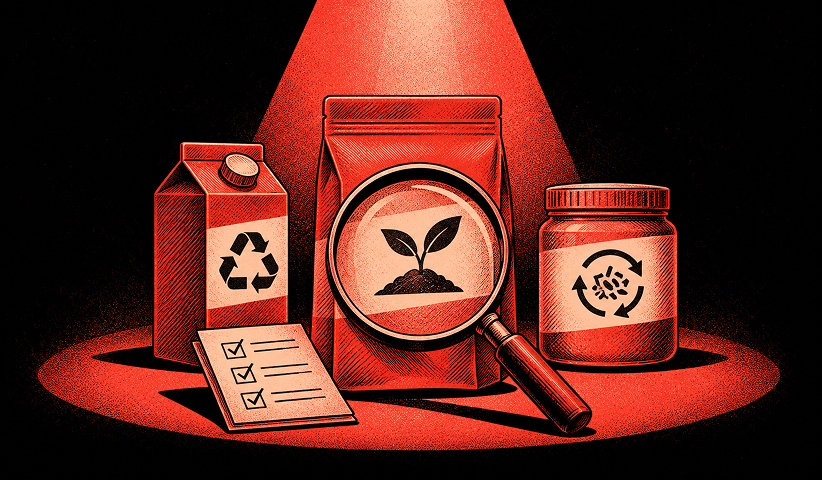
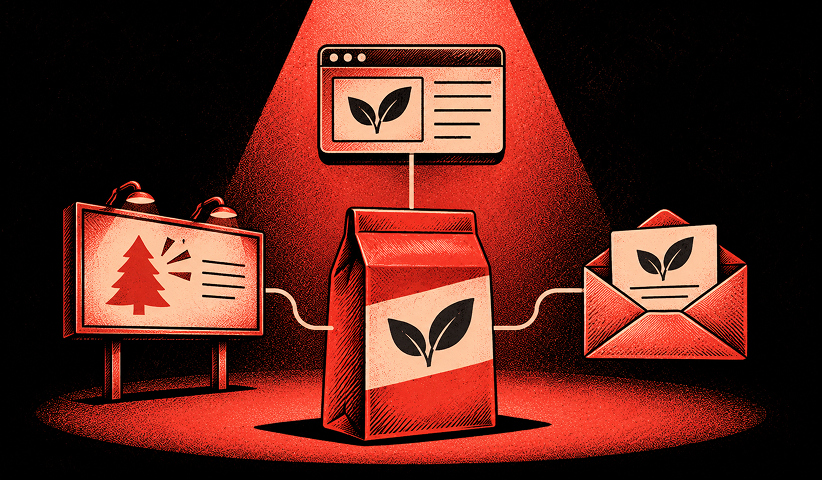
Most compliance problems are not written by lawyers. They appear in the places marketing teams work fast:
• Packaging: a front-panel “green” badge is stronger than the qualified product-page explanation.
• Paid social: the short headline drops the material percentage, test conditions or recycling qualifier.
• Website and SEO: metadata or a hero headline promises “carbon neutral” while the evidence supports only a narrower offset claim.
• Email and sales decks: old approved language is reused after a supplier, material or market changes.
• Influencer content and certifications: creators repeat an unverified claim or display a seal without saying what it covers.
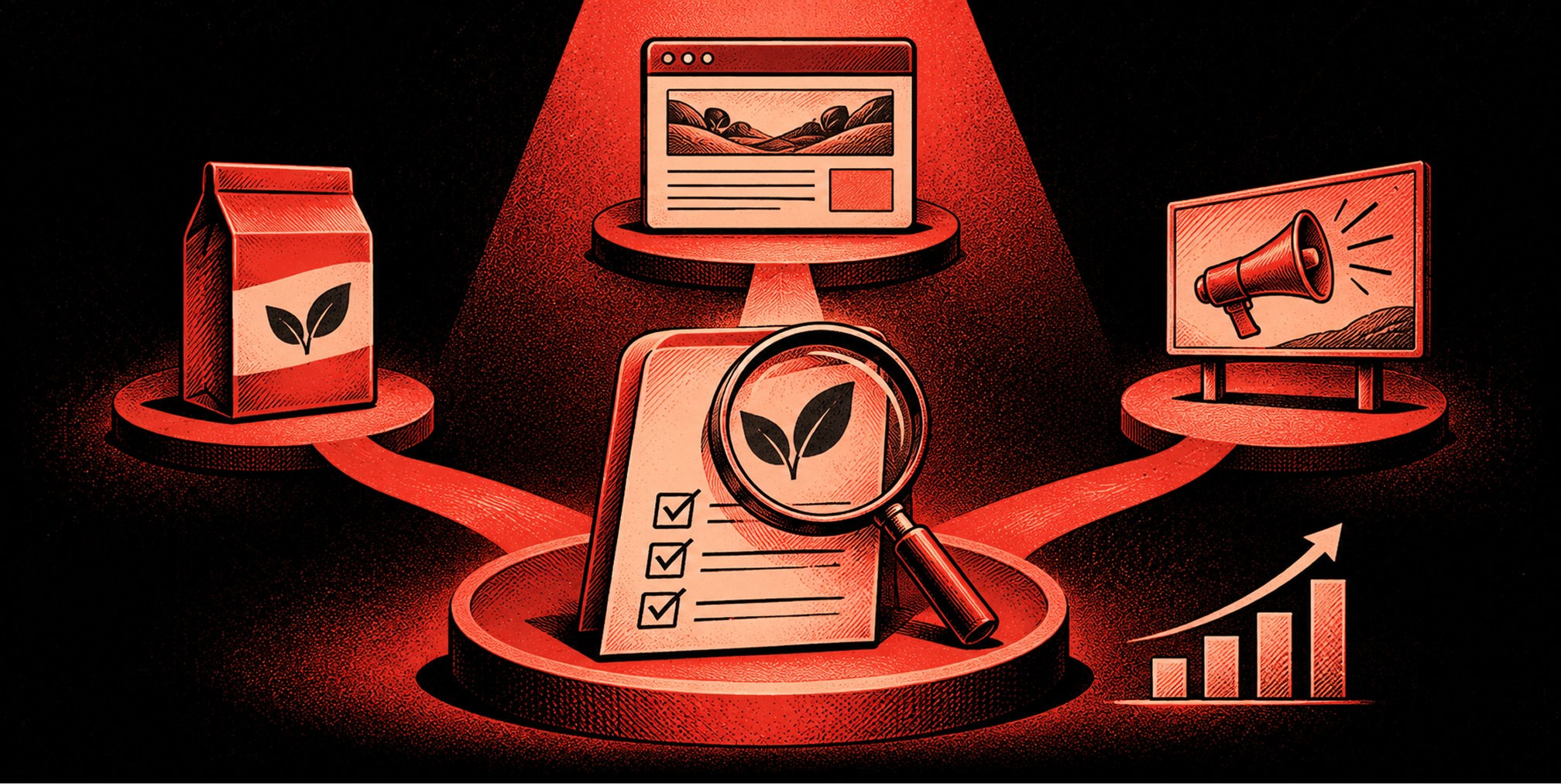
• Imagery and product naming: nature scenes, leaves or names imply a broad environmental benefit even when the copy makes a limited claim.
Each of these is a consistency problem. The claim is fine in one place and unqualified in another. That is a brand governance issue, and it has a brand governance fix.
A practical process for defensible environmental claims
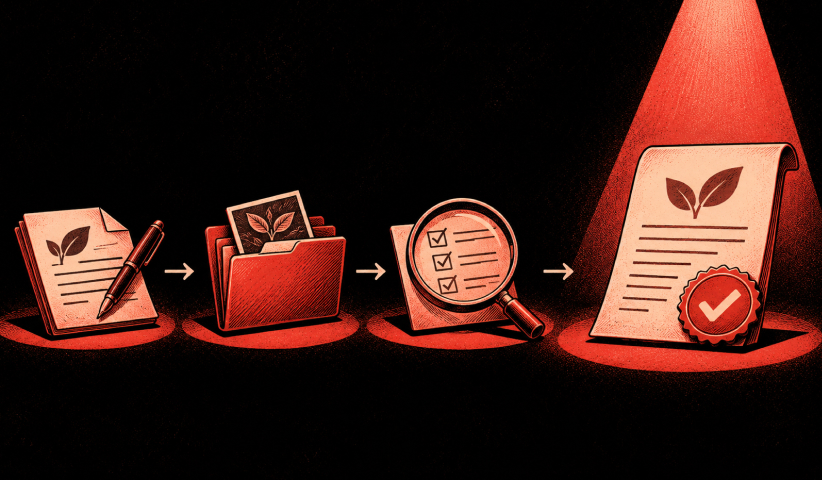
1. Inventory every environmental statement and implied message, including logos, color cues, imagery, metadata, packaging and sales materials.
2. State the precise claim scope: which product, package component, geography, comparison period and environmental attribute it covers.
3. Gather competent and reliable substantiation before launch; record methods, test conditions, dates, sample products and the accountable evidence owner.
4. Evaluate how a reasonable buyer could interpret both the headline and the surrounding visual context; verify each reasonable interpretation or narrow the claim.
5. Draft plain-language qualifications beside the claim and check legibility on mobile, packaging, ads and all sales channels.
6. Obtain marketing, product and legal or compliance sign-off. Record the final approved wording, supporting file, reviewers and expiration/review date.
7. Publish from a single approved claim library, monitor supplier or regulatory changes and re-review the claim whenever materials, markets or evidence change.
Worked example: a packaging claim
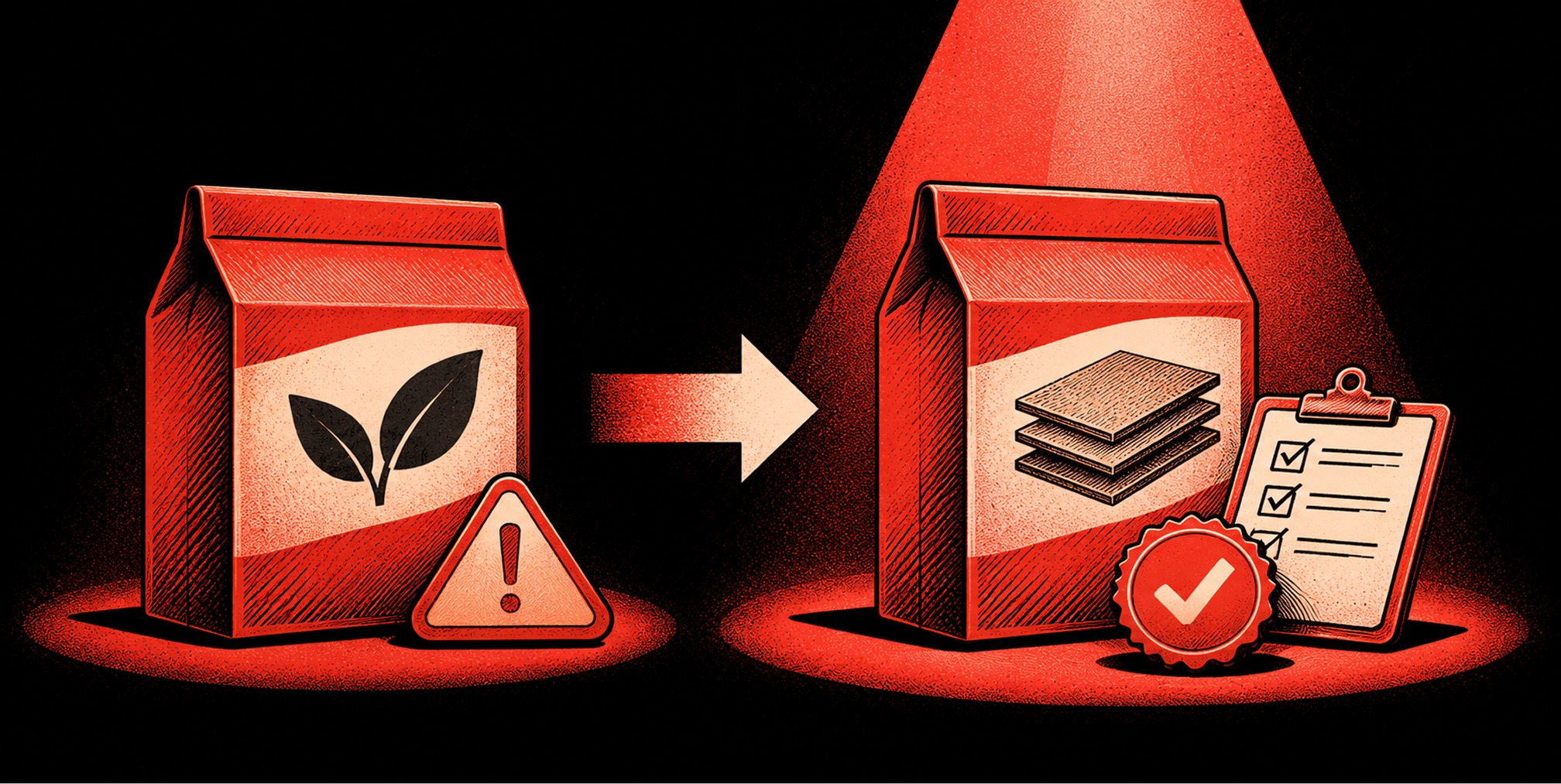
Suppose a DTC brand prints “Eco-friendly, recyclable packaging” on its mailer. Under § 260.4, “eco-friendly” is a general benefit claim the Guides advise against making unqualified. Under § 260.12, “recyclable” requires access to recycling for a substantial majority of consumers where the item is sold. A defensible rewrite would drop the general term and say what is true, for example the specific material and percentage of recycled content, with a recyclability statement that matches where programs exist. The same revised wording then needs to carry through to the product page, the unboxing email and the paid social creative.
Turn proof into positioning
Compliance does not mean muting your story. It means choosing the claims you can stand behind and making them vivid. A specific, verified statement is more credible to buyers than a vague promise, and it travels better across channels. This is the idea behind proof points: each brand promise is paired with a reason to believe. Our glossary entry on proof points explains how to build them, and our piece on sustainable packaging design covers how packaging decisions can reduce waste and test reuse in ways you can describe accurately.
Want to learn more about brand platforms, Brand Strategy and Brand Identity? Keep reading!
If you need help with your companies brand strategy and identity, contact us for a free custom quote.
Our approach to green claims at The Branded Agency
We build brands where positioning, creative and performance marketing work from the same facts. Our Branding, Creative Services, Print & Packaging, Website Design, Content Marketing, Paid Media Management and Retention Marketing services cover the places environmental claims appear, so one approved message can be carried consistently from the package to the website to the inbox.
Published starting prices: Creative Services from $4,000 per month, Content Marketing from $5,500 per month, Paid Media Management from $5,500 per month and Retention Marketing from $6,500 per month. Branding, Website Design, Development & Optimization, and Print & Packaging are scoped to the project. See our pricing page for the full list, or start with our branding services if a sustainability repositioning is on your roadmap.
If your next launch, rebrand or packaging refresh includes environmental messaging, talk with us at The Branded Agency about building it on proof from day one.
Our perspective
We see green claims as a brand-integrity question first and a legal question second. The companies that grow fastest are the ones whose promises hold up everywhere a customer meets them: on the shelf, on the site, in the ad and in the inbox.
That is why we start with proof points. When a claim has evidence behind it, it becomes a durable piece of positioning that creative, web, paid media and retention teams can all use without improvising. When it does not, it spreads quickly through every channel and becomes a liability in all of them.
Our approach to brand-backed performance™ aligns branding, creative assets, digital platforms and marketing tactics so that measurable results and a trustworthy story reinforce each other. For ambitious companies, a precise, verifiable environmental message is not a constraint on growth. It is a reason for customers to believe you.
- Quincy Samycia
Frequently Asked Questions
Are the FTC Green Guides legally binding?
No. The regulation says the Guides do not confer rights or bind the FTC or the public. Liability arises under Section 5 of the FTC Act, which bans unfair or deceptive practices, and the Guides show how the FTC is likely to apply it. Following them is the most reliable way to stay on the right side of that law. State laws can add binding requirements of their own.
Do the Green Guides apply to B2B marketing?
Yes. Under § 260.1 they cover environmental claims in consumer and business-to-business transactions, in any medium. A claim in a sales deck, a procurement response or a website aimed at enterprise buyers is subject to the same substantiation expectations as a package label.
Can I say my product is “eco-friendly”?
The Guides advise against unqualified general claims like this, because customers read many meanings into them and it is unlikely you can support all of them. A claim limited to a specific, provable benefit, with any needed qualifier placed clearly beside it, is the safer path.
What counts as “recyclable” under the Guides?
An item should not be marketed as recyclable unless it can be collected and recovered through established recycling programs available to a substantial majority of consumers, which the Guides define as at least 60%. If access is lower, the claim should be qualified clearly and prominently.
Is the FTC updating the Green Guides?
The FTC opened a review and requested public comment in December 2022, covering topics such as carbon offsets, climate claims and compostability. The 2012 version remains in effect, so check the FTC’s official site for the latest status before you finalize claims.
Sources
• FTC — Green Guides (16 CFR Part 260), official rule page
• FTC — Environmental Claims: Summary of the Green Guides

Quincy Samycia
As entrepreneurs, they’ve built and scaled their own ventures from zero to millions. They’ve been in the trenches, navigating the chaos of high-growth phases, making the hard calls, and learning firsthand what actually moves the needle. That’s what makes us different—we don’t just “consult,” we know what it takes because we’ve done it ourselves.
Want to learn more about brand platform?
If you need help with your companies brand strategy and identity, contact us for a free custom quote.
We do great work. And get great results.
+2.3xIncrease in revenue YoY
+126%Increase in repurchase rate YoY


+93%Revenue growth in first 90 days
+144% Increase in attributed revenue




+91%Increase in conversion rate
+46%Increase in AOV




+200%Increase in conversion rate
+688%Increase in attributed revenue