What a Go to Market Plan Actually Requires to Work
11/09/2026
Marketing Strategy
Turn your go-to-market strategy into a practical launch plan with a clear target buyer, accountable owners and measurable pipeline goals.
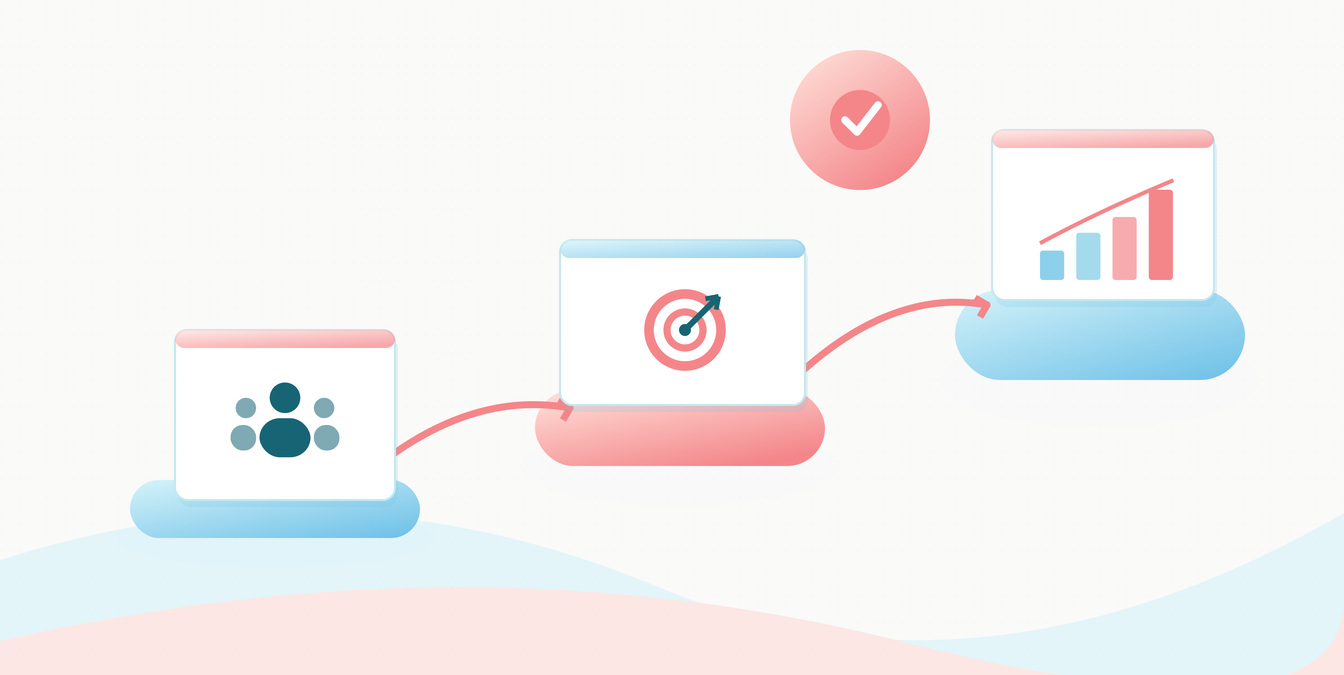
A go-to-market plan is the operational document that maps how a product reaches the right buyer, converts them, and keeps them, measured by adoption and revenue rather than activity. Before you write a single positioning line, validate your ideal customer profile through at least 10 qualitative customer conversations. Skip this step and everything downstream, pricing, messaging, channel choice, gets built on guesswork.


What Are the Core Components of a Go to Market Strategy?


Every durable go-to-market strategy compiles the same seven building blocks, and most stalled launches trace back to skipping one of them rather than executing all seven poorly.
Define who buys, who champions, and who blocks the deal internally. Then resist the instinct to target every segment simultaneously. A beachhead, one narrow, winnable segment, gives your messaging and sales motion a fighting chance. Expand once you own it.
Positioning that survives a boardroom has to answer the CFO’s silent question: so what? Every feature needs a line to a business outcome, cost reduction, risk mitigation, or revenue uplift. If your positioning reads like a spec sheet, a buyer’s finance team will translate it into a rejection. Our
Your average contract value (ACV) dictates the model, not your preference. Low ACV, low-touch products lean toward product-led growth (PLG). Mid-market complexity usually needs a sales-led motion. Enterprise deals with long procurement cycles often require a channel or hybrid approach. Picking the wrong model for your ACV is one of the most expensive mistakes a launch team makes.
Pricing is a product decision, not a finance afterthought. It determines your sales motion, which channels make sense, and which buyer segment self-selects into your funnel. A $99 monthly plan invites self-serve signups; a $150,000 annual contract requires a sales team and a proof-of-concept process. This is where strategy becomes the pipeline. You need 3 to 5 defined pipeline sources (outbound, partnerships, paid media, content, referral) and a playbook for each, not a vague hope that “marketing will figure it out.” CAC, CAC payback, ACV, win rate, and net revenue retention (NRR) form the backbone. Decide your reporting cadence before launch, not during the first messy quarter.
A quick audit checklist for any existing plan:
- One narrow target segment and evidence that its pain is meaningful.
- A differentiated promise mapped to buyer and budget owner.
- A sales motion and pricing structure consistent with deal economics.
- Named pipeline sources, owners, measurement and a test threshold.
- A realistic launch window, risk register and feedback cadence.
How Do You Build a Go to Market Plan Step by Step?
Building a usable plan is a sequence, not a brainstorm. Here is the order that keeps teams from reworking the same slide five times.
Step 0: Decide launch scope. A minimal viable GTM, tight ICP, one channel, basic messaging, can ship in two to three weeks. A full cross-functional GTM with multi-channel pipeline and enablement content takes six to eight. Choose based on how much capital you’re risking on being wrong.
Step 1: Validate the ICP. Run at least 10 qualitative interviews with real buyers or churned prospects. Score each interview against fit criteria: budget authority, pain intensity, willingness to switch. Qualitative conviction here prevents an expensive pivot after launch.
Step 2: Map the buyer journey. Identify the priority use case, the trigger event that sends a buyer looking for a solution, and the touchpoints between awareness and purchase. Most B2B buyers touch five or more channels before a demo request; know which ones matter for your beachhead.
Step 3: Build the positioning and messaging matrix. Translate every feature into a benefit, then into a measurable outcome, for each persona in the buying committee. A champion cares about looking smart internally. A CFO cares about payback period. Write both messages, not one generic pitch.
Step 4: Choose your GTM model. Document the ACV-based rationale in writing. If your ACV sits under $5,000 annually, PLG or low-touch sales usually wins on unit economics. Above that, sales-led or hybrid models justify the added cost per deal.
Step 5: Design pricing and packaging. Set tiers against your target CAC payback period, many SaaS businesses aim for a reasonable payback period on this metric and confirm packaging doesn’t force your ideal buyer into a tier that doesn’t fit their usage pattern.
Step 6: Design the revenue engine. Name 3 to 5 pipeline sources explicitly. Write a one-page playbook for each: who runs it, what the weekly cadence looks like, what “working” looks like after 30 days. Build your tech-stack checklist here too, CRM, attribution tool, email platform, so measurement isn’t retrofitted later.
Step 7: Pilot, measure, iterate. Launch to a limited slice of the beachhead first. Set a threshold, a specific win rate or CAC target, that triggers scaling to the full segment. If the pilot misses threshold twice in a row, the plan needs revision before more budget goes out the door.
Pro Tip: Write the ICP scoring criteria down before the first interview, not after. Teams that score retroactively tend to talk themselves into whichever segment feels most exciting rather than the one the data actually supports.
Which KPIs Actually Signal a Healthy GTM Launch?
Leading indicators tell you where momentum is building before revenue shows up. Track pipeline velocity, meetings booked per week, and lead-to-opportunity conversion rate on a weekly basis. These move fast and give you an early warning system.
Lagging metrics confirm whether the model actually works. CAC, CAC payback period, ACV, win rate, net revenue retention, and churn all belong here, and they deserve a monthly review, not a weekly one, since they move slower and noisier data at that frequency just creates false alarms.
Set a short-term target for early pipeline health and a medium-term target for CAC payback and NRR. Gartner’s research on GTM strategy found that most audited programs fail by skipping either ICP definition or measurement discipline, not by picking the wrong channel. If CAC payback exceeds your target significantly for two consecutive periods, that’s a pivot trigger, not a patience test.
Ownership matters as much as the numbers themselves. Marketing owns leading indicators. Sales leadership owns win rate and ACV. Customer success owns NRR and churn. A single dashboard, reviewed by all three, keeps the numbers honest.
Who Owns What in a Go to Market Launch?
Coordination friction kills more launches than bad strategy does. A working GTM plan assigns clear ownership before the first campaign goes live. The handoff points matter more than the roles themselves. Marketing to SDR needs a lead-scoring threshold everyone agrees on. SDR to AE needs a qualification checklist, not a vague “they seemed interested.” AE to CS needs a documented use case and success criteria, so onboarding doesn’t start from zero.
Free Brand Health Audit
Make sure your brand is built to sell
Search has changed. Your customers aren't just Googling anymore. They're asking ChatGPT, Perplexity, Gemini and other AI platforms what to buy, who to trust and which brands they should consider.
If your brand isn't showing up clearly in those answers, you're already losing opportunities. Our free Brand Health Audit shows you where your brand stands across traditional search, AI search and brand positioning.

Sample brand audit
Live preview
Traditional search
72
AI search (GEO)
34
Brand positioning
58
What Should the Launch Timeline and Checklist Look Like?

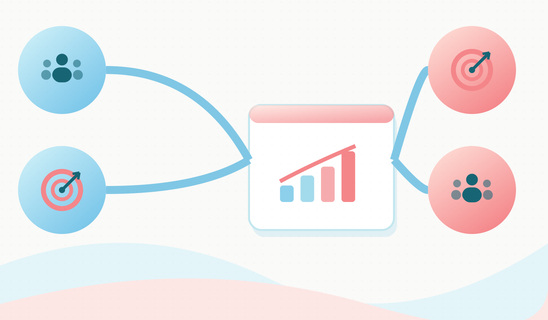


A minimal viable GTM launch runs 2 to 3 weeks: narrow ICP, one pipeline channel, core messaging, and a basic tracking setup. A full cross-functional launch with multiple channels, sales enablement assets, and a coordinated PR push runs 6 to 8 weeks. Choose based on capital at risk and how much you already know about the buyer.
Pre-launch (weeks 1 to 2):
1. Validate ICP, buying committee and top alternatives through interviews.
2. Approve positioning, pricing, tracking schema and one or two initial acquisition paths.
3. Assign sales, marketing, product and customer-success owners and launch blockers.
Launch week:
1. Verify website conversion flow, CRM routing and measurement before increasing traffic.
2. Launch the pilot to the beachhead audience with approved messaging and an escalation owner.
3. Review qualitative buyer objections and leading indicators daily.
Post-launch (first 90 days):
1. Weekly: Review meetings, qualification, pipeline creation and handoff quality.
2. Monthly: Review CAC, win rate, cohort retention and conversion by source.
3. Scale only repeatable motions, then revise messaging, channel or segment when thresholds are missed.
How Does The Branded Agency Approach a Go to Market Engagement?
We treat a GTM plan as a living document, not a deck that gets presented once and shelved. Every engagement starts with alignment across product, sales, and marketing stakeholders, then moves into deliverables built to be used weekly: an ICP interview script, a positioning matrix mapping features to buyer outcomes, and a pricing decision matrix tied to your unit economics.
The plans that survive contact with the market are the ones teams actually open on a Tuesday morning, not the ones filed away after the kickoff meeting.
Governance matters as much as the artifacts. We assign a named owner for updates and build the plan into new-hire onboarding, so institutional knowledge doesn’t walk out the door with one departing team member.
Pro Tip: Ask any agency partner how their deliverables get updated after month one. If the answer is “they don’t,” you’re buying a one-time document, not a working system.
What Risks Should You Plan for Before Launch?
The biggest risk in most launches isn’t competitive, it’s internal misalignment surfacing after money has already gone out the door. Three risks deserve explicit mitigation plans before you launch, not after something breaks.
Pricing and sales motion mismatch. If pricing implies self-serve but your team builds a high-touch sales process anyway, CAC balloons and payback targets slip immediately. Mitigate by confirming pricing and GTM model decisions together, in the same meeting, with the same stakeholders.
Segment drift. Teams under pipeline pressure often start chasing deals outside the beachhead to hit a number. This dilutes messaging and slows the feedback loop that tells you whether the original ICP was right. Mitigate with a hard rule: no segment expansion until the beachhead hits its win-rate threshold.
Measurement blind spots. Launching without attribution tracking live means you’re flying blind on which pipeline source actually works. Mitigate by treating tracking setup as a launch blocker, not a nice-to-have, the same weight as legal sign-off.
Competitive risk deserves a mention too. Map two or three direct alternatives your buyer considers and know their pricing and positioning before launch, so your sales team isn’t caught improvising an answer mid-deal.
How Should You Budget and Allocate Resources for a Launch?
Budget allocation should follow the pipeline sources you named in the revenue engine step, not a generic split across “marketing” and “sales.” If you’ve committed to three pipeline sources, paid media, outbound, and partnerships, allocate budget proportional to which one has the fastest expected payback for your ACV, then let early signal reallocate the rest.
Early pipeline data almost always reveals that one channel outperforms projections and another underperforms; an unallocated buffer lets you shift spend toward the winner in week three instead of waiting for a quarterly budget review.
Resource allocation isn’t only about dollars. Headcount hours matter just as much: an SDR team stretched across five pipeline sources will execute all five poorly. Assign a lead owner per source, even if that person also has other responsibilities, so accountability doesn’t dissolve into “the team” handling everything collectively.
Revisit the budget split at the 30-day mark alongside your first metrics audit. A plan that allocates once at kickoff and never adjusts again is treating budget as a guess rather than a lever tied to actual performance.
Want to learn more about Digital Marketing and Strategy? Keep reading!
If you need help with your company’s marketing, contact us for a free custom quote.
How Do You Communicate the Plan to Stakeholders?

Internal alignment fails more launches than external messaging ever does. Executives need a different cut of the plan than the SDR team running daily outreach, and conflating the two into one communication creates confusion at exactly the moment clarity matters most.
For internal stakeholders, build a two-tier communication rhythm. Executives get a monthly summary tied to lagging metrics: CAC, win rate, NRR trend. Execution teams, marketing, sales, CS, get the weekly leading-indicator review, since they need faster signal to adjust tactics day to day.
External communication needs its own sequencing. Customers and prospects should hear about the launch through channels matched to where your beachhead segment already pays attention, not through a single press release blasted everywhere at once. Partners and channel resellers, if part of your GTM model, need advance notice and enablement material before the public launch date, not on it.
Document who approves external messaging before it ships. A launch announcement that goes out without legal or leadership sign-off is a preventable risk, not a bad-luck scenario.
Why Most Failed Launches Trace Back to the Same Root Cause
Every failed launch we’ve analyzed shares a pattern: teams skip the beachhead and chase every segment because narrowing feels like leaving revenue on the table. It’s the opposite. Diffuse targeting produces diffuse messaging, and diffuse messaging converts nobody particularly well.
Misaligned pricing and sales motion is the second recurring failure. A team builds a high-touch enterprise sales process, then prices the product like a self-serve tool, and wonders why CAC never comes down. Pricing and GTM model have to be decided together, in the same room, by the same people.
The tactical habit that separates the launches that scale from the ones that stall is almost embarrassingly simple: a weekly 30-minute GTM standup where marketing, sales, and CS look at the same three numbers together. Not a status update. A working session where someone owns the decision to adjust.
Ready to Turn Your Go to Market Plan Into Revenue?
Writing the plan is the easy part. Executing it across positioning, paid media, a website that converts, and sales enablement, while keeping every function aligned to the same metrics, is where most internal teams run out of bandwidth. The Branded Agency builds go-to-market plans as working documents from day one, not slide decks that get presented once and forgotten by the second sprint.
We map our branding services to your positioning and messaging component, connect paid media management to your pipeline source design, and pair both with a website built to convert the traffic once it arrives. A typical engagement runs alignment workshops in week one, delivers the positioning matrix and pricing framework by week three, and has your first pipeline source live within six weeks, milestones you can hold us to, not vague promises.
If your launch needs full-funnel execution rather than another internal slide deck, visit The Branded Agency to scope your engagement and get a timeline built around your actual launch date.
Frequently Asked Questions

What is included in a go-to-market plan?
It should cover ICP, positioning, pricing, sales motion, channels, owners, launch timing and measurable outcomes.
How long does a GTM plan take to build?
A narrow pilot can be planned quickly, while a cross-functional launch with research and enablement takes longer and depends on readiness.
What is a beachhead market?
It is the first narrowly defined customer segment a company deliberately prioritizes before expanding.
How do you measure GTM success?
Track qualified pipeline, win rate, CAC, payback and retention, using consistent definitions and review cadences.
Sources
HubSpot go-to-market strategy guide: https://blog.hubspot.com/marketing/go-to-market-strategy
U.S. Small Business Administration market research: https://www.sba.gov/business-guide/plan-your-business/market-research-competitive-analysis
For foundational GTM structure and the four Ps, see Coursera’s go-to-market strategy guide. For a repeatable B2B framework built around ICP and pipeline sources, review Filament’s GTM framework. Internally, A Guide to Writing a Marketing Plan clarifies how a marketing plan fits under GTM strategy.

Quincy Samycia
As entrepreneurs, they’ve built and scaled their own ventures from zero to millions. They’ve been in the trenches, navigating the chaos of high-growth phases, making the hard calls, and learning firsthand what actually moves the needle. That’s what makes us different—we don’t just “consult,” we know what it takes because we’ve done it ourselves.
Want to learn more about brand platform?
If you need help with your companies brand strategy and identity, contact us for a free custom quote.
We do great work. And get great results.
+2.3xIncrease in revenue YoY
+126%Increase in repurchase rate YoY




+93%Revenue growth in first 90 days
+144% Increase in attributed revenue




+91%Increase in conversion rate
+46%Increase in AOV




+200%Increase in conversion rate
+688%Increase in attributed revenue