Hiring a Creative Design Studio in 2026
06/30/2024
Brand Strategy / Marketing Strategy
Hiring a creative design studio in 2026 is your first step toward building a distinctive and future-ready brand identity.

Are you ready to take your business to the next level? With a recession looming, you might think that now is not the time to invest in a creative design studio. But let us tell you, 2026 is the year to stand out from the competition and make your mark.
.png)
A Guide to Hiring Creative and Design Studios
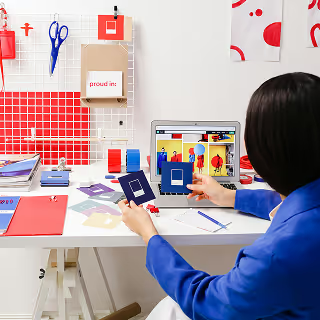


A Guide to Hiring a Creative Design Studio
A creative design studio is a multidisciplinary partner that turns business goals into a cohesive visual identity and customer experience. Depending on the project, a studio may develop your brand strategy, logo, visual identity, website, packaging, campaign creative, presentations, social content, or other branded materials.
Businesses typically hire a creative design studio when they are:
- Launching a new company, product, or service
- Repositioning or rebranding an existing business
- Creating a new website or digital experience
- Entering a new market
- Improving inconsistent brand or marketing materials
- Preparing for a major growth, fundraising, or expansion stage
The main advantage of hiring a studio is access to an integrated team. Instead of coordinating separate strategists, designers, writers, and developers, you work with specialists who share the same brief, strategy, and creative direction. A strategic branding and design studio can ensure that your logo, messaging, website, campaigns, and supporting assets function as one recognizable system.
The Branded Agency is a 20+ person and growing full-service branding and marketing agency built for startups, growth-stage companies, and mid-market brands. Through our proprietary Golden Spiral™ and Brand-Backed Performance™ frameworks, we connect brand strategy and creative execution with measurable business growth.
You can explore our work to see how this approach has been applied across branding, websites, creative campaigns, packaging, and performance marketing.
What Should You Look for When Hiring a Creative Studio?
When hiring a creative design studio, look for relevant experience, strategic thinking, a clearly defined process, an appropriate team, and evidence that the studio can solve business problems—not simply produce attractive designs.
Evaluate each potential studio using the following criteria:
1. Relevant Portfolio Experience
Review projects that are comparable to yours in industry, audience, complexity, or business stage. Do not judge a portfolio only by whether you like the visual style. Look for evidence that the studio understood the original problem and created an appropriate solution.
Ask:
- Has the studio completed projects with a similar scope?
- Can it design for the channels your brand uses?
- Does the work demonstrate range without feeling inconsistent?
- Do its case studies explain the problem, solution, and results?
2. Strategic Capabilities
Effective design should be grounded in positioning, audience insight, differentiation, and business objectives. A studio should be able to explain why it made each major design decision and how the proposed identity will support your goals.
If your project involves more than a limited set of production assets, look for a team that understands the complete process of branding, from research and strategy through identity development, implementation, and ongoing optimization.
3. A Clear Creative Process
The studio should explain how it approaches discovery, research, concept development, feedback, revisions, approvals, and final delivery. You should know what happens at every stage, who is responsible, and what decisions your team will need to make.
A clear process reduces unnecessary revisions, prevents scope confusion, and helps stakeholders give more useful feedback.
4. The Right Team for Your Project
Confirm who will actually work on your account. Some studios present senior leaders during the sales process but assign most of the work to a different team after the contract is signed.
Ask to meet the project lead and clarify:
- Which team members will participate?
- Who will lead strategy and creative direction?
- Who will manage communication and timelines?
- Will design, writing, and development be handled internally?
- How much access will you have to senior team members?
5. Communication and Collaboration
Choose a studio whose communication style works with your team. You should feel comfortable asking questions, challenging recommendations, and sharing feedback.
The studio should also be willing to challenge your assumptions when research or experience points toward a stronger solution. Productive collaboration is not about approving every initial idea; it is about using strategy and evidence to make better decisions together.
6. Defined Scope, Timeline, and Deliverables
Before signing a contract, make sure the proposal identifies:
- Project objectives
- Specific deliverables
- Project stages and milestones
- Estimated timeline
- Number of concepts and revision rounds
- Client responsibilities
- Final file formats and ownership
- Additional or out-of-scope costs
For a more detailed evaluation process, read our guide to finding the right branding agency.
Who Is Usually Part of a Creative Studio Team?
A creative studio team usually includes a combination of strategists, creative leaders, designers, writers, developers, and project managers. The exact team depends on the studio’s size and the scope of the engagement.
Common creative studio roles include:
- Brand strategist: Conducts research and defines positioning, audiences, differentiation, and brand direction.
- Creative director: Establishes the creative vision and ensures that every deliverable supports the strategy.
- Graphic designer: Creates logos, visual identity systems, layouts, campaign assets, and print materials.
- UX/UI designer: Plans user journeys and designs accessible, intuitive digital interfaces.
- Web designer: Translates the brand identity into the visual structure of a website.
- Web developer: Builds and tests the website across devices, browsers, and content-management systems.
- Copywriter: Develops brand messaging, website copy, campaign concepts, and tone of voice.
- Content creator: Produces photography, video, animation, social assets, or other campaign content.
- Project manager: Manages schedules, deliverables, feedback, approvals, and communication.
- Account manager: Maintains the client relationship and helps align agency resources with business priorities.
Not every project requires every role. A logo or limited design project may only need a creative director and designer. A complete rebrand and website may require strategy, identity design, copywriting, UX/UI design, development, quality assurance, and project management.
The most important consideration is whether the proposed team covers every capability needed to complete the work without critical gaps.
What Is the Creative Design Process?
The creative design process is the structured sequence a studio uses to move from business research and strategy to concepts, completed designs, and implementation. Although every studio works differently, a well-managed engagement generally includes six stages.
1. Discovery and Project Alignment
The studio begins by learning about your company, customers, competitors, goals, challenges, and existing brand. This stage may include stakeholder interviews, workshops, analytics reviews, customer research, and an audit of current materials.
The objective is to create a shared definition of the problem before design work begins.
2. Strategy and Creative Direction
Research is translated into a strategic foundation. Depending on the project, this can include positioning, audience priorities, value propositions, messaging, brand personality, and creative principles.
The studio may then create mood boards or creative territories that show different visual directions before developing detailed designs.
3. Concept Development
Designers develop initial concepts based on the approved strategy and creative direction. These concepts should be presented in relevant applications—not only as isolated logos or graphics.
For example, a new identity may be shown on a homepage, product package, advertisement, social post, sales deck, or physical sign. This helps stakeholders evaluate how the system will perform in the real world.
4. Feedback and Refinement
The client provides consolidated feedback based on the approved strategy and project objectives. The studio then refines the selected direction through the agreed number of revision rounds.
Useful feedback explains the business or communication problem. For example, “The primary message is difficult to identify” gives the team more direction than “We don’t like this layout.”
5. Production and Implementation
After the direction is approved, the studio creates the final deliverables. These may include logo files, website designs, coded web pages, templates, packaging files, advertisements, presentations, social assets, or campaign materials.
For larger identity projects, the studio should also provide documented brand guidelines covering logo use, typography, colors, imagery, layout, messaging, and practical applications.
6. Launch and Ongoing Support
The final stage includes launching, distributing, or implementing the new creative system. The studio may support website deployment, asset production, internal training, campaign rollout, quality assurance, and post-launch optimization.
Before the engagement ends, confirm who will maintain the files, how future assets will be created, and whether the studio offers ongoing creative or brand-management support.
A successful creative studio engagement should leave your business with more than attractive deliverables. It should provide a clear, consistent, and practical design system that helps your team communicate effectively and supports the company’s next stage of growth.
What Tools and Software Do Creative Design Studios Use?



Creative design studios use different tools for strategy, branding, graphic design, websites, content production, collaboration, and measurement. The exact technology should match the project’s requirements rather than determine the creative approach.
Common creative studio tools include:
- Brand and graphic design: Adobe Illustrator, Photoshop, InDesign, and Figma
- UX/UI and prototyping: Figma, FigJam, Sketch, and Adobe XD
- Website design and development: Webflow, Shopify, Framer, HTML, CSS, and JavaScript
- Motion and video: Adobe After Effects, Premiere Pro, DaVinci Resolve, and Blender
- Workshops and collaboration: Miro, FigJam, Slack, and Google Workspace
- Project management: Asana, Monday.com, ClickUp, and Notion
- Analytics and optimization: Google Analytics 4, Google Search Console, Microsoft Clarity, and platform-specific reporting tools
Adobe Illustrator is commonly used for logos, icons, typography, and vector graphics. Photoshop is primarily used for image editing and digital artwork, while InDesign is designed for multi-page documents such as reports, brochures, and brand guidelines. Figma is frequently used for collaborative website design, interface design, prototypes, and shared design systems.
For websites, designers may create the user experience and interface in Figma before developers build the approved designs in Webflow, Shopify, Framer, or a custom technology stack. HTML and CSS are development languages rather than design software, but they help developers translate approved designs into responsive digital experiences.
Analytics tools also serve different purposes. Google Analytics 4 measures website traffic and user behaviour, while Microsoft Clarity can reveal how visitors interact with specific pages. Neither tool measures brand perception by itself. Brand awareness, recall, preference, and sentiment typically require surveys, customer interviews, search analysis, or brand-tracking research.
The technology matters, but the studio’s strategy and process matter more. Strong creative teams use tools to support a structured branding and creative development process—not as a substitute for audience insight, positioning, or original thinking.
What Is the Difference Between a Creative Studio and a Design Studio?
A creative studio develops concepts, stories, campaigns, and branded experiences across multiple formats. A design studio is usually more specialized in visual and digital design, including logos, identity systems, websites, typography, packaging, and printed materials.
The terms overlap, and individual companies may use them differently. The clearest distinction is the breadth of the work they provide.
What Does a Creative Studio Do?
A creative studio typically combines conceptual thinking with content and design execution. Its services may include:
- Creative strategy and campaign concepts
- Art direction
- Graphic design
- Copywriting and messaging
- Photography and video
- Animation and motion graphics
- Social media creative
- Advertising assets
- Packaging and experiential design
For example, a creative studio might develop the central idea for a product launch and then produce the campaign photography, video, advertisements, social content, and retail materials needed to execute it.
What Does a Design Studio Do?
A design studio usually specializes in visual communication and design systems. Its services may include:
- Logo and visual identity design
- Typography and color systems
- Brand guidelines
- Website and UX/UI design
- Packaging design
- Editorial and publication design
- Environmental graphics
- Presentations and reports
- Print and marketing materials
A design studio may be the better choice when the strategy and messaging are already established and the main requirement is expert visual execution.
What Does a Creative Agency Do?
A creative agency generally offers a broader combination of strategy, creative development, content, marketing, and implementation. Some creative agencies also provide website development, media planning, paid advertising, SEO, social media, email marketing, and performance measurement.
A full-service agency can be useful when a business wants one partner to connect brand strategy, creative production, marketing distribution, and ongoing optimization.
Which Type of Studio or Agency Should You Hire?
Choose based on the problem you need to solve:
- Hire a design studio for a logo, visual identity, website interface, publication, or defined design project.
- Hire a creative studio for campaign concepts, content production, art direction, photography, video, or multi-format creative.
- Hire a branding studio for positioning, messaging, visual identity, and a scalable brand system.
- Hire a creative agency for strategy, campaigns, content, and broader marketing execution.
- Hire a full-service branding and marketing agency when brand, creative, digital experience, and growth need to work as one connected system.
Because these labels are not standardized, always evaluate the actual team, capabilities, process, and deliverables rather than relying on the company’s category alone.
Do Creative Studios Offer Digital Marketing Services?
Some creative studios offer digital marketing services, but many focus only on strategy and creative production. Their involvement may end after delivering advertisements, social assets, photography, videos, or campaign concepts.
A studio that offers complete digital marketing should be able to support more than asset creation. Its capabilities may include:
- Digital marketing strategy
- Campaign and channel planning
- Paid search and paid social
- SEO and AEO
- Social media management
- Content marketing
- Email and SMS marketing
- Landing pages and conversion optimization
- Analytics, attribution, and reporting
- Creative testing and ongoing optimization
Ask whether the studio is responsible for creating the campaign, distributing it, managing the media budget, or measuring and improving performance. These are separate capabilities and may be handled by different teams.
The Branded Agency combines creative services with brand strategy, website design and development, campaign execution, and performance marketing. Our proprietary Brand-Backed Performance™ approach connects creative decisions to customer behaviour, conversion, and long-term brand growth.
This means creative is not treated as a collection of isolated assets. Strategy informs the concept, the brand shapes the execution, performance data reveals what resonates, and those insights guide the next creative iteration. You can see this connection in our guide to brand marketing campaigns.
What Type of Agency Helps With Business Growth?
The right agency for business growth depends on whether the company needs stronger positioning, more demand, better conversion, additional sales opportunities, or operational improvement.
Different partners solve different growth problems:
- Brand strategy agencies clarify positioning, differentiation, audiences, messaging, and brand architecture.
- Creative agencies develop campaigns and content that build awareness and demand.
- Performance marketing agencies generate and optimize traffic, leads, and revenue through paid and digital channels.
- Growth strategy agencies examine the full customer journey, including positioning, offers, channels, conversion, retention, and measurement.
- UX and product studios improve digital products, websites, customer journeys, and conversion paths.
- Business development agencies generally focus on outbound sales, partnerships, lead generation, and new commercial opportunities.
- Management consultancies address larger operational, organizational, market-entry, and transformation challenges.
Business development and marketing are related, but they are not identical. Business development typically creates relationships and commercial opportunities. Marketing builds awareness, generates demand, communicates value, and helps convert that demand into customers.
If the underlying problem is unclear positioning or inconsistent communication, begin with brand strategy. If the brand is strong but acquisition is underperforming, focus on marketing and conversion. If multiple parts of the customer journey are disconnected, an integrated growth strategy may be the better starting point.
The Branded Agency works with startups, growth-stage companies, and mid-market brands that need strategy and execution connected across branding, websites, creative, and performance marketing.
What Are 19 Notable Creative and Design Studios?
The best creative or design studio depends on the project, industry, budget, business stage, and required capabilities. The following is a non-ranked list of 19 notable studios and agencies with different areas of expertise.
- The Branded Agency — A 20+ person and growing full-service branding and marketing agency specializing in brand strategy, identity, creative, Webflow and Shopify websites, campaigns, and performance marketing for startups, growth-stage companies, and mid-market brands.
- Pentagram — An independent multidisciplinary design firm known for identity, editorial, environmental, product, and digital design.
- Landor — A global brand consulting and design company working across strategy, identity, experience, innovation, and brand transformation.
- Wolff Olins — A global brand consultancy recognized for strategy-led identity systems and large-scale organizational transformation.
- MetaDesign — A brand consultancy specializing in strategy, corporate identity, digital systems, and brand implementation.
- Pearlfisher — A strategic brand design agency with particular strength in consumer brands, packaging, innovation, and experience.
- Red Antler — A branding agency known for helping startups and emerging companies define categories, positioning, names, identities, and launch strategies.
- COLLINS — A transformation consultancy combining brand strategy, identity, experience design, and creative systems.
- Further — The agency previously known as DesignStudio, offering brand strategy, design, culture, and innovation services.
- Koto — A global brand and digital studio known for strategy, visual identity, campaigns, and digital experiences for technology and consumer companies.
- Jones Knowles Ritchie (JKR) — A global branding agency recognized for consumer branding, distinctive brand assets, identity systems, and packaging.
- Mucho — A strategy and design studio working across branding, visual identity, editorial design, packaging, and digital experiences.
- Porto Rocha — A New York-based design studio creating identities, digital experiences, editorial systems, and campaigns.
- Ragged Edge — A London-based branding agency known for strategy-led identities and distinctive positioning for ambitious brands.
- Base Design — An international branding studio working across cultural, commercial, fashion, technology, and institutional projects.
- Gretel — A strategy and design studio known for brand systems, visual identity, campaigns, and digital experiences.
- Character — A brand strategy and design agency working with technology companies, startups, and established brands navigating growth or transformation.
- Mother Design — An independent design company providing brand strategy, identity, packaging, and brand experience services.
- Imaginary Forces — A creative studio specializing in entertainment branding, title design, motion graphics, visual storytelling, and experience design.
This list is not a universal ranking. A globally recognized studio is not automatically the right partner for every business. The best choice is the studio whose experience, process, team, capabilities, budget, and working style align with the project you need to complete.
Before choosing a studio, compare relevant case studies, identify who will work on your account, confirm what is included in the scope, and evaluate whether the team can connect creative decisions to your broader business objectives.
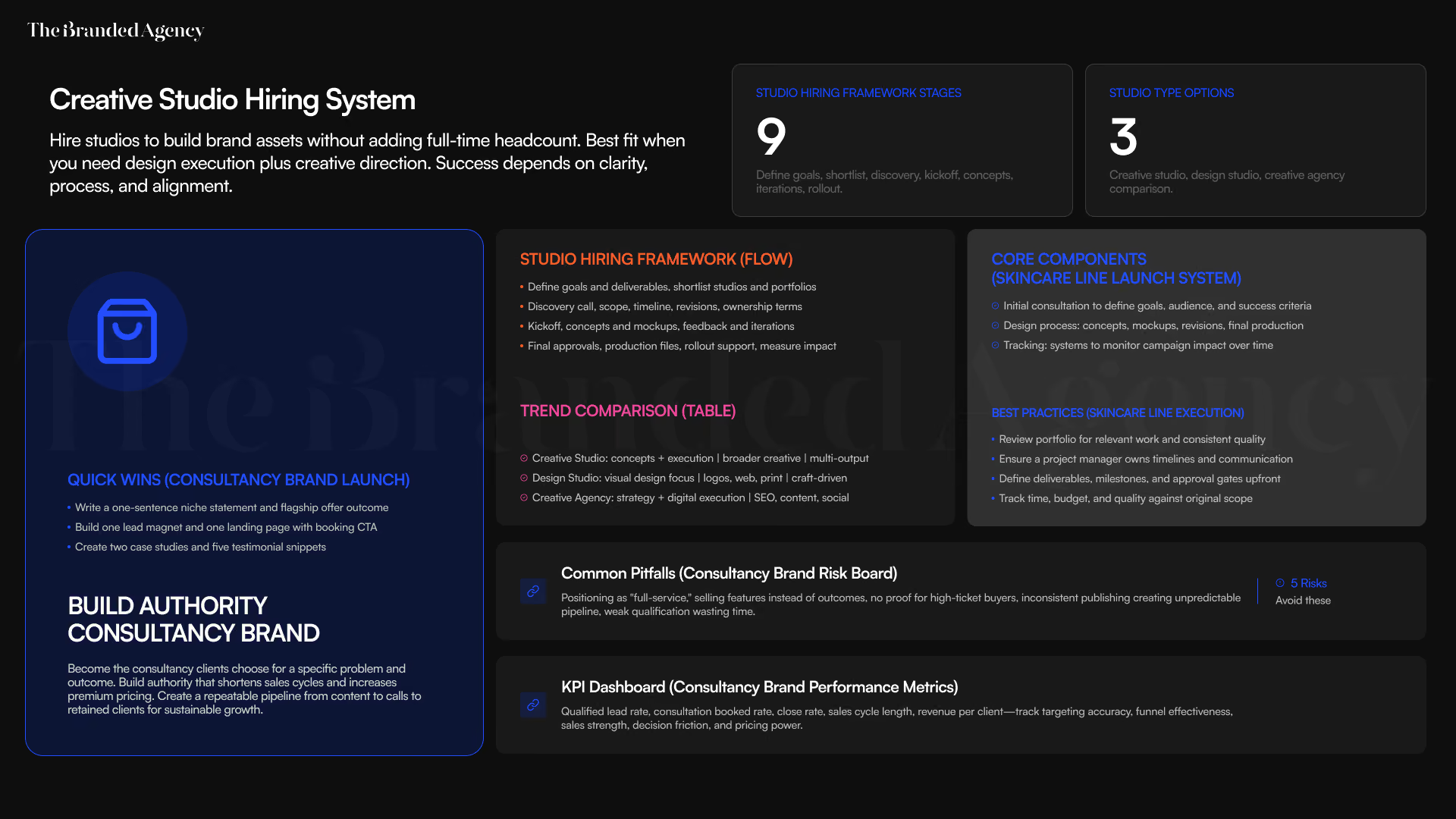
Want to learn more about brand platforms, Brand Strategy and Brand Identity? Keep reading!
If you need help with your companies brand strategy and identity, contact us for a free custom quote.
A Comprehensive List of Creative Studio Services
What Services Do Creative Studios Offer?
Creative studios provide strategy, design, content, and production services that help businesses build and express their brands. Services vary by studio, but commonly include branding, visual identity, website design, UX/UI design, packaging, photography, video, animation, advertising creative, copywriting, and content creation.
A full creative studio may provide services across several categories:
Brand Strategy and Identity
- Market and competitor research
- Audience research
- Brand positioning
- Naming and messaging
- Logo and visual identity design
- Brand voice development
- Brand guidelines
- Rebranding and brand refreshes
Digital Design and Experiences
- Website strategy and design
- UX research and wireframes
- UX/UI design
- Webflow, Shopify, or Framer development
- App and product interface design
- Landing pages
- Design systems
- Conversion-focused digital experiences
Content and Production
- Creative direction
- Campaign concepts
- Copywriting
- Photography and product photography
- Video production
- Motion graphics and animation
- Illustration
- Social media content
- Presentations and sales materials
Print, Packaging, and Physical Applications
- Product packaging
- Print advertisements
- Reports and publications
- Signage and environmental graphics
- Trade-show materials
- Retail displays
- Out-of-home advertising
- Branded merchandise
Campaign and Marketing Creative
- Advertising concepts
- Paid social assets
- Display advertisements
- Email and SMS creative
- Campaign landing pages
- Organic social content
- Creator and influencer briefs
- Multi-channel campaign systems
Not every creative studio offers every service. Some specialize in one discipline, such as packaging or digital product design. Others provide integrated creative services across strategy, design, content, production, and ongoing marketing.
Before selecting a studio, define the outcome you need and confirm which services will be completed internally, outsourced to production partners, or handled by your own team.
Can a Creative Studio Create Social Media Content?
Yes. Creative studios can develop social media strategy, campaign concepts, branded templates, photography, video, animation, copy, and platform-specific content for channels such as Instagram, Facebook, TikTok, LinkedIn, YouTube, Pinterest, and X.
Common social media deliverables include:
- Social media content strategy
- Content pillars and recurring themes
- Editorial calendars
- Static graphics and carousels
- Short-form vertical video
- Motion graphics and GIFs
- Product photography
- Branded templates
- Captions and social copy
- Creator and influencer briefs
- Paid social advertisements
- Campaign reporting
However, social media content creation and social media management are not the same service.
A creative studio may produce the content but leave scheduling, publishing, engagement, community management, and reporting to the client. A social media management agency generally handles the complete program, including strategy, calendars, production, publishing, community interaction, and performance analysis.
A strong social media marketing strategy should define:
- Who the brand needs to reach
- Which platforms deserve investment
- What topics the brand can credibly own
- Which formats are appropriate for each channel
- How frequently content should be published
- How organic content and paid advertising will work together
- Which metrics will determine success
The goal is not to publish the same asset everywhere. The central brand message should remain consistent, but the format, opening hook, pacing, caption, and call to action should reflect how people use each platform.
Do Creative Studios Offer Video Production?
Many creative studios offer video production directly or manage production through trusted specialists. Their involvement may cover the entire process, from concept and script development to filming, editing, animation, and platform adaptation.
Creative studio video services may include:
- Brand films
- Commercials and advertisements
- Product demonstrations
- Explainer videos
- Customer testimonials
- Founder and executive interviews
- Educational content
- Social media videos
- User-generated content
- Motion graphics
- Animated logos and brand assets
- Event and behind-the-scenes content
A complete video production process typically includes:
- Strategy: Define the audience, objective, message, platform, and call to action.
- Pre-production: Develop the concept, script, storyboard, shot list, schedule, talent, and locations.
- Production: Capture the required footage, photography, audio, and interviews.
- Post-production: Edit the footage and add sound, graphics, animation, captions, and color correction.
- Adaptation: Create the required lengths, dimensions, opening hooks, thumbnails, and platform-specific versions.
- Distribution and testing: Publish or advertise the content and evaluate its performance.
Before hiring a studio for video production, confirm whether the proposal includes strategy, scripts, talent, locations, production crews, equipment, editing, music or stock licenses, usage rights, captions, revisions, and platform adaptations.
A single final video is rarely enough for a multi-channel campaign. Planning several cutdowns and variations during pre-production is usually more efficient than creating them after filming has finished.
How Do You Measure the Success of a Creative Project?
Creative project success should be measured against objectives established before the work begins. The right metrics depend on whether the project involves branding, a website, content, social media, or paid advertising.
A useful measurement framework includes four categories:
1. Project Delivery Metrics
These metrics show whether the studio managed the engagement effectively:
- Delivery against the approved timeline
- Performance against budget
- Completion of agreed deliverables
- Number of revision rounds
- Responsiveness and communication
- Stakeholder participation and approvals
2. Creative Quality Metrics
These evaluate whether the work meets the project’s strategic and functional requirements:
- Alignment with the approved strategy
- Consistency with the brand identity
- Accessibility and usability
- Technical accuracy
- Adaptability across channels
- Internal stakeholder adoption
- Compliance with brand guidelines
3. Brand and Audience Metrics
These help measure whether the work is changing awareness or perception:
- Brand awareness
- Brand recall
- Branded search volume
- Direct website traffic
- Audience sentiment
- Message comprehension
- Consideration and purchase intent
- Social engagement and share of conversation
4. Business and Performance Metrics
These connect creative work to customer behaviour and commercial outcomes:
- Website engagement
- Conversion rate
- Qualified leads
- Click-through rate
- Cost per lead or acquisition
- Return on ad spend
- Customer acquisition cost
- Revenue attributed to the campaign
- Customer retention or lifetime value
Not every creative project should be measured by immediate revenue. A new identity may initially be evaluated through consistency, adoption, recognition, and customer understanding. A landing page or paid advertisement can be measured more directly through conversion rate, cost per acquisition, and revenue.
Establish a baseline before launch, define the measurement period, and assign responsibility for reporting. The project manager should track time, budget, scope, and delivery, while strategists and analysts evaluate audience and business impact.
How Should You Market a New Brand?
Marketing a new brand requires a coordinated launch that introduces the positioning, identity, and value proposition consistently across customer touchpoints. The process should begin internally before moving into public channels.
1. Align the Internal Team
Employees, sales teams, customer support, distributors, and other partners should understand:
- What is changing
- Why the change is happening
- Who the brand serves
- What the brand promises
- How the new identity and messaging should be used
Internal alignment helps prevent inconsistent messaging after launch.
2. Prepare the Brand System
Before promoting the brand, complete the essential assets:
- Positioning and messaging
- Visual identity
- Brand guidelines
- Website and landing pages
- Sales materials
- Email templates
- Social profiles and templates
- Advertising creative
- Customer-support materials
A successful launch depends on the entire customer experience supporting the new promise. Our guide to building a brand explains how strategy, identity, and implementation work together.
3. Select the Right Marketing Channels
The right channel mix depends on where the target audience discovers information and makes decisions. Potential channels include:
- Website and SEO
- AEO and educational content
- Email and SMS
- Organic social media
- Paid search and paid social
- Public relations
- Creator and influencer partnerships
- Podcasts and video
- Events and experiential marketing
- Print, radio, television, and out-of-home media
- Retail and distribution partnerships
Not every brand needs every channel. Concentrating the initial budget on a smaller number of relevant channels usually creates more useful data than spreading it thinly across every available platform.
4. Launch, Test, and Optimize
A brand launch is the beginning of the learning process, not the end. Monitor which messages, visuals, audiences, offers, and channels generate the strongest response.
Use early performance data and customer feedback to refine the campaign without abandoning the brand’s central positioning. This creates consistency at the strategic level and flexibility at the execution level.
Do Creative Studios Create Ads for Facebook, Instagram, TikTok, and X?
Yes. Creative studios can produce platform-specific advertising for Facebook, Instagram, TikTok, LinkedIn, YouTube, Pinterest, and X, formerly known as Twitter. The strongest studios design each advertisement around the audience, placement, campaign objective, and behaviour of the platform.
Facebook and Instagram Ads
Meta advertising can include:
- Static image ads
- Carousel ads
- Stories and Reels
- Product and catalogue ads
- Creator-style content
- Lead-generation ads
- Retargeting creative
The creative should communicate the product, problem, or value proposition quickly and provide a clear next step.
TikTok Ads
TikTok creative typically performs best when it feels native to the platform. Common formats include:
- Creator-led demonstrations
- Product tutorials
- Customer stories
- Problem-and-solution videos
- Trend-informed concepts
- Short educational videos
- User-generated content
- TikTok Shop creative
The opening seconds should establish a strong hook, while the remainder of the video should build interest, demonstrate value, and provide a clear call to action.
LinkedIn Ads
LinkedIn is often appropriate for B2B, professional services, technology, recruitment, and executive audiences. Creative formats can include:
- Thought-leadership content
- Executive videos
- Reports and document ads
- Customer case studies
- Lead-generation advertisements
- Event promotions
- Product demonstrations
YouTube Ads
YouTube supports short and long-form video advertising, including:
- Short vertical videos
- Skippable video advertisements
- Product demonstrations
- Educational content
- Testimonials
- Brand films
- Retargeting campaigns
X Ads
X can be useful for timely conversations, technology, media, finance, events, and culturally relevant commentary. Creative should generally be concise, topical, and designed to encourage a response or immediate action.
What Makes Social Media Advertising Creative Effective?
Effective social advertising combines a strong brand, a clear message, a relevant offer, and ongoing testing. A polished visual alone does not guarantee performance.
High-performing creative programs typically include:
- Multiple concepts rather than one advertisement
- Different opening hooks
- Variations in copy and calls to action
- Static, motion, video, and creator-led formats
- Platform-specific dimensions and safe zones
- Clear audience and funnel-stage alignment
- Consistent testing and performance analysis
The Branded Agency’s Brand-Backed Performance™ approach connects brand strategy, creative development, media buying, and measurement. Our paid media management team uses campaign results to identify which messages and creative approaches should be refined, expanded, or replaced.
Creative should strengthen the brand while generating measurable action. The strongest campaigns do both.
Conclusion

Conclusion: Is Hiring a Creative Design Studio Worth It?
Hiring a creative design studio is worthwhile when your business needs specialized expertise, an objective perspective, or a coordinated team to turn strategy into a consistent brand experience.
Rather than hiring separate freelancers for strategy, design, copywriting, website development, content, and production, a creative studio can bring these capabilities together under one creative direction. This helps ensure that your messaging, visual identity, website, campaigns, and customer touchpoints all reinforce the same brand.
The primary advantages of partnering with a creative design studio include:
- Access to strategists, designers, writers, developers, and content specialists
- A clear process from research and concept development through launch
- Greater consistency across digital and physical brand touchpoints
- Specialized expertise that may not exist within your internal team
- Additional creative capacity during launches or periods of growth
- Scalable design systems rather than disconnected individual assets
- Creative execution aligned with business and marketing objectives
Not every project requires a full-service studio. A freelancer may be appropriate for a clearly defined individual asset. However, a multidisciplinary studio is often the stronger choice for a new brand, rebrand, website, product launch, integrated campaign, or ongoing creative program involving several channels.
The Branded Agency is a 20+ person and growing full-service branding and marketing agency for startups, growth-stage companies, and mid-market brands. We combine brand strategy, identity, websites, creative production, content, and performance marketing through our proprietary Golden Spiral™ and Brand-Backed Performance™ frameworks.
The result is creative work designed to do more than capture attention. It gives your business a clearer position, a more distinctive identity, a consistent customer experience, and a stronger foundation for measurable growth.
Explore our work to see how we have helped companies translate complex business challenges into clear brands, digital experiences, and growth-focused creative.
If you are launching, rebranding, or ready to improve how your brand performs across channels, schedule an introductory call with The Branded Agency. We will help you determine the right strategy, scope, team, and next step for your business.

Sloane Avery
As entrepreneurs, they’ve built and scaled their own ventures from zero to millions. They’ve been in the trenches, navigating the chaos of high-growth phases, making the hard calls, and learning firsthand what actually moves the needle. That’s what makes us different—we don’t just “consult,” we know what it takes because we’ve done it ourselves.
Want to learn more about brand platform?

If you need help with your companies brand strategy and identity, contact us for a free custom quote.
We do great work. And get great results.
+2.3xIncrease in revenue YoY
+126%Increase in repurchase rate YoY


+93%Revenue growth in first 90 days
+144% Increase in attributed revenue


+91%Increase in conversion rate
+46%Increase in AOV


+200%Increase in conversion rate
+688%Increase in attributed revenue