Product Photography Pricing: How Much Does It Cost?
03/13/2025
Branding
Great product photography can make or break your brand’s first impression—so how much should you invest?
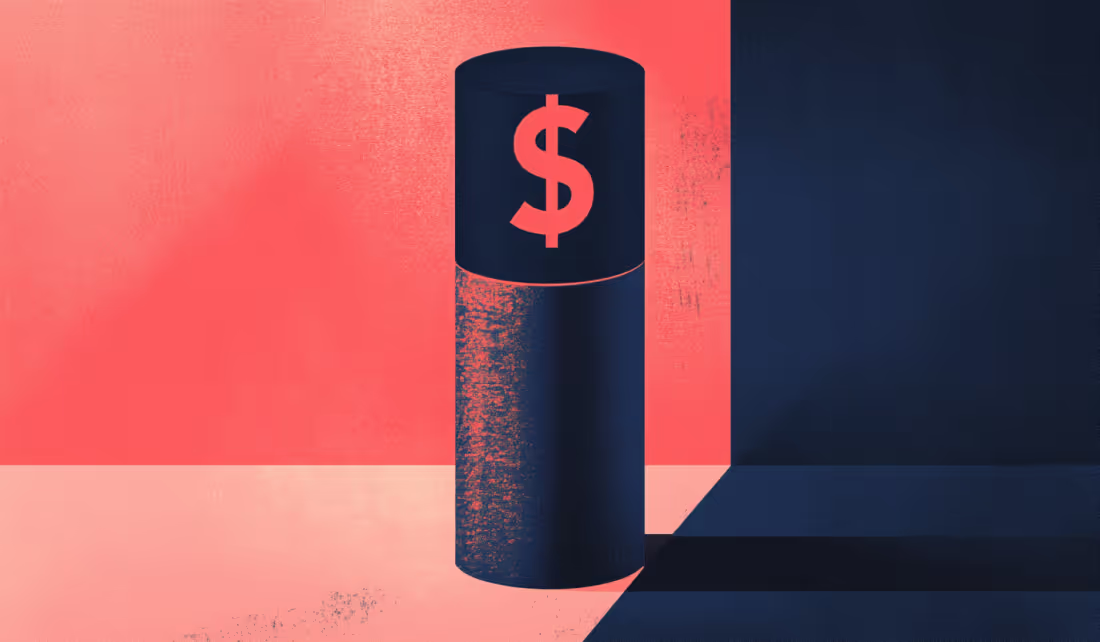
When it comes to selling products online, high-quality visuals aren't just a luxury—they're a necessity. But with so many variables influencing the cost of product photography, it can be tough to know what to budget. Whether you're launching a new brand or refreshing your existing imagery, this guide will break down the factors that impact pricing, help you understand what you’re really paying for, and show you how to get the most value for your investment.
.png)


The Cost of Product Photography

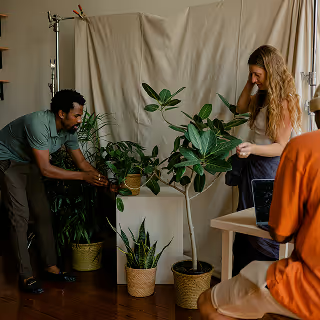

The Real Deal on Product Photography Costs: From DIY to Big Budget
In this blog post, we’ll go over the different types of product photography – from basic to major productions – and explain what’s included with each and how much it might cost.
From no-budget DIY shoots to high-end professional setups, there’s a wide range of options. And we’re breaking them all down.
Keep reading to have all your questions answered on “How Much does Product Photography Cost”
Product photography for your online store isn't just any photo.
The image you use to advertise your product online can be the most critical piece of content on your product page and directly affect sales.
At a basic level, product photography can cost anywhere from $60 per image to several hundred dollars, depending on the size and complexity of your product.
For a high-volume e-commerce businesses that need large volumes of product photos for their online store, the cost of hiring a professional photographers or hiring an e-commerce photography agency with specialized photo services may be upwards of $600 per image.
Ready to get the lowdown on what it'll cost to make your products look legendary?
Hit us up for a custom quote on product photography, creative direction, and campaign planning.
Let's make some magic happen!
Product Photography Hourly Rate
In the wild world of product photography, the price tag per hour is as varied as the shots you’re aiming for. It all boils down to how slick the photographer’s skills are and their experience in the game. A photographer's experience can significantly influence both their rates and the quality of the final images, making it a key factor to consider when choosing a professional.
Your average pro? They might sling you a rate between $100 to $300+ an hour. But hey, if you’re dealing with a freelance hotshot or a one-person wonder with a portfolio that’s off the charts, don’t be shocked if they quote you a number that’s north of that range. It’s all about what they bring to the table. Photographers also need to factor in overhead costs like equipment, studio rental, and insurance when setting their hourly or fixed rates, ensuring their pricing is both sustainable and profitable.
Is Product Photography Profitable?
Alright, let’s talk shop about product photography and the green it can rake in for photographers.
Here’s the deal: The cash you’ll cough up for a product photoshoot swings wildly based on a few key things. Think the lineup of products, how long the shoot’s gonna last, and the nitty-gritty of post-production jazz like editing.
But here’s the real kicker: The big money move in this game? It’s all about the number of killer shots you squeeze out of a session. The total number of images produced per session directly impacts both the photographer's profitability and the client's cost, since many pricing models are based on the quantity of images delivered. More snaps? More moolah.
That’s the golden rule in the product photography hustle.
The Creative Process for Product Photography
Product photography can be complex and time-consuming, but it’s also incredibly rewarding.
Before taking a single photo, product photographers must carefully plan out their product beauty shots to ensure that all details are addressed during the shoot. Product complexity, such as intricate designs, reflective surfaces, or unusual shapes, can significantly increase the time and effort required for setup, shooting, and retouching, which in turn affects overall product photography pricing.
This includes setting up lighting, choosing a backdrop, and positioning the product in an aesthetically pleasing way.
Once the set is ready, product photographers then have to take multiple photos from different angles and with varying lighting setups before they can start editing.
This process is often labor-intensive, but it’s essential for creating stunning images that reflect the high quality of the products being photographed.
For small businesses and startups, it is often more cost-effective to DIY product photography using your own equipment and software.
Using a smartphone or DSLR camera, you can take professional photos of your products at minimal cost, with the added benefit of customizing the photos to suit your branding and aesthetic preferences. Creative options like lifestyle shots, which showcase products in real-life settings or styled environments, can further enhance brand storytelling and appeal to consumers, though they may require additional planning and resources.
However, hiring a professional photographer or professional product photography and videography studio with specialized photo services may be necessary to achieve the high quality and consistency needed for e-commerce photography.
According to a study, pro product photography can help you sell more products and make a more significant profit, as 53% of online shoppers understand the primary product function through images.
It gives shoppers a clear idea of what they’re buying and makes it easy to compare different products on your site.
93% of consumers consider visual appearance to be the critical deciding factor in a purchasing decision, according to statistics by Justuno
The wrong product photography can make your products look cheap and unappealing, putting off shoppers and costing you potential sales.
To effectively market products, you need to consider many technical aspects, including lighting, white balance, framing, and exposure, to name a few.
Every product feature must be captured in great detail and perspective. This is not an easy task, and as a business owner, your time and effort are best spent elsewhere, such as in your business operations.
You need to find expert product photography, so the first step to getting great product images is knowing how much they cost.
Product photography can be expensive, but it doesn’t have to break the bank.
It just depends on what you need and how much your budget allows.
Here are some of the key factors that affect pricing:
Type of product – The most obvious factor to consider when calculating product photography costs is what type of products you need photographed. Some products, such as electronics and machinery, may require specialized equipment and experienced product photographers who have specific technical knowledge about the product being photographed. Other products, like food and fashion, are usually shot in a studio setting with specialized lighting and backdrops.
Volume of photos – The number of photos needed for your product line will also affect the cost of product photography. If you need a lot of high-quality photos for a large product range, it will likely be more expensive than if you need only a few photos for a few products.
Complexity of the shoot – The complexity and size of your product photoshoots will affect pricing as well. For example, if you need dozens of photos that require complex lighting setups or multiple angles and perspectives, it will likely cost more than a simpler shoot with fewer photos.
Location – If your pro product photos need to be shot in a product photography studio, this will have an impact on the cost. Studios typically charge by the hour and may also require additional set-up time and equipment rentals, which can significantly increase the final price tag.
Photographer’s experience – Finally, it’s important to consider the photographer’s level of experience when calculating product photography costs. Experienced photographers may offer higher rates, but they will typically be able to deliver better photos and more value for your money.
Usage rights – The level of usage rights you require for your product images—such as basic e-commerce use versus broader advertising or print rights—can significantly affect the overall cost and contract terms. Make sure to clarify how and where you plan to use the images when negotiating pricing.
Licensing fee – When hiring external talent or models for your product shoots, a licensing fee may be charged in addition to the model's hourly rate. This fee covers the right to use the model's likeness in your product images.
Seasonal campaigns – Planning your product photography around seasonal campaigns can help maximize the marketing impact and relevance of your visuals. Coordinating shoots to align with specific marketing events or seasonal promotions is an important consideration for scheduling and budgeting.
If you’re looking for high-quality product photography at an affordable price, it is best to work with a reputable photographer that has the experience and expertise needed to produce high-quality, effective product photos.
To find the right photographer for your business, start by researching local photographers and comparing their rates and portfolios to find the one that best fits your needs.
Overall, if you need high-quality product photography at an affordable price, it is essential to consider all of the key factors that affect pricing, including the type of product, volume of photos, the complexity of the shoot, and more.
By doing your research and working with a reputable photographer, you can ensure that you get great product photos at a price that works for your business.
Types of Product Photography
When it comes to product photography, one size definitely doesn’t fit all. Different styles serve different purposes, and choosing the right approach can make your products stand out to potential customers.
Lifestyle Photography puts your products in real-world scenarios, showing them in action or as part of a daily routine. Think of a cozy mug in someone’s hands on a chilly morning, or sneakers hitting the pavement during a morning jog. This style helps shoppers imagine your product in their own lives, boosting its perceived value and making it more relatable.
Studio Photography is all about control. Shot in a dedicated studio space, this style lets photographers fine-tune lighting, background, and angles to highlight every detail of your product. It’s perfect for catalog images or when you want to showcase the craftsmanship and features of your items.
White Background Photography is a staple for e-commerce. By photographing products against a crisp, clean white background, distractions are eliminated and your product takes center stage. This approach is especially effective for online sales, where clarity and consistency are key to building customer trust.
360-Degree Photography takes things up a notch by capturing your product from every angle. The result? An interactive experience that lets potential customers virtually “spin” the product and inspect it from all sides. This is a game-changer for complex items or anything with features worth showing off.
Understanding these types of product photography helps you pick the style that best fits your brand and marketing goals—ensuring your products catch the eye of potential customers and drive more sales.
What to Look for in Good Product Photography
Professional product photography is more than just taking a picture.
It’s a combination of art, science, and technical skills that can add value to your business. High quality product images can significantly influence consumers' purchase decisions, especially in e-commerce, by making your products more appealing and trustworthy.
Here are some things to look for in good product photography:
Some studios or photographers also offer volume discounts for clients who need a large number of product images, providing better value for bulk orders.
High-quality images
A paper from 2017 by B. Walker called "Consumer Psychology Behind the E-Commerce Checkout" shows that:
For 90% of buyers, product visuals are the most critical factor when purchasing online.
Good photos should have high resolution so they can be enlarged without losing image quality, sharp focus, attractive colors, and enough detail so customers can see what they're buying.
Multiple angles
Product photos should show merchandise from different angles so customers can see the product's looks from different perspectives.
The same paper mentioned above showed that: Offering multiple photos depicting a product from different angles leads to a 58% increase in sales regardless of the category.
Close-up shots
These are especially important for jewelry and other items with intricate details, such as watches or handbags.
They give customers a clear idea of what they're buying so they can make an informed purchase decision.
Expert photographers know how to capture these details, and their work will help you sell more products.
Consultations and support
Product photography is a complex task that requires technical skills, so it's important to choose a photographer who not only has the right skills, but also provides consultations and support to help you get the most out of your photos.
Product in context
Product photos should show items in the context of their intended use, such as a laptop computer on a desk, shoes worn with an outfit, or a camping tent in the forest.
This helps buyers get a better sense of how something looks and feels.
Action shots
These can be especially effective for sporting goods, toys, and other products that are meant to be used by people. Customers like to see what items can do, and action shots give them a sense of how they work.
These are just some of the things to look for in good product photography.
If you're looking for expert product photos that will help you sell more products, be sure to find a photographer who can provide consultations and support, as well as high-quality images.
To find good product photography, start by looking for reputable photographers with a strong track record of success.
Hidden Costs
When planning your product photography session, it’s easy to focus on the headline price—but don’t let hidden costs sneak up on you. Beyond the photographer’s base rate, several additional expenses can impact your total cost.
Post-Production Fees can add up quickly. While basic editing might be included, advanced retouching, color correction, or background removal often come with an additional fee. These services are crucial for achieving high quality images, but it’s important to clarify what’s included upfront.
Studio Rental is another potential expense. If your photographer doesn’t have their own studio space, you may need to cover the cost of renting one. Studio rental fees can vary depending on location and amenities, so factor this into your photography budget.
Equipment and Prop Costs can also surprise you. Some shoots require specialized lighting, lenses, or props to achieve the desired look—especially for lifestyle photography or creative campaigns. These extras may not be included in the initial quote.
Model and Talent Fees are a must-consider for lifestyle photography. Hiring models or talent to showcase your products can significantly increase your total cost, but they can also elevate your brand’s image and appeal.
Shipping Costs shouldn’t be overlooked, especially if you need to send products to the photographer or studio. Depending on the size and value of your items, shipping can become a notable line item in your budget.
By being aware of these hidden costs, you can plan more effectively and avoid surprises—ensuring your investment in product photography delivers the results you want without breaking the bank.
Free Brand Health Audit
Make sure your brand is built to sell
Search has changed. Your customers aren't just Googling anymore. They're asking ChatGPT, Perplexity, Gemini and other AI platforms what to buy, who to trust and which brands they should consider.
If your brand isn't showing up clearly in those answers, you're already losing opportunities. Our free Brand Health Audit shows you where your brand stands across traditional search, AI search and brand positioning.

Sample brand audit
Live preview
Traditional search
72
AI search (GEO)
34
Brand positioning
58
What Photo Editing Software is Needed for Product Photography?
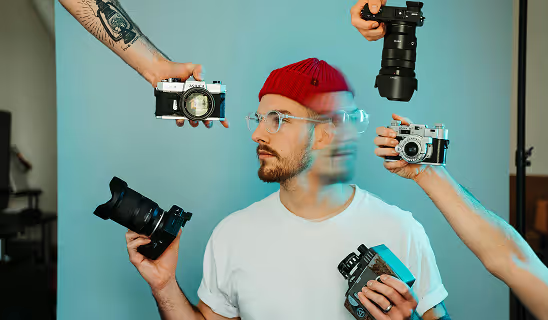
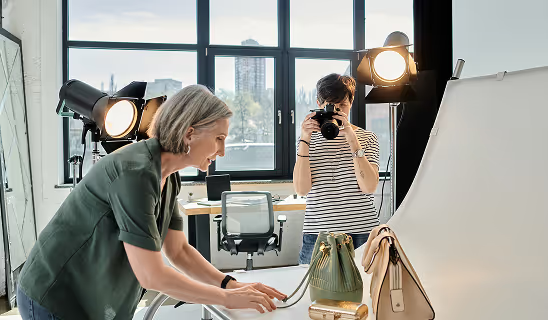
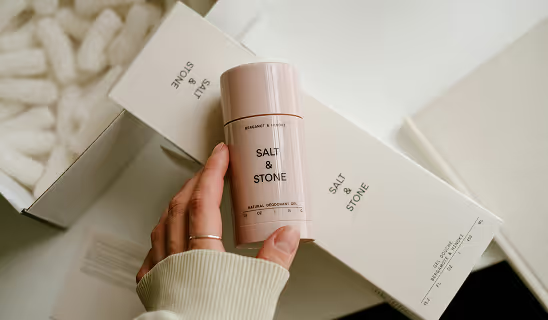

Product photography also requires post-processing, which is done with specialized photo editing software.
Popular programs used by product photographers include Adobe Lightroom and Photoshop, Capture One Pro, and On1 Photo RAW. With these tools, photographers can take photos that look great straight out of the camera and make them even better by fine-tuning color, sharpening details, and removing blemishes.
How Much Does Product Photography Cost?
The prices for Product Photography can range from $500 for a half day shoot and for something basic by amateur photographers to $20,000+ for larger scale commercial shoots. It all depends on what you need and your budget.
Overall, when looking for product photography, it's important to consider several key factors, including quality of images, support and consultations from experienced professionals, pricing, and more.
To find the best product photos for your business, be sure to work with a reputable photographer who can deliver high-quality images, help you choose the right angles and lighting for your products, and provide support and guidance throughout the process.
Product Photography costs and pricing by The Branded Agency start at $250 per product.
Clients can expect a minimum of 3-4 edited photos per product and a minimum of 6-10 products shot in a full-day shoot.
To figure out how much product photography costs, there are several things that you need to consider.
The following are some of them:
The Cost of Traditional Product Photography
Product photography pricing can vary widely depending on the scope of the shoot, the number of products, the complexity of the setup, and whether you need models, special locations, or studio production. In many cases, businesses can expect costs to range from a few hundred dollars for something simple to tens of thousands of dollars for a larger commercial production. As with any visual investment, pricing is often influenced by quality, planning, editing, and the overall creative direction required.
Why Professional Visual Content Still Matters
No matter the budget, high-quality imagery plays a major role in how customers perceive your brand and products. Strong visuals help businesses build trust, showcase details, and create a more polished buying experience. This is especially important for ecommerce, advertising, and social media, where image quality can directly influence customer interest and conversions. As the original blog points out, buyers often want to see multiple product images and angles before making a purchase.
A Smarter Alternative to Traditional Commercial Shoots
While traditional photography is still valuable, it is no longer the only path to professional-quality content. For many brands, AI-powered content creation is becoming a more flexible and cost-effective alternative. Instead of coordinating full-day shoots, studio rentals, models, locations, and large production teams, businesses can now create custom visual content faster and with far less overhead.
This is where The Branded Agency comes in.
Studio-Quality AI Content by The Branded Agency
At The Branded Agency, we help businesses create high-end product, lifestyle, and branded imagery using state-of-the-art AI tools combined with expert manual editing in Adobe and Photoshop. This allows us to deliver visuals that look polished, intentional, and professionally finished — without the high cost of a traditional commercial photoshoot.
Our process blends the efficiency of AI with the trained eye of human creatives, so the final images do not feel generic or artificial. Every image is refined to match your brand, your product, and your marketing goals.
Ideal for Product, Lifestyle, and Branded Visuals
Whether you need product images for your online store, lifestyle content for social media, or campaign visuals for ads and promotions, AI-assisted image creation can offer an effective alternative to conventional photography. It gives businesses more creative freedom, faster turnaround times, and the ability to produce a larger volume of content at a fraction of the cost.
A More Affordable Way to Scale Your Content
For businesses that need consistent, high-quality visuals but want to avoid the expense and logistics of full commercial productions, AI content creation offers a modern solution. With The Branded Agency, you get the benefit of advanced image generation paired with professional editing expertise — resulting in studio-quality content that helps your business stand out and grow.
Want to learn more about brand platforms, Brand Strategy and Brand Identity? Keep reading!
If you need help with your companies brand strategy and identity, contact us for a free custom quote.
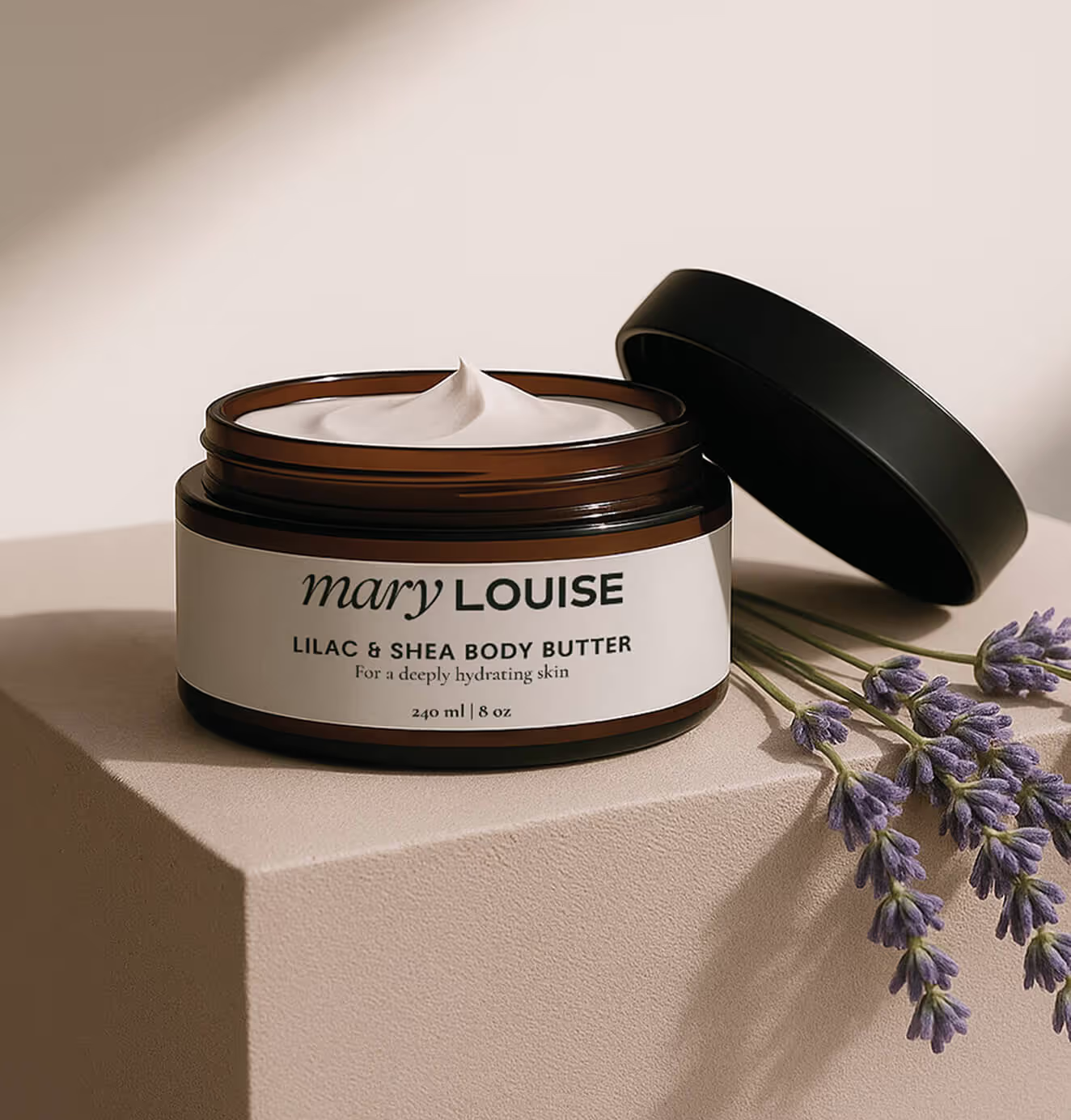
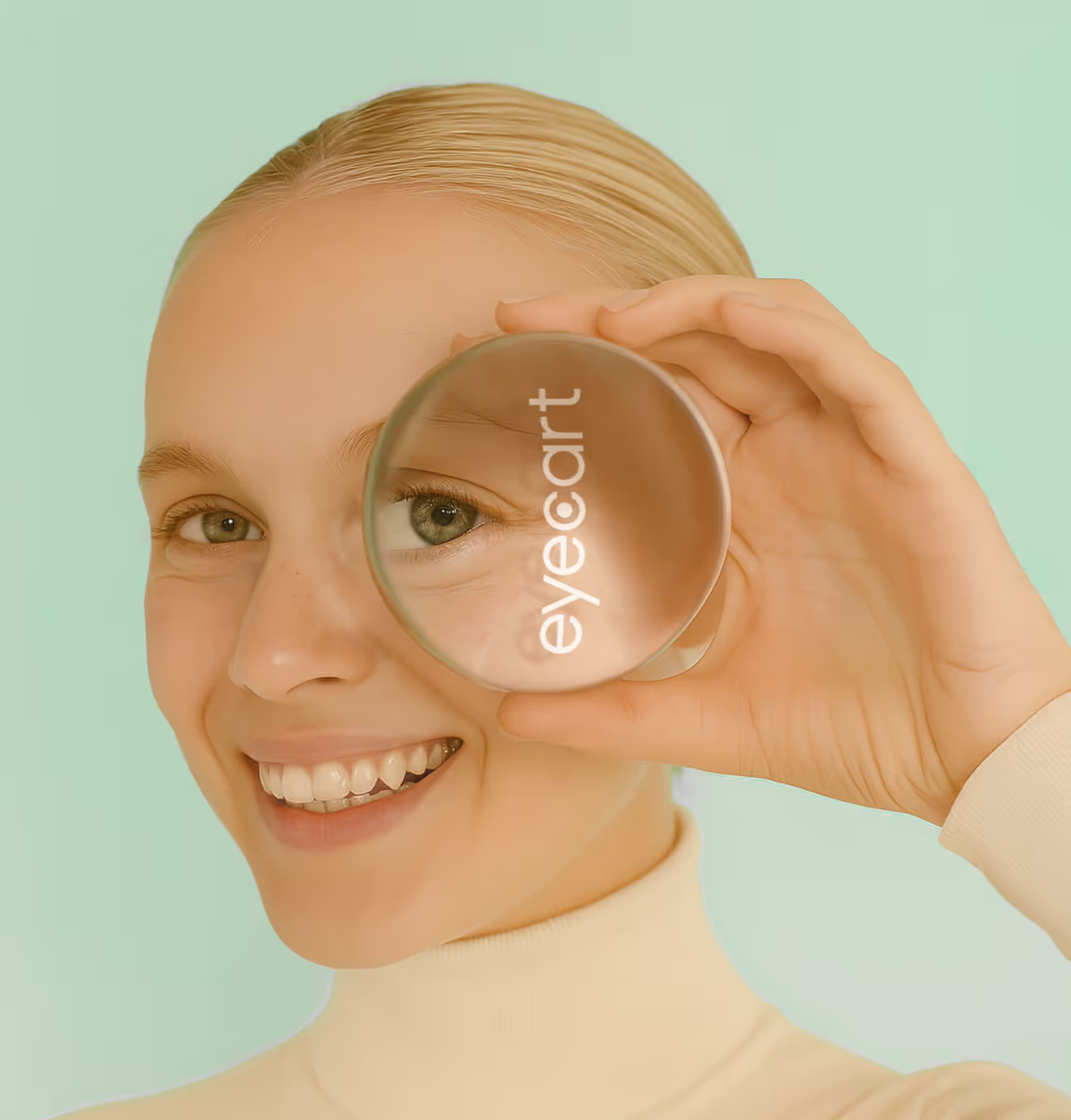
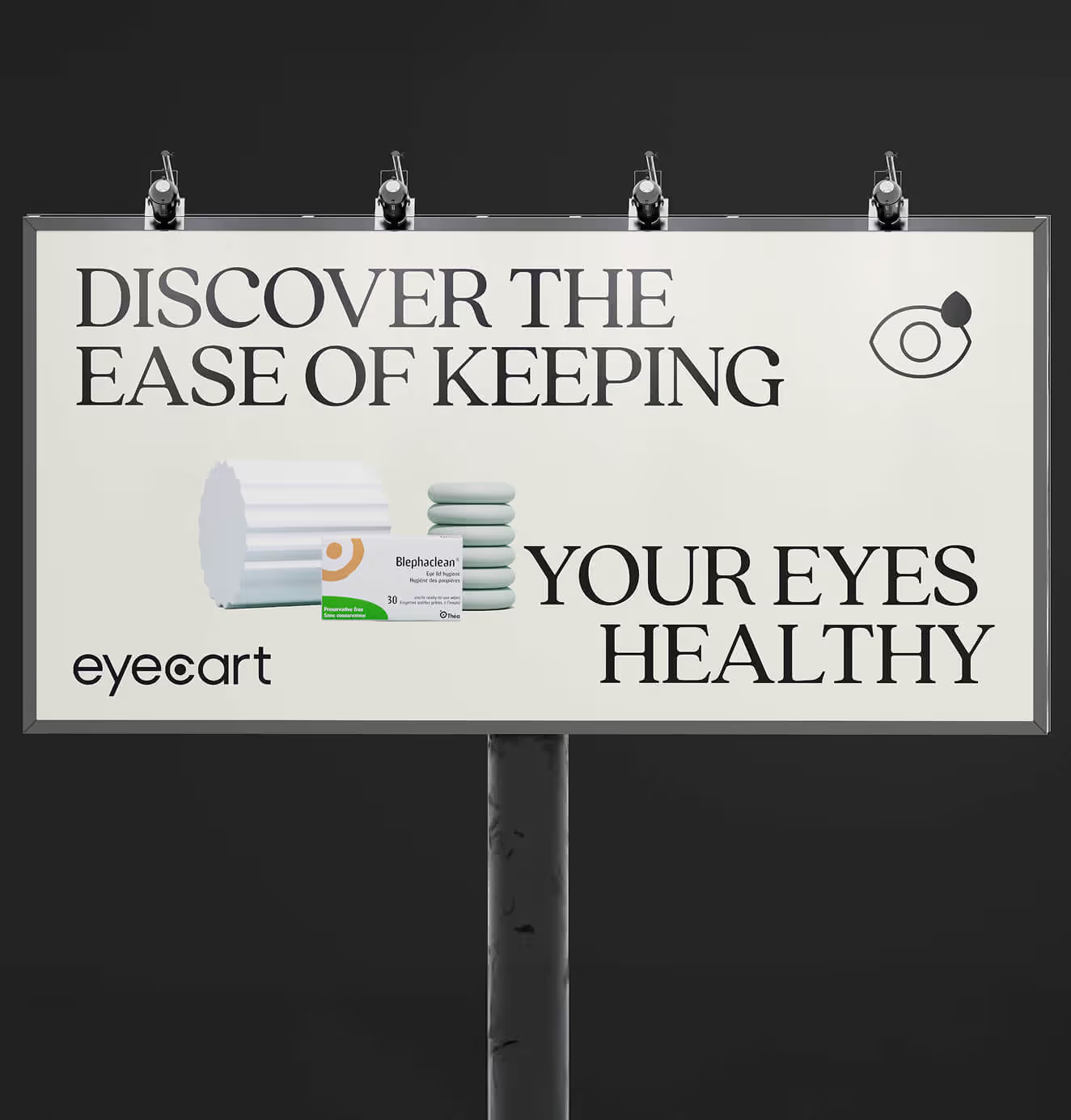
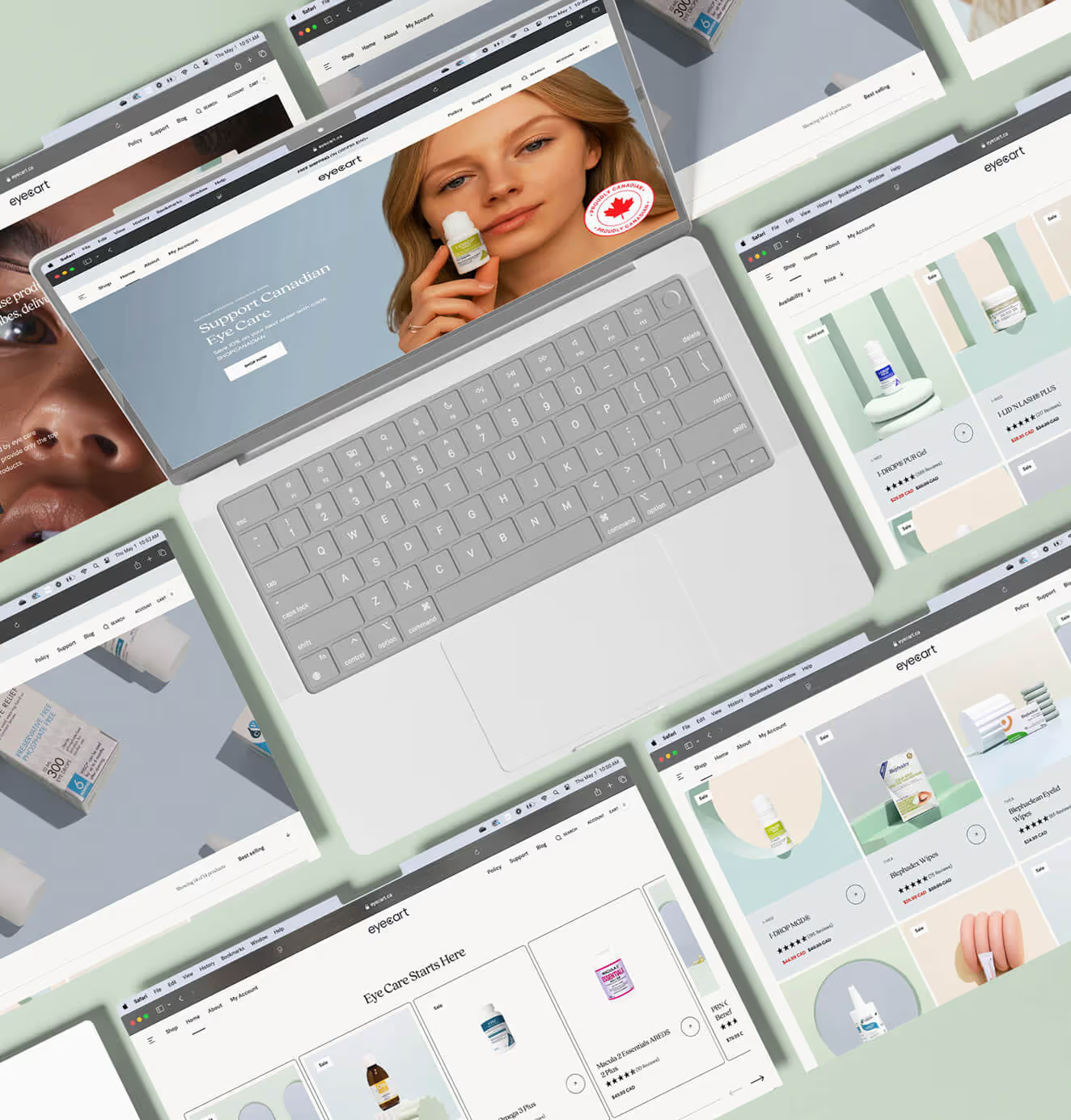
Product Photography Examples

The Future of Product Photography Is AI-Assisted
As businesses look for ways to create more content without increasing production costs, AI is becoming an increasingly valuable tool in modern product photography. While traditional photography still has its place, AI-assisted content creation offers brands a faster, more flexible, and more scalable way to produce high-quality visuals for ecommerce, advertising, and social media.
Why Brands Are Turning to AI for Visual Content
Traditional product shoots often involve multiple moving parts — photographers, studios, lighting setups, props, models, editing, and scheduling. That process can be effective, but it can also be expensive and time-consuming. AI helps remove many of those barriers by allowing brands to create polished product and lifestyle visuals without the same level of production overhead. For businesses that need fresh content regularly, this creates a major advantage in both speed and cost-efficiency.
AI Makes High-Quality Content More Accessible
One of the biggest challenges for growing brands is maintaining a consistent stream of professional visual content. AI-assisted image creation makes that easier by giving businesses access to premium-looking imagery without the need for a full commercial shoot every time. Instead of being limited by budget, location, or studio availability, brands can create custom visuals tailored to specific campaigns, product launches, and seasonal promotions with much greater flexibility.
The Branded Agency’s Approach to AI Content Creation
At The Branded Agency, we use state-of-the-art AI tools alongside professional editing in Adobe and Photoshop to create studio-quality product, lifestyle, and branded images. This means clients get the best of both worlds: the speed and creative range of AI, combined with the expert retouching and brand refinement needed to make every image feel polished, intentional, and campaign-ready.
A Smarter Way to Create Product and Lifestyle Imagery
AI is not about replacing creativity — it is about expanding what is possible. With the right creative direction and post-production process, AI can help businesses produce everything from clean product images to elevated lifestyle scenes and branded campaign visuals. For companies that want to move quickly, test more creative concepts, and stretch their marketing budget further, AI-powered content creation offers a smart alternative to traditional photography alone.
Studio-Quality Results at a Fraction of the Cost
For brands that want strong visuals without the high costs tied to full-scale productions, AI content creation opens the door to a more efficient solution. By combining advanced image generation with human-led editing and creative oversight, The Branded Agency helps businesses create high-impact visuals that look premium, support conversion, and keep content production moving at the pace modern marketing demands.
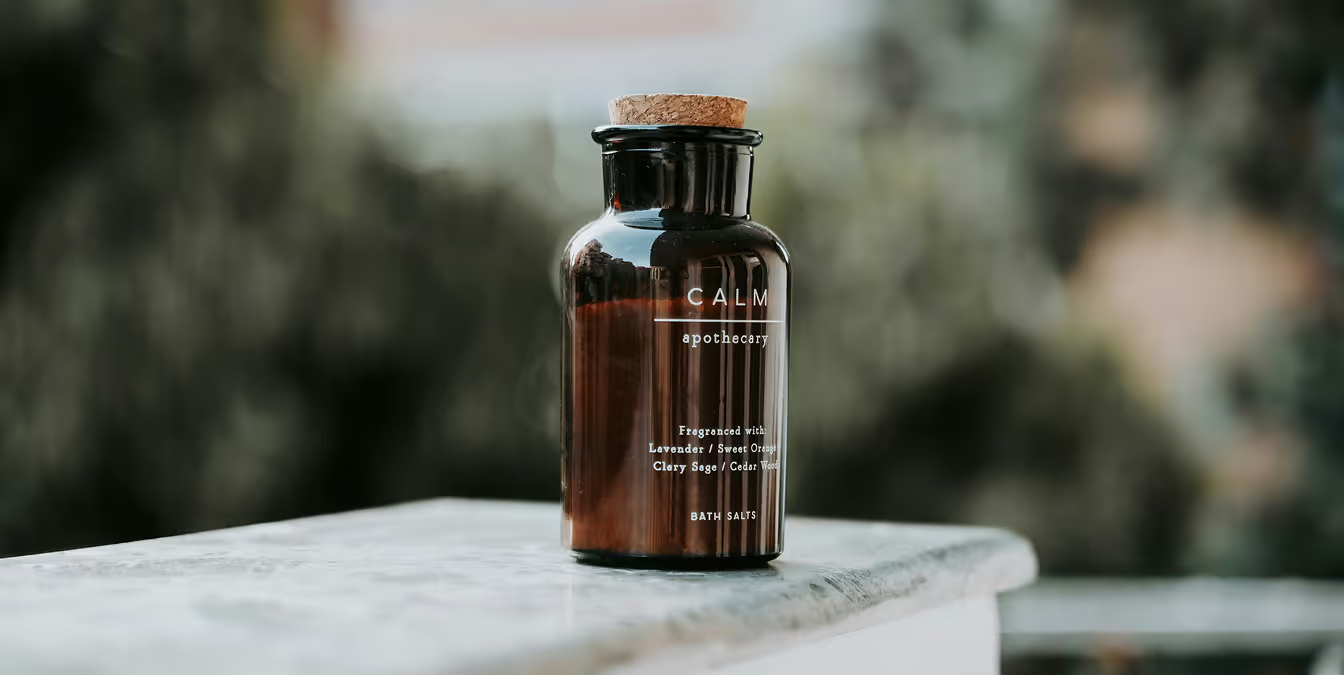
Professional photography will make your product stand out
Conclusion: Choosing the Right Approach for Your Brand
If you’ve decided you’re ready to invest in product photography, the most important step is choosing the right approach for your business. High-quality visuals don’t happen by accident — they require creative direction, technical expertise, and a clear understanding of how your products should be presented to your audience.
Traditional photography remains a powerful option, especially for brands that need highly customized, in-person production. However, as we’ve explored throughout this guide, it comes with a range of variables — from time and complexity to cost and logistics — that can quickly add up depending on your needs.
Today, brands have more flexibility than ever. With AI-assisted content creation, businesses can now produce high-quality product and lifestyle imagery faster, more efficiently, and at a fraction of the cost of traditional shoots — without compromising on visual impact. When paired with expert editing and creative direction, this approach offers a scalable solution for modern marketing demands.
At The Branded Agency, we combine the best of both worlds. Whether you need traditional product photography, AI-generated visuals, or a hybrid approach, our team works with you to create content that aligns with your brand, supports your marketing goals, and drives results.
We’re more than just a product photography provider — we’re a full-service digital branding agency. From campaign photography and creative direction to strategy, planning, and launch, we help bring your entire vision to life.
If you’re ready to elevate your product imagery and create visuals that convert, contact The Branded Agency today for a free custom quote. Let’s build something great together.

Sloane Avery
As entrepreneurs, they’ve built and scaled their own ventures from zero to millions. They’ve been in the trenches, navigating the chaos of high-growth phases, making the hard calls, and learning firsthand what actually moves the needle. That’s what makes us different—we don’t just “consult,” we know what it takes because we’ve done it ourselves.
Want to learn more about brand platform?
If you need help with your companies brand strategy and identity, contact us for a free custom quote.
We do great work. And get great results.
+2.3xIncrease in revenue YoY
+126%Increase in repurchase rate YoY


+93%Revenue growth in first 90 days
+144% Increase in attributed revenue



+91%Increase in conversion rate
+46%Increase in AOV
+200%Increase in conversion rate
+688%Increase in attributed revenue