Ladder of Loyalty: How to Turn New Leads into Lifelong Brand Advocates
07/22/2026
Branding
Discover how the customer loyalty ladder helps you reduce acquisition costs, increase customer lifetime value, and build lasting relationships that fuel sustainable business growth.

The customer loyalty ladder gives businesses a clear way to understand how relationships deepen over time, from initial awareness to repeat purchasing and active advocacy. By identifying where customers sit on the ladder, brands can tailor messaging, offers, and experiences to move them toward greater trust, retention, and lifetime value. In 2026, this framework is especially useful for reducing dependence on costly acquisition and building more profitable, long-term customer relationships.
.png)


How the Customer Loyalty Ladder Drives Retention and Advocacy


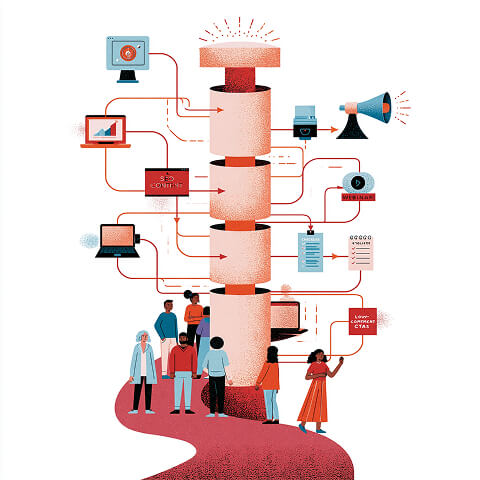
Key Takeaways
The customer loyalty ladder is a relationship marketing model for seeing how a customer moves from initial awareness to lifelong brand advocates. The Ladder of Loyalty maps progression from cold suspects and prospects to repeat customers, loyal clients, and brand advocates. In 2026, it matters because customer acquisition is more expensive, while customer retention, customer lifetime value, and brand reputation are more profitable growth levers.
- The loyalty ladder helps you tailor marketing efforts, offers, and customer experience tactics to each rung.
- Moving people upward creates repeat purchases, improves customer retention rate, and lowers acquisition costs.
- Not all customers need the same message; segmenting customers based on behavior makes engagement strategies more relevant.
- This guide gives stage-by-stage tactics and metrics you can start tracking this quarter, including repeat purchase rate, net promoter score, and lifetime value.
-
What Is the Customer Loyalty Ladder?
The customer loyalty ladder is a framework that segments customers based on their level of engagement and loyalty, helping businesses understand the different stages of customer relationships from leads to advocates. It is often visualized as a ladder where each rung represents deeper trust, stronger customer engagement, and a higher-value customer’s relationship with the brand.
The customer loyalty ladder is a step-by-step framework that outlines the progression of a customer’s relationship with a brand, typically moving through stages such as leads, prospects, customers, and advocates. Unlike the broader brand funnel, which covers the whole buying process, the customer loyalty ladder focuses on loyalty depth, retention, and advocacy.
- Suspects: people in your target market who may fit your offer.
- Prospects: people who have shown interest through visits, downloads, free trials, or signups.
- First-time customers: people who made a first purchase.
- Repeat customers: people who buy again.
- Loyal clients: loyal customers with consistent activity.
- Brand advocates: people who actively promote you through word of mouth marketing.
The idea comes from 1990s relationship marketing and still works in ecommerce, SaaS, and retail. For example, a skincare brand might turn a checklist download into an email lead, then a first order, then a subscription member, and finally one of its passionate brand advocates posting online reviews and user generated content.
Why the Customer Loyalty Ladder Is Important in 2026
Rising ad costs, tougher competition, and privacy changes have made acquisition harder since 2020. Retaining existing clients costs less than acquiring new customers, and winning a new customer can cost 5 to 7 times more than retaining an existing one, making customer retention more profitable.
Understanding the customer loyalty ladder allows businesses to tailor their brand marketing campaigns to nurture relationships at each stage, ultimately increasing customer lifetime value and driving brand advocacy.
- It helps maximize customer lifetime value by encouraging repeat purchases across the full customer lifetime.
- It shows where customers stall, such as first time buyers who do not return within 30–90 days.
- It improves coordination across sales, support, product, and marketing around customer feedback.
- Advocates provide authentic user-generated content and referrals.
- 92% of consumers trust recommendations from friends and family over any other form of advertising, highlighting the importance of brand advocates.
- 96% of consumers say customer service influences brand loyalty, highlighting the importance of effective customer service in retention strategies.
- Loyal customers can drive up to 65% of a brand’s revenue, emphasizing the financial benefits of effective customer retention strategies.
Recent benchmarks show average ecommerce repeat customer rates around 27%–28%, while retention gains can have a major profit impact, especially given the data-backed case for branding as a revenue growth driver. That is what makes searches for customer loyalty ladder important practical, not theoretical.
Free Brand Health Audit
Make sure your brand is built to sell
Search has changed. Your customers aren't just Googling anymore. They're asking ChatGPT, Perplexity, Gemini and other AI platforms what to buy, who to trust and which brands they should consider.
If your brand isn't showing up clearly in those answers, you're already losing opportunities. Our free Brand Health Audit shows you where your brand stands across traditional search, AI search and brand positioning.

Sample brand audit
Live preview
Traditional search
72
AI search (GEO)
34
Brand positioning
58
The Rungs of the Customer Loyalty Ladder
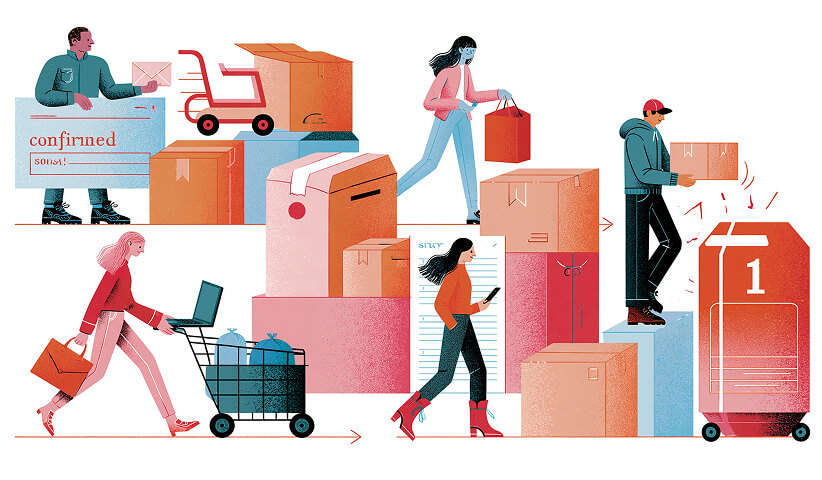
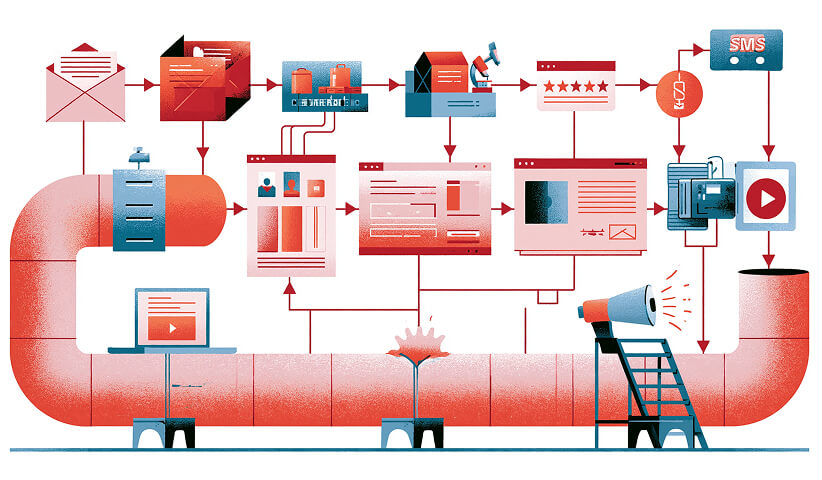

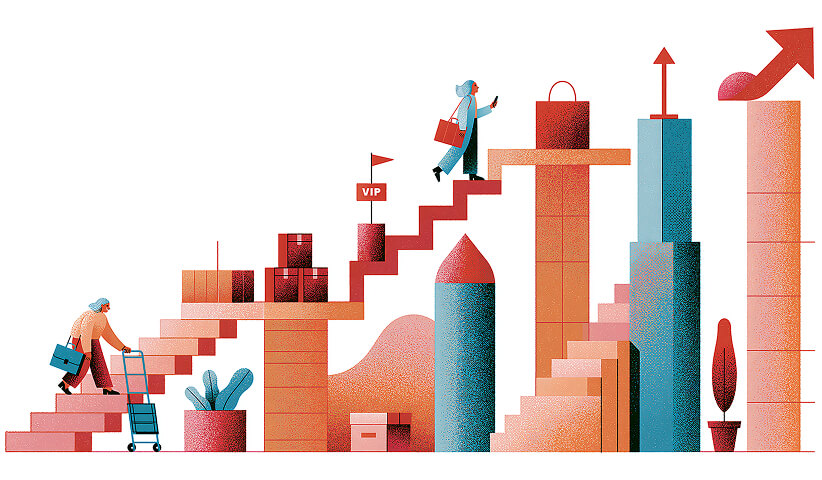
The customer loyalty ladder typically consists of five stages: prospects, first-time customers, repeat customers, loyal customers, and brand advocates, each representing a deeper level of trust and engagement. Key stages in the Ladder of Loyalty include Prospects, First-Time Buyers, Repeat Customers, Clients, and Advocates.
Labels vary, but the logic is the same: stages customers move through should reflect measurable behavior and the way branding influences customer behaviour at each step.
Suspects: People Who Fit Your Target Profile
Suspects are potential customers in your target market who may not know your brand yet. There is no customer loyalty here, only possible fit.
Common sources include:
- Paid social media audiences
- Lookalike lists
- Compliant cold outreach
- Event attendees
- SEO visitors from problem-aware content
The goal is attracting leads by earning permission to contact them.
Prospects and Leads: From Awareness to Consideration
Prospects have engaged at least once: newsletter signup, webinar registration, product page view, comparison page visit, or abandoned cart. They need proof, not pressure.
Use:
- Short demos
- Case studies
- Comparison pages
- Recent customer stories
- Clear product differentiation
The objective is a first purchase, demo, or trial conversion.
First-Time Customers: Critical Moment for Future Loyalty
First-time customers have completed exactly one transaction or signed their first contract. This rung is fragile because many casual buyers never become a repeat buyer.
Trigger automated, personalized onboarding emails or SMS messages with usage tips to ensure new buyers get immediate value from their purchase. Track time to first value, first-order customer satisfaction, support issues, and second-order conversion within 30–90 days. Strong post purchase engagement helps move first-time buyers toward a second order.
Repeat Customers: Building Habit and Preference
Repeat customers have made two or more purchases or renewed once. They show preference, but they may still switch for price or convenience.
This is where customer lifetime value starts becoming more predictable. Watch purchase history, email engagement, category browsing, app usage, and purchase rate trends.
Loyal Clients or Members: Deep Relationship and Lower Price Sensitivity
Loyal clients buy regularly, engage across channels, and often join loyalty programs or subscriptions, so a consistent brand communication strategy across email, social, and in-product messaging becomes critical. A practical rule might be 4+ orders in 12 months, but each business should adapt criteria.
This group is ideal for bundles, upsells, premium support, early access, and exclusive perks. Loyal customers are typically more receptive to upselling and cross-selling opportunities, which increases marketing ROI.
Brand Advocates: Top of the Ladder
Brand advocates recommend you publicly and privately. They leave reviews, refer friends, post on social media channels, and may become brand ambassadors.
Typical signals include:
- Net promoter score of 9–10
- Referral programs participation
- Testimonials or case studies
- User generated content
- Positive word of mouth
Advocates are your most valuable customers because they lower your cost of acquisition and drive growth naturally.
Benefits of Using a Customer Loyalty Ladder
The ladder is not just a theory. It guides budget, messaging, retention, and product improvements, and it should be supported by strong agency-led branding foundations so every touchpoint feels coherent.
- It reveals where customer retention breaks down.
- It helps forecast customer lifetime value by modeling movement between rungs.
- It makes customer experience more relevant for each segment.
- It helps justify loyalty programs, onboarding, and service investments.
- It turns a broad customer base into actionable groups.
- Loyal customers can drive up to 65% of a brand’s revenue, even though they make up a small fraction of total customers.
Implementing a well-structured loyalty program can significantly enhance customer retention by providing rewards and incentives for repeat purchases.
Want to learn more about brand platforms, Brand Strategy and Brand Identity? Keep reading!
If you need help with your companies brand strategy and identity, contact us for a free custom quote.
How to Move Customers Up the Loyalty Ladder
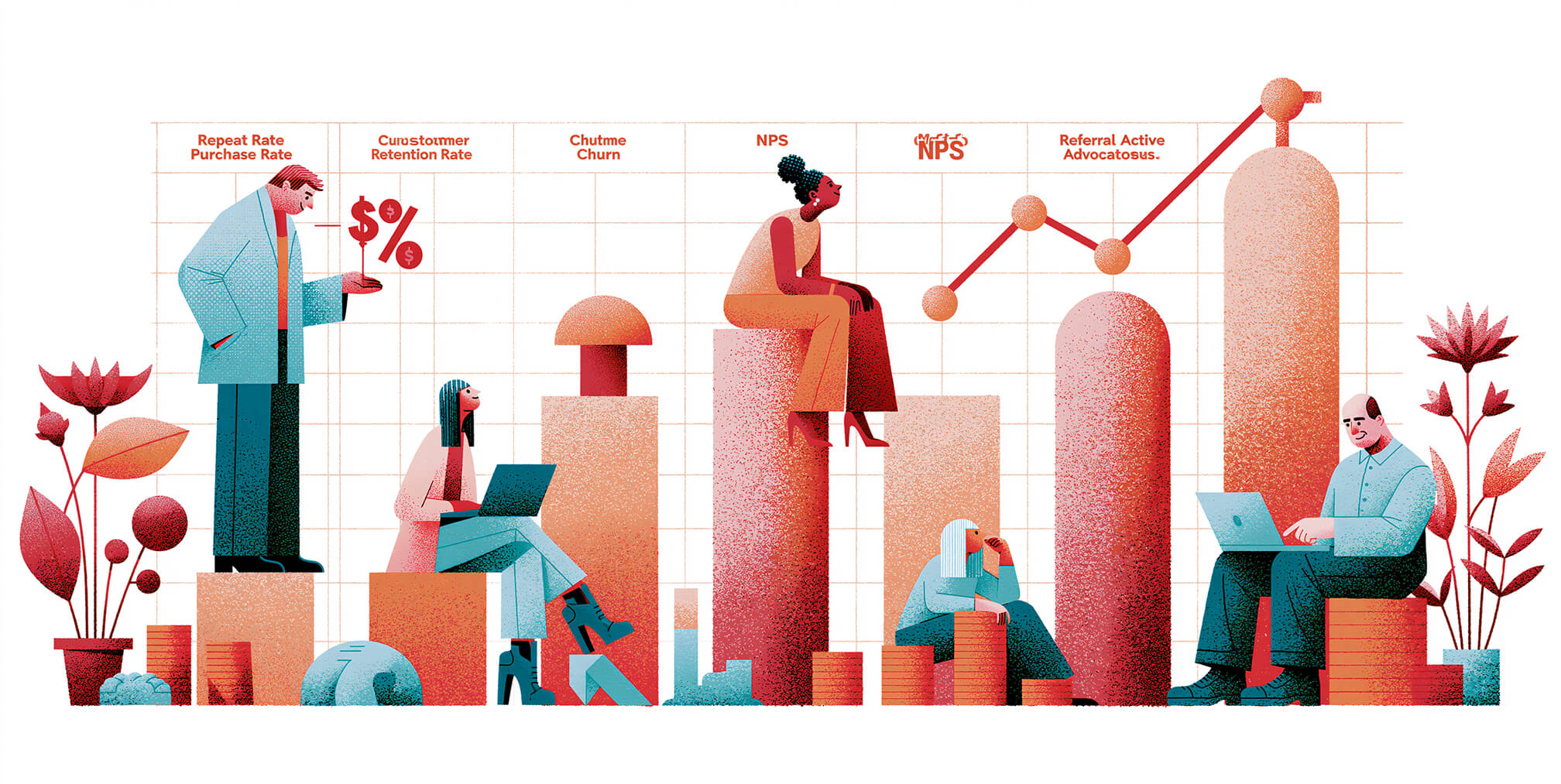
Building loyalty requires targeted strategies. You would not use the same offer for a suspect as you would for loyal advocates.
Attracting Suspects and Converting Them into Leads
Use SEO, targeted ads, useful calculators, webinars, and checklists. The CTA should feel low-commitment: learn, download, compare, or watch.
For example, a B2B software firm could run a Q1 2025 webinar campaign for finance managers built around a compelling brand story, then retarget attendees with product proof and demo invitations.
Trust signals matter:
- Fresh reviews
- Clear return policies
- Visible contact details
- Simple privacy language
Nurturing Prospects into First-Time Customers
Create email or SMS sequences that educate, answer objections, and show social proof. Keep the same value proposition across ads, emails, and landing pages.
Useful metrics include:
- Open rates
- Click-through rates
- Lead-to-sale conversion
- Abandoned cart recovery
- Time from first visit to first order
Use light urgency, such as free shipping or 10% off within seven days, without training buyers to wait for discounts.
Onboarding First-Time Customers for a Second Purchase
For ecommerce, send confirmation, shipping updates, how-to content, and a satisfaction request. For SaaS or services, use a kickoff call, onboarding checklist, and quick-start guide.
Collect customer feedback early through a short survey or review request. Then send a relevant follow-up offer based on the first purchase, such as a complementary item within 14–21 days, to strengthen the customer's relationship with the brand.
This is where providing excellent customer service matters most. Excellent customer service and fast issue resolution protect future loyalty.
Strengthening Relationships with Repeat Customers
Recognize repeat customers with small moments that feel personal:
- Bonus points
- Handwritten notes
- Early access emails
- Personalized rewards
- Product care tips
Implement a tiered points-based loyalty system that gamifies retention by providing better perks as customers spend more. A simple structure might reward customers after the second, fourth, and eighth purchase. These tactics help foster long term loyalty.
Turning Loyal Clients into Brand Advocates
Referral programs reward loyal clients for bringing in new business, offering mutual incentives such as discounts or store credit. For example, give both the advocate and referred friend a $15 credit after the friend’s first successful purchase.
Encourage customers to share reviews and user generated content with easy links and prompts. Involve loyal customers in beta launches, advisory boards, and private communities. Recognition and belonging often work better than discounts.
Using Customer Feedback and Data to Optimize Each Rung
Without measurement, you cannot know where customers stall. Businesses use CRM platforms to track data, automate communications tailored to each rung of the Ladder of Loyalty, and support measuring success.
Track:
- Cost per lead for suspects and prospects
- First purchase conversion
- Repeat purchase rate
- Churn rate
- Customer lifetime value
- Customer retention rate
- Number of active brand advocates
Use NPS, satisfaction surveys, support tickets, and social listening to find friction. Then run A/B tests for specific rungs, such as two win-back emails for lapsed repeat customers or co-created offers promoted through strategic brand partnerships.
Practical Tips for Implementing a Customer Loyalty Ladder in Your Business
Implementing a loyalty ladder is a process, not a one-time campaign, and it works best when your brand hierarchy and architecture are clear enough to segment customers meaningfully across products or sub-brands.
- Define numerical criteria for each rung, such as “repeat customer = 2–3 orders in 12 months.”
- Map your existing customer base using CRM, ecommerce, or analytics data.
- Prioritize one or two transitions this quarter, such as first-time buyer to repeat customer.
- Align sales, support, product, and marketing around shared definitions.
- Set a target, such as increasing repeat purchase rate from 22% to 30% by Q4 2026.
Using real-world examples from similar businesses can help teams define rung criteria and tactics more confidently.
Understanding the stages of the customer loyalty ladder helps businesses tailor their marketing strategies to effectively guide customers from initial awareness to full loyalty, maximizing customer lifetime value. Each stage of the customer loyalty ladder reflects a deeper level of trust, engagement, and emotional connection, with the ultimate goal being to strengthen relationships at every rung.
Conclusion: Building Loyalty as a Long-Term Growth Engine
The ladder of loyalty gives you a clear way to understand where every customer stands today and what should happen next. Done well, it improves customer retention, increases lifetime value, creates loyal customer base growth, and turns happy buyers into advocates.
Start small:
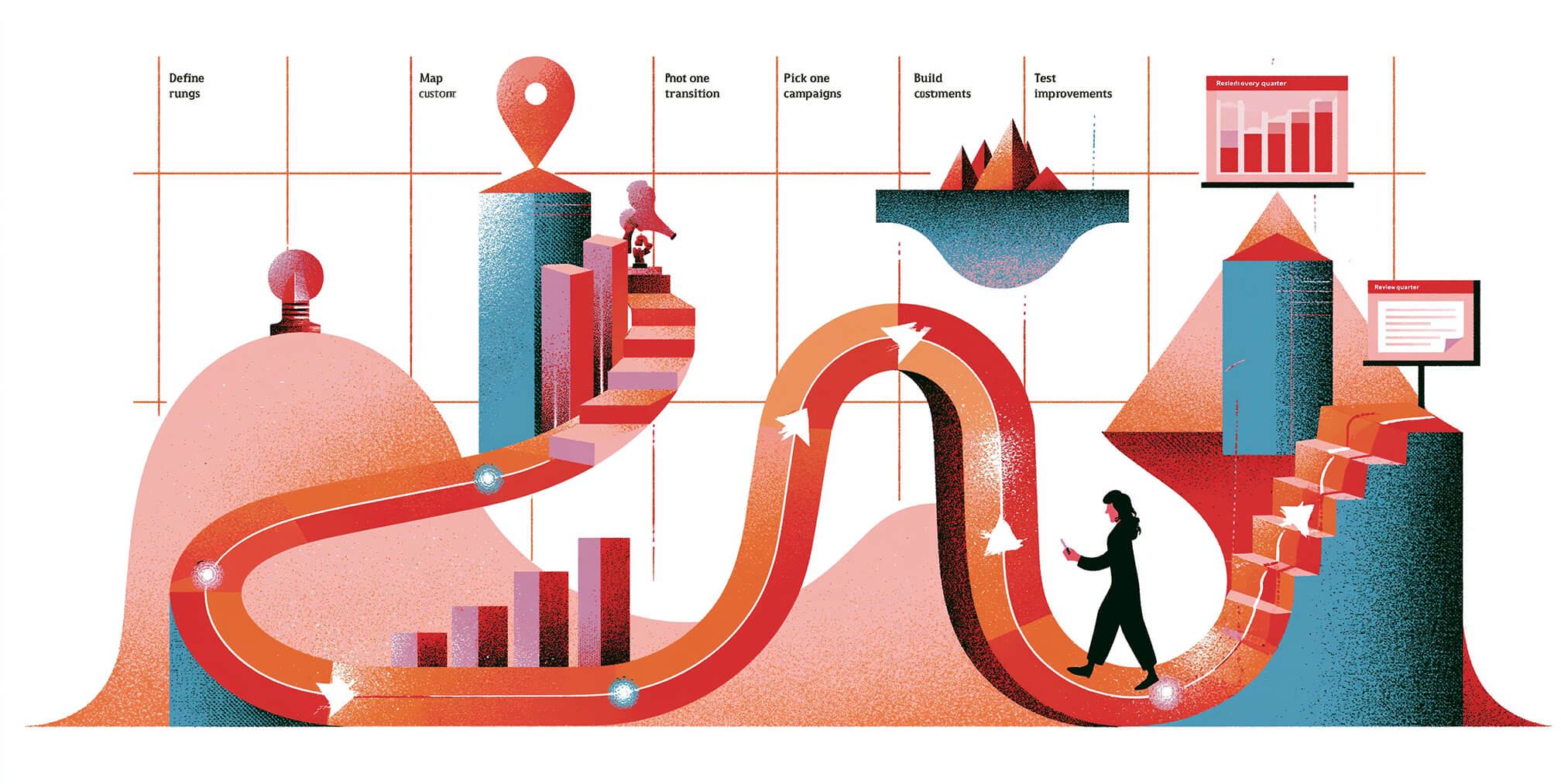
- Define your rungs.
- Map your customers.
- Pick one transition to improve.
- Build repeatable campaigns.
- Review results every quarter.
The goal is not one campaign. It is building loyalty through better experiences, useful communication, and long-term trust.
FAQ: Customer Loyalty Ladder and Loyalty Strategy
Here are concise answers to common implementation questions.
How do I decide how many rungs my customer loyalty ladder should have?
Most small and mid-sized businesses can start with 4–6 rungs. Choose rungs based on measurable behavior, such as first purchase, second purchase, subscription start, or referral. Add extra tiers only when they create different actions or results.
What tools do I need to track customers on the loyalty ladder?
At minimum, you need a CRM, ecommerce dashboard, or marketing automation tool that shows purchase history and engagement. More advanced setups connect email, SMS, analytics, and loyalty software. For example, you can tag customers who make 3+ purchases as “loyal” and trigger a VIP campaign.
How long does it take to see results from a loyalty ladder strategy?
Early signals, such as higher email clicks or better second-purchase rates, may appear in 4–8 weeks. Bigger changes in customer lifetime value usually take several months to a year, depending on your category’s buying cycle. Set quarterly milestones to keep the work realistic.
What are the most common mistakes when using a customer loyalty ladder?
Common mistakes include vague rung definitions, sending the same message to everyone, ignoring existing customers, and over-complicating rewards. Another mistake is relying only on discounts instead of emotional connection. Review your ladder twice a year to simplify and improve it.
How does the loyalty ladder differ from a traditional sales funnel?
A sales funnel usually ends at conversion. The loyalty ladder continues after the sale through repeat purchases, loyalty, and advocacy. Use the funnel for customer acquisition and the ladder for customer retention, relationship growth, and advocacy, potentially with support from a specialized Toronto branding agency for growth if you need extra strategic capacity.

Quincy Samycia
As entrepreneurs, they’ve built and scaled their own ventures from zero to millions. They’ve been in the trenches, navigating the chaos of high-growth phases, making the hard calls, and learning firsthand what actually moves the needle. That’s what makes us different—we don’t just “consult,” we know what it takes because we’ve done it ourselves.
Want to learn more about brand platform?
If you need help with your companies brand strategy and identity, contact us for a free custom quote.
We do great work. And get great results.
+2.3xIncrease in revenue YoY
+126%Increase in repurchase rate YoY

+93%Revenue growth in first 90 days
+144% Increase in attributed revenue



+91%Increase in conversion rate
+46%Increase in AOV


+200%Increase in conversion rate
+688%Increase in attributed revenue