Landing Page vs Homepage: Which One Does Your Growth Goal Need?
11/16/2026
Web Design
Learn when to send visitors to a landing page or homepage, and turn better message match into more qualified conversions without sacrificing your brand.
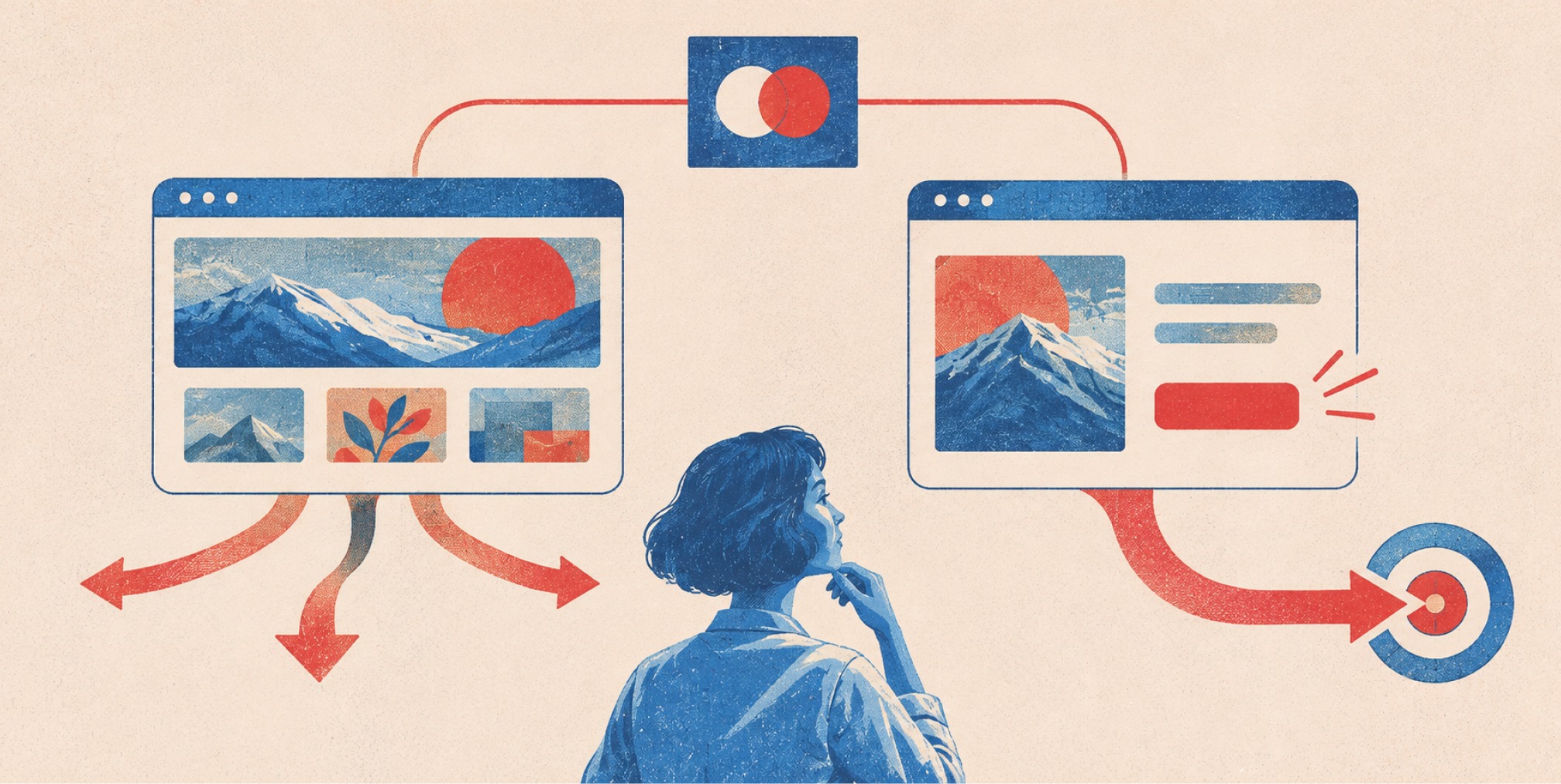
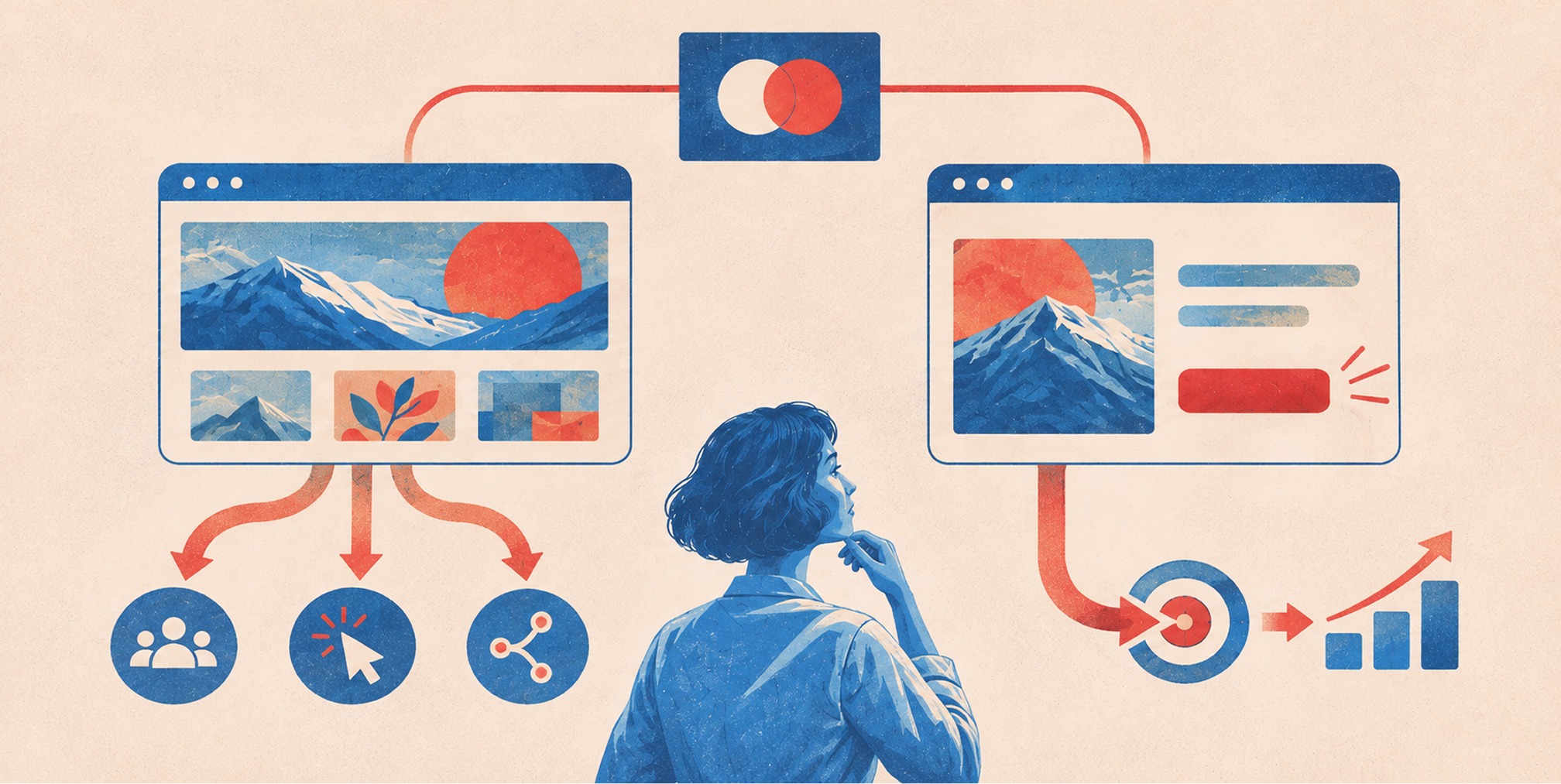
A homepage introduces your whole company to everyone who arrives. A landing page asks one audience to take one action. Send paid traffic, a launch email or an outbound campaign to a page built for that single job, and keep the homepage as the front door for everyone else. Most growth-stage companies need both, and they need them to look and sound like one brand.


The core difference in plain terms

This guide is for the CEO, CMO or marketing director who has to decide where traffic goes, what to build next and how to measure it. It covers the real differences, a simple decision rule, what each page must contain and the mistakes that quietly drain ad budgets.
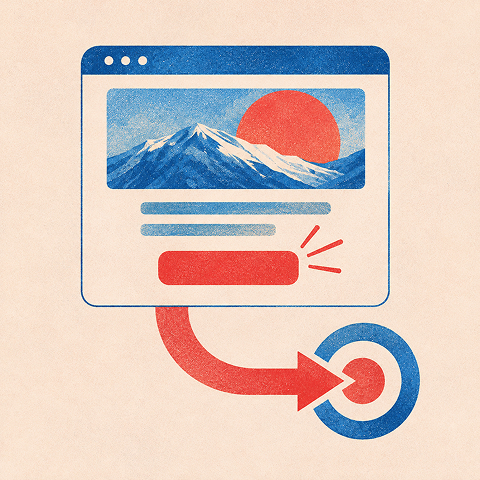
A homepage is the page at the root of your domain. It answers a broad question: who are you and where should I go next? A landing page is a dedicated, standalone page focused on persuading visitors to take one specific action, such as filling out a form, registering for a webinar, downloading a resource, starting a free trial or making a purchase.
Think of the homepage as a lobby and the landing page as a room with one door in and one door out. A lobby has to serve everyone, so it points in many directions. The room has one purpose, so everything in it points one way.
- Purpose: A homepage introduces the brand and directs visitors to relevant content; a landing page converts a defined audience on a particular offer.
- Audience: A homepage serves buyers, candidates, partners, press and investors; a landing page focuses on one high-intent segment.
- Traffic: A homepage commonly receives direct, branded search and broad organic traffic; a landing page is tailored to ads, email, outbound or a specific social campaign.
- Navigation: A homepage includes full menus and multiple routes; a landing page minimizes distractions while retaining necessary legal and accessibility links.
- Call to action: A homepage may present several next steps; a landing page repeats one primary action.
- Lifespan: A homepage is an enduring brand hub; landing pages may be campaign-specific or evergreen.
- Measurement: Track homepage routing and engagement; evaluate landing pages through conversions and downstream lead or sale quality.
None of these differences is a rule of nature. They follow from the job each page does. A homepage that tried to convert one audience would shortchange everyone else. A landing page that tried to explain the whole company would lose the visitor it was built to win.
Why the homepage can’t do every job
Executives often ask why the homepage can’t simply carry the campaign. The reason is intent.
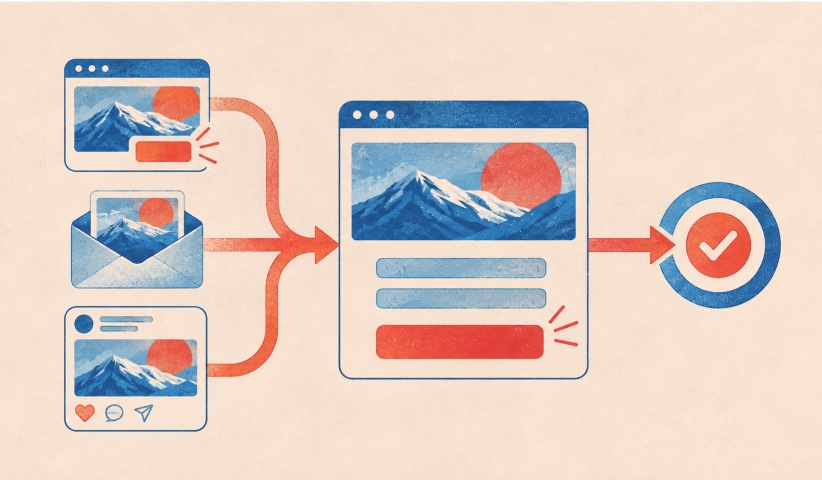
A person who clicks an ad has made a specific promise-for-promise trade: your ad said something, and they expect the next screen to continue it. If the ad says “Free audit for fintech teams” and the page says “Welcome to our company,” the visitor has to do the work of finding the audit. Many will not.
The homepage also has more exits than any other page. Header menus, footer sitemaps, product links, careers links and blog links all compete with the one action you paid to generate. That is fine when the visitor is exploring. It is expensive when the visitor arrived because of a $40 click.
There is a second problem, which is message match. Your homepage has to speak to every segment at once, so its headline is necessarily general. A landing page can speak to one segment in that segment’s language, with proof that segment cares about. That specificity is where conversion gains come from.
The decision rule: is this visitor here for a specific offer?
Use this test before you build or buy traffic:
- Can you name the audience beyond “anyone interested in us”? If yes, write its specific pain point into the page brief.
- Is the visitor coming from a message that promises one offer or outcome? If yes, continue that same promise on a dedicated page.
- Is there one primary conversion event, such as a demo request or registration? If yes, make that action the page’s focus.
- Do visitors need to compare multiple product lines or learn who you are? If yes, the homepage or a broader product page may be more appropriate.
If you can name a specific visitor, a specific offer and a specific source, you have a landing page brief. If the visitor is simply “anyone interested in us,” you have a homepage job.
When to use a landing page
A dedicated page is the right call when the goal is to move a specific audience toward a specific action, because it gives you control over message alignment, design focus and conversion-path clarity. In practice, that means these situations:
- Paid search or paid social campaigns promoting a specific offer, audience or product.
- Webinar registrations, whitepaper downloads, events and product-launch announcements.
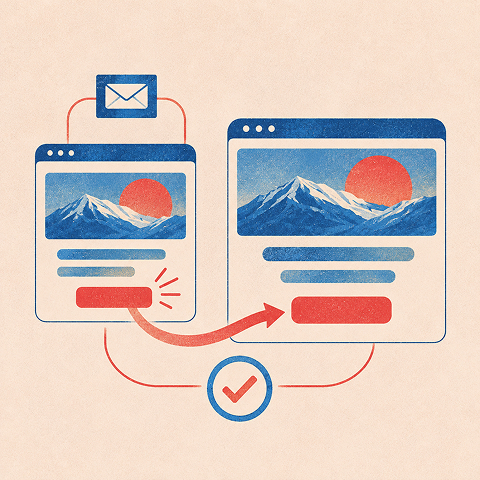
- Email campaigns where the click promises a trial, consultation, offer or purchase.
- ABM and outbound sequences tailored to a particular industry, role or account segment.
- Campaign experiments that need clean attribution and a focused conversion metric.
For a fuller view of the format itself, see our landing pages definition.
Free Brand Health Audit
Make sure your brand is built to sell
Search has changed. Your customers aren't just Googling anymore. They're asking ChatGPT, Perplexity, Gemini and other AI platforms what to buy, who to trust and which brands they should consider.
If your brand isn't showing up clearly in those answers, you're already losing opportunities. Our free Brand Health Audit shows you where your brand stands across traditional search, AI search and brand positioning.

Sample brand audit
Live preview
Traditional search
72
AI search (GEO)
34
Brand positioning
58
When the homepage is the right destination
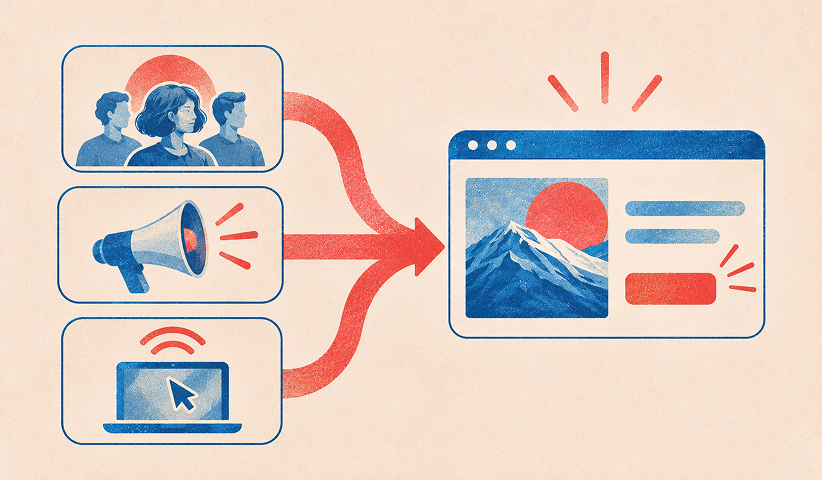
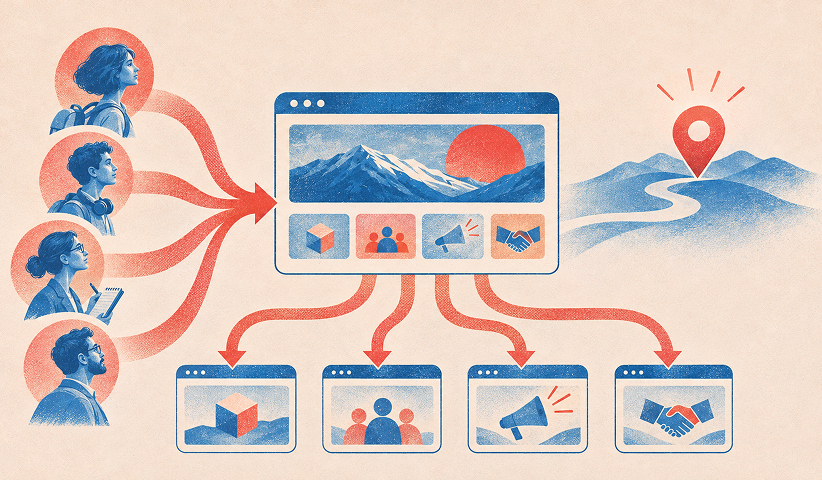
Not every click deserves a new page. The homepage is the better destination in these cases:
- Branded and direct visitors who need to understand the company and explore different solutions.
- Broad category or navigational organic searches with mixed visitor intent.
- Recruitment, partnership, investor and press visitors looking for information rather than a single offer.
- Early-stage single-product brands whose entire site already supports one clear goal.
Even then, the homepage should let visitors act. A strong homepage makes it clear in seconds what you do, directs each audience to the right section and gives a primary next step, such as booking a conversation, without hiding it.
Enterprise and long-cycle products add a nuance. A six-month sales cycle will not close on one landing page. Landing pages in that setting do their best work at the top of the funnel, with offers like an audit or a demo request, and then hand the buyer to the deeper site.
Can your homepage double as a landing page?
Sometimes. A single-product company with one goal can make its homepage act like a landing page, with a focused hero, one primary call to action and light navigation. Early-stage teams also do this while the full site is still being built.
Once you have multiple audiences, multiple offers or meaningful paid spend, the compromise stops paying. The homepage becomes too general to optimize for conversion, and the landing page cannot carry the whole brand story. At that point, run both: the homepage as the permanent hub, and landing pages as campaign-specific entry points.
What each page must contain
A homepage that works
- A clear value proposition that explains whom you serve and why you are different.
- Navigation paths for your main products, services, audience segments and company information.
- Credibility signals, including customer evidence, case studies and verifiable proof.
- A recognizable brand identity across headlines, visuals, typography and tone.
- An obvious primary next step plus secondary routes for visitors at different buying stages.
- Fast, mobile-friendly and accessible navigation and page performance.
A landing page that converts
- A headline that repeats the specific promise of the ad, email or outbound message.
- One primary offer and a visible call to action repeated at natural decision points.
- Concise benefits and proof relevant to the targeted audience, not a general company overview.
- A form or checkout that asks only for information needed at this stage.
- Mobile-first layout, accessible components and fast loading.
- Minimal navigation and competing exits, while preserving essential trust and policy links.
- Conversion tracking that connects the submission to the source and downstream outcome.
Proof that these details matter: a published B2B SaaS case study reported a 59% lift in paid-campaign landing-page conversions, from 6.89% to 10.95%, after a hero redesign that added an embedded email capture, testimonials and customer logos under the call to action. Small structural decisions compound across paid spend.
We break down the complete list in our guide to high-converting landing page elements.
A worked example: a SaaS company running two audiences
Imagine a Series B analytics platform with two goals this quarter: win mid-market retail buyers and recruit data engineers.
- Homepage: explain the analytics platform, route visitors to product and company content, and link to careers.
- Retail campaign landing page: lead with a retail-specific analytics outcome, a relevant customer proof point and a “Book a retail demo” CTA.
- Recruitment landing page: describe engineering culture, open roles and the application process, with “View engineering roles” as the CTA.
Each campaign has its own message, its own conversion rate and its own cost per lead. The homepage is untouched by any of it. When campaign A underperforms, the team edits one page. They do not rewrite how the company introduces itself.
Want to learn more about Website Design, Development and E-commerce? Keep reading!
If you need help with your company’s website and development, contact us for a free custom quote.
Common mistakes that waste spend
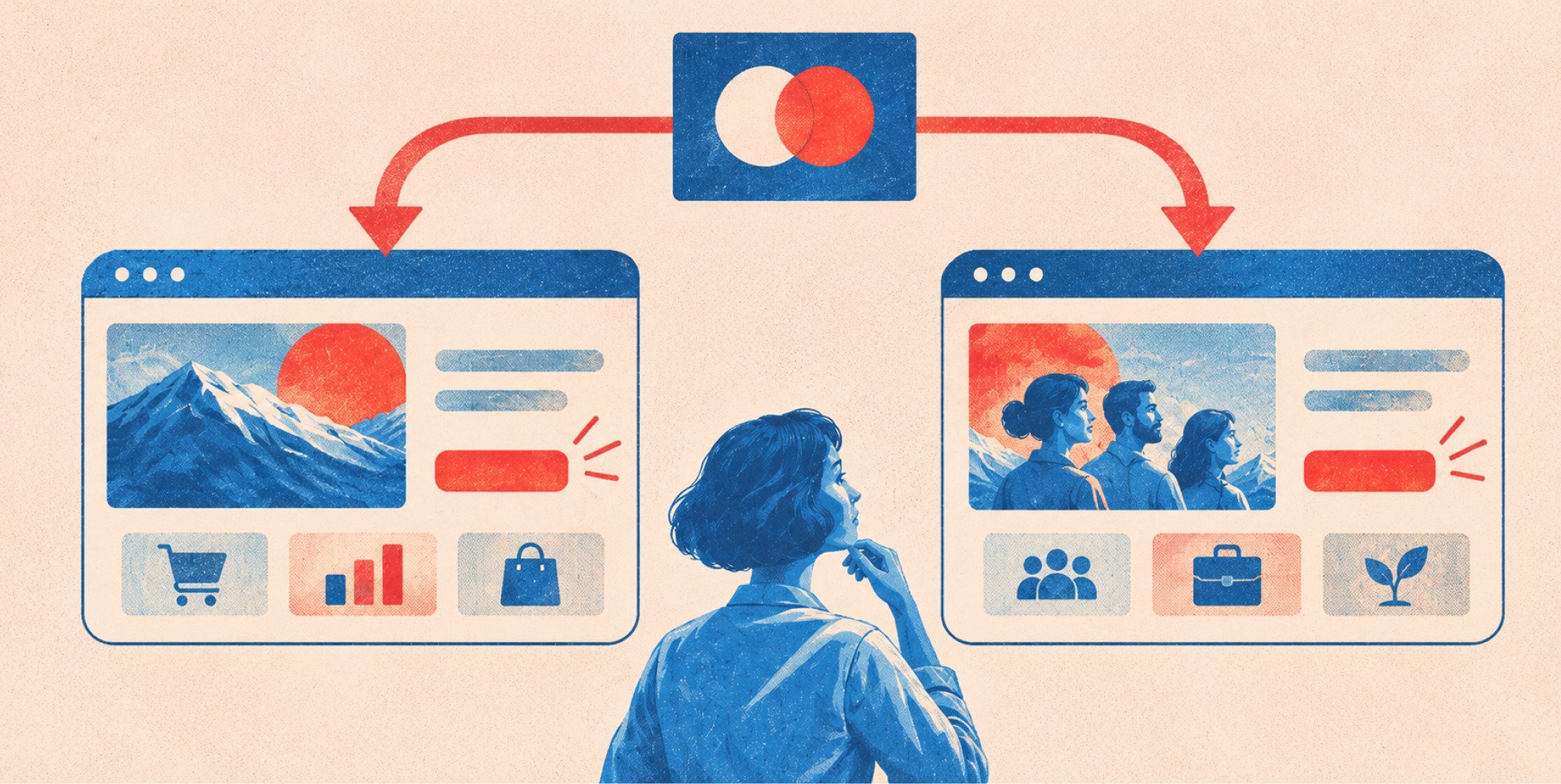
- Sending all paid clicks to the homepage even when the ad promises a specialized offer.
- Using a generic headline that fails to match the visitor’s source or problem.
- Adding multiple competing CTAs, menus and unrelated content to a focused campaign page.
- Asking too many questions before the visitor understands the value of the offer.
- Overlooking mobile layouts, accessibility, loading speed or confirmation-page tracking.
- Optimizing only for cheap leads instead of qualified opportunities and sales.
How to measure each page
The two pages have different scorecards.
- Homepage: branded search volume, return visits, engagement with key sections, click-through to high-intent pages, and assisted conversions. Success is orientation and routing.
- Landing page: conversion rate, cost per lead or acquisition, lead quality downstream and form completion rate. Success is the action, and its quality after the click.
Do not judge a landing page by bounce rate alone. A visitor who reads the offer and leaves has done what the page invited. A visitor who converts and then never answers a sales call is a different problem, and it belongs to targeting and qualification, not page design.
Where brand fits in
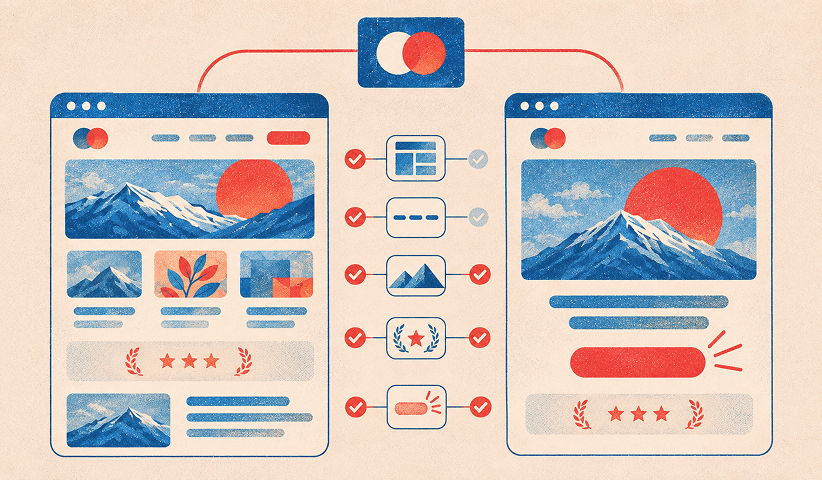
The false choice behind “landing page or homepage” is brand versus performance. Executives sometimes fund the homepage as brand and the landing pages as performance, then wonder why the pair underdeliver. The visitor does not experience two departments. They experience one company, and the second page either confirms the first impression or contradicts it.
That is why we build both from one system: shared positioning, shared visual language, shared proof, with landing pages that narrow the message without changing the voice.
Our perspective
We see the landing page versus homepage question as a symptom of a deeper one: whether your brand and your performance marketing are built as one system. When they are, the homepage establishes who you are, and every landing page is a focused extension of that same promise to a specific audience. We call that brand-backed performance™.
The practical consequence is that landing pages are not throwaway assets. They are where positioning meets measurable results, so they deserve the same strategic care as the homepage: message match to the channel, creative that carries the brand, a platform that lets you launch and test quickly, and reporting that traces each lead back to the campaign that earned it.
Our advice to growth-stage leaders is to stop treating the homepage as the default landing page for every campaign. Define the audience and the offer first, then give each one a page built to win it.
- Quincy Samycia
How we help
We design and build the full set: the brand foundation, the homepage and the campaign landing pages that sit on top of it, with paid media that sends each audience to the page made for it. Our website design and development work covers the site itself, and our paid media management starts from $5,500 per month. Creative services start from $4,000 per month. Website design and development pricing is scoped to the project, and you can see the full list on our pricing page.
If your campaigns are landing on a page that was never built for them, we can map the audiences, offers and sources with you and show where a dedicated page would change the result. Talk to The Branded Agency.
A quick checklist before your next campaign
- Is the target audience and its intended next action unmistakable?
- Does the landing page headline deliver the same promise as the ad or email?
- Is the page’s proof tailored to that audience and its concerns?
- Is there one clear primary CTA with a low-friction form or checkout?
- Does the page work on mobile and pass basic accessibility checks?
- Are source tracking, conversion events and lead follow-up tested?
- Is one owner accountable for performance after launch?
If the answer to any of these is no, fix it before you raise the budget. Ad copy and page copy should be written as a pair, and our ad copy prompts guide shows how to keep them aligned.
Frequently Asked Questions
What is the main difference between a landing page and a homepage?
A homepage introduces your whole business and routes many kinds of visitors with full navigation. A landing page is a standalone page built to get one audience to take one action, with navigation usually removed. The homepage orients; the landing page converts.
Should I send ad traffic to my homepage or a landing page?
Send it to a landing page in almost every case. Ads promise something specific, and a dedicated page can continue that promise with a matching headline, proof and a single call to action. The exceptions are branded search and very small tests.
Can my homepage be my landing page?
It can when your company has one product, one audience and one goal, or while the full site is still being built. As soon as you have several audiences or meaningful paid spend, separate pages give you better message match and cleaner measurement.
Do I need a landing page for every campaign?
Not for every one. Campaigns with a distinct audience, offer and budget justify a dedicated page. Tiny tests, or campaigns where an existing page already converts well for the same intent, may not need a new page.
Does a landing page need to match my brand?
Yes. The page can be leaner and more focused than the homepage, but the visual identity, voice and claims should be recognizably the same. Visitors who feel a mismatch at the moment of the ask lose trust.
Sources
- Unbounce: Landing page vs. homepage — https://unbounce.com/landing-page-articles/whats-the-difference-between-a-landing-page-and-a-homepage/
- Unbounce: What is a landing page? — https://unbounce.com/landing-page-articles/what-is-a-landing-page/
- Unbounce: Landing page best practices — https://unbounce.com/landing-page-articles/landing-page-best-practices/
- Google Analytics: Key events — https://support.google.com/analytics/answer/12966437
- W3C: WCAG overview — https://www.w3.org/WAI/standards-guidelines/wcag/

Quincy Samycia
As entrepreneurs, they’ve built and scaled their own ventures from zero to millions. They’ve been in the trenches, navigating the chaos of high-growth phases, making the hard calls, and learning firsthand what actually moves the needle. That’s what makes us different—we don’t just “consult,” we know what it takes because we’ve done it ourselves.
Want to learn more about brand platform?
If you need help with your companies brand strategy and identity, contact us for a free custom quote.
We do great work. And get great results.
+2.3xIncrease in revenue YoY
+126%Increase in repurchase rate YoY



+93%Revenue growth in first 90 days
+144% Increase in attributed revenue




+91%Increase in conversion rate
+46%Increase in AOV



+200%Increase in conversion rate
+688%Increase in attributed revenue