Local Web Designer: How to Find, Hire, and Get Results for Your Local Business
07/22/2026
Web Design / Web Dev
Discover how choosing the right local web designer can transform your website into a powerful growth engine that attracts customers, builds trust, and drives measurable business results.

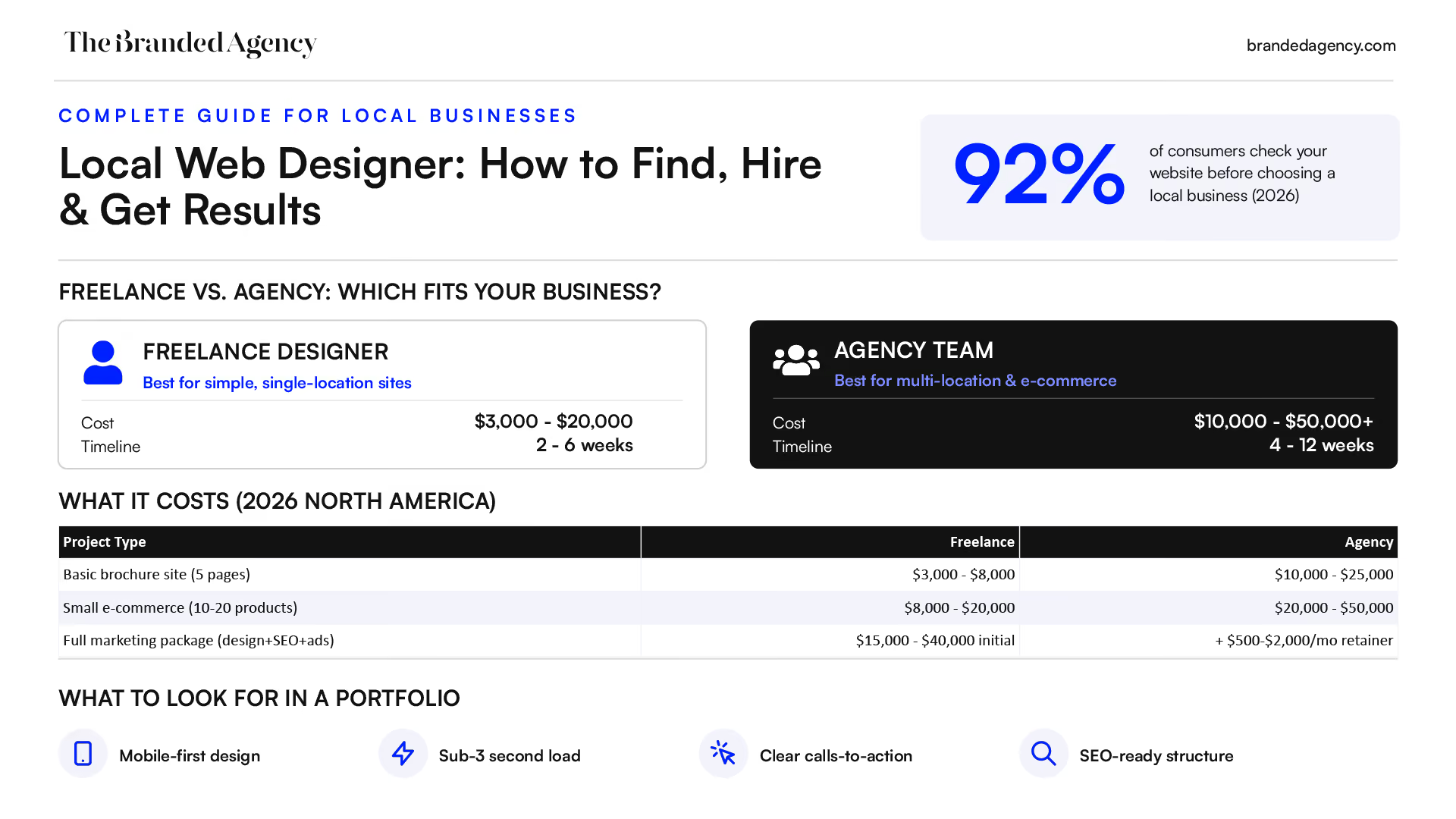
Your website is often the first online interaction potential customers have with your business, making its design crucial for creating a positive first impression. In 2026, 92% of consumers look at your website when choosing which local business to use. Finding the right local web designer can mean the difference between a site that generates leads and one that sends visitors to competitors.
.png)
Why Your Local Business Needs a Local Web Designer



A great website has a direct impact on business growth, lead generation, and customer trust. In 2026, most customers search Google and review a company’s website before deciding to call, visit, or make a purchase. Your website is no longer just a digital brochure — it’s a key part of your sales and marketing strategy.
Traditionally, hiring a local web designer offered advantages because they understood the local market, competition, and customer behaviour. A designer familiar with the area could create messaging and visuals that resonated more effectively with the target audience.
Today, advancements in AI and digital research tools have changed the landscape. Experienced agencies can now quickly analyze local markets, competitor strategies, customer demographics, and regional trends to create highly targeted websites — regardless of physical location. The result is the same strategic, localized approach combined with access to a broader range of expertise and resources.
The Branded Agency is a web design company and global digital marketing agency with offices across Canada, the United States, and internationally. With extensive experience in website design and development, we’ve built hundreds of websites across a wide range of industries. The best web designers prioritize user experience, technical proficiency, and local SEO to help local businesses grow. As certified Shopify and Webflow partners, we combine strategy, design, and technology to create high-performing websites that help businesses grow.
A well-designed website can significantly improve a local business’s visibility and credibility, making it essential for attracting new customers. Local designers align web design, content creation, and digital branding and marketing with specific business goals like calls, bookings, and in-store visits.
Concrete benefits of hiring locally:
- Hyper-targeted keywords for your service areas (e.g., “emergency plumber downtown Seattle”)
- Face-to-face collaboration reducing miscommunications by up to 40%
- Culturally resonant visuals that boost engagement by 25-30%
- Faster post-launch support through in-person meetings
- Economic investment in your community that builds brand loyalty
- Deep understanding of local search behavior and Google Maps optimization
Professional web design services can help a business grow by improving conversions and increasing revenue, making high-performing websites essential for supporting business growth.
What a Local Web Designer Actually Does for Your Business
Website design is more than making a site look aesthetically pleasing—it’s strategy, structure, and performance working together. Web design is not your job; it’s the job of a professional local web designer who has the expertise to handle website creation and maintenance. An appealing and easy-to-navigate website can significantly reduce the likelihood of potential customers leaving for a competitor’s site.
Web design services should focus on creating a user-friendly experience that encourages visitors to stay on the site and engage with the content. A good web designer should focus on business goals and conversion paths rather than just aesthetics.
Core tasks a local web designer handles:
- Planning site structure: home page, services, service-area pages, contact, FAQs, reviews integration, and Google Maps embed
- Visual design services including branding for small businesses, color palettes, layout decisions, typography, and basic logo design when needed
- Technical work: mobile friendly builds, fast load times, search engine optimization (SEO) setup to ensure your website is visible to search engines like Google, contact forms, booking systems, and analytics tracking
- Extended design services: content creation, photography coordination, and digital marketing campaigns
- Connecting website strategy with business goals like more calls, form fills, or foot traffic
- Integration of CRM systems for instant lead follow-ups
Freelance Web Designer vs Local Web Design Agency
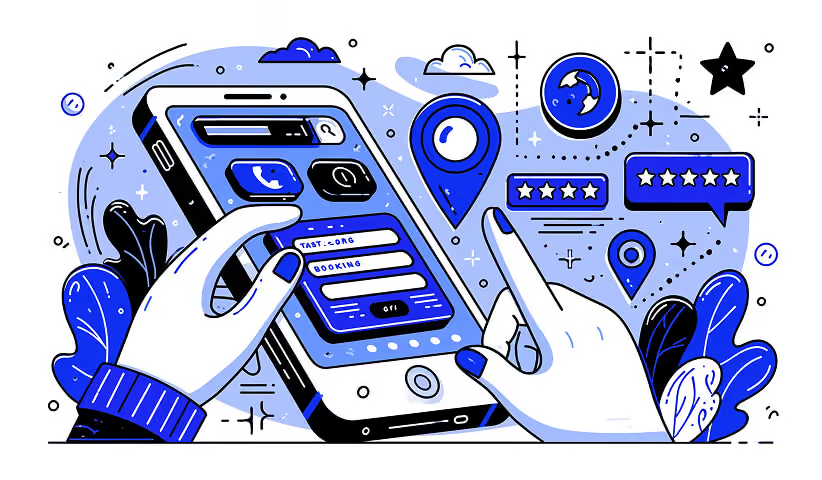


Small business owners have two main options when seeking web development help: freelance web designers and local agencies. Both have distinct advantages depending on your situation.
Freelance web designers are often suitable for smaller projects with flexible timelines, while agencies are better for complex sites needing multiple specialists and ongoing support.
Freelance web designers offer:
- More personal, direct contact with the person building your site
- Flexible schedules and faster pivots mid-project
- Lower costs (typically 30-50% savings due to no overhead)
- Ideal for simple 5-10 page service sites or single-location businesses
- Quick turnaround: 2-6 weeks for basic builds
Web design agencies provide:
- Teams handling web design, development, SEO, and digital marketing under one roof
- Better infrastructure for multi-location or rapidly scaling local businesses
- Complex e commerce builds with inventory management
- Ongoing marketing expertise and monthly SEO audits
- Account managers ensuring project continuity
Decision factors: Consider your budget, timeline, complexity, and whether you need ongoing support for content creation and marketing. If you’re still validating your concept, reviewing small business ideas for entrepreneurs can clarify where web design fits into your overall launch plan. A neighborhood gym might thrive with a freelance designer, while a regional home-services brand expanding to popular cities benefits from agency resources.
How Much Does a Local Web Designer Cost?
Pricing varies significantly by city, experience, and project scope. Here are concrete 2026 price ranges for North American markets:
- Basic brochure site (5 pages, mobile-responsive, basic SEO): $3,000-$8,000 freelance / $10,000-$25,000 agency
- Small e commerce for local products (10-20 products, local delivery): $8,000-$20,000 freelance / $20,000-$50,000 agency
- Full digital marketing packages (design + SEO + Ads management): $15,000-$40,000 initial + $500-$2,000/month retainers
Freelance pricing models:
- Flat project fees (most common, caps client anxiety)
- Hourly rates: $75-150/hour depending on skill set and location
- San Francisco and New England designers often charge 40% premiums over Midwest rates
Agency pricing models: When you’re budgeting, remember that understanding how much branding should cost helps you evaluate whether bundled offers are actually competitive.
- Higher retainers with strategy sessions ($2,000+)
- Bundled design services including SEO, content, and Google Ads management
- Monthly reporting and conversion rate optimization
Hidden and ongoing costs to budget for:
- Domain and hosting: $100-500/year
- Maintenance: $50-200/month (critical since 30% of sites are hack-vulnerable)
- Content refreshes: $500-2,000/year
- Plugins and integrations: $100-1,000
Ask for itemized quotes breaking down design (40%), development (30%), SEO (15%), and content (15%) so you can compare value across candidates.
How to Find Web Designers in Your Local Market
Finding experienced web designers goes beyond a quick Google search. You want vetted local professionals who understand your industry.
Practical discovery methods:
- Search for local web designers by using Google Maps and searching for terms like “[Your City] web design”
- Use “near me” queries to find freelancers in adjacent neighborhoods
- Consult the local Chamber of Commerce or business associations for trusted referrals to web designers
- Browse local business directories and Expertise.com for curated top performers
- Checking portfolios on platforms like Upwork or Behance can help compare design styles and technical expertise
- Freelance platforms like Upwork and Fiverr can be used to search for web designers filtered by location
Social proof sources to check:
- Google reviews (aim for 4.8+ stars from 50+ reviews)
- Yelp and local Facebook groups
- LinkedIn searches for “web designer” + your location + “local SEO”
- Niche industry forums where other websites in your sector are discussed
Review portfolios specifically for local businesses similar to yours—restaurants, contractors, salons, law firms, or clinics. Meet locally or via video to walk through your business goals, local competition, and customer behavior. When meeting with candidates, look for web designers who are excellent communicators and prioritize clear communication to ensure a smooth project process. If you’re in British Columbia, for example, you might compare options to a dedicated Vancouver branding and marketing agency. Narrow to 3-5 candidates with strong local examples and clarity about digital marketing and SEO capabilities.
Want to learn more about Website Design, Development and E-commerce? Keep reading!
If you need help with your company’s website and development, contact us for a free custom quote.
What to Look For When Hiring a Local Web Designer

Choosing the right partner from the start prevents costly redesigns. When evaluating portfolio for diversity in work, ensure the designer can adapt to different brand styles and that their sites are functional and mobile responsive.
Portfolio criteria to evaluate:
- Mobile-first designs (90% of local traffic comes from mobile devices)
- Fast loading speeds (sub-3 seconds via GTmetrix scores)
- Clear calls-to-action driving visitors to convert
- Portfolios should show relevant project experience and previous work within the same industry as your business
Market understanding indicators:
- Evidence the designer knows your local audience, service areas, and key differentiators
- References to local competitors or regional industry trends
- Questions about your target audience during initial conversations
Technical skills to verify:
- Important qualities for a web designer include expertise in SEO, mobile responsiveness, and fast loading speeds
- Responsive web design allows websites to adapt seamlessly to various devices, enhancing user experience across mobile, tablet, and desktop platforms
- Form integrations, map embeds, and simple booking/contact systems
- Inquire about the web designer’s process, support options, and experience with specific content management systems (CMS)
Communication and process expectations:
- Web designers should demonstrate strong communication skills and clear communication throughout the project, and provide post-launch support
- Clear timelines, revision rounds, and content responsibilities
- Ensure that the web designer offers training, maintenance, and ongoing support after the site goes live
- Look for web designers who prioritize user experience (UX) and have a strong portfolio showing successful similar projects
Check experience by looking at previous work and ensuring their design style matches your needs. Ask for case studies showing traffic improvements or lead volume growth for other clients, similar to what a results-focused Winnipeg branding and digital marketing agency might highlight.
Local Web Design and Digital Marketing: Working Together
A great website is only one part of a wider digital marketing system. Search engine optimization is a critical part of web design and digital marketing, helping websites rank higher in search engines and attract targeted traffic. Web design and SEO should go hand in hand, as both are critical elements of a successful digital marketing strategy that drives traffic to your website, alongside initiatives like strategic brand partnerships that expand your reach.
How local SEO supports your site:
- Google Business Profile optimization dominates Maps pack (46% of searches)
- Google Maps visibility captures nearby customers searching “near me”
- 92% of consumers look at your website when choosing which local business to use, highlighting the critical role of SEO in attracting potential customers
On-site SEO elements your designer should set up:
- Title tags with local keywords and service-area pages
- Schema markup for rich snippets (boosting click-through by 20-30%)
- NAP consistency across all pages
- Having a mobile-friendly website is essential for SEO, as Google gives preference to responsive designs, which can lead to higher search rankings
Complementary services for ongoing online visibility:
- Content creation: blogs, FAQs, city-specific pages sustaining 20-30% organic growth, especially when supported by AI tools to boost website traffic
- Social media marketing for local reach and engagement, with budgets guided by a clear social media marketing cost breakdown
- Integration of tracking tools (analytics, call tracking, lead forms) to measure business growth
- Websites with responsive design are favored by Google, which can lead to higher search rankings and improved visibility in search results
Consistent branding across web design, logo design, graphic design, and social media builds credibility by aligning every brand touchpoint. A responsive design can significantly reduce bounce rates, as users are less likely to leave a site that is easy to navigate on their device.
Step-by-Step: Working With a Local Web Designer From First Call to Launch

The typical web design project for a local business takes 4-12 weeks from inquiry to launch. Working with a reputable web design company ensures a structured process and reliable support from discovery to launch. Here’s what to expect at each phase:
Discovery phase (Week 1):
- Initial call discussing business goals, target audience, competitors, and must-have features
- Audit of existing site and competitor analysis
- Mapping user journeys and conversion paths
Proposal and scope (Week 1-2):
- Written outline of pages, design services, content responsibilities, timelines, and costs
- Agreement on revision rounds and communication cadence
- Deposit and contract signing
Design phase (Weeks 2-4):
- Wireframes or mockups in tools like Figma
- Feedback rounds (typically 2-3) on branding, imagery, and messaging
- Final approval before development begins
Build and testing (Weeks 4-8):
- Converting designs into a working site on WordPress, Webflow, or similar platforms
- Mobile testing, speed checks, form and map testing
- Cross-browser compatibility verification
Launch and handover (Week 8-10):
- DNS changes and go-live checklist
- Training on how to update key pages and content
- Backup systems and security protocols in place
Post-launch (ongoing):
- Optional maintenance packages for updates and security
- SEO refinements and content updates
- Digital marketing campaigns aimed at long-term business growth
Local Web Designer FAQs
This section answers common questions small business owners ask before hiring a designer.
How long does a web design project take? Basic local business sites typically take 4-6 weeks. More complex builds with online stores or multiple service locations can extend to 8-12 weeks. Client feedback delays cause 40% of timeline overruns.
What should I expect to pay? Most small business sites cost $4,000-$15,000 depending on pages, features, and complexity. Location matters—highly skilled designers in major metros charge premiums.
When is DIY enough vs hiring a professional? Template sites ($200/year) work for static information pages. But for lead generation where you need more customers, professional designers deliver 4x ROI through effective strategies and conversion optimization.
How much SEO does a web designer include? Most web designers include basic on-page SEO (10-20 pages optimized). For competitive keywords where you need to rank higher, you’ll need dedicated seo experts.
Who owns the website after the project? You should own all assets post-payment—domain, design files, and content. Ensure this is clearly stated in your contract before starting.
How are future updates handled? Most sites use a CMS allowing you to edit 70% of content yourself. For technical changes, expect $100/hour maintenance rates. Many designers offer monthly retainer packages for ongoing support and security updates.
Your next step: Create a shortlist of 3-5 local designers by searching Google Maps for web design in your city. Review their portfolios for relevant industry experience, then schedule discovery calls to discuss your business goals and get itemized quotes.

Quincy Samycia
As entrepreneurs, they’ve built and scaled their own ventures from zero to millions. They’ve been in the trenches, navigating the chaos of high-growth phases, making the hard calls, and learning firsthand what actually moves the needle. That’s what makes us different—we don’t just “consult,” we know what it takes because we’ve done it ourselves.
Want to learn more about brand platform?

If you need help with your companies brand strategy and identity, contact us for a free custom quote.
We do great work. And get great results.
+2.3xIncrease in revenue YoY
+126%Increase in repurchase rate YoY


+93%Revenue growth in first 90 days
+144% Increase in attributed revenue


+91%Increase in conversion rate
+46%Increase in AOV


+200%Increase in conversion rate
+688%Increase in attributed revenue