Marketing Agency Performance: How to Measure and Choose
09/14/2026
Marketing Services
A guide to measuring marketing agency performance — the right KPIs by funnel stage, evaluation steps, red flags, and channel-by-channel timelines.
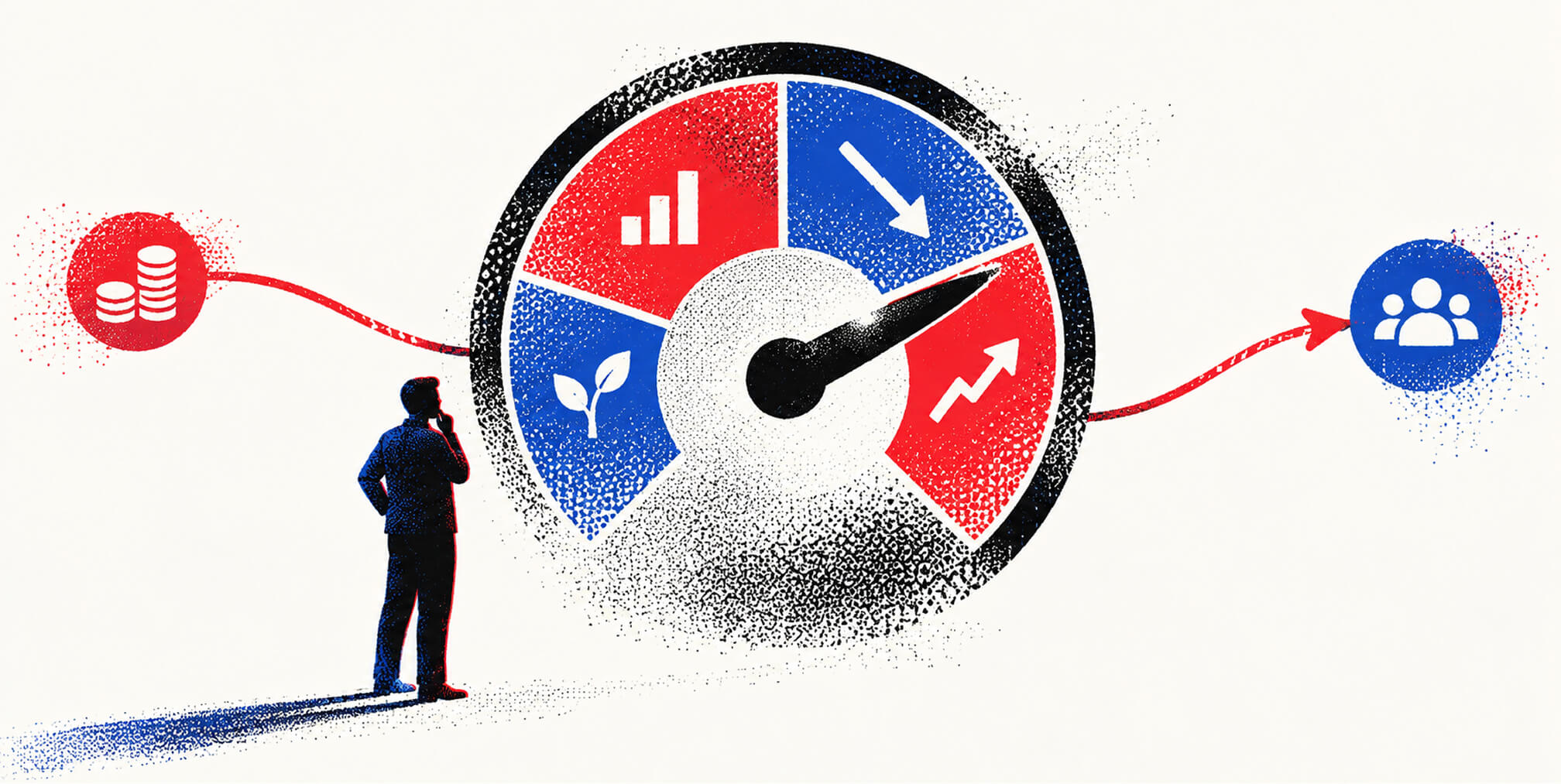
A performance marketing agency is a firm where advertisers pay based on completed, measurable actions - clicks, leads, sales, or app installs - rather than for impressions or reach alone. The defining characteristic is accountability: every dollar spent is tracked to a specific outcome, and the agency's value is judged by whether those outcomes improve over time.
.png)


What a Performance Marketing Agency Is, and Which KPIs Actually Tell You It's Working

What is a performance marketing agency, and how is it different?
A performance marketing agency is a firm where advertisers pay based on completed, measurable actions, such as clicks, leads, sales, or app installs, rather than for impressions or reach alone. The defining characteristic is accountability: every dollar spent is tracked to a specific outcome, and the agency's value is judged by whether those outcomes improve over time.
This is a meaningful distinction from traditional brand-first agencies, which focus on awareness, perception, and long-game equity building. Brand work is valuable, but its results often take a year or more to show up in revenue. Performance work is designed to produce measurable signals within weeks. The best agencies do both, integrating creative brand narrative with paid activation to sustain ROAS at scale, what The Branded Agency calls brand-backed performance™.
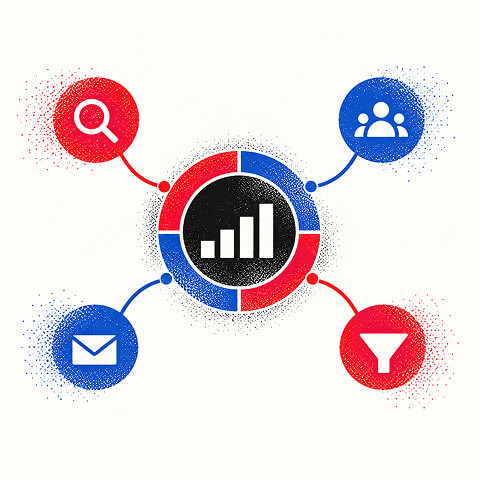
Core services bundled under performance marketing typically include:
- Paid search (Google Ads, Microsoft Advertising)
- Paid social (Meta, LinkedIn, TikTok, Pinterest)
- Programmatic display and video
- Affiliate and partner marketing
- App user acquisition (UA)
- Email and SMS marketing
- Conversion rate optimization (CRO)
- Analytics, attribution, and measurement infrastructure
Pricing models vary. Retainers give you predictable monthly costs and dedicated team time. Percentage-of-spend models (typically 10-20% of managed ad budget) align agency incentives with media scale. Performance fee structures tie a portion of compensation to hitting agreed KPIs. Hybrid models combine a base retainer with a performance bonus, which tends to produce the most aligned incentives for both sides.
Free Brand Health Audit
Make sure your brand is built to sell
Search has changed. Your customers aren't just Googling anymore. They're asking ChatGPT, Perplexity, Gemini and other AI platforms what to buy, who to trust and which brands they should consider.
If your brand isn't showing up clearly in those answers, you're already losing opportunities. Our free Brand Health Audit shows you where your brand stands across traditional search, AI search and brand positioning.

Sample brand audit
Live preview
Traditional search
72
AI search (GEO)
34
Brand positioning
58
The Full KPI Reference Table and Why Incrementality Testing Matters

Which KPIs actually tell you if an agency is performing?
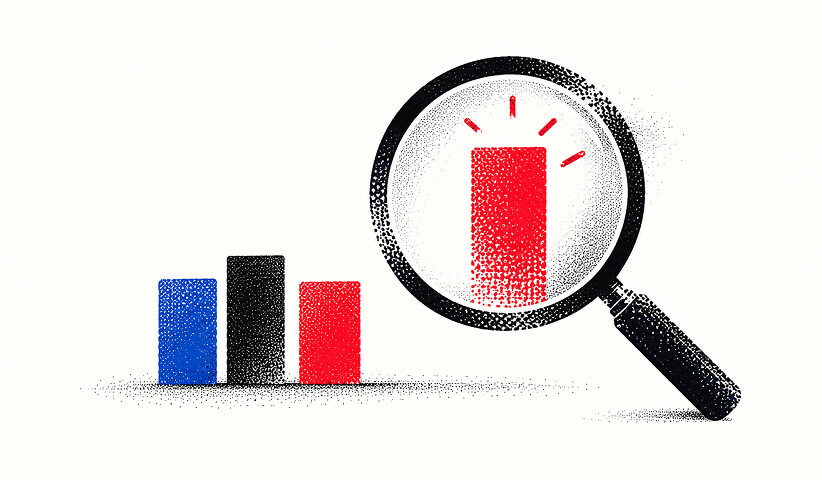
The right KPI depends on your funnel stage and business model. Using the wrong metric, or letting an agency report only the metrics that flatter their work, is one of the most common and costly mistakes buyers make.
| KPI | What It Measures | When to Use It | Watch Out For |
|---|---|---|---|
| ROAS | Revenue per $1 of ad spend | E-commerce, direct response | Doesn't account for margin; high ROAS on low-margin SKUs can destroy profit |
| ROI | Net profit relative to total investment | Any channel, full-funnel view | Requires accurate cost attribution across all inputs |
| CPA | Total cost per acquired customer | Lead gen, SaaS, subscription | Varies widely by channel and audience quality |
| CPL | Cost per qualified lead | B2B, high-consideration purchases | "Qualified" must be defined in advance; agencies can game this |
| CLTV | Predicted lifetime revenue per customer | Subscription, repeat-purchase models | Requires 6 months of cohort data to validate |
| Conversion rate | % of visitors/leads completing a target action | CRO, landing page optimization | Segment by traffic source; blended rates hide channel-level problems |
| Incrementality | Lift caused by agency activity vs. baseline | Any channel with holdout testing | Requires proper test/control design; most agencies skip this |
| Attribution window | Time between first touch and conversion credit | Multi-touch, long sales cycles | Shorter windows undercount B2B impact; longer windows inflate credit |
The most abused metric is ROAS. An agency can report a 6x ROAS while your actual profit margin is shrinking, because ROAS ignores product cost, fulfillment, and overhead. Always ask for margin-adjusted ROAS or blended MER (marketing efficiency ratio) alongside the headline number. For KPI alignment across marketing levers, map each metric back to the specific channel and funnel stage it governs, since promotion KPIs like conversion rate and ROAS sit in a different category than distribution or pricing KPIs.
Pipeline velocity, how quickly leads move through your sales funnel, is an underused but powerful agency performance metric for B2B buyers. If an agency's leads are sitting in your CRM for 90 days without converting, the CPL looks fine but the program is broken.
Pro Tip: When an agency presents ROAS figures, ask for the underlying data export: raw spend by campaign, revenue by order ID, and the attribution model used. If they can't or won't provide it, that's your answer.
Incrementality testing, running holdout groups to measure the true causal lift of a campaign, is the gold standard for validating agency performance claims. Most agencies don't offer it by default. The ones that do are worth a longer look.
Tired of agency reports that only show flattering numbers? Keep reading!
If you need paid media tied to real revenue with live dashboard access, contact us for a free custom quote.
How to Evaluate and Compare Performance Agencies, Plus Pricing Models and Red Flags
How do you evaluate and compare performance agencies?
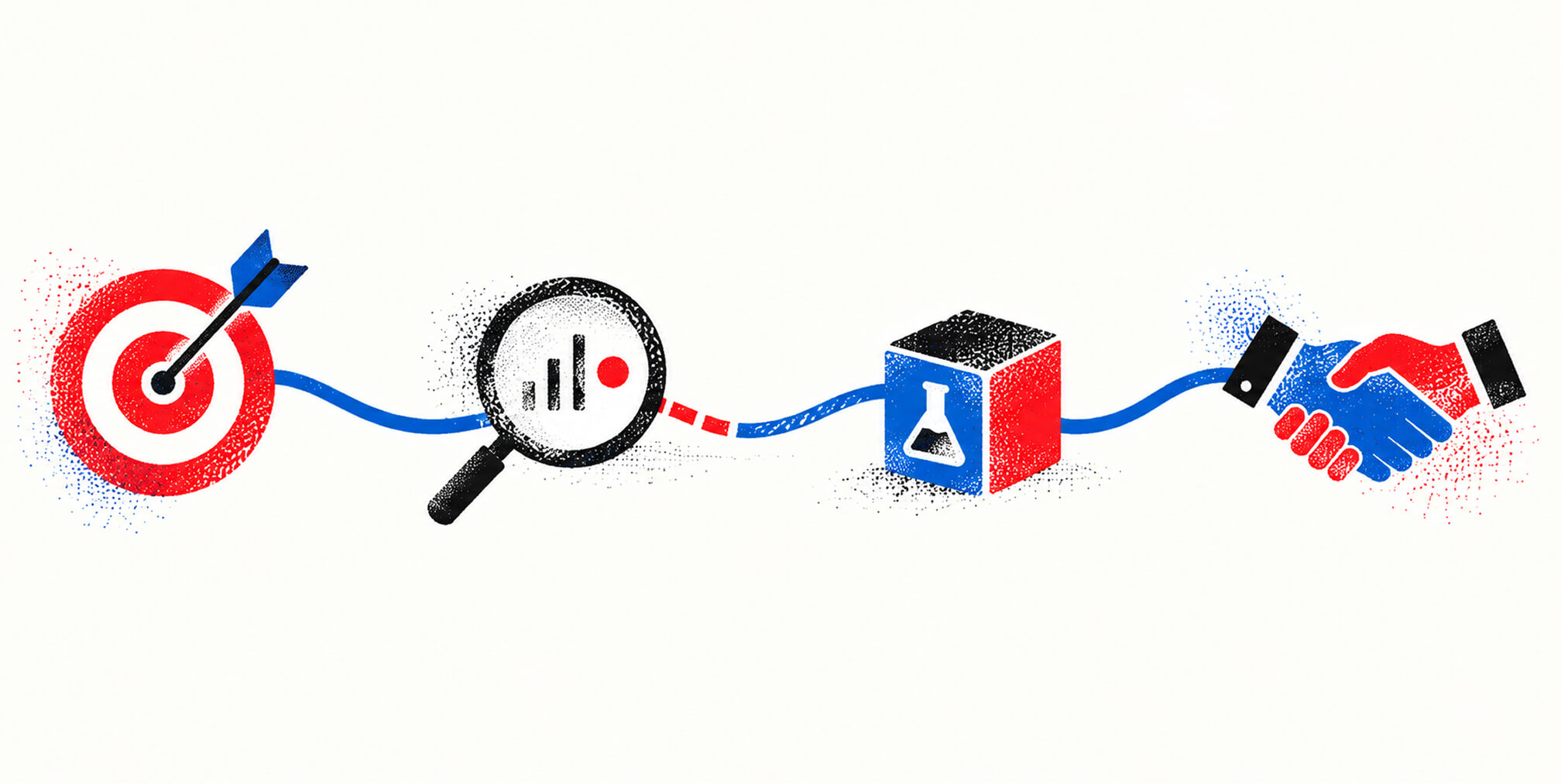
Vendor evaluation works best as a sequential process. Skipping steps, especially the measurement audit and reference check, is where most buyers regret their choice six months later.
- Define your goals and funnel stage first. An agency optimized for top-of-funnel lead volume is the wrong partner if your problem is mid-funnel conversion. Write down your primary KPI, your secondary KPI, and the revenue outcome you expect within 90 days and 12 months.
- Run a measurement audit. Before any agency pitch, audit your own tracking: Is Google Analytics 4 or a comparable platform configured correctly? Are conversion events firing accurately? Agencies inherit your measurement infrastructure. If it's broken, their reporting will be too.
- Conduct a capability interview. Ask specifically: What attribution model do you use by default, and why? How do you handle cross-channel attribution? What's your process for incrementality testing? Can you show us a sample dashboard from a current client? Who on your team will own our account day-to-day, and what's their seniority level?
- Design a pilot test. A 60-90 day paid pilot with a defined budget, agreed KPIs, and a clear measurement window is the most reliable way to evaluate an agency before a full commitment. Set the success threshold in writing before the pilot starts.
- Evaluate pricing and contract terms. Compare proposals on total cost of ownership, not just the monthly fee. Ask what's included in the retainer versus billed separately (creative production, landing page development, reporting tools). Negotiate data ownership clauses; your campaign data, audience lists, and creative assets should belong to you, not the agency.
- Run reference checks. Ask for two or three client references in your industry or at a similar growth stage. Specific questions to ask: Did the agency hit the KPIs they projected? How did they handle a campaign that underperformed? How responsive was the team when something went wrong?
For a detailed agency selection checklist, the process above maps directly to what separates agencies that deliver from those that just report.
Pricing models: pros and cons
- Monthly retainer: Predictable cost, dedicated team time, works well for ongoing strategy and multi-channel management. Risk: agency effort can drift if there's no performance accountability built in.
- Percentage of ad spend: Aligns agency revenue with media scale. Risk: incentivizes spending more, not spending smarter.
- Performance fee: Pays the agency only when KPIs are hit. Risk: agencies may cherry-pick easy wins and avoid harder long-term work.
- Hybrid (retainer + performance bonus): Generally the most aligned model for growth-stage companies. Covers baseline work while rewarding results.
Red flags that signal poor measurement
- No access to raw campaign data or ad platform accounts
- Attribution explained only as "last click" with no discussion of alternatives
- Benchmarks that shift between calls without explanation
- Case studies with no methodology notes (no attribution model, no measurement window stated)
- Reluctance to run a pilot before a 12-month commitment
Channels and Timelines, What Strong Performance Looks Like, and Key Takeaways
What channels do performance agencies use, and when do results show up?
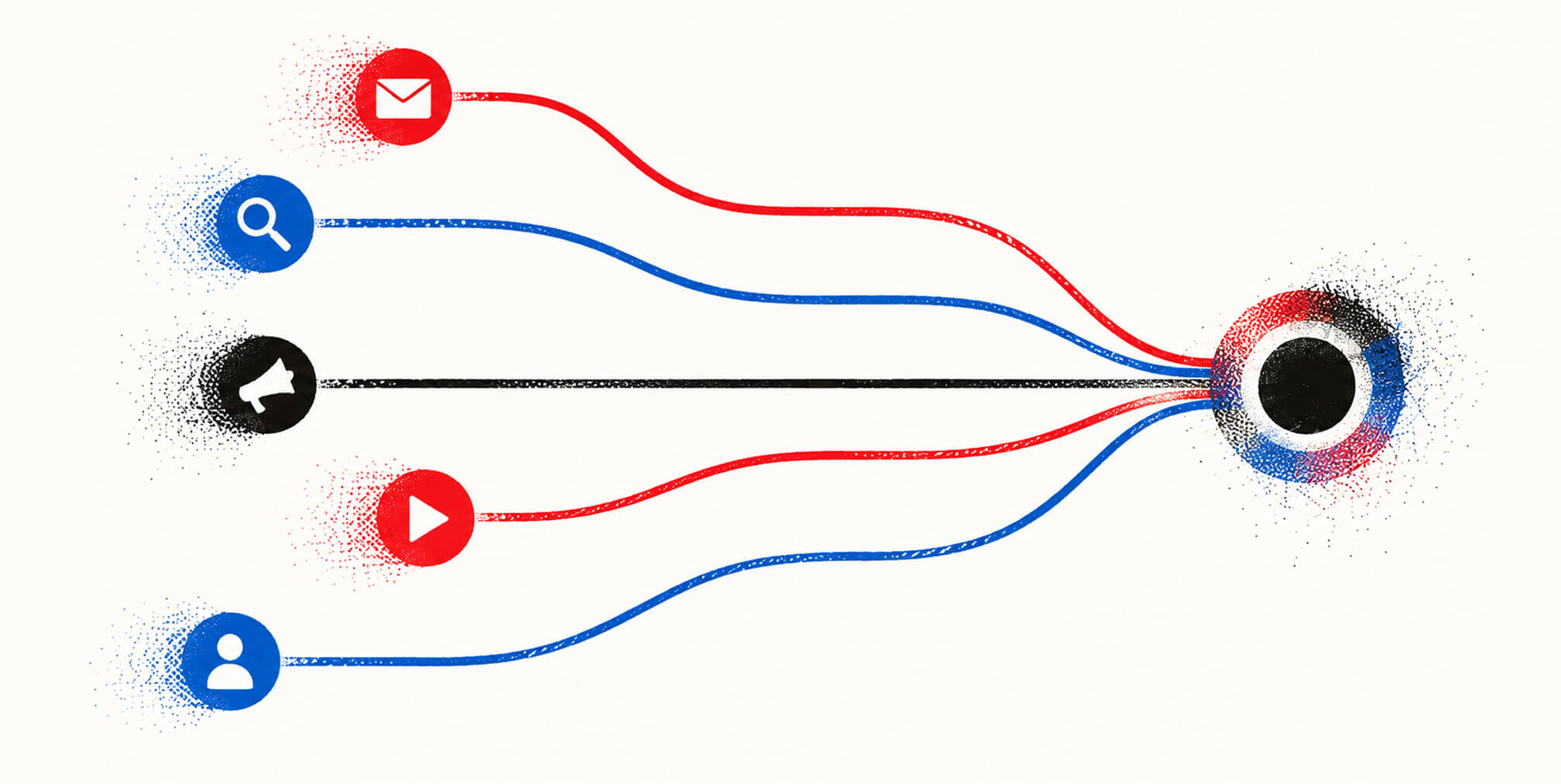
Performance agencies work across a defined set of channels, each with its own signal speed and measurement requirements. Knowing what to expect from each prevents the common mistake of judging a channel too early or too late.
- Paid search: Fastest signal. Lower CPA is often visible within 30-60 days as campaigns optimize. Best for high-intent buyers already searching for your solution.
- Paid social: Early engagement data (CTR, CPL) appears within 2-4 weeks, but meaningful conversion data typically takes 6-8 weeks as the algorithm learns. Social media ad optimization requires creative testing velocity to sustain performance.
- Programmatic display/video: Brand awareness lift is measurable within 4-8 weeks; direct conversion impact takes longer and requires view-through attribution to capture.
- Affiliate marketing: Revenue impact is visible quickly, but building a quality affiliate network takes 3-6 months. Watch for affiliate fraud and last-click attribution inflation.
- App user acquisition (UA): Install volume is fast; quality signals (retention, in-app purchase) take 30-90 days to validate.
- Email and SMS: Among the fastest channels for measurable revenue impact, often within days of a send. CLTV and retention rate improvements are visible over 3-6 months.
- CRO: Statistically significant A/B test results typically require 4-8 weeks per test depending on traffic volume. Compounding gains from sequential tests build over 6-12 months.
| Channel | Earliest Success Signal | Typical Measurement Window |
|---|---|---|
| Paid search | CPA improvement | 30-60 days |
| Paid social | CPL, CTR trends | 6-8 weeks |
| Programmatic | Awareness lift, view-through | 4-8 weeks |
| Affiliate | Revenue per affiliate | 3-6 months |
| App UA | Install quality, retention over 30-90 days | 30-90 days |
| Email/SMS | Revenue per send, open rate | Days to weeks |
| CRO | Conversion rate lift (A/B) | 4-8 weeks per test |
Multi-touch measurement matters here. Research on content and touchpoint sequencing suggests that meaningful conversion sequences typically require multiple coordinated interactions before a prospect converts, which means single-channel attribution will always undercount the contribution of upper-funnel channels like programmatic or paid social. Build your measurement framework to capture cross-channel credit before you judge any individual channel's performance in isolation.
What does strong agency performance actually look like?
The difference between a credible case study and a marketing slide is methodology. Any agency can claim a 4x ROAS. The ones worth hiring can show you the attribution model, the measurement window, the baseline they compared against, and the cohort data that supports the claim.
Here's what a well-documented case study card should contain:
- Challenge: Specific business problem (e.g., e-commerce brand with declining ROAS on Meta, rising CPA on Google)
- Approach: Channels activated, creative strategy, audience segmentation, attribution model selected
- Measurable outcomes: Before/after KPIs with the measurement window stated (e.g., "CPA reduced from $142 to $89 over 90 days, measured via last-touch with a 28-day click window")
- Methodology note: How results were isolated from organic lift, seasonality, or other variables
When you review an agency's case studies, ask for the raw dashboard export or a live read-only account view. Cohort analysis and raw data sharing are the standard for auditability; if an agency only shows you a PDF with aggregate numbers, push back.
The Branded Agency's approach to measurement centers on tying paid media activity directly to revenue or pipeline, not just to platform-reported conversions. Campaigns are structured with defined attribution windows, and clients receive access to live reporting dashboards rather than monthly PDF summaries. This reflects a broader philosophy: integrated brand and performance work produces more durable ROAS because creative quality and brand consistency reduce the cost of converting paid traffic over time.
For buyers evaluating case studies, the analytics-driven ROI approach is what separates agencies that grow with you from those that plateau after the first 90 days.
Key Takeaways
Reliable agency evaluation comes down to three non-negotiables: defined KPIs agreed before work starts, raw data access throughout the engagement, and a structured pilot before any long-term commitment.
| Point | Details |
|---|---|
| Demand incrementality testing | Ask every agency how they isolate their impact from organic or seasonal baseline trends. |
| Insist on raw data access | Live dashboard access and exportable data are the baseline for any credible performance partner. |
| Run a 90-day pilot | Define KPIs, budget, and success thresholds in writing before the pilot starts. |
| Match KPIs to funnel stage | ROAS fits direct response; CPL and pipeline velocity fit B2B; CLTV fits subscription models. |
| The Branded Agency | Offers paid media management, CRO, and retention marketing with transparent reporting and brand-backed performance methodology. |
The gap between what agencies promise and what actually matters
Performance marketing has a measurement theater problem. Agencies have learned that decision-makers respond to big numbers, so they optimize their reporting for impressive-looking aggregates: headline ROAS, total impressions, blended conversion rates. The numbers aren't always wrong, they're just carefully selected. The 6x ROAS on a single campaign segment doesn't tell you what happened to your overall marketing efficiency ratio. The 40% conversion rate improvement on a landing page variant doesn't tell you whether the test was statistically significant or whether the traffic source changed mid-test.
What actually matters is simpler and harder to fake: did revenue go up, did customer acquisition cost go down, and can the agency show you the data that proves it? Those three questions cut through most of the noise.
There's also a structural issue that most buyers underestimate. An agency's incentives are rarely perfectly aligned with yours. A percentage-of-spend model rewards media scale, not efficiency. A CPL model rewards lead volume, not lead quality. Even a performance fee model can be gamed by optimizing for easy conversions at the top of the funnel while ignoring the harder work of mid-funnel nurture and retention. The solution isn't to distrust agencies, it's to build the measurement infrastructure yourself, own your data, and treat agency reporting as one input rather than the source of truth.
The brands that get the most from performance agencies are the ones that show up as informed buyers. They know their baseline metrics before the first call. They have a clear attribution framework. They ask hard questions about methodology and don't accept "trust us" as an answer. That posture, more than any specific agency choice, is what drives results.
What The Branded Agency delivers for performance-focused buyers
If you've read this far, you already know what to look for. The Branded Agency is built for buyers who want both: measurable performance outcomes and the brand foundation that makes those outcomes compound over time. Rather than running paid media in isolation, we integrate brand strategy, creative development, and paid media management into a single accountable system, so your ROAS improves not just because bids are optimized, but because your creative is stronger and your brand converts more efficiently at every touchpoint.
We work with growth-stage companies, VC-backed firms, and established businesses across North America that need a partner who can move fast and report clearly. Our engagements include paid media management, CRO, retention marketing (email and SMS), and full analytics infrastructure, all with live dashboard access and defined reporting cadence from week one. To see how we'd approach your specific performance challenges, book a measurement audit and we'll map your current KPIs against what's achievable.
Useful Sources
- What is Performance Marketing & How Does it Work? | Salesforce — foundational definition of performance marketing and pay-for-action mechanics
- What Does a Performance Marketing Agency Do? Pros & Cons | Metadata — agency capabilities, cohort analysis, and measurement best practices
- The 4 Ps of Marketing (Investopedia) — KPI-to-marketing-lever mapping and strategic alignment framework
- The 4 Ps of Marketing Explained | Leavey School of Business, SCU — connecting product, price, place, and promotion decisions to measurable KPIs
- The 3-3-3 Rule in Marketing | SEOnib — multi-touch sequencing and content velocity benchmarks
- The Branded Agency: Integrated Strategy, Branding & Performance Marketing — publisher proof point; integrated brand and performance methodology
- Top AI Digital Marketing Agency for Brand & Performance | Branded Agency — agency service scope, AI capabilities, and measurement emphasis
- Agency for Advertising: How to Choose in 2026 | Branded Agency — procedural reference for agency selection, reference checks, and dashboard requests
- Why Analytics in Marketing Drives Better ROI | Babylove Growth — analytics-first perspective on measurement improving marketing ROI
Recommended

Quincy Samycia
As entrepreneurs, they’ve built and scaled their own ventures from zero to millions. They’ve been in the trenches, navigating the chaos of high-growth phases, making the hard calls, and learning firsthand what actually moves the needle. That’s what makes us different—we don’t just “consult,” we know what it takes because we’ve done it ourselves.
Want to learn more about brand platform?
If you need help with your companies brand strategy and identity, contact us for a free custom quote.
We do great work. And get great results.
+2.3xIncrease in revenue YoY
+126%Increase in repurchase rate YoY




+93%Revenue growth in first 90 days
+144% Increase in attributed revenue




+91%Increase in conversion rate
+46%Increase in AOV




+200%Increase in conversion rate
+688%Increase in attributed revenue