A Complete Guide to Hiring Marketing and Branding Consultancy Firms and their Services

06/27/2025

Brand Strategy / Marketing Strategy

Unlock the full potential of your business by partnering with a marketing and branding consultancy that aligns with your goals.

Abstract digital artwork featuring pencils, geometric shapes, and splatter effects in red, navy, and off-white tones, symbolizing creativity and design.

Ready to take your business to the next level? It's time to call in the pros. Marketing and branding consulting firms can help your business stand out in the crowded digital marketplace and achieve the success you've been dreaming of. But with so many options out there, choosing the right consultant can feel like a daunting task. That's where our guide comes in. We'll help you cut through the noise and find the perfect match for your business, so you can start making waves in no time. Don't settle for blending in with the competition. Hire a marketing and branding consultancy firm that's as witty, clever, bold, and punchy as you are!

Sloane Avery
Play IconPause Icon
0:00
0:00

What Services Do Marketing and Branding Consultancy Firms Offer?

Male designer working at a computer in a modern office, with colorful graphic design software open on the screen.
Professional man in a suit assisting a smiling woman with notes during a collaborative meeting in a bright office.
Creative team of four people brainstorming around a table covered in notes, sketches, and coffee mugs.
No items found.

What Services Do Marketing and Branding Consulting Firms Provide?

Marketing and branding consulting firms help businesses clarify their position, understand their customers, strengthen their identity, and create more effective strategies for growth. Depending on the consultancy, services may include:

  • Market research and analysis: Examining customer needs, buying behaviours, competitors, market trends, and existing performance to identify opportunities and risks.
  • Brand strategy and positioning: Defining what the brand stands for, who it serves, what makes it different, and why customers should choose it.
  • Marketing strategy: Developing a clear plan for reaching, engaging, converting, and retaining the right customers.
  • Audience development: Identifying priority customer segments and creating detailed profiles based on their needs, motivations, challenges, and behaviours.
  • Brand messaging: Creating value propositions, key messages, taglines, brand stories, and voice guidelines that communicate the brand clearly and consistently.
  • Visual identity and creative direction: Developing or refining the logo, colour palette, typography, imagery, graphic elements, and overall creative system.
  • Website strategy and design: Planning digital experiences that communicate the brand, support the customer journey, and turn visitors into qualified leads or customers.
  • Digital marketing: Using SEO, content marketing, paid media, email, social media, and other channels to build awareness and generate demand.
  • Campaign strategy and execution: Creating targeted campaigns, selecting the appropriate channels, developing campaign creative, and managing implementation.
  • Performance measurement and optimization: Tracking brand, marketing, and business metrics to understand what is working and improve results over time.

Some firms specialize exclusively in strategy, while others provide creative development, campaign execution, and ongoing marketing support. The right partner depends on whether a business needs strategic direction, implementation, or an integrated team that can handle both.

What Is the Difference Between Brand Consulting and Marketing Consulting?

Brand consulting defines how a business should be understood and remembered. Marketing consulting determines how that business should reach customers and generate demand.

A brand consultant typically focuses on questions such as:

  • Who are we as a company?
  • Who is our most important audience?
  • What makes us meaningfully different?
  • How should customers perceive us?
  • What should our brand look, sound, and feel like?
  • What promise can we credibly own?

A marketing consultant focuses on questions such as:

  • Where can we reach our target audience?
  • Which marketing channels should we prioritize?
  • What campaigns and offers will motivate customers to act?
  • How should the marketing budget be allocated?
  • Which metrics should be used to measure success?
  • How can performance improve over time?

Brand consulting creates the strategic foundation. Marketing consulting activates that foundation through campaigns, channels, content, and customer acquisition.

The two disciplines are closely connected. Marketing becomes less effective when a business lacks clear positioning, differentiated messaging, or a consistent identity. Branding also has limited commercial impact when it is never translated into marketing activity.

The strongest approach connects both disciplines so that brand strategy shapes marketing execution and marketing performance provides insights that strengthen the brand. At The Branded Agency, we call this Brand-Backed Performance™.
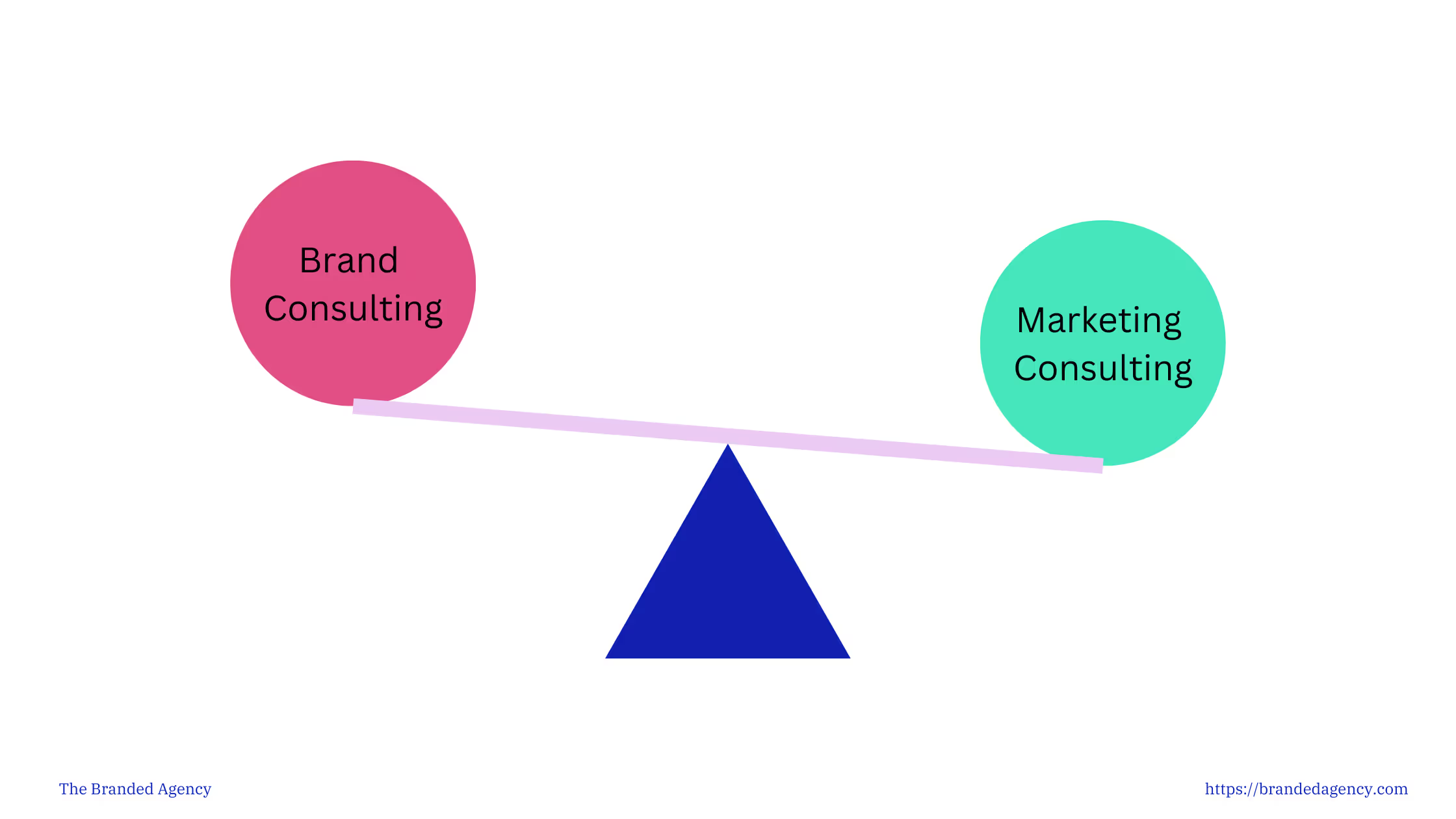
Brand Consulting vs Marketing Consulting

What Do Branding Consultancy Services Include?

Branding consultancy services help a company define, organize, and express its brand across every customer and employee touchpoint. A comprehensive branding engagement may include:

  • Brand discovery and audits: Evaluating the company’s existing positioning, messaging, identity, customer experience, and competitive standing.
  • Audience and competitor research: Understanding the people the business needs to reach and how competing brands are positioned.
  • Brand positioning: Establishing the distinct and valuable place the company should occupy in the minds of its customers.
  • Purpose, mission, and vision: Clarifying why the business exists, what it aims to accomplish, and where it is going.
  • Brand architecture: Organizing the relationships between a parent company, sub-brands, products, services, and future offerings.
  • Value proposition development: Explaining the specific value the company provides and why that value matters to its audience.
  • Brand messaging and verbal identity: Creating the language, stories, claims, tone, and communication principles used across the brand.
  • Visual identity: Developing the logo, typography, colour system, imagery, iconography, and other recognizable brand elements.
  • Brand guidelines: Documenting how the brand should be communicated and represented across different teams, channels, and applications.
  • Brand activation: Applying the strategy and identity to websites, campaigns, social media, sales materials, packaging, environments, and other important touchpoints.
  • Internal brand alignment: Helping employees understand the brand promise and consistently deliver it through their work and customer interactions.

A branding consultancy should provide more than an attractive logo or a collection of design assets. Its role is to create a clear, differentiated, and scalable brand system that supports marketing, customer experience, and long-term business growth.

What Services Do Marketing Consultants Provide?

Designer using a graphics tablet and referencing a color swatch book while working at a desk with a desktop computer.
Group of four young professionals collaborating in a cozy, plant-filled office with charts and graphs on the table.
Focused man holding a coffee cup and reviewing brand design layouts at a desk while two colleagues talk in the background.
Close-up of a desktop computer with a “Design Systems” book cover on the screen, in a well-lit home office workspace.

Marketing consultants help businesses determine how to reach the right audience, generate demand, convert more customers, and measure performance. They may provide strategic guidance, execution support, or both.

Common marketing consulting services include:

  • Marketing audits: Evaluating current channels, campaigns, messaging, technology, budgets, and performance to identify gaps and opportunities.
  • Marketing strategy: Creating a plan that connects target audiences, business objectives, priority channels, budgets, timelines, and measurable KPIs.
  • Audience and channel strategy: Identifying where prospective customers spend their time and determining which channels are most likely to influence them.
  • Content strategy and creation: Planning and producing useful content for websites, search engines, social media, email, thought leadership, and sales enablement.
  • Campaign development: Creating campaign concepts, offers, messaging, creative assets, landing pages, and channel-specific execution plans.
  • SEO and AI-search optimization: Improving website structure, content, authority, and relevance so the business can be discovered through traditional search engines and AI-powered platforms.
  • Paid media strategy: Planning and managing advertising across platforms such as Google, YouTube, Meta, LinkedIn, TikTok, and other relevant channels.
  • Conversion-rate optimization: Improving landing pages, calls to action, forms, offers, and customer journeys to turn more traffic into leads or sales.
  • Retention marketing: Using email, SMS, loyalty programs, automation, and customer segmentation to increase repeat purchases and customer lifetime value.
  • Marketing analytics: Tracking traffic, qualified leads, conversions, acquisition costs, revenue, retention, and return on marketing investment.

An effective marketing plan should define what the business wants to achieve, who it needs to reach, which channels it will use, what it will communicate, and how success will be measured. A marketing consultant helps turn those decisions into a practical roadmap.

What Are Business Growth Consulting Services?

Business growth consulting helps companies identify and act on opportunities to increase revenue, enter new markets, improve profitability, and build more scalable operations.

Unlike marketing consulting, which primarily focuses on reaching and converting customers, business growth consulting considers the wider organization. This may include pricing, operations, financial performance, customer retention, market expansion, sales processes, and internal capabilities.

Common business growth consulting services include:

  • Growth strategy: Establishing clear growth objectives and determining the markets, products, services, and customer segments most likely to support them.
  • Market expansion planning: Researching new geographic regions, industries, audiences, or distribution channels before the business invests in expansion.
  • Revenue-model analysis: Evaluating pricing, packaging, margins, recurring-revenue opportunities, and customer lifetime value.
  • Customer acquisition strategy: Creating a coordinated plan for attracting new customers through marketing, sales, partnerships, referrals, and other channels.
  • Customer retention strategy: Identifying ways to improve customer experience, repeat purchases, loyalty, referrals, and long-term account value.
  • Sales and marketing alignment: Connecting marketing activity with sales processes so leads are properly qualified, followed up with, and converted.
  • Financial and resource planning: Evaluating budgets, unit economics, staffing requirements, and investment priorities to ensure the growth plan is financially realistic.
  • Business-process optimization: Improving workflows, technology, responsibilities, and approval processes to reduce inefficiencies and support scale.
  • Performance measurement: Defining the metrics that show whether the growth strategy is increasing revenue, profitability, market share, or operational efficiency.

A business growth consultant should not simply recommend that a company “do more marketing.” They should determine which growth opportunities are commercially viable, what capabilities are required, and how the business can pursue them without creating unnecessary operational or financial strain.

How Branding, Marketing, and Business Growth Consulting Work Together

Branding, marketing, and business growth consulting address different parts of the same challenge:

  • Brand consulting defines what the business stands for, how it is positioned, and why customers should choose it.
  • Marketing consulting determines how the business will reach, engage, convert, and retain those customers.
  • Business growth consulting ensures the company has the strategy, economics, operations, and resources required to scale.

These disciplines are most effective when they work together. A growth strategy without a differentiated brand can lead to higher acquisition costs. Marketing without clear positioning can generate attention without meaningful conversion. Branding without activation can create a strong identity that never produces commercial results.

The right consulting partner should leave your business with clear priorities, practical recommendations, accountable owners, and measurable success criteria—not a strategy document that is difficult to implement.
Want to learn more about brand platforms, Brand Strategy and Brand Identity? Keep reading!

If you need help with your companies brand strategy and identity, contact us for a free custom quote.

How to Choose and Hire the Right Type of Consultancy Firm?

Diverse creative team smiling and posing around a desk in a modern office, with mood boards and design visuals displayed behind them.

How to Choose a Business, Marketing, or Branding Consultancy

The best consulting firm for your business is the one with the right combination of expertise, experience, process, and implementation capabilities for your specific goals.

Before hiring a business, marketing, or branding consultancy, evaluate the following factors:

  • Relevant expertise: Confirm that the firm specializes in the problem you need to solve, whether that is brand positioning, rebranding, marketing strategy, customer acquisition, operational improvement, or business growth.
  • Industry experience: Look for experience in your industry or with businesses facing similar market conditions, customer journeys, regulations, or growth challenges.
  • Quality of previous work: Review case studies, portfolio examples, campaign results, and client outcomes—not simply the logos displayed on the consultancy’s website.
  • Strategic depth: Determine whether the consultants investigate the underlying business problem or immediately begin recommending tactics.
  • Implementation capabilities: Some firms only deliver recommendations. Others can also develop the identity, website, content, campaigns, technology, and systems required to execute the strategy.
  • Measurement approach: Ask how the firm defines success, which KPIs it will track, and how it will connect its work to business performance.
  • Senior involvement: Understand who will actually work on your account and how involved the senior strategists presented during the sales process will remain.
  • Process and communication: Look for a clear process, defined milestones, realistic timelines, regular communication, and transparent approval procedures.
  • Client reviews and references: Examine credible reviews, testimonials, references, and independent feedback to understand how the consultancy performs after the contract is signed.
  • Cultural fit: The consultants should understand your ambitions, communicate clearly, challenge assumptions constructively, and work effectively with your internal team.
  • Scope and budget: Compare what is included, what is excluded, how revisions are managed, and whether the proposed investment matches the complexity of the problem.

A strong consultancy should be able to explain what it will do, why it matters, who will be responsible, how the work will be implemented, and how progress will be measured.

What Do Brand Strategy Consultants Do?

Brand strategy consultants help businesses define how they should be positioned, understood, and differentiated in the market. Their work establishes the strategic foundation for messaging, identity, customer experience, marketing, and long-term growth.

Brand strategy consulting services may include:

  • Brand research and audits: Evaluating the current brand, customer perceptions, competitors, market conditions, and internal stakeholder perspectives.
  • Audience strategy: Identifying priority audiences and understanding their needs, motivations, behaviours, and decision-making criteria.
  • Brand positioning: Defining the distinct and valuable position the business should occupy relative to its competitors.
  • Purpose, mission, and vision: Clarifying why the organization exists, what it aims to accomplish, and where it is going.
  • Value-proposition development: Explaining the value the business provides and why customers should choose it.
  • Brand architecture: Organizing the relationships among the corporate brand, sub-brands, products, services, and future offerings.
  • Brand messaging: Developing key messages, taglines, brand stories, claims, and communication frameworks.
  • Verbal identity: Establishing the brand’s voice, tone, personality, vocabulary, and writing principles.
  • Creative direction: Translating the strategy into a clear direction for visual identity, imagery, typography, colour, motion, and other creative elements.
  • Visual identity development: Creating or refining the logo and broader visual system used to make the brand recognizable.
  • Brand guidelines: Documenting how the strategy, messaging, and identity should be applied consistently.
  • Brand activation: Applying the brand across websites, campaigns, packaging, sales materials, social media, physical spaces, and other touchpoints.
  • Brand measurement: Tracking awareness, consideration, preference, customer perception, search demand, and other indicators of brand strength.

A logo may be one outcome of a branding engagement, but it is not the brand strategy itself. Effective brand consulting begins with research and positioning, then uses messaging, design, and experience to express that strategy.

What Are Some of the Top Business Consulting Firms?

There is no single best business consulting firm for every company. Large enterprise consultancies are generally suited to complex transformation programs, while specialized or boutique firms may provide greater senior involvement, flexibility, and category expertise.

Established business consulting firms include:

  • Deloitte Consulting: Business transformation, technology, operations, human capital, finance, and enterprise strategy.
  • Bain & Company: Corporate strategy, customer strategy, performance improvement, private equity, and organizational transformation.
  • Boston Consulting Group: Business strategy, innovation, digital transformation, operations, and organizational change.
  • McKinsey & Company: Enterprise strategy, operations, analytics, organizational transformation, and growth.
  • Accenture: Strategy, technology, operations, digital transformation, data, and managed services.
  • Roland Berger: Corporate strategy, restructuring, innovation, operations, and international growth.
  • PwC Consulting: Technology, risk, finance, operations, workforce, and business transformation.
  • KPMG Advisory: Strategy, transactions, risk, technology, operational improvement, and organizational transformation.

These firms primarily serve large organizations with complex business challenges and substantial consulting budgets. Smaller companies may benefit from a specialized consultancy with more direct senior involvement and a scope designed around their stage of growth.

What Are Some of the Top Brand Strategy Consulting Firms?

Brand strategy firms differ significantly in size, specialization, process, and implementation capabilities. Some concentrate on enterprise strategy, while others combine positioning, identity, digital experience, creative, and ongoing marketing.

Established brand strategy consultancies include:

  • The Branded Agency: A Vancouver-based branding and marketing consultancy that connects research, positioning, messaging, identity, digital experiences, creative, and growth strategy through its Brand-Backed Performance™ model.
  • Lippincott: Brand strategy, innovation, customer experience, identity, and organizational change.
  • Landor: Brand consulting, identity design, customer experience, verbal identity, and brand-led transformation.
  • Design Bridge and Partners: Brand strategy, identity, packaging, experience, and design for consumer and corporate organizations.
  • FutureBrand: Brand strategy, identity, experience, innovation, and corporate branding.
  • Wolff Olins: Brand strategy, creative transformation, identity, and experience for global organizations.
  • Siegel+Gale: Brand strategy, naming, identity, communication, and customer experience with a focus on simplicity.
  • Prophet: Brand, marketing, customer experience, digital transformation, and growth strategy.

When comparing brand strategy firms, consider whether you need an enterprise consultancy, a specialized identity partner, or an integrated agency that can carry the strategy through creative development, digital implementation, and marketing.

What Are Some of the Top Marketing Consulting Firms?

Marketing consulting firms help businesses understand customers, prioritize channels, create demand, improve conversion, and connect marketing activity to commercial performance.

Established marketing strategy and consulting partners include:

  • The Branded Agency: Integrated brand and marketing strategy, creative, website design, content, paid media, retention, conversion optimization, and growth.
  • Accenture Song: Marketing, commerce, customer experience, digital products, technology, and business transformation.
  • Deloitte Digital: Digital strategy, customer experience, commerce, marketing technology, data, and organizational transformation.
  • Ogilvy: Brand strategy, advertising, customer experience, public relations, consulting, and integrated marketing.
  • VML: Brand experience, customer experience, commerce, creative, technology, and marketing transformation.
  • R/GA: Brand design, experience design, innovation, communications, technology, and consulting.
  • Publicis Sapient: Digital business transformation, customer experience, commerce, data, technology, and product development.
  • Prophet: Brand, marketing, customer experience, growth strategy, and digital transformation.

The right marketing consulting firm depends on the company’s size, goals, internal capabilities, geographic reach, industry, and need for implementation. A multinational transformation project requires a very different partner from a growth-stage company seeking brand strategy, campaigns, and hands-on execution.

How Do You Choose the Best Marketing Consulting Firm?

To choose the best marketing consulting firm, begin by defining the business problem—not merely the marketing deliverables you think you need.

For example, declining sales may be caused by weak positioning, an unclear offer, poor website conversion, ineffective campaigns, limited customer retention, or a combination of these factors. A capable consultant should diagnose the cause before prescribing a solution.

Ask prospective firms the following questions:

  • Have you solved similar problems for comparable businesses?
  • Who will be responsible for our strategy and day-to-day work?
  • How will you research our customers, competitors, and current performance?
  • Which marketing channels do you believe are most relevant, and why?
  • Can you implement the strategy or only provide recommendations?
  • How will you measure qualified leads, customer acquisition cost, conversion, revenue, retention, and return on investment?
  • How often will you report results and recommend changes?
  • What information, resources, and approvals will you need from our team?
  • What is included in the scope, and what could create additional costs?
  • How will the work support our long-term brand and business strategy?

Be cautious of firms that guarantee specific results before reviewing your business, recommend every available channel, or focus on impressions and traffic without connecting those metrics to qualified leads, sales, or retention.

The best marketing consultant should provide clear strategic reasoning, realistic expectations, transparent measurement, and recommendations your business can actually implement.

What Is a Brand Consultant?

A brand consultant is a strategist who helps an organization define, position, develop, and manage its brand. Brand consultants connect business strategy with customer perception, messaging, identity, and experience.

Typical brand-consultant responsibilities include:

  • Conducting brand, customer, competitor, and market research
  • Auditing existing positioning, messaging, and identity
  • Identifying audience needs and market opportunities
  • Developing brand positioning and differentiation
  • Defining purpose, mission, vision, and values
  • Creating value propositions and messaging frameworks
  • Developing naming and brand-architecture recommendations
  • Guiding verbal and visual identity development
  • Collaborating with designers, writers, researchers, marketers, and internal stakeholders
  • Creating brand guidelines and governance systems
  • Supporting rebrands, launches, and brand activation
  • Measuring customer perception and brand performance

Successful brand consultants combine research, strategic thinking, creativity, commercial awareness, facilitation, and communication. Their role is not simply to make a company look different; it is to make the business easier to understand, trust, remember, and choose.

What Is a Marketing Consultant?

A marketing consultant is a professional who helps an organization plan, improve, and measure how it reaches, converts, and retains customers.

Typical marketing-consultant responsibilities include:

  • Auditing current marketing strategies, channels, campaigns, and technology
  • Researching customers, competitors, and market trends
  • Defining marketing objectives, audiences, budgets, and KPIs
  • Developing channel, campaign, content, and acquisition strategies
  • Improving offers, messaging, funnels, and customer journeys
  • Guiding SEO, AI-search visibility, paid media, social media, email, and content marketing
  • Collaborating with creative, media, sales, data, and technology teams
  • Monitoring campaign and channel performance
  • Analyzing acquisition costs, conversion rates, revenue, and retention
  • Recommending experiments and performance improvements
  • Reporting results to internal teams and leadership

Marketing consultants need analytical ability, strategic judgment, customer understanding, communication skills, and working knowledge of the channels they recommend. They should be able to connect marketing activity to measurable business objectives rather than reporting surface-level metrics alone.

What Is a Business Management Consultant?

A business management consultant helps organizations improve strategy, operations, efficiency, decision-making, and organizational performance.

Typical business-management consultant responsibilities include:

  • Assessing business models, operations, workflows, and organizational structures
  • Identifying operational inefficiencies and performance gaps
  • Developing strategic and operational improvement plans
  • Redesigning processes, roles, responsibilities, and governance
  • Supporting technology selection and implementation
  • Creating performance-management systems and KPIs
  • Evaluating expansion, restructuring, and transformation opportunities
  • Facilitating leadership alignment and organizational change
  • Working with finance, operations, sales, marketing, and human-resources teams
  • Monitoring implementation and measuring business outcomes

Business management consultants require strategic thinking, financial literacy, analytical problem-solving, stakeholder-management skills, and an understanding of organizational change. Their work typically extends beyond marketing to improve how the wider business operates and scales.

What Is a Full-Service Consulting Firm?

A full-service consulting firm provides strategy and implementation across multiple areas of a business rather than specializing in one isolated service. Depending on the firm, its capabilities may include business strategy, brand strategy, marketing, customer experience, technology, operations, creative development, and performance measurement.

A full-service engagement commonly follows four stages:

1. Audit and Discovery

The firm evaluates the business model, market, customers, competitors, positioning, marketing, operations, existing data, and current performance.

2. Strategy Development

Consultants identify the most important opportunities and create a prioritized plan covering objectives, audiences, positioning, channels, resources, timelines, and KPIs.

3. Implementation

The firm may help develop the brand identity, website, content, campaigns, technology, workflows, and internal systems required to execute the strategy.

4. Measurement and Optimization

Consultants monitor results, identify areas for improvement, test new approaches, and adjust the strategy based on evidence.

A full-service consulting firm can be valuable when a business needs several connected capabilities and does not want to coordinate multiple specialized partners. However, companies should still confirm that the firm has genuine depth in the services most critical to the engagement.

The strongest full-service partners connect brand, marketing, customer experience, and business strategy around measurable outcomes. They should leave the organization with stronger capabilities, clearer systems, and a practical path for continued growth.

Conclusion: Is Hiring a Branding or Marketing Consultant Worth It?

Modern open-plan office space with white desks, black chairs, and minimalist decor, conveying a sleek professional environment.

Hiring a branding, marketing, or business consultant can be worthwhile when your company needs specialized expertise, an objective perspective, or a clearer strategy for growth.

The right consulting firm can help you identify what is limiting performance, clarify your market position, understand your customers, prioritize opportunities, and turn those insights into an actionable plan. Depending on your needs, that may involve strengthening your brand, improving your marketing, entering a new market, increasing conversion, or building more scalable operations.

A consulting firm is especially valuable when:

  • Your brand no longer reflects the company you have become
  • Customers have difficulty understanding what makes you different
  • Marketing activity is not generating measurable business results
  • Your team lacks specialized brand, creative, or marketing expertise
  • Growth has stalled and the underlying cause is unclear
  • You are launching, repositioning, rebranding, or entering a new market
  • You have a strategy but need support implementing it

The best consultant will not apply the same formula to every business. They will investigate your market, customers, competitors, capabilities, and objectives before recommending a strategy. They should also establish clear priorities, responsibilities, timelines, and success metrics so you can evaluate whether the work is producing meaningful results.

Ultimately, consulting should provide more than advice. It should give your business greater clarity, stronger decision-making, and a practical path toward sustainable growth.

Looking for a Branding and Marketing Consultancy?

The Branded Agency is a full-service branding and marketing agency headquartered in Vancouver, Canada, serving ambitious companies throughout Canada, the United States, and international markets.

We connect brand strategy, positioning, messaging, and identity with marketing, creative, digital experiences, and business growth strategy. Our Brand-Backed Performance™ model ensures your brand is not developed in isolation—it is built to support how your business attracts customers, earns trust, converts demand, and scales.

Whether you are launching a new company, repositioning an established business, or looking for a more integrated brand and marketing partner, our team can provide both the strategic direction and hands-on execution required to move forward.

Startups and smaller companies can also explore our dedicated startup-branding services, while growing and enterprise organizations can review our complete range of branding and marketing services.

Ready to clarify your brand, strengthen your marketing, and uncover your next opportunity for growth? Book an introductory consultation with The Branded Agency.

An image of the author Sloane Avery

Sloane Avery

As entrepreneurs, they’ve built and scaled their own ventures from zero to millions. They’ve been in the trenches, navigating the chaos of high-growth phases, making the hard calls, and learning firsthand what actually moves the needle. That’s what makes us different—we don’t just “consult,” we know what it takes because we’ve done it ourselves.

Want to learn more about brand platform?

If you need help with your companies brand strategy and identity, contact us for a free custom quote.

We do great work. And get great results.

DrTung’s
Breathed new life into a storied oral care brand with a smarter site and marketing for scalable growth.

+2.3x
Increase in revenue YoY

+126%
Increase in repurchase rate YoY

READ MORE
DrTung’s oral care product image with a smiling man, tooth powder tabs, and activated charcoal floss.
Smartphone on a textured blue surface displaying a DrTung’s ad with the text “Make the Switch” and an image of a woman holding herbal tooth powder tabs.
Flat lay of DrTung’s oral care products, arranged with a blue pouch on white tile.
DrTung’s Activated Charcoal Floss packaging arranged in a repeating pattern on a bright blue background.
DrTung’s oral care product image with a smiling man, tooth powder tabs, and activated charcoal floss.
Smartphone on a textured blue surface displaying a DrTung’s ad with the text “Make the Switch” and an image of a woman holding herbal tooth powder tabs.
Flat lay of DrTung’s oral care products, arranged with a blue pouch on white tile.
DrTung’s Activated Charcoal Floss packaging arranged in a repeating pattern on a bright blue background.
Mary Louise Cosmetics
Scaled a heritage-inspired clean beauty brand with modern performance marketing and farm-to-face storytelling.

+93%
Revenue growth in first 90 days

+144%
Increase in attributed revenue

READ MORE
Mary Louise Lilac & Shea Body Butter jar with creamy texture and lavender sprigs on a beige surface.
A Mary Louise Miracle Serum bottle with a dropper cap, lying on a bed of small yellow flowers.
Mary Louise body butter promotional print materials with product photography and skincare application imagery.
Mary Louise Miracle Serum bottles arranged in a close-up pattern with pale yellow dropper caps.
Mary Louise Lilac & Shea Body Butter jar with creamy texture and lavender sprigs on a beige surface.
A Mary Louise Miracle Serum bottle with a dropper cap, lying on a bed of small yellow flowers.
Mary Louise body butter promotional print materials with product photography and skincare application imagery.
Mary Louise Miracle Serum bottles arranged in a close-up pattern with pale yellow dropper caps.
Eyecart
Made eye care feel modern, then marketed it like a DTC darling—with the results to match.

+91%
Increase in conversion rate

+46%
Increase in AOV

READ MORE
Eyecart optical care campaign image with a smiling woman holding a branded magnifying lens over one eye.
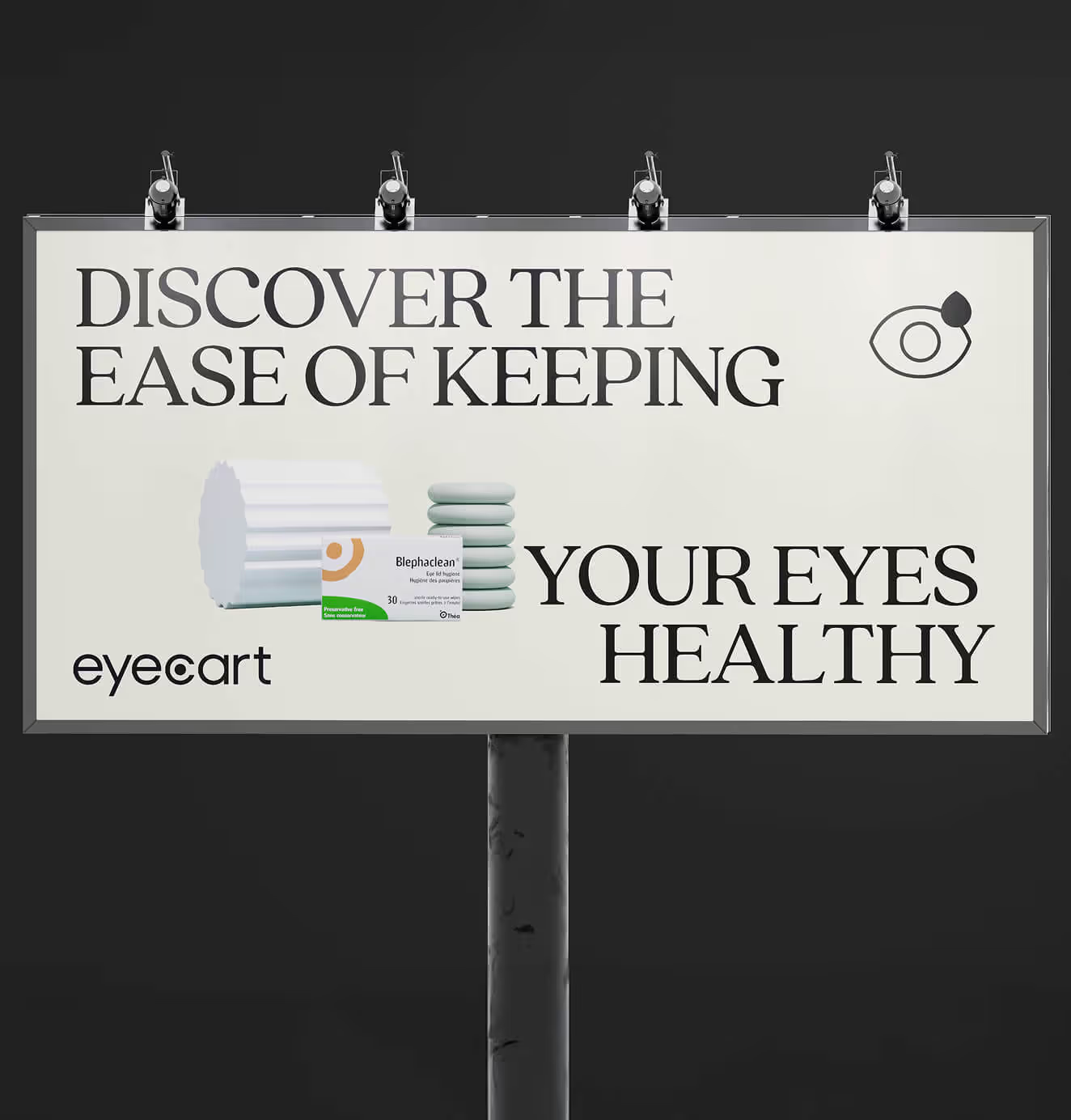
Eyecart billboard campaign featuring Blephaclean eye care wipes and healthy eye care messaging.
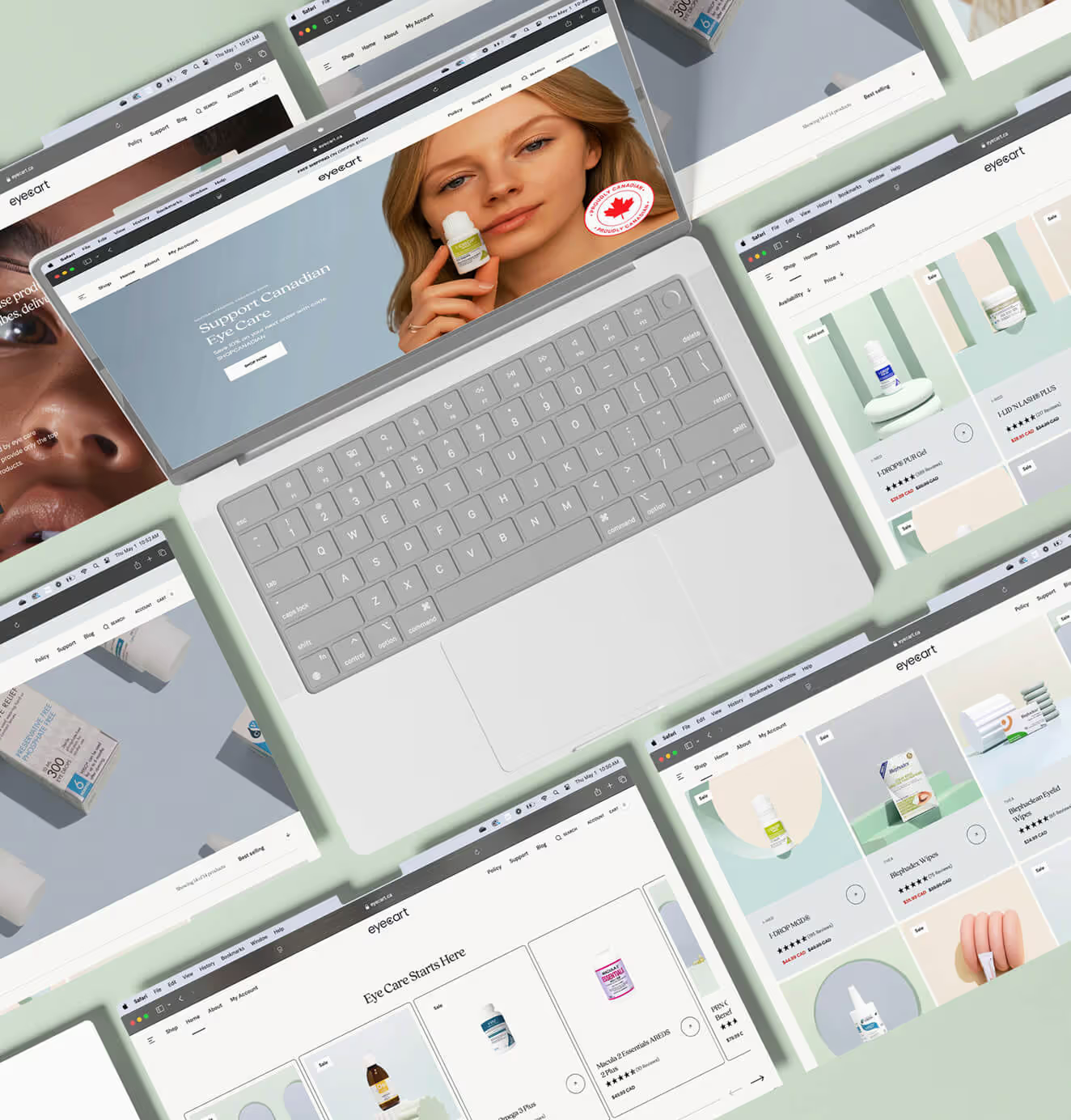
Multiple laptop screens display the Eyecart website, showcasing product pages and banners promoting eye care items.
Eyecart outdoor campaign posters featuring eye care products, skincare visuals, and modern branding.
Eyecart optical care campaign image with a smiling woman holding a branded magnifying lens over one eye.
Eyecart billboard campaign featuring Blephaclean eye care wipes and healthy eye care messaging.
Multiple laptop screens display the Eyecart website, showcasing product pages and banners promoting eye care items.
Eyecart outdoor campaign posters featuring eye care products, skincare visuals, and modern branding.
Lucky Girl Rosé
We turned a zero-carb rosé into a lifestyle brand that makes every moment worth celebrating.

+200%
Increase in conversion rate

+688%
Increase in attributed revenue

READ MORE
A bottle of Lucky Girl rosé wine nestled among pink and white flowers in a rustic outdoor setting.
Lucky Girl rosé picnic setup with wine bottle, fruit, sunglasses, and The Lucky Club booklet.
Lucky Girl rosé campaign visual with a wine glass, gold tray, red nails, and Pour Yourself Some Luck text.
Lucky Girl rosé wine bottle with floral label design and soft pink lifestyle styling.
A bottle of Lucky Girl rosé wine nestled among pink and white flowers in a rustic outdoor setting.
Lucky Girl rosé picnic setup with wine bottle, fruit, sunglasses, and The Lucky Club booklet.
Lucky Girl rosé campaign visual with a wine glass, gold tray, red nails, and Pour Yourself Some Luck text.
Lucky Girl rosé wine bottle with floral label design and soft pink lifestyle styling.