Paid Search SEM: A Practical Guide to Profitable Search Engine Marketing
07/07/2026
Social Media Marketing

.png)


Paid Search SEM Explained


Key Takeaways
- Paid search marketing, also known as search engine marketing (SEM) or pay-per-click (PPC) advertising, is a digital marketing strategy where advertisers pay a fee each time one of their ads is clicked, appearing prominently on search engine results pages above organic search results.
- Search campaigns work through real-time ad auctions where your Ad Rank—determined by bid amount, quality score, and ad relevance—decides whether your paid ads appear and in what position.
- Success in paid search advertising hinges on tight alignment between target keywords, well-structured ad groups, compelling ad copy, and highly relevant landing pages, all tracked with clear conversion goals.
- Modern paid search ads rely heavily on automation, including Smart Bidding strategies, Performance Max campaigns, and AI-assisted creative testing through responsive search ads.
- Search engine marketing works best when integrated with your broader digital advertising strategy, including analytics, conversion rate optimization, and organic search engine optimization SEO for long-term visibility.
What Is Paid Search SEM?
Search engine marketing (SEM) typically refers to running paid ads that can appear when someone searches for terms related to your business on search engines like Google and Bing, driving targeted traffic to your website. These sponsored listings show up above or alongside organic search results, marked with “Sponsored” or “Ad” labels.
Search engine marketing is one of the most effective forms of digital advertising for reaching highly motivated prospects. When users search for “emergency plumber near me” or “best CRM for startups,” they’re actively looking for solutions—and paid search puts your business directly in front of them at that exact moment of intent.
The main platforms dominating this space are Google Ads (commanding over 90% of global search market share) and Microsoft Advertising, which covers Bing, Yahoo, and partner properties. Other search-based ecosystems like Amazon Ads serve product-focused queries for ecommerce brands.
Paid Search vs. SEM vs. PPC: Sorting Out the Terms
These three terms get tossed around interchangeably in marketing conversations, which creates confusion. Here’s how to think about each one.
Paid search refers specifically to ads that appear on search results pages based on keywords, primarily through Google Ads and Microsoft Advertising. When someone types a search query, your text ads can appear if you’re bidding on relevant keywords.
SEM (search engine marketing SEM) has become industry shorthand for paid search, especially post-2020. Historically, it encompassed both paid advertising and SEO, but the terminology shifted as search engine optimization matured into its own discipline.
PPC describes the payment model itself—pay per click. The terms paid search and pay-per-click (PPC) are often used interchangeably, but there’s a subtle distinction: all paid search is PPC, but not all PPC is paid search. PPC extends to display ads, social advertising, and shopping ads across various platforms.
In practice, an agency might report: “Our SEM/PPC/paid search campaign on ‘project management software’ delivered 5x ROAS”—all three terms describing the same activity.
How SEM Differs from SEO and Broader Search Marketing
Search marketing is the umbrella term covering both SEM (paid search) and SEO (organic search engine optimization). Understanding how they differ helps you allocate resources strategically across channels like paid search and social media marketing investments.
Timeline differences matter. Paid search campaigns can generate web traffic within hours of approval. SEO is gradual and compounding, often requiring months to build organic search rankings through content depth, backlinks, and technical optimization.
Control varies significantly. With SEM, you control bids, budgets, ad copy, and targeting directly. SEO depends on search engine algorithms and requires building authority over time. Advertisers have control over daily spending limits and can stop or adjust campaigns at any time during paid search.
The most effective brands in 2026 run both: using paid advertising specifically to capture immediate demand while organic SEO builds long-term search visibility and supports broader branding campaign objectives. Google’s data shows brands running both achieve 25% higher conversion rates.
Your reporting should distinguish between paid search traffic and organic search results in analytics to measure impact accurately—misattribution can inflate perceived SEO ROI by 30-50%.

Ads with Quality Scores of 7+ achieve CPCs 50% lower than those scoring 5 or below, while CTRs are three times higher.
Utilizing ad extensions can improve click-through rates by providing additional information in ads. Advertisers can enhance their ads with extensions like sitelinks, call buttons, and location extensions for more information. For example, an ecommerce shoe ad might include sitelinks for “Men’s Shoes,” “Women’s Shoes,” and “Free Returns”—increasing CTR by an average of 15%.
Keyword Match Types and Intent
Match types control how loosely or tightly a keyword in your ad group matches a user’s actual search. Understanding these helps you balance reach against relevance.
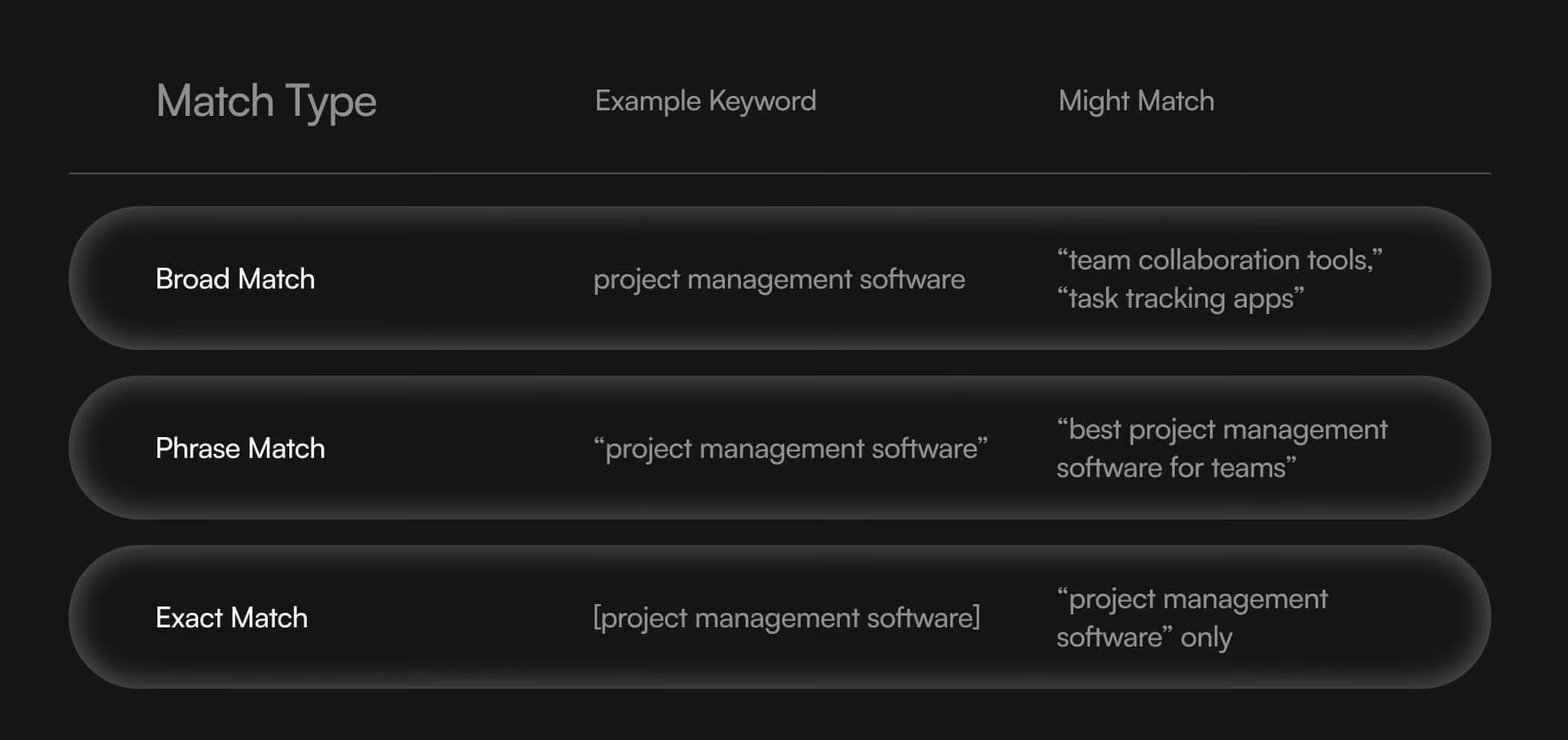
The foundational element of paid search has historically been the keyword, but AI has shifted the focus toward a more sophisticated understanding of user intent, prioritizing the ‘why’ behind a search query over the specific ‘what’ of the words used. Broad match now leverages Google’s semantic search and AI to match synonyms and related concepts.
Modern SEM campaigns typically use a mix of match types plus robust negative keywords to balance reach and efficiency. Using long-tail keywords can reach highly motivated buyers at a lower cost-per-click (CPC).
Free Brand Health Audit
Make sure your brand is built to sell

Core Components of a High-Performing SEM Campaign


Want to learn more about Digital Marketing and Strategy? Keep reading!
Campaign Types and Platforms in Paid Search

Paid search now spans multiple campaign types and surfaces beyond basic search ads. Understanding when to use each helps you maximize visibility across the buyer journey and fit SEM into the broader mix of advertising types.
Standard Search Campaigns
Standard search campaigns remain the backbone of most SEM strategies, using keyword-targeted responsive search ads on search results pages.
These work best for high-intent, bottom-of-funnel queries:
- “Book dentist appointment Chicago”
- “Enterprise email security pricing”
Separate brand search campaigns (low CPC, high conversion) from non-brand campaigns (higher CPC, broader testing). Many advertisers also create competitor campaigns bidding on rival brand names—though trademark policies apply.
Shopping and Product-Focused Campaigns
Shopping campaigns display product images, titles, and prices directly in SERPs for ecommerce queries. For “running shoes under $100,” image-rich Product Listing Ads claim top real estate.
These campaigns pull data from product feeds in Merchant Center, not keyword lists. US ecommerce Shopping clicks grew 25% year-over-year in 2025, making them essential for retail categories.
Performance Max, Demand Gen, and AI-Driven Campaigns
Performance Max represents Google’s AI-first approach, using audience signals, search themes, and creative assets to automate delivery across Search, the Google Display Network, YouTube, Gmail, and Discover. Many advertisers pair these campaigns with multi-model AI prompting workflows to generate, refine, and govern creative and audience insights across channels.
Advertisers set goals (target CPA, ROAS) rather than bidding on specific keywords. Studies show 18% incremental conversions—though reduced transparency and control are tradeoffs.
Demand Gen campaigns focus on upper-funnel discovery, complementing paid search with 15-20% lower CPAs for awareness objectives.
Microsoft Advertising and Other Search Ecosystems
Microsoft Advertising extends reach to Bing Ads, Yahoo, and partner properties with similar campaign types to Google. Its audience skews older and more affluent—valuable for B2B, finance, and professional services.
Campaigns can be imported from Google Ads with minimal changes. Microsoft often delivers CPCs 20-30% lower than Google. Consider expanding once your core Google campaigns are profitable and stable.
Budgeting, Bidding, and Optimization in Paid Search
Budgeting and bidding determine how much targeted traffic you can afford and at what cost per acquisition. The shift toward automated bidding strategies powered by machine learning and AI tools to boost website traffic has transformed data driven campaigns in 2024-2026.
Setting Realistic Budgets and Goals
Setting a daily budget that you are comfortable with and closely monitoring performance allows for data-driven adjustments to maximize return on investment (ROI) in paid search campaigns.
Back into your monthly budget from revenue goals:
- Target CPA × Desired conversions = Required budget
- Industry CPCs vary dramatically: legal/insurance $50+, retail $1-2
Starting with small daily spends for testing can help determine what works in paid search management. Small businesses typically start at $1,000-$3,000 monthly for testing. Effective paid search strategies for small businesses focus on high-intent targeting and strict budget control to maximize ROI.
Maximizing limited budgets in paid search focuses on high-intent, long-tail keywords, tight local targeting, and optimized landing pages to drive conversions.
Manual vs. Smart Bidding Strategies
Effective bidding strategies can include both manual bidding, where you set your own maximum cost-per-click (CPC) for each keyword, and automated bidding strategies that use machine learning to optimize for goals like conversions or clicks.

Smart Bidding uses hundreds of signals—device, location, time, remarketing lists—to adjust bids in real-time. Avoid switching strategies too often; algorithms need 2+ weeks to learn.
Ongoing Optimization: Testing and Refinement
Profitable sem campaigns require continuous refinement. A/B testing on ad copy and landing pages helps refine campaigns in paid search.
Prioritize tests by impact:
- Headlines and descriptions
- Landing page layouts and CTAs
- Audience segments
- Bid strategies
Search term reports reveal wasted ad spend, new keyword opportunities, and negative keyword candidates. Use platform experiment features, supported by AI content and analysis tools, to compare strategies statistically before full rollout.
Best Practices and Common Pitfalls in Paid Search SEM


Quincy Samycia
Want to learn more about brand platform?