Product Designer vs UX Designer: Which Career Path Is Right for You?
07/08/2026
Web Design
Learn how to build a high-performing paid search SEM strategy that captures buyer intent, maximizes advertising ROI, and turns every click into measurable business growth.
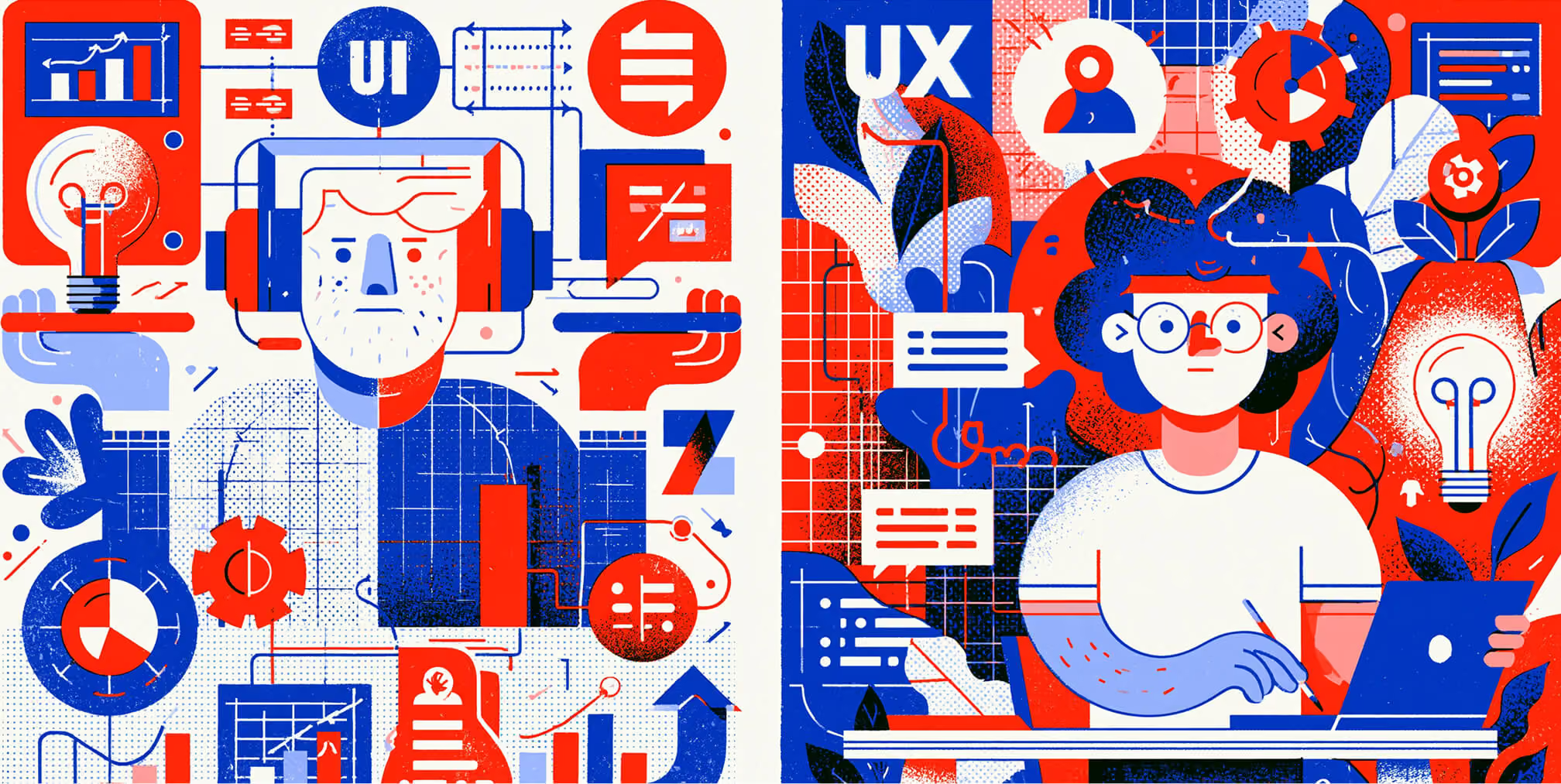
Choosing between product design and UX design affects your daily responsibilities, skill requirements, career trajectory and collaboration style. Both roles focus on user-centered design but differ in scope, strategic involvement and specialization depth.
.png)


Product Designer vs UX Designer Explained
Below is a practical comparison of product designer vs UX designer career paths. Product and UX design often work together and overlap in responsibilities, with both contributing to the product development process through design, research, and collaboration.
Introduction to Design Roles
Design roles are fundamental in shaping products that are both user-friendly and aligned with business goals. The two primary roles in this space are Product Designer and UX Designer.
- Product Designer: Oversees the entire design process, from the initial concept to the final product. Product designers ensure that every stage of development addresses user needs, technical constraints, and business objectives. They balance user research with business strategy to deliver solutions that meet both user and company goals.
- UX Designer: Focuses on the user experience by conducting user research, creating user personas, and designing intuitive interfaces. UX designers have a deep understanding of user behavior and are dedicated to optimizing how users interact with products. Their work centers on identifying user needs and ensuring the final product is both usable and enjoyable.
Both roles require a comprehensive understanding of the entire design process, technical constraints, and the ability to translate user needs into actionable design solutions that support business objectives.
Product Designer vs UX Designer: Key Differences
The main difference comes down to breadth versus depth.
- Product designers oversee the entire product lifecycle from initial concept to final product and post-launch improvements.
- UX designers focus on improving user interactions with a product, relying heavily on research, testing and iteration to ensure usability and accessibility.
Product designers focus on integrating strategy, aesthetics, and business goals across the entire product lifecycle, while UX designers focus more narrowly on optimizing the user experience.
Product designers are generally more business-oriented, focusing on aligning product design with business goals. UX designers concentrate on enhancing user experience and usability through deep understanding of user behavior.
Both roles aim to create intuitive, useful and high-quality user experiences. In smaller companies or startups, the roles of product designer and UX designer are often used interchangeably due to overlapping responsibilities.
Scope and Responsibilities
The breadth of responsibilities differs significantly between these roles. User experience designers are responsible for ensuring usability, conducting research, and shaping the overall user journey to enhance user satisfaction and identify business opportunities.
Product Designer Responsibilities
Product designers manage the end-to-end creation of a product, from initial concept to final release and post-launch improvements, often relying on innovative creative design strategies to align outcomes with user needs and business goals. Their design process typically involves:
- Aligning design decisions with business strategy and technical constraints
- Collaborating with cross-functional teams including engineering, marketing teams and business teams
- Handling user interface (UI) design, visual design, and brand consistency across digital products
- Conducting market research and competitive analysis to understand market trends
- Balancing user needs with business objectives throughout the entire product lifecycle
- Leading projects that bridge product management, design and development
UX Designer Responsibilities
UX designers prioritize usability, accessibility and user research to refine specific interactions. Their focus areas include:
- Conducting user research through interviews, surveys and observational studies
- Creating user personas, user journey maps and wireframes
- Conducting usability tests and iterating based on user feedback
- Optimizing specific user flows and interaction design patterns
- Designing information architecture and navigation systems
- Advocating for user needs throughout the entire design process
Free Brand Health Audit
Make sure your brand is built to sell
Search has changed. Your customers aren't just Googling anymore. They're asking ChatGPT, Perplexity, Gemini and other AI platforms what to buy, who to trust and which brands they should consider.
If your brand isn't showing up clearly in those answers, you're already losing opportunities. Our free Brand Health Audit shows you where your brand stands across traditional search, AI search and brand positioning.

Sample brand audit
Live preview
Traditional search
72
AI search (GEO)
34
Brand positioning
58
Required Skills and Expertise


Both roles share foundational design skills but require different areas of specialization. Proficiency in UI/UX concepts and tools is essential for both product and UX designers, as understanding the integration of user interface and user experience is key to creating effective digital products.
Product Designer Skills
Product designers require a broad set of skills including visual design, UI design, UX design and an understanding of business and market strategy to effectively manage the product lifecycle.
Key competencies include:
- Visual design skills for creating cohesive, intuitive interfaces
- Business strategy understanding to align design with business goals
- Project management skills for coordinating cross-functional teams
- Basic technical knowledge to communicate effectively with developers about technical constraints
- Design systems management and brand consistency maintenance
- Market research abilities for understanding user behavior and competitive positioning
UX Designer Skills
UX designers must excel in user research, usability testing and information architecture to create intuitive and user-friendly designs that enhance the overall user experience.
Essential expertise includes:
- User research methodologies including conducting usability tests and surveys
- Understanding user behavior patterns and user pain points
- Information architecture and interaction design expertise
- Psychology and behavioral science understanding for creating user friendly experiences
- Prototyping and creating wireframes using key design tools
- Accessibility standards and inclusive design principles
- Web design skills, including responsive layouts, wireframing, and usability testing, are fundamental for creating effective digital experiences.
Both Product Designers and UX Designers need to be proficient in design tools such as Figma, Sketch and Adobe Creative Suite to create, test and refine product features.
Design Thinking Process
The design thinking process is a structured approach used by both Product Designers and UX Designers to solve complex problems and create user-centered solutions. This methodology includes several key stages:
- Empathize: Conduct user research to understand user needs, motivations, and pain points.
- Define: Clearly articulate the problem based on insights from user research.
- Ideate: Generate a range of creative solutions to address the defined problem.
- Prototype: Develop low- or high-fidelity prototypes to visualize and test ideas.
- Test: Conduct usability testing to gather feedback and refine solutions.
By following the design thinking process, product designers and UX designers ensure that their work is grounded in user needs and aligned with business goals. This iterative approach helps teams identify what works, address usability issues, and deliver products that are both functional and appealing.
Want to learn more about Product Design, UX Design, Development and E-commerce? Keep reading!
If you need help with your company’s website and development, contact us for a free custom quote.
Daily Tasks and Work Focus
The day-to-day activities reflect each role’s primary focus areas.
Product Designer Daily Tasks
Expect product designers to balance strategic and executional work:
- Collaborate with product managers on feature prioritization and roadmap planning
- Create high-fidelity mockups and interactive prototypes for development
- Review and refine design systems for consistency across products
- Participate in business strategy meetings and stakeholder presentations
- Coordinate with engineering teams on implementation feasibility
- Balance multiple projects and manage design deliverable timelines
- Craft solutions that address both business needs and user satisfaction
UX Designer Daily Tasks
UX designers focus on understanding and optimizing how users interact with digital products:
- Conduct user research to identify pain points and gather user insights
- Create and test prototypes with target users for usability validation
- Map user journeys and identify opportunities for experience improvement
- Collaborate with UI designers and developers on interaction details
- Research user behavior patterns and document insights for team reference
- Focus on specific features or user flows for optimization
Business Objectives
Business objectives are central to the design process for both Product Designers and UX Designers. Every design decision must consider how it supports broader business goals, such as increasing revenue, improving customer satisfaction, or reducing operational costs.
- Product designers and UX designers analyze market trends and conduct market research to ensure their designs are competitive and relevant.
- User feedback is collected through usability testing and other research methods to validate that designs meet user needs and business objectives.
- Balancing user needs with business goals is essential for creating products that are both effective for users and profitable for the company.
By integrating business objectives into the design process, designers help ensure that products not only delight users but also drive organizational success.
Career Progression and Salary
Both careers offer strong growth potential with different advancement trajectories.
Product Designer Career Path
Product designers in the U.S. earn an average salary ranging from $100,000 to $140,000 annually, with senior roles exceeding $150,000 in top markets.
The career path for product designers often leads to leadership roles due to their involvement in strategy and cross-functional collaboration:
- Advance to senior product designer or design team lead positions
- Transition to product manager or design director roles
- Lead cross-functional teams and manage design strategy
- Opportunities in startups, tech companies and design agencies
UX Designer Career Path
UX designers in the U.S. have an average salary between $80,000 and $120,000 annually, with senior roles reaching $150,000 or more in competitive markets.
UX designers can progress to senior UX designer, UX manager or UX strategist roles:
- Specialize in areas like accessibility, user testing or design research
- Move into UX management or design research leadership
- Strong demand in tech, e-commerce and digital product companies
- Option to freelance or consult on specific UX projects
Both product designers and UX designers have strong career prospects, with opportunities to specialize or move into management roles as they gain experience, including roles at companies that focus on shaping the future of branding and digital commerce.
Team Collaboration Style
How each role interacts with other team members varies based on their scope.
Product Designer Collaboration
While both roles require collaboration, product designers often work with cross-functional teams including business and marketing:
- Work closely with product managers on strategic decisions
- Partner with engineering teams throughout the development process
- Present design concepts to executives and business stakeholders
- Coordinate with marketing teams on brand consistency and messaging
- Lead design reviews and manage feedback from multiple departments
- Bridge communication between business, design and technical teams
UX Designer Collaboration
UX designers typically collaborate more closely with UI designers and developers to refine user interactions:
- Partner primarily with visual designers and developers on implementation
- Work with product researchers and data analysts on user insights
- Collaborate with customer support teams to understand user issues
- Focus on design team coordination and user advocacy
- Share research findings with broader product teams
- Maintain close relationships with users through research and user testing
Product designers and UX designers often collaborate closely within cross-functional teams to ensure that both user needs and business goals are met throughout the product lifecycle. Effective collaboration between product designers and UX designers is essential for addressing usability issues and ensuring that the final product aligns with user expectations and business objectives.
Both product designers and UX designers rely heavily on design tools and methods, which facilitates their collaboration in creating a seamless user experience.
Career Trends
The career landscape for Product Designers and UX Designers is rapidly evolving. As digital products become more central to business strategy, the demand for professionals skilled in user-centered design continues to grow.
- Companies are investing in user-centered design to create competitive digital products, increasing opportunities for product designers and UX designers.
- Online courses and design tools make it easier than ever to develop relevant skills and stay current with industry trends.
- Related roles such as web designers, graphic designers, and interaction designers are also in high demand, especially for those with expertise in usability testing, intuitive interfaces, and understanding user behavior.
- Conducting usability tests and leveraging user insights are now essential skills for anyone involved in digital product design.
Staying up-to-date with the latest design tools, online courses, and best practices in user-centered design is key for career growth in this dynamic field.
Product Designer vs UX Designer: Which Should You Choose?
Choose product design if you enjoy strategic thinking, cross-functional collaboration and want to impact the entire product lifecycle from business strategy to visual execution. This path suits those who thrive on problem solving across multiple domains and want involvement in business decisions.
Choose UX design if you prefer specializing in user research, want to focus deeply on user behavior and usability and enjoy advocating specifically for user needs throughout the design process. This path suits those who want to develop deep expertise in understanding user behavior and conducting usability tests.
Both product designers and UX designers utilize the design thinking process for problem-solving, which involves understanding user needs, ideation, prototyping and testing. Both product design and UX design offer rewarding careers creating user-centered digital products when matched with your interests and career goals.

Quincy Samycia
As entrepreneurs, they’ve built and scaled their own ventures from zero to millions. They’ve been in the trenches, navigating the chaos of high-growth phases, making the hard calls, and learning firsthand what actually moves the needle. That’s what makes us different—we don’t just “consult,” we know what it takes because we’ve done it ourselves.
Want to learn more about brand platform?
If you need help with your companies brand strategy and identity, contact us for a free custom quote.
We do great work. And get great results.
+2.3xIncrease in revenue YoY
+126%Increase in repurchase rate YoY


+93%Revenue growth in first 90 days
+144% Increase in attributed revenue


+91%Increase in conversion rate
+46%Increase in AOV
+200%Increase in conversion rate
+688%Increase in attributed revenue