Prompting for Brand Voice, Tone, and Messaging in 2026

03/06/2026

Marketing Strategy / Technology

Discover how strategic prompting for brand voice and tone in 2026 helps executive teams prevent AI-driven brand drift and maintain consistent, high-trust messaging at scale.

Abstract circular dial with a central pointer and numeric markings, symbolizing calibration and fine-tuning brand voice and tone through structured prompting.

How teams preserve brand integrity when AI is involved—and why most brand drift starts in the prompt

Prompting for Brand Voice, Tone, and Messaging in 2026v
Quincy Samycia
Play IconPause Icon
0:00
0:00
https://cdn.prod.website-files.com/673ec61d219571e72b3eba03/69a1cc59bc5ee1fb6d501d76_356_Prompting%20for%20Brand%20Voice%2C%20Tone%2C%20and%20Messaging%20in%202026.mp3

How AI Accelerates Brand Voice Drift

Magnifying glass placed over stylized city buildings and documents, representing close analysis of brand messaging and contextual clarity.
Professionals standing on layered geometric platforms, symbolizing structured hierarchy and defined brand roles in communication.
Tree growing from a central cube connected to smaller blocks, illustrating how consistent brand voice branches across connected systems.
No items found.

By 2026, the biggest risk with AI in marketing isn’t speed.

It’s brand erosion.

As generative AI becomes embedded across teams—marketing, product, sales, leadership—more people are producing brand-facing content than ever before. Without structure, this creates subtle but compounding inconsistencies in voice, tone, and messaging.

The issue usually isn’t bad writing.
It’s under-specified brand context.

This article focuses on how teams prompt AI to sound like one brand, even when many people and tools are involved.

Why brand voice breaks down faster with AI

Before AI, brand voice drift happened slowly:

  • new hires
  • agencies
  • campaign pressure

With AI, drift accelerates because:

  • outputs are generated faster
  • prompts are reused inconsistently
  • tools default to generic industry language
  • tone shifts subtly between models and users

Even strong brand teams notice:

  • copy feels “almost right”
  • messaging lacks a clear point of view
  • tone varies by channel or contributor

These issues usually originate before the AI writes a single word—in the prompt.

Brand voice ≠ tone (and prompts must treat them differently)

Individual walking up a stepped pathway between large blocks, representing progression toward clearer, more aligned messaging.
Typewriter on an open landscape with clouds, symbolizing deliberate, crafted language shaped by strategic prompting.
Cluster of stacked buildings forming a unified structure, representing cohesive brand architecture built from aligned messaging elements.
Grid of tall rectangular structures arranged in rows, symbolizing repeated content outputs shaped by a consistent brand framework.

One of the most common mistakes teams make is collapsing brand voice and tone into the same instruction.

In practice:

  • Brand voice is stable
  • Tone is situational

AI needs both—clearly separated.

Brand voice (persistent)

Defines:

  • personality
  • worldview
  • language preferences
  • boundaries

This should rarely change.

Tone (variable)

Adapts to:

  • channel
  • audience state
  • funnel stage
  • context (launch, issue, celebration, support)

When prompts don’t distinguish these, outputs become inconsistent or confusing.

The hidden reason “on-brand” prompts fail

Many prompts include something like:

“Write this in our brand voice.”

This fails because:

  • the AI doesn’t know what your brand voice is
  • generic descriptors (“friendly,” “bold,” “professional”) are ambiguous
  • tone defaults to industry averages

AI can’t infer brand nuance unless it’s explicitly encoded.

Want to learn more about AI and Marketing? Keep reading!

If you need help with your company’s branding and marketing, contact us for a free custom quote.

What brand-aware prompts include in 2026

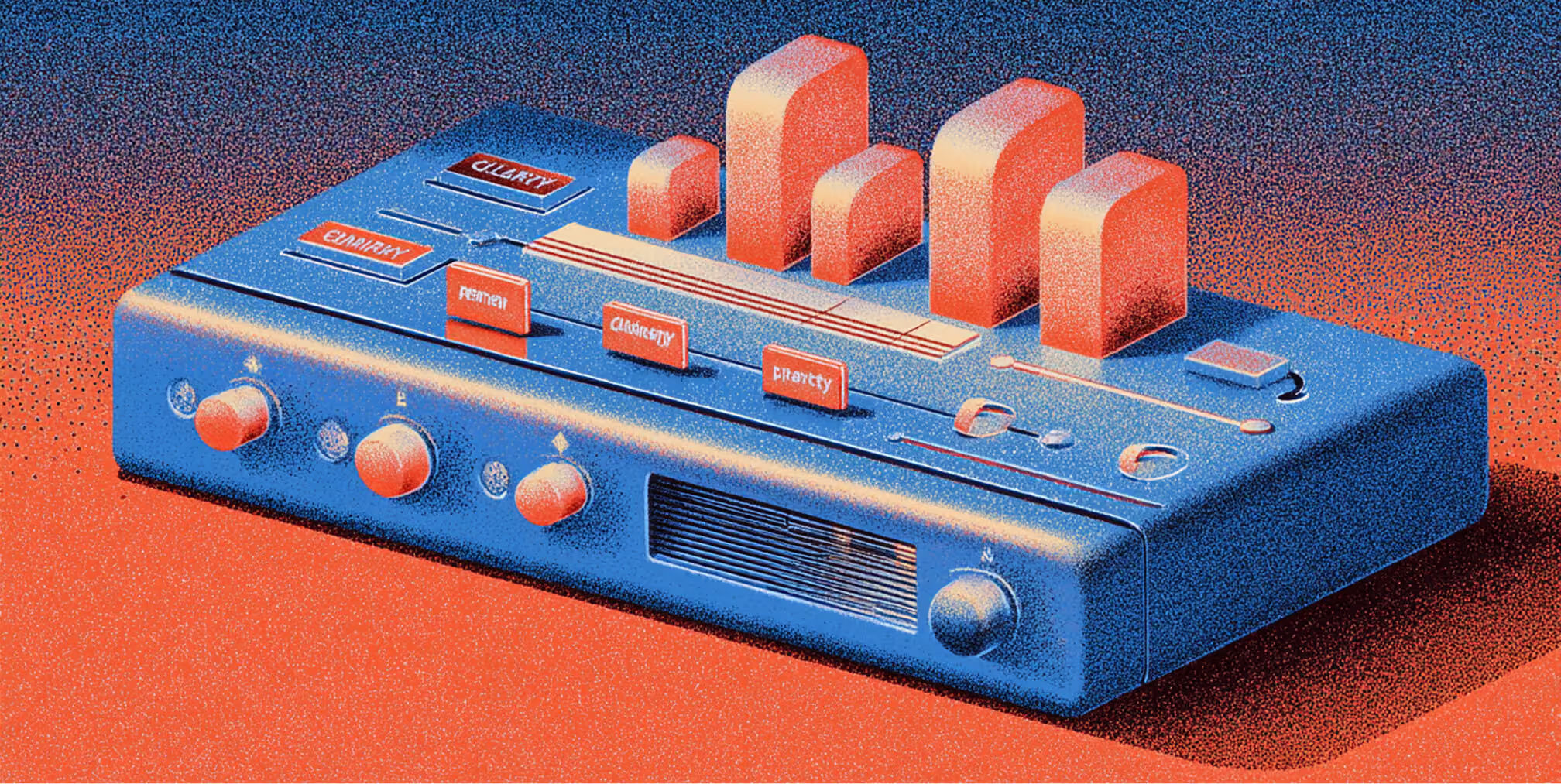
Control panel with labeled sliders and buttons such as clarity and creativity, representing adjustment of tone and messaging variables.

High-performing teams encode brand voice as reusable prompt components, not ad hoc instructions.

These components typically include:

1. Voice pillars (how the brand shows up)

Examples:

  • Calm confidence
  • Direct, not dramatic
  • Insight-led, not hype-driven

These guide attitude, not phrasing.

2. Language rules

Clear signals for:

  • words and phrases to use
  • words and phrases to avoid
  • sentence structure preferences

Example:

“Prefer short, declarative sentences. Avoid buzzwords, exaggeration, and marketing clichés.”

3. Worldview and stance

This is where differentiation lives.

Examples:

  • What the brand believes about the market
  • What it rejects
  • What it refuses to exaggerate or simplify

This helps AI generate messaging with a point of view—not just information.

4. Proof and claims boundaries

Especially important in 2026, as scrutiny increases.

Prompts often specify:

  • what can be claimed
  • what requires evidence
  • what must be avoided entirely

This protects both trust and compliance.

A reusable brand voice block (example)

Many teams maintain a brand voice block they drop into prompts unchanged.

Brand Voice Context:
– Personality: Calm, confident, grounded
– Tone baseline: Direct and respectful, never hype-driven
– Language: Plainspoken, specific, avoids jargon
– We believe: Clarity builds trust
– We avoid: Fear-based messaging, exaggerated claims
– Sentence style: Short, declarative
– Reader assumption: Intelligent, skeptical, time-constrained

This block becomes the anchor for every brand-facing output.

How tone is layered on top (without breaking voice)

Tone instructions should be explicit and situational.

Examples:

  • “Tone for this asset: reassuring and steady”
  • “Tone for this message: direct and pragmatic”
  • “Tone: confident but understated—no celebration language”

This allows AI to adapt without reinventing the brand.

Channel-specific prompting (where drift often happens)

Brand drift is most noticeable when content crosses channels.

In 2026, teams often maintain channel-specific constraints, layered on top of brand voice.

Examples:

  • Homepage: Clear, restrained, positioning-led
  • Paid ads: Sharper, benefit-forward, concise
  • Email: Conversational but purposeful
  • Product UI: Neutral, precise, supportive

Prompts that include both brand voice + channel rules consistently outperform generic “on-brand” requests.

Common mistakes teams still make

Classical columns and geometric forms arranged in balance, symbolizing foundational brand principles supporting consistent communication.

Even experienced teams struggle when they:

  • rely on adjectives instead of examples
  • change voice rules between prompts
  • bury brand context deep inside long prompts
  • skip brand context for “small” assets

Brand erosion happens through small exceptions, not big violations.

How teams manage brand voice at scale in 2026

Mature teams:

  • centralize brand voice blocks
  • reuse them across tools and teams
  • version them intentionally
  • audit AI outputs for drift, not just errors

This turns brand voice from a document into an operational system.

An image of the author Quincy Samyica

Quincy Samycia

As entrepreneurs, they’ve built and scaled their own ventures from zero to millions. They’ve been in the trenches, navigating the chaos of high-growth phases, making the hard calls, and learning firsthand what actually moves the needle. That’s what makes us different—we don’t just “consult,” we know what it takes because we’ve done it ourselves.

Want to learn more about brand platform?

If you need help with your companies brand strategy and identity, contact us for a free custom quote.

We do great work. And get great results.

DrTung’s
Breathed new life into a storied oral care brand with a smarter site and marketing for scalable growth.

+2.3x
Increase in revenue YoY

+126%
Increase in repurchase rate YoY

READ MORE
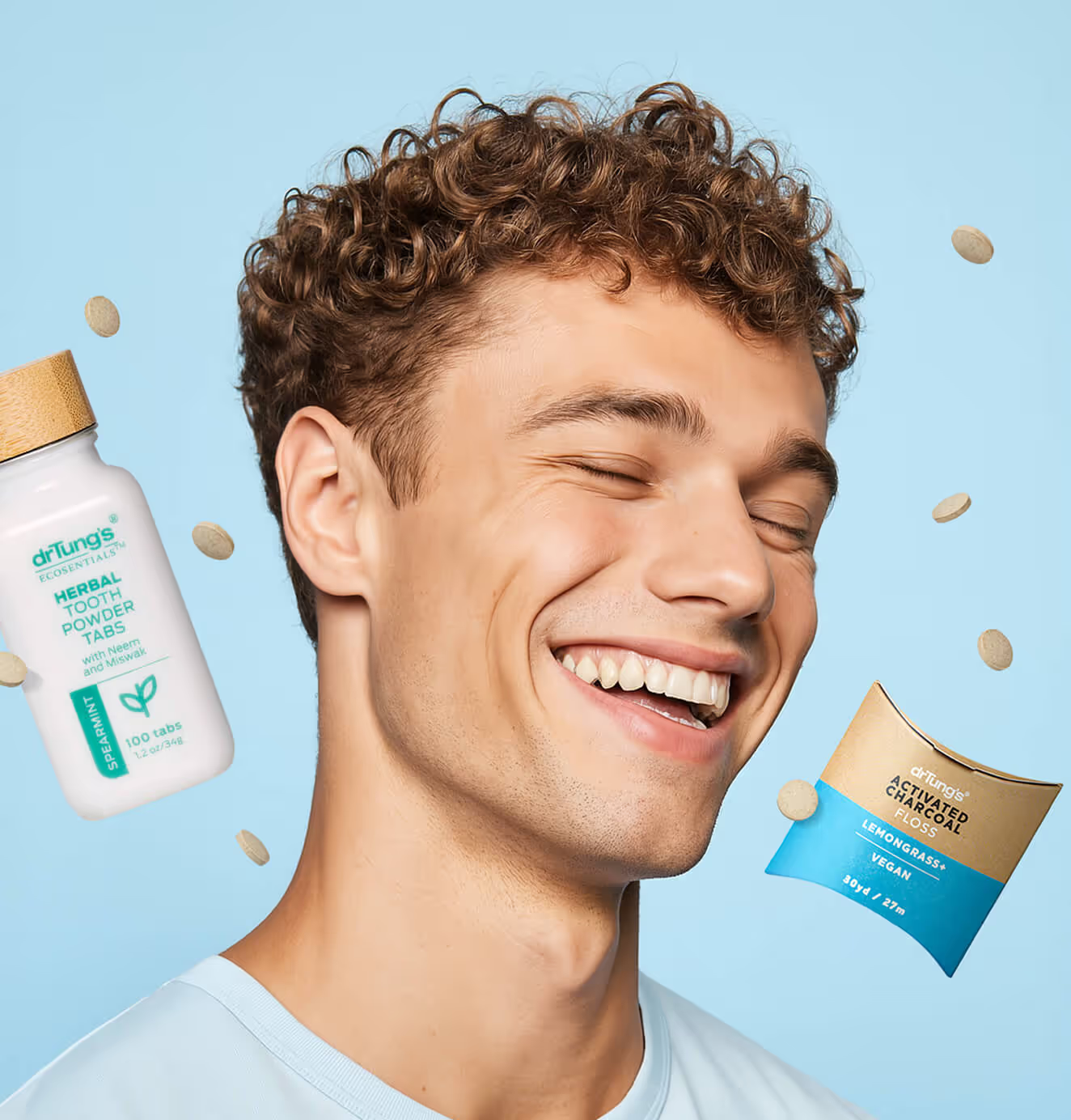
DrTung’s oral care product image with a smiling man, tooth powder tabs, and activated charcoal floss.
Smartphone on a textured blue surface displaying a DrTung’s ad with the text “Make the Switch” and an image of a woman holding herbal tooth powder tabs.
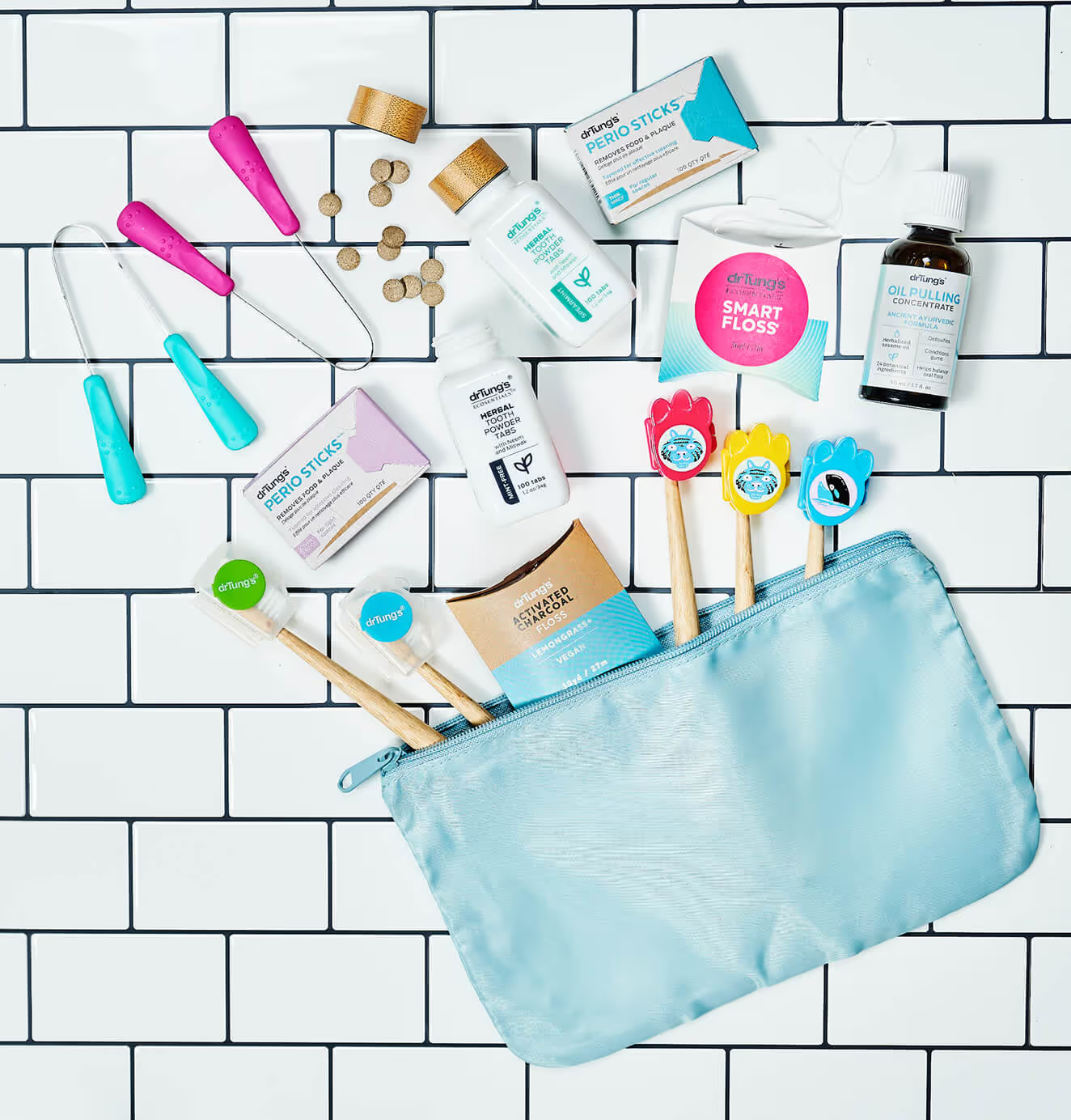
Flat lay of DrTung’s oral care products, arranged with a blue pouch on white tile.
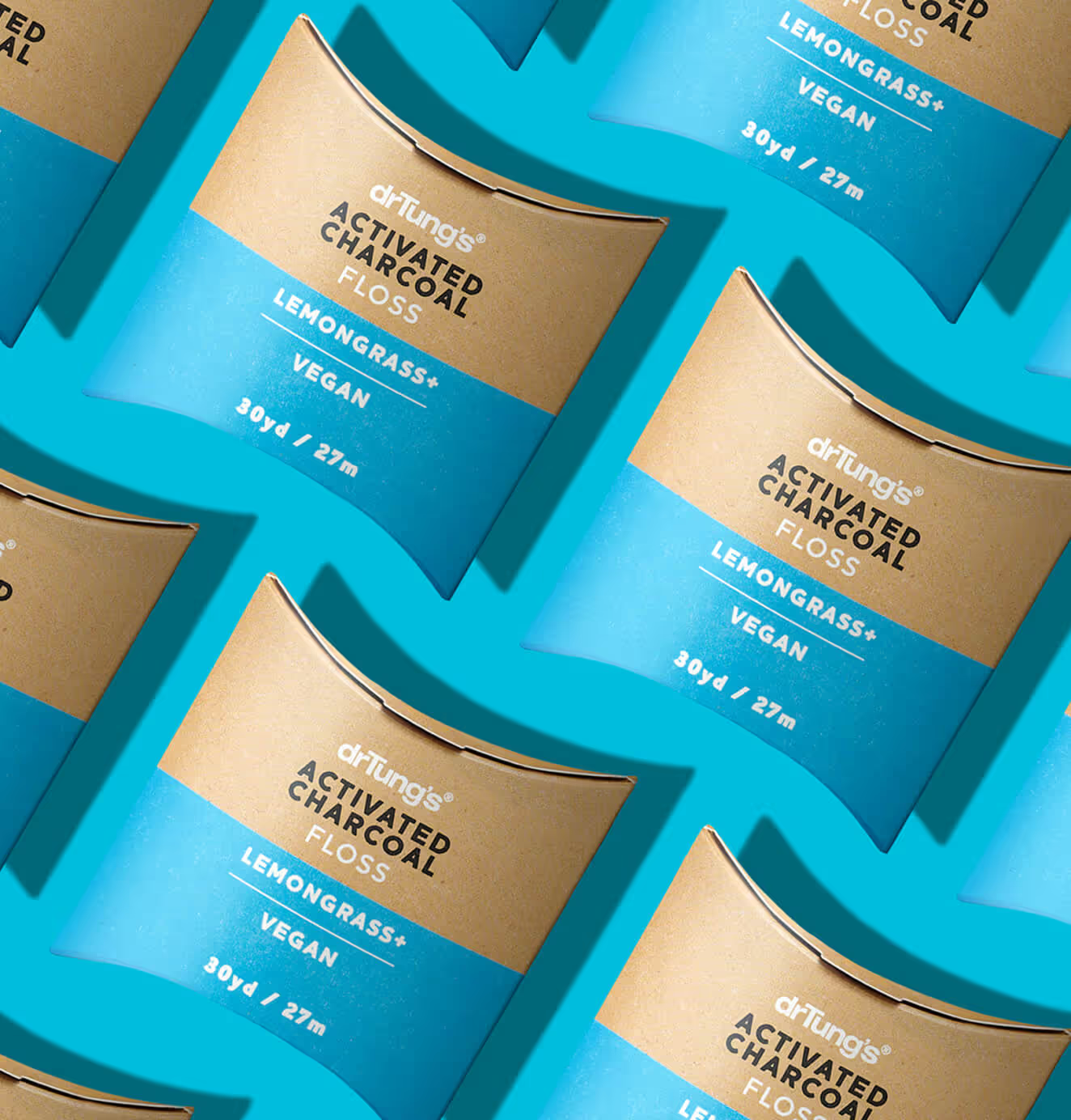
DrTung’s Activated Charcoal Floss packaging arranged in a repeating pattern on a bright blue background.
DrTung’s oral care product image with a smiling man, tooth powder tabs, and activated charcoal floss.
Smartphone on a textured blue surface displaying a DrTung’s ad with the text “Make the Switch” and an image of a woman holding herbal tooth powder tabs.
Flat lay of DrTung’s oral care products, arranged with a blue pouch on white tile.
DrTung’s Activated Charcoal Floss packaging arranged in a repeating pattern on a bright blue background.
Mary Louise Cosmetics
Scaled a heritage-inspired clean beauty brand with modern performance marketing and farm-to-face storytelling.

+93%
Revenue growth in first 90 days

+144%
Increase in attributed revenue

READ MORE
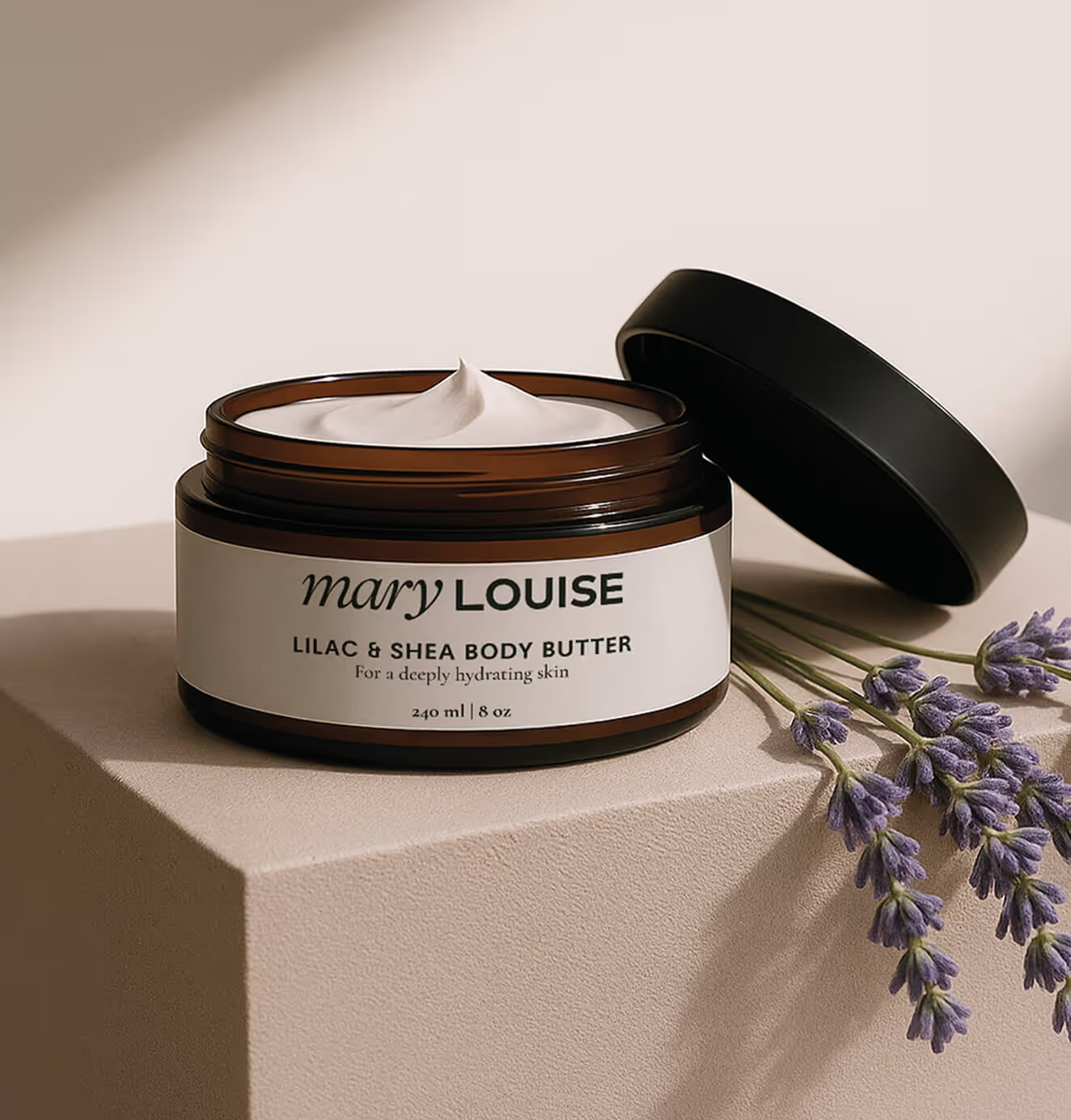
Mary Louise Lilac & Shea Body Butter jar with creamy texture and lavender sprigs on a beige surface.
A Mary Louise Miracle Serum bottle with a dropper cap, lying on a bed of small yellow flowers.
Mary Louise body butter promotional print materials with product photography and skincare application imagery.
Mary Louise Miracle Serum bottles arranged in a close-up pattern with pale yellow dropper caps.
Mary Louise Lilac & Shea Body Butter jar with creamy texture and lavender sprigs on a beige surface.
A Mary Louise Miracle Serum bottle with a dropper cap, lying on a bed of small yellow flowers.
Mary Louise body butter promotional print materials with product photography and skincare application imagery.
Mary Louise Miracle Serum bottles arranged in a close-up pattern with pale yellow dropper caps.
Eyecart
Made eye care feel modern, then marketed it like a DTC darling—with the results to match.

+91%
Increase in conversion rate

+46%
Increase in AOV

READ MORE
Eyecart optical care campaign image with a smiling woman holding a branded magnifying lens over one eye.
Eyecart billboard campaign featuring Blephaclean eye care wipes and healthy eye care messaging.
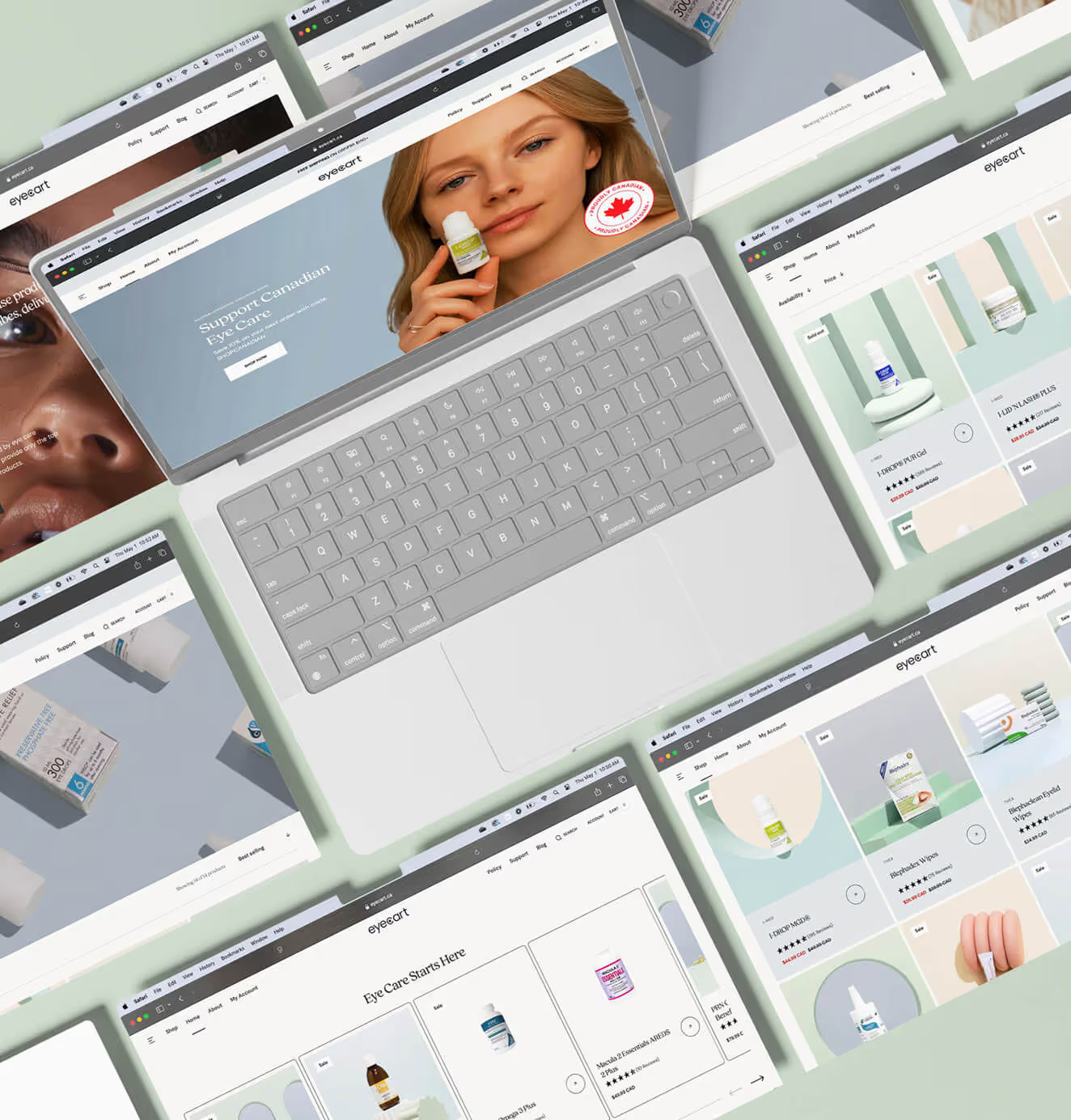
Multiple laptop screens display the Eyecart website, showcasing product pages and banners promoting eye care items.
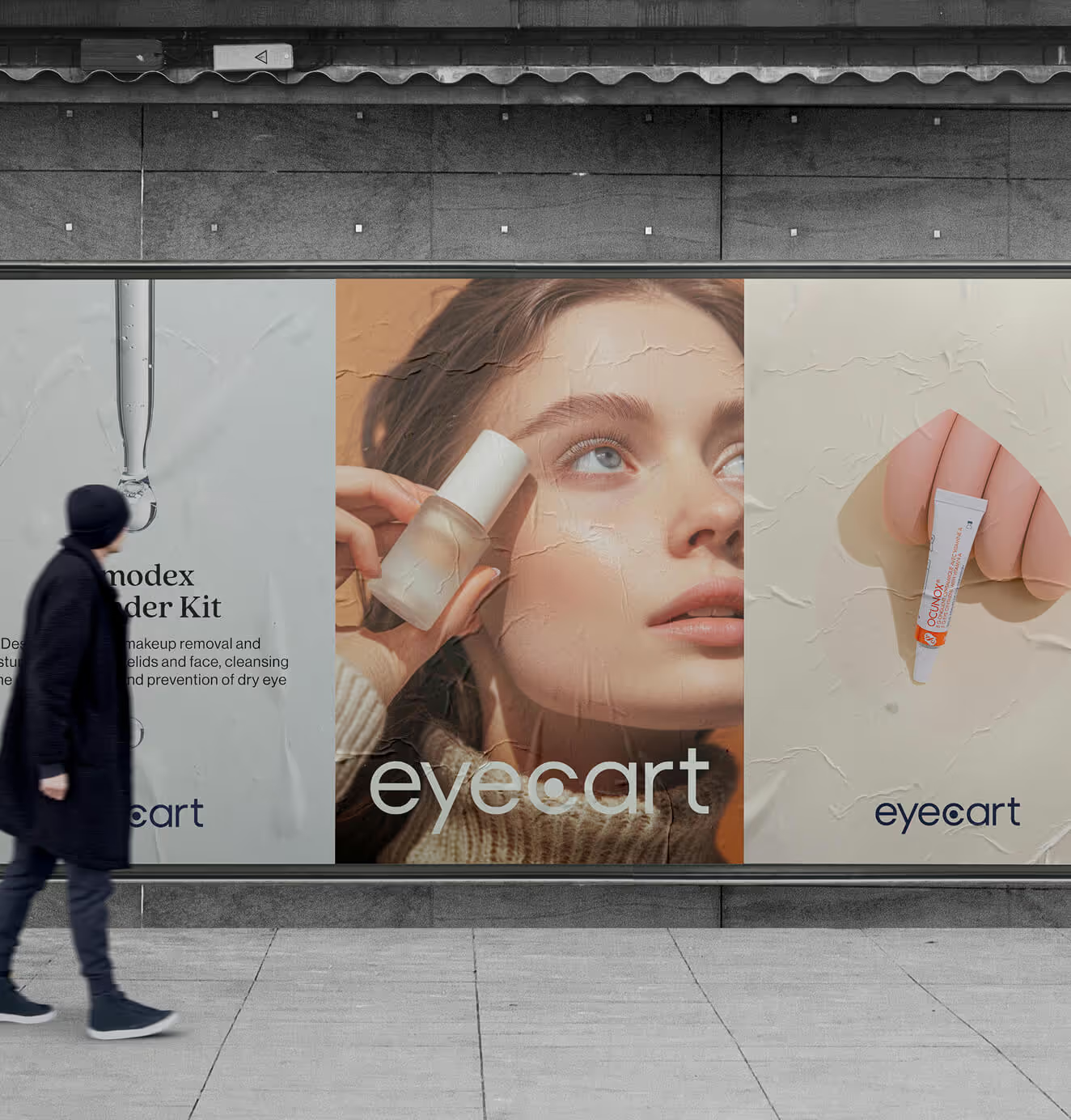
Eyecart outdoor campaign posters featuring eye care products, skincare visuals, and modern branding.
Eyecart optical care campaign image with a smiling woman holding a branded magnifying lens over one eye.
Eyecart billboard campaign featuring Blephaclean eye care wipes and healthy eye care messaging.
Multiple laptop screens display the Eyecart website, showcasing product pages and banners promoting eye care items.
Eyecart outdoor campaign posters featuring eye care products, skincare visuals, and modern branding.
Lucky Girl Rosé
We turned a zero-carb rosé into a lifestyle brand that makes every moment worth celebrating.

+200%
Increase in conversion rate

+688%
Increase in attributed revenue

READ MORE
A bottle of Lucky Girl rosé wine nestled among pink and white flowers in a rustic outdoor setting.
Lucky Girl rosé picnic setup with wine bottle, fruit, sunglasses, and The Lucky Club booklet.
Lucky Girl rosé campaign visual with a wine glass, gold tray, red nails, and Pour Yourself Some Luck text.
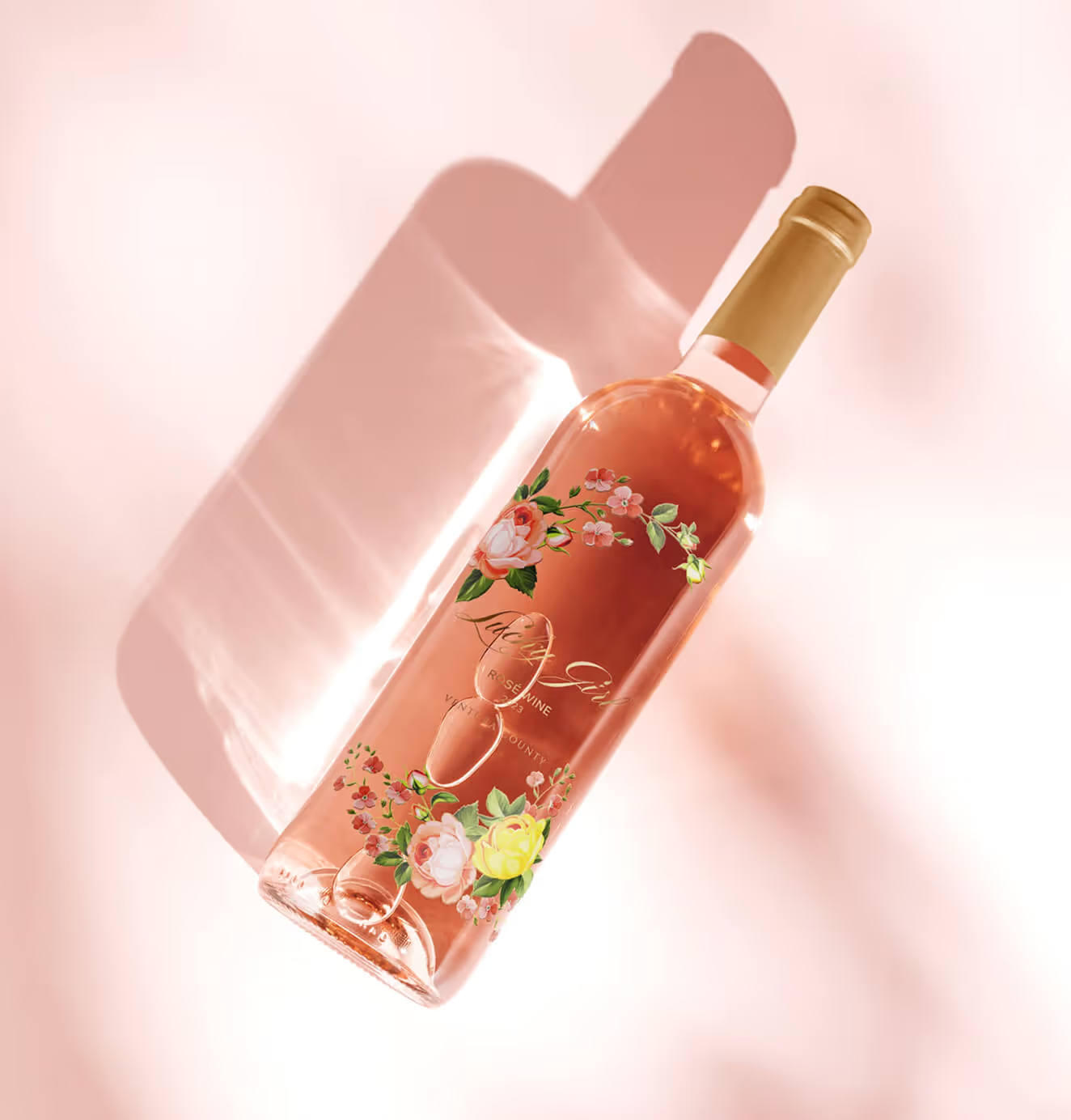
Lucky Girl rosé wine bottle with floral label design and soft pink lifestyle styling.
A bottle of Lucky Girl rosé wine nestled among pink and white flowers in a rustic outdoor setting.
Lucky Girl rosé picnic setup with wine bottle, fruit, sunglasses, and The Lucky Club booklet.
Lucky Girl rosé campaign visual with a wine glass, gold tray, red nails, and Pour Yourself Some Luck text.
Lucky Girl rosé wine bottle with floral label design and soft pink lifestyle styling.