Role-Based Prompting in 2026: How to Get AI to Think Like a Marketer

03/05/2026

Marketing Strategy / Technology

Discover how role-based prompting in 2026 transforms AI into a strategic marketing collaborator—driving sharper positioning, stronger decisions, and more consistent, high-performing outputs.

Close-up illustration of a camera lens surrounded by abstract red and blue circular forms, symbolizing perspective, focus, and role-driven framing in prompting.

As AI becomes embedded in everyday marketing workflows, the competitive edge no longer comes from access to the tool. It comes from how intelligently the tool is directed. In 2026, the difference between average and exceptional AI output is rarely about wording tweaks or longer prompts. It is about perspective. Specifically, the role you assign the model before it generates a single word.

Role-Based Prompting in 2026: How to Get AI to Think Like a Marketer
Quincy Samycia
Play IconPause Icon
0:00
0:00
https://cdn.prod.website-files.com/673ec61d219571e72b3eba03/69a0a2926732a55ba956ec20_355_Role-Based%20Prompting%20in%202026.mp3

AI Thinks at the Level You Assign It

Two professionals walking through a modern architectural corridor framed by bold red geometric overlays, representing defined roles within structured environments.
Office scene with team members working at desks and on screens, layered with abstract blocks, symbolizing collaborative role-based workflows.
Collage of overlapping image tiles featuring clouds and sky, representing modular inputs and layered perspectives in structured prompts.
No items found.

Why the role you assign matters more than the words you use—and how teams apply this at scale

By 2026, most marketing teams aren’t struggling to get AI to write.

They’re struggling to get AI to think at the right level.

You can give the same task to the same model and receive outputs that feel:

  • overly generic
  • too tactical
  • too cautious
  • oddly confident but strategically shallow

In most cases, the issue isn’t the task or the tool.

It’s the role.

Why “role” is the most leveraged part of a prompt

In large language models, roles act as cognitive frames.

They influence:

  • how abstract or concrete the response is
  • whether the model prioritizes ideas or decisions
  • how much context it assumes
  • the language register it uses

Without a role, the model defaults to a general assistant optimized for breadth and politeness.

With a role, the model adopts a decision-making posture.

This is why role-based prompting consistently produces:

  • clearer prioritization
  • stronger recommendations
  • more confident framing
  • fewer hedges and disclaimers

What actually happens when you don’t define a role

Cityscape partially framed by geometric shapes and color overlays, illustrating contextual framing and environmental influence on output.
Two professionals reviewing a document in a stylized office setting, symbolizing clearly defined responsibilities and decision-making roles.
Modern high-rise buildings against a textured sky with bold red and blue overlays, representing structured hierarchy and strategic oversight.
Stacked envelopes and message panels layered across the frame, symbolizing communication flow shaped by assigned roles.

When no role is specified, AI tends to:

  • explain instead of decide
  • list options without judgment
  • avoid tradeoffs
  • mirror average industry language

This is useful for learning—but frustrating for marketing work, which requires positioning, choice, and clarity.

In practice, this leads to outputs that feel like:

  • “content summaries” instead of strategy
  • “safe suggestions” instead of direction
  • “nice writing” instead of usable assets


Role-based prompting is not role-play

This is where many teams go wrong.

Role-based prompting is not about pretending the AI is a fictional character.

It’s about setting:

  • scope of responsibility
  • level of seniority
  • type of judgment expected

Compare:

Weak role

“Act like a marketer.”

Strong role

“Act as a senior brand strategist responsible for positioning a B2B product in a crowded market.”

The second implies:

  • experience
  • accountability
  • tradeoffs
  • decision-making under constraints

That implication matters.

Want to learn more about AI and Marketing? Keep reading!

If you need help with your company’s branding and marketing, contact us for a free custom quote.

The three dimensions of an effective role

Abstract interlocking curved forms in red and blue tones, representing interconnected responsibilities within a coordinated prompt system.

High-performing teams define roles along three dimensions, even if implicitly.

1. Function

What discipline is the model operating within?

Examples:

  • brand strategist
  • growth marketer
  • lifecycle marketer
  • SEO lead
  • content editor

This affects vocabulary, priorities, and output structure.

2. Seniority

How experienced is the role?

Compare:

  • junior copywriter
  • senior marketer
  • head of growth
  • CMO

Higher seniority produces:

  • fewer tactics, more direction
  • stronger opinions
  • less explanation, more synthesis

In 2026, seniority is often the difference between lists and decisions.

3. Responsibility

What outcome is the role accountable for?

Examples:

  • increasing conversion
  • reducing churn
  • protecting brand trust
  • launching a new product

Responsibility forces the model to prioritize impact, not completeness.

Examples: the same task, different roles

Task: Create homepage messaging for a new analytics product.

No role

“Write homepage copy for an analytics platform.”

Result:
Generic, feature-heavy, interchangeable.

Tactical role

“Act as a content marketer and write homepage copy…”

Result:
Clearer language, still feature-led, limited differentiation.

Strategic role

“Act as a senior brand strategist responsible for differentiating analytics platforms in saturated markets.”

Result:
Positioning-led, sharper framing, clearer point of view.

The task didn’t change.
The role did—and so did the thinking.

Common role patterns marketing teams use in 2026

Experienced teams don’t invent roles randomly. They reuse a small, consistent set.

Strategic roles

  • Senior brand strategist
  • Head of marketing
  • Product marketing lead

Used for:

  • positioning
  • messaging architecture
  • campaign direction

Growth roles

  • Growth marketer
  • Lifecycle lead
  • Performance marketing strategist

Used for:

  • funnels
  • experiments
  • optimization ideas

Editorial roles

  • Managing editor
  • Brand copy lead
  • UX writer

Used for:

  • tone
  • clarity
  • consistency
  • refinement

Risk-aware roles

  • Compliance-conscious marketer
  • Brand guardian
  • Trust & safety reviewer

Used for:

  • regulated industries
  • sensitive messaging
  • final QA passes


How role-based prompting works across platforms

While tools differ, roles help normalize output quality:

  • Creative-first models become more focused
  • Analytical models become more decisive
  • Safety-focused models become more usable
  • Search-driven models become more contextual

Roles act as stabilizers, especially in multi-model stacks common in 2026.

Role stacking (advanced but common)

In mature workflows, teams often chain roles across steps:

  1. Senior strategist → define direction
  2. Growth marketer → generate variants
  3. Brand editor → refine tone
  4. Risk-aware reviewer → flag issues

Each role has a narrow job.
No single prompt does everything.

This mirrors how marketing teams already work—AI just joins the process.

Mistakes to avoid with role-based prompting

  • Using vague roles (“marketing expert”)
  • Overloading roles with multiple responsibilities
  • Treating role as optional
  • Changing roles mid-task without intention

Roles work best when they’re deliberate and consistent.

How this fits in the series

Silhouetted professionals standing on layered geometric platforms, symbolizing tiered authority, expertise levels, and structured role hierarchy in prompting.

Builds on

Sets up

This post zooms in on one lever—and shows why it matters.

The takeaway

In 2026, the fastest way to improve AI output quality isn’t better wording.

It’s assigning the right role.

When you clearly define:

  • who the AI is
  • how senior they are
  • what they’re responsible for

AI stops behaving like a helpful assistant—and starts behaving like a capable marketing collaborator.

An image of the author Quincy Samyica

Quincy Samycia

As entrepreneurs, they’ve built and scaled their own ventures from zero to millions. They’ve been in the trenches, navigating the chaos of high-growth phases, making the hard calls, and learning firsthand what actually moves the needle. That’s what makes us different—we don’t just “consult,” we know what it takes because we’ve done it ourselves.

Want to learn more about brand platform?

If you need help with your companies brand strategy and identity, contact us for a free custom quote.

We do great work. And get great results.

DrTung’s
Breathed new life into a storied oral care brand with a smarter site and marketing for scalable growth.

+2.3x
Increase in revenue YoY

+126%
Increase in repurchase rate YoY

READ MORE
DrTung’s oral care product image with a smiling man, tooth powder tabs, and activated charcoal floss.
Smartphone on a textured blue surface displaying a DrTung’s ad with the text “Make the Switch” and an image of a woman holding herbal tooth powder tabs.
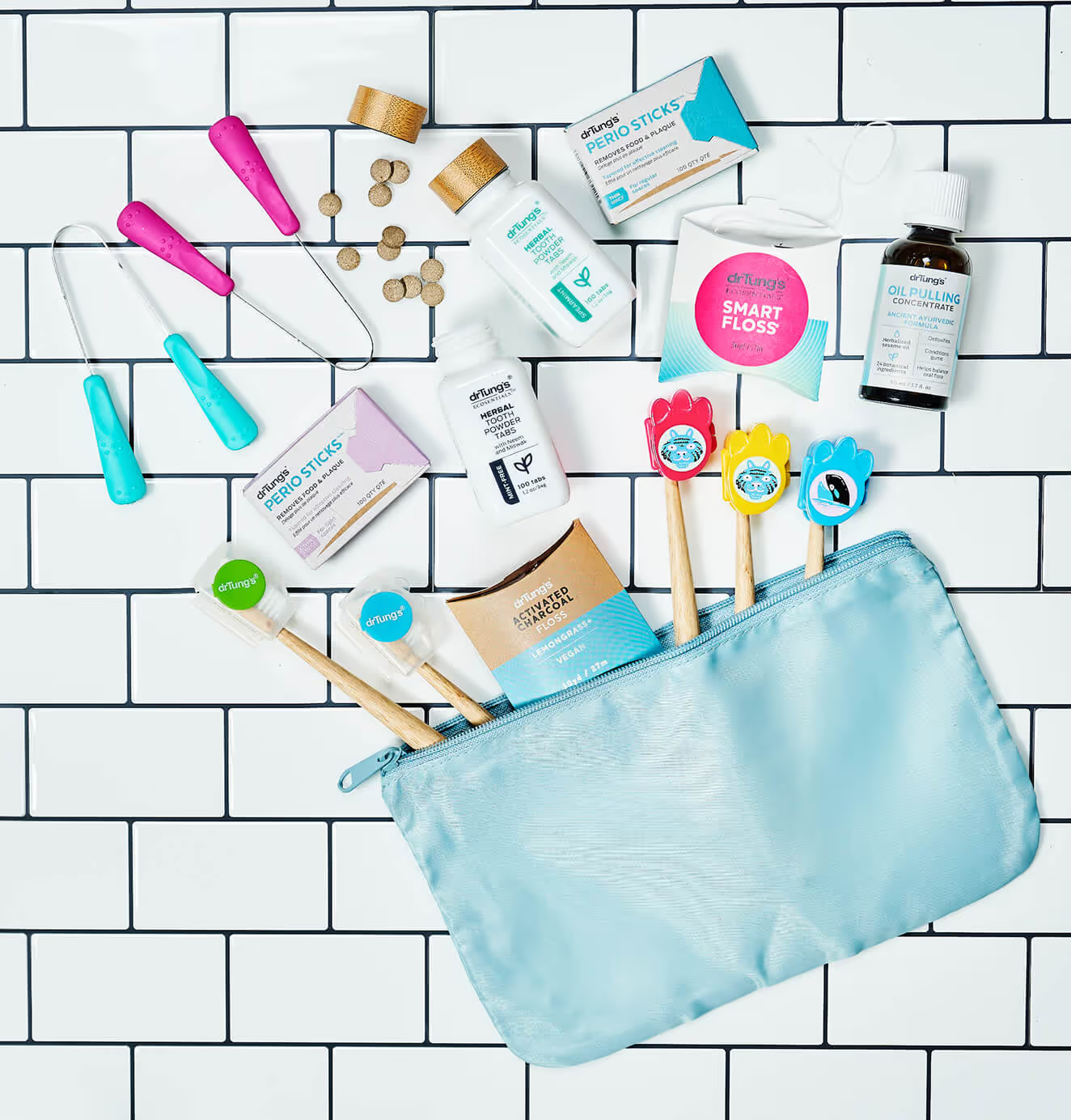
Flat lay of DrTung’s oral care products, arranged with a blue pouch on white tile.
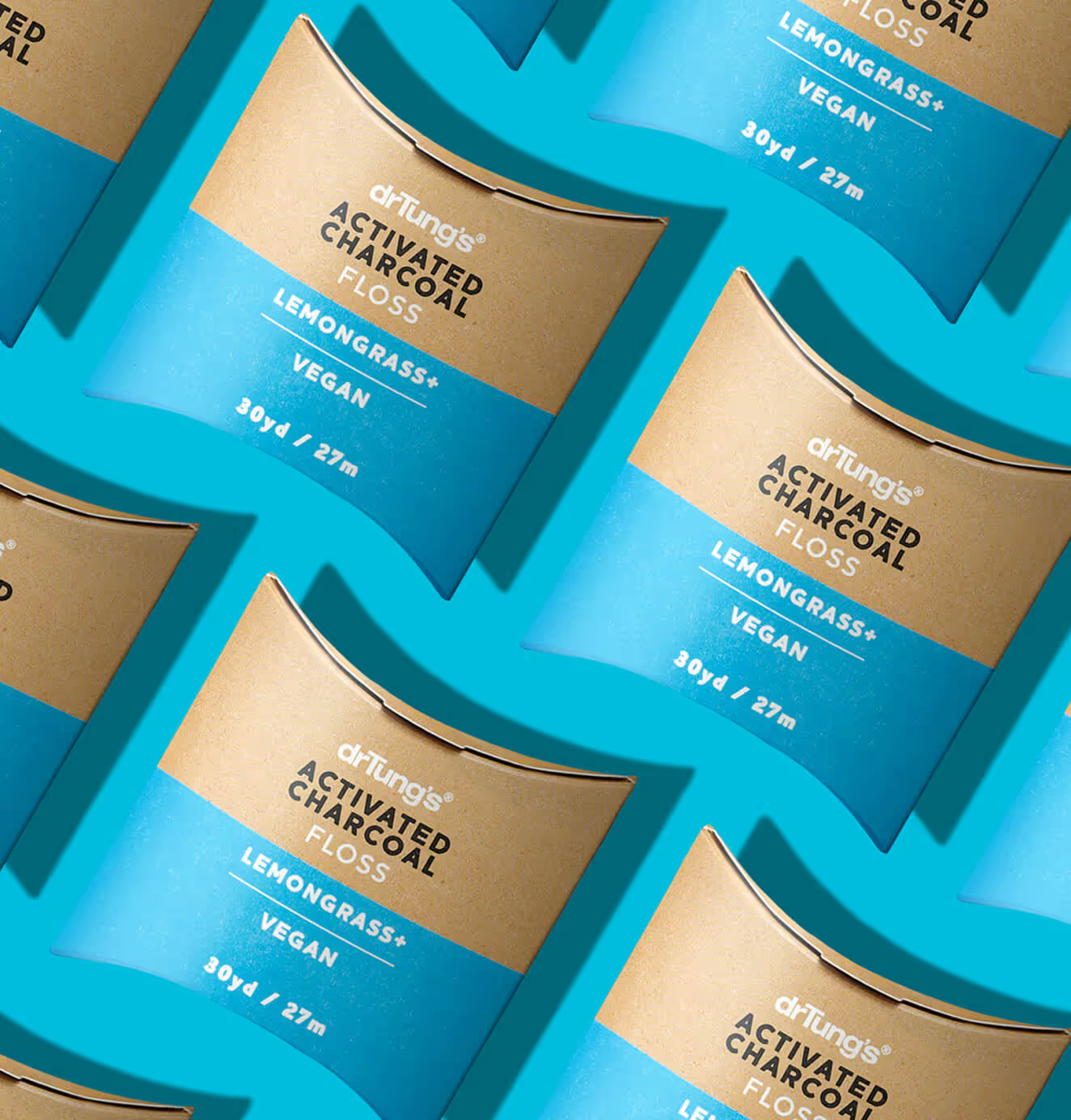
DrTung’s Activated Charcoal Floss packaging arranged in a repeating pattern on a bright blue background.
DrTung’s oral care product image with a smiling man, tooth powder tabs, and activated charcoal floss.
Smartphone on a textured blue surface displaying a DrTung’s ad with the text “Make the Switch” and an image of a woman holding herbal tooth powder tabs.
Flat lay of DrTung’s oral care products, arranged with a blue pouch on white tile.
DrTung’s Activated Charcoal Floss packaging arranged in a repeating pattern on a bright blue background.
Mary Louise Cosmetics
Scaled a heritage-inspired clean beauty brand with modern performance marketing and farm-to-face storytelling.

+93%
Revenue growth in first 90 days

+144%
Increase in attributed revenue

READ MORE
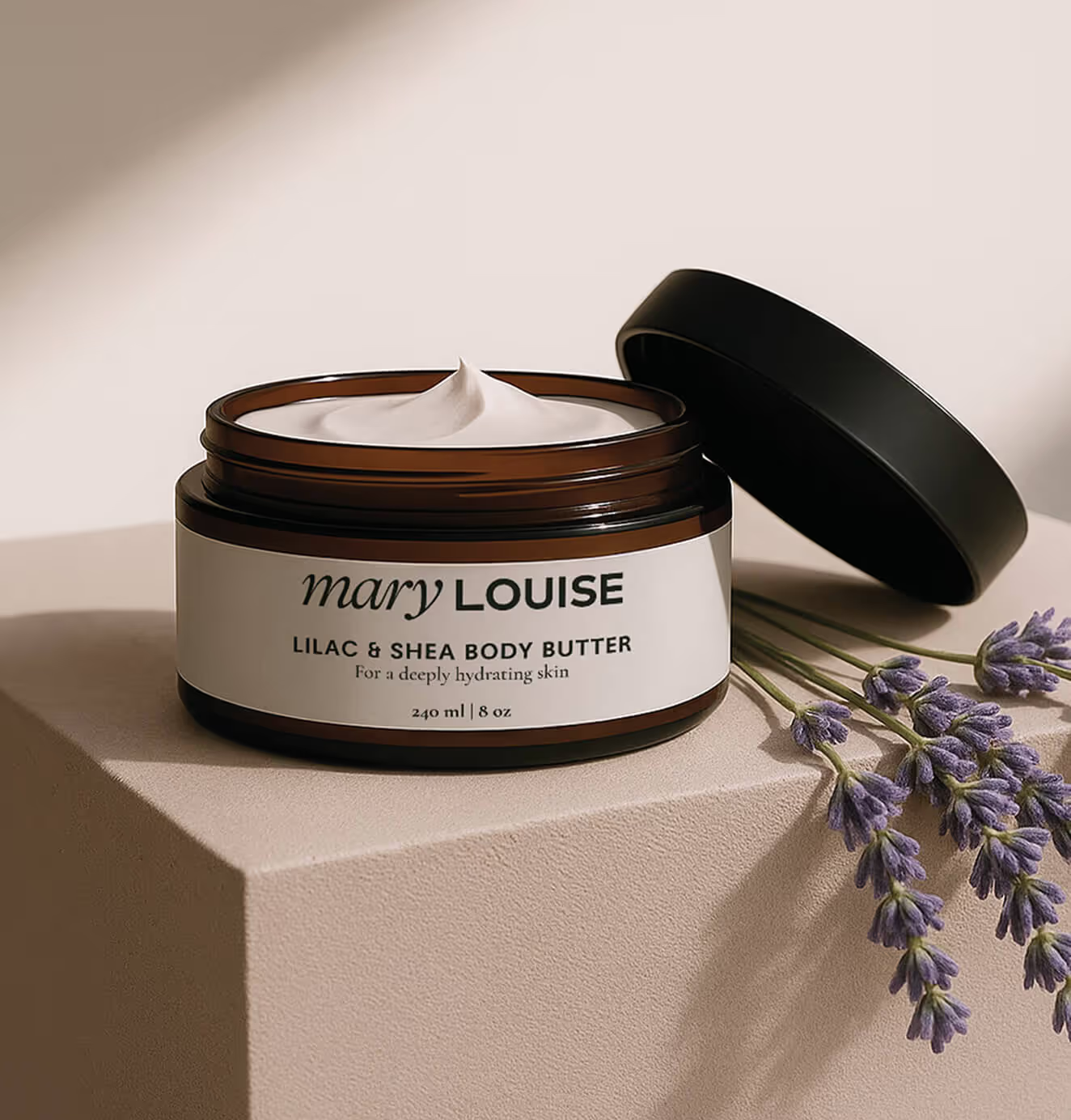
Mary Louise Lilac & Shea Body Butter jar with creamy texture and lavender sprigs on a beige surface.
A Mary Louise Miracle Serum bottle with a dropper cap, lying on a bed of small yellow flowers.
Mary Louise body butter promotional print materials with product photography and skincare application imagery.
Mary Louise Miracle Serum bottles arranged in a close-up pattern with pale yellow dropper caps.
Mary Louise Lilac & Shea Body Butter jar with creamy texture and lavender sprigs on a beige surface.
A Mary Louise Miracle Serum bottle with a dropper cap, lying on a bed of small yellow flowers.
Mary Louise body butter promotional print materials with product photography and skincare application imagery.
Mary Louise Miracle Serum bottles arranged in a close-up pattern with pale yellow dropper caps.
Eyecart
Made eye care feel modern, then marketed it like a DTC darling—with the results to match.

+91%
Increase in conversion rate

+46%
Increase in AOV

READ MORE
Eyecart optical care campaign image with a smiling woman holding a branded magnifying lens over one eye.
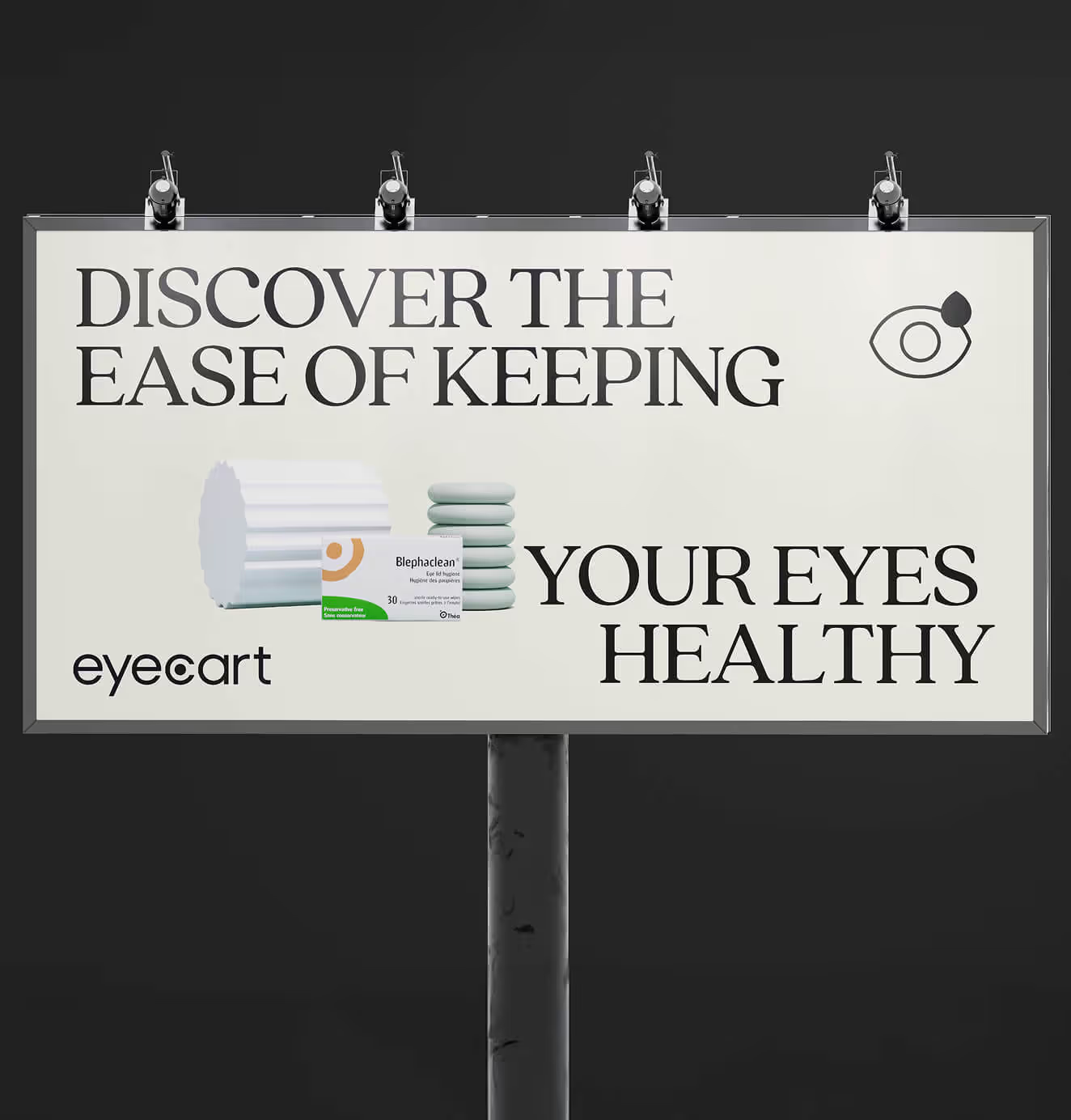
Eyecart billboard campaign featuring Blephaclean eye care wipes and healthy eye care messaging.
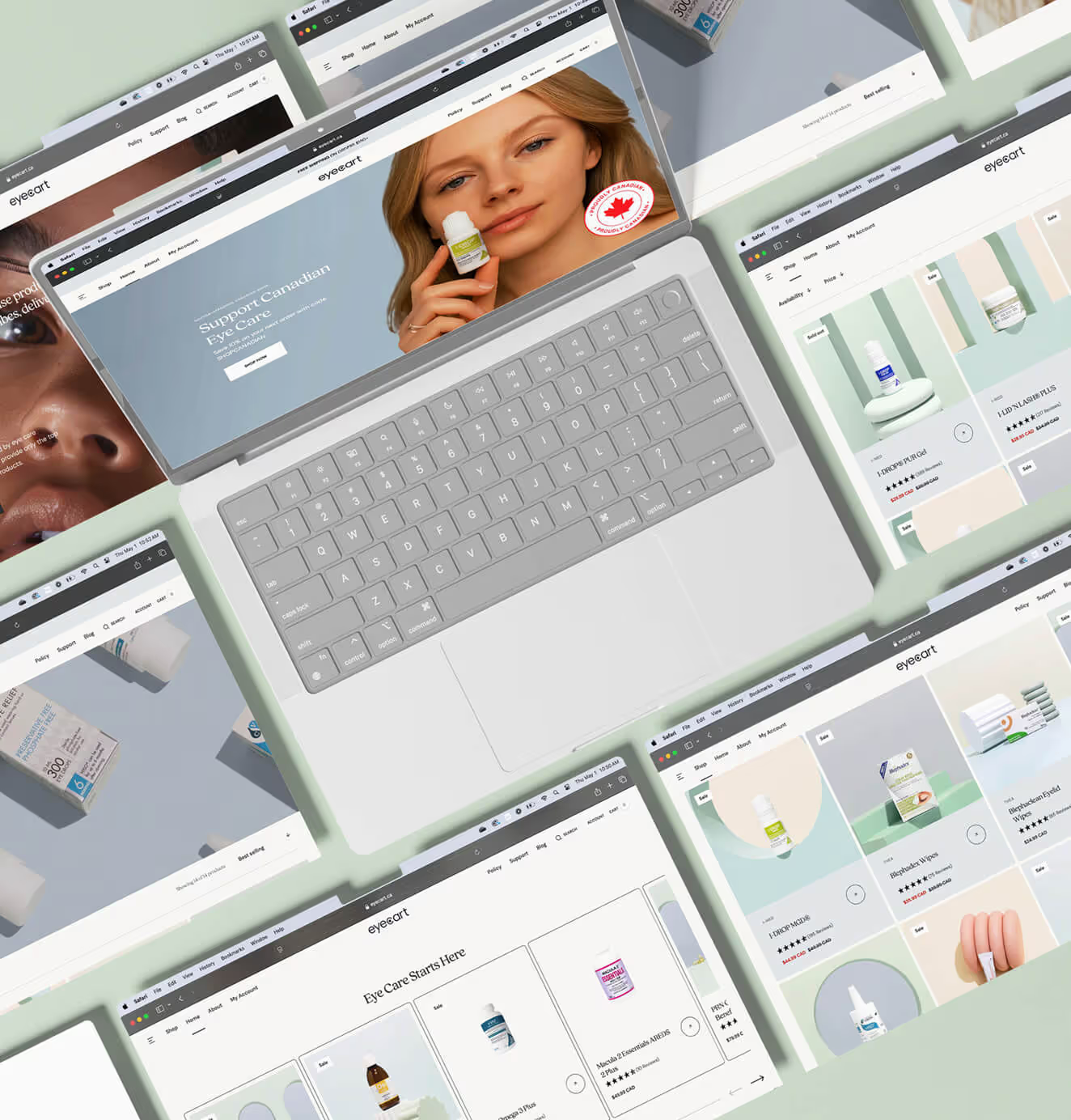
Multiple laptop screens display the Eyecart website, showcasing product pages and banners promoting eye care items.
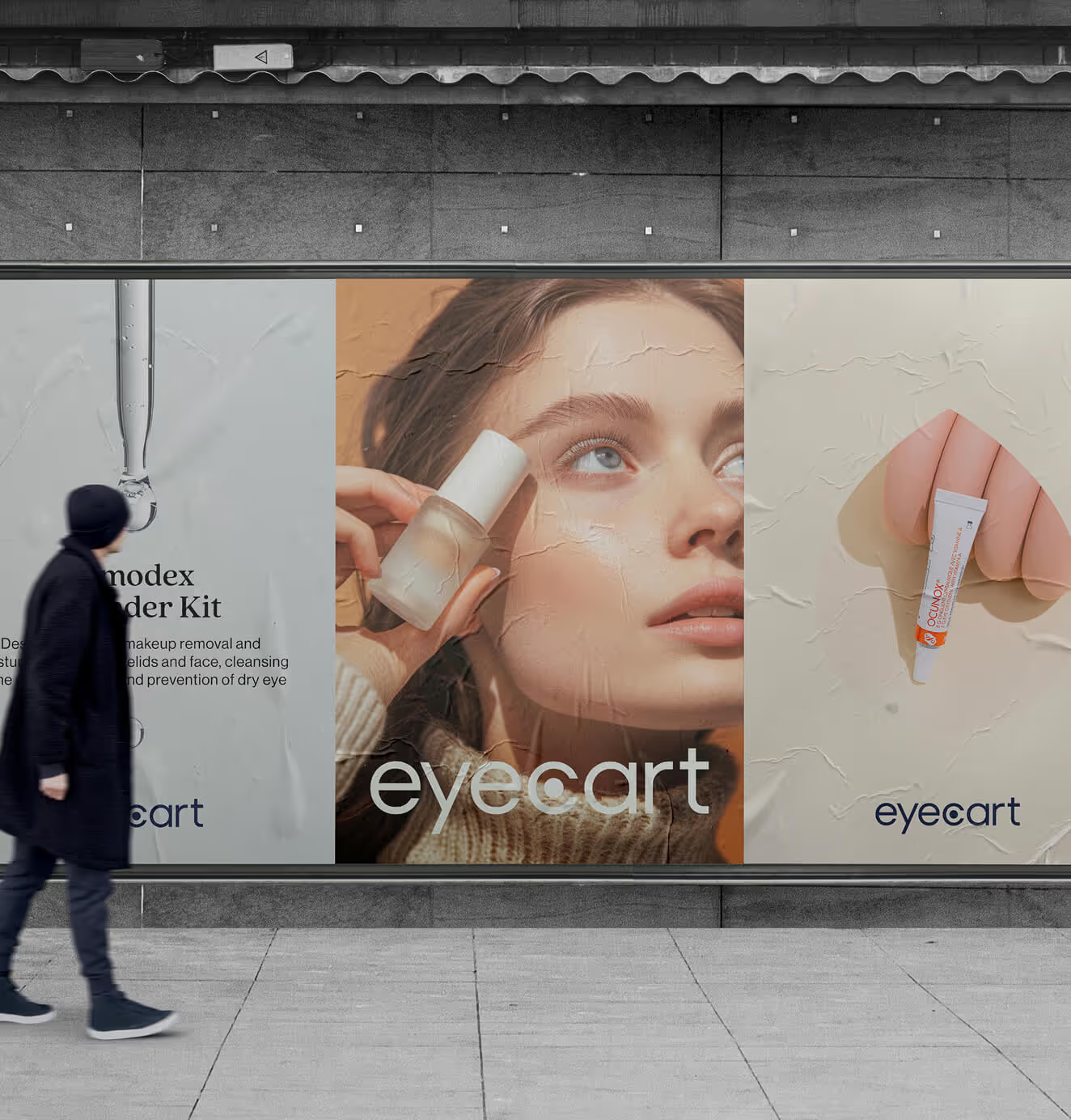
Eyecart outdoor campaign posters featuring eye care products, skincare visuals, and modern branding.
Eyecart optical care campaign image with a smiling woman holding a branded magnifying lens over one eye.
Eyecart billboard campaign featuring Blephaclean eye care wipes and healthy eye care messaging.
Multiple laptop screens display the Eyecart website, showcasing product pages and banners promoting eye care items.
Eyecart outdoor campaign posters featuring eye care products, skincare visuals, and modern branding.
Lucky Girl Rosé
We turned a zero-carb rosé into a lifestyle brand that makes every moment worth celebrating.

+200%
Increase in conversion rate

+688%
Increase in attributed revenue

READ MORE
A bottle of Lucky Girl rosé wine nestled among pink and white flowers in a rustic outdoor setting.
Lucky Girl rosé picnic setup with wine bottle, fruit, sunglasses, and The Lucky Club booklet.
Lucky Girl rosé campaign visual with a wine glass, gold tray, red nails, and Pour Yourself Some Luck text.
Lucky Girl rosé wine bottle with floral label design and soft pink lifestyle styling.
A bottle of Lucky Girl rosé wine nestled among pink and white flowers in a rustic outdoor setting.
Lucky Girl rosé picnic setup with wine bottle, fruit, sunglasses, and The Lucky Club booklet.
Lucky Girl rosé campaign visual with a wine glass, gold tray, red nails, and Pour Yourself Some Luck text.
Lucky Girl rosé wine bottle with floral label design and soft pink lifestyle styling.