Get Sellers Using Sales Enablement Content in 90 Days
11/09/2026
Marketing Strategy
Stop producing unused sales collateral and build a focused 90-day enablement library that helps reps answer objections and move deals forward.

Sales enablement content is the deal-focused material sellers use to answer buyer questions in the moment and push a stalled opportunity forward. Done right, it cuts rep search time, shortens the sales cycle, and gives late-stage buyers the internal ammunition they need to build consensus. This guide covers the asset types that matter, the workflow for building them, how to map them to buyer roles and deal stages, and the metrics that prove which ones actually move revenue.


What Counts as Sales Enablement Content (And What Doesn’t)



Not every PDF marketing produces qualifies as enablement content. The operational test is simple: does a rep pull this material into a live deal to answer a specific buyer question, or does it sit in a shared drive collecting dust? Sales enablement content exists to be used in context. It has a job to do inside a conversation, not just a slot in a content calendar.
That distinction splits assets into two buckets. Internal content trains and equips the seller: playbooks, battlecards, call scripts, competitive positioning docs. External content goes straight to the buyer: case studies, one-pagers, demos, ROI tools. Both categories only earn the “enablement” label when three conditions hold:
- Buyer relevance: The asset answers a specific question or objection at a defined deal stage.
- Findability: Reps can locate and personalize it inside their normal CRM or sales workspace.
- Feedback: Usage and deal-stage outcomes are tracked so outdated or ineffective assets can be improved.
Miss any one of those, and you have marketing collateral, not enablement content. Gartner’s sales enablement research frames this as a balancing act: buyers increasingly want a rep-free path to purchase, yet enablement teams still need to arm sellers for the moments buyers do want a human in the room.
The Sales Enablement Assets Worth Building First
Most enablement libraries suffer from too much volume and too little relevance. Before you greenlight another asset, run it through a simple filter: impact times frequency, divided by effort. High-impact, high-frequency, low-effort assets go first. Here’s the priority order that consistently pays off.
1. Stakeholder-matched case studies. A case study written for a CFO reads nothing like one written for a VP of engineering. The strongest versions include hard metrics, a named attribution (with signed consent), and an explicit offer for a reference call. Generic “customer success story” templates that try to serve every reader end up serving none.
2. Deal-specific one-pagers and consensus briefs. These exist to help your internal champion do a job you can’t do yourself: sell your solution up the chain when you’re not in the room. Keep them to a single page with a summary, three to five metrics, and a clear next step. GrowthNation’s research on B2B enablement content points to this format as the difference between a champion who advocates confidently and one who fumbles the pitch internally.
3. ROI calculators and business-case templates. Build these for the economic buyer, not the end user. A rep with a live calculator that plugs in the prospect’s own numbers wins more budget approvals than one waving around a static case study with someone else’s math.
4. Battlecards and objection-handling one-pagers. These live or die on speed. A rep fielding a tough competitive question mid-call needs the answer in fifteen seconds, not a five-page comparison document they have to skim.
5. Interactive demos and short explainer videos. Buyers evaluating asynchronously, often outside business hours, need something better than a static slide deck. Recommended length: under three minutes for explainer and demo videos, long enough to show real value, short enough to actually get watched.
6. Email templates and follow-up sequences. These need enough structure to stay on message and enough flexibility for a rep to personalize the first two lines. Rigid, fully scripted templates get ignored; templates that leave room for a real observation about the prospect get used.
7. Win/loss analyses. Often treated as a retrospective exercise for leadership, but the best programs feed win/loss findings directly back into battlecards and objection handling within weeks, not quarters.
Pro Tip: Run every proposed asset through the impact × frequency × effort filter before it gets built. An asset that’s high-impact but used twice a year loses to one that’s moderate-impact but touches every deal in the pipeline.
Free Brand Health Audit
Make sure your brand is built to sell
Search has changed. Your customers aren't just Googling anymore. They're asking ChatGPT, Perplexity, Gemini and other AI platforms what to buy, who to trust and which brands they should consider.
If your brand isn't showing up clearly in those answers, you're already losing opportunities. Our free Brand Health Audit shows you where your brand stands across traditional search, AI search and brand positioning.

Sample brand audit
Live preview
Traditional search
72
AI search (GEO)
34
Brand positioning
58
How to Build Enablement Content Sellers Will Actually Open
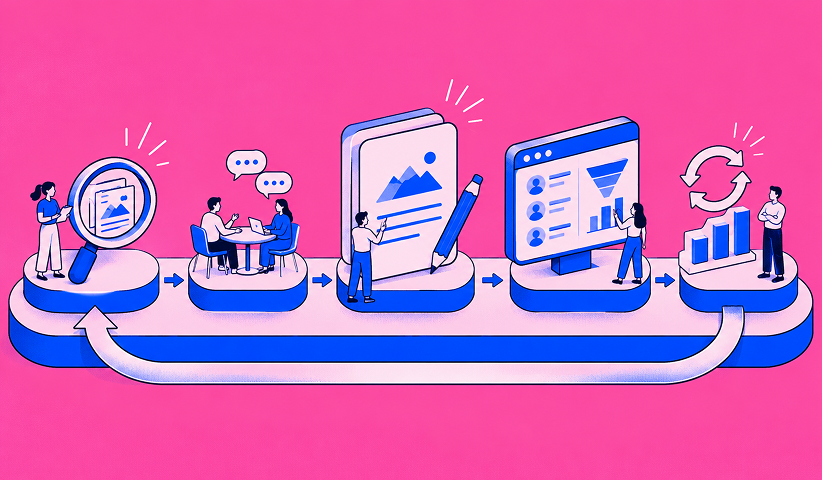


Start with an audit, not a brainstorm. Pull your content inventory, tag what’s actually been opened or shared in the last ninety days, and flag the gap between what marketing produced and what sales touches. If your team is spending real time hunting for the right asset across shared drives, CRM notes, and Slack threads, you already have a diagnostic: Sifthub’s research on enablement content operations estimates sales teams lose 40+ hours a month to exactly this kind of scattered search.
From there, the workflow breaks into five steps.
- Step 1, audit: Inventory assets, usage, deal stages and seller search friction.
- Step 2, interview: Ask reps and buyers which questions most often block progress.
- Step 3, prioritize: Build the highest-frequency, highest-impact missing materials first.
- Step 4, distribute: Tag by buyer role, stage, use case and region; surface assets in CRM workflows.
- Step 5, improve: Review usage, objections and deal outcomes monthly; archive stale materials.
Close the loop by measuring usage and asking reps directly what’s missing every quarter, not once a year during planning season.
Mapping Content to Buyer Roles and Deal Stages
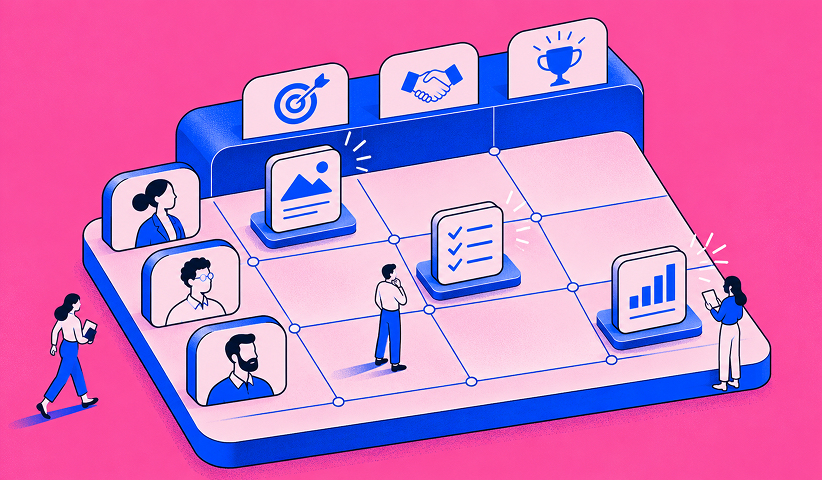
A content matrix works because it forces specificity. Cross your typical buyer roles against your deal stages, and you get a grid that tells you exactly what to build and when a rep should send it.
- Discovery, business champion: Use an outcome-oriented overview and a relevant case study.
- Evaluation, technical buyer: Share an integration sheet, security answers and a short product walkthrough.
- Business case, finance buyer: Provide ROI assumptions, pricing context and a one-page consensus brief.
- Decision, procurement: Share implementation scope, compliance materials and clear ownership commitments.
Template these by role and stage, not by product line, so the framework transfers when you launch something new. Keep enough white space in each template for a rep to drop in one specific, current detail. A generic template with zero personalization reads as generic; a rigid template that can’t flex reads as outdated the moment the market shifts.
Measuring What Works and Choosing the Right Tech Stack
Asset creation without measurement is a guessing game dressed up as strategy. Track these at the asset level, not just the campaign level:
- Seller adoption: Percentage of active reps who use approved assets during a reporting period.
- Discovery time: Median minutes it takes a rep to find the right piece of content.
- Buyer engagement: Asset views and completion where privacy and tooling permit.
- Deal influence: Usage by opportunity stage, adjusted for deal complexity rather than claiming causation.
- Freshness: Percentage of high-priority assets reviewed in the last quarter.
Instrumentation is where most teams underinvest. Gartner projects that 65% of B2B sales organizations will shift from intuition-based to data-driven decisions by 2026, yet enablement teams currently put only around 22% of their budget toward the technology that makes that shift possible. Closing that gap means tagging content in the CRM, pulling analytics from your DSR, and tracking embed and viewer data on video and interactive demos.
The tagging structure matters as much as the tool. A multidimensional scheme, industry, use case, buyer role, deal stage, region, beats folder-based systems every time because it lets sellers filter by what they actually need instead of remembering which folder someone filed it in years ago. AI-driven recommendation engines that push the right asset into a rep’s workflow at the right moment consistently outperform passive libraries reps have to remember to search.
Pro Tip: Set a quarterly review cadence for every asset in your library. If something hasn’t been opened in ninety days, either fix why or archive it. A stale battlecard sitting next to a current one erodes trust in the whole system.
Want to learn more about Digital Marketing and Strategy? Keep reading!
If you need help with your company’s marketing, contact us for a free custom quote.
The Branded Agency’s Approach to Enablement Content Production
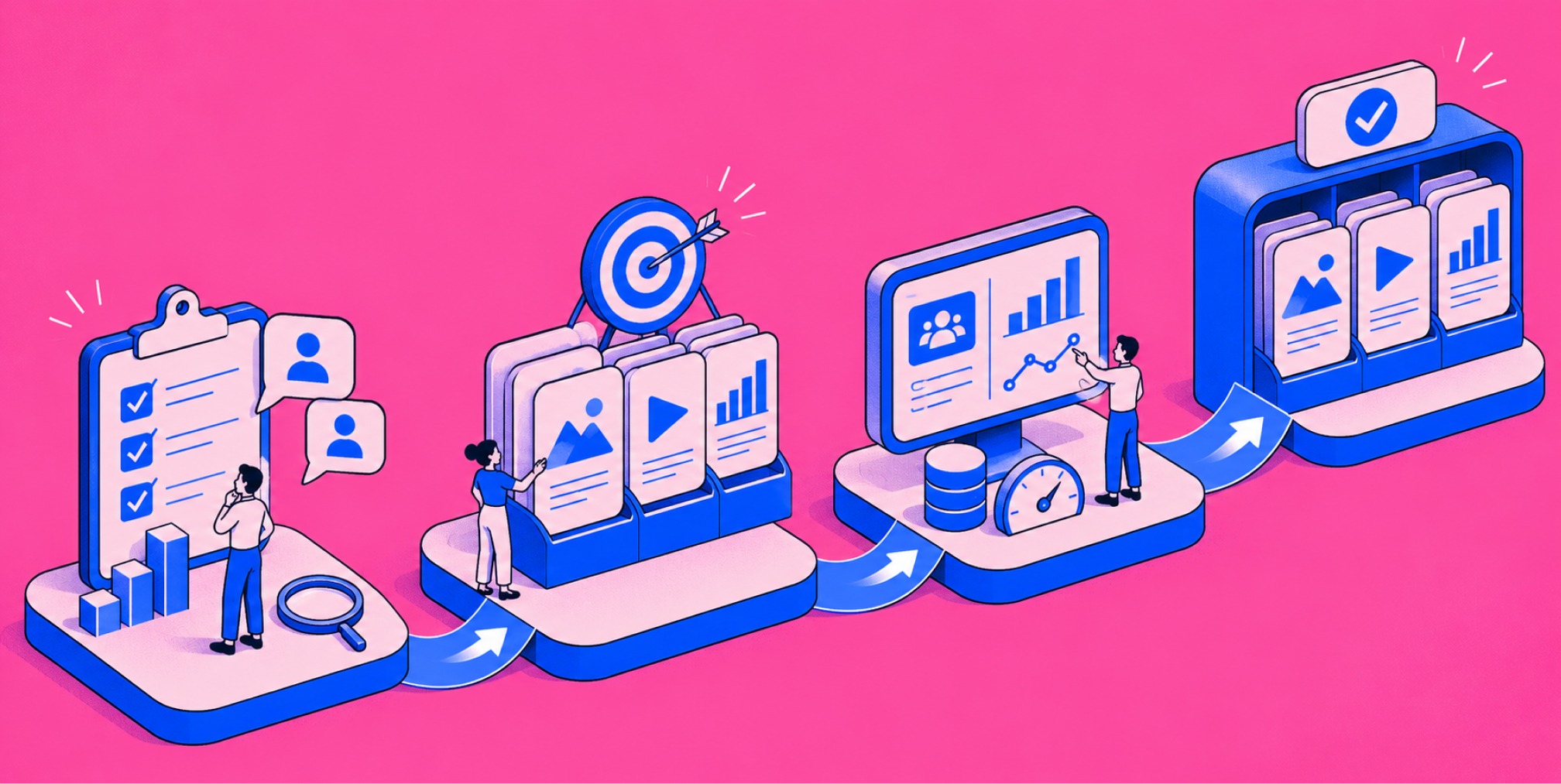
Our audit process starts with a content inventory cross-referenced against CRM activity, followed by structured seller interviews built around three prompts: what question comes up every week that you don’t have a good answer for, what asset do you avoid sending because it feels outdated, and what would you build yourself if you had an hour.
From there, we work from two core templates: a one-page deal brief (summary, three metrics, reference-call offer) and a battlecard structured around the top five recurring objections our field interviews surface.
Why Usable Beats Polished
Most enablement failures aren’t creative failures. They’re usability failures dressed up in good design. A gorgeous fifteen-page playbook that takes ninety seconds to find the right slide loses every time to an ugly one-pager that answers the buyer’s question on page one. Sellers are in live conversations, not study halls.
The real trade-off isn’t speed versus quality. It’s speed versus over-engineering. Templated structure with room for genuine personalization beats both a rigid script and a blank page. If you’re starting from zero, spend the first thirty days auditing and interviewing sellers, the next thirty building your top three highest-frequency assets, and the last thirty fixing distribution so those assets actually reach a CRM or DSR sellers open daily.
When to Bring In Help Building Your Enablement Program
Building a seller-first content system in-house takes time most marketing teams don’t have: the audits, the field interviews, the template design, the CRM integration work. The Branded Agency exists for growth-stage companies that need this built correctly the first time, not rebuilt six months from now after sellers stop opening the library.
Our approach combines brand strategy and messaging alignment with hands-on asset production, so your case studies, battlecards, and ROI tools all sound like the same company instead of five different departments. If your team is small and needs a fast, complete system without hiring internally, our turnkey branding and content package covers strategy, creative, and initial asset production in one engagement. Teams already running paid campaigns can pair enablement content with performance-driven media management so top-of-funnel demand and late-stage sales content reinforce each other instead of operating in silos.
The right call depends on bandwidth: if your team has the people but lacks the process, we build the framework and hand it off. If you need both the strategy and the execution, we run the full engagement. Either way, start with a conversation about your current content gaps at The Branded Agency.
Frequently Asked Questions

What is sales enablement content?
It is internal and buyer-facing material designed to answer questions, overcome objections and support a live sales opportunity.
Which sales enablement assets should come first?
Begin with role-specific case studies, concise objection handling and a buyer-facing business case that reps repeatedly need.
How do you measure seller adoption?
Track the share of active reps using approved materials and whether assets are easy to find at relevant deal stages.
What can you build in 90 days?
Audit and interview in the first month, create priority assets in the second, and connect distribution and measurement in the third.
Sources
- HubSpot sales enablement resources: https://blog.hubspot.com/sales/sales-enablement
- Salesforce sales enablement: https://www.salesforce.com/sales/enablement/
- Gartner sales enablement: https://www.gartner.com/en/sales/topics/sales-enablement

Quincy Samycia
As entrepreneurs, they’ve built and scaled their own ventures from zero to millions. They’ve been in the trenches, navigating the chaos of high-growth phases, making the hard calls, and learning firsthand what actually moves the needle. That’s what makes us different—we don’t just “consult,” we know what it takes because we’ve done it ourselves.
Want to learn more about brand platform?
If you need help with your companies brand strategy and identity, contact us for a free custom quote.
We do great work. And get great results.
+2.3xIncrease in revenue YoY
+126%Increase in repurchase rate YoY



+93%Revenue growth in first 90 days
+144% Increase in attributed revenue




+91%Increase in conversion rate
+46%Increase in AOV



+200%Increase in conversion rate
+688%Increase in attributed revenue