Shopify for Beauty & Skincare Brands: Turning Aesthetic Into Authority
12/12/2025
E-Commerce
In a category where trust drives every purchase, this guide shows beauty and skincare leaders how to use Shopify to turn aesthetic excellence into real authority, higher conversions, and scalable growth.
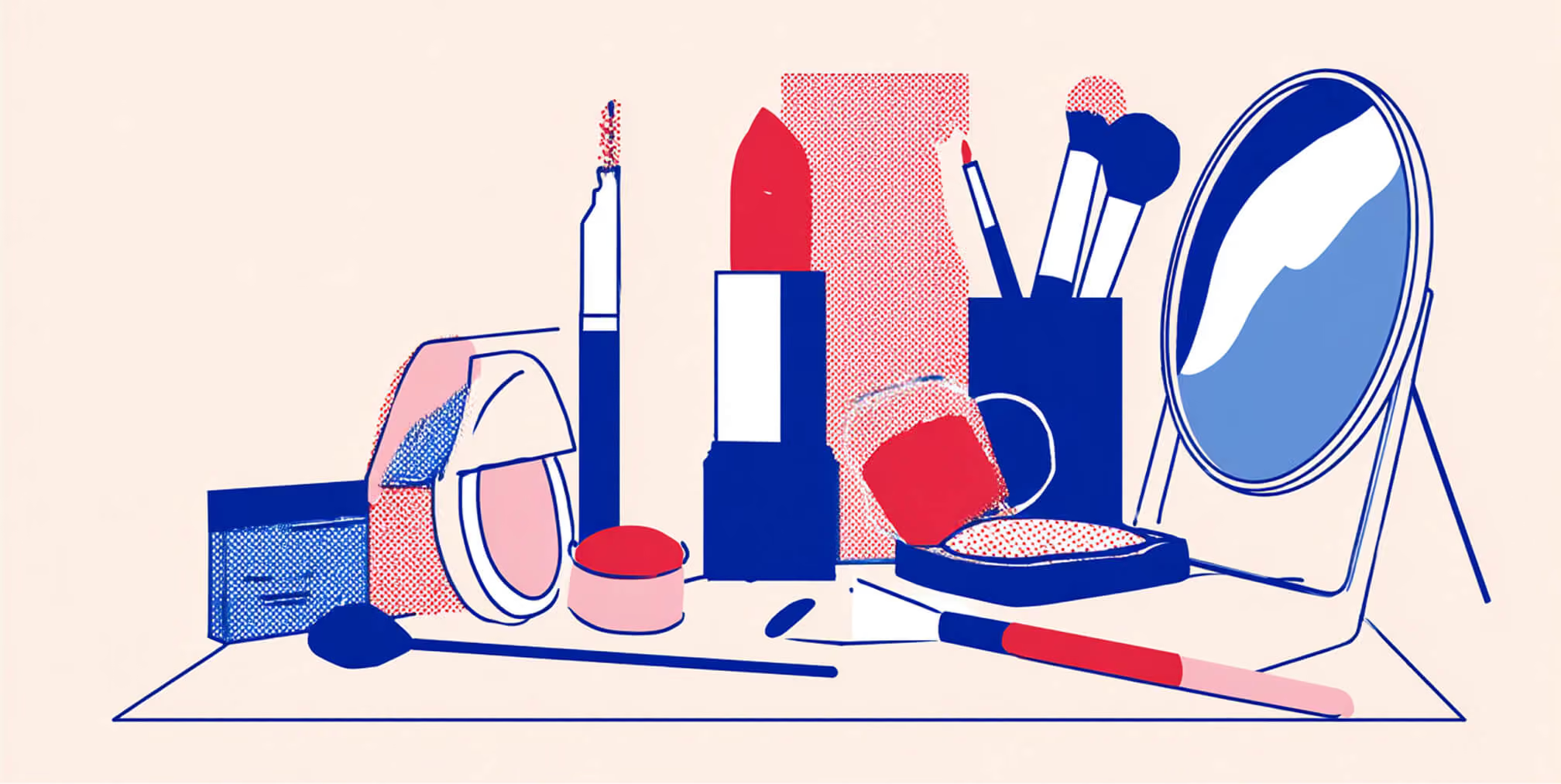
In a category where first impressions, trust, and performance determine who wins, Shopify has become the platform beauty and skincare brands rely on to turn visual appeal into scalable growth.



Why Beauty & Skincare Brands Thrive on Shopify
A strong Shopify store for beauty and skincare brands combines distinctive design, clear product education and an easy shopping experience. Customers should be able to understand what a product does, how to use it and what supports its claims before deciding whether to buy.
Shopify’s beauty ecommerce examples show how brands approach ingredient transparency, product discovery and customer education. The opportunity is to connect those elements in a store that reflects your brand and answers your customers’ questions.
That is how aesthetic becomes authority: recognizable design draws attention, while useful information and credible evidence give shoppers reasons to trust you.
This guide explores how to build a beauty or skincare Shopify store around those principles, from product-page design and mobile usability to social proof and repeat-purchase experiences.
Why Aesthetic Matters for Beauty and Skincare Brands
Beauty ecommerce design should help customers evaluate products they cannot physically try. Photography, typography and page layout each have a practical role: showing texture, making information readable and guiding shoppers toward the details they need.
Build Trust Through Clear Product Information
Online shoppers cannot sample a fragrance, feel a moisturizer or test a shade directly from your website. Your product pages should help them understand those qualities without overstating what a product can deliver.
Make these details easy to find:
- Product photography that clearly shows packaging, texture or shade.
- Ingredient lists and straightforward usage instructions.
- Benefits supported by appropriate evidence.
- Customer experiences presented with relevant context.
- Delivery, returns and customer-support information.
Present essential information alongside the buying decision. Give customers a clear route to more detailed explanations when they need them.
Create a Consistent Visual Identity
A visual identity brings together elements such as your logo, colors, typography and imagery. Apply these consistently across packaging, product pages and marketing so customers can recognize your brand throughout their shopping journey.
Use that consistency to make the store easier to navigate. Establish clear heading styles, readable ingredient sections and recognizable purchase buttons. Product benefits should be explained and supported by evidence; visual polish alone cannot establish effectiveness.
Design Beauty Product Pages for Mobile Use
Mobile product pages should make it easy to browse images, compare options, read ingredients and add products to the cart. Use your store’s traffic and conversion data to understand how customers shop across devices.
Test practical tasks on smaller screens: Can shoppers select a shade, expand usage instructions and close a popup without losing their place? Check that review widgets and subscription selectors leave essential information accessible.
When testing reveals slow loading or delayed interactions, investigate images, video and storefront scripts. Our Shopify speed optimization guide explores these areas in more detail. Measure performance before and after changes to see whether they improve your store’s experience.
Free Brand Health Audit
Make sure your brand is built to sell
Search has changed. Your customers aren't just Googling anymore. They're asking ChatGPT, Perplexity, Gemini and other AI platforms what to buy, who to trust and which brands they should consider.
If your brand isn't showing up clearly in those answers, you're already losing opportunities. Our free Brand Health Audit shows you where your brand stands across traditional search, AI search and brand positioning.

Sample brand audit
Live preview
Traditional search
72
AI search (GEO)
34
Brand positioning
58
Why Shopify Is the Ideal Platform for Beauty E-Commerce
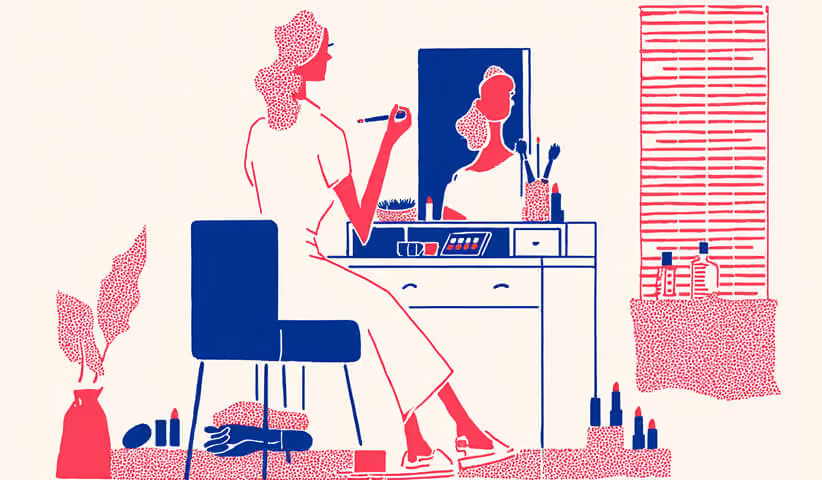
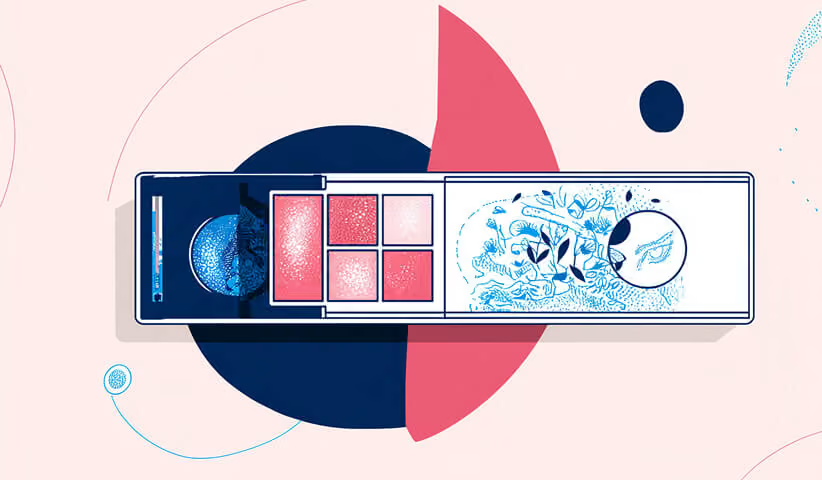
Beauty brands need a storefront that combines clear product information, distinctive design and reliable functionality. Shopify provides tools to build that experience, but the outcome depends on how you configure your theme, content and integrations.
Use brand storytelling to explain your products’ purpose, development and place in a customer’s routine. Connect that story with practical information shoppers can use to evaluate each product.
Flexible Theme Architecture
Shopify themes let beauty brands combine product photography, video and educational content within reusable page layouts. Choose sections that make ingredients, usage instructions and purchase options easy to find.
Rich visuals still require performance planning. Resize and compress images, use video selectively, and test layouts on mobile. Large media files and additional widgets can affect loading and responsiveness, even when the underlying theme is well built.
Speed, Stability, and Core Web Vitals
Shopify’s hosting provides the infrastructure for your store. The customer experience also depends on your theme, media, apps and third-party scripts.
Core Web Vitals measure three aspects of page performance:
- Largest Contentful Paint (LCP): how quickly the main content loads.
- Interaction to Next Paint (INP): how quickly the page responds to interactions.
- Cumulative Layout Shift (CLS): how much content moves unexpectedly.
Google’s recommended good thresholds are LCP of 2.5 seconds or less, INP of 200 milliseconds or less, and CLS of 0.1 or less, assessed at the 75th percentile of visits. See Google’s Core Web Vitals guidance.
Measure your own product and collection pages instead of assuming beauty shoppers behave differently from customers in other categories. Use our Shopify speed optimization guide to investigate performance issues, then compare results after changes. Track conversion separately to assess the business impact.
App Integrations for Beauty Brands
Shopify’s app ecosystem offers tools for reviews, subscriptions, loyalty programs and before-and-after galleries. Before installing one, check whether your theme or existing Shopify features already cover the requirement.
For example, Shopify metafields can store product-specific ingredient information and usage instructions for display in a compatible theme. More specialized functionality may require an app or development work.
Evaluate each integration for compatibility, accessibility, ongoing cost and storefront impact. Our guide to Shopify app creep explains how to review overlapping tools and unnecessary dependencies.
The Essentials of an Effective Beauty and Skincare Shopify Store
Product Detail Pages for Beauty Buyers
A beauty product detail page should answer the questions customers need resolved before purchasing: What is this product? How do I use it? What results are supported? What does it cost?
Include:
- Clear product benefits with appropriate supporting evidence.
- Ingredient lists and explanations of relevant ingredients.
- Photography showing packaging, texture, shade or application.
- Usage instructions and relevant precautions.
- Product size, price and available options.
- Clearly distinguished one-time and subscription purchases, where offered.
Place essential details near the purchase controls, with additional information organized under descriptive headings.
Before/After Galleries & Social Proof
Before-and-after galleries should present authentic experiences with enough context to interpret the result. Use comparable lighting, angles and image quality, and avoid filters or retouching that exaggerate changes. Obtain permission to publish customer content and explain the product used, duration of use and other relevant treatments.
Show representative results. If an exceptional testimonial is featured, clearly explain what customers can generally expect, supported by evidence. A generic “results may vary” disclaimer is insufficient under FTC endorsement guidance for U.S. marketing.
Keep customer opinions distinct from clinical findings. When presenting study results, identify the tested product, study size, duration and measured outcome. Testimonials and expert quotations do not replace scientific support for health-related claims. See the FTC’s U.S. health-products advertising guidance.
Disclose paid relationships, free products or other relevant connections clearly alongside the endorsement. Preserve those disclosures when content appears in galleries, review widgets or mobile layouts.
Ingredient Transparency & Education
Make ingredient information accessible on each product page. Explain relevant ingredients in plain language, their role in the formula and how to use the finished product.
A dedicated ingredients or science section can provide deeper context, but avoid implying that research on an individual ingredient automatically proves the finished product delivers the same result. Link claims to evidence that supports their specific wording.
Organize this information around customer questions, such as “How do I use this serum?” or “Where does this moisturizer fit in my routine?” Clear answers make the content easier to navigate and understand.
Routine Builders, Quizzes & Personalization
A routine builder or product quiz can guide shoppers through your catalog using their stated preferences and goals. Ask questions that meaningfully affect the recommendation, explain why each product is suggested, and let customers edit their answers or browse independently.
Present recommendations as shopping guidance, avoiding unsupported diagnostic or treatment claims. Explain how submitted information will be used.
Measure quiz completion, purchases, returns and customer feedback to understand whether the tool helps shoppers choose suitable products. Higher order value should be evaluated alongside those outcomes.
Want to learn more about Website Design, Development and E-commerce? Keep reading!
If you need help with your company’s website and development, contact us for a free custom quote.
Branding: How Beauty Brands Build Authority Through Design

Color, Typography & Packaging Consistency
Carry your packaging’s colors, typography and photography style into your Shopify store so customers can recognize the same brand across physical and digital experiences.
Adapt those elements for readability and accessibility. Small packaging text may need a different treatment on screen, and decorative type should not make ingredient lists or purchase options difficult to read. A consistent visual identity should make the store recognizable and usable.
The Power of Storytelling & Ritual
Explain why your products exist, how they were developed and where they fit into a customer’s routine. Specific details about formulation choices, application and your founder’s experience give shoppers something concrete to understand.
Use brand storytelling to connect those details across product pages, tutorials and post-purchase content. Keep the story grounded in facts, and support product-performance claims with appropriate evidence.
Premium Visual Design & Product Value
For a premium beauty brand, photography and layout should help customers evaluate the product’s quality and value. Show packaging details, texture, quantity and application clearly.
Explain what supports the price, such as documented formulation work, materials or included services. Use animation selectively and test its effect on usability. Visual polish can communicate positioning, but it does not establish product effectiveness or guarantee that customers will accept a higher price.
Marketing Integrations for Beauty and Skincare Brands
Influencer & UGC Integrations
Influencer content and user-generated content can demonstrate application techniques, answer product questions and show individual experiences. Choose creators whose content is relevant to your customers and whose claims you can support.
Before adding creator content to Shopify, obtain usage permission, preserve the original meaning and retain relevant sponsorship disclosures. Test whether videos and social widgets affect page performance.
Evaluate results using your own campaign and storefront data. Avoid assuming that UGC produces stronger conversion gains in beauty than in other categories.
Email and SMS Personalization
Build email and SMS journeys around customer preferences, purchases and consent. Useful messages can include:
- Application guidance after a first purchase.
- Replenishment reminders based on likely usage.
- Complementary product suggestions with a clear explanation.
- Subscription delivery and account reminders.
Give each message a practical purpose. Adjust timing using customer behavior and feedback rather than assuming everyone follows the same routine.
Compare repeat purchases, unsubscribes and customer responses to understand whether the program is useful. Personalization alone does not guarantee retention.
Reviews, UGC & Dermatologist/Expert Endorsements
An endorsement should make clear who is speaking, what supports the recommendation and whether the person has a relationship with your brand.
For dermatologist or other expert endorsements, verify relevant qualifications and an evaluation sufficient to support the statement. Describe the expert’s involvement accurately. Reviewing a formula, participating in product development and testing a finished product are different activities; the wording should reflect what actually happened. See the FTC’s U.S. health-products advertising guidance.
Disclose relationships that could affect credibility, including payment, free products, affiliate
FAQs About Beauty & Skincare Shopify Stores
1. Do beauty and skincare brands need stronger branding than other categories?
Beauty and skincare brands need clear, consistent branding, but there is no universal basis for saying they need stronger branding than every other category. Focus on recognizable design, useful product information and credible evidence. Documenting your visual brand guidelines helps maintain consistency across packaging, your Shopify store and marketing.
2. What marketing channels work best for beauty brands?
The best channel mix depends on your audience, products, budget and goals. Test creator content, paid social, search, email and consent-based SMS against specific objectives. Compare acquisition costs, purchases and repeat-customer behavior rather than treating engagement or platform-reported revenue alone as proof of success.
3. How important is product detail page design for beauty brands?
Product detail page design helps shoppers evaluate products and complete purchases. A useful beauty PDP makes ingredients, benefits, usage instructions, photography, price and purchase options easy to find. Test these tasks on mobile, and ensure reviews or promotional widgets do not obscure essential information.
4. Which Shopify apps work best for beauty stores?
Choose Shopify apps according to the functions your store needs, such as reviews, subscriptions or product recommendations. Check your theme and existing features first: Shopify metafields, for example, can hold product-specific ingredient and usage information. Compare compatibility, cost and performance before adding tools. Our Shopify app audit guide explains how to assess overlap.
5. How can beauty brands encourage repeat purchases?
Start with product satisfaction, clear usage guidance and reliable service. Then test replenishment reminders, relevant recommendations, loyalty benefits or optional subscriptions. Match communication and delivery timing to customer preferences. A well-planned beauty subscription experience should make recurring prices, schedules and account controls clear.
6. Do beauty brands need a quiz or routine builder?
A quiz or routine builder is optional. Consider one when customers struggle to choose between products and their answers can meaningfully improve recommendations. Explain why products are suggested and allow shoppers to browse independently. Measure completion, purchases, returns and feedback to determine whether the tool helps.
Build a Beauty Shopify Store Customers Can Understand and Trust
A strong beauty and skincare Shopify store connects recognizable design with clear product education, credible evidence and an easy path to purchase. Every element—from photography to subscription controls—should help customers make informed decisions.
Start with the questions shoppers ask and the obstacles they encounter. Improve the relevant content or functionality, then measure the result. This gives your brand a practical foundation for refining the experience as your business grows.
At The Branded Agency, our Shopify website design and development services bring together brand strategy, UX, development and ongoing optimization. Whether you are launching a beauty brand or improving an existing store, contact us to discuss your Shopify project.

Quincy Samycia
As entrepreneurs, they’ve built and scaled their own ventures from zero to millions. They’ve been in the trenches, navigating the chaos of high-growth phases, making the hard calls, and learning firsthand what actually moves the needle. That’s what makes us different—we don’t just “consult,” we know what it takes because we’ve done it ourselves.
Want to learn more about brand platform?
If you need help with your companies brand strategy and identity, contact us for a free custom quote.
We do great work. And get great results.
+2.3xIncrease in revenue YoY
+126%Increase in repurchase rate YoY

+93%Revenue growth in first 90 days
+144% Increase in attributed revenue


+91%Increase in conversion rate
+46%Increase in AOV

+200%Increase in conversion rate
+688%Increase in attributed revenue