Value Proposition Examples That Turn Browsers Into Buyers
11/09/2026
Brand Strategy
Write a value proposition that names your buyer, promises a relevant outcome and gives people a credible reason to choose you.
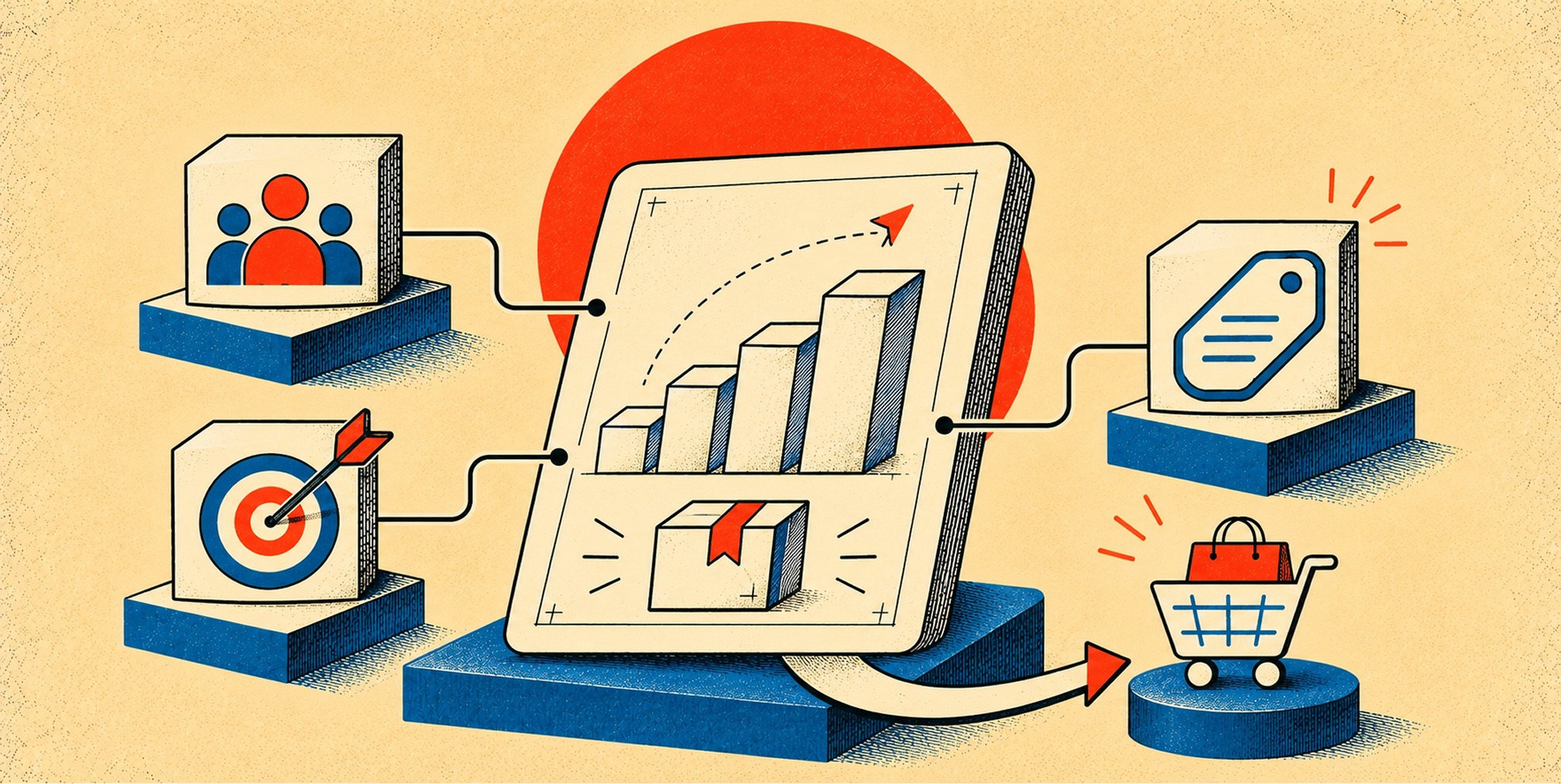
A strong value proposition follows one rule: it names who achieves what measurable outcome within what scope, and you can prove it. Everything else, including the tagline, the color palette, and the hero image on your homepage, is decorated around that core sentence.


Key Takeaways

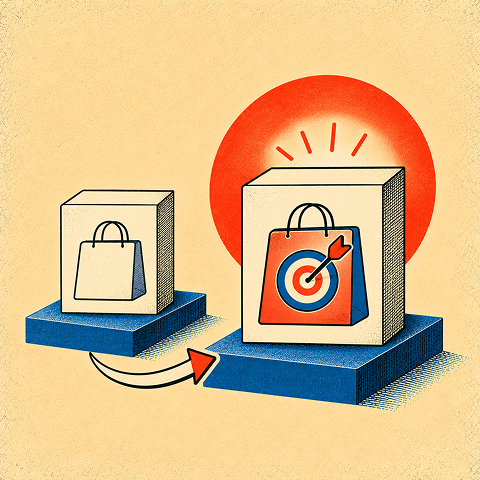

Before you write another word of marketing copy, run it against this checklist:
- Buyer: Does this name a recognizable customer or problem?
- Outcome: Is the result concrete enough to evaluate?
- Differentiation: Does it explain why this option beats doing nothing or switching?
- Proof: Can the claim be supported by a real example, metric or demonstrated capability?
Here’s the rule in action: “Grammarly helps writers who second-guess their tone catch errors and rewrite awkward sentences in real time, without hiring an editor.” Buyer named. Outcome measurable. Tradeoff removed. That’s a value proposition doing its job, not a slogan hoping it lands.
A value proposition only works when it names a specific buyer, a measurable outcome, and proof that survives a skeptical prospect’s first objection.
The term “value proposition” isn’t marketing folklore. It was popularized by McKinsey consultants Michael Lanning and Edward Michaels in 1988 as a clear, simple statement of benefits and approximate price for a customer segment. Nearly four decades later, that definition still holds: a value proposition tells a specific buyer what they get, what it costs them, and why it beats the alternative.
Investopedia sharpens this further, describing an effective value proposition as a concise statement with a headline, a subheading, and evidence-backed proof points. That structure, not a single punchy sentence, is what most companies actually publish on their homepages.
You don’t need to invent your own process. Three frameworks cover almost every situation marketers face:
- Value Proposition Canvas: Map customer jobs, pains and gains against the product’s benefits and pain relievers.
- Steve Blank customer development: Draft a clear hypothesis, interview prospective buyers and revise based on direct evidence.
- Harvard Business School value framing: Clarify target buyer, problem, differentiated benefit and defensible proof.
If your team has a week to spare and a genuinely undefined market, use the Canvas. If you have ninety minutes and an existing customer base, start with the HBS questions and skip the workshop entirely.
Value Proposition Examples Across Consumer, SaaS, and Services
The strongest value propositions share a structure, even when the industries look nothing alike. Below are proven examples grouped by category, with the reasoning behind why each one converts.
Consumer and product brands:
- Example, refillable cleaning product (illustrative): “For busy households, concentrated refills keep essentials stocked with less storage and packaging, without another bulky bottle.”
- Example, meal kit (illustrative): “Home cooks get measured ingredients and recipes for weekday dinners, without planning an entire grocery trip.”
SaaS and B2B software:
- Example, analytics software (illustrative): “Operations leaders see delayed orders in one shared view, without stitching together weekly spreadsheets.”
- Example, customer support software (illustrative): “Growing service teams route and resolve conversations in one workspace, without losing customer history.”
These three work because each names a buyer a reader can picture immediately: the fast-moving team, the underresourced marketing department, the writer without an editor on call. HBS’s B2B extension of the Elements of Value framework backs this up directly, showing that companies delivering value across multiple elements, functional and emotional, see higher NPS and stronger repeat-purchase intent than those competing on a single feature or price point.
Professional services:
- Example, accounting advisory (illustrative): “Multi-location operators get monthly cash-flow reporting they can act on, without waiting for year-end statements.”
- Example, design agency (illustrative): “Growth-stage teams get a documented visual identity they can launch across channels, without reinventing every asset.”
Startups and early-stage products:
- Example, scheduling app (illustrative): “Independent consultants book clients and collect deposits in one link, without manual back-and-forth.”
- Example, B2B integration product (illustrative): “Small engineering teams monitor failed data syncs in one place, without maintaining custom alerts.”
Notice what none of these examples do: they don’t lead with “innovative,” “seamless,” or “all-in-one.” They lead with a person and a number.
Before-and-After Rewrites: Turning Vague Claims Into Proof
Most weak value propositions aren’t wrong, they’re just incomplete. They describe a category instead of an outcome. Here’s what changes when you push a vague statement toward something specific enough to defend in a sales call.
Notice the pattern in before-and-after professional services rewrites: each “after” version adds a named buyer, a measurable result, and a defined scope, exactly what separated a forgettable statement from one that survives a skeptical prospect’s first objection.
The measurable language matters more than it looks. “Increase conversion” is a claim. “Increase trial-to-paid conversion” names a specific metric a prospect can ask about in a sales call, and forces your team to have an actual number ready. Source your proof points from real client results, documented before/after metrics, or third-party benchmarks, not aspirational language your team hopes turns out to be true.
Pro Tip: The “removed tradeoff” clause is the most underused lever in value proposition writing. Instead of only stating what the customer gains, name what they no longer have to give up: “without adding headcount,” “without the hidden fee,” “without waiting six weeks.” Removing a known pain point often lands harder than promising a new benefit, because the reader has already felt that specific frustration.
Free Brand Health Audit
Make sure your brand is built to sell
Search has changed. Your customers aren't just Googling anymore. They're asking ChatGPT, Perplexity, Gemini and other AI platforms what to buy, who to trust and which brands they should consider.
If your brand isn't showing up clearly in those answers, you're already losing opportunities. Our free Brand Health Audit shows you where your brand stands across traditional search, AI search and brand positioning.

Sample brand audit
Live preview
Traditional search
72
AI search (GEO)
34
Brand positioning
58
How to Write a Value Proposition From Real Customer Evidence
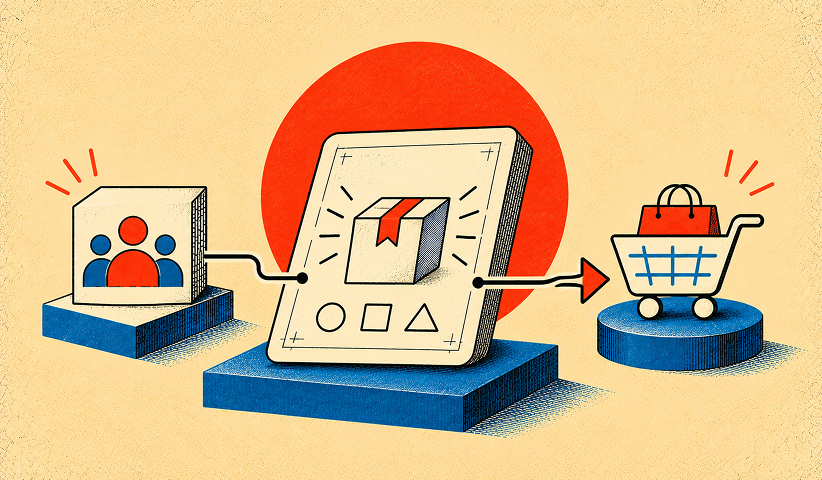
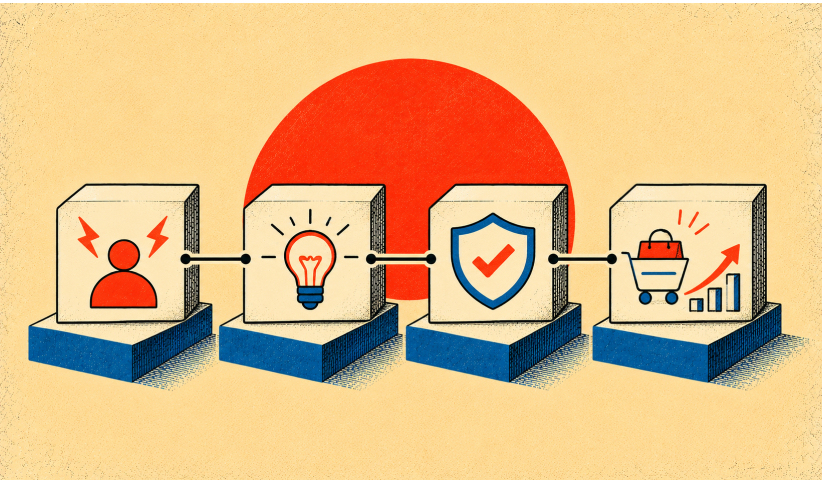
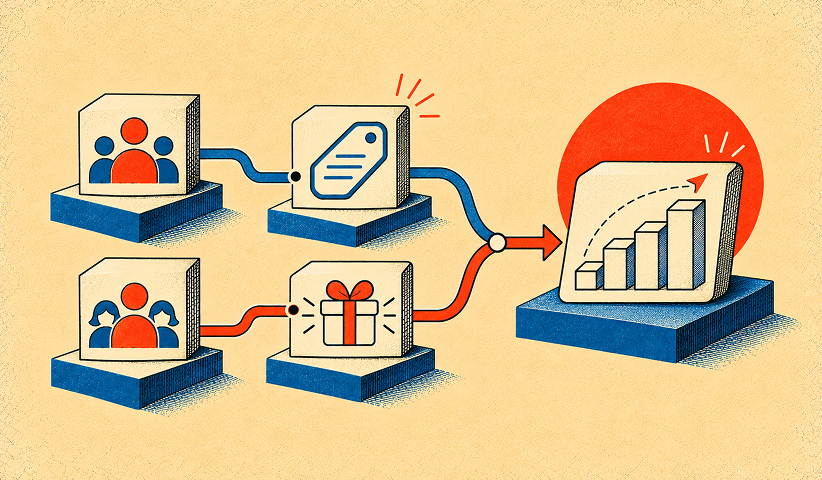
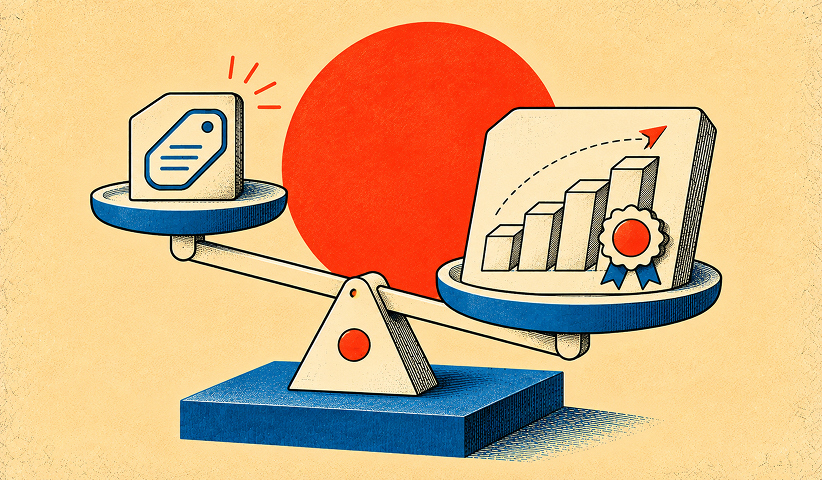
A value proposition built on assumptions is a guess wearing a suit. The reliable version comes from customer evidence, tested and refined until it’s provable, not just plausible. Treat the whole exercise as building and validating a hypothesis, the same approach practitioners recommend for any claim you plan to put in front of buyers.
Structured statement template:
For [specific buyer], [product/company] delivers [measurable outcome] by [mechanism], without [removed tradeoff]. Unlike [generic alternative], we [specific proof point].
One-liner template:
[Buyer] gets [outcome] in [timeframe], without [tradeoff].
Once you have both versions, get them in front of real prospects before publishing anywhere. A one-liner that sounds sharp in a Slack thread sometimes falls flat in an actual sales call, and you only find that out by testing it against a live objection.
Checklist for embedding the one-liner:
- Use the same verified promise in the homepage hero, product page and sales opener.
- Match each paid ad to a landing-page proof point and single action.
- Give sales teams approved variants for economic and technical buyers.
- Revisit claims as products, customer evidence and market conditions change.
Pro Tip: Write the one-liner before the structured statement, not after. Teams that start with the long version tend to keep every clause they wrote, producing a bloated 40-word “one-liner” that isn’t one. Draft the single sentence first, then build the fuller version around it.
How to Validate a Value Proposition Before You Bet the Budget On It
A value proposition is a claim until someone outside your team confirms it with a decision, a dollar, or a documented result. Win/loss interviews are the fastest way to find out if your language matches how buyers actually think. Ask closed deals what almost made them walk, and ask lost deals what the winning option offered that you didn’t.
Beyond interviews, three metrics tell you whether the proposition itself, not just the design around it, is doing the work:
- Qualified conversion rate from comparable traffic to the page or message being tested.
- Progression to demo, trial or purchase among visitors exposed to the proposition.
- Win/loss interview recall and the reasons buyers give for choosing or rejecting the offer.
Run headline tests for at least two full business cycles before drawing conclusions, since a three-day spike often reflects traffic source, not message quality. A lift you see in the first 48 hours is directional, not proof. Wait for a large enough sample before calling a winner, and treat anything under a few hundred visits per variant as a signal to keep testing, not a verdict.
Practitioner guidance on B2B value propositions backs a pattern worth remembering here: companies competing on multiple value elements, not price alone, consistently outperform single-benefit pitches in both close rate and retention. If your only proof point is “cheaper,” you’re not testing a value proposition. You’re testing a discount.
Common Mistakes That Weaken a Value Proposition
Most bad value propositions fail for one of six repeatable reasons. Fixing them rarely requires new research, just sharper editing.
In editing workshops, ask your team one question per line: “Could a competitor say this exact sentence?” If the answer is yes, the sentence isn’t specific enough yet.
Quick Templates You Can Fill In Right Now
If you need a working draft in the next ten minutes, start with one of these three templates and fill in your own specifics.
B2B template: [Role/title] at [company type] achieve [measurable outcome] within [timeframe], without [tradeoff].
B2C template: [Specific customer] gets [outcome] every time they [action], without [tradeoff].
Agency/services template: [Client type] gets [deliverable] in [timeframe], backed by [proof point], without [tradeoff].
Fill in the brackets with your actual numbers before you publish anything. A template with placeholder language still reads as generic; the specificity is the entire point.
Want to learn more about brand platforms, Brand Strategy and Brand Identity? Keep reading!
If you need help with your companies brand strategy and identity, contact us for a free custom quote.
Workshop Kit: Resources, Agenda, and Ownership
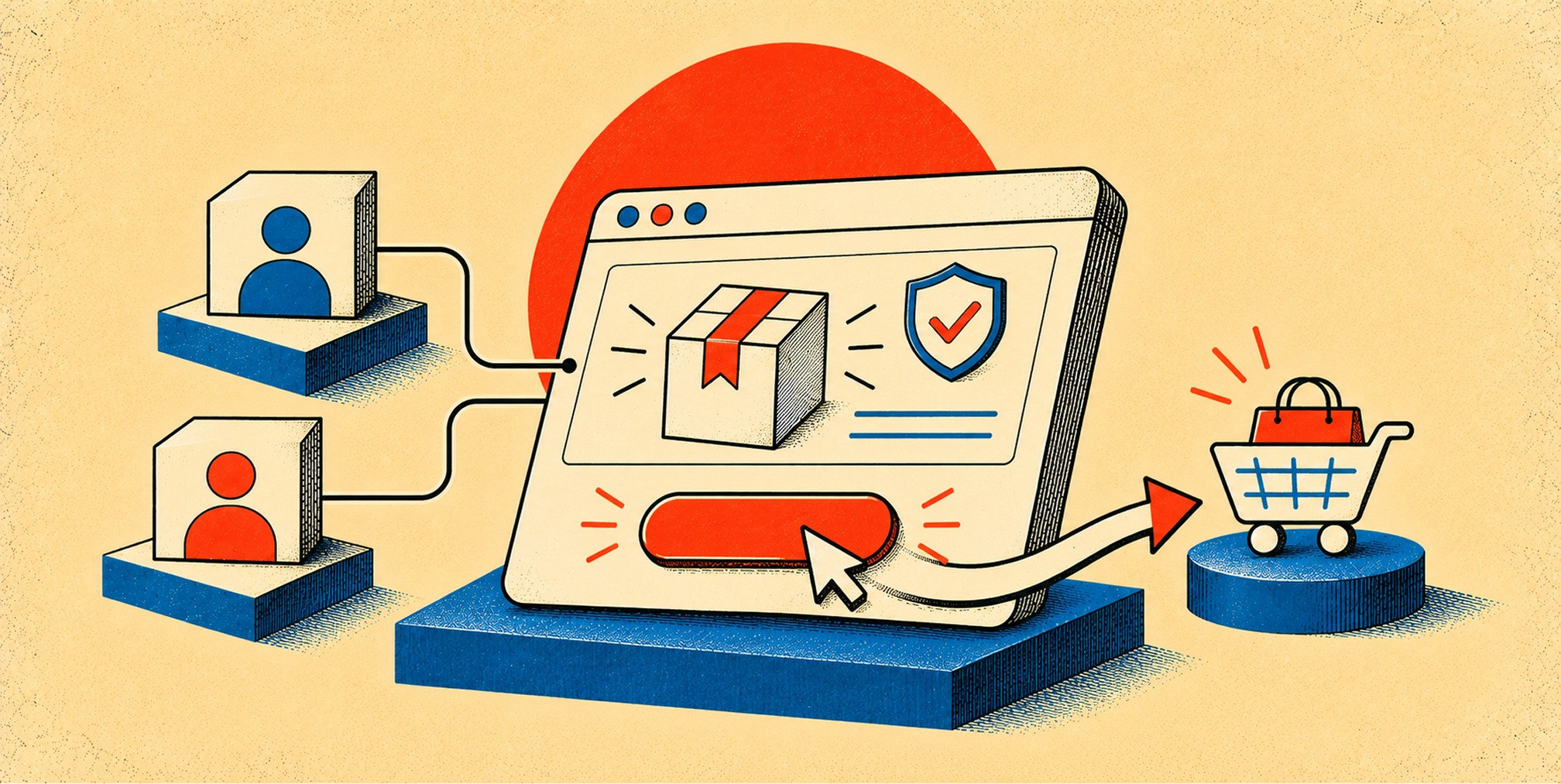
Running a value proposition sprint doesn’t require a full offsite. A focused 45 minute session, with the right prep, gets a team from scattered ideas to a testable draft.
45 minute agenda:
- Minutes 0–10: Review customer quotes, objections and competing alternatives.
- Minutes 10–20: Draft three buyer-outcome-proof statements.
- Minutes 20–30: Remove unprovable claims and identify the strongest differentiation.
- Minutes 30–40: Score each draft for clarity, relevance and evidence.
- Minutes 40–45: Assign an owner and a real-world test.
Where to consult examples for inspiration: revisit B2B brand positioning strategy resources and campaign case studies from brand marketing campaigns that show how a clear proposition drives creative execution downstream, not just homepage copy.
Ownership: store the final one-liner and structured statement in a single shared document, not scattered across slide decks. Assign one person, usually the head of marketing or a founder, to own quarterly review, since a value proposition that never gets revisited quietly goes stale as your product and market shift.
Why Most Value Propositions Fail Before They’re Ever Tested
The biggest problem with most value propositions isn’t that they’re poorly written. It’s that they were never meant to survive contact with a real customer. Teams draft them in a conference room, everyone nods, and the sentence goes on the homepage without a single prospect ever hearing it read aloud.
Here’s the uncomfortable part: a value proposition that sounds impressive internally often fails externally for the opposite reason you’d expect. It’s not too simple. It’s too safe. Marketing teams hedge language to avoid overpromising, and the hedging strips out the exact specificity that made the original insight compelling. “We help you grow faster” survived eleven rounds of internal review specifically because nobody could object to it, and nobody will remember it either.
At The Branded Agency, we treat a value proposition the same way we treat a media buy: as a hypothesis that earns its place through evidence, not consensus. When we align a client’s positioning with their creative and their performance marketing, the value proposition isn’t a line item handed off from strategy to design. It’s the sentence every asset, from the paid ad headline to the email subject line, gets tested against. If a landing page doesn’t clearly reinforce the promise made in the ad that drove the click, the gap shows up in conversion data within days, not quarters.
The teams that get this right aren’t the ones with the cleverest copywriters. They’re the ones willing to let a real prospect tell them their favorite sentence doesn’t land, and rewrite it anyway.
How The Branded Agency Turns a Value Proposition Into Revenue
Turning it into a homepage that converts, a sales deck your team actually uses, and paid campaigns that don’t contradict the promise, that’s where most in-house teams stall out.
The Branded Agency builds value propositions as the connective layer between brand strategy and performance results, not as a standalone deliverable that sits in a slide deck after the workshop ends. Our branding services start with the same win-interview and outcome-mapping process outlined above, then carry that language directly into your website copy, your paid media creative, and your sales enablement materials, so every touchpoint reinforces the same measurable claim instead of five different guesses at what makes you different.
Growth-stage companies preparing for a raise, a rebrand, or a new market segment get a positioning framework built to survive contact with real buyers, not just internal review. If your team already has a draft one-liner and needs it pressure-tested against actual campaign performance, request a value proposition audit and see where the language and the results currently disagree.
Frequently Asked Questions
What is a value proposition in simple terms?
It’s a concise statement identifying the specific benefit a product or service delivers to a named buyer, backed by proof. It answers one question: why should this exact customer choose you over every other option, including doing nothing?
What’s the difference between a value proposition and a tagline?
A tagline is external branding built for memorability, like “Just Do It.” A value proposition is an operational, evidence-backed claim that guides sales conversations, website copy, and campaign messaging. Confusing the two is one of the most common mistakes marketing teams make.
How long should a value proposition be?
The one-liner version should fit in a single sentence, ideally under 20 words. The full structured version, with headline, subhead, and proof points, can run several sentences, but every homepage and sales deck should lead with the compressed one-liner first.
How do I know if my value proposition is actually working?
Track homepage headline CTA lift, demo-to-close rate, and qualification rate over at least two business cycles. Run win/loss interviews alongside the data, since a metric tells you something changed, but a conversation tells you why.
Can a value proposition change over time?
Yes, and it should. Revisit it every time you close or lose a significant deal, or when your product, market, or competitive set shifts. A proposition drafted two years ago rarely still reflects how your best customers describe their decision today.
Sources
- Harvard Business School Online value proposition guidance: https://online.hbs.edu/blog/post/creating-a-value-proposition
- Strategyzer Value Proposition Canvas: https://www.strategyzer.com/library/the-value-proposition-canvas
- U.S. FTC advertising claims guidance: https://www.ftc.gov/business-guidance/advertising-marketing

Quincy Samycia
As entrepreneurs, they’ve built and scaled their own ventures from zero to millions. They’ve been in the trenches, navigating the chaos of high-growth phases, making the hard calls, and learning firsthand what actually moves the needle. That’s what makes us different—we don’t just “consult,” we know what it takes because we’ve done it ourselves.
Want to learn more about brand platform?
If you need help with your companies brand strategy and identity, contact us for a free custom quote.
We do great work. And get great results.
+2.3xIncrease in revenue YoY
+126%Increase in repurchase rate YoY



+93%Revenue growth in first 90 days
+144% Increase in attributed revenue




+91%Increase in conversion rate
+46%Increase in AOV



+200%Increase in conversion rate
+688%Increase in attributed revenue