Mastering Visual Brand Guidelines: The Ultimate Guide to Branding
03/22/2025
Branding Strategy
Visual brand guidelines show your team how to use your identity across websites, packaging, and campaigns. Use this guide to decide which rules to document and how to illustrate each one.

A designer is placing your logo over a photograph. The dark version disappears into the background, the white version is hard to read in one corner, and the brand folder contains six files with almost identical names. Which one should they use? A useful set of visual brand guidelines answers that question with an approved example the designer can see and a rule they can apply to the next image. The same principle applies to colour, typography, and photography. A colour palette records the exact blue your brand uses. A guideline shows where that blue belongs, which text colours are readable against it, and how it works on a product label or a mobile screen. In this guide, we’ll walk through the essential sections of a visual brand guide and show how to turn each one into instructions your team can use.


What Are Brand Guidelines?

What Are Brand Guidelines?
Brand guidelines are a shared reference for how a brand looks, sounds, and presents itself. Visual brand guidelines cover the parts people see, including your logo, colours, typography, photography, illustrations, and layouts. A broader guide may also explain your positioning, key messages, and brand voice.
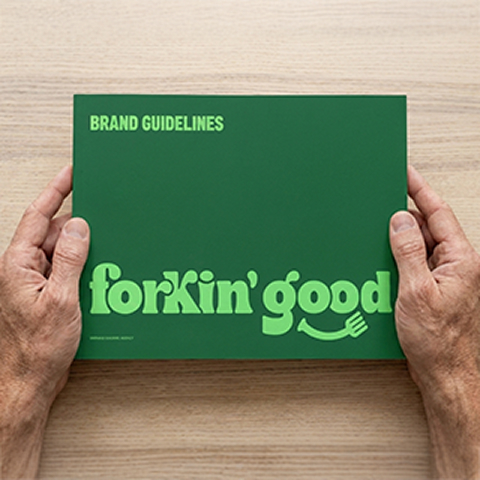
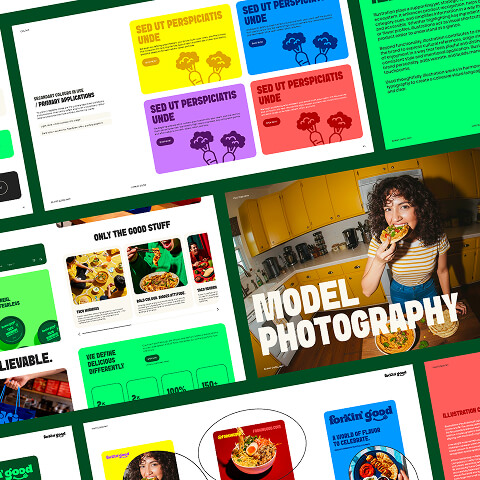
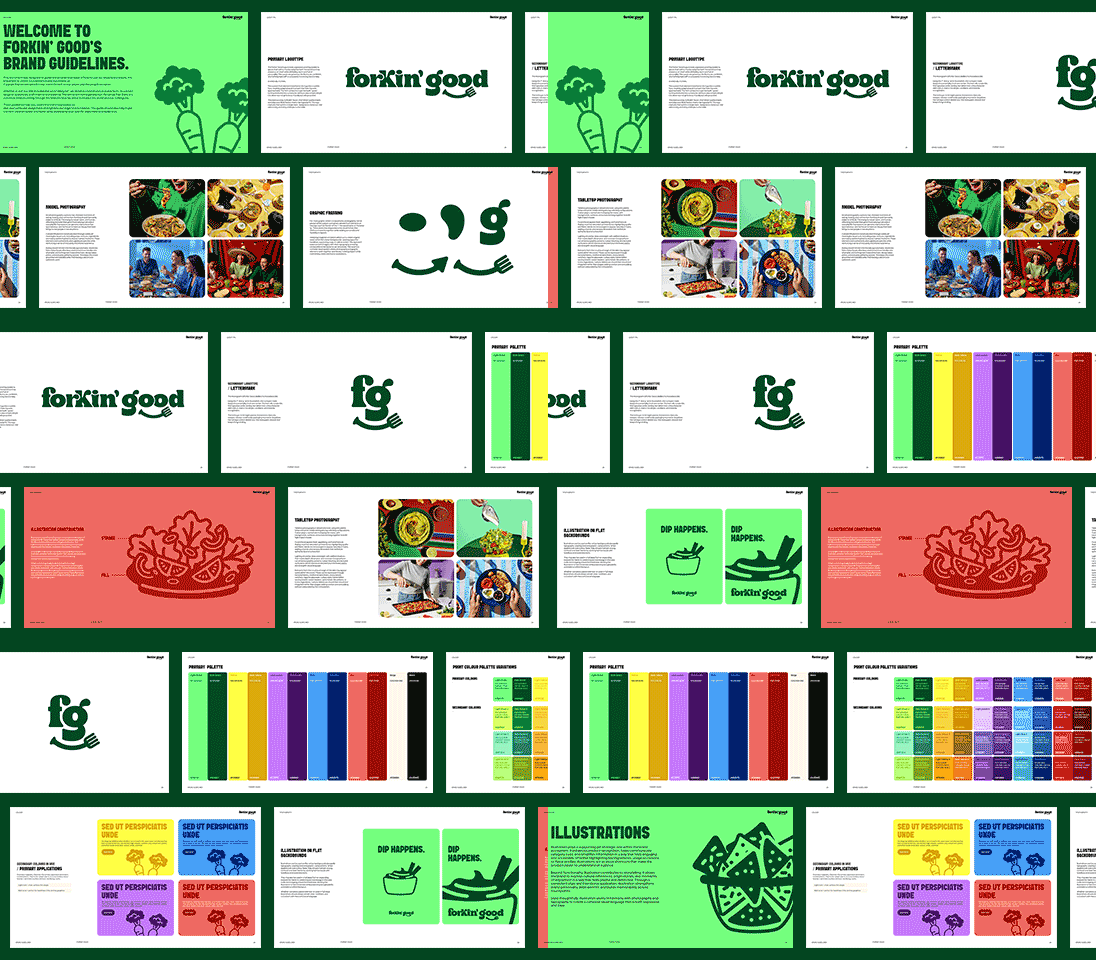
All visual examples in this article come from the brand guidelines we created for Forkin’ Good, a Vancouver Island food brand. See how we applied those guidelines across the product line in our Forkin’ Good branding and packaging case study.
A useful guideline pairs a rule with an example. “Use our primary logo on packaging” leaves a designer guessing when the package is too narrow for the full wordmark. Showing the approved compact logo on a narrow label, specifying its minimum size, and linking to the correct artwork gives them enough information to finish the job.
Why Are Visual Brand Guidelines Important?
The same identity has to work on a website, a shipping box, and a social profile image. Each format gives the designer a different amount of space and the customer a different amount of time to recognize the brand. Guidelines identify what needs to stay consistent and where the design can adapt.
Take a brand launching a new product. The packaging designer needs a label that reads clearly on a shelf. The web team needs a product name that stays readable on a phone. The photographer needs to know which feature to bring into focus. A guide can give all three the same priorities while showing a different application for each.
What Should Visual Brand Guidelines Cover?
Use this checklist as a starting point. For each element, include an approved asset, a rule for using it, and an example from something your brand actually produces.
- Logo usage: Show the primary logo, compact versions, clear space, minimum sizes, and approved backgrounds. Link to the current artwork.
- Colour palette: Give each colour a role. Specify values for screen and print, and show approved text and background combinations.
- Typography: Identify the typefaces and weights for headlines, body copy, captions, and labels. Show a real headline beside a paragraph so the hierarchy is easy to see.
- Photography and illustration: Explain what belongs in the frame, how to compose it, and which visual details matter. Annotate a few representative images so a new photographer or illustrator can follow the direction.
- Icons, patterns, and layout: Show how graphic elements work together. A finished product label or mobile screen can explain spacing, scale, and alignment more clearly than a page of isolated assets.
- Files and templates: Tell people where to find the approved logo files, fonts, and editable templates. Someone preparing a print file should be able to find the right artwork as quickly as someone making a presentation.
Who Uses Visual Brand Guidelines?
Designers use them to make creative decisions. Developers use them to translate typography, colour, and spacing into a working website. Marketers use them to build campaigns, and external partners use them to produce work without having to ask your team to approve every detail.
When organizing the guide, think about what each person will look for first. A print supplier needs the production artwork and colour specifications. A social media manager needs the current profile image and post templates. A photographer needs examples of composition and lighting. Put those resources where each person can find them.
What’s the Difference Between a Brand Style Guide and Comprehensive Brand Guidelines?
The terms often overlap. A brand style guide usually focuses on everyday application: which logo to use, how to set type, which colours work together, and what finished materials should look like. Comprehensive brand guidelines, sometimes called a brand bible, can also cover positioning, messaging, naming, voice, and how multiple products or sub-brands relate to one another.
Choose the scope based on the decisions your team makes. A single-location consultancy might get good use from a short visual guide, a proposal template, and a presentation deck. A consumer brand selling through retail and ecommerce may also need packaging rules, photography direction, retailer assets, and a system for distinguishing flavours or sizes.
A practical way to decide how much detail to include is to review the last five pieces of creative your team sent back for revisions. If three came back because the product name was hard to read, add a hierarchy rule and a corrected example. Build the guide around decisions people repeatedly need help making.
Free Brand Health Audit
Make sure your brand is built to sell
Search has changed. Your customers aren't just Googling anymore. They're asking ChatGPT, Perplexity, Gemini and other AI platforms what to buy, who to trust and which brands they should consider.
If your brand isn't showing up clearly in those answers, you're already losing opportunities. Our free Brand Health Audit shows you where your brand stands across traditional search, AI search and brand positioning.

Sample brand audit
Live preview
Traditional search
72
AI search (GEO)
34
Brand positioning
58
How to Create a Brand Style Guide
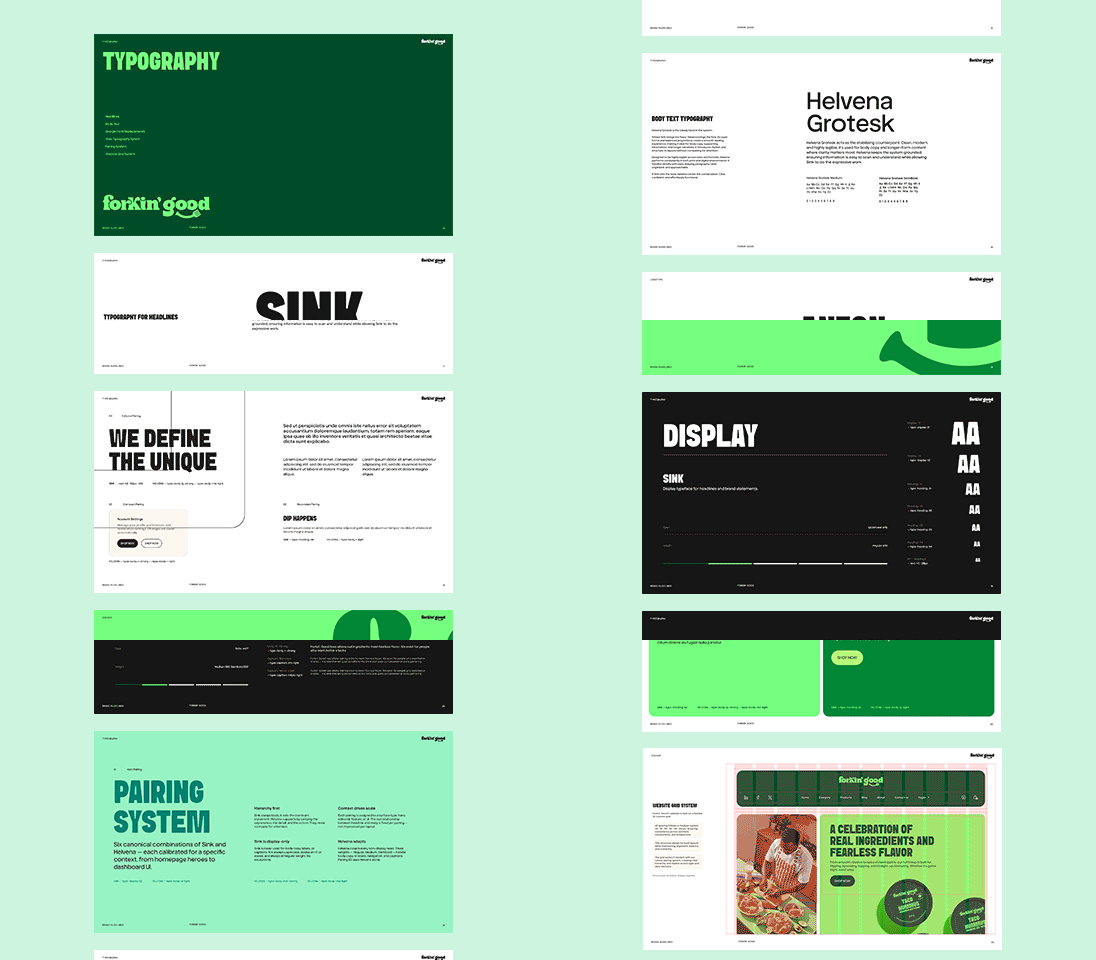
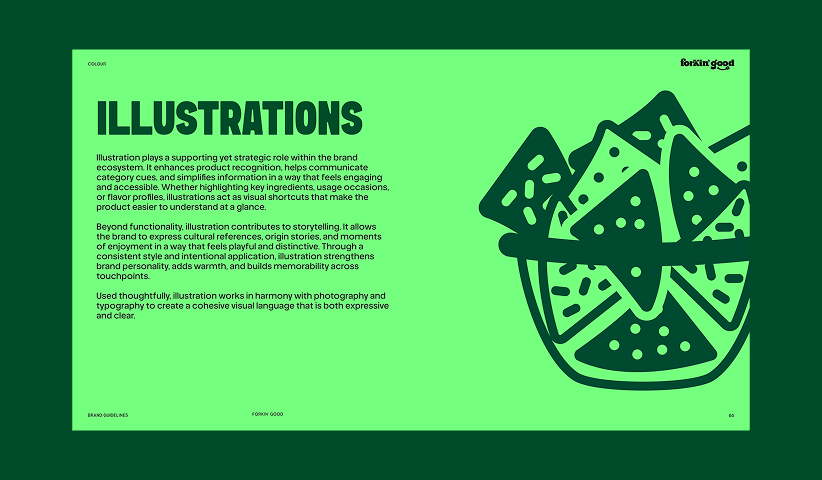
Start with three pieces your team produces regularly: a product page, a package, and a sales presentation, for example. Lay them side by side. Where does the brand already feel consistent? Where would two designers working from the same files make different decisions? Those differences tell you what your style guide needs to explain.
- Gather the approved assets. Collect the current logo files, colour values, typefaces, photography, illustrations, and templates in one place. Confirm which versions are in use before documenting them.
- Record the decisions people need to repeat. Start with basics such as how to write the company name, when to use a shortened name, and where the tagline belongs. If your brand appears alongside a retailer, sponsor, or partner, show an approved co-branded layout.
- Build each guideline around a real example. Show the finished design, label the decision, and link to the file someone needs to reproduce it. A marked-up package or webpage often explains more than a page of adjectives.
- Test the guide with someone who didn’t write it. Ask them to build a social post or presentation slide using only the guide and its linked assets. Every time they have to ask a question, you’ve found an instruction to clarify.
- Give the guide an owner. Name the person responsible for updates, show when the guide was last revised, and keep one link to the current version so suppliers and internal teams can find it.
Logo Usage Guidelines
Show which version of the logo to use in each setting. A primary wordmark might work across a storefront sign, while a compact mark fits a profile image. For each approved version, document its minimum size, clear space, background options, and file location. Show how to measure clear space using a feature of the mark itself, such as the height of a letter, so the rule works at any scale.
Example to include: Place the full wordmark and compact mark on the same narrow package label at actual print size. Mark which version to use and explain why. The next designer facing a similar constraint has a decision they can apply. Explore logo usage guidelines.
Colour Guidelines
Give each brand colour a job. Identify the colours used for backgrounds, text, accents, product variants, and actions such as buttons. Include HEX or RGB values for digital work and approved CMYK or spot-colour specifications where relevant for print. Show which text and background combinations your team has checked for readability.
Example to include: Put a product family side by side. Label the elements that stay the same across the range and the colour that changes by flavour. Pair each colour with a written flavour name so shoppers can tell the products apart even when the colour difference is subtle.
Typography Guidelines
Document the typeface, weight, size, and spacing for the text people use most: headlines, subheadings, body copy, captions, and labels. Include a fallback font for email or presentations where the brand typeface may be unavailable. Show how the hierarchy adapts from a wide desktop layout to a narrow phone screen.
Example to include: Set your longest product name in a mobile product-page mockup. Show where the headline can wrap, where the price sits, and how much space separates the name from the description. This gives your team a more useful reference than a specimen showing the alphabet.
Iconography Guidelines
Define whether icons are outlined or filled, how thick their strokes should be, and what sizes they need to work at. Include the approved icon files and a short label describing what each one means. If an icon could have multiple interpretations, show the text that should accompany it.
Example to include: Put your shipping, pickup, and returns icons together at the size they appear on a product page. A designer can then check whether a new warranty icon belongs to the same family and whether a shopper can tell the four actions apart.
Illustration and Graphic Guidelines
Explain what illustration contributes to the brand. A diagram that shows someone how to assemble a product has a different job from a pattern printed inside its box. Specify the drawing style, perspective, line weight, palette, and level of detail for each use. If you have recurring characters, include their proportions, expressions, and permitted uses.
For a working reference, the Little Tandem brand identity case study shows how custom illustrations and styled photography can work together for a children’s furniture brand. The illustration brings imagination into the experience, while the photography helps parents picture the furniture in a room.
Photography Guidelines
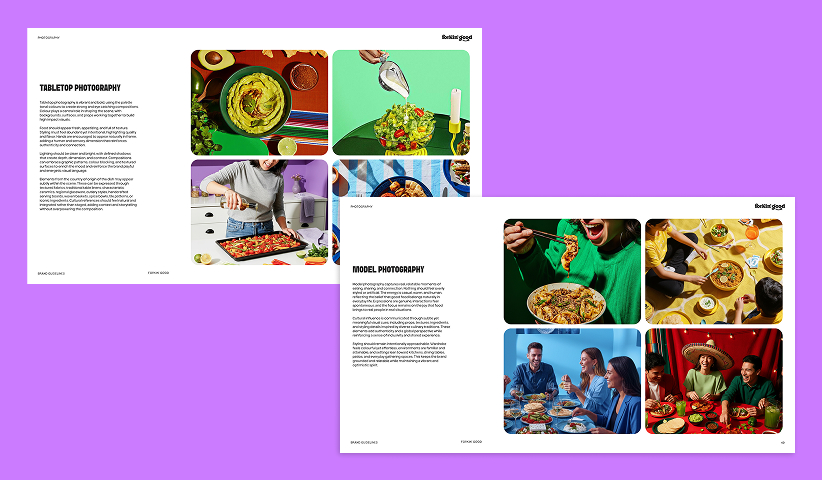
Write this section as a brief a photographer could take into a shoot. Define the subject, setting, lighting, camera angle, background, and crop. Annotate approved photographs to explain which decisions matter. “Leave open space to the right of the product for a headline” is easier to act on than “make the image feel premium.”
Example to include: Show three shots of the same product: a front view that identifies it, a close-up that explains a material or feature, and a photograph that shows its scale in use. If the images need to work in both a wide website banner and a vertical social post, show both crops before commissioning the shoot. Read our guide to product photography costs.
If you publish customer photography, give it a place in the guide. Specify how the team confirms permission, credits the creator, and decides where an image can appear. A candid customer photo may be ideal for a community post, while the product gallery needs a clear, consistent view of what ships.
Templates for Other Creative Assets
Build templates for the pieces your team recreates most often. For each one, identify what stays fixed, what can change, and where to find the editable file.
- Social posts and video thumbnails: Set the logo position, headline area, and safe margins. Show what happens when the headline runs to two lines.
- Sales presentations: Provide a cover, a content slide, and a case study slide populated with realistic copy and images.
- Packaging and printed materials: Show which details need approval before production, including artwork size, product naming, and colour specifications.
- Digital ads and email banners: Show how the same campaign adapts to wide and narrow formats, including which element gets priority when space is tight.
How Verbal Guidelines Fit Into a Visual Style Guide
Include naming, voice, and messaging rules wherever they affect a design. A packaging designer needs the correct product name. A web designer needs to know whether a button should say “Book a consultation,” “Request a quote,” or “Buy now.” Put those instructions beside the layout where the decision happens.
Writers, marketers, sales teams, and customer support teams can use a more detailed brand voice guide. Link to it from the visual guide and include one finished example that brings both together. An annotated product page works well: the headline establishes the message, the photograph supplies the evidence, and the button makes the next step clear.
Want to learn more about brand platforms, Brand Strategy and Brand Identity? Keep reading!
If you need help with your companies brand strategy and identity, contact us for a free custom quote.
Brand Communication Guidelines: How Voice and Tone Fit Into a Visual Style Guide
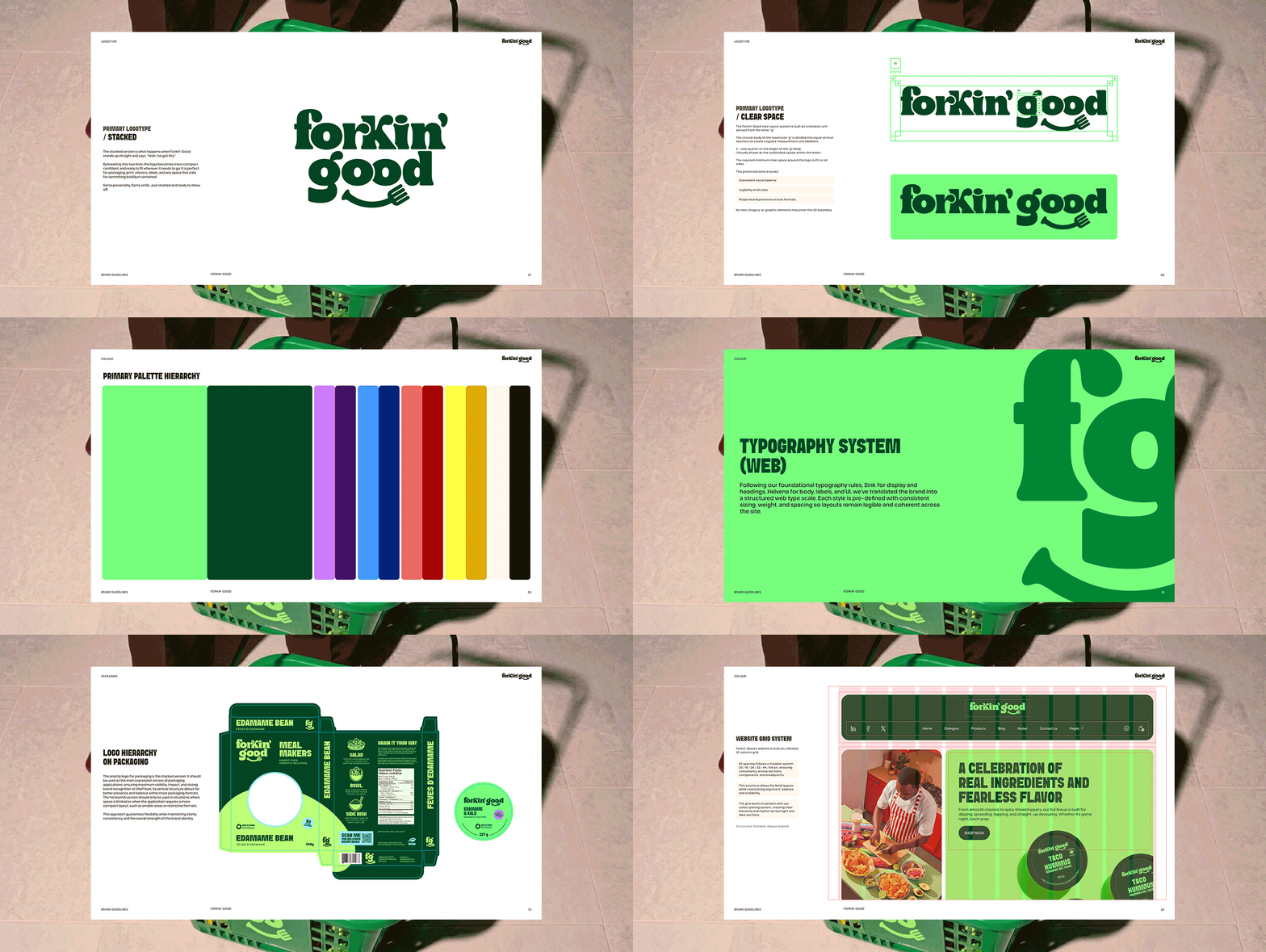
A customer reads the headline, looks at the photograph, and decides whether to click. They experience all three together. That’s why a visual style guide benefits from a short section showing how words and design work on the same page.
Brand voice is the recognizable way your brand speaks. Tone is how that voice changes with the reader’s situation. Take a furniture brand with a warm, practical voice. On a product page, it might say, “Start with the desk. Add storage when you need it.” In a delivery email, it might say, “Your desk will arrive Friday. The storage unit will follow on Monday.” The product page invites the reader to picture a room. The email gives them the information they need to plan their week.
Put both examples beside the relevant layouts. Writers can hear the voice, and designers can see which words need the most emphasis. For a more detailed writing reference, see our guides to brand voice and brand tone.
What to Include in Your Communication Guidelines
- Communication objectives. Define what each audience should understand or be able to do. A customer choosing a finish needs a clear description and an accurate photograph. A retail partner ordering that finish needs the approved colour name, product code, and image file.
- Brand attitude. Describe how the brand approaches a situation, then show what that means in practice. If your brand is candid, include an example of how you explain a product limitation before someone buys.
- Brand story. Record the details your team can substantiate: why the company started, what problem the founders saw, and which decisions followed. Include a short approved version for packaging or partner profiles and a fuller version for the About page.
- Key messages. Name the ideas you want customers to remember and pair each with evidence. If the message is “this furniture adapts as your child grows,” show the same piece in two configurations and label what changed.
- Writing principles. Give editors rules they can apply to a draft. “Use the same finish name on the product page, swatch label, and order confirmation” is more useful than “Be consistent.”
Brand Style Guide Examples Worth Studying
These public guides each solve a different problem. Choose the one closest to the decision your own team keeps revisiting.
NASA: Explain When Each Logo Belongs
NASA distinguishes between its round insignia, commonly called the “meatball,” and its “worm” logotype. Its guide explains how the two marks relate and where the secondary mark can appear. If your brand has a primary logo, a heritage mark, or a campaign symbol, borrow this approach: show the marks together on a finished application and identify which one takes priority. Explore NASA’s brand guidelines.
Slack: Put the Approved Files Within Reach
Slack’s media kit gives people access to logo files, product screenshots, and its broader brand guidelines. That’s a useful model for a company whose identity appears in partner presentations, press coverage, or retailer listings. Place the download beside the usage instructions so the person preparing the artwork can act on both at once. Explore Slack’s media kit.
IBM: Give Typography Its Own Reference
IBM dedicates a section of its design language to type. For your own guide, apply that depth to one layout your team produces often. Show a headline, paragraph, caption, and button together, then label the type choices behind each. A designer recreating the hierarchy can see how the sizes and weights work in relation to one another. Explore IBM’s typography guidelines.
Mailchimp: Show How Tone Changes With Context
Mailchimp’s public resource is a content style guide. Its voice and tone section is especially useful for teams writing interface copy, emails, and support messages. Borrow the idea by placing two examples side by side: how your brand announces something a customer is excited about and how it responds when something goes wrong. Read Mailchimp’s voice and tone guidelines.
How Much Does a Brand Style Guide Cost?
The first pricing question is how much of the identity already exists. If your logo, colours, typefaces, and photography direction are approved, the project involves organizing assets, documenting rules, and showing how to apply them. If those decisions are still open, the scope also includes design work.
For context, The Branded Agency lists branding engagements starting at $15,500. That figure covers a broader branding engagement. For a standalone style guide, the quote depends on the existing assets, the applications that need examples, and the templates included in the handoff. View The Branded Agency’s branding pricing.
When comparing proposals, ask three questions:
- Which design decisions are included? Documenting an approved palette is a different assignment from developing one and testing it across packaging, print, and digital.
- Which finished applications will we see? Ask for examples on materials you actually produce, such as a mobile product page, a retail label, or a partner presentation.
- What can our team edit after handoff? Specify whether you’ll receive the guide, source artwork, editable templates, and a walkthrough for the people who will use them.
Which Type of Brand Guidelines Does Your Team Need?
Build specialist guides around the work you produce most often. A one-page logo reference may be enough for a sponsor placing your mark on an event banner. A retailer launching a new product line needs more detail.
- Core visual guidelines cover logos, colour, typography, imagery, iconography, and layout. Start here when multiple people create materials under the same brand.
- Digital and ecommerce guidelines show how the identity works on websites, Shopify product pages, Amazon listings, email, and social media. Include mobile examples, image crops, buttons, and editable templates.
- Packaging and print guidelines cover product naming, variant colours, label hierarchy, stationery, and production artwork. Show the smallest package and the longest product name your system needs to accommodate.
- Photography, rendering, and motion guidelines give creators direction on lighting, framing, materials, animation, and video. Include a reference image, clip, or storyboard with notes explaining what to reproduce.
- Communication and writing guidelines cover voice, tone, terminology, key messages, and examples for different audiences. These are especially useful when marketing, sales, and customer support all write on the brand’s behalf.
What’s the Difference Between Brand Identity, Brand Guidelines, and a Brand Bible?
Brand identity is what people encounter: the name on a package, the photography on a website, the language in a welcome email, and the visual details that make those pieces recognizable.
Brand guidelines document how to create that experience again. The logo is part of the identity. The instruction showing which version belongs on a dark background is part of the guidelines.
A brand bible is a name teams often give to a broader reference that brings positioning, story, messaging, and visual standards together. The terms overlap, so when you commission a guide, agree on the contents and deliverables up front.
A useful final test is to hand the guide to someone joining your team. Ask them to find the correct logo, build a product announcement, and explain one design choice they made. Where they can do that independently, the guide is doing its job. Where they hesitate, you’ve found the next example to add.
Start With the Next Design Decision Your Team Has to Make
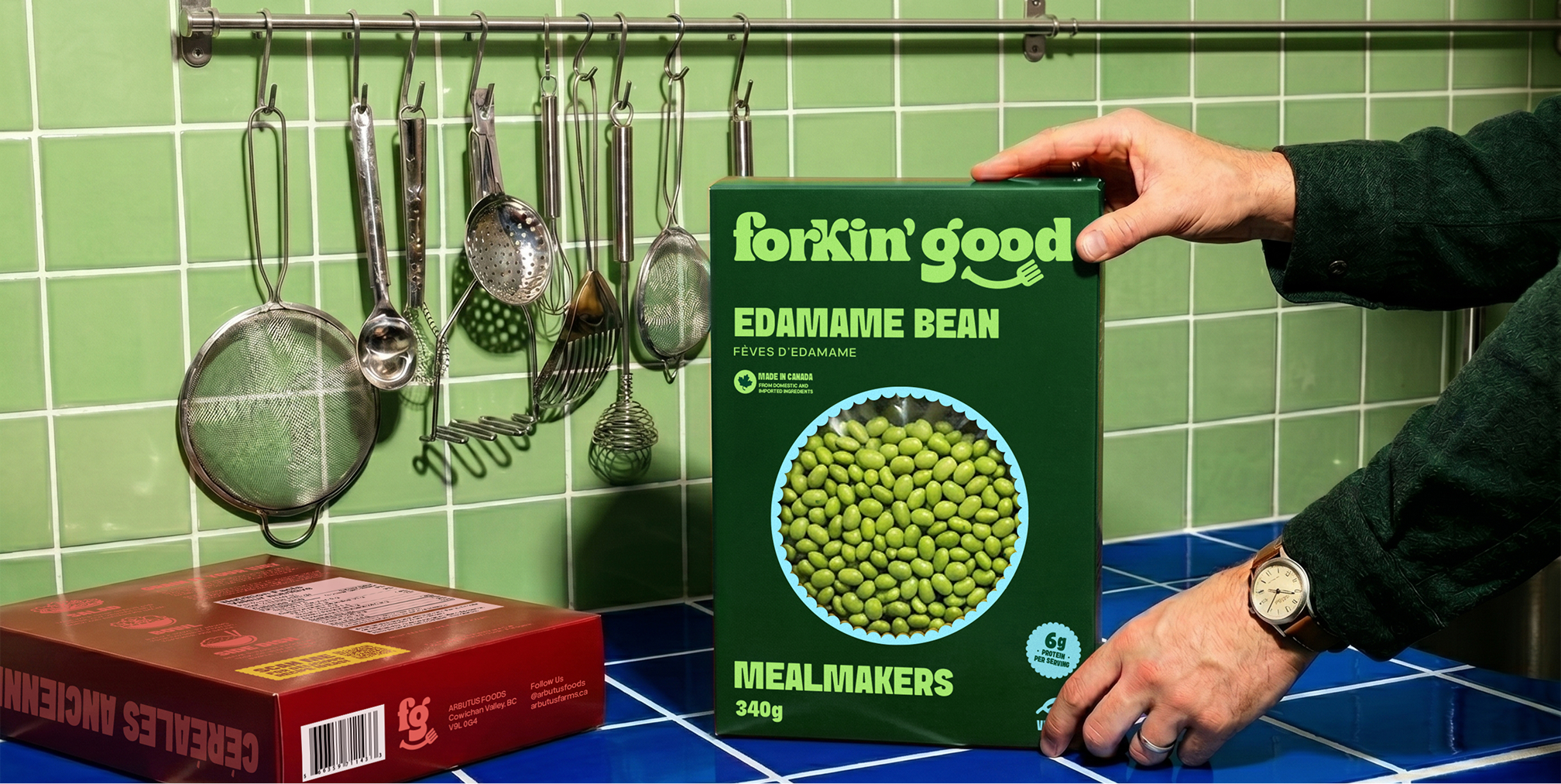
Think about the last piece of creative that came back for another round of revisions. Maybe the product name disappeared against the packaging, or a mobile crop cut off the detail the photographer was hired to capture. Put the original and approved versions side by side in your visual brand guidelines. Add one sentence explaining the decision. Now the next person facing that problem has an answer.
Build from there. Document the choices your team makes most often, link to the approved assets, and add examples as the brand appears in new places. For more examples from our client work, explore our guide to brand guidelines.
Frequently Asked Questions About Visual Brand Guidelines
What should visual brand guidelines include?
Start with logo usage, colour, typography, imagery, and layout. For each, provide the approved asset, explain when to use it, and show it in a finished application. A packaging brand might show a label at actual print size. A digital service might show the same heading on desktop and mobile. Choose examples that reflect what your team produces.
Can a small business use a one-page brand guide?
Yes. A one-page guide can cover your primary logo, compact logo, colour values, typefaces, and a link to the current files. Make room for one finished example, such as an email header or product label. It shows a freelancer how the pieces work together. Expand the guide when your team starts making decisions the page doesn’t answer.
What’s the difference between brand identity and brand guidelines?
Your brand identity includes the name, logo, colours, imagery, and language people encounter. Your brand guidelines explain how to use those elements. The wordmark on a bottle is part of the identity. The instruction showing how small that wordmark can appear on a label is part of the guidelines.
How much creative freedom should a brand guide allow?
Be explicit about what stays fixed and what can change. On a packaging line, the product name and logo might occupy the same positions across every flavour, while illustrations and accent colours vary. Show two approved designs side by side and label those choices. That gives designers room to introduce something new while keeping the range recognizable on a shelf.
What files should designers and external partners receive?
Match the handoff to the work. A print supplier needs approved vector artwork and print colour specifications. A web developer needs digital assets, colour values, typography rules, and mobile examples. A marketing team needs editable templates for the materials it publishes regularly. Give each partner one link to the current files and identify who can approve an exception.
Should brand voice and tone be in a visual style guide?
Include verbal guidance where it affects a design decision. Show how to write the company name, how long a package headline can run, or which words belong on a booking button. A separate brand voice guide can cover longer writing samples, tone, and messaging for sales and customer support.
How much does a brand style guide cost?
The main pricing question is whether the agency is documenting an approved identity or developing one. Organizing existing artwork and usage rules is a narrower assignment than creating a type system, directing photography, and building editable templates. Ask for a quote that separates identity design, documentation, templates, and handoff so you can compare the actual deliverables. View The Branded Agency’s branding pricing.
When should you update your brand guidelines?
Update them when a new product, channel, or partnership introduces a decision the current guide can’t resolve. Review them when teams repeatedly request the same exception, too. If three designers struggle to fit your wordmark into a retailer’s thumbnail, test and approve a compact version, add it to the guide, and link to the file.
If your team already has a visual identity but keeps running into the same design problem, talk to The Branded Agency about your brand guidelines. Bring the asset that raises the most questions. It’s a useful place to start.

Sloane Avery
As entrepreneurs, they’ve built and scaled their own ventures from zero to millions. They’ve been in the trenches, navigating the chaos of high-growth phases, making the hard calls, and learning firsthand what actually moves the needle. That’s what makes us different—we don’t just “consult,” we know what it takes because we’ve done it ourselves.
Want to learn more about brand platform?
If you need help with your companies brand strategy and identity, contact us for a free custom quote.
We do great work. And get great results.
+2.3xIncrease in revenue YoY
+126%Increase in repurchase rate YoY


+93%Revenue growth in first 90 days
+144% Increase in attributed revenue




+91%Increase in conversion rate
+46%Increase in AOV


+200%Increase in conversion rate
+688%Increase in attributed revenue