Breakdown of Webflow Agency Pricing Models: Flat, Hourly, Retainer, Per Module

10/24/2025

Web Design / Web Dev

Understand Webflow agency pricing in 2026. Compare fixed fees, hourly billing, retainers, and per-module quotes to build a clearer website budget.

Overhead view of a blue desk with a coffee cup, glasses, notebook, and open planner with handwritten notes, symbolizing focused work, planning, and productivity.

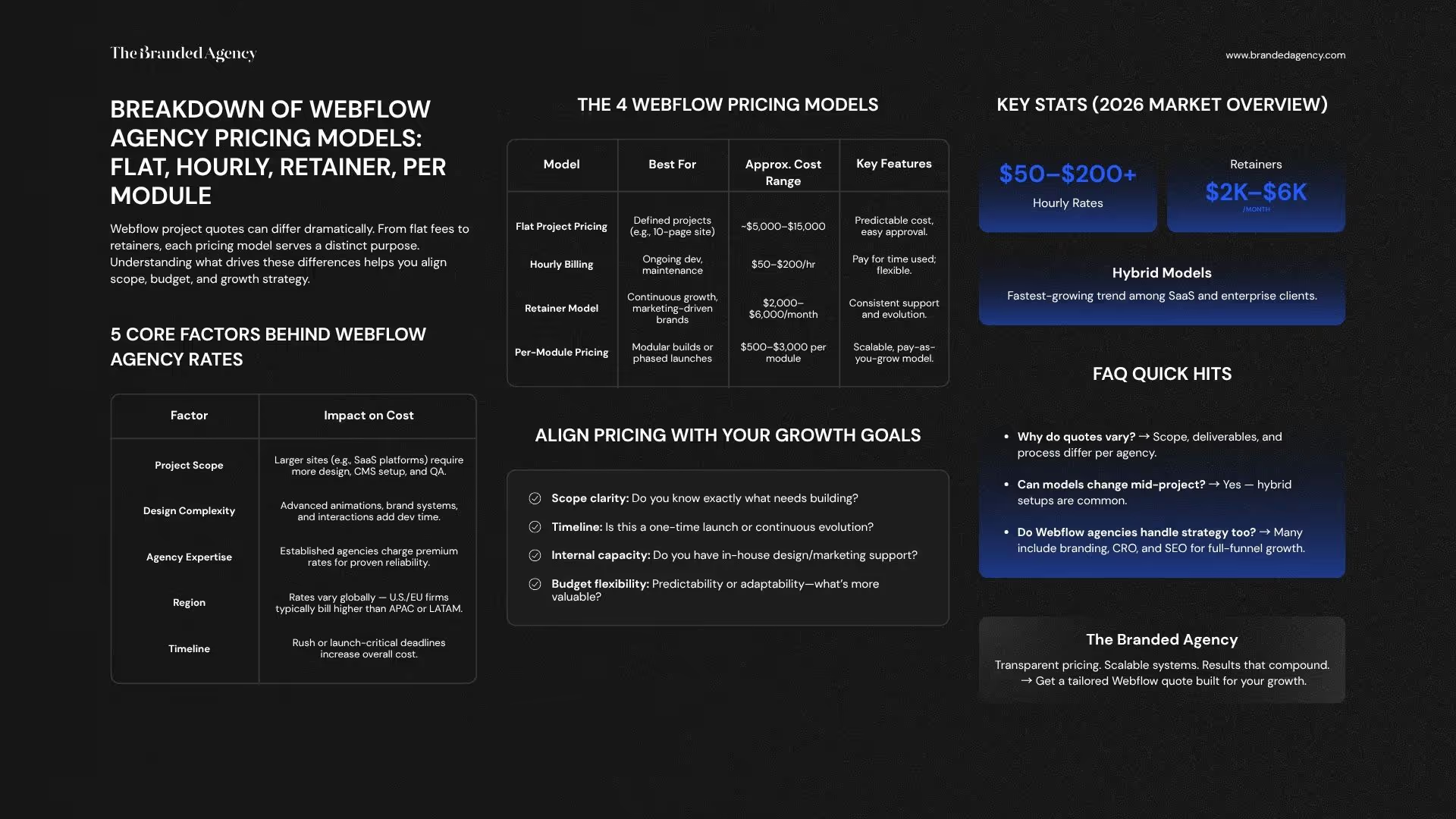
How much does it cost to hire a Webflow agency in 2026? The answer depends on your website’s scope, the services included, and how the agency charges. A fixed project fee, hourly arrangement, monthly retainer, or per-module quote can each cover a different set of responsibilities. To compare proposals, look beyond the headline price. Check whether strategy, design, CMS setup, content, integrations, testing, and launch support are included. Separate agency fees from platform subscriptions and other ongoing expenses so you can understand the full commitment. This guide explains the four Webflow agency pricing models, their trade-offs, and the questions to ask before choosing an approach for your launch, redesign, or ongoing website work.

Breakdown of Webflow Agency Pricing Models: Flat, Hourly, Retainer, Per Module
Quincy Samycia
Play IconPause Icon
0:00
0:00
https://cdn.prod.website-files.com/673ec61d219571e72b3eba03/68fbc0ab94bfb1bc4a3c6e26_274_Breakdown%20of%20Webflow%20Agency%20Pricing%20Model.mp3

What Influences Webflow Agency Pricing

Two people standing and reviewing large floating documents, symbolizing project planning and proposal analysis.
Abstract illustration of a road with dollar bills and currency symbols, representing financial flow and budget planning.
Person working alone at a desk with papers and a computer, symbolizing focused creative or design work.
No items found.

What Influences Webflow Agency Pricing?

Webflow agency pricing depends on project scope, design complexity, content requirements, integrations, and the services included. The billing model determines how you pay for that work: a fixed project fee, hourly billing, a retainer, or pricing for individual deliverables.

Agency fees are separate from Webflow’s platform pricing. When comparing proposals, identify which subscriptions and third-party services you will pay for directly.

The following factors help explain why quotes differ.

Project Scope and CMS Structure

Page count is only part of the scope. A website with many pages sharing a few templates may require less design work than a smaller site with a unique layout for every page.

For content-driven websites, Webflow CMS Collections organize recurring content such as articles, case studies, or team profiles. Budgeting should account for the structure of those Collections, their relationships, template design, and content population.

Ask agencies to distinguish between unique page templates, individual pages, and CMS items in their estimates.

Design Complexity and Brand Readiness

Custom layouts, animations, and interactive features add design, development, and testing work. Responsive behavior and accessibility requirements also need attention throughout the build.

Your existing assets affect the workload. Clear brand guidelines, approved messaging, and usable photography give the team a defined starting point. If those assets need development, include that work in the scope.

Content, Integrations, and Migration

A quote for building pages may exclude writing their content or connecting them to your business systems.

Clarify who handles:

  • Copywriting, image preparation, and content entry.
  • CRM connections and form routing.
  • Analytics and conversion tracking.
  • Migration of existing pages and CMS content.
  • Redirects and launch checks when URLs change.

These responsibilities can materially change the project fee, even when the finished websites look similar.

Agency Expertise and Team Structure

Quotes reflect the specialists involved and the depth of their work. One proposal may cover implementation from supplied designs, while another includes research, UX, copywriting, development, and project management.

Evaluate relevant work, the proposed team, and the delivery process. A higher price alone does not establish better quality, and a lower quote may leave more responsibilities with your team.

Location, Collaboration, and Timeline

Location can influence costs, but it should not substitute for evaluating capability. Consider working-hour overlap, communication, currency, and how the team will manage feedback.

A compressed schedule may require additional resources or a narrower launch scope. Confirm content deadlines, approval responsibilities, and any rush fees before committing to a launch date.

To compare proposals effectively, give each provider the same brief. Our Webflow development services provide a starting point for discussing the design, build, and support your project needs.

Flat Project Pricing

How Fixed-Price Webflow Projects Work

Flat project pricing is an agreed fee for a defined set of deliverables. It provides a clear project price as long as the work stays within the agreed scope.

A useful proposal should specify:

  • The number of unique templates and pages.
  • CMS Collections and content-entry limits.
  • Included integrations and interactions.
  • Design revision rounds.
  • Testing and launch responsibilities.
  • Training and post-launch support.
  • Exclusions and the process for approving additional work.

For example, “a ten-page website” leaves important questions unanswered. Does it include ten distinct designs or pages assembled from shared templates? Will the agency write the copy, populate the CMS, and migrate existing content? Those details determine what the price covers.

Payment schedules vary by agreement. A project may use a deposit followed by design, development, and launch milestones. Confirm when each payment becomes due and what approval or delivery triggers it.

Advantages of Flat Project Pricing

Fixed pricing makes it easier to approve a budget and compare the agreed deliverables against the final cost.

It works well when the team has settled the main requirements, content responsibilities, and approval process before development begins. It can also help stakeholders prioritize what must be included at launch.

Budget predictability applies to the defined project scope. Platform subscriptions, third-party services, taxes, and future improvements may remain separate.

Limitations of Flat Project Pricing

Fixed pricing becomes harder to manage when requirements are still evolving. Additional templates, new integrations, or substantial changes to approved designs may require a revised fee and timeline.

Before signing, agree on what counts as an included revision, a defect to be corrected, or a new request. Require approval of additional costs before the extra work begins.

If significant technical questions remain unresolved, a separately scoped discovery phase can help establish a more reliable build price.

When Flat Pricing Is a Good Fit

Fixed pricing suits projects with clear deliverables and manageable dependencies, including company websites, defined redesigns, and campaign landing pages.

Project size is not the deciding factor. The key is whether both teams can clearly describe what will be delivered, who is responsible, and how completion will be assessed.

Free Brand Health Audit

Make sure your brand is built to sell

Search has changed. Your customers aren't just Googling anymore. They're asking ChatGPT, Perplexity, Gemini and other AI platforms what to buy, who to trust and which brands they should consider.

If your brand isn't showing up clearly in those answers, you're already losing opportunities. Our free Brand Health Audit shows you where your brand stands across traditional search, AI search and brand positioning.

checkmark icon
AEO Health
checkmark icon
GEO Visibility
checkmark icon
Brand Health

Sample brand audit

Live preview

Traditional search

72

AI search (GEO)

34

Brand positioning

58

Hourly Pricing Model

Close-up of a checklist on a red desk surrounded by pens and glasses, representing task organization and project tracking.
Group of professionals collaborating around laptops and notebooks, symbolizing teamwork and strategic discussion.
Open calendar on a desk with dates and notes, representing project scheduling and time management.
Person walking among oversized red and blue clocks, symbolizing deadlines, time tracking, and workflow pacing.

How Hourly Billing Works

Hourly Webflow pricing means paying an agreed rate for the time spent on your project. It can suit troubleshooting, consulting, development updates, or work whose scope becomes clearer during implementation.

The final fee depends on the billable hours recorded. Before work begins, confirm whether research, meetings, project management, testing, and revisions are billable.

Ask for an initial estimate, itemized time reports, and an approval threshold before spending exceeds your budget. These controls make an open-ended arrangement easier to manage.

How to Budget for Webflow Hourly Rates in 2026

There is no single hourly rate that represents all Webflow freelancers and agencies. Rates reflect the specialist’s experience, responsibilities, and business costs, as well as the complexity of the work.

Compare the estimated total cost of completing the task, alongside the hourly rate. A lower rate does not necessarily mean a lower final bill if the work requires more hours or additional oversight.

Use this calculation:

Estimated service cost = Hourly rate × Estimated billable hours

For example, a hypothetical rate of $125 USD per hour and an estimate of 20–30 hours produces a service budget of $2,500–$3,750 USD, before taxes and separately billed expenses. This is a budgeting example, not a verified market average.

Ask what could push the work beyond the estimate and when the agency will notify you.

Advantages of Hourly Billing

Hourly billing offers flexibility when priorities change or the cause of a technical problem is unknown.

It can help you:

  • Start with a limited investigation before approving further work.
  • Prioritize improvements as new information becomes available.
  • Pay for occasional specialist support.
  • Review spending against documented tasks.

Transparency depends on the reporting process. Useful time records explain what was investigated, completed, tested, or left unresolved.

Limitations of Hourly Billing

An hourly estimate is not a fixed project price unless the agreement includes a spending cap. Additional revisions, technical complications, and changing requirements can increase the total.

Agree on who can authorize work, how often progress will be reported, and whether the provider needs approval before exceeding an estimate.

Also distinguish corrections to the provider’s work from new requests, and confirm how each will be billed.

When Hourly Pricing Is a Good Fit

Hourly pricing suits intermittent updates, technical investigations, consulting, and projects with evolving requirements.

It works best when someone on your team can prioritize tasks, review progress, and approve spending. For a clearly defined launch with a firm budget, fixed project pricing may offer more predictability.

Retainer-Based Pricing

What a Webflow Retainer Includes

A Webflow retainer is a recurring agreement for a defined amount or type of ongoing service. Depending on the contract, it may cover reserved hours, specified deliverables, or access to a team within agreed capacity limits.

Possible services include:

  • Landing page design and development.
  • Updates to existing templates and components.
  • Technical SEO improvements and conversion analysis.
  • CMS content updates and publishing support.
  • Performance reviews and prioritized fixes.
  • Integration troubleshooting and technical support.

Confirm what the fee covers. A retainer does not automatically include unlimited requests, immediate turnaround, or a dedicated full-time team.

How to Budget for a Webflow Retainer

Build the budget around your expected workload and service requirements. List the recurring tasks, likely development needs, and level of support your team requires.

For illustration, a $3,000 USD monthly retainer covering 20 service hours has an effective included rate of $150 per hour if all 20 hours are used. Deliverable-based retainers need a different comparison: assess the agreed outputs, complexity, and turnaround commitments.

Before signing, clarify:

  • Included hours, deliverables, or capacity.
  • How requests are prioritized.
  • Response times and expected completion times.
  • Whether unused hours roll over or expire.
  • Overage rates and approval requirements.
  • Minimum commitment and cancellation terms.
  • Which subscriptions and third-party costs remain separate.

These terms determine the practical value of the arrangement more clearly than the monthly price alone.

When a Webflow Retainer Makes Sense

A retainer can suit businesses with a consistent website backlog: recurring campaigns, frequent content releases, ongoing experiments, or regular development needs.

It can also supplement an internal marketing team that needs specialist execution without hiring every discipline in-house.

If your requests are infrequent, hourly support may be more economical. If you need one substantial redesign, a project agreement may provide a clearer scope.

How to Evaluate Retainer Value

Review what was delivered, how much capacity was used, and whether the work addressed your priorities.

Useful measures include turnaround time, resolved issues, publishing efficiency, and relevant website performance metrics. Separate completed deliverables from business outcomes: publishing a landing page is measurable immediately, while its effect on qualified leads requires data over time.

A productive retainer combines a prioritized backlog, clear ownership, and regular review of results.
Want to learn more about Website Design, Development and E-commerce? Keep reading!

If you need help with your company’s website and development, contact us for a free custom quote.

Per-Module or Component-Based Pricing

Large blue globe with floating price tags, symbolizing global pricing and international business dynamics.

What Is Per-Module Pricing?

Per-module Webflow pricing assigns a separate fee to a defined feature or deliverable, such as a landing page template, blog setup, or CRM connection. You can commission selected pieces of work instead of approving an entire website project at once.

In this context, “module” describes a billable deliverable. It does not necessarily mean a reusable Webflow component.

Each module should have its own scope, acceptance criteria, and dependencies. A new landing page, for example, may rely on existing brand guidelines, shared navigation, approved copy, and functioning forms.

Examples of Module-Based Deliverables

Module prices depend on the work included. Compare quotes using clearly defined outputs rather than assuming every homepage or integration requires the same effort.

Homepage design and development

Specify whether the fee includes wireframes, custom design, copywriting, responsive development, interactions, and testing. Confirm whether shared elements, such as navigation and the footer, are included.

Blog CMS setup

Define the content structure, article template, listing page, categories, and editing requirements. Content migration, data cleanup, and entering existing articles should be listed separately or explicitly included.

Animations and interactions

Identify the effects required, where they appear, and how they should behave on mobile devices. Include accessibility considerations and performance testing in the scope.

API or CRM integrations

Define which information moves between systems, what triggers the transfer, and how failures will be handled. Connecting a standard form is a different scope from building a custom integration with authentication, data mapping, and ongoing monitoring.

Reusable landing page templates

Clarify which sections your team can edit, duplicate, or rearrange. State whether the work includes forms, analytics events, documentation, and training.

Ask your Webflow development partner to price these deliverables against your existing site. A module that fits an established design system may require less work than one that first needs foundational changes.

Benefits for Startups and Growing Teams

Per-module pricing can help teams launch in phases and approve spending against specific priorities.

A business might commission its core website first, then add a resource center, campaign templates, or integrations as those needs become clearer. This spreads spending across milestones and allows later work to reflect customer feedback.

However, phased delivery does not automatically reduce total costs. Repeated onboarding, duplicated setup, and changes to earlier work can make separately commissioned modules more expensive than a coordinated project.

What to Check Before Approving a Module

Make sure the proposal answers:

  • What exactly will be delivered?
  • Which existing assets or systems does it depend on?
  • Who supplies the content and account access?
  • Are revisions, testing, and deployment included?
  • Will it work consistently with the rest of the website?
  • What ongoing subscriptions or maintenance will it require?

For phased projects, agree on shared brand guidelines, design conventions, and ownership early. These foundations help separately delivered features remain consistent.

When Per-Module Pricing Is a Good Fit

Per-module pricing suits discrete additions, phased launches, and teams with an established website foundation.

It is less straightforward when features are tightly connected or the overall architecture is unresolved. In those cases, planning the complete system before pricing individual pieces can prevent duplicated work.

Comparing the Four Webflow Agency Pricing Models

Choose a pricing model based on how clearly you can define the work, how often you need support, and how much budget flexibility you have.

Fixed Project Pricing: For Defined Deliverables

A fixed fee can suit a launch or redesign with agreed requirements, content responsibilities, and approval stages.

It provides cost predictability within the documented scope. Confirm exclusions, revision limits, and how additional work will be priced.

Hourly Pricing: For Investigations and Evolving Tasks

Hourly billing can suit troubleshooting, consulting, and occasional updates where the effort is difficult to estimate precisely.

Manage uncertainty with an initial estimate, useful time reports, and approval thresholds before additional spending.

Retainer Pricing: For Consistent Ongoing Work

A retainer can suit teams with recurring design, development, content, or optimization needs.

Its value depends on using the agreed capacity effectively. Review deliverables, turnaround commitments, unused-hour policies, and cancellation terms.

Per-Module Pricing: For Discrete Features and Phased Delivery

Per-module pricing can suit individual additions that can be scoped and accepted separately.

Check dependencies and shared setup costs before comparing module fees. The combined price matters as much as the cost of each piece.

Can You Combine Pricing Models?

Yes. A project could begin with a fixed-fee discovery phase, move into a scoped website build, and use hourly support or a retainer after launch.

Keep responsibilities and billing boundaries clear so the same work is not charged under multiple arrangements. Compare proposals by scope, total expected cost, ownership, and support—not the pricing model alone.

FAQs About Webflow Agency Pricing

Top-down view of a desk with a notebook, coffee cup, and glasses, symbolizing planning, focus, and workspace organization.

1. Why do Webflow agency quotes vary so much?


Because each agency defines scope, process, and deliverables differently. Some include strategy, copywriting, and SEO; others only handle design and build.

2. Is hourly billing better than flat pricing?

Not necessarily. Hourly billing suits open-ended tasks, while flat pricing offers peace of mind for fixed projects.

3. What is a good retainer budget for a Webflow agency?

Most retainers range from $2,000 to $6,000 per month, depending on the number of design hours or deliverables.

4. Can I switch pricing models mid-project?

Yes, many agencies start with a fixed-price project and move into a retainer or modular model once the site is live.

5. Which model is most popular in 2026?

Hybrid models (flat + retainer) are trending giving businesses both predictability and flexibility.

6. Do Webflow agencies **also help with branding and marketing strategy? **‍

Yes, many Webflow agencies—especially those focused on enterprise and SaaS—go beyond development. They support brand positioning, conversion-driven design, content marketing, and SEO strategy, ensuring your website is not just functional but also a brand growth engine.

Matching Pricing Models to Your Goals

There’s no one-size-fits-all Webflow pricing model; the best structure depends on how your business operates.

If you value cost certainty and have a defined project, flat pricing is perfect.

If you need ongoing collaboration and iteration, retainers or per-module pricing give you long-term agility.

At The Branded Agency, we tailor our pricing structures to how your business actually grows whether that means flat-fee builds, continuous optimization retainers, or modular systems that scale with your marketing engine.

If you’re ready for transparent pricing and measurable results from your next Webflow project, contact us to start the conversation.

An image of the author Quincy Samyica

Quincy Samycia

As entrepreneurs, they’ve built and scaled their own ventures from zero to millions. They’ve been in the trenches, navigating the chaos of high-growth phases, making the hard calls, and learning firsthand what actually moves the needle. That’s what makes us different—we don’t just “consult,” we know what it takes because we’ve done it ourselves.

Want to learn more about brand platform?

If you need help with your companies brand strategy and identity, contact us for a free custom quote.

We do great work. And get great results.

DrTung’s
Breathed new life into a storied oral care brand with a smarter site and marketing for scalable growth.

+2.3x
Increase in revenue YoY

+126%
Increase in repurchase rate YoY

READ MORE
DrTung’s oral care product image with a smiling man, tooth powder tabs, and activated charcoal floss.
Smartphone on a textured blue surface displaying a DrTung’s ad with the text “Make the Switch” and an image of a woman holding herbal tooth powder tabs.
Flat lay of DrTung’s oral care products, arranged with a blue pouch on white tile.
DrTung’s Activated Charcoal Floss packaging arranged in a repeating pattern on a bright blue background.
DrTung’s oral care product image with a smiling man, tooth powder tabs, and activated charcoal floss.
Smartphone on a textured blue surface displaying a DrTung’s ad with the text “Make the Switch” and an image of a woman holding herbal tooth powder tabs.
Flat lay of DrTung’s oral care products, arranged with a blue pouch on white tile.
DrTung’s Activated Charcoal Floss packaging arranged in a repeating pattern on a bright blue background.
Mary Louise Cosmetics
Scaled a heritage-inspired clean beauty brand with modern performance marketing and farm-to-face storytelling.

+93%
Revenue growth in first 90 days

+144%
Increase in attributed revenue

READ MORE
Mary Louise Lilac & Shea Body Butter jar with creamy texture and lavender sprigs on a beige surface.
A Mary Louise Miracle Serum bottle with a dropper cap, lying on a bed of small yellow flowers.
Mary Louise body butter promotional print materials with product photography and skincare application imagery.
Mary Louise Miracle Serum bottles arranged in a close-up pattern with pale yellow dropper caps.
Mary Louise Lilac & Shea Body Butter jar with creamy texture and lavender sprigs on a beige surface.
A Mary Louise Miracle Serum bottle with a dropper cap, lying on a bed of small yellow flowers.
Mary Louise body butter promotional print materials with product photography and skincare application imagery.
Mary Louise Miracle Serum bottles arranged in a close-up pattern with pale yellow dropper caps.
Eyecart
Made eye care feel modern, then marketed it like a DTC darling—with the results to match.

+91%
Increase in conversion rate

+46%
Increase in AOV

READ MORE
Eyecart optical care campaign image with a smiling woman holding a branded magnifying lens over one eye.
Eyecart billboard campaign featuring Blephaclean eye care wipes and healthy eye care messaging.
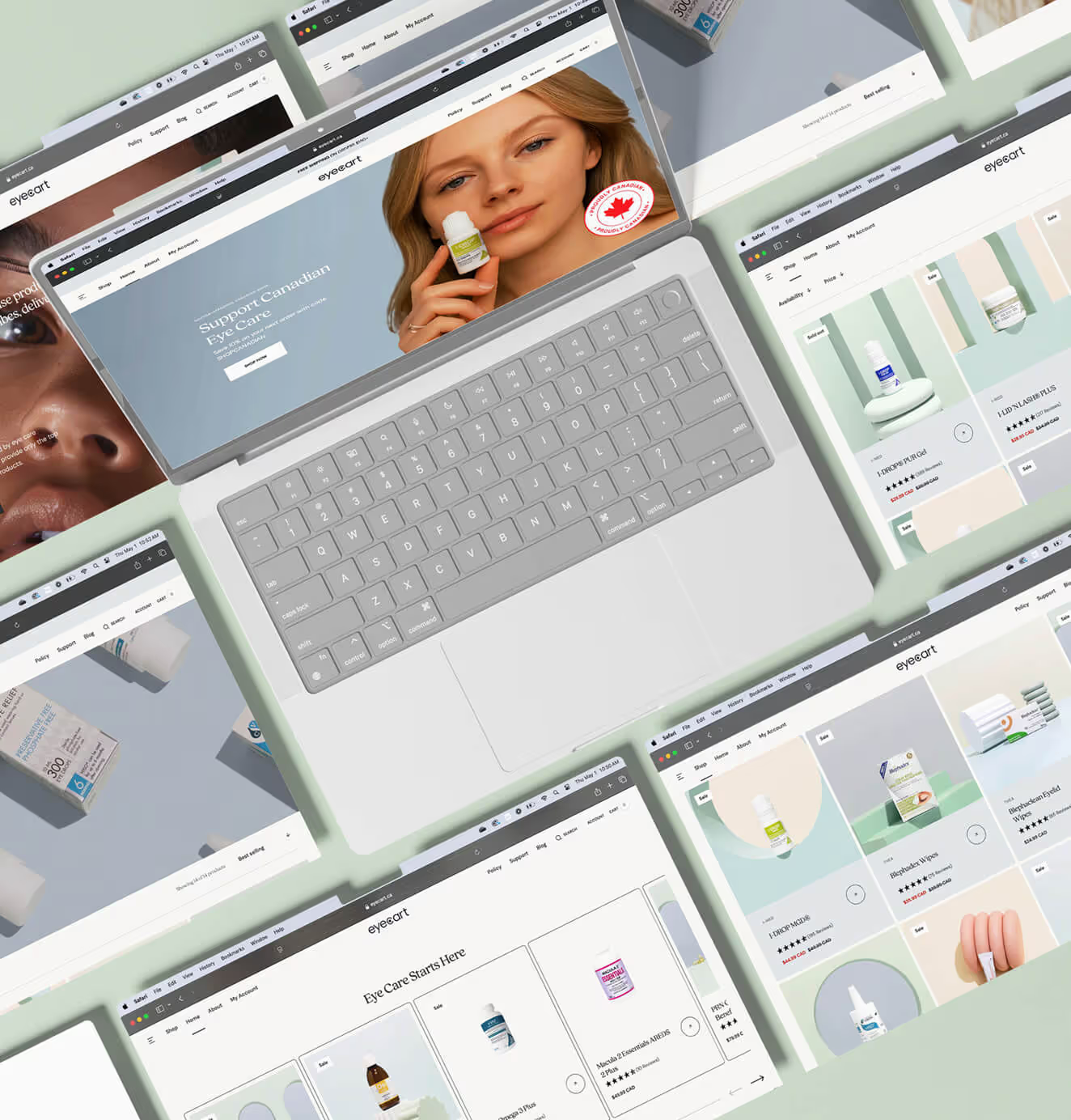
Multiple laptop screens display the Eyecart website, showcasing product pages and banners promoting eye care items.
Eyecart outdoor campaign posters featuring eye care products, skincare visuals, and modern branding.
Eyecart optical care campaign image with a smiling woman holding a branded magnifying lens over one eye.
Eyecart billboard campaign featuring Blephaclean eye care wipes and healthy eye care messaging.
Multiple laptop screens display the Eyecart website, showcasing product pages and banners promoting eye care items.
Eyecart outdoor campaign posters featuring eye care products, skincare visuals, and modern branding.
Lucky Girl Rosé
We turned a zero-carb rosé into a lifestyle brand that makes every moment worth celebrating.

+200%
Increase in conversion rate

+688%
Increase in attributed revenue

READ MORE
A bottle of Lucky Girl rosé wine nestled among pink and white flowers in a rustic outdoor setting.
Lucky Girl rosé picnic setup with wine bottle, fruit, sunglasses, and The Lucky Club booklet.
Lucky Girl rosé campaign visual with a wine glass, gold tray, red nails, and Pour Yourself Some Luck text.
Lucky Girl rosé wine bottle with floral label design and soft pink lifestyle styling.
A bottle of Lucky Girl rosé wine nestled among pink and white flowers in a rustic outdoor setting.
Lucky Girl rosé picnic setup with wine bottle, fruit, sunglasses, and The Lucky Club booklet.
Lucky Girl rosé campaign visual with a wine glass, gold tray, red nails, and Pour Yourself Some Luck text.
Lucky Girl rosé wine bottle with floral label design and soft pink lifestyle styling.