Top Webflow-Certified Web Design Agency: Website Development Services That Build Fast, Launch Faster, and Actually Convert
01/26/2026
Web Design / Web Dev
Explore what a Webflow certified agency can offer and how to evaluate its strategy, design, development, SEO, and support before starting your website project.
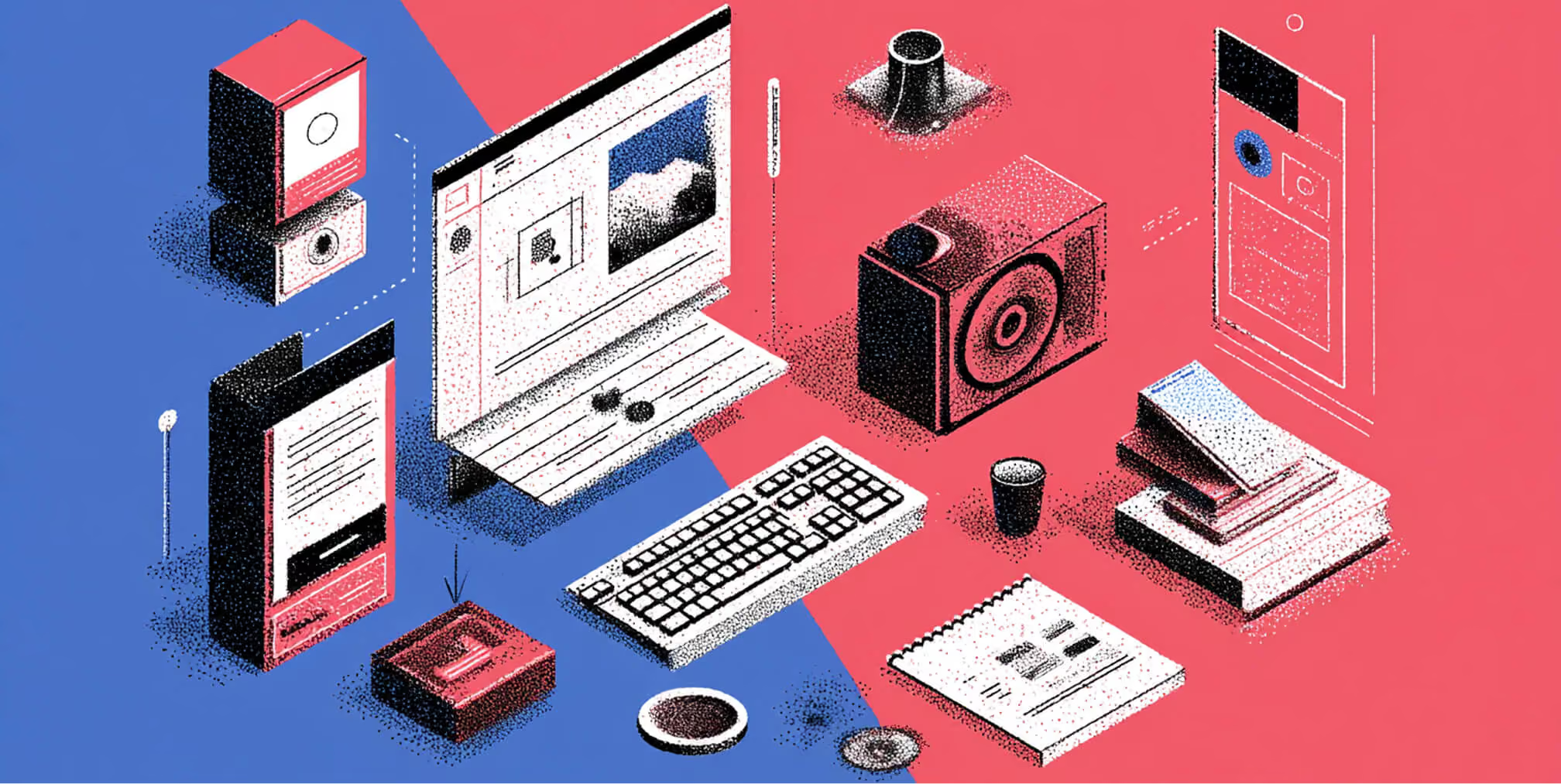
A Webflow certified agency helps businesses design, develop, and maintain websites using Webflow. When evaluating a provider, verify its listing in the Webflow Certified Partner directory, then assess its relevant experience, proposed team, and project deliverables. Partner status is a useful credential, but it does not guarantee rankings, conversion improvements, or a particular launch timeline. A successful project requires clear decisions about messaging, navigation, content, functionality, and how your team will manage the website after launch. Ask how the agency connects those requirements to its design, development, testing, and handover process. This guide explains what to expect from a Webflow agency and how The Branded Agency approaches Webflow design and development, from initial strategy through launch and ongoing improvements.



Webflow Websites Built Around Your Brand and Business Goals
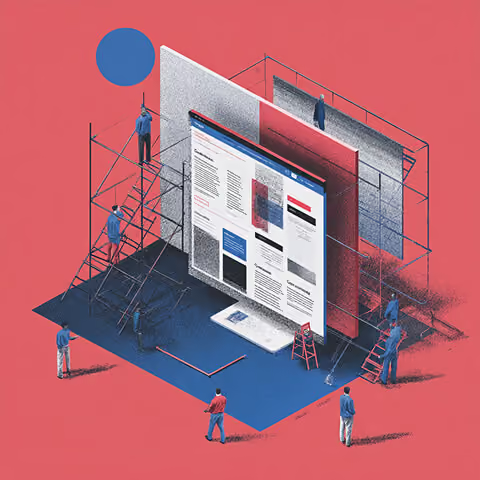
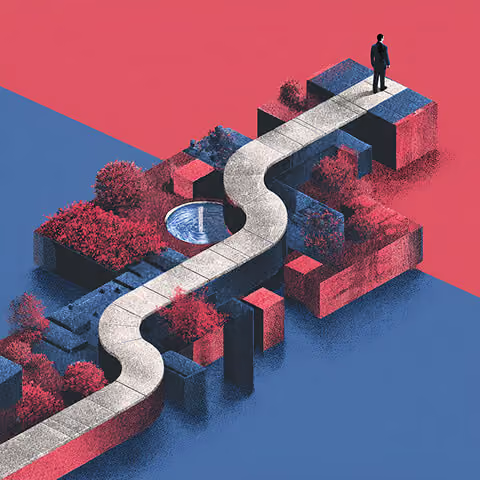
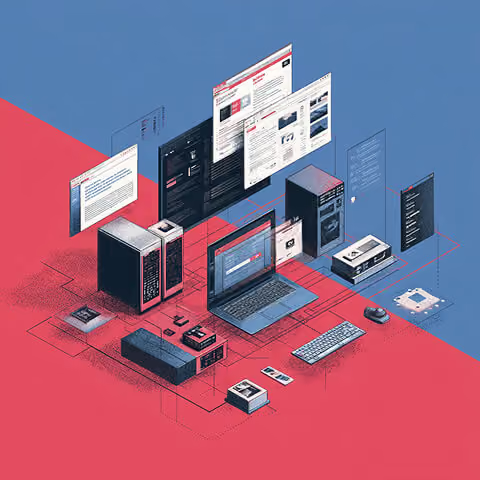
A successful Webflow website needs clear messaging, usable design, reliable functionality, and a practical plan for ongoing management. At The Branded Agency, we connect those requirements to the actions you want visitors to take, whether that means requesting a demo, booking a consultation, or exploring your services.
Our Webflow design and development approach brings brand strategy, content structure, UX, and implementation into one coordinated process. We define the scope, identify dependencies, and establish approval milestones so your team understands what is being built and what is needed to launch.
Timelines depend on design complexity, content readiness, integrations, migration requirements, and feedback. Reusable components and clear decisions can make delivery more efficient, while testing helps identify problems before customers encounter them.
We also plan for what happens after launch. A scalable Webflow foundation should make routine updates manageable and give your team a clear process for adding content, developing new pages, and evaluating improvements.
Quick Answers About Webflow Web Design Agencies
What Is a Web Design Agency?
A web design agency plans, designs, and builds websites around a business’s audience, content, and functional requirements. Services may include strategy, UX, visual design, development, content migration, testing, and ongoing support.
The scope varies by provider. Before hiring, confirm who handles content, SEO, integrations, analytics, and maintenance. Our guide to questions to ask a Webflow agency explains how to assess those responsibilities.
What Does a Webflow Agency Do?
A Webflow agency uses the platform to build and manage websites, including page layouts, reusable components, CMS structures, and supported integrations.
At The Branded Agency, we connect this work to your brand positioning and customer journey. The goal is a website that communicates your offer clearly, supports relevant visitor actions, and gives your team appropriate editing control.
Can a Webflow Redesign Improve Conversions?
A redesign can address barriers such as confusing navigation, unclear product or service information, difficult forms, and poor mobile usability. Whether those changes improve conversions depends on the problems identified, the implementation, and the audience visiting the site.
Establish a baseline before launch and measure relevant outcomes afterward. Our Webflow redesign ROI guide explores how to evaluate the investment.
Five Priorities for a Successful Webflow Website
1. Start With Business Goals and Customer Needs
Define what visitors need to understand and what the website should help them accomplish. Use those priorities to guide messaging, navigation, page structure, and calls to action.
This gives the team a shared basis for design decisions and helps keep the project focused.
2. Build a Realistic Path to Launch
Set milestones for strategy, content, design, development, testing, and approval. Assign owners to dependencies such as copy, images, account access, and integration decisions.
A clear scope makes timelines more useful. If a deadline is fixed, agree on which features are essential for launch and which can follow later.
3. Make Conversion Paths Clear and Measurable
Help visitors find relevant information, evaluate your offer, and take the next step. Forms, navigation, and calls to action should be understandable and usable across devices.
Define meaningful success measures, such as qualified inquiries or completed bookings. Test key journeys before launch, then use performance data and customer feedback to prioritize improvements.
4. Combine Distinctive Design With Reusable Components
Your website should reflect your brand through its messaging, imagery, typography, and layout. Reusable components help apply that identity consistently across pages.
Custom design and reuse work together. A well-planned component system can support distinctive pages while reducing repetitive development and simplifying routine updates.
5. Plan for Ownership and Ongoing Improvement
A website needs clear ownership after launch. Define who manages content, integrations, analytics, and technical support, and provide the documentation and training those people need.
Prioritize future changes according to customer needs and business value. This keeps the website useful as your content, campaigns, and operational requirements evolve.
Free Brand Health Audit
Make sure your brand is built to sell
Search has changed. Your customers aren't just Googling anymore. They're asking ChatGPT, Perplexity, Gemini and other AI platforms what to buy, who to trust and which brands they should consider.
If your brand isn't showing up clearly in those answers, you're already losing opportunities. Our free Brand Health Audit shows you where your brand stands across traditional search, AI search and brand positioning.

Sample brand audit
Live preview
Traditional search
72
AI search (GEO)
34
Brand positioning
58
The Role of Webflow in Modern Web Design
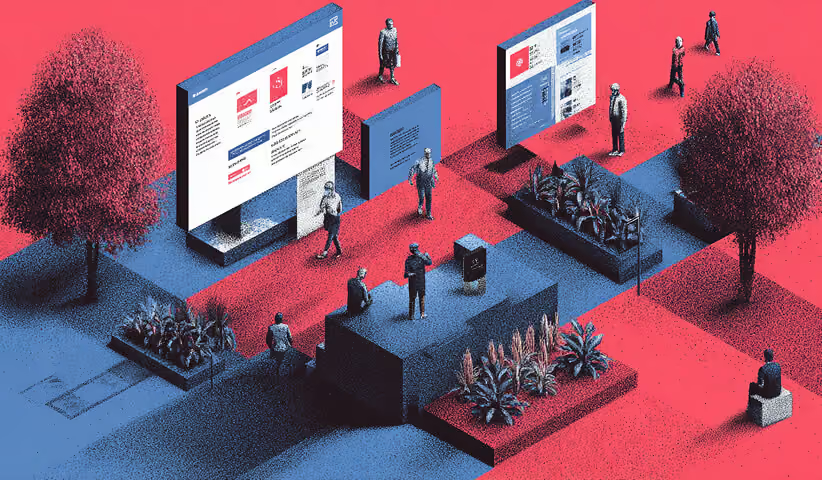
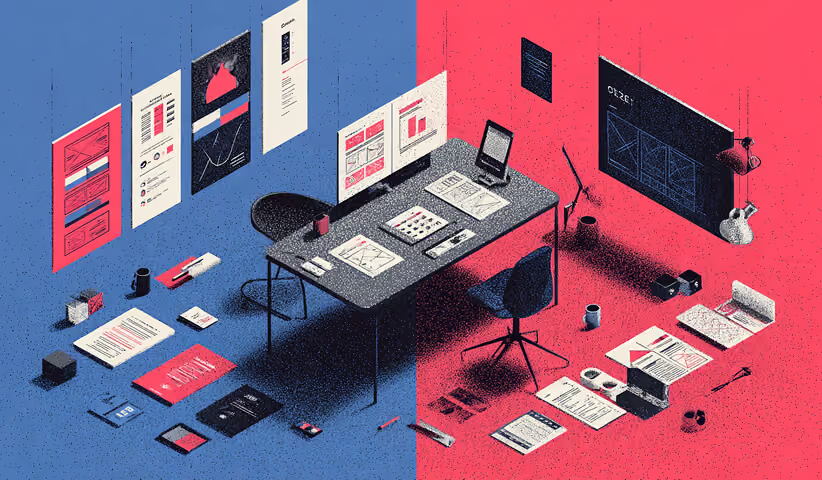

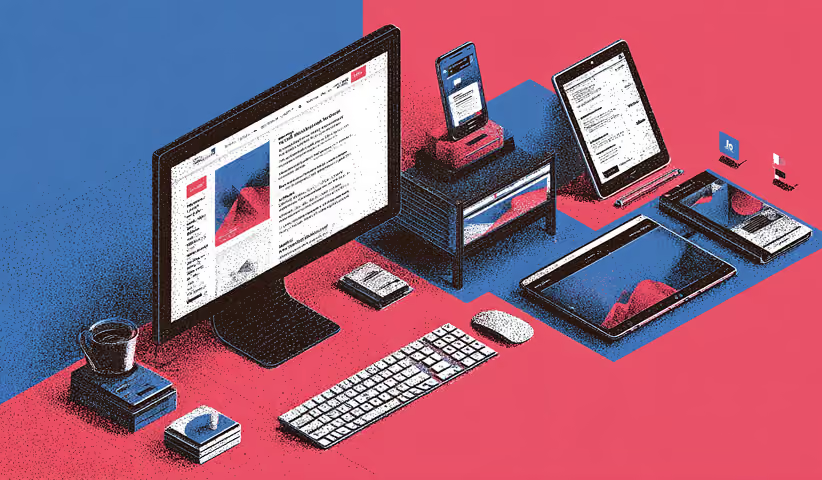
Webflow provides a visual development environment for building website layouts, managing content, and creating interactions. Its value depends on how those tools are applied to your brand, customer journey, and day-to-day operations.
At The Branded Agency, we connect Webflow development with UX design, messaging, and content planning. That means deciding what visitors need to understand, how they will navigate the website, and what your team needs to manage after launch.
Visual Development With Clear Implementation Standards
Webflow lets designers and developers work visually with page structure and styling. This can make reviewing layouts and refining designs more direct.
The implementation still requires technical judgment. Reusable components, consistent styles, accessible interactions, and organized content structures help keep the website manageable. Specialized functionality may also require custom code or third-party services, which need testing and documentation.
Responsive Design Requires Deliberate Testing
Webflow includes responsive breakpoints for adapting layouts to different screen widths. These controls support responsive design, but they do not automatically make every page usable on every device.
A thorough build checks navigation, text sizes, image behavior, forms, and interactive elements across representative screens and browsers. Testing should include widths between the default breakpoints and actual content, especially long headings or complex page layouts.
Content Management That Supports Your Team
A website should remain practical to update after the development team hands it over.
Plan which content belongs in the CMS, which page sections should be reusable, and what editing access each team member needs. Then test routine tasks: publishing an article, updating a service page, replacing an image, or building a campaign page.
Our approach to Webflow design and development connects these operational needs with the initial build, so editing and maintenance responsibilities are considered before launch.
Performance and Growth Need Measurement
Webflow provides tools for building and publishing websites, but launch speed, search visibility, and conversion performance depend on the project.
Set a baseline, define the outcomes that matter, and validate analytics before release. After launch, use customer feedback and performance data to prioritize improvements.
For larger projects, review Webflow’s scalability considerations alongside content volume, integrations, publishing needs, and ongoing support.
Resources for Choosing a Web Design Agency
Evaluate a web design agency using verifiable credentials, relevant work, and a clearly defined delivery process. The following resources help answer different questions during your selection process.
1. Verify Webflow Partner Status
Use the official Webflow Certified Partner directory to check a provider’s listing and explore services, budgets, and locations.
Webflow states that Certified Partners are vetted by its team. Treat that credential as one part of your evaluation, alongside project fit, references, and the people assigned to your work.
2. Ask About Process and Responsibilities
Our guide to questions to ask before hiring a Webflow agency covers experience, delivery, integrations, SEO, and support.
Ask agencies to demonstrate their process through a sample project plan or handover document. Confirm who supplies content, approves designs, tests the website, and resolves issues after launch.
3. Compare Pricing Against the Same Scope
Use our Webflow agency pricing guide to understand fixed fees, hourly billing, retainers, and per-module arrangements.
Compare deliverables and exclusions alongside the price. Check revision limits, migration responsibilities, third-party costs, and whether post-launch support is included.
4. Assess Accessibility Beyond Appearance
The W3C’s Easy Checks for Web Accessibility introduces checks for issues such as page titles, image alternatives, contrast, keyboard access, and forms.
Use it to start a conversation about the agency’s testing process. These preliminary checks do not establish full accessibility conformance; ask what deeper evaluation is included in the proposed scope.
5. Examine SEO and Technical Deliverables
Our guide to Webflow SEO improvements provides context for discussing search requirements.
Ask the agency to define what “SEO included” means. Depending on the project, deliverables might cover content structure, metadata, redirects, internal links, structured data, and launch validation. Keep implementation work distinct from promises about rankings or traffic.
6. Establish How Results Will Be Evaluated
Our Webflow redesign ROI guide explains how to connect website investment with financial outcomes.
When reviewing an agency’s case studies, ask about the measurement period, baseline, and other changes that could have influenced results. Reported improvements are more useful when the agency explains both its contribution and the limits of the evidence.
7. Confirm Ownership and Support Before Signing
Request written details covering account ownership, domain access, design assets, custom code, documentation, and training.
Clarify the difference between included bug fixes, ongoing maintenance, and new development. A useful handover should explain what your team can manage independently, what requires specialist support, and how that support will be priced.
Want to learn more about Website Design, Development and E-commerce? Keep reading!
If you need help with your company’s website and development, contact us for a free custom quote.
Key Features of Our Webflow Development Process
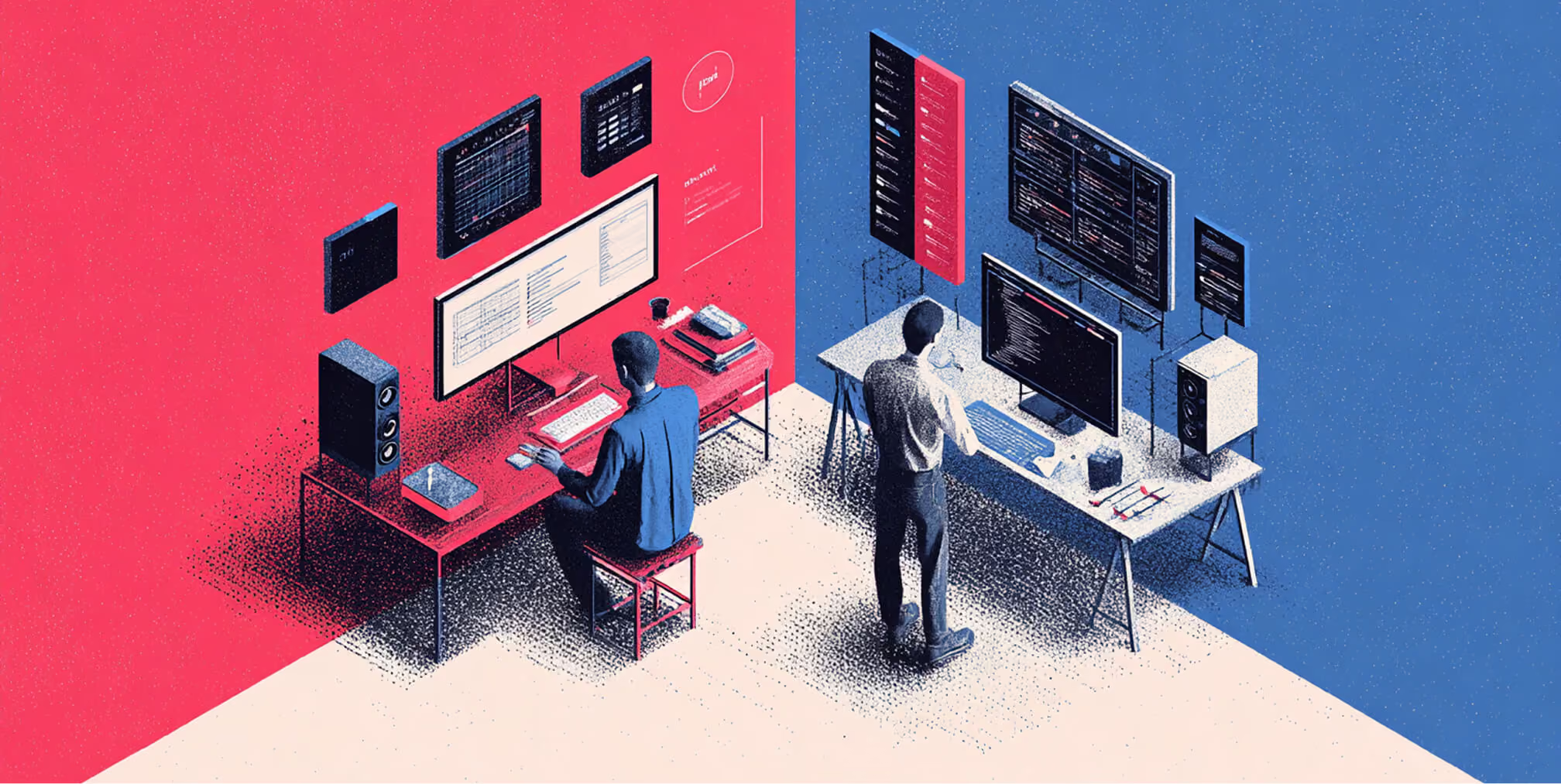
Our Webflow development process connects business goals, brand strategy, user experience, and technical implementation. Each phase defines what we are building, why it matters, and what your team needs to review before the project moves forward.
Strategy and Website Planning
We begin by understanding your audience, offer, existing website, and operational requirements. Together, we identify the actions visitors should be able to complete and the information they need to make a decision.
This work informs the sitemap, content priorities, required functionality, and project scope. It also helps identify dependencies early, including copywriting, photography, integrations, and migration requirements.
UX, Content, and Visual Design
We translate those priorities into navigation, page layouts, and a clear content hierarchy. Messaging and design work together to explain your offer, present relevant evidence, and guide visitors toward an appropriate next step.
Our approach to UX design considers both the customer journey and the practical tasks your team will manage after launch.
Development and Structured Reviews
During development, we turn approved designs into responsive pages, reusable components, and CMS structures.
Defined review points keep feedback organized. We distinguish corrections from new requests, explain the impact of scope changes, and test important functionality as it is implemented.
Testing, Launch, and Handover
Before launch, we review representative pages and key journeys across devices and browsers. The agreed scope should specify checks for forms, integrations, accessibility, performance, SEO, and analytics.
Handover establishes who owns the accounts, how routine updates are made, and what support is available afterward. Our Webflow development services can include documentation, training, and ongoing improvements according to the project requirements.
How We Design Websites to Support Conversions
Conversion-focused web design helps visitors understand an offer, evaluate it, and complete a relevant action. That action might be a qualified inquiry, demo request, booking, or purchase.
Answer the Questions That Influence Decisions
A useful page explains who the offer is for, what it includes, and why someone should consider it. Relevant details, examples, and FAQs help visitors assess whether the business meets their needs.
We organize this information around customer questions rather than assuming every visitor arrives ready to buy.
Make the Next Step Clear
Calls to action should describe what happens next. “Request a demo,” “Explore services,” and “Book a consultation” serve different intentions and should appear where they make sense in the journey.
Forms should request the information needed to handle the inquiry, with clear instructions and useful error messages.
Present Credible Evidence
Case studies, testimonials, credentials, and product demonstrations can help customers evaluate a business. Their value depends on relevance and accuracy.
We look for evidence that supports the claims being made, with appropriate context for reported results. A specific example of solving a comparable problem is more useful than an unsupported promise.
Measure Outcomes After Launch
Design decisions create hypotheses about what will help customers. Analytics, usability feedback, and appropriately designed experiments help evaluate those hypotheses.
We recommend measuring business-relevant outcomes, such as qualified leads or completed bookings, alongside interactions such as clicks and form starts. More engagement does not automatically mean more revenue. Our Webflow redesign ROI guide explains how to assess the financial return.
Website Design for Different Business Models
Your business model affects the information customers need, the features they use, and how the website connects to your operations.
B2B and Technology Companies
A B2B website may need to explain complex products to several decision-makers. Priorities can include use-case pages, integration information, technical resources, customer evidence, and a clear demo or sales inquiry process.
The content should help visitors assess suitability at different stages of their research.
Service-Based Businesses
A service website should explain the offer, relevant expertise, locations served, and what customers can expect next.
Useful features may include service comparisons, project examples, booking options, and inquiry forms that route requests to the appropriate team.
Retail and Product Brands
Product businesses need clear descriptions, useful imagery, purchasing information, and dependable connections between the storefront and operational systems.
Platform selection should follow those requirements. The right setup depends on catalog complexity, checkout needs, subscriptions, inventory, and fulfillment. We assess those needs before recommending Webflow, Shopify, or a connected architecture.
Research That Informs Website Planning
Broader research provides context for website decisions. Your own audience data determines how that context applies to the project.
1. Internet Use Is Widespread Among U.S. Adults
Pew Research Center’s 2025 survey found that 96% of U.S. adults use the internet. This supports the importance of accessible online information, but it does not establish that nearly every purchase journey begins online. See Pew’s Internet and Broadband Fact Sheet.
For website planning, investigate how your customers actually discover the business and what they need from the site before contacting you.
2. Smartphone Ownership Makes Mobile Usability Important
Pew’s 2025 research found that 91% of U.S. adults own a smartphone. That is an ownership statistic, not the percentage of visitors using mobile devices on any particular website. See Pew’s Mobile Fact Sheet.
Review your own device-level traffic and conversion data. Test navigation, forms, and key content on mobile even when desktop visitors account for a substantial share of inquiries.
3. Some Visitors Depend on Mobile Connections
The same research found that 16% of U.S. adults own a smartphone but do not have home broadband service. This adds context to the need for usable pages on mobile connections. Pew’s smartphone dependency data provides the demographic breakdown.
For your website, consider the practical impact of large media files, difficult forms, and interactions that work poorly on smaller screens. Validate improvements through testing rather than assuming national statistics predict conversion gains.
Build a Website Your Team Can Use and Improve
A successful website project balances a clear launch scope with the needs of the people who will use and manage it. That means making deliberate decisions about brand, content, functionality, and ongoing ownership.
What Defines Our Approach
At The Branded Agency, we bring brand strategy, design, and development into a coordinated process. We connect recommendations to customer needs, document the scope, and establish review points so progress is visible.
Reusable components and structured content help your team maintain consistency. Testing and documentation support a more reliable handover. Ongoing improvements can then be prioritized using evidence from the live website.
Define Success Beyond Launch Day
Before development begins, agree on what success looks like. Depending on the business, that could mean better-qualified inquiries, easier content publishing, fewer failed form submissions, or a clearer product evaluation journey.
Set a baseline and identify who will review results. This gives future investment a practical purpose and makes it easier to decide what to improve next.
Plan Your Next Webflow Project
Your website should communicate your brand clearly, help customers make informed decisions, and remain manageable as your needs change.
If you’re preparing for a launch, redesign, or migration, explore our Webflow design and development services or contact The Branded Agency to discuss your goals, requirements, and budget.
FAQs About Hiring a Web Design Agency
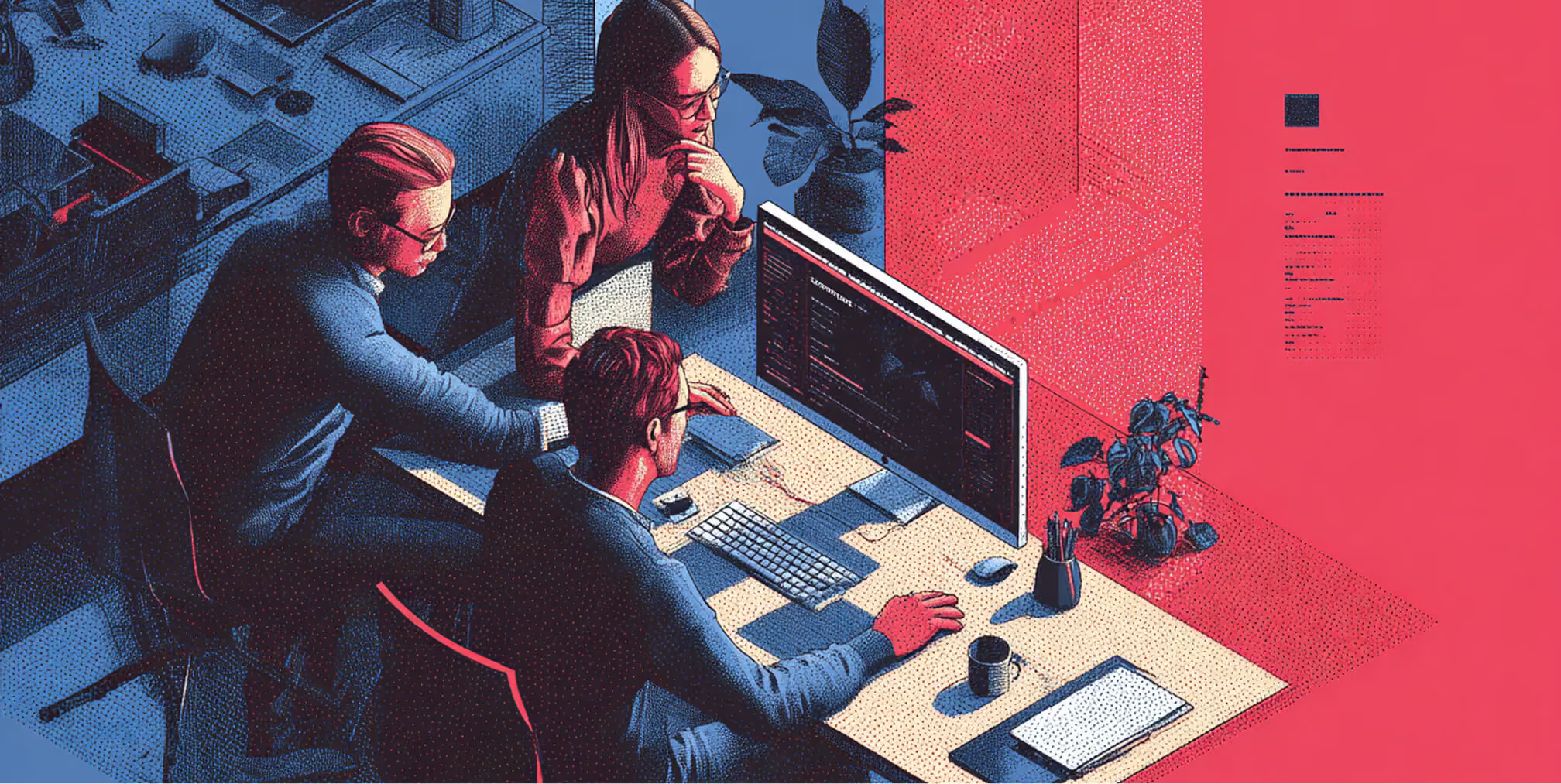
1. What does a web design agency do?
A web design agency plans and designs websites around a business’s audience, brand, and functional requirements. Services can include strategy, content planning, UX, visual design, responsive development, testing, and launch support.
Some agencies also provide copywriting, SEO, integrations, and maintenance. Confirm which services are included and what your team must supply before approving the project.
2. How do I choose the right web design agency?
Look for relevant project experience, clearly defined deliverables, and a process that fits your team. Review live websites and case studies, ask who will perform the work, and discuss how the agency handles feedback, technical challenges, and handover.
Use our questions to ask a Webflow agency to compare providers against the same requirements.
3. How much does hiring a web design agency cost?
The cost depends on the scope: unique page layouts, content creation, CMS structure, integrations, migration, and testing all affect the workload.
Request an itemized proposal and separate project fees from platform subscriptions, third-party tools, and ongoing support. Our Webflow agency pricing guide explains fixed fees, hourly billing, retainers, and per-module arrangements.
4. How long does a web design project take?
There is no standard timeline that applies to every website. A focused update using approved content requires a different schedule from a redesign involving new messaging, integrations, or a platform migration.
Ask for a milestone plan covering discovery, content, design, development, testing, and launch. Assign a lead contact to coordinate feedback and confirm what could change the delivery date.
5. What should I prepare before working with a web design agency?
Prepare a brief covering your business goals, audience, required functionality, budget, and target launch date. Gather available brand guidelines, copy, images, and information about your current website and connected systems.
Share reference websites with explanations of what you like. Identify missing assets and decisions so the agency can include the necessary discovery or production work in its scope.
Ready to plan your website? Explore our Webflow design and development services to see how we connect brand strategy, UX, implementation, and ongoing management.

Quincy Samycia
As entrepreneurs, they’ve built and scaled their own ventures from zero to millions. They’ve been in the trenches, navigating the chaos of high-growth phases, making the hard calls, and learning firsthand what actually moves the needle. That’s what makes us different—we don’t just “consult,” we know what it takes because we’ve done it ourselves.
Want to learn more about brand platform?
If you need help with your companies brand strategy and identity, contact us for a free custom quote.
We do great work. And get great results.
+2.3xIncrease in revenue YoY
+126%Increase in repurchase rate YoY



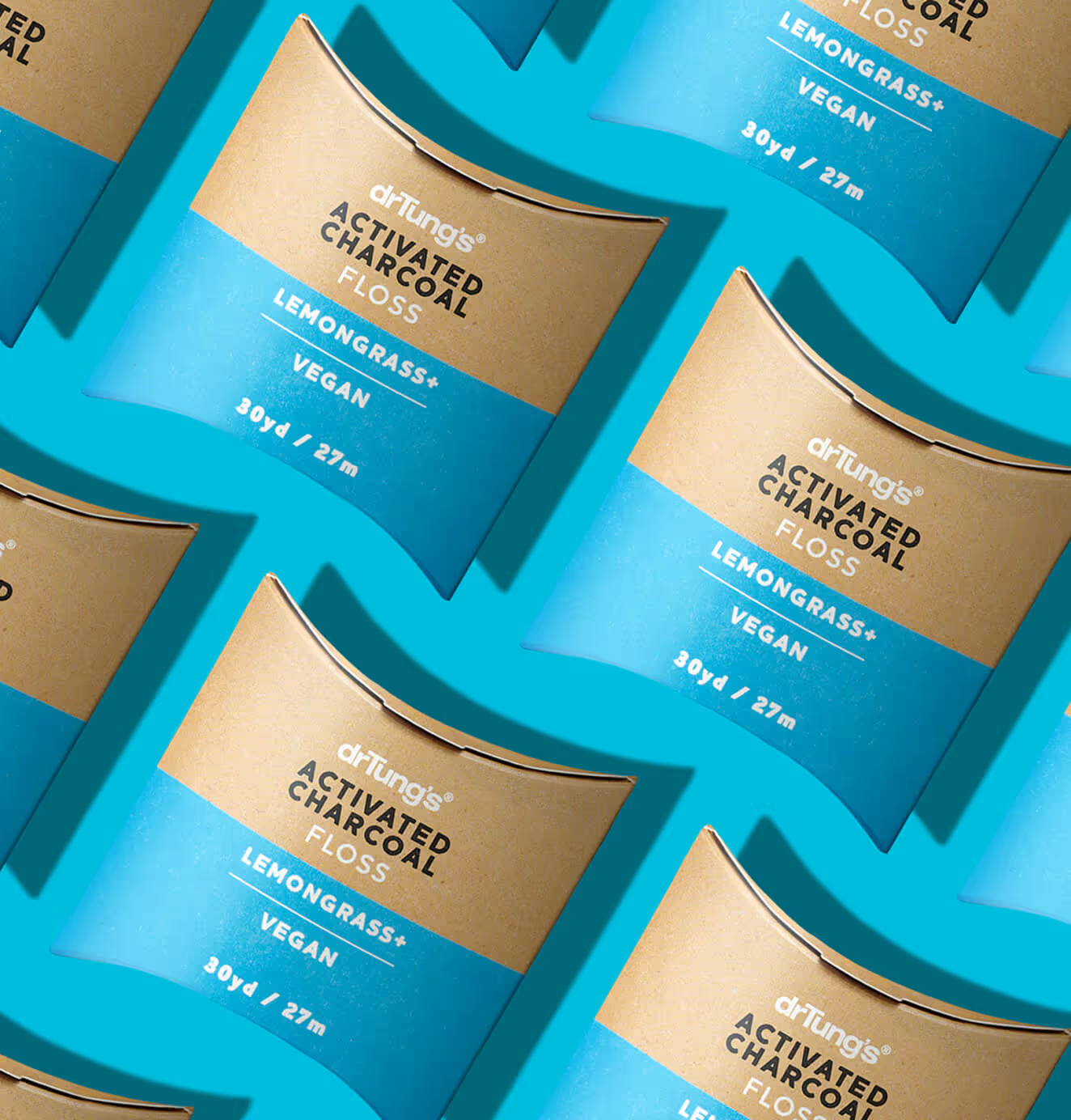
+93%Revenue growth in first 90 days
+144% Increase in attributed revenue




+91%Increase in conversion rate
+46%Increase in AOV

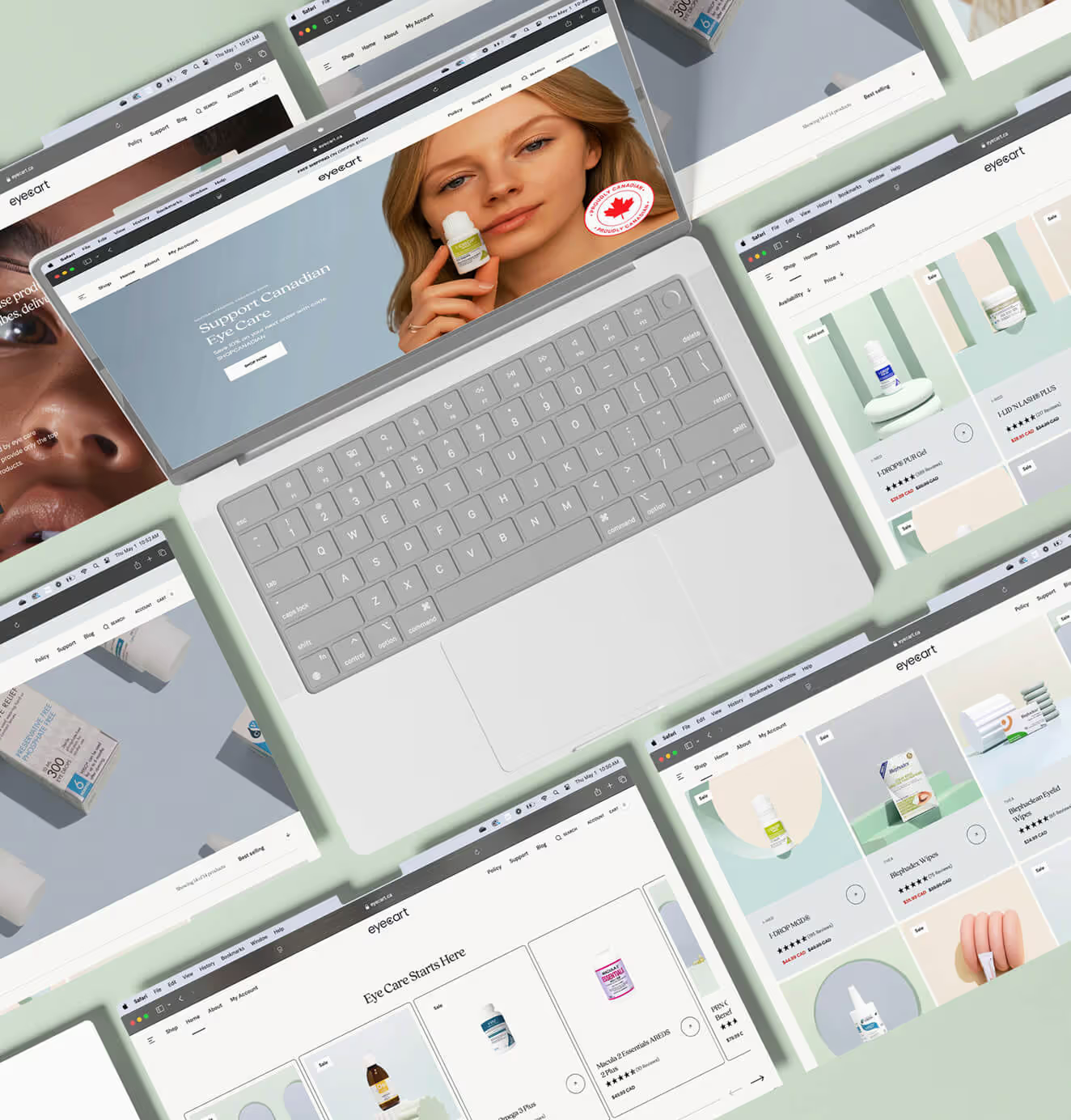
+200%Increase in conversion rate
+688%Increase in attributed revenue