Pass Procurement: Webflow Development for Enterprise with SOC 2
11/09/2026
Web Development
Learn how enterprise Webflow development helps organizations meet security and procurement requirements, streamline content management, and scale websites with confidence.
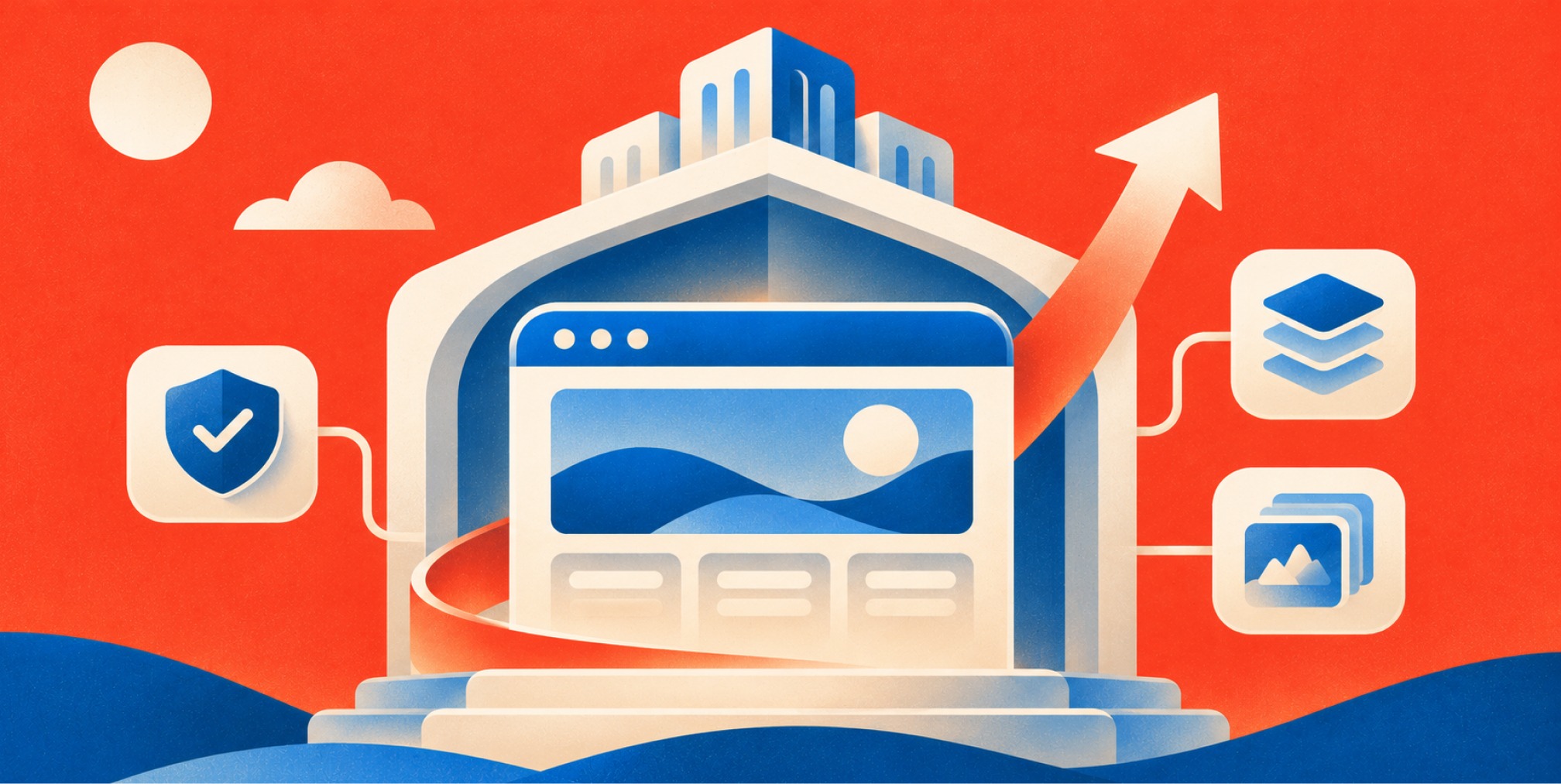
Webflow development for enterprise is a legitimate answer for large organizations, not just a scaled-up website builder. The verdict: yes, when marketing velocity and governance both matter, backed by SOC 2 Type II certification and CMS capacity scaling past 100,000 items. The catch is that complex CMS structures, deep CRM integrations, and corporate IAM mapping almost always require an experienced agency partner, not an in-house team learning as it goes.


Who Webflow Enterprise Fits, and Who Should Look Elsewhere
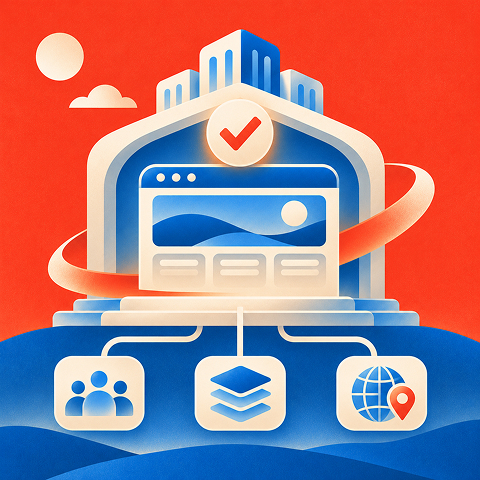


The right buyer profile is specific. Marketing-first organizations running frequent campaigns, localized pages across regions, and content-heavy microsites tend to see the fastest wins. Teams stuck waiting weeks for developer tickets to update a landing page often cut that cycle to hours once editors have direct, permissioned access to the CMS.
Webflow’s strength is the presentation layer. Organizations with heavy transactional backends, custom checkout logic, or strict data-residency requirements tied to a specific regulated industry usually need a different architecture, or a hybrid approach where Webflow handles the front end and a separate system handles the business logic.
Patterns that signal a strong fit:
- High publishing frequency: Regional and campaign teams need to launch or update pages weekly without a development ticket.
- Governed collaboration: Editors, designers, approvers and external partners need distinct access levels and controlled publishing.
- Content and localization scale: The site uses repeatable collections, multiple locales and consistent design components.
- Marketing-led experimentation: Teams need staging, branching, analytics and repeatable landing page production.
- Managed infrastructure: IT prefers hosted infrastructure, documented security controls and a negotiated support agreement.
Patterns that suggest looking at other architectures first include heavy e-commerce logic with complex inventory rules, applications requiring server-side session management, or industries where data residency law dictates hosting location down to the server rack.
What Webflow Enterprise Provides: Security, Governance, and Scale
Enterprise procurement teams evaluate platforms on three fronts: can it be governed, can it be trusted, and can it grow without breaking. Webflow Enterprise answers all three with documented specifics rather than marketing language.
On governance, admins get Single Sign-On, SCIM provisioning, and custom role assignments that map to how large organizations actually structure permissions. Access controls go further than most CMS platforms by working at the collection, locale, and individual page level, so a regional marketing manager or translator can edit their slice of the site without touching global navigation or brand components.
SOC 2 Type II certification and ISO 27001 compliance back the platform’s security posture, alongside managed TLS, HSTS enforcement, and a global CDN with DDoS protection built into Webflow’s hosted infrastructure.
On scale, the numbers matter for procurement conversations:
- CMS capacity: Request contract-specific limits for items, collections, references, locales and API throughput; do not assume a headline item count applies to every configuration.
- Traffic and performance: Confirm bandwidth allowances, burst behavior, CDN protections, uptime commitments and escalation windows.
- Publishing controls: Validate page branching, staging approvals, rollback and site activity visibility in a proof of concept.
- Identity and auditability: Test SSO, SCIM provisioning/deprovisioning, custom roles and audit-log exports in the actual identity environment.
- Integration constraints: Document API limits, webhook retries, rate limits, data-export access and dependencies on third-party services.
That audit-log API deserves attention on its own. Most CMS platforms treat activity logging as an afterthought. Webflow built it to feed directly into the monitoring stacks security teams already run, which matters more than any single feature when you’re trying to pass a vendor security review.
When to Move to Webflow: Business and Technical Signals
Timing the move matters as much as choosing the platform. A few operational symptoms tend to show up right before organizations make the switch, and a few technical realities confirm whether the timing is right.
- Diagnose the bottleneck: Measure how long page launches take, which teams are blocked and how many requests need developers.
- Inventory complexity: Count content types, locales, pages, integrations and forms, including business logic that must remain outside Webflow.
- Model the value: Compare the cost of current maintenance and delayed campaigns with migration and ongoing platform expenses.
- Pilot representative content: Build a real localized template and a high-value integration to expose architecture limits early.
- Confirm IAM and procurement fit: Validate the organization’s identity provider, SCIM offboarding, security evidence, DPA, SLA and approvals before kickoff.
Skipping that fifth step is where most enterprise rollouts stall midway through implementation. Confirming IAM fit before kickoff saves weeks later.
Free Brand Health Audit
Make sure your brand is built to sell
Search has changed. Your customers aren't just Googling anymore. They're asking ChatGPT, Perplexity, Gemini and other AI platforms what to buy, who to trust and which brands they should consider.
If your brand isn't showing up clearly in those answers, you're already losing opportunities. Our free Brand Health Audit shows you where your brand stands across traditional search, AI search and brand positioning.

Sample brand audit
Live preview
Traditional search
72
AI search (GEO)
34
Brand positioning
58
Why an Enterprise Webflow Agency Reduces Risk

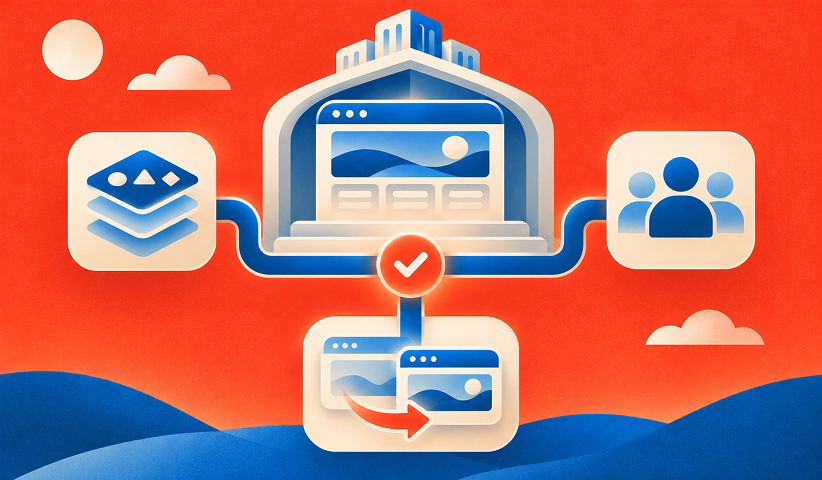
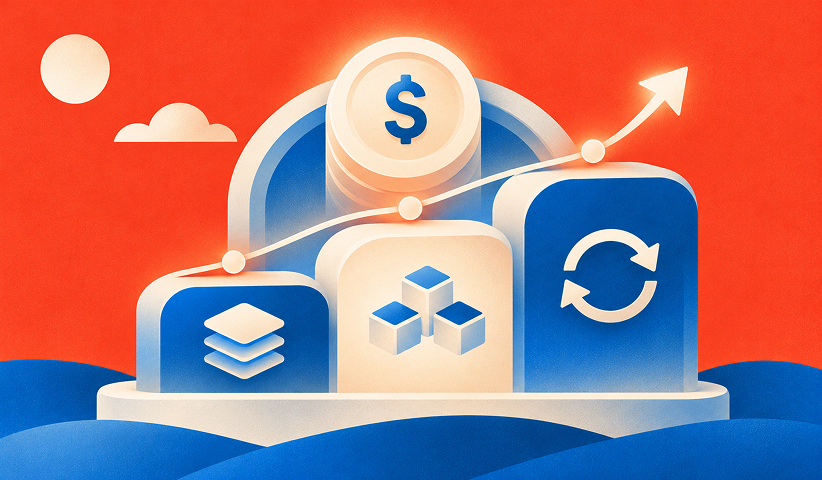
Enterprise Webflow projects fail less often from platform limits and more often from structural choices made in the first few weeks. Poor CMS modeling, missing governance planning, and rushed migrations tend to surface as costly rebuilds six months in, not immediately.
An experienced agency partner brings specific capabilities most in-house teams haven’t built yet:
- Information architecture: Map CMS collections and relationships against content growth, localization and reuse.
- Enterprise security coordination: Translate SSO, SCIM, least-privilege access, approvals and audit evidence into IT-ready requirements.
- Integration engineering: Specify CRM, marketing automation and analytics events, including retries, monitoring and failure ownership.
- Migration discipline: Build URL inventories, redirect maps, SEO baselines, content parity checks and rollback procedures.
- Operational enablement: Document editor workflows, train regional publishers and provide support after launch.
Engagement models vary by need. Some enterprises want a discovery-and-architecture engagement, a fixed period to map the CMS structure and integrations before any design work starts. Others prefer an ongoing squad or retainer model, where the agency functions as an extension of the marketing team rather than a one-time vendor. Agency-led engagements structured this way tend to keep pace with campaign velocity better than fixed-scope projects that end at launch.
Watch for red flags when vetting a partner: no clear answer on how they handle SSO/SCIM setup, no examples of CMS architecture at scale, or a proposal that skips governance planning entirely.
Pro Tip: Ask a prospective agency to walk through how they’d structure CMS collections for your exact content types before you sign anything. Their answer tells you more about their enterprise readiness than their portfolio does.
Implementation: Architecture, Integrations, and Migration Patterns
Getting the architecture right up front prevents the “costly rebuild” scenario that shows up again and again in practitioner post-mortems. A few decisions carry outsized weight.
CMS modeling comes first. Collections need clear relationships, consistent naming conventions, and enough foresight to handle future content types without restructuring everything. Skipping this step is the single most common source of what practitioners call structural debt, the accumulated cost of shortcuts that made sense for 500 pages but break down at 50,000.
Integration patterns matter next. CRM connections, marketing automation triggers, and analytics pipelines all need webhook or queue-based buffering with error recovery built in, not bolted on after something breaks in production. Tools like Webflow SEO Automation can handle recurring technical SEO tasks at scale, while platforms built for integration demos, such as FlowLab, help teams pressure-test webhook flows before committing to a vendor.
Migration and governance deserve equal weight in planning:
- Migration mapping: Inventory URLs, metadata, internal links, redirects, canonical tags, schema and content owners before cutover.
- Editorial governance: Define who drafts, approves, publishes, localizes and retires each content type.
- Identity lifecycle: Test provisioning, role changes, contractor access and same-day deprovisioning through the actual IdP.
- Integration resilience: Queue or retry failed events, log errors, and assign an owner for reconciliation between Webflow and the CRM.
- Launch safety: Rehearse redirects, rollback, DNS, analytics events, consent settings and security headers on staging.
Deprovisioning is the step teams forget most. When someone leaves the company, their Webflow access needs to disappear on the same day, not whenever someone remembers to check the user list.
Want to learn more about Website Design, Development and E-commerce? Keep reading!
If you need help with your company’s website and development, contact us for a free custom quote.
What Drives the Cost of an Enterprise Webflow Project

Enterprise Webflow budgets swing widely, and the variables driving that range fall into three buckets worth separating clearly before you write an RFP.
Platform licensing scales with the number of sites, CMS item volume, the SLA tier you need, and any enterprise add-ons like advanced security controls.
Agency costs follow a similar logic:
- Strategy and discovery: Stakeholder interviews, architecture workshops, security reviews and content inventories.
- Design and component system: Responsive templates, accessibility checks, reusable components and localization variants.
- CMS and migration: Collection relationships, data cleaning, imports, redirect testing and content QA.
- Integrations: CRM workflows, analytics instrumentation, API development, identity provider coordination and monitoring.
- Training and operations: Documentation, editor onboarding, post-launch support and continuous optimization.
Hidden costs catch procurement teams off guard more often than the headline numbers. Content migration at scale takes longer than most timelines allow. Performance tuning after launch, ongoing monitoring, and third-party integration maintenance all show up as recurring line items, not one-time fees. Budget for them from the start rather than treating them as scope creep later.
Enterprise Migration and Launch Checklist
A short, specific checklist separates a smooth Webflow launch from a scramble. Before signing off on any enterprise project, confirm that these deliverables exist in writing.
- Security approval: Collect current SOC 2 Type II evidence, ISO certification details, DPA, subprocessors, incident terms and contract-specific SLAs.
- Identity acceptance: Demonstrate SSO login, SCIM onboarding and offboarding, permission boundaries and access review procedures.
- CMS sign-off: Approve collections, references, locale workflows, templates, editor permissions and future-content assumptions.
- Integration QA: Verify CRM submissions, consent capture, webhook retries, analytics events and alerting on failures.
- SEO migration QA: Validate 301 mappings, canonicals, metadata, structured data, XML sitemaps, robots directives and Search Console access.
- Accessibility and speed: Test keyboard paths, forms, readable contrast, mobile layouts and Core Web Vitals on important templates.
- Launch and rollback: Assign launch owners, define stop/go criteria, confirm backups and set an incident escalation path.
- 30-day ownership: Schedule daily initial checks, weekly traffic and error reviews, and a final handoff with training.
How The Branded Agency Approaches Enterprise Webflow Projects
We start every enterprise Webflow engagement the same way: discovery, then architecture, then implementation, then managed operations. That order matters. Skipping discovery to jump into design is how CMS structures collapse under their own weight a year later.
In the first 30 to 60 days, clients get a documented CMS architecture, a governance and role mapping plan, and a clear integration roadmap, not just wireframes. We build brand-backed performance™ into the platform itself, so the site scales with campaigns instead of becoming the bottleneck.
Ready to Scale Your Enterprise Site With Webflow?
If your marketing team is waiting on developer tickets while competitors launch campaigns in hours, that gap is the real cost of the wrong platform, not a line item you can defer. The Branded Agency builds enterprise Webflow platforms with the governance, integrations, and managed operations your security and IT teams will actually approve, backed by brand strategy that makes the redesign count for more than a fresh coat of paint.
Our team offers services including CMS architecture, SSO and SCIM setup, CRM integrations, and ongoing performance tuning through a unified engagement model rather than as separate handoffs. Enterprises pairing platform work with a brand refresh often start with our executive-level branding services to make sure the new site reflects where the company is headed, not where it’s been.
Request a discovery call and a security and compliance checklist walkthrough to see exactly how a Webflow Enterprise build would map to your existing IAM structure and campaign roadmap.
Frequently Asked Questions
Is Webflow Enterprise SOC 2 Type II compliant?
Webflow states that it maintains SOC 2 Type II compliance and ISO 27001 certification. Procurement should obtain the current report and scope through the vendor’s trust process, then assess the organization’s own configuration and integrations separately.
Does Webflow Enterprise support SSO and SCIM?
Yes. Webflow documents Enterprise Workspace SSO and SCIM-based user provisioning and deprovisioning. However, identity-provider groups do not automatically assign Webflow roles, so permission mapping still needs a separate design and test.
How much CMS content can Webflow Enterprise handle?
Enterprise offers higher and more flexible CMS capacity than standard plans. Confirm the contracted limits for CMS items, collections, locales, API usage and performance instead of treating one advertised capacity figure as universal.
Can Webflow Enterprise integrate with Salesforce or HubSpot?
Integrations can be built through supported apps, APIs, webhooks or middleware. Test field mapping, consent, retries, duplicate handling, rate limits and failure alerts before committing to the architecture.
Sources
- Webflow Security and Compliance: https://webflow.com/security
- Webflow Enterprise: https://webflow.com/enterprise
- Webflow SSO: https://help.webflow.com/hc/en-us/articles/46651862433683-Single-Sign-On-SSO-Login
- Webflow SCIM Provisioning: https://help.webflow.com/hc/en-us/articles/46651868408595-SCIM-provisioning
- Webflow Workspace Audit Log API: https://help.webflow.com/hc/en-us/articles/46651794799891-Workspace-audit-log-API
- Webflow Enterprise vs Standard Plans: https://help.webflow.com/hc/en-us/articles/46651891357971-Differences-between-Enterprise-and-non-Enterprise-plans

Quincy Samycia
As entrepreneurs, they’ve built and scaled their own ventures from zero to millions. They’ve been in the trenches, navigating the chaos of high-growth phases, making the hard calls, and learning firsthand what actually moves the needle. That’s what makes us different—we don’t just “consult,” we know what it takes because we’ve done it ourselves.
Want to learn more about brand platform?
If you need help with your companies brand strategy and identity, contact us for a free custom quote.
We do great work. And get great results.
+2.3xIncrease in revenue YoY
+126%Increase in repurchase rate YoY




+93%Revenue growth in first 90 days
+144% Increase in attributed revenue




+91%Increase in conversion rate
+46%Increase in AOV




+200%Increase in conversion rate
+688%Increase in attributed revenue