What Does a Webflow Site Cost in 2026? Sample Quotes + Breakdown
10/22/2025
Web Design / Web Dev

Plan your Webflow website budget with a clear breakdown of platform fees, design and development costs, ongoing support, and illustrative project quotes.

How much does a Webflow website cost in 2026? Your total budget depends on two main components: the work required to design and build your website, and the recurring expenses of running it. Page count, content, integrations, and migration requirements all influence the project scope. This guide separates Webflow Site plans from Workspace costs, explains ongoing expenses, and provides illustrative project budgets with clear inclusions. Use it to compare proposals, understand what you’re paying for, and plan beyond launch. All prices are in USD unless otherwise stated.

Why Webflow Pricing Confuses Most Businesses



The cost of a Webflow website includes more than a subscription. Your budget needs to account for designing and building the site, the platform services it uses, and the work required to maintain it after launch.
Confusion often starts when these expenses are combined into one figure. A platform subscription does not include an agency’s design services, and a development quote may exclude copywriting, migration, integrations, or ongoing support.
To compare proposals accurately, separate one-time project costs from recurring expenses. Any sample budgets in this guide are illustrative unless an identifiable vendor and source are provided.
Webflow Pricing in 2026: The Current Landscape
Webflow distinguishes between Site plans, Workspace plans, and bundled Platform plans. Which costs apply depends on your website requirements and how your team works.
Pricing checked September 17, 2026. All figures below are in USD, before applicable taxes. Annual-billing rates are monthly equivalents, not month-to-month prices. Confirm your configuration on the official Webflow pricing page before purchasing.
Webflow Site and Platform Plans
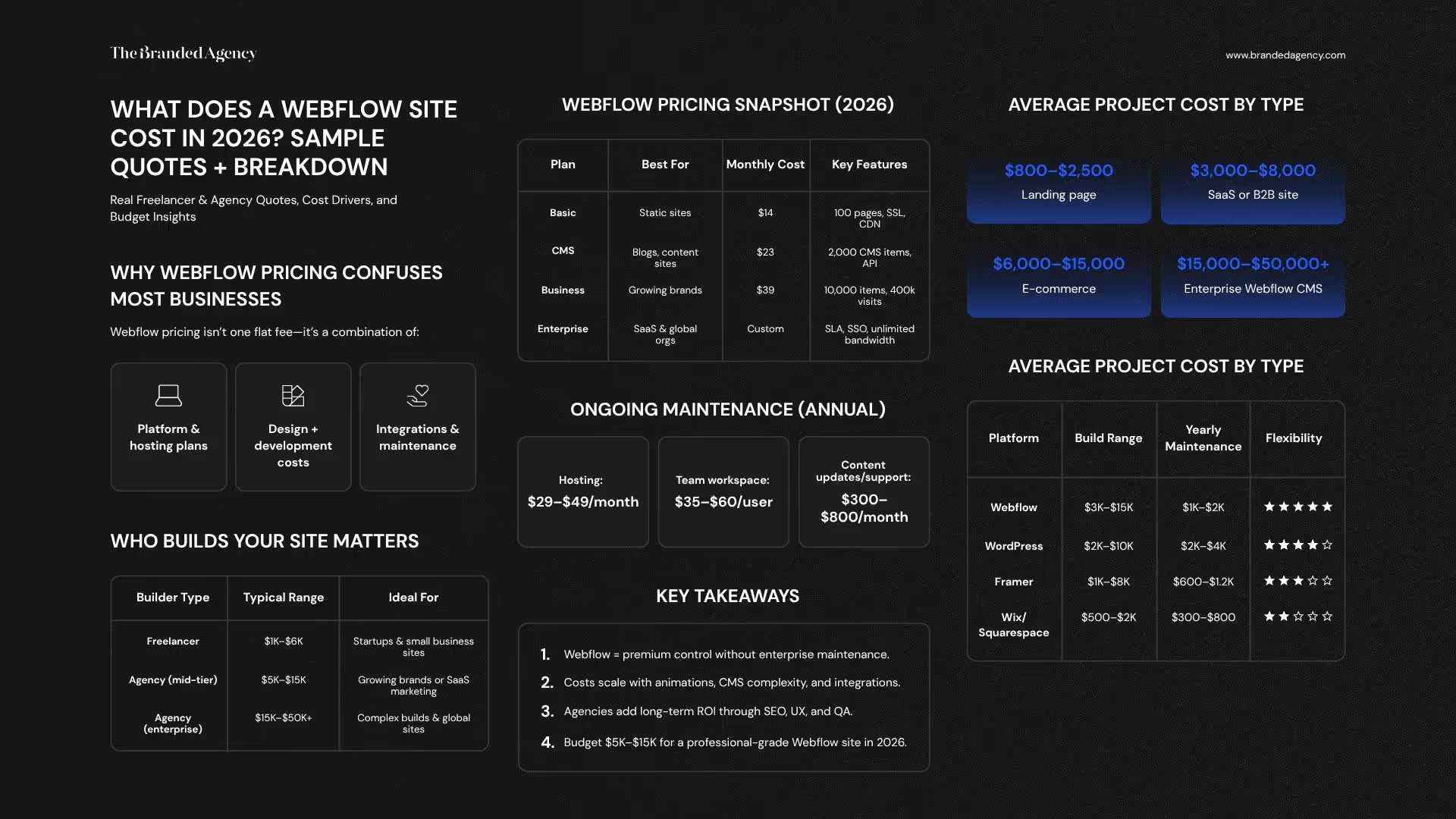
PlanPublished priceIntended useStarterFreeTesting on a Webflow subdomainBasic$15/month, billed yearlySimple sites without a CMSPremiumFrom $25/month, billed yearlyContent-rich sites using the CMSTeam Platform$2,500/month, annual contract requiredBundled Site and Workspace capabilitiesEnterprise PlatformCustom quoteCustomized scale, governance, and support
Premium costs depend on the selected configuration. Add-ons and usage requirements can increase the total. These subscription prices exclude professional design and development services.
Webflow Workspace Pricing
A Workspace organizes your sites and the people working on them. A Site plan supports an individual published website. You do not automatically need a paid Workspace just because you have a paid Site plan. See Webflow’s explanation of Workspace versus Site plans.
Workspace planMonthly equivalent, billed yearlyStarterFreeCore$19Growth$49Freelancer$16Agency$35
These are base Workspace prices; additional seats can cost extra. Core and Growth serve in-house needs, while Freelancer and Agency support client work. Verify seat requirements and bundled coverage before adding Workspace charges to your budget.
When working with an agency, clarify who will own the website, which Workspace will contain it, and who pays each subscription.
Hosting, Domains, and Ongoing Support
Hosting is included in the applicable Webflow Site or Platform subscription. Avoid adding a second generic hosting charge to your budget unless your architecture requires separately hosted services.
Domain registration and renewal are separate expenses. Check the registrar’s renewal price as well as any introductory offer, since the cost depends on the domain extension and provider.
Your recurring budget should also identify business email, paid integrations, optional platform features, and agency support where applicable. Ask vendors to separate required expenses from optional services.
Finally, budget for the work your website will need after launch. Reviewing your ongoing Webflow maintenance scope helps distinguish platform fees from services such as content updates, form testing, integration checks, and performance improvements.
Free Brand Health Audit
Make sure your brand is built to sell
Search has changed. Your customers aren't just Googling anymore. They're asking ChatGPT, Perplexity, Gemini and other AI platforms what to buy, who to trust and which brands they should consider.
If your brand isn't showing up clearly in those answers, you're already losing opportunities. Our free Brand Health Audit shows you where your brand stands across traditional search, AI search and brand positioning.
Sample brand audit
Live preview
Traditional search
72
AI search (GEO)
34
Brand positioning
58
One-Time Webflow Development Costs


Your initial Webflow investment covers the work required to plan, design, build, and launch your website. The cost depends on the scope, the complexity of the implementation, and the specialist support you need.
A template-based website with supplied copy requires different work than a custom redesign involving research, content migration, and CRM integration. Compare proposals against the same deliverables before comparing their totals.
All budget ranges below are illustrative planning examples in USD—not verified vendor quotes, market averages, or The Branded Agency’s rates.
Working With a Webflow Freelancer
A freelancer can be a suitable choice for a focused project, particularly when your team can supply approved designs, copy, and assets. Some freelancers also offer strategy and design, so confirm what their proposal includes.
As an illustrative allowance, you could budget $1,000–$6,000 for a limited template adaptation or small build with prepared content. Extensive custom design, copywriting, migration, and integrations would require a separate estimate.
For hourly work, ask for an estimated number of hours, a clear list of deliverables, and a process for approving additional time. An hourly rate alone does not establish the total project cost.
Working With a Webflow Agency
An agency engagement can bring together strategy, copywriting, UX design, development, and launch support. Confirm which disciplines are included rather than assuming every proposal covers them.
Illustrative project allowances might include:
- $5,000–$15,000: A defined marketing website with limited templates, straightforward CMS requirements, and client-supplied content.
- $15,000–$50,000+: A broader custom project involving research, multiple page templates, migration, integrations, or more extensive testing.
These ranges describe possible scopes, not agency quality tiers. Complex projects can exceed them substantially.
Our guide to Webflow agency pricing models explains how fixed fees, hourly billing, retainers, and modular pricing affect the way work is quoted.
Templates, Integrations, and Custom Features
Separate one-time purchases and implementation fees from subscriptions:
- Templates: Budget for the template licence and the work required to adapt its layouts, styles, and content.
- Integrations: Separate setup, configuration, and testing from the software provider’s recurring charges.
- Animations: Define the number and complexity of interactions, including mobile behaviour and reduced-motion alternatives.
- Custom functionality: Scope search, filtering, calculators, customer accounts, and other features individually.
Check current vendor prices when selecting tools. Avoid using one generic allowance for products with different pricing models and usage limits.
Illustrative Webflow Budgets by Project Type
These examples show how scope can affect the initial build budget. They exclude platform subscriptions, domains, ongoing maintenance, third-party licence fees, and taxes. Unless stated otherwise, they assume the client supplies approved copy, branding, and assets.
Single Landing Page: $1,000–$3,000
An illustrative budget for one page with client-supplied content, a straightforward responsive layout, a basic lead form, and launch testing. Custom copywriting, complex animations, and integrations would require additional scope.
Small Marketing Website: $5,000–$15,000
An illustrative budget for approximately 5–10 pages using a limited set of reusable layouts. Assumes client-supplied content, one straightforward CMS Collection, and basic metadata setup.
Custom Marketing Website: $15,000–$35,000
An illustrative budget for custom UX/UI design, multiple CMS templates, a defined amount of content migration, analytics setup, and broader quality assurance. The proposal should specify the page layouts, migration volume, and integrations included.
Complex Website or Enterprise Migration: $35,000–$75,000+
An illustrative budget for discovery, content modelling, multiple stakeholder reviews, migration planning, redirects, integrations, and documented launch procedures. Extensive content libraries or custom functionality can increase the investment.
These planning examples are in USD and are not verified vendor quotes or market averages. They assume client-supplied copy, branding, and assets, and exclude platform subscriptions, domains, ongoing maintenance, third-party licence fees, and taxes.
Page count is only one cost driver. Ten pages using a shared layout can require less work than three pages with unique interactions and complex integrations.
Ecommerce, multilingual content, authenticated portals, and application features should receive separate estimates. Product data, payment flows, translation workflows, and backend requirements can change the scope considerably.
Before accepting a quote, confirm the number of unique layouts, CMS Collections, migrated items, integrations, revision rounds, and training sessions included. The proposal should also identify exclusions and explain how scope changes will be priced.
Want to learn more about Website Design, Development and E-commerce? Keep reading!
If you need help with your company’s website and development, contact us for a free custom quote.
Factors That Influence Webflow Pricing

The biggest cost drivers are the work required to design your website, organize its content, connect its systems, and test it before launch. A useful proposal should explain these requirements rather than relying on page count alone.
Complexity of Design
Reusable layouts generally require less work than pages with entirely different structures. Custom illustrations, advanced animations, and interactive features add design, development, and testing time.
Ask your provider to identify the number of unique layouts and custom interactions included. Motion effects should also account for mobile usability, loading performance, and reduced-motion preferences.
Avoid assigning a standard surcharge to every animation. A simple hover effect and an interactive product demonstration involve very different levels of effort.
CMS Structure and Integrations
CMS complexity depends on how content is organized and connected. A straightforward blog differs from a resource library with multiple content types, filters, and relationships.
Integration costs depend on the workflow. Embedding a form is a different task from building a connection that validates data, updates CRM records, and handles failures.
For each integration, define:
- Which systems need to connect.
- What information moves between them and in which direction.
- Whether existing connectors meet the requirements.
- How errors will be detected and handled.
- Which setup fees and recurring subscriptions apply.
Customer dashboards and authenticated portals should be scoped separately because they may require additional application development and backend services.
SEO, Accessibility, and Localization
These requirements should be defined early rather than treated as a standard percentage added to every project.
For SEO, distinguish basic metadata setup from content research, structured data, technical auditing, and migration planning. Our guide to Webflow SEO improvements provides additional context.
For accessibility, specify the target standard, testing methods, and remediation included. Avoid treating an accessibility tool or a brief review as a guarantee of compliance.
For localization, account for translation, localized content entry, layout adjustments, and review in each language. Separate implementation work from recurring platform or translation-service charges.
Illustrative Webflow Project Budgets
The examples below demonstrate how a project budget could be allocated. They are hypothetical planning scenarios—not completed client projects, verified vendor quotes, or The Branded Agency’s pricing. All figures are in USD.
Example 1: Small SaaS Marketing Website
Assumed scope: eight pages built from a limited set of reusable layouts, one blog CMS Collection, a standard lead form, and light interactions. The client supplies approved branding, copy, and images.
- UX and visual design: $2,000
- Webflow development: $3,500
- CMS setup and blog configuration: $800
- Basic SEO setup and launch testing: $700
Illustrative total: $7,000
This example excludes copywriting, brand strategy, substantial content migration, custom integrations, subscriptions, taxes, and ongoing support.
A provider would need to confirm the schedule after reviewing the content, approval process, and detailed requirements.
Example 2: Custom B2B Website Redesign
Assumed scope: approximately 25 pages using a defined set of reusable templates, client-supplied content, limited CMS migration, selected interactions, and one straightforward CRM connection.
- Discovery and UX architecture: $5,000
- Visual design and interaction specifications: $6,000
- Webflow development and CMS implementation: $9,000
- CRM connection and analytics configuration: $2,000
- Launch testing and a defined redirect list: $1,500
Illustrative total: $23,500
This example excludes multilingual implementation, translation, extensive content rewriting, custom portals, complex data synchronization, independent accessibility auditing, subscriptions, taxes, and ongoing support.
The page count alone does not establish an enterprise scope. Additional governance, security reviews, migration complexity, or approval requirements would need their own allowance.
For an estimate based on your actual requirements, explore our Webflow development services.
Comparing Webflow Costs With Other Platforms
Compare platforms using the same project brief and ownership period. A template-based implementation and a fully custom build are not equivalent, even if both produce the same number of pages.
Webflow
Separate the build fee from Site or Platform subscriptions, any applicable Workspace charges, add-ons, and ongoing support. Confirm which expenses are included in the proposal and which you will pay directly.
WordPress
Specify whether the proposal uses self-hosted WordPress or a managed service. Ask for hosting, theme and plugin licences, updates, backups, security responsibilities, and support to be itemized.
Framer
Request a breakdown of design and implementation, the selected subscription, content requirements, integrations, and ongoing editing support. Have the provider demonstrate any functionality essential to your project before finalizing the scope.
Wix or Squarespace
Separate subscription fees from professional setup, content preparation, customization, paid extensions, and ongoing assistance. Confirm how the proposed implementation will meet your content and integration requirements.
The most useful comparison is the total cost of meeting your requirements over one to three years. Include internal staff time, recurring tools, support, and foreseeable expansion—not just the initial build price.
FAQs About Webflow Website Costs in 2026

1. How much does a Webflow website cost in 2026?
The total depends on your design, content, functionality, and migration requirements. For planning purposes, this guide uses illustrative build budgets of $5,000–$15,000 for a small marketing website and $15,000–$35,000 for a custom marketing website. Complex implementations can cost substantially more.
These figures are in USD and are not verified market averages or vendor quotes. They exclude subscriptions, taxes, ongoing support, and any services outside the defined project scope.
2. Is Webflow cheaper than WordPress?
Not necessarily. The better-value option depends on the implementation and the resources required to maintain it.
Compare design and development, hosting or platform subscriptions, paid tools, ongoing support, and internal staff time over the same period. Webflow does not eliminate hosting or maintenance expenses; hosting is included in the applicable subscription, while website upkeep still needs an owner.
Our Webflow versus WordPress comparison explores the decision in more detail.
3. Can I build a Webflow website myself?
Yes. Building it yourself can reduce external development costs, particularly when your requirements are straightforward and you have time to learn the platform.
Include your own time in the budget, along with content preparation, responsive design, accessibility checks, SEO setup, and testing. Professional support can be useful for specific tasks such as CMS architecture, migrations, or integrations without requiring you to outsource everything.
4. Do I need to pay separately for hosting?
For a website hosted on Webflow, hosting is included in the applicable Site or Platform subscription. Domain registration, business email, and separately hosted applications may create additional expenses.
Check the current Webflow pricing for your selected configuration and billing term. Avoid adding a separate hosting allowance unless your project actually requires it.
5. What additional Webflow costs should I budget for?
Depending on your setup, additional expenses may include paid Workspace seats, platform add-ons, increased usage, domain renewals, third-party tools, and ongoing agency support.
Ask your provider to itemize one-time charges and recurring commitments. Confirm who pays each bill, which currency applies, and whether taxes are included. Reviewing the ongoing Webflow maintenance scope can help you budget for work after launch.
6. How do I calculate the ROI of a Webflow website?
Start with a baseline and a defined measurement period. Track outcomes relevant to your business, such as qualified inquiries, sales, or time saved managing content.
A practical calculation is:
Website ROI = (attributable financial benefit − total website cost) ÷ total website cost × 100
Use incremental profit rather than gross sales when measuring financial benefit, and include build costs, subscriptions, and ongoing support. Account for campaign changes, seasonality, and other factors before attributing improvements to the website.
A Webflow build does not guarantee a positive return. Results depend on the strategy, execution, traffic, offer, and ongoing management.
Is Webflow Worth the Cost in 2026?
Webflow can be a worthwhile investment when it supports your website requirements and gives your team an effective way to manage content and make improvements.
The decision should come from a clear scope and realistic ownership budget. Compare the functionality you need, the work required to launch, and the resources needed to maintain the site. Paying more is easier to justify when the proposal clearly connects that investment to useful capabilities and measurable goals.
At The Branded Agency, we help businesses plan, design, and develop Webflow websites around their brand, content, and growth priorities.
Explore our Webflow development services, or contact us for a project estimate with defined deliverables, assumptions, and exclusions.

Quincy Samycia
As entrepreneurs, they’ve built and scaled their own ventures from zero to millions. They’ve been in the trenches, navigating the chaos of high-growth phases, making the hard calls, and learning firsthand what actually moves the needle. That’s what makes us different—we don’t just “consult,” we know what it takes because we’ve done it ourselves.
Want to learn more about brand platform?

If you need help with your companies brand strategy and identity, contact us for a free custom quote.
We do great work. And get great results.
+2.3xIncrease in revenue YoY
+126%Increase in repurchase rate YoY


+93%Revenue growth in first 90 days
+144% Increase in attributed revenue


+91%Increase in conversion rate
+46%Increase in AOV


+200%Increase in conversion rate
+688%Increase in attributed revenue