Website Design for Creatives: Turn Your Best Work into a Standout Online Presence
07/22/2026
Web Design / Web Dev
Learn how to build a creative portfolio website that highlights your best work, strengthens your personal brand, and consistently converts visitors into high-value clients.

In 2026, your website is where serious clients decide whether to hire you. Platforms like Behance and Dribbble are crowded, and Instagram’s algorithm doesn’t care about your career goals. This guide delivers concrete web design inspiration, structural clarity, and an actionable checklist to help you build a portfolio site that converts.
.png)
Why your creative website matters in 2026



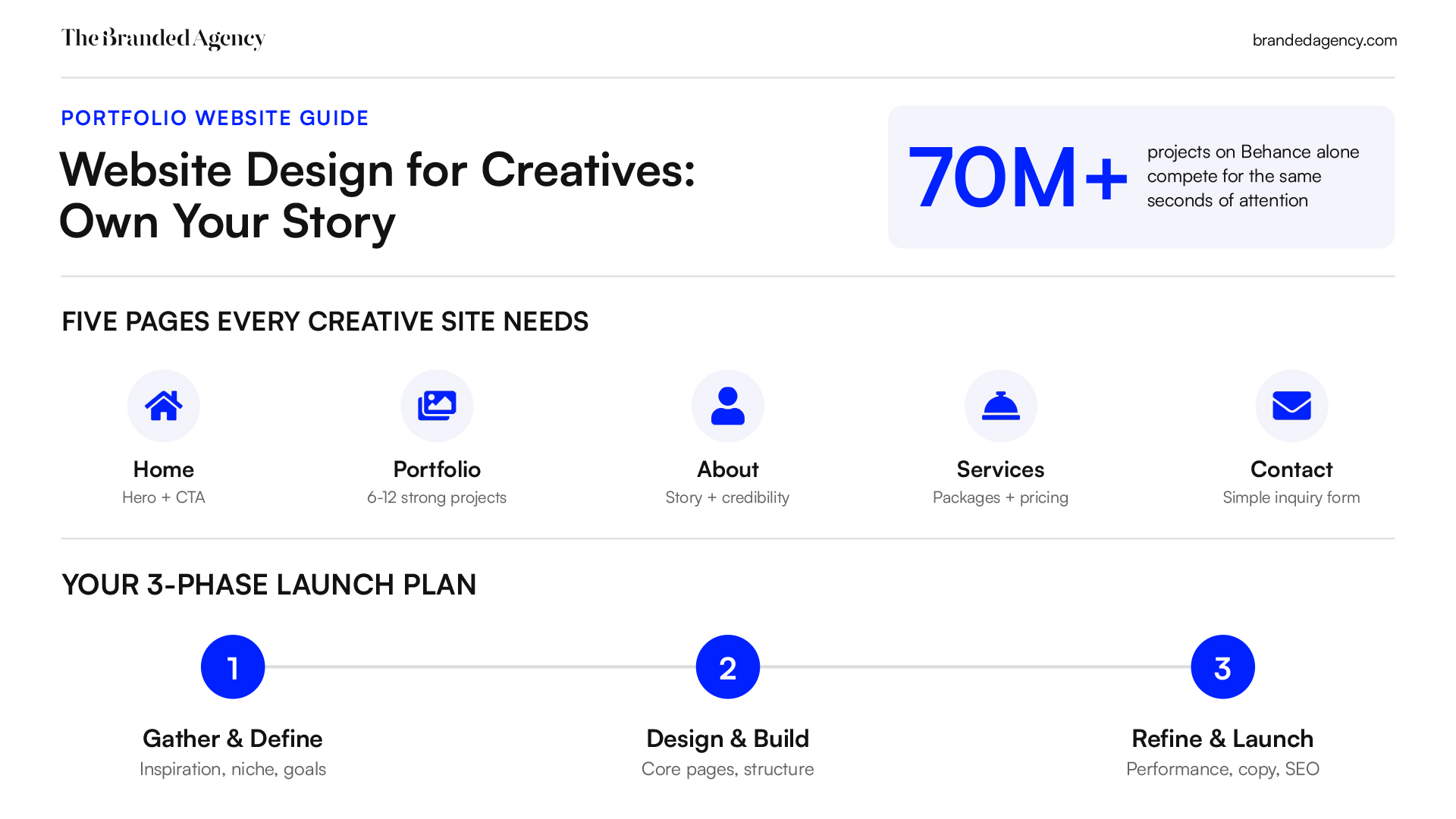
Behance hosts over 40 million members and 70 million projects. Dribbble lists hundreds of thousands of web design shots. Instagram has over 1 billion monthly active users. In these spaces, your work competes for seconds of attention.
Your portfolio site is often the first impression for art directors, gallery owners, industry leaders, and brand managers. The typical workflow: someone spots your work on social, Googles your name, and lands on your site. Platforms such as Behance and Dribbble are popular among designers for finding inspiration and showcasing their work; browsing these platforms helps creatives generate ideas and stay updated with trends, but your website is where you control the full story.
Designing an effective portfolio website requires a balance of high-impact visuals, fast performance, and a clear, personal narrative. Good website design for creatives blends aesthetics with business strategy and innovative creative design strategies—it must look like your best work and convert inquiries into commissions.
Clarify your creative niche before you design
Before choosing colors or fonts, define your niche. “Freelance brand designer in Berlin” lands differently than “general creative.” Your niche shapes everything from site structure to SEO strategy.
Concrete niches include different types of creative professionals:
- Editorial photographer
- Concept artist for games
- UX/UI designer for SaaS products
- Interior stylist focusing on residential minimalism
- Ceramic artist selling limited editions
- Tattoo artist specializing in fine-line work
Mini exercise: Who do you want to impress in 2026—digital agencies, collectors, indie founders? What’s your dream project? A full identity for an eco-fashion label? Cover art for a sci-fi novel series?
Your niche affects structure. Photographers need large image grids. Illustrators benefit from case-study storytelling. UX designers need process explanations and prototypes. Review 5–10 competitor websites in your field—London branding studios, New York interior designers—and pay attention to how they present the work they've created. As you refine your brand positioning framework, note the types of things—like layout, navigation, and content—that make those sites effective.
Structure: the essential pages every creative site needs
Even experimental web design should rest on clear structure. Visitors need to feel confident navigating your site.
Must-have pages:
- Home: As the main landing page for your site, feature one bold hero showcasing 1–3 flagship projects, a clear positioning statement, and a direct CTA (“View portfolio” or “Book a project for Q3 2026”)
- Portfolio/Work: Portfolios should showcase only the best, most relevant work and organize it by project type or client for quick access. Manage and display files such as images and documents efficiently, and aim for 6–12 strong projects grouped into categories like “Branding,” “Web Design,” or “Editorial Series”
- About: Combine a human story (location, notable clients, exhibitions) with credibility markers like awards or press mentions, shaped by a compelling brand story
- Services: Clear packages or starting prices (“Brand identity projects from $2,500”) and typical timelines to filter serious inquiries, aligned with realistic expectations of how much branding should cost
- Contact: Contact information should be easily accessible on a portfolio website, typically in a footer or a dedicated contact page. Include a simple form (name, email, budget range, project type, deadline) so visitors can share their inquiries and you can reply promptly, plus direct email and social links
Optional: Blog/Journal for process content, Shop for prints or digital products.
Design fundamentals tailored for creatives


Strong creative web design frames your work—it doesn’t compete with it. Effective website design for creative professionals prioritizes high-quality visuals, intentional minimalism, and intuitive navigation to showcase portfolios while ensuring mobile responsiveness. Building a creative website can be a fun and rewarding process.
Layout: Lots of white space, a consistent grid, and one primary navigation always visible for a gallery-like feel. A nice, clean design helps your work stand out.
Typography: There are a lot of options to choose from for creative expression. Choose 1–2 font families. Pair a distinctive display font for headings with a clean sans-serif for body—like “Playfair Display” with “Inter.”
Color: Build your palette from your work itself. Sample dominant colors from a key project, then keep backgrounds neutral so images breathe.
Image treatment: Large, edge-to-edge images for photographers. Device mockups for UI work. Before-and-after sliders for interior design or retouching. Videos can also be used to showcase portfolios or design ideas, especially for interior design or multimedia work.
High-resolution images and subtle animations can enhance engagement on portfolio websites. Use hover states and scroll-based reveals sparingly—every design choice should support a goal: booking a shoot, selling prints, securing a retainer.
Finding and using web design inspiration wisely
Many creatives browse Awwwards, Behance, and Pinterest for design inspiration but feel overwhelmed or pressured to over-design.
Concrete sources:
- Awwwards recognizes the talent and effort of the world's best designers, web developers, and digital agencies by showcasing winning websites that serve as true inspiration for creative professionals
- Siteinspire for curated typography and layout ideas
- Websites like CSS Zen Garden allow designers to showcase their creativity by using the same content but applying different styles, resulting in countless unique designs
Deconstruct sites you admire. Study layout, navigation, project pages, and calls-to-action. Note what you love and how it serves the site’s goals.
Try “outside-category” inspiration: a photographer borrowing navigation patterns from SaaS products, or an illustrator using editorial magazine layouts.
Warning: Don’t copy. True inspiration comes from remixing 2–3 influences into your own visual system. Time-box research to 2–3 hours so inspiration doesn’t become procrastination.
Showcasing your best work through strong case studies
Single images rarely convince decision-makers. They want to see how you think and solve problems.
Case studies in portfolios should explain the process, the problem, and the specific role of the creator in collaborative projects.
Ideal structure:
- Project overview (client, date, scope)
- Brief or challenge
- Your role
- Process steps
- Final outcome with tangible results
Examples: A brand identity for a 2025 Austin coffee roastery. UI design for a 2026 fintech app that improved sign-up conversion by 18%.
Include 6–10 images per project: context shots, work-in-progress sketches, close-ups, and final assets on real-world mockups. Add short captions explaining decisions—typography choices, color rationale, accessibility considerations, and how they fit into your visual guidelines for branding.
Lead with your strongest, most recent, and most on-niche work.
Want to learn more about Website Design, Development and E-commerce? Keep reading!
If you need help with your company’s website and development, contact us for a free custom quote.
Make your creative site fast, usable, and mobile-first

A slow or clunky site makes even beautiful work look unprofessional. Over 60% of traffic comes from mobile devices, necessitating a mobile-first design approach.
A simple site that loads in under two seconds outperforms a visually complex site that loads slowly.
Performance basics:
- Compress images (WebP, AVIF formats)
- Use lazy loading
- Avoid heavy video autoplay on the home page
- Using HTTPS/SSL encryption builds trust and improves SEO
Mobile-first layout: Stacked sections, thumb-friendly buttons, legible font sizes (at least 16px body text), simplified navigation.
Test manually on at least one iPhone and one Android device, plus Chrome and Safari. Check load time, layout, and tap targets.
Accessibility essentials: Sufficient color contrast, meaningful alt text for portfolio images, keyboard navigability, and descriptive link labels instead of “click here.”
Good usability supports SEO—helping more people discover your content via search and social shares.
Tell your story: copywriting for creative websites
Images get people interested. Words convince them to hire you.
Write in first person with a clear, friendly tone, guided by consistent brand guidelines for your voice and visuals. Skip vague poetry about “pushing boundaries.”
Key copy elements:
- One-sentence positioning statement on the home page: “I design bold, strategy-driven brands for indie fashion labels”
- Short bio with origin story and current focus
- Concise services list with clear deliverables
Include client quotes with names, locations, and dates for credibility. Clear calls to action should provide prominent contact information or links for job inquiries: “View my latest web design projects,” “Book a discovery call.”
Sprinkle keywords naturally while keeping language honest and conversational.
Connect your website to the rest of your creative ecosystem
Your website should act as the hub. Social platforms feed into it, not replace it.
Creative website services typically include features such as social media integration, allowing users to connect their portfolios with their social media profiles for greater visibility. Link to curated Behance or Instagram content—don’t dump your entire feed.
Set up a simple mailing list with a clear promise: “Studio notes and new work 1–2 times a month,” aligned with your broader branding campaign objectives.
If you sell prints, presets, or fonts, add a small shop section or link to external platforms like Shopify or Gumroad.
All external links should open in new tabs. Keep “Portfolio” and “Contact” one click away in your main navigation.
Simple SEO so your best work can be found
SEO makes it easier for people searching Google to discover your work.
Keyword basics with creative examples:
- “wedding photographer in Lisbon”
- “freelance UX designer remote”
- “surreal illustration prints”
On-page essentials:
- Unique page titles and meta descriptions
- Descriptive URLs (/brand-identity-studio-london)
- Alt text describing portfolio images
Many creative website services offer built-in SEO tools, and most do not charge extra for basic SEO features—these free tools help users optimize their sites for search engines without needing extensive technical knowledge. Some website builders also provide premium SEO features in higher-tier plans, offering advanced optimization options for those seeking more robust tools.
Create at least one in-depth page targeting a key phrase, like “branding and web design for wellness brands.” Claim Google Business Profile if you serve a local market. Build links gently through online magazine features and collaborator credits, especially if you offer branding for small businesses.
Practical tools and workflows for building your site

The no-code movement has led to the rise of website builders that empower users to create professional-looking websites quickly and easily, without needing technical skills. Many of these platforms offer free trials or free templates, making it easy to get started at no cost.
Popular tools:
- Webflow: Powerful for custom layouts and animations that can showcase a cohesive brand kit design
- Squarespace: Beautiful templates for photographers and artists, especially useful for studios that want to reflect strong agency branding and business identity
- Framer: Modern, animated sites for UI designers
- WordPress with visual builders: Flexible for content-heavy portfolios
There are a lot of website builders and templates available, giving creatives plenty of options to find the right fit for their needs.
Website builders often utilize drag-and-drop functionality, allowing users to create websites without any coding knowledge. Many website builders provide customizable templates that enable users to design their sites according to their unique vision and branding. With these templates, users can create different types of websites, such as portfolios, landing pages, shops, and more, catering specifically to the needs of creative professionals.
Workflow:
- Plan site map on paper or Figma
- Gather and organize files such as images and documents
- Write copy in a separate doc
- Build and iterate—websites can be created quickly and easily with these tools
Keep a staging version for testing bold changes. Frequent updates to the portfolio, such as adding new projects annually, maintain credibility and relevance.
Many platforms offer quick reply times for customer inquiries, ensuring you get support when you need it.
It’s better to launch a clean, minimal site in a week than chase a perfect, never-finished redesign for months.
Next steps: turn inspiration into a live creative website
A strong creative website combines focused niche, clear structure, thoughtful design, and strategic presentation of your best work.
Set a specific launch day—“go live by 30 June 2026”—and work backward with a simple checklist to ensure you meet your target day.
3-phase action plan:
- Gather high quality inspiration and define goals
- Design and build core pages
- Refine performance, copy, and SEO
Treat your website as a living portfolio that evolves with every new project, exhibition, or client win. The web remains the best place to own your creative narrative and showcase your work on your own terms.
Start today. Your future clients are already searching.

Quincy Samycia
As entrepreneurs, they’ve built and scaled their own ventures from zero to millions. They’ve been in the trenches, navigating the chaos of high-growth phases, making the hard calls, and learning firsthand what actually moves the needle. That’s what makes us different—we don’t just “consult,” we know what it takes because we’ve done it ourselves.
Want to learn more about brand platform?

If you need help with your companies brand strategy and identity, contact us for a free custom quote.
We do great work. And get great results.
+2.3xIncrease in revenue YoY
+126%Increase in repurchase rate YoY


+93%Revenue growth in first 90 days
+144% Increase in attributed revenue


+91%Increase in conversion rate
+46%Increase in AOV


+200%Increase in conversion rate
+688%Increase in attributed revenue