Wellness Branding and Marketing in 2026: How Modern Wellness Brands Build Trust, Demand, and Long-Term Growth
02/23/2026
Branding / Marketing Strategy
Discover how wellness branding, marketing, and website design work together to communicate your value, build trust, and turn interest into sales and qualified inquiries.

Wellness branding gives people a clear reason to choose your business. Wellness marketing helps the right audience discover it. Your website connects the two, helping visitors understand your offer, evaluate your credibility, and take the next step. For supplement brands, wellness clinics, personal care businesses, and emerging health platforms, these elements need to work together. Your positioning should shape your identity and messaging. Your website should make buying or booking straightforward. Your marketing should reinforce the same promise across search, advertising, social media, and email. At The Branded Agency, our wellness work spans brand strategy, visual identity, website design, development, and ongoing marketing. That includes AfterGlow’s rebrand and Webflow website redesign and development, branding for BeatsWell, identity and packaging for Bomi 365, and integrated ecommerce and marketing for DrTung’s. In this guide, we explain what an effective wellness brand strategy includes, how to prioritize marketing channels, and what a website for a wellness brand needs to convert interest into action. You’ll also find real project examples and practical questions to ask when choosing a wellness branding, marketing, or website design agency.



Why Wellness Branding and Marketing Is Essential in 2026



Wellness branding and marketing help businesses explain their value, establish credibility, and turn customer interest into purchases, bookings, and lasting relationships. For supplement brands, wellness clinics, and personal care businesses, a clear position in the market gives customers a reason to choose them.
The opportunity is substantial. The Global Wellness Institute’s 2025 Global Wellness Economy Monitor estimates that the global wellness economy reached $6.8 trillion in 2024 and projects it will reach $9.8 trillion by 2029. These figures cover a broad economy spanning 11 wellness sectors. Explore the Global Wellness Institute’s research.
Consumer priorities reinforce that opportunity. In McKinsey’s 2025 Future of Wellness survey, 84% of U.S. respondents considered wellness a top or important priority. The research also describes younger consumers incorporating wellness into their everyday routines. Read McKinsey’s wellness consumer research.
However, category growth does not automatically translate into growth for an individual business. Your brand still needs to answer three questions:
- Relevance: Who is this product or service for?
- Credibility: Why should someone trust the offer?
- Value: What makes it worth choosing over the alternatives?
A focused brand strategy and identity gives those answers a consistent expression across your messaging, packaging, website, and campaigns.
What Is Wellness Branding and Marketing?
Wellness branding defines how a wellness business is positioned, recognized, and understood. Wellness marketing communicates that value to attract and retain suitable customers.
Branding establishes the foundation. Marketing puts that foundation into action. Your website connects the two by helping visitors evaluate the offer and take the next step.
Wellness Branding: Establish Your Position and Identity
Wellness branding gives your business a clear, recognizable position in the market. It includes audience research, competitive positioning, messaging, logo design, visual identity, packaging, and brand guidelines.
These elements define what your business stands for, who it serves, and how it communicates its value consistently.
Wellness Marketing: Reach and Retain Customers
Wellness marketing brings your brand to prospective and existing customers through educational content, search, advertising, social media, partnerships, and email.
Its role is to generate awareness, help people evaluate your offer, and support ongoing customer relationships. Your campaigns should reflect the same positioning and promises customers encounter throughout the business.
Wellness Website Design: Help Visitors Understand and Act
Wellness website design turns your strategy and messaging into a practical customer experience. Product pages, service information, trust signals, and checkout or booking flows should help visitors understand the offer and move forward confidently.
For example, a supplement brand may need packaging that clearly communicates its product range, educational content that answers ingredient questions, and an ecommerce experience that makes purchasing straightforward. A wellness clinic may need service explanations, practitioner profiles, and a clear consultation process.
Effective website design and development should reflect those differences. The right customer journey depends on what you sell, how people evaluate it, and what they need to know before committing.
How Wellness Consumer Behavior Has Evolved
Wellness brands need to serve customers who want clear information, relevant guidance, and credible reasons to trust an offer. Broad promises leave important buying questions unanswered.
NIQ’s 2025 Global Health & Wellness research, based on nearly 19,000 adult consumers across 19 countries, found that 82% wanted health and wellness product labels to be more transparent and easier to understand. Read NIQ’s findings on wellness and consumer trust.
For wellness businesses, this points to practical priorities:
- Explain the offer clearly. Describe what the product or service includes, who it is intended for, and how it fits into a customer’s routine.
- Make evidence accessible. Provide relevant sources, credentials, and context for claims.
- Address buying questions. Make pricing, product details, service expectations, and next steps easy to find.
- Build consistency. Ensure the message customers encounter in an advertisement matches what they find on the website.
- Support the ongoing relationship. Use useful education, onboarding, and follow-up to help customers after their first purchase or inquiry.
Our BeatsWell branding project illustrates how clarity and guidance can shape a wellness brand’s positioning and identity. That strategic direction gives the business a foundation for communicating consistently across its customer touchpoints.
For founders and marketing teams, the practical implication is clear: build your wellness branding and marketing around the questions customers need answered before they can confidently choose your business.
Free Brand Health Audit
Make sure your brand is built to sell
Search has changed. Your customers aren't just Googling anymore. They're asking ChatGPT, Perplexity, Gemini and other AI platforms what to buy, who to trust and which brands they should consider.
If your brand isn't showing up clearly in those answers, you're already losing opportunities. Our free Brand Health Audit shows you where your brand stands across traditional search, AI search and brand positioning.

Sample brand audit
Live preview
Traditional search
72
AI search (GEO)
34
Brand positioning
58
The Foundations of Effective Wellness Branding




Effective wellness branding combines clear positioning, a distinctive identity, credible messaging, and a consistent customer experience. Together, these foundations help people understand what your business offers, why it matters, and why they should choose it.
Before designing a logo, refreshing packaging, or commissioning a website, establish the strategic direction that will guide those decisions.
1. Clear Positioning in a Competitive Market
Wellness brand positioning defines who you serve, the value you provide, and what makes your business a relevant choice. It should be specific enough to guide your messaging, design, and marketing.
Start by answering:
- Who is your priority audience? Define their needs, motivations, and buying concerns.
- What problem does your offer address? Explain its practical value in language customers understand.
- What alternatives do customers consider? Look beyond direct competitors to other ways people meet the same need.
- Why should they choose you? Identify meaningful differences you can demonstrate.
- What supports your credibility? Connect your promises to relevant evidence, experience, or qualifications.
Words such as “premium,” “natural,” and “personalized” need explanation. Show what they mean for the customer through your product, service, or experience.
Our brand strategy and identity services connect these decisions with the way a business presents itself. For BeatsWell, clarity and guidance helped shape the brand’s positioning and creative direction.
2. A Distinctive Visual and Verbal Identity
A wellness brand identity should make the business recognizable while helping customers understand its offer. Its visual and verbal elements need to communicate the same positioning.
A complete identity system can include:
- Logo and supporting brand marks.
- Color palette and typography.
- Photography, illustration, and art direction.
- Brand messaging and product or service descriptions.
- Packaging and digital design principles.
- Guidelines for consistent application.
Visual polish should support accurate communication. A clinical-looking design does not establish scientific credibility; any claims still need appropriate evidence.
For product businesses, packaging must balance recognition with clear information. Our Bomi 365 branding and packaging work shows how a central idea—a consistent daily wellness ritual—can guide a coordinated identity and product range.
3. A Clear, Empathetic Brand Voice
A wellness brand voice should make information understandable and help customers feel respected throughout the buying journey. The right tone depends on your audience, offer, and the decisions people are making.
Define how your brand will:
- Explain complex subjects in accessible language.
- Discuss benefits without exaggerating outcomes.
- Address questions and concerns directly.
- Distinguish evidence, professional opinion, and customer experience.
- Maintain consistency across website copy, campaigns, and customer support.
Useful education starts with real questions. Explain how a product is used, what a service includes, or what happens during an initial consultation. Give people enough information to decide whether the offer fits their needs.
4. Consistency Across the Customer Experience
Your positioning should carry through every major touchpoint, from the first advertisement to the website, purchase, booking, and follow-up.
For AfterGlow, our work included rebranding, website redesign, and Webflow development. Bringing those elements into one engagement connected the refreshed brand with its digital presentation. Explore AfterGlow’s website.
Brand guidelines should make that consistency easier to maintain as your team, channels, and services grow.
Wellness Marketing Strategies That Work in 2026
An effective wellness marketing strategy connects a defined audience with a relevant offer, a clear customer journey, and measurable business goals. Choose channels according to how your customers discover, evaluate, and purchase your products or services.
Search-Driven, Educational Content
Build content around the questions people ask before buying or booking. Prioritize topics that relate directly to your offer and that your team can address credibly.
Useful formats include:
- Product and service explanations.
- Ingredient or feature guides supported by appropriate sources.
- Comparisons that clearly explain differences and limitations.
- Consultation and appointment guides.
- Answers to pricing, delivery, subscription, and booking questions.
For SEO, AEO, and GEO, make each page easy to interpret: use descriptive headings, answer the main question directly, identify relevant expertise, and link supporting evidence where needed.
Google’s guidance confirms that its AI search features rely on established SEO practices, including useful content, accessible text, and internal links. There is no special AI schema requirement or guaranteed inclusion. Read Google’s AI-search guidance.
Our content marketing services connect educational content with relevant service pages, product pages, and conversion opportunities.
High-Trust Websites and Campaign Landing Pages
A wellness website should help visitors understand the offer, assess its credibility, and complete a clear next step.
Prioritize:
- Specific product or service explanations.
- Evidence that supports the claims being made.
- Relevant team credentials and business information.
- Authentic testimonials presented with appropriate context.
- Clear pricing, terms, and expectations where applicable.
- Straightforward mobile navigation, checkout, or booking.
Match campaign landing pages to the message that brought visitors there. An advertisement for a specific service should lead to information about that service and a relevant action.
Our website design and development services bring together messaging, usability, and conversion planning.
Paid Media That Tests a Clear Offer
Use paid campaigns to test a specific audience, message, and offer. Establish what counts as a valuable conversion before increasing spend.
For an ecommerce brand, that may mean purchases evaluated against acquisition costs and margins. For a wellness clinic, it may mean qualified inquiries that become attended appointments.
Review the complete journey. Strong click-through rates cannot resolve an unclear landing page or a slow inquiry response. Our paid media management services connect campaign execution with these broader business goals.
Lifecycle and Retention Marketing
Wellness retention marketing supports customers after their first interaction through relevant education, follow-up, and ongoing service.
Depending on the business, useful email journeys can include:
- Welcome messages that explain the brand and offer.
- Product education and onboarding.
- Replenishment reminders based on realistic purchase cycles.
- Appointment preparation and follow-up.
- Membership updates and renewal information.
- Requests for feedback after an appropriate interval.
Give each message a clear purpose and use customer information with appropriate permissions. Measure repeat purchases, bookings, and retention alongside email engagement.
Our retention marketing services help connect these communications with the wider brand experience. The DrTung’s case study provides an example of lifecycle marketing working alongside brand positioning, ecommerce, and acquisition.
Want to learn more about Branding and Marketing? Keep reading!
If you need help with your company’s branding and marketing, contact us for a free custom quote.
Wellness Branding and Marketing Examples: From Strategy to Execution

Wellness branding becomes tangible through the identity, packaging, website, and communications customers encounter. The following projects show how The Branded Agency has applied brand strategy across different wellness businesses, from supplements and oral care to wellness services.
Bomi 365: Connecting Brand Positioning With Packaging
The challenge: Bomi 365 needed an identity that made daily supplementation feel approachable and credible, with a clear connection between its brand positioning and product presentation.
Our approach: We developed branding and packaging around the idea of a consistent daily wellness ritual. The work included:
- A coordinated visual identity across the product range.
- A mint-and-midnight color palette.
- Ingredient illustrations that supported the brand’s visual storytelling.
- Structured typography and packaging layouts.
The deliverable: A cohesive identity and packaging system that gave Bomi 365 a recognizable expression across bottles, pouches, and supporting applications.
For wellness product businesses, this illustrates how positioning can guide specific creative decisions and create consistency across a growing range.
Explore the Bomi 365 branding and packaging case study.
AfterGlow: Rebranding and Website Development in Webflow
Our scope: The Branded Agency supported AfterGlow with rebranding, website redesign, and website development in Webflow.
The engagement connected the brand work with its digital implementation, bringing the refreshed identity into the website experience.
For businesses planning a wellness rebrand, this is an important consideration: the website is often where prospective customers first explore the offer in detail. Brand and website decisions should therefore be planned together.
Our Webflow development services support the implementation of brand and service websites.
BeatsWell: Building a Brand Around Clarity and Guidance
The challenge: BeatsWell wanted to communicate credibility and make wellness choices feel more understandable, while maintaining an approachable brand experience.
Our approach: Our work included brand strategy, creative direction, brand identity, packaging design, and website design. The positioning centered on curation and guidance, supported by a warm visual direction and editorial typography.
The deliverable: A brand system that translated this positioning into messaging, imagery, and design applications.
The practical lesson is that a wellness brand’s role should guide its expression. Defining how the business helps customers make decisions gives the creative team a stronger starting point.
Read the BeatsWell branding case study or explore BeatsWell’s website.
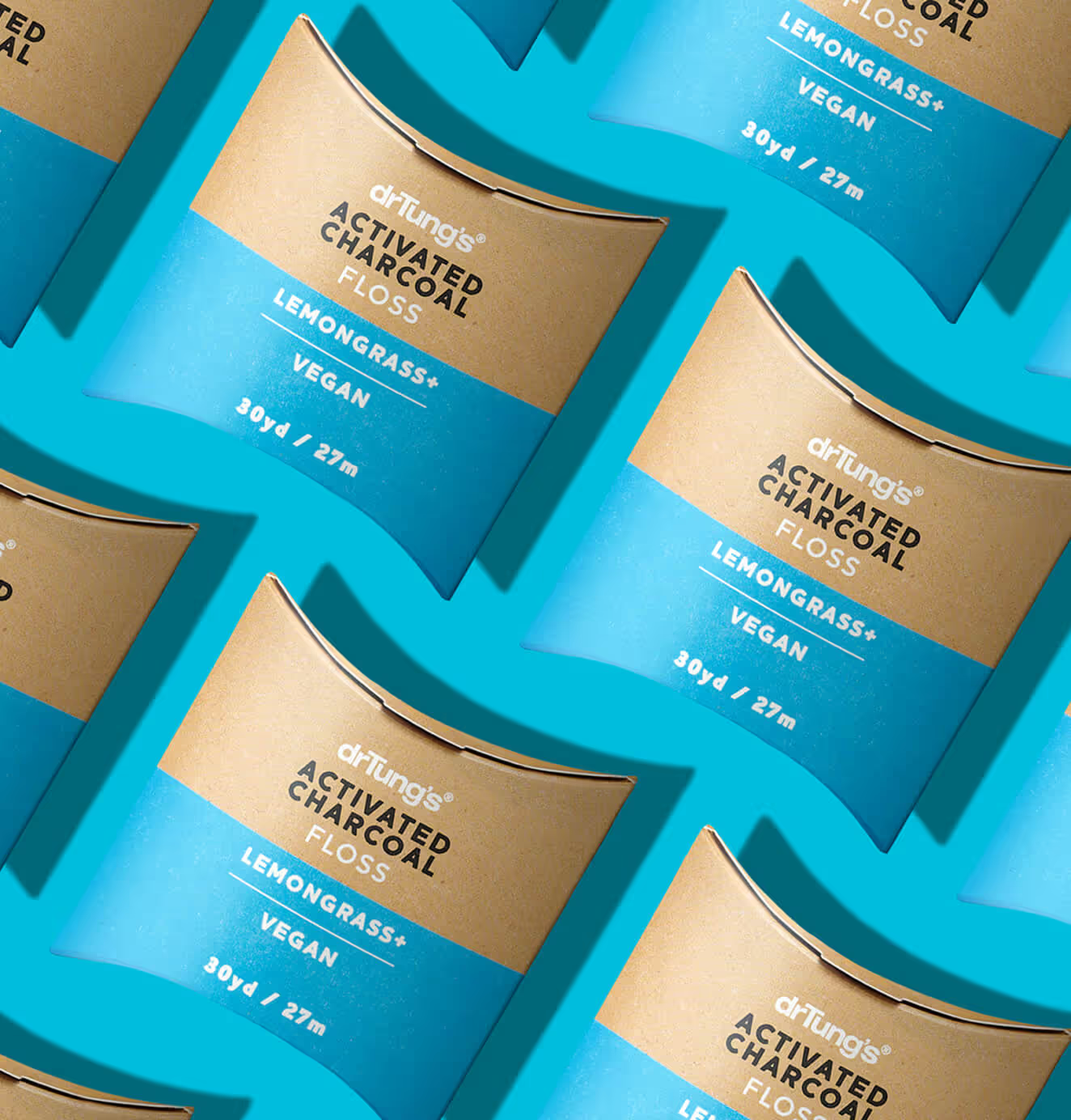
DrTung’s: Connecting Brand Strategy, Ecommerce, and Marketing
The challenge: DrTung’s had an established natural oral care business but needed stronger positioning and a more effective digital experience to support ecommerce growth.
Our approach: We sharpened the messaging around product efficacy and professional credibility, then carried that direction into:
- A Shopify website migration and redesigned customer experience.
- B2B ordering capabilities.
- Email education and replenishment journeys.
- Paid media, social content, and campaign creative.
Reported results: The published case study records:
- Revenue at 2.3 times the prior-year level.
- A 99% increase in orders year over year.
- A 122% increase in hero product sales.
These results reflect a broader program spanning branding, website improvements, and marketing. They should not be attributed to a single design change or treated as a forecast for another business.
Explore the DrTung’s branding and ecommerce case study.
Who Wellness Branding and Marketing Is For
Wellness branding and marketing support businesses that need a clearer market position, a stronger customer experience, or a more coordinated approach to growth. The right scope depends on the business model, stage, and problem being solved.
Wellness Product and Ecommerce Brands
Supplement, nutrition, personal care, and beauty brands may need positioning, packaging, product education, and an ecommerce experience that helps customers evaluate the range.
For these businesses, Shopify website design can be scoped alongside branding, content, and retention marketing.
Wellness Clinics and Service Providers
Med spas, aesthetic clinics, integrative practices, and other wellness service businesses may need clearer service messaging, practitioner information, and a simpler inquiry or booking journey.
The priority is to help prospective clients understand the offer, assess the provider, and know what happens next.
Fitness, Membership, and Wellness Platforms
Studios, membership programs, and wellness platforms need to explain the experience, the intended audience, and the value of an ongoing relationship.
Their branding and marketing should connect the initial promise with onboarding, participation, and retention.
Established Businesses Preparing for Change
A new service, expanded audience, acquisition, or outdated website can create a need to reassess the brand.
Before committing to a full rebrand, evaluate what customers already recognize and value. A focused update to positioning, messaging, or the website may address the main issue while preserving useful brand equity.
Ethics, Transparency, and Trust in Wellness Marketing
Trustworthy wellness marketing uses clear information, appropriate evidence, and realistic expectations to help people make informed choices.
NIQ’s 2025 Global Health & Wellness research found that 82% of surveyed consumers wanted health and wellness product labels to be more transparent and easier to understand. This reinforces the importance of making information accessible at the point of decision. Read NIQ’s research on wellness and consumer trust.
Apply that principle throughout your communication:
- Explain claims precisely. Make clear what a statement refers to and what supports it.
- Provide context for testimonials. An individual experience should not imply an outcome everyone can expect.
- Identify relevant expertise. Explain who created or reviewed specialist content and why their qualifications matter.
- Make commercial information accessible. Clearly explain pricing, subscriptions, booking terms, and other conditions.
- Keep messages consistent. Product labels, advertisements, website copy, and sales conversations should communicate compatible information.
Build review responsibilities into the content process, particularly when material discusses clinical topics or regulated products and services.
Clear communication gives customers a better basis for deciding whether your business is right for them.
How to Measure Wellness Branding and Marketing Success
Measure wellness branding and marketing against business outcomes, supported by indicators of awareness, customer understanding, and engagement. Establish a baseline before making changes so you can assess progress meaningfully.
Brand Awareness and Understanding
Monitor branded search demand, direct customer feedback, and the reasons prospects give for choosing or overlooking your business.
Look for evidence that people understand your positioning and can identify what makes the offer relevant to them.
Website Conversion and Lead Quality
Track the actions that matter to your business:
- Completed purchases for ecommerce brands.
- Qualified inquiries and attended appointments for service businesses.
- Trial registrations and paid memberships for subscription businesses.
Review where visitors abandon the journey and whether inquiries match the customers you want to serve.
Acquisition Efficiency
Evaluate customer acquisition cost, the percentage of leads that become customers, and revenue or margin generated by campaigns.
Clicks and impressions help explain campaign activity, but they need to be connected to meaningful outcomes.
Retention and Customer Value
Track repeat purchases, replenishment behavior, membership renewals, and customer lifetime value using a consistent definition.
Our retention marketing services connect ongoing communication with these customer relationships.
Search and AI Visibility
Monitor relevant search queries, visits to priority pages, and inquiries influenced by educational content. For AI discovery, record observed brand mentions, citations, and identifiable referral traffic while recognizing that measurement is incomplete.
Interpret results alongside changes in pricing, promotions, inventory, seasonality, and media spend. Strong measurement helps you decide whether the next priority is clearer positioning, a better website experience, or adjustments to your marketing.
Frequently Asked Questions About Wellness Branding and Marketing

What is wellness branding and marketing?
Wellness branding defines how your business is positioned, recognized, and understood. Wellness marketing communicates that value to attract and retain customers. Branding includes strategy, messaging, visual identity, and guidelines. Marketing puts those foundations into action through content, search, advertising, social media, and email.
What does a wellness branding agency do?
A wellness branding agency helps a business identify its audience, define its competitive position, and develop a consistent identity. Deliverables can include research, positioning, messaging, naming, logo design, packaging, and brand guidelines.
Website design, development, and ongoing marketing may be included or scoped separately. Review the proposed deliverables to understand how the strategy will be implemented.
How is wellness branding different from medical branding?
Wellness branding often emphasizes daily routines, lifestyle, and personal well-being. Medical branding typically places greater emphasis on clinical expertise, patient experience, and care delivery.
The categories can overlap. The appropriate approach depends on the actual product or service, the audience, and the claims being made. Both require accurate communication and credible support for those claims.
Can small wellness brands compete with larger companies?
Yes. A smaller wellness brand can compete by serving a clearly defined audience, addressing a specific need, and delivering a consistent customer experience.
Focus your resources on a meaningful point of difference and the channels most relevant to your customers. A narrower, well-executed strategy can give people a reason to choose your business, even when competitors have greater reach.
What should a website for a wellness brand include?
A wellness website should explain what you offer, who it is for, why someone should trust it, and what to do next.
Essential content typically includes:
- Clear product or service descriptions.
- Relevant brand, team, or practitioner information.
- Appropriate evidence, credentials, and authentic customer feedback.
- Pricing, terms, and answers to common buying questions.
- A straightforward purchase, inquiry, or booking process.
- Mobile-friendly navigation and readable content.
Our website design and development services connect these requirements with the brand’s positioning and business goals.
Should a wellness website use Shopify or Webflow?
The choice depends on the website’s requirements. We assess Shopify for product businesses that need ecommerce, and Webflow for brand and service websites where design flexibility and content management are priorities.
Booking, subscriptions, integrations, content needs, and ongoing maintenance should inform the final recommendation. Define those requirements before choosing a platform.
Does wellness branding affect revenue?
Wellness branding can support revenue by helping customers understand the offer, recognize its value, and feel confident choosing the business. Its impact depends on execution across the product, pricing, website, marketing, and customer experience.
Measure changes in qualified inquiries, conversion rates, repeat purchases, and customer value. Avoid attributing every improvement to branding alone when several parts of the business have changed.
Is social media enough for wellness marketing?
Social media can support discovery, education, and community, but relying on it alone leaves important parts of the customer journey uncovered.
A wellness business may also need search visibility, useful website content, email communication, and a reliable purchase or booking experience. Choose the channel mix according to how your audience makes decisions and how your business retains customers.
How much does wellness branding and marketing cost?
Cost depends on the scope, starting point, and implementation required. A positioning engagement is different from a full rebrand that includes packaging, website design, development, and launch campaigns.
Ask for a proposal that separates project deliverables, ongoing agency fees, advertising spend, software, and production costs. Explore our branding packages and marketing packages as a starting point for discussing the right scope.
How long does wellness branding take to deliver results?
Project delivery and business results follow different timelines. Research, design, website development, and rollout depend on the scope, content readiness, and approval process.
Once the work is live, some changes—such as a simpler inquiry process—can be evaluated relatively quickly when there is enough traffic. Recognition, organic visibility, and repeat purchasing require observation over a longer period. Establish a baseline and review progress against agreed business goals.
How do I choose a wellness branding or marketing agency?
Look for relevant work, a clear strategic process, and the ability to deliver the services your project requires. Ask what the agency contributed to each example and how it measured the outcome.
Discuss who will handle strategy, copywriting, design, development, and ongoing marketing. Confirm deliverables, responsibilities, handoff arrangements, and how the team will evaluate progress.
Build a Wellness Brand People Understand and Trust
A strong wellness brand gives customers a clear reason to choose it. Consistent messaging, a recognizable identity, useful information, and a straightforward website experience help turn that promise into something people can evaluate and act on.
At The Branded Agency, we help wellness businesses in the U.S. and Canada connect brand strategy, identity, website design, development, and marketing.
Our work includes AfterGlow’s rebrand and Webflow website, BeatsWell’s branding, Bomi 365’s identity and packaging, and DrTung’s integrated ecommerce and marketing program.
Whether you are launching a wellness business, refreshing an established brand, or improving your website, we can help define the priorities and scope the work around your goals.
Discuss your wellness branding, marketing, or website project with our team.

Quincy Samycia
As entrepreneurs, they’ve built and scaled their own ventures from zero to millions. They’ve been in the trenches, navigating the chaos of high-growth phases, making the hard calls, and learning firsthand what actually moves the needle. That’s what makes us different—we don’t just “consult,” we know what it takes because we’ve done it ourselves.
Want to learn more about brand platform?
If you need help with your companies brand strategy and identity, contact us for a free custom quote.
We do great work. And get great results.
+2.3xIncrease in revenue YoY
+126%Increase in repurchase rate YoY



+93%Revenue growth in first 90 days
+144% Increase in attributed revenue



+91%Increase in conversion rate
+46%Increase in AOV


+200%Increase in conversion rate
+688%Increase in attributed revenue