Winback Email Campaign: How to Build One That Works
11/09/2026
Marketing Strategy
Win back customers who stopped buying with a targeted three-email sequence that matches their purchase cycle, addresses their reason for leaving, and protects your profit margins.
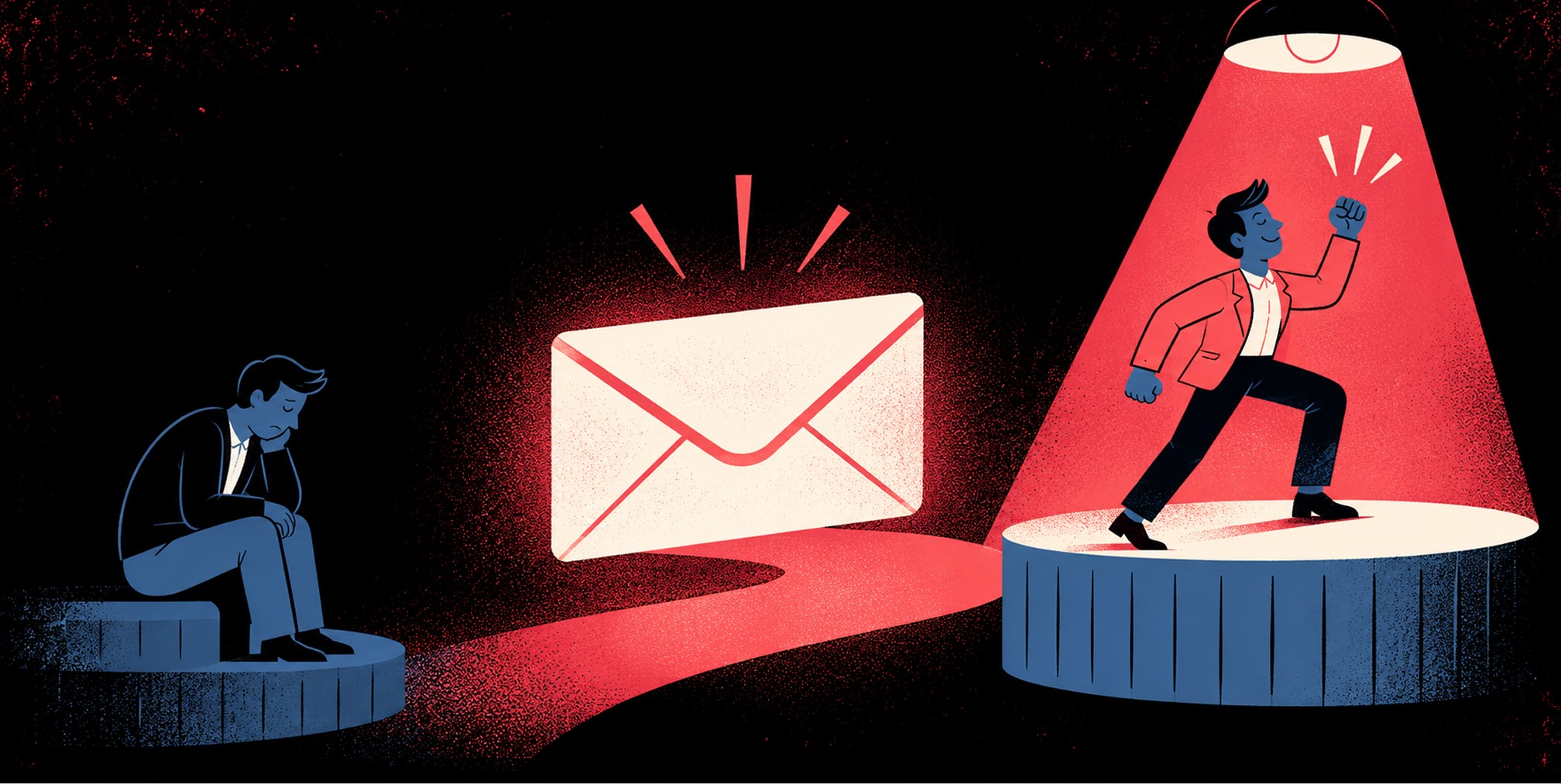
A winback email campaign is a short automated series that goes to customers who bought before and then went quiet. It works when you trigger it on each customer’s own buying rhythm, match the message to why they left, and stop the series the moment they return. This guide covers the triggers, the segments, a three-email structure, B2B and SaaS variations, the numbers to track and the U.S. rules to follow.


Winback, reactivation and re-engagement: what each one means
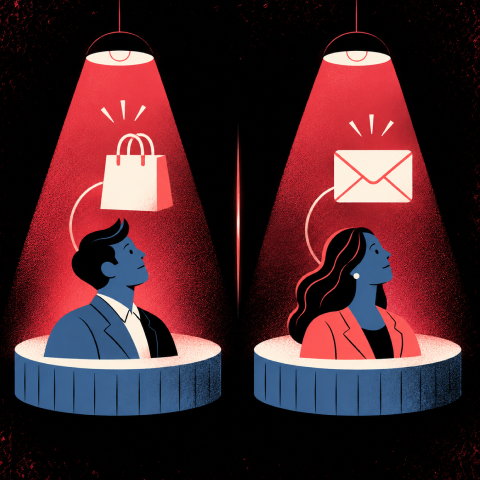
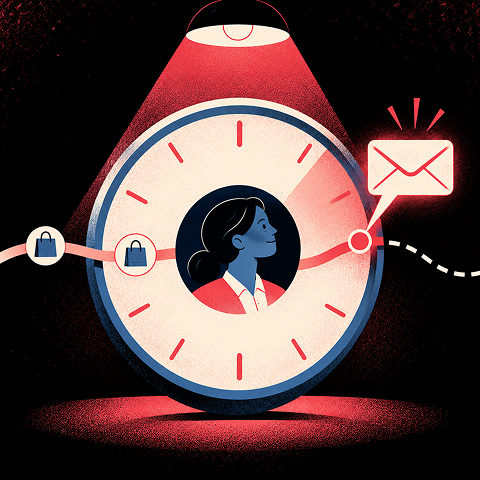
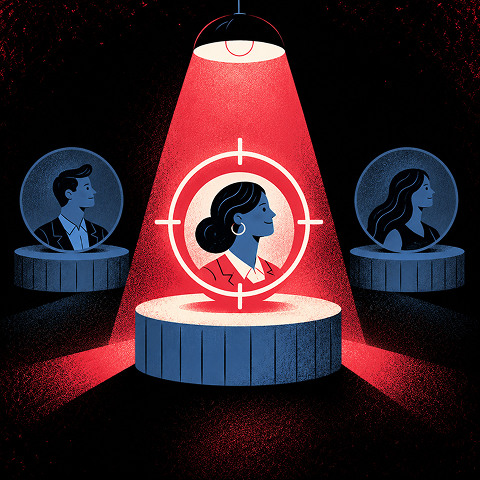
The three terms get used interchangeably, and mixing them up leads to the wrong audience and the wrong message.
A winback campaign goes to people who purchased before but have not purchased in a while. Their relationship with you is commercial, so the message is about value, fit and a reason to return.
A re-engagement campaign goes to subscribers who have not opened or clicked recently. Bloomreach draws this line: re-engagement targets inactive subscribers, win-back targets lapsed buyers. Many of them may never have bought.
Reactivation is the outcome both aim for: a dormant person becomes active again. When people search for a “reactivation email campaign,” they usually mean one of the two above.
The format differs too. According to the Klaviyo Help Center, a winback flow is a sequence triggered by the Placed Order event once enough time passes without another purchase. A re-engagement campaign is a single email sent infrequently, with once a year a good rule of thumb, to people who may not receive a winback flow.
For a SaaS business, “winback” often means a churned account: a customer who cancelled or let a subscription lapse. The logic is the same, but the trigger is a cancellation event rather than a missed purchase.
When to trigger a winback flow
The most common mistake is a blanket rule such as “no purchase in 90 days.” A coffee subscription buyer and a buyer of annual software have very different cycles, so the same cutoff will mislabel one group or the other.
Published platform rules show how much the window varies. Attentive’s winback journey starts after at least 45 days without a purchase, includes only subscribers who have purchased before, and sends two messages separated by a 15-day wait. That is a sensible default for fast-repeat retail. It is a poor default for a product people buy once a year.
A better method is to work from your own data:
- Calculate the median time between repeat purchases by product category or customer segment, not only the storewide average.
- Choose an inactivity threshold slightly beyond that normal interval and check that no new purchase has occurred before each send.
- Create separate triggers for replenishable items, seasonal purchases, high-value customers and churned subscription accounts.
- Review the first 30–60 days of results, then adjust entry windows using recovered revenue, complaints and repeat-purchase behavior.
Acoustic recommends watching for departures from a customer’s own pattern: slowing purchases, declining engagement, falling product usage, or a lifecycle milestone that passed without the expected activity. In B2B and SaaS, usage decline and a missed renewal conversation are often earlier signals than a lapsed invoice.
Who belongs in the flow and who does not
Not everyone who went quiet deserves a winback message. Build the audience deliberately.
Include:
- Past customers whose last purchase is beyond their expected repeat-buying window.
- Contacts with a marketable email status and a clear relationship to the product or subscription.
- RFM segments with enough lifetime value or purchase frequency to make recovery worthwhile.
- Churned SaaS accounts with a known cancellation reason, an appropriate re-entry offer and an authorized contact.
Suppress:
- Anyone who placed a new order, reactivated an account or renewed after entering the series.
- Unsubscribed contacts, prior complainers, hard bounces and addresses without required permissions.
- Customers with unresolved support disputes, refunds or sensitive account issues until the problem is addressed.
- People already receiving a conflicting replenishment, renewal, dunning or high-priority lifecycle flow.
- Contacts who finished the series without responding, until a separately justified future reactivation window.
Zendesk suggests segmenting by shared attributes and using RFM analysis (recency, frequency, monetary value) to find the most profitable lapsed customers. For B2B lists it points to budget, company size and business needs as the attributes that matter.
A three-email winback sequence
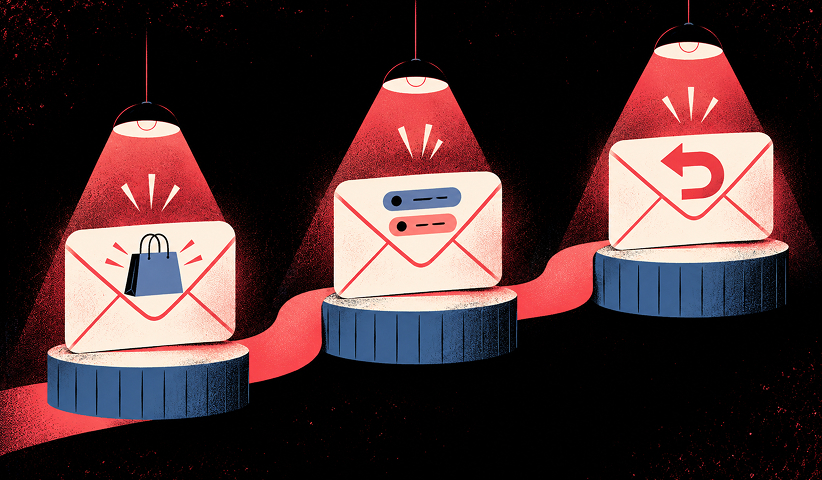
Keep the series short. Each email has one job and one call to action. The timing below is our working template, which you should adjust to your buying cycle.
Three-email winback sequence:
- Email 1, reintroduction: Send when the customer crosses the inactivity threshold. Remind them of the value they received, show what is new and use one clear CTA. No discount required.
- Email 2, reason to return: Send about 4–7 days later if there has been no purchase. Address likely friction with proof, a relevant update or a carefully targeted incentive.
- Email 3, final follow-up: Send roughly one week after email 2 to eligible non-responders. Close any real offer window, offer a preference or unsubscribe option, and exit the contact from the flow.
Email 1: lead with value, not a coupon
Open with something specific to the customer: what they bought, what they used, or what has improved since. Offer one clear action. Discounting first teaches customers that going quiet earns a reward and gives away margin you may not need to give.
Example subject lines to adapt:
- A few things have changed since your last order
- Your favorites are still here, plus something new
- Ready when you are: see what is new
Email 2: answer why they left
This is where segmentation pays off. A customer who left over price needs a different message from one who left because of a missing feature or a poor onboarding experience.
Email 3: close it cleanly
Say what happens next. If there is a deadline, state it in the email itself and make the unsubscribe link easy to find. A clear ending respects the reader and protects your deliverability. After the last email, move non-responders out of the flow. If they have not engaged by then, a single re-engagement email once a year is a better use of the channel than more winback attempts.
Free Brand Health Audit
Make sure your brand is built to sell
Search has changed. Your customers aren't just Googling anymore. They're asking ChatGPT, Perplexity, Gemini and other AI platforms what to buy, who to trust and which brands they should consider.
If your brand isn't showing up clearly in those answers, you're already losing opportunities. Our free Brand Health Audit shows you where your brand stands across traditional search, AI search and brand positioning.

Sample brand audit
Live preview
Traditional search
72
AI search (GEO)
34
Brand positioning
58
Winback emails for B2B and SaaS
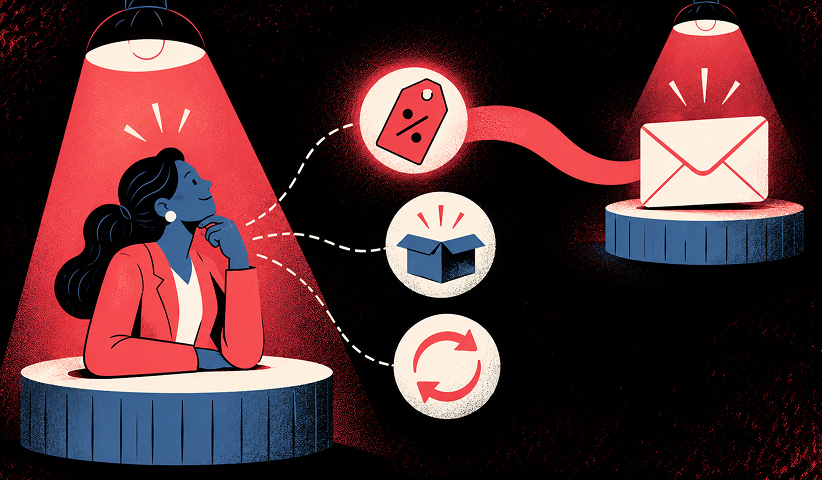
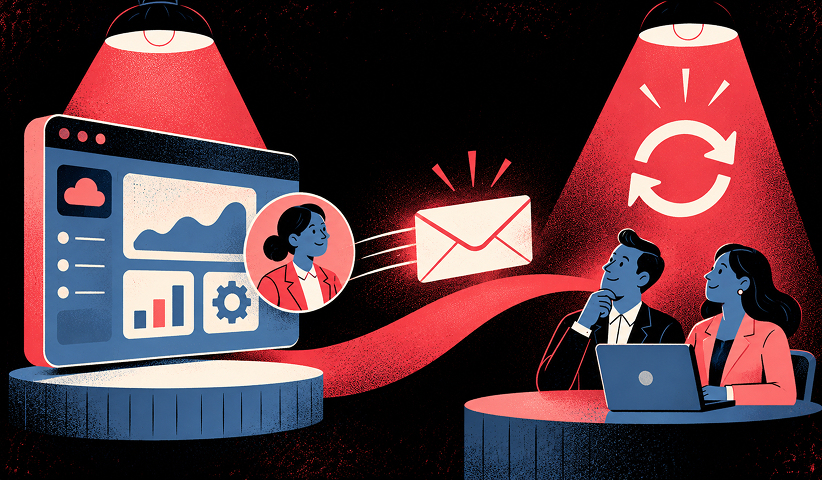
B2B winback differs from consumer winback in four ways.
The buyer is not the only reader. The person who cancelled may not be the budget holder. Write emails that can be forwarded: short, specific and clear about what has changed.
The reason for leaving is usually known. Your cancellation flow, account manager notes or exit survey tell you why. Use it. A subject line that references the stated reason will outperform a generic “We miss you.”
Timing follows contracts and budgets. Align touches with renewal windows, budget cycles and product releases rather than a fixed day count.
A person should send it. For high-value accounts, an email from the account owner or a founder reads as a real note, not a campaign. Keep the tone empathetic and the ask small, such as a short call or a look at one new feature.
A practical SaaS timeline, which we use as a planning template and not as a benchmark:
- At cancellation: Send confirmation, preserve access and ask an optional one-question reason-for-leaving survey.
- After 14–30 days: For accounts with a relevant product update, send a personal message linking the update to their prior need.
- Around the next natural budget or renewal window: Ask whether circumstances changed and offer a short, low-pressure walkthrough.
- After a clear decline or lack of response: End the sequence and suppress further automated winback touches for the chosen interval.
If you want the wider picture of how these emails fit into a SaaS lifecycle, our guides on email marketing for SaaS and SaaS email marketing growth walk through onboarding, expansion and retention flows that sit around winback.
Using offers without training customers to wait for them
An offer is a tool for specific segments, not a default.
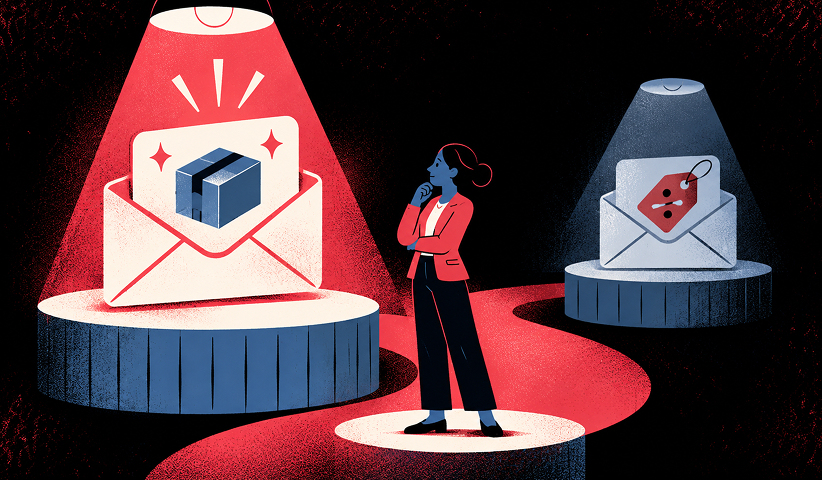
- Price-sensitive customers: Test a limited discount only after calculating contribution margin and expected customer value.
- Feature-gap churn: Lead with the newly released capability, an honest comparison or a product walkthrough.
- Poor onboarding: Offer guided setup, training or a dedicated support contact rather than a coupon.
- Replenishment customers: Use reorder convenience, product bundles or a subscription option before monetary incentives.
- High-value B2B accounts: Prioritize a named account-owner conversation and a tailored solution to the original objection.
Brands often find that a well-placed non-monetary reason, such as a new feature, a new collection or a useful guide, works for customers who left without a price complaint. Test that against your own list instead of assuming it.
Want to learn more about Digital Marketing and Strategy? Keep reading!
If you need help with your company’s marketing, contact us for a free custom quote.
What to measure
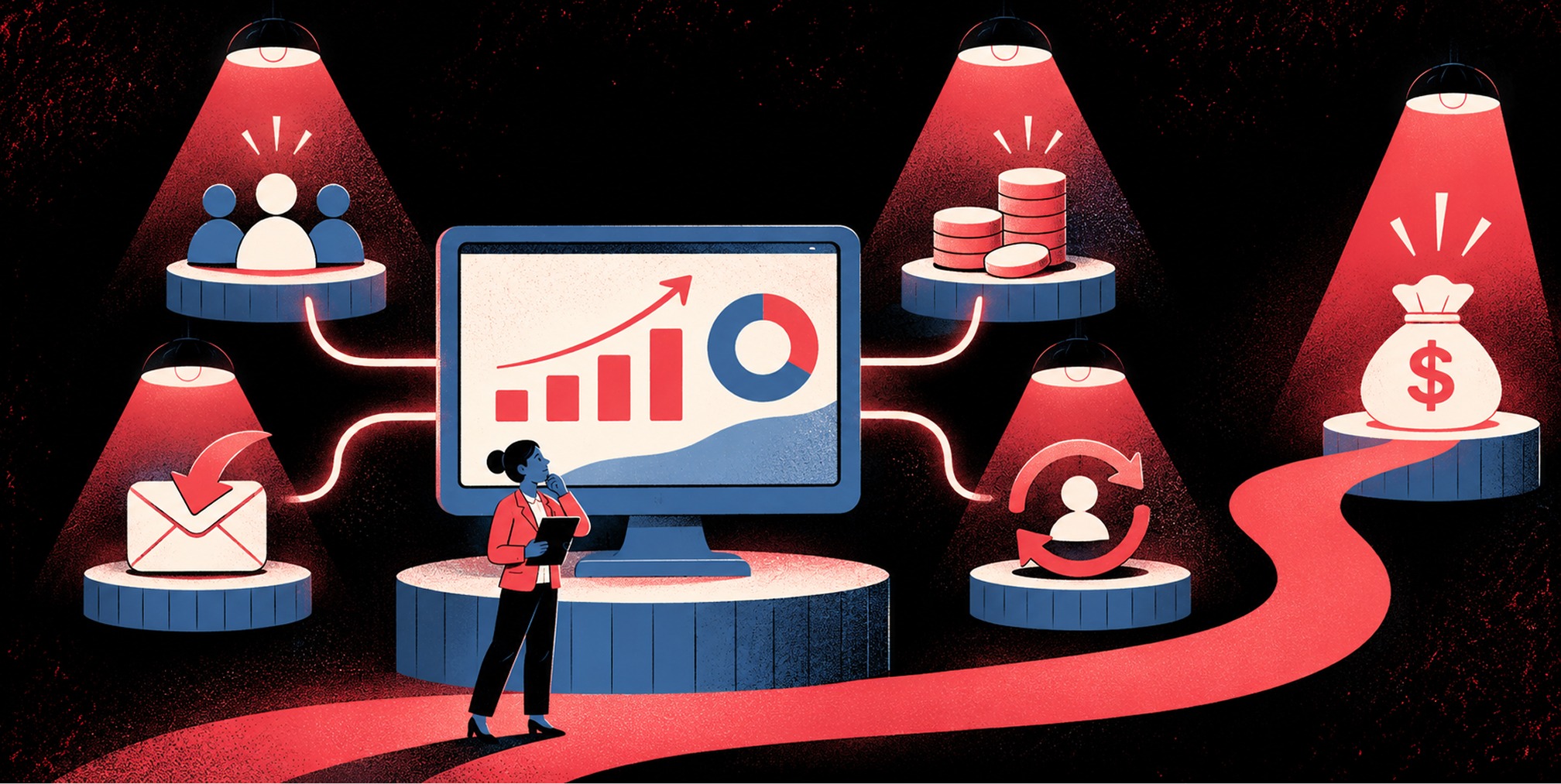
Open rates are a weak signal, partly because privacy features inflate or obscure them. Build your scorecard around outcomes.
Core winback metrics:
- Winback conversion rate: Recovered purchasers divided by eligible winback recipients over a defined attribution window.
- Program reactivation rate: All reactivated customers divided by the total inactive customer population, including returns through other channels.
- Revenue per recipient: Attributed revenue divided by delivered recipients; also review gross margin to avoid overstating incentive-driven gains.
- 90-day re-churn: Share of recovered customers who lapse again within 90 days or within a cycle appropriate to the category.
- Unsubscribes and spam complaints: Guardrails for list quality and reputation, reviewed by segment and email.
- Cost per recovered customer: Full campaign cost including incentives divided by incremental recoveries; compare against customer value and a holdout where feasible.
The first two are not interchangeable. Eightx notes that flow conversion is measured among lapsed recipients, while program-level reactivation covers inactive customers returning through any channel. Their denominators differ, so compare like with like.
As for “what is a good winback rate,” the honest answer is that it depends on your category, price point and how long customers have been gone. Published figures vary widely and mix definitions. Set your own baseline from the first three months of sends, then improve against it. A flow is working when recovered customers generate more margin than the campaign cost and stay beyond 90 days.
Compliance and deliverability in the U.S.
Winback emails go to people who have drifted away, which makes them more likely to be marked as spam. Treat compliance as part of the design.
- Use accurate from names, subject lines and headers; clearly identify commercial messages when required.
- Include a valid physical mailing address and an easy, functioning opt-out mechanism. Honor CAN-SPAM opt-out requests within 10 business days.
- Respect applicable state privacy requirements and any stricter consent obligations in the markets where recipients live.
- Authenticate sending domains with SPF and DKIM, configure DMARC, and follow mailbox-provider bulk-sender requirements when applicable.
- Suppress bounces, unsubscribes and complainers immediately in your sending platform. Watch delivery, spam complaints and click behavior rather than relying on opens alone.
- For higher-volume promotional sends, provide one-click unsubscribe where required by mailbox providers and ensure suppression propagates across tools.
Our perspective
Most winback programs fail before the first email is written. They treat a lapsed customer as a list problem when it is a brand and experience problem.
At The Branded Agency, we build winback inside a full lifecycle system, not as a standalone blast. That means the emails look and sound like the brand customers chose in the first place, the segmentation reflects why people left, and the landing page they click through to is built to convert. This is what we mean by brand-backed performance™: creative, messaging and measurement working as one.
Our approach starts with the reason for the lapse. We map the customer journey, find where accounts go quiet, and design flows for each segment, with the offer as the last lever and not the first. We track recovered revenue and re-churn so you can see whether returning customers stay.
For growth-stage and VC-backed teams, retention is often the most traceable source of profitable growth. A customer you already earned is cheaper to keep than a new one is to find, and winback is how you protect that investment.
–Quincy Samycia
Getting help building the program
If you would rather not build segmentation, creative, flows and reporting in-house, our retention team does this work. Our retention marketing service covers lifecycle email and SMS, including winback, post-purchase and churn-prevention flows, designed around your data and brand.
Retention Marketing engagements start from $6,500 per month, and you can see the full list of services on our pricing page. To see how winback fits the wider picture, read about lifecycle marketing and retention rate.
Frequently Asked Questions
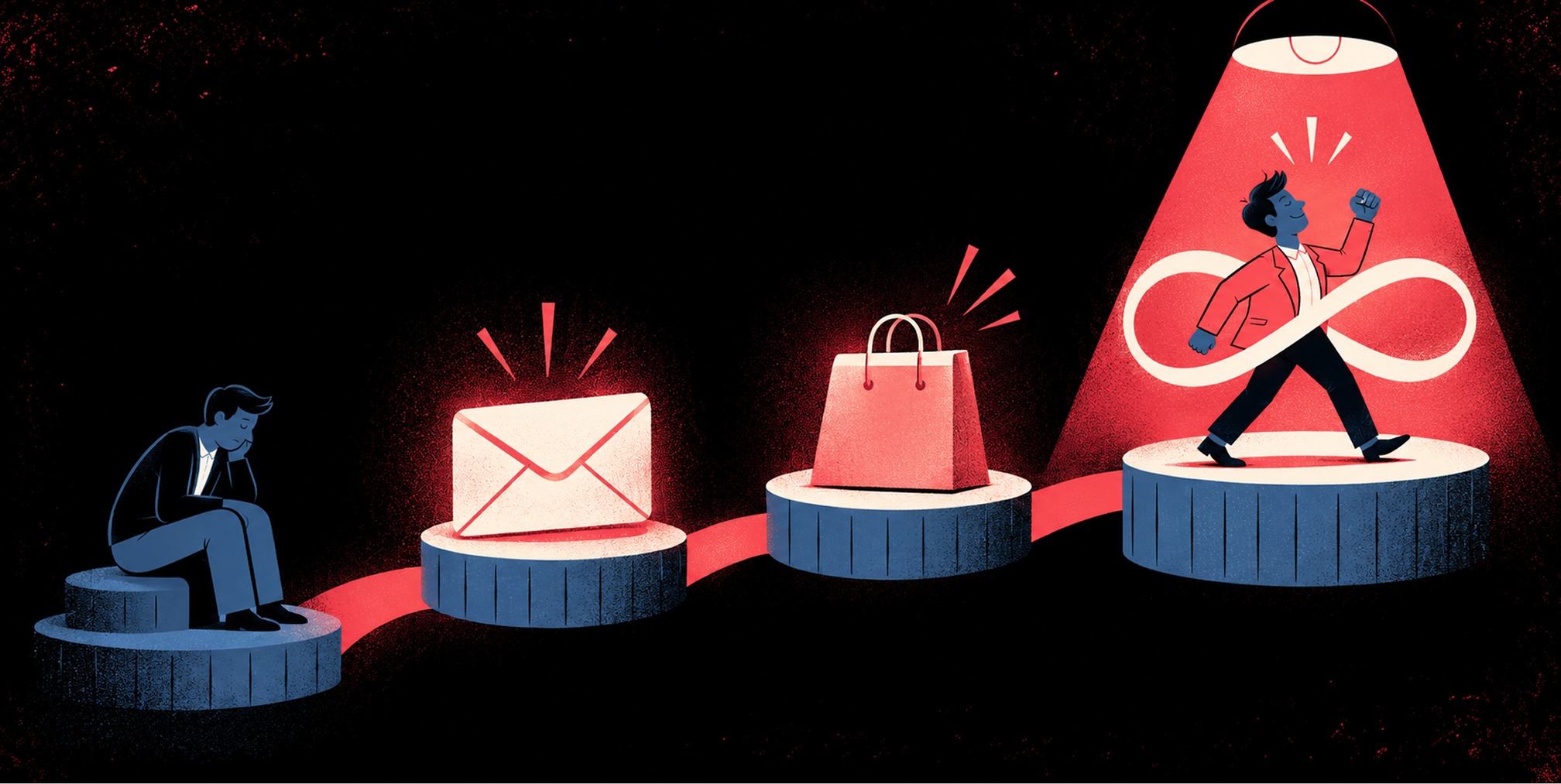
What is a winback campaign email?
A winback campaign email is a message sent to a customer who bought or subscribed before and has since stopped. It reminds them of the value they received and gives them a specific reason to return. It is usually part of a short automated series and not a one-off blast.
How many emails should a winback series have?
Two to three is a solid range. One email to reintroduce value, one to address the likely reason for leaving, and a final one that closes the window clearly. Longer series tend to annoy readers and put your sender reputation at risk. Adjust spacing to your buying cycle.
Should every winback email include a discount?
No. Use a discount where price is the likely reason for leaving, and scale it to account value. For payment failures, lapsed users who still like the product, or feature-gap churn, a friction-free message or a product update is usually enough. Offering a discount to everyone can teach customers to wait for one.
How is a B2B winback email different?
It is written for a buying group, not one shopper, and it should be triggered by renewal dates, usage decline or a stated cancellation reason. Short, specific emails that reference what changed and come from a named person tend to fit best. Offer a call or a demo before a price cut.
When should you send a winback email?
Send when a customer is overdue relative to their normal reorder or renewal cadence. For fast-repeat items that may be weeks; for annual contracts it may be near the next budget cycle. Base your trigger on purchase and usage data rather than a universal day count.
What is a good winback conversion rate?
There is no universal benchmark because industries define inactivity and recovery differently. Establish a baseline by segment and track recovered revenue, margin and 90-day retention; use a holdout group to estimate incremental lift.
How do you prevent a winback flow from annoying customers?
Limit the series to two or three useful messages, stop it as soon as someone buys or unsubscribes, avoid overlapping lifecycle flows and reduce frequency for unresponsive segments.
Sources
- Klaviyo Help Center, How to create a winback flow: https://help.klaviyo.com/hc/en-us/articles/115002775192
- Federal Trade Commission, CAN-SPAM Act Compliance Guide for Business: https://www.ftc.gov/business-guidance/resources/can-spam-act-compliance-guide-business
- Google, Email sender guidelines: https://support.google.com/mail/answer/81126
- Klaviyo Help Center, How to create a post-purchase flow: https://help.klaviyo.com/hc/en-us/articles/360028872611

Quincy Samycia
As entrepreneurs, they’ve built and scaled their own ventures from zero to millions. They’ve been in the trenches, navigating the chaos of high-growth phases, making the hard calls, and learning firsthand what actually moves the needle. That’s what makes us different—we don’t just “consult,” we know what it takes because we’ve done it ourselves.
Want to learn more about brand platform?
If you need help with your companies brand strategy and identity, contact us for a free custom quote.
We do great work. And get great results.
+2.3xIncrease in revenue YoY
+126%Increase in repurchase rate YoY


+93%Revenue growth in first 90 days
+144% Increase in attributed revenue


+91%Increase in conversion rate
+46%Increase in AOV


+200%Increase in conversion rate
+688%Increase in attributed revenue