Brand Architecture Models: The Executive Decision Guide
09/17/2026
Brand Strategy
A guide to brand architecture models — Branded House, House of Brands, and Hybrid — with decision criteria, implementation phases, and real case studies.
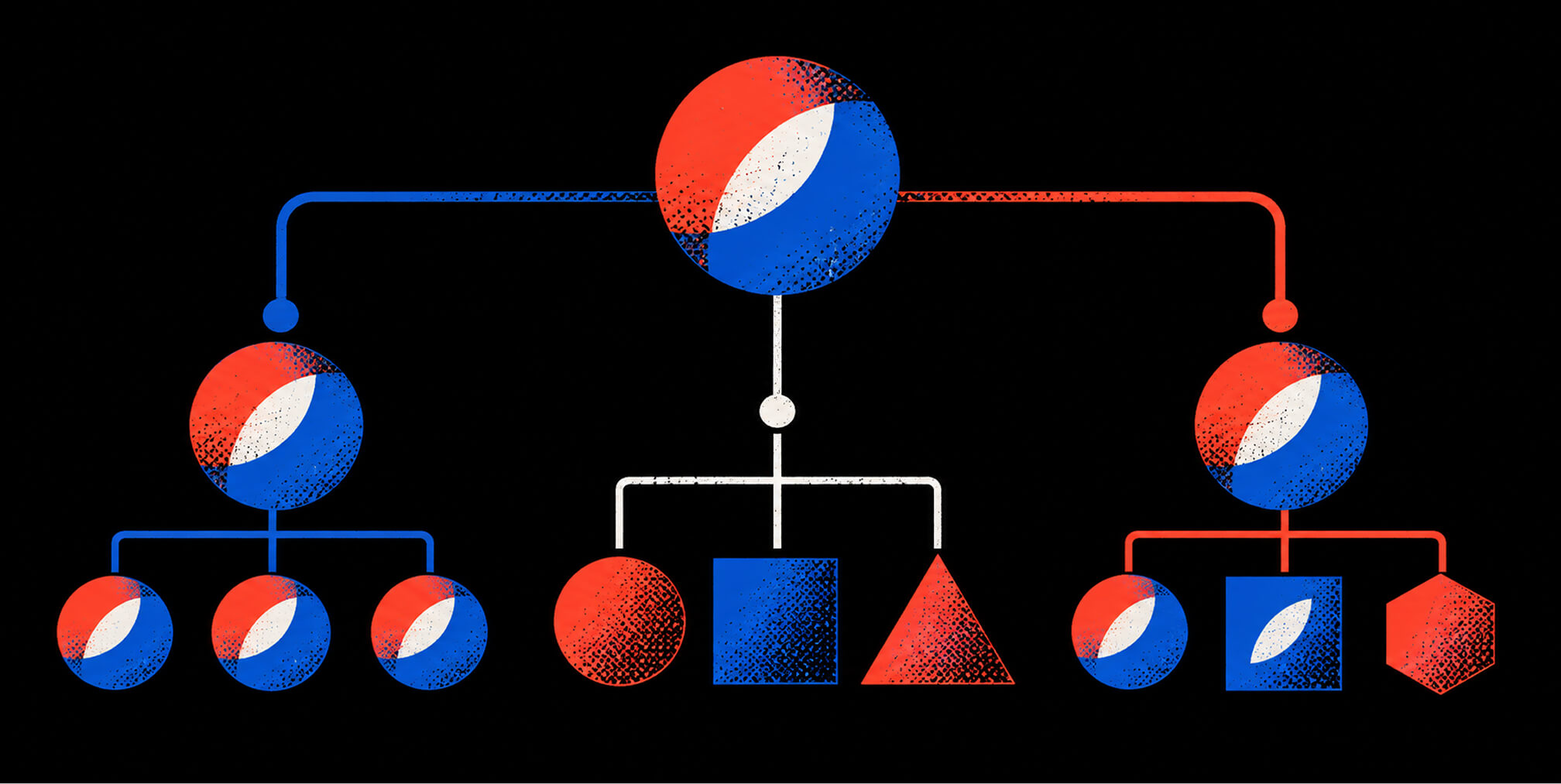
The three core brand architecture models are the Branded House, the House of Brands, and the Hybrid. Each describes a different structural relationship between a parent organization and its portfolio of products, services, or acquired companies. For most growth-stage and enterprise executives, the right starting lens is this: if your portfolio serves overlapping audiences under a unified promise, lean toward a Branded House; if your brands compete in distinct markets with different buyer expectations, a House of Brands protects each brand's independence; if you're managing both scenarios simultaneously, a Hybrid gives you flexibility at the cost of governance complexity.
.png)


What Brand Architecture Is, and the Three Models Compared
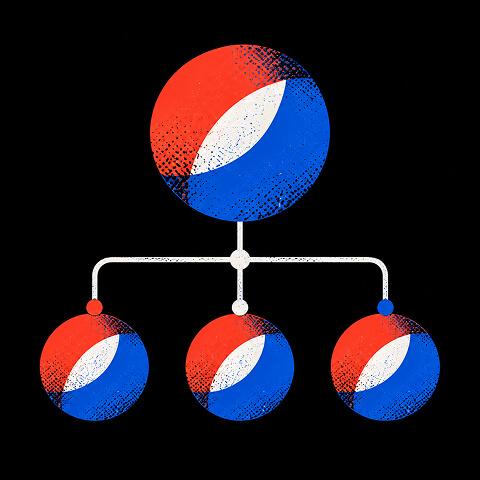


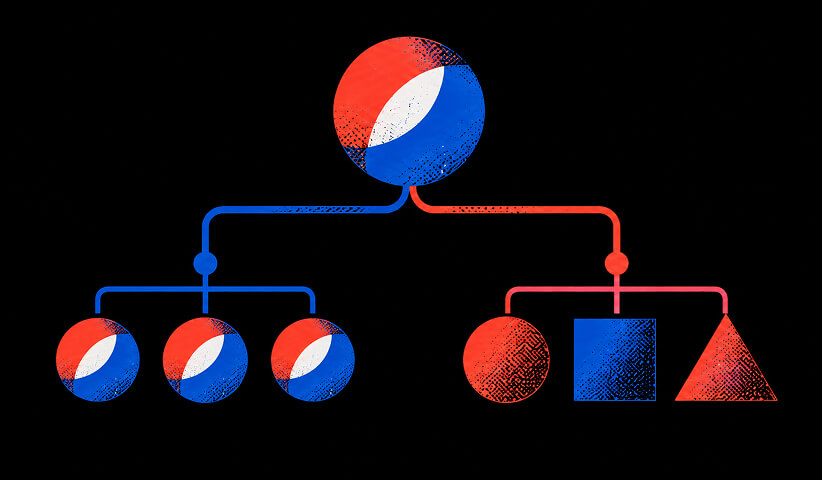
- Branded House: One master brand covers everything. High efficiency, fast launch speed, strong equity transfer. Risk: one crisis affects the whole portfolio.
- House of Brands: Each brand stands alone. Maximum market targeting precision and risk isolation. Cost: duplicated marketing investment across every brand.
- Hybrid: Parent brand and sub-brands share visibility selectively. Balances efficiency with independence. Requires disciplined governance to prevent brand drift.
Key Takeaways
The most effective brand architecture model is the one your organization can govern consistently, not the one that looks best in a strategy deck.
| Point | Details |
|---|---|
| Three core models | Branded House, House of Brands, and Hybrid each offer distinct trade-offs in efficiency, targeting precision, and governance complexity. |
| Visibility impact | Organizations with a defined architecture achieve significantly greater visibility than those without one, per Harvard Business School. |
| Selection rule of thumb | Match the model to your audience overlap, M&A pipeline, and governance capacity before considering cost or aesthetics. |
| Governance is non-negotiable | Assign a named governance owner before rollout; without one, any architecture drifts within 18 months regardless of model choice. |
| The Branded Agency's role | The Branded Agency designs and implements brand architecture strategies, including naming systems, brand handbooks, and migration roadmaps for growth-stage and enterprise clients. |
What are brand architecture models and why do they matter?
Brand architecture is the framework that defines the relationships between a parent company and every brand, sub-brand, product line, and acquired entity in its portfolio. It governs how those brands present themselves visually, how they're named, how much equity they share with the parent, and how they're positioned in the market. Think of it as the organizational chart for your brand portfolio, except the decisions made here affect revenue, legal exposure, M&A integration, and customer perception simultaneously.
The scope is broader than most executives initially expect. Brand architecture covers naming conventions, visual identity linkage, endorsement structures, trademark strategy, messaging alignment, and portfolio economics. It determines whether a new product launch borrows credibility from the parent brand or builds its own from scratch. It shapes how an acquired company is absorbed or kept separate. It defines what a customer sees on packaging, in advertising, and on a website.
The stakeholders who need to be aligned before any architecture decision is finalized include:
- Board and C-suite: Approve architecture changes that affect corporate identity, M&A integration strategy, or significant capital allocation.
- CMO and brand leads: Own the positioning logic and ensure the chosen model supports go-to-market execution.
- Product owners: Manage how individual products or services are named and positioned within the portfolio hierarchy.
- Legal and IP counsel: Assess trademark implications, registration requirements, and risk exposure across naming conventions.
- M&A teams: Evaluate how acquired brands will be integrated or maintained as independent entities.
- Agency partners: Execute the identity, naming, and communications work that brings the architecture to life.
Three benefits stand out when architecture is clearly defined. Customers navigate your portfolio with less friction, which shortens the path to purchase. Marketing teams avoid duplicating effort across brands that could share assets, messaging, or media spend. And when a product or sub-brand faces reputational risk, a well-designed architecture limits how far that damage travels.
The three brand architecture models: definitions, trade-offs, and examples
The Branded House places one master brand at the center of everything. Every product, service, and offering carries the parent brand's name and visual identity. FedEx is the textbook example: FedEx Express, FedEx Ground, FedEx Freight, and FedEx Office all operate under a single, unified brand. Customers know exactly who they're dealing with regardless of which service they use. The equity built in one division reinforces all others.
The House of Brands operates in the opposite direction. The parent company stays invisible to consumers, and each brand in the portfolio competes independently. Procter & Gamble runs this model across dozens of brands including Tide, Pampers, Gillette, and Bounty. A consumer buying Tide has no reason to know or care that P&G owns it. Each brand targets its own audience with its own positioning, pricing, and personality. The parent's role is capital allocation and operational infrastructure, not consumer-facing identity.
The Hybrid sits between these two poles. Sony illustrates this well: the Sony master brand anchors the portfolio while sub-brands like PlayStation and Bravia carry their own distinct identities. The parent brand lends credibility; the sub-brand builds its own equity in its specific category. Nestlé uses a similar approach, with the Nestlé name appearing on some products while brands like KitKat, Nespresso, and Purina operate with significant independence.
The following comparison covers the dimensions executives use most when evaluating which structure fits their portfolio.
| Dimension | Branded House | House of Brands | Hybrid |
|---|---|---|---|
| When to use / best for | Unified portfolio, overlapping audiences, strong parent equity | Distinct markets, competing audiences, M&A-heavy portfolios | Mixed portfolio with some shared and some independent brands |
| Advantages | Marketing efficiency, fast launch speed, strong equity transfer | Risk isolation, precise targeting, premium/value tier separation | Flexibility, selective equity sharing, market expansion |
| Risks | One crisis damages all brands; limits category stretch | High cost, duplicated investment, weak parent visibility | Governance complexity, brand drift, inconsistent experience |
| Organizational complexity | Low: centralized brand governance | High: each brand needs its own team and budget | Medium-high: requires clear rules for when parent brand appears |
| Cost to implement and maintain | Lower: shared assets, unified guidelines | Higher: separate identity systems per brand | Medium: shared foundation with brand-specific extensions |
| Representative examples | FedEx, Heinz, Virgin | Procter & Gamble, General Motors | Sony, Nestlé, Virgin Group (at portfolio level) |
FedEx unified its portfolio under one master brand after acquiring Caliber System in 1998, renaming all subsidiaries under the FedEx name. The lesson: a Branded House accelerates customer trust transfer after M&A when the parent brand already carries strong equity.
General Motors runs a House of Brands with Chevrolet, Buick, GMC, and Cadillac each targeting different income segments and buyer identities. The lesson: when price tiers and buyer personas diverge sharply, independent brands prevent cannibalization.
Heinz operates as a Branded House where the Heinz name appears prominently across ketchup, mustard, sauces, and beans. The lesson: a single trusted brand name in a commodity category creates a durable quality signal that private labels struggle to replicate.
Virgin presents an interesting case. Richard Branson's Virgin Group uses the Virgin name across airlines, financial services, gyms, and telecommunications, functioning as an endorsed or Hybrid model where the Virgin brand signals entrepreneurial energy and consumer advocacy regardless of category. The lesson: a strong founder-linked brand personality can stretch across categories that would otherwise seem incompatible, but this depends entirely on the brand's core values remaining consistent.
Pro Tip: When evaluating the house of brands vs. branded house question, run this test first: if a crisis in one product line would materially damage your other products' sales, you need either a House of Brands or a Hybrid with clear separation rules. If your products share the same buyer and the same core promise, a Branded House almost always delivers better ROI on brand investment.
Free Brand Health Audit
Make sure your brand is built to sell
Search has changed. Your customers aren't just Googling anymore. They're asking ChatGPT, Perplexity, Gemini and other AI platforms what to buy, who to trust and which brands they should consider.
If your brand isn't showing up clearly in those answers, you're already losing opportunities. Our free Brand Health Audit shows you where your brand stands across traditional search, AI search and brand positioning.

Sample brand audit
Live preview
Traditional search
72
AI search (GEO)
34
Brand positioning
58
Naming Conventions Explained, and Deciding Which Model Fits Your Portfolio
How naming conventions and brand components work in practice
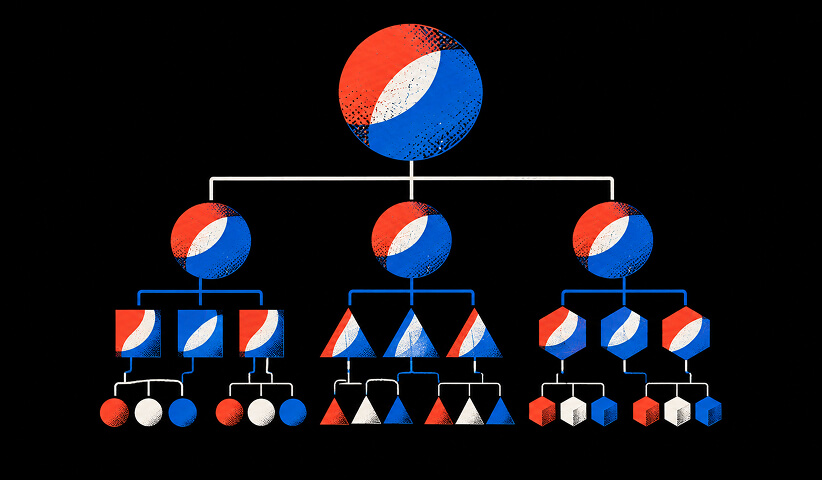
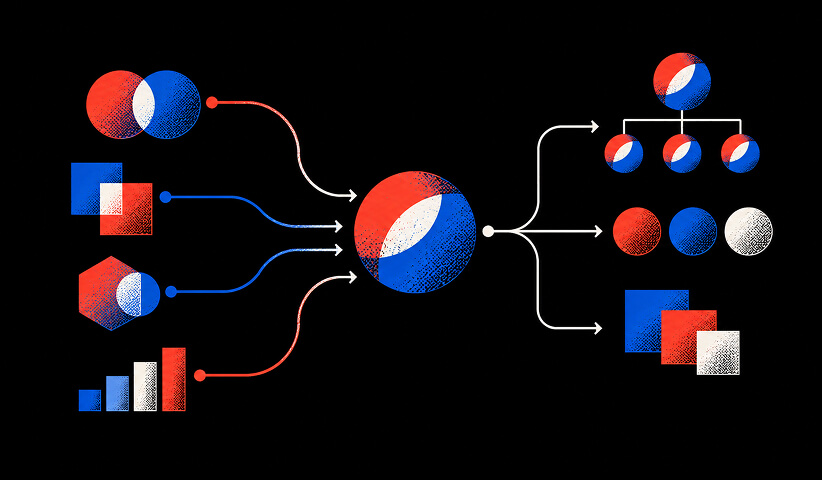
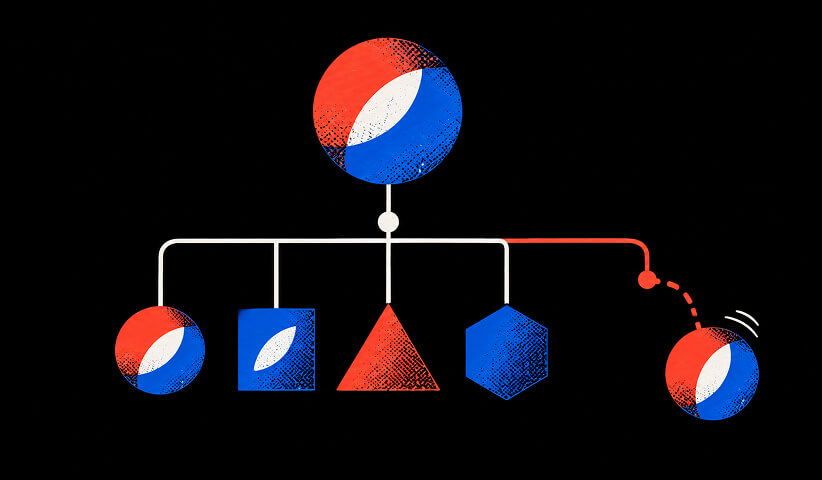
Every brand architecture model relies on a clear nomenclature to function. The standard naming hierarchy distinguishes four levels, each with a different relationship to the parent and a different role in consumer communication.
The corporate or master brand is the top-level entity. It may or may not appear on consumer-facing products. In a Branded House, it's front and center. In a House of Brands, it operates in the background, visible mainly in investor materials and legal filings.
Umbrella or family brands cover a range of products within a category. Heinz uses its name as an umbrella across its entire condiment and food portfolio. The umbrella brand creates a quality halo that benefits every product beneath it.
Endorsed brands carry their own name but display the parent brand as a visible endorser. This is common in B2B brand architecture, where a parent company's reputation for reliability or compliance matters to buyers. The endorsement appears as a "by [Parent]" or "a [Parent] company" descriptor. Marriott's portfolio uses this approach with brands like Courtyard by Marriott and Fairfield by Marriott.
Sub-brands have a defined relationship with the parent but operate with more independence. They share some visual identity cues but build their own positioning. PlayStation within Sony is a sub-brand: it carries Sony's quality signal but has built its own identity, community, and equity over decades.
Individual or product brands stand entirely alone. Tide, Pampers, and Gillette within P&G's portfolio are individual brands. Consumers don't need to know the parent to trust the product.
Practical naming conventions follow from these levels. In a Branded House, the parent name leads: FedEx Express, FedEx Ground. In an endorsed model, the parent name trails: Courtyard by Marriott. In a House of Brands, the parent name is absent from consumer-facing materials entirely.
A few naming rules that hold across models:
- Use the parent brand name on packaging only when it adds credibility the product brand cannot yet claim on its own.
- Establish a naming taxonomy before launching new products so every team follows the same logic.
- Register trademarks at every level of the hierarchy, not just the master brand. Sub-brand names and product names are independently valuable and independently vulnerable.
- Involve IP counsel before finalizing any new brand name, especially in regulated categories where naming restrictions apply.
P&G's naming discipline is worth noting here. Each brand in its portfolio has its own trademark, its own legal entity in key markets, and its own brand guidelines. The parent brand's absence from packaging is a deliberate choice, not an oversight. That separation is what allows P&G to sell or spin off individual brands without disrupting the rest of the portfolio.
How do you decide which brand architecture model fits your portfolio?
The right model follows from your strategic situation, not from what your competitors do or what looks cleanest on a slide. Work through these diagnostic questions before committing to a structure.
- What is your primary strategic goal for the next three to five years? If it's market penetration under a single trusted name, a Branded House accelerates that. If it's entering multiple distinct markets with different buyer expectations, a House of Brands or Hybrid gives you the targeting precision you need.
- How much audience overlap exists across your portfolio? Significant overlap favors a Branded House. Distinct, non-overlapping audiences with different purchase drivers favor independent brands.
- What does your M&A pipeline look like? If you're acquiring brands in adjacent or unrelated categories, a Hybrid or House of Brands gives you integration flexibility. A Branded House works best when acquisitions will be absorbed into the parent identity.
- Are any of your categories regulated? In financial services, healthcare, or pharmaceuticals, a parent brand's regulatory standing can either accelerate or complicate a sub-brand's market entry. Endorsed models are common in these sectors because they transfer compliance credibility while maintaining product-level positioning.
- Do you need price tier separation? General Motors keeps Chevrolet and Cadillac separate because a single GM brand cannot simultaneously signal value and luxury. If your portfolio spans price tiers with different quality signals, brand separation protects margin at the top end.
- What is your realistic governance capacity? A House of Brands requires dedicated brand teams, separate budgets, and separate measurement frameworks for each brand. If your organization lacks that capacity, a simpler architecture will outperform a complex one in practice.
- What is your timeline and budget for migration? Moving from a House of Brands to a Branded House, or vice versa, is a multi-year program. A Hybrid adjustment can often be executed in phases over 12-18 months. A full rebrand of an established House of Brands into a Branded House typically requires three or more years and significant capital.
Pro Tip: In B2B brand architecture, the endorsed model often outperforms both extremes. Enterprise buyers want the parent company's credibility (financial stability, compliance track record, support infrastructure) alongside the product brand's specific positioning. A "by [Parent]" endorsement delivers both without requiring a full Branded House consolidation.
Pro Tip: Protect the master brand where regulatory trust is the primary purchase driver. In sectors like financial services or healthcare, the parent brand's reputation is a compliance asset. Diluting it with unrelated sub-brands in consumer categories can create regulatory and reputational exposure that outweighs any revenue upside.
According to Simon-Kucher's brand architecture framework, effective architecture decisions must be governed across five pillars: positioning, architecture design, equity management, risk management, and organizational alignment. Skipping any one of these in the decision process creates gaps that surface during execution, usually at the worst possible moment.
Is your brand architecture a slide deck or a governed system? Keep reading!
If you need naming rules, endorsement criteria, and a migration roadmap that actually holds, contact us for a free custom quote.
From Decision to Delivery: The 5-Phase Implementation and Governance Model
From decision to delivery: implementation, governance, and KPIs
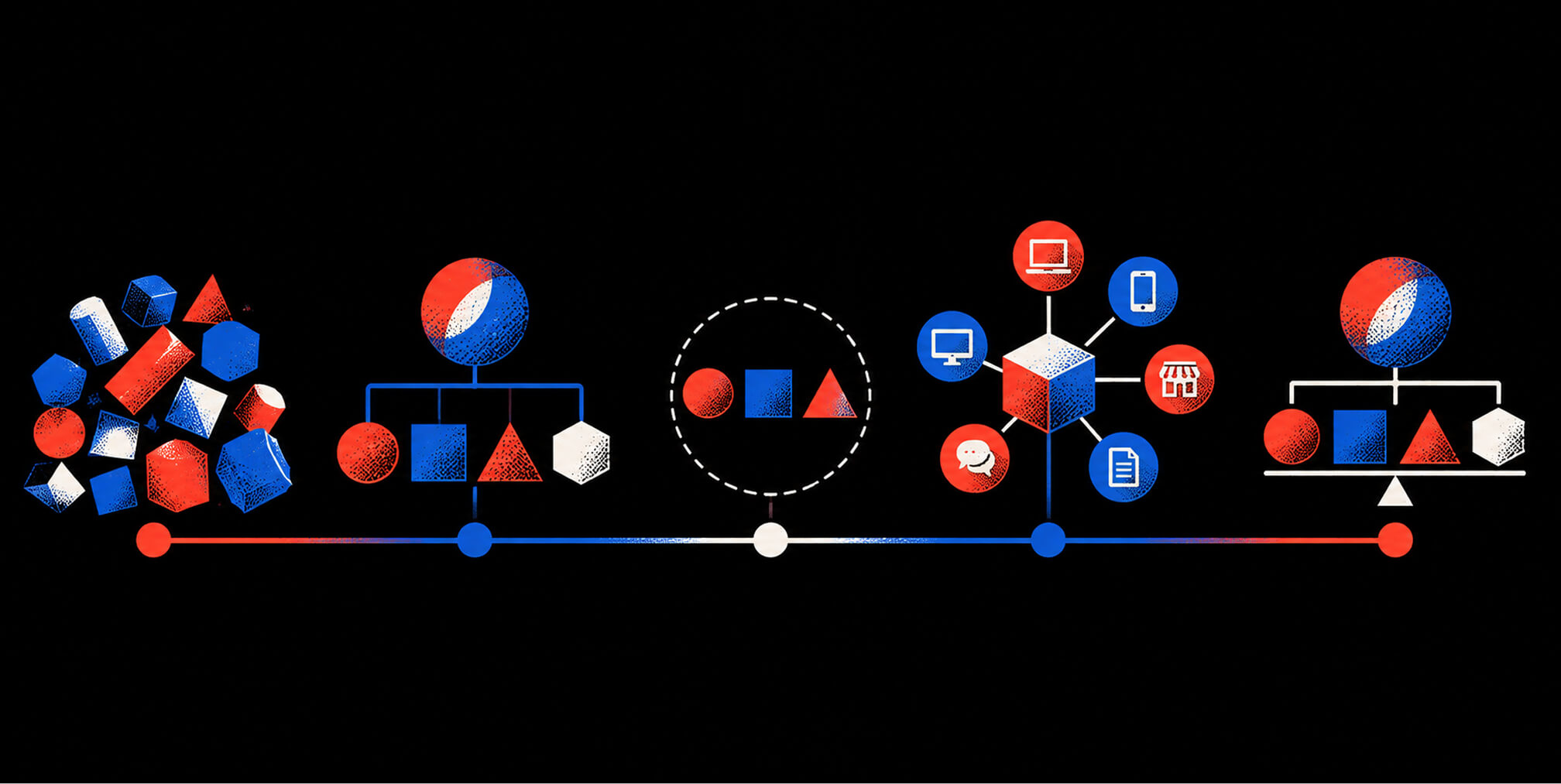
Choosing a model is the easy part. Executing it without losing brand equity, confusing customers, or creating legal exposure requires a phased approach with clear ownership at every stage.
Phase 1: Assess
Audit your current portfolio. Map every brand, sub-brand, product line, and acquired entity. Document how each currently presents to customers, what equity each carries, and where naming inconsistencies exist. This audit typically surfaces more complexity than leadership expects, especially in organizations that have grown through acquisition.
Phase 2: Design
Define the target architecture. Establish the naming taxonomy, visual identity hierarchy, and endorsement rules. Determine which brands will be consolidated, which will be maintained independently, and which will be retired. Produce a brand handbook that codifies these decisions with enough specificity that any team member or agency partner can apply them without ambiguity.
Phase 3: Pilot
Test the new architecture in one market, one product line, or one customer segment before full rollout. Measure customer recognition, purchase intent, and any confusion signals. Pilots catch execution problems before they scale.
Phase 4: Migrate
Roll out the new architecture across all touchpoints: packaging, digital properties, advertising, sales materials, legal filings, and internal communications. Prioritize high-visibility touchpoints first. Build a migration tracker so leadership can see progress against the rollout plan.
Phase 5: Measure
Track brand equity, awareness, and business impact against pre-migration baselines. Adjust governance rules based on what the data shows.
Governance roles and responsibilities:
- Board: Approves architecture changes that affect corporate identity or require capital above defined thresholds.
- CMO: Owns the brand architecture strategy and the brand handbook. Final decision authority on naming and endorsement questions.
- Brand leads: Manage day-to-day compliance with architecture rules across their brand or product line.
- Product owners: Apply naming and identity guidelines to new product launches and updates.
- Legal: Reviews all new brand names for trademark clearance and maintains the trademark portfolio.
- Agency partners: Execute identity design, naming work, and communications aligned to the architecture. A brand strategy agency partnership works best when the agency is involved in the design phase, not just the execution phase.
KPIs worth tracking post-migration include unaided brand awareness by brand level (master, sub-brand, product), brand attribution accuracy (do customers correctly associate products with the right parent?), net promoter score by brand, marketing cost per acquisition across the portfolio, and revenue contribution by brand tier. Review these quarterly for the first two years after a major architecture change.
For resourcing, small portfolios (fewer than five brands) can typically complete a Hybrid or Branded House migration with a core team of three to five people over 12 months. Mid-size portfolios (five to fifteen brands) generally require a dedicated brand program manager, external agency support, and an 18-24 month timeline. Enterprise portfolios with more than fifteen brands or significant M&A activity should plan for a phased multi-year program with a dedicated brand governance function.
Research, Pitfalls, Case Studies, and What Executives Get Wrong

What does the research say about brand architecture and business performance?
The business case for getting architecture right is well-documented. According to Harvard Business School, organizations with a clearly defined brand architecture achieve significantly greater visibility than those without one. That figure reflects the compounding effect of consistent brand presentation across touchpoints: customers recognize the brand faster, trust it sooner, and require less marketing spend to convert.
Dr. Jill Avery's caution about master brand stretch is one of the most practically useful guardrails in the field. The efficiency argument for a Branded House is real, but it has a ceiling. When a master brand spans categories with conflicting quality signals or buyer identities, the brand's meaning erodes. Virgin's success with brand stretch is the exception, not the rule, and it depends on a very specific brand personality that translates across categories.
Simon-Kucher's research ties architecture directly to revenue and margin performance, framing it as a governance-led strategic lever rather than a marketing exercise. Their five-pillar model (positioning, architecture, equity management, risk management, and organizational alignment) is useful for structuring board-level presentations because it connects brand decisions to financial outcomes that CFOs and investors understand.
When building board materials around an architecture decision, pair the HBS visibility statistic with your own brand awareness baseline data to show the gap you're closing. Use the Simon-Kucher pillars as a framework for the governance section of your proposal. Dr. Avery's caution about master brand stretch is useful when you need to defend a Hybrid or House of Brands choice against pressure to consolidate everything under the parent brand for cost reasons.
Common pitfalls and how to avoid them
Most brand architecture failures are predictable. They follow recognizable patterns that show up across industries and company sizes.
- Brand dilution through over-extension: The master brand gets applied to categories where it has no credibility or where its associations actively hurt the new product. Mitigation: run a brand fit assessment before any new product launch or acquisition integration. If the parent brand's core associations conflict with the new category's purchase drivers, use an endorsed or independent brand structure instead.
- Endorsement mismatch: A parent brand endorses a sub-brand whose positioning, quality level, or target audience conflicts with the parent's reputation. This damages both brands. Mitigation: define explicit endorsement eligibility criteria in the brand handbook before any endorsement decision is made.
- Inconsistent customer experience across touchpoints: Customers encounter different brand names, visual identities, or messaging depending on where they interact with the portfolio. This is especially common after M&A. Mitigation: complete a touchpoint audit within the first 90 days of any acquisition and establish a migration timeline with clear ownership.
- Trademark collisions: New brand names or sub-brand names conflict with existing registrations in key markets. Mitigation: involve IP counsel before finalizing any name. Budget for trademark searches in all markets where you intend to operate.
- Unmanaged portfolio drift after M&A: Acquired brands are left to operate independently without clear integration rules, creating a de facto House of Brands with none of the governance infrastructure that model requires. Mitigation: establish an integration playbook before closing any acquisition. Define within 30 days whether the acquired brand will be absorbed, endorsed, or maintained independently.
- Architecture decisions made without legal alignment: Naming and endorsement rules that make sense from a marketing perspective create trademark or regulatory complications that surface months later. Mitigation: legal review is not a final step. Involve IP counsel in the design phase.
Warning signs during rollout that require immediate attention: customer research showing declining brand recognition for the master brand, internal teams applying the architecture inconsistently because the handbook is too vague, and new product launches that don't fit cleanly into the defined hierarchy. Any of these signals that the architecture needs refinement, not just better enforcement.
Short case studies: what leading firms actually did
FedEx and the power of consolidation. When FedEx acquired Caliber System in 1998, it inherited a portfolio of logistics brands with no connection to the FedEx name. Rather than maintain a House of Brands, FedEx rebranded all subsidiaries under the FedEx master brand. The result was a unified customer experience across every service line and a significant reduction in marketing complexity. The lesson for growth-stage companies: if your parent brand already carries strong equity and your acquired businesses serve the same core customer need, consolidation under the master brand accelerates trust transfer and reduces long-term marketing cost.
Procter & Gamble and the discipline of independence. P&G's House of Brands model is not accidental. It reflects a deliberate strategy to own multiple positions in the same category without cannibalizing any of them. Tide and Gain both clean clothes, but they target different buyers with different price sensitivities and brand personalities. Keeping them separate allows P&G to maximize shelf space, run distinct promotional strategies, and isolate any product-level crisis. The governance infrastructure required to run this model is substantial, but the revenue protection it provides justifies the investment at P&G's scale.
Nestlé's Hybrid in practice. Nestlé applies its master brand selectively. The Nestlé name appears on products where its quality and safety associations add value (Nestlé Pure Life, Nestlé Toll House). But Nespresso, KitKat, and Purina operate with significant independence because their brand equities are strong enough to stand alone and their category associations would dilute the Nestlé master brand if tightly linked. The lesson: a Hybrid model requires explicit rules about when the parent brand appears and when it stays in the background.
General Motors and tier separation. GM's decision to maintain Chevrolet, Buick, GMC, and Cadillac as independent brands reflects a fundamental truth about price tier management: a single brand cannot simultaneously signal mass-market value and premium luxury without losing credibility at both ends.
What executives consistently get wrong about brand architecture
Most executives treat brand architecture as a branding exercise. It's actually a governance decision with branding implications. The organizations that execute architecture changes successfully are the ones that establish ownership, decision rights, and measurement frameworks before they touch a single logo or name.
The most common mistake we see at the strategy stage is choosing a model based on what looks elegant in a presentation rather than what the organization can actually govern. A Hybrid architecture looks sophisticated on a slide. In practice, it requires someone to make judgment calls every time a new product launches, a new market is entered, or an acquisition closes. If that person doesn't exist or doesn't have clear authority, the architecture drifts within 18 months.
Three heuristics that hold up across client engagements:
- Protect the master brand wherever regulatory trust is the primary purchase driver. In financial services, healthcare, and enterprise software, the parent brand's compliance and stability signals are worth more than any sub-brand's positioning flexibility.
- Use endorsed brands to test new segments before committing to full independence. An endorsed brand gives you market data on whether the new positioning resonates without the full cost of building an independent brand from scratch.
- Never migrate architecture without a governance owner. The CMO can set the strategy, but someone needs to own the day-to-day decisions. At growth-stage companies, this is often a brand director or VP of brand. Without that owner, the architecture becomes a document rather than a living system.
For growth-stage companies specifically, the architecture decision often comes earlier than expected, typically triggered by a second product launch, a first acquisition, or a funding round that brings new investors with opinions about brand positioning. The Branded Agency typically advises clients at this stage to start with the simplest architecture that fits their current portfolio and build governance infrastructure that can accommodate the next two to three moves, rather than designing for a portfolio they don't yet have.
The Branded Agency helps you move from architecture decision to execution
Choosing the right brand architecture model is only half the work. The other half is building the governance, naming system, identity hierarchy, and migration roadmap that turn the decision into a functioning portfolio strategy.
The Branded Agency works with growth-stage and enterprise clients to design and implement brand architecture strategies that align marketing, legal, product, and M&A teams around a single, coherent portfolio structure. Our work covers brand strategy, naming conventions, endorsement rules, brand handbooks, migration roadmaps, and measurement frameworks. We build systems that your teams can govern without returning to the agency for every new product launch or acquisition.
If you're preparing for a funding round, integrating an acquisition, or launching a second product line and need a clear architecture before you go to market, contact The Branded Agency to start with a brand architecture assessment.
Sources
- How to Develop an Effective Brand Architecture Strategy
- Brand Architecture Strategy: Unlocking the power of multi-brand architecture | Simon-Kucher
- What is Brand Architecture? Definition, Models, and Examples - The Branding Journal
- Brand architecture
Recommended

Quincy Samycia
As entrepreneurs, they’ve built and scaled their own ventures from zero to millions. They’ve been in the trenches, navigating the chaos of high-growth phases, making the hard calls, and learning firsthand what actually moves the needle. That’s what makes us different—we don’t just “consult,” we know what it takes because we’ve done it ourselves.
Want to learn more about brand platform?
If you need help with your companies brand strategy and identity, contact us for a free custom quote.
We do great work. And get great results.
+2.3xIncrease in revenue YoY
+126%Increase in repurchase rate YoY



+93%Revenue growth in first 90 days
+144% Increase in attributed revenue




+91%Increase in conversion rate
+46%Increase in AOV



+200%Increase in conversion rate
+688%Increase in attributed revenue