How We Used a Free-Plus-Shipping Funnel to Introduce an Entirely New Product Category
09/10/2026
Marketing Strategy
How The Branded Agency used sponsored content, third-party credibility, and a free-plus-shipping funnel to help NOWATA grow from $2,000 to $85,000 in monthly sales in six months.
Some products are difficult to market because they have too much competition.
.png)


The Challenge of a Product Category No One Recognized Yet, and Finding the Brand Truth
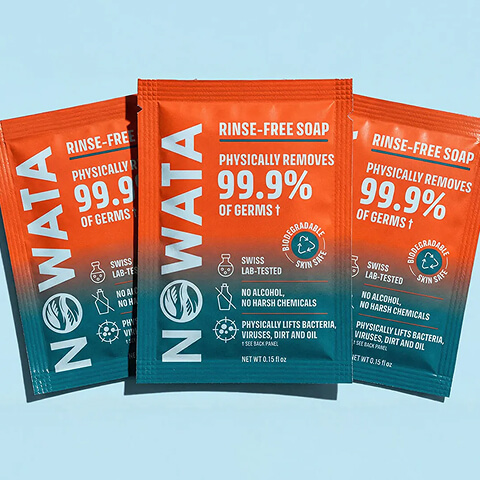

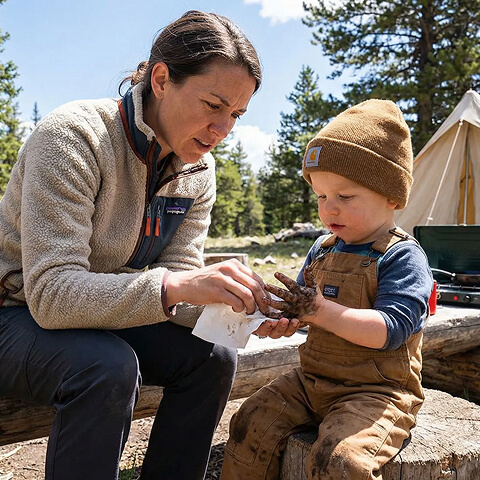
Others are difficult to market because customers do not immediately understand what they are. NOWATA faced the second problem. The company had developed a doctor-founded, plant-based soap that physically removes germs without water, rinsing or wiping. It was independently lab-tested, patent-pending and designed for situations where proper handwashing was not available. But "rinse-free soap" was not an established category.
Most consumers understood two familiar options: wash with soap and water, or use hand sanitizer when a sink is unavailable. NOWATA introduced a third option. The product worked differently from both, which meant the marketing had to do more than generate attention. It had to help customers understand a new behaviour, believe the underlying science and experience the product for themselves.
The Branded Agency developed a free-plus-shipping customer-acquisition funnel built around sponsored content, third-party credibility, a dedicated landing page and an immediate full-product upgrade. The campaign became one component of a larger Brand-Backed Performance™ system that helped NOWATA grow from approximately $2,000 to $85,000 in monthly sales in six months. Here is how we approached it.
The Challenge: A Differentiated Product People Did Not Understand
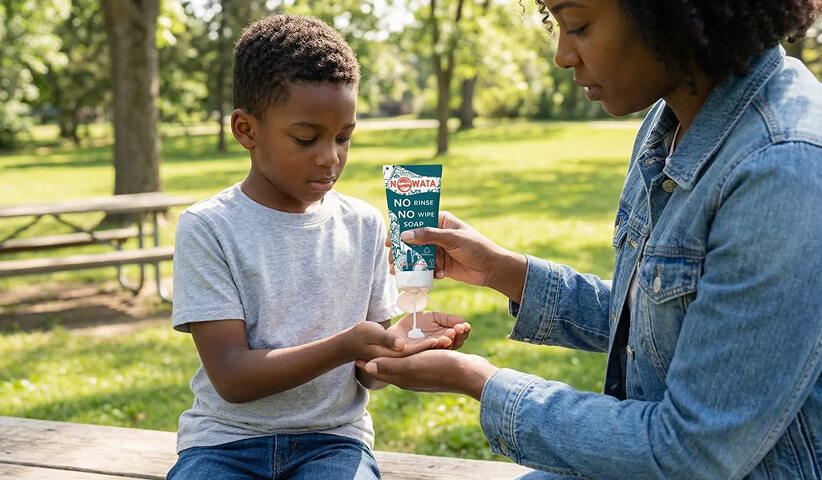
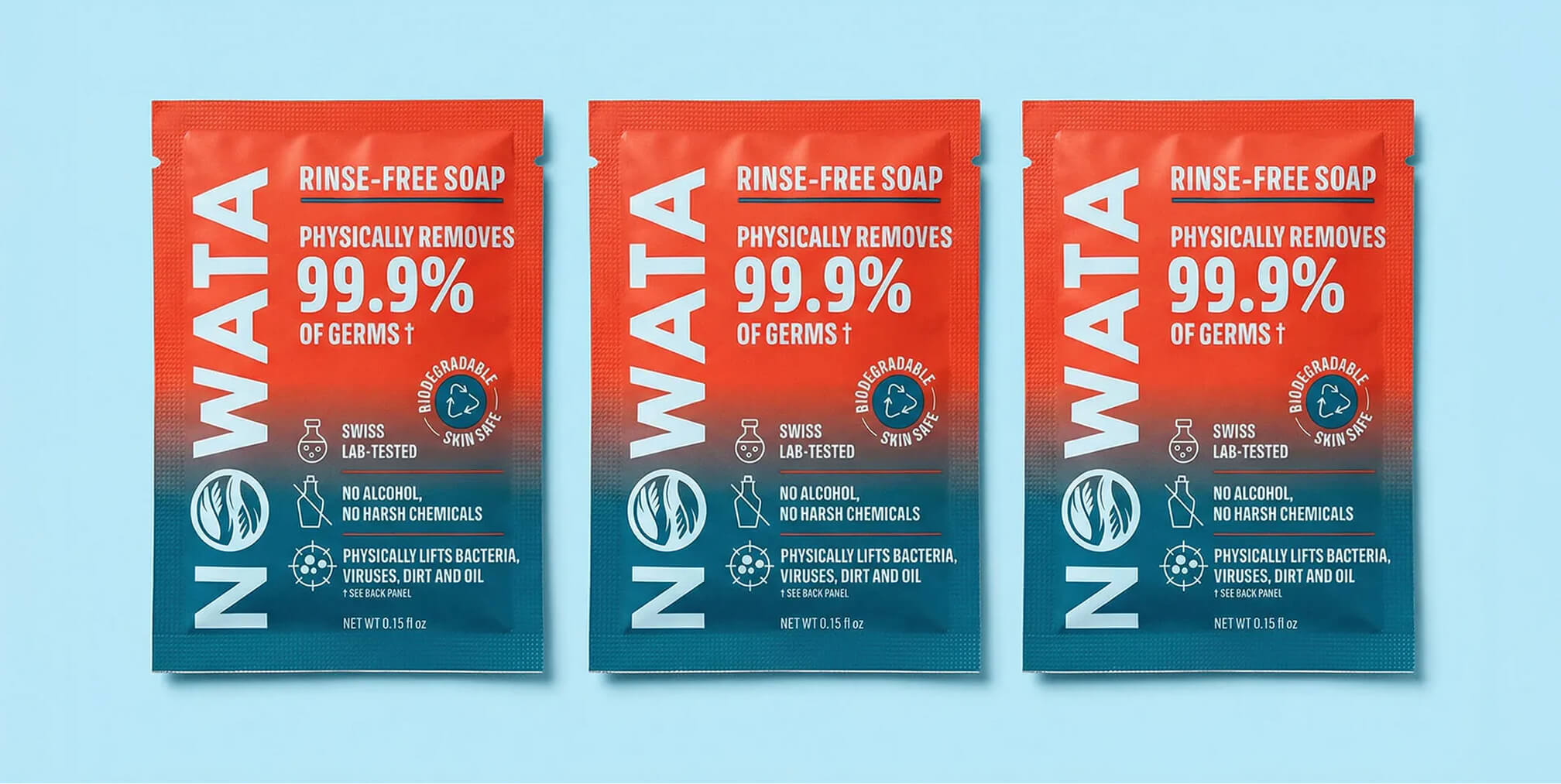
NOWATA was created by Dr. Ruslan Maidans and Dr. Yalda Shahriari—doctors, scientists and parents looking for a better way to clean their children's hands when soap and water were unavailable. Unlike hand sanitizer, NOWATA does not rely on alcohol to kill susceptible germs. Its patent-pending formula bonds with dirt, oils and microbes, forming visible clumps that can be brushed away from the skin. Apply it. Rub your hands together. Brush away the clumps. No water. No rinsing. No towel. The product was legitimately differentiated, but that created several marketing challenges.
Customers had no existing reference point. "Rinse-free soap" was unfamiliar. New customers naturally wanted to know: is this a soap or sanitizer? How can soap work without water? Where do the germs go? What are the visible clumps? Is it safe for children? Does it leave a residue? Has it been independently tested? A conventional product advertisement could attract attention, but it could not answer all those questions.
The product needed to be demonstrated. NOWATA's mechanism is easier to understand when someone sees or experiences it. Explaining "clumping technology" is less persuasive than watching the product collect dirt and residue into visible peelings that can be brushed away.
The scientific claims needed context. NOWATA was evaluated by Microbe Investigations AG, a Swiss laboratory and ETH Zürich spin-off. In controlled hand-use simulations, the formula physically removed more than 99.9% of E. coli and murine norovirus particles, a commonly used surrogate for human norovirus. That was powerful proof, but it needed to be presented carefully. Physical removal during cleansing is not the same as disinfecting, treating illness or preventing disease.
The customer had to change an established habit. Parents already carried sanitizer and wipes. NOWATA was asking them to adopt something unfamiliar. A new product category cannot rely entirely on a better feature list. The customer needs to understand why the existing solution is incomplete, when the new behaviour is useful and why trying it is worth the effort.
Start With the Brand Truth
At The Branded Agency, we use our Golden Spiral™ methodology to find the point where the brand's truth, the customer's problem and the market opportunity intersect. For NOWATA, that alignment looked like this:
The brand truth: NOWATA was created by doctors and parents who wanted a practical way to clean their children's hands when a sink was unavailable.
The customer problem: parents regularly encounter moments when their children need clean hands but soap and running water are nowhere nearby — after leaving a playground, before eating in the car, while travelling, during an outdoor activity, after touching shared public surfaces, or when wipes or sanitizer do not feel sufficient.
The market opportunity: NOWATA was not merely another hand sanitizer. It could establish a distinct category around real cleaning without a sink. That led us to a clearer market position: "Not a replacement for handwashing. A solution for everywhere sinks aren't." This distinction helped us avoid positioning NOWATA as an unrealistic substitute for every form of handwashing. Instead, it gave the product a specific and credible role in a parent's daily routine.
Free Brand Health Audit
Make sure your brand is built to sell
Search has changed. Your customers aren't just Googling anymore. They're asking ChatGPT, Perplexity, Gemini and other AI platforms what to buy, who to trust and which brands they should consider.
If your brand isn't showing up clearly in those answers, you're already losing opportunities. Our free Brand Health Audit shows you where your brand stands across traditional search, AI search and brand positioning.

Sample brand audit
Live preview
Traditional search
72
AI search (GEO)
34
Brand positioning
58
Why Sponsored Content Worked, and the Four Jobs of Third-Party Credibility

Why We Used Sponsored Content
The challenge with a new product category is that the customer needs more education than a standard social advertisement can provide. A short ad might communicate the offer, but it cannot easily explain why hand sanitizer and rinse-free soap are different, how the product physically removes contaminants, why parents developed it, how the independent testing was conducted, when someone would use the product, or why a customer should trust an unfamiliar company.
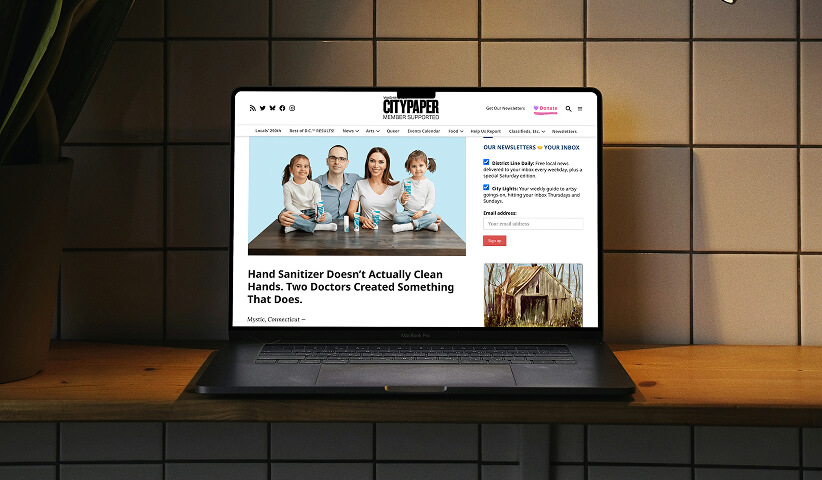
We therefore purchased a sponsored-content placement with Washington City Paper, using the same Brand-Backed Performance™ approach we've applied for other clients introducing unfamiliar products. The resulting article, "Why Kids Keep Getting Sick—and the Simple Hand-Cleaning Mistake Most Parents Make", approached the campaign through a problem parents already understood: children constantly touch shared surfaces and then touch their faces, food and belongings.
Rather than opening with an unfamiliar product, the article opened with a familiar concern. This was a deliberate funnel decision. The customer journey began with the problem, moved into education and introduced NOWATA as a possible solution only after the need had been established. The sponsored relationship was clearly disclosed. This was advertiser-funded content, not independent editorial coverage. That transparency matters when using a publisher partnership to introduce a product.
The Role of Third-Party Credibility
NOWATA was still building awareness. Most of the campaign audience had never encountered the company or the concept of rinse-free soap. Publishing the story through an established media platform gave the campaign a more credible educational environment than an unknown brand advertisement could create on its own. The article had four specific jobs.
1. Capture attention through the customer's problem. "Why kids keep getting sick" is more immediately relevant to a parent than "Introducing a new rinse-free soap." The headline entered an existing conversation instead of asking the customer to care about a new product category immediately.
2. Make the problem more specific. Parents already know that children encounter germs. The content helped connect that general concern to specific situations where soap and water are unavailable and sanitizer may not provide the type of cleaning the parent wants.
3. Explain the new mechanism. Before asking readers to purchase, the article could establish the idea that cleaning and disinfecting are not necessarily identical actions. That created the conceptual opening for a product designed to physically lift and remove dirt and contaminants from the skin without water.
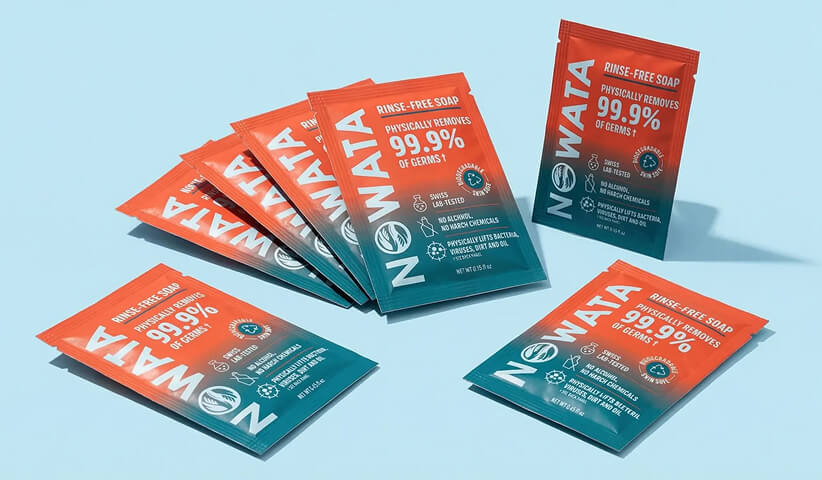
4. Introduce a low-risk way to experience the product. Instead of requiring readers to commit to a full-size purchase, the article invited them to claim one of 500 samples and cover only the shipping cost. Readers who wanted to try the product were directed to the dedicated NOWATA free-sample landing page.
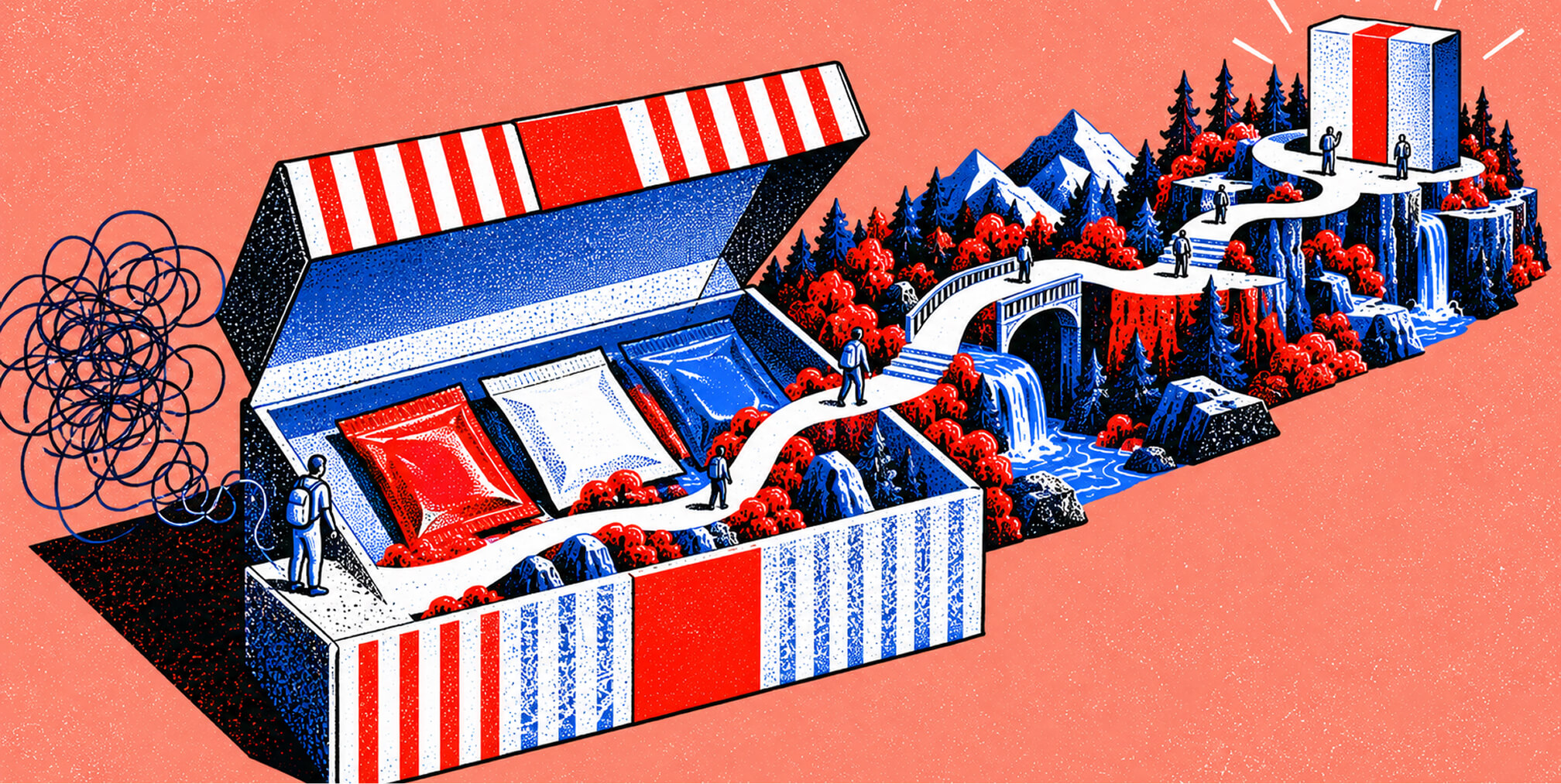
The funnel became: Paid social distribution → Sponsored article → Free-sample landing page → Sample or full bundle → Retention marketing.
Have a differentiated product customers don't quite get yet? Keep reading!
If you need a funnel that turns product confusion into trial and repeat customers, contact us for a free custom quote.
The Free-Plus-Shipping Offer and the Eight-Step Landing Page That Completed the Education
Why We Chose a Free-Plus-Shipping Offer
A free-plus-shipping campaign is not appropriate for every product. It is most effective when experiencing the product removes an important purchasing objection. That was true for NOWATA. The primary barrier was not simply price. It was uncertainty: does it really work without water? What does it feel like? Does it leave my hands sticky? What happens to the dirt? Will my child tolerate it? Is it more practical than wipes or sanitizer?
The fastest way to resolve those questions was to put the product in the customer's hands. The introductory offer included three unscented NOWATA sachets for free, with the customer paying $5.99 for shipping. There was no subscription, and the limited run was capped at 500 samples. This structure reduced the perceived risk while giving the campaign a concrete reason to act. The offer was not simply "save 20%." It was an invitation to experience an unfamiliar product in the situations for which it was designed before committing to a full-size purchase. That is a much stronger offer for a category-creating product.
The Landing Page Had to Complete the Education
Visitors who clicked from the Washington City Paper article did not arrive on the NOWATA homepage. They arrived on a dedicated 500 Free Samples campaign page designed around the exact promise introduced in the article. This message continuity is an important part of Brand-Backed Performance™. The advertisement, sponsored article and landing page should not feel like three separate campaigns. Each stage should continue the same story while adding another layer of proof.
The landing page opened with "Clean Hands Anywhere, On Us!" It then immediately clarified the product, audience and offer: "A doctor-founded, rinse-free soap for parents on the go. 500 free samples available—just cover shipping." The visitor did not need to determine whether they had reached the correct page or search for the promotion.
The Landing-Page Conversion Sequence
The page was built to answer questions in the order they were most likely to occur, following a conversion-optimized structure.
1. Restate the offer. The page immediately presented the free sample, $5.99 shipping charge, lack of subscription and limited availability. This prevented the visitor from feeling misled after clicking through from an article promoting free samples.
2. Establish the core proof. Before introducing a lengthy product explanation, the page highlighted four essential differentiators: physically removes more than 99.9% of tested germs, independently tested by a Swiss laboratory, plant-based and biodegradable, and no water required.
3. Offer two purchase paths. The free NOWATA sampler included three unscented sachets, free product, $5.99 shipping and no subscription. The full NOWATA experience included four sample sachets, two full-size soaps, a silicone travel bottle, free shipping, for $39.99 total. This created an immediate upgrade opportunity without hiding the free-sample option. Customers who remained uncertain could try the sampler. Customers who already understood the value could purchase a complete system.
4. Explain what was inside. The page identified key ingredients and connected the formulation to NOWATA's plant-based positioning. This was particularly important for parents evaluating a product intended for use around children.
5. Demonstrate the behaviour. The product mechanism was reduced to three steps: apply the product, rub until the clumps form, and brush the clumps away. That made a technically unfamiliar product feel simple.
6. Introduce independent testing. The page explained that NOWATA had been evaluated by Microbe Investigations AG and reported the results for E. coli and a norovirus surrogate. It also included essential context: the test measured physical removal during cleansing, NOWATA is not a disinfectant, the results do not imply disease prevention, and the product is intended for hand cleansing. The proof was strong because it was specific, substantiated and appropriately qualified.
7. Connect the product to real-life situations. The page identified its clearest customer groups: parents of toddlers and young children, families who travel or frequently eat away from home, people who dislike sticky sanitizer, parents concerned about hand-to-mouth contact, and anyone looking for cleaning when a sink is unavailable. This helped readers move from understanding the technology to imagining when they would use it.
8. Introduce the founders. NOWATA was created by doctors who were also parents. That detail helped connect technical credibility with a relatable origin story. The product was not created in search of an abstract market opportunity. It came from a problem the founders experienced with their own families.
Why the Upgrade Was Built Into the Page
A free-plus-shipping campaign can generate a high volume of first-time customers, but shipping a very low-cost sample may not produce attractive initial economics on its own. That is why the upgrade was not treated as an afterthought. The full experience gave higher-intent visitors a way to move directly from curiosity to adoption. For $39.99, the customer received two full-size NOWATA soaps, four sample sachets, a reusable silicone travel bottle, and free shipping. The offer was designed around how the product would actually be used. Customers could keep the full-size products at home and use the smaller bottle or sachets while travelling. The bundle therefore increased order value while also helping the customer integrate NOWATA into their routine. A strong upgrade should not be an unrelated product added merely to increase revenue. It should help the customer achieve the original outcome more completely.
The Growth System, the Broader Results, and When to Use This Funnel Model
The Funnel Was Part of a Larger Growth System
The free-plus-shipping campaign was one component of a broader engagement between NOWATA and The Branded Agency. We did not begin by increasing advertising spend. We began by making the product easier to understand and the brand easier to trust. Our Brand-Backed Performance™ process moved through three phases.
Phase 1: Brand foundation. We strengthened the core value proposition, outcome-led messaging, the distinction between sanitizer and rinse-free soap, the hierarchy of scientific proof, the visual and verbal identity, and the consistency between advertising and the website. This improved the foundation before additional traffic was introduced.
Phase 2: Performance marketing. Once the story was clearer, we built acquisition campaigns around more focused creative, stronger audience-to-message alignment, dedicated landing pages, educational sponsored content, product demonstrations, free-plus-shipping acquisition, and full-product upgrades. Every touchpoint reinforced the same core promise.
Phase 3: Retention marketing. The initial order was only the beginning of the customer relationship. We developed email flows and automations supporting welcome, abandoned checkout, post-purchase education, replenishment, cross-selling, win-back, and repeat purchasing. The sample campaign created the first product experience. Retention marketing was responsible for turning that trial into a longer customer relationship.
The Broader Results
Across the first six months of the Brand-Backed Performance™ engagement, NOWATA achieved growth from approximately $2,000 to $85,000 in monthly sales, 1,800% growth in sessions, 1,500% growth in total sales, 1,500% growth in orders, a sustained ecommerce conversion rate above 3% with conversion peaks above 3.5%, a 487% year-over-year increase in conversion rate, and approximately 4,500% year-over-year sales growth.
These are overall engagement results and should not be attributed exclusively to the Washington City Paper placement or free-sample landing page. The growth came from the combined effect of clearer positioning, stronger creative, paid acquisition, funnel development, conversion optimization and retention marketing. The free-plus-shipping campaign mattered because it addressed one of the brand's most important barriers: customers needed to experience the product before fully understanding why it was different.
Why This Funnel Worked
Each stage had a distinct responsibility.
| Funnel Stage | Primary Responsibility |
|---|---|
| Paid publisher content | Reach new audiences with a relevant problem |
| Sponsored article | Educate customers and establish context |
| Free sample | Reduce the risk of trying an unfamiliar product |
| Campaign landing page | Explain the mechanism and present proof |
| Full-experience offer | Convert higher-intent visitors at a greater order value |
| Product experience | Demonstrate the product's differentiation |
| Retention system | Turn trial customers into repeat customers |
Many campaigns fail because every asset is expected to do everything. The ad must attract attention, explain the category, prove the science, introduce the brand and close the sale—all within a few seconds. We distributed those responsibilities across the funnel. That allowed the customer to move from concern to curiosity, from curiosity to understanding, and from understanding to action.
When Should a Brand Use a Free-Plus-Shipping Funnel?
A free-plus-shipping campaign may be worth testing when the product is difficult to understand without experiencing it, trial can resolve a major customer objection, the sample cost is low enough to support acquisition, the full-size product has healthy margins, the business has a credible retention strategy, the product naturally supports repeat purchases, the company can accurately calculate its allowable acquisition cost, and a logical bundle or upgrade can improve initial order value.
It is less suitable when shipping costs make the offer economically unsustainable, the product is unlikely to generate repeat purchases, the sample does not provide enough product to demonstrate the benefit, the full-size upgrade feels unrelated or misleading, fulfilment cannot handle the campaign volume, or the brand has no plan for nurturing sample customers. A free sample is not the business model. It is the entry point into a larger customer-acquisition and retention system.
Brand First. Then Performance. Then Retention.
NOWATA already had a differentiated product. What it needed was a clearer story and a system capable of carrying that story from the first impression through the first purchase and into the long-term customer relationship. That is the purpose of Brand-Backed Performance™. We build the brand foundation first. We scale the message through performance marketing. Then we use retention to compound the value of every acquired customer.
For NOWATA, that meant turning an unfamiliar product into a clear customer promise: "Real cleaning when a sink is not available." It meant using sponsored educational content to introduce the problem, a dedicated free-plus-shipping landing page to reduce trial risk and a full retention system to continue the relationship after the first order.
Six months. Approximately $2,000 to $85,000 per month. Same core product. A much stronger story and growth system. If your consumer brand has a differentiated product but customers do not immediately understand why it matters, contact The Branded Agency. We can help you clarify the story, build the funnel and develop a customer-acquisition system designed to scale.
Results reflect a specific client engagement and are not a guarantee of future performance. Scientific and product claims should be reviewed against applicable testing, advertising, regulatory and consumer-protection requirements before publication.

Quincy Samycia
As entrepreneurs, they’ve built and scaled their own ventures from zero to millions. They’ve been in the trenches, navigating the chaos of high-growth phases, making the hard calls, and learning firsthand what actually moves the needle. That’s what makes us different—we don’t just “consult,” we know what it takes because we’ve done it ourselves.
Want to learn more about brand platform?
If you need help with your companies brand strategy and identity, contact us for a free custom quote.
We do great work. And get great results.
+2.3xIncrease in revenue YoY
+126%Increase in repurchase rate YoY

+93%Revenue growth in first 90 days
+144% Increase in attributed revenue


+91%Increase in conversion rate
+46%Increase in AOV


+200%Increase in conversion rate
+688%Increase in attributed revenue