LinkedIn Ads Strategy for B2B Marketers: Pipeline-First Playbook
09/16/2026
Marketing Services
A pipeline-first LinkedIn Ads playbook for B2B marketers — funnel mapping, audience building, ad formats, budgets, tracking, and advanced ABM tactics.
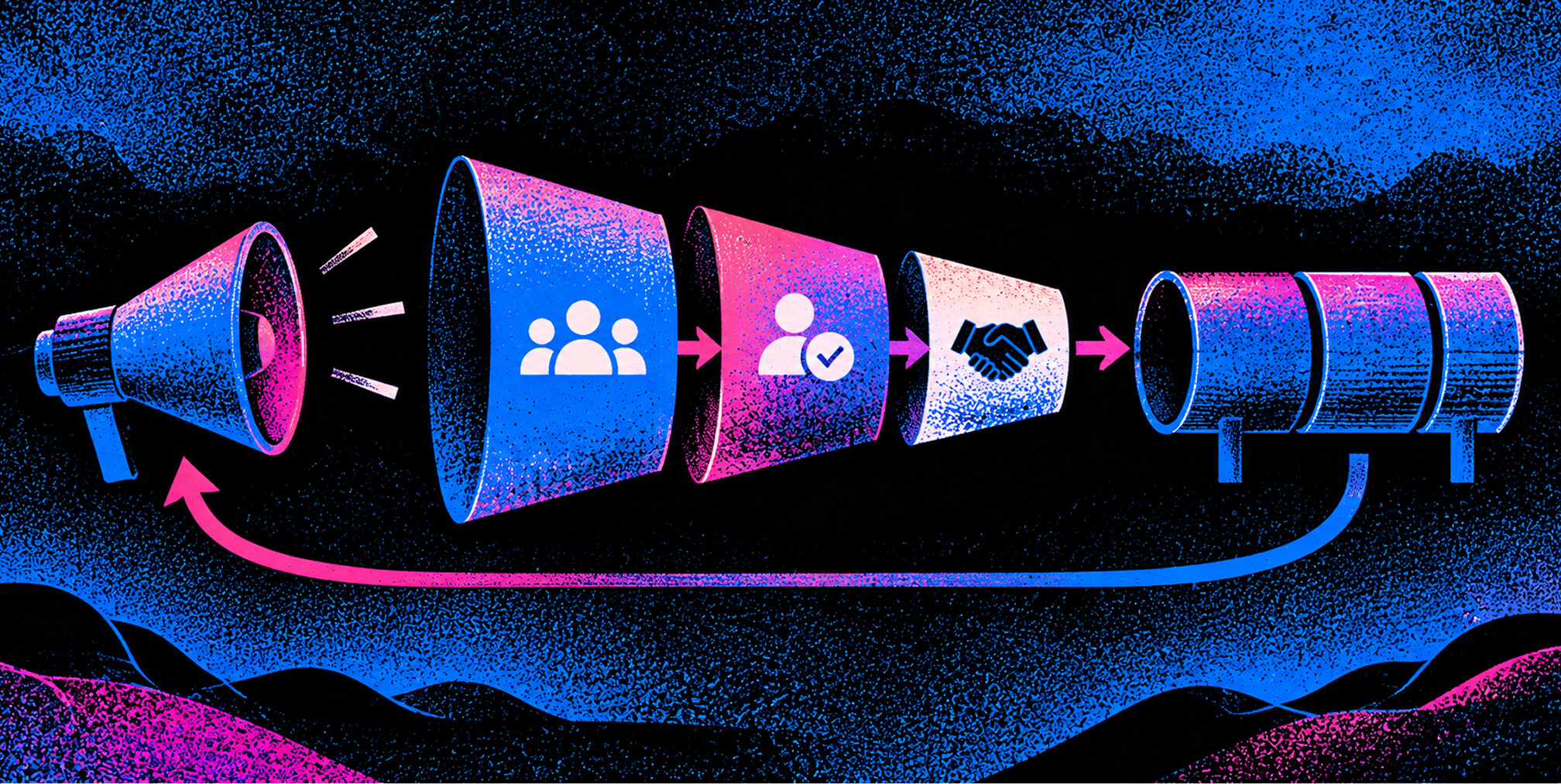
A high-performing LinkedIn ads strategy follows five steps: map each campaign to a funnel stage, build stacked audiences and ABM lists, select ad formats by stage, set learning budgets with a structured bidding sequence, and feed downstream conversion events back into Campaign Manager. Every step depends on three foundational assets being in place before you spend a dollar.
.png)


Why LinkedIn Works for B2B, and Mapping Objectives to Funnel Stages

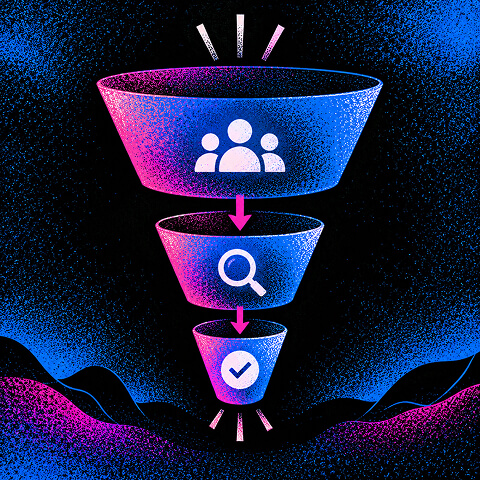
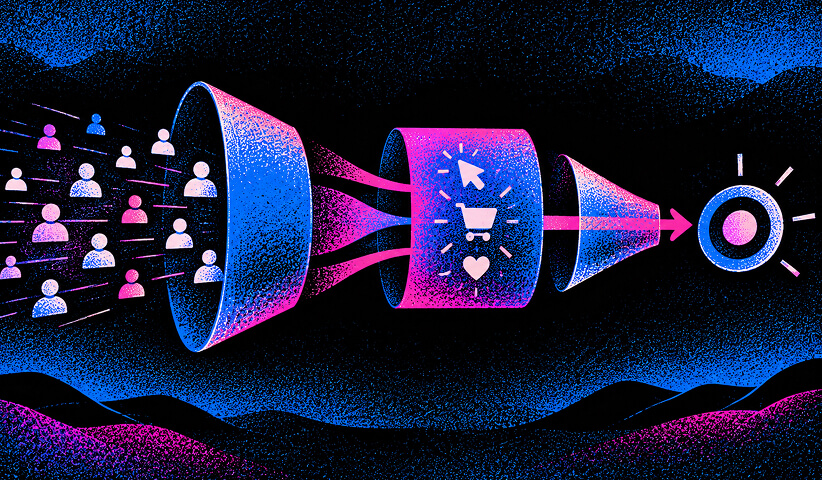
- Map objectives to funnel stage. Brand awareness belongs at TOFU, engagement and consideration at MOFU, Lead Gen Forms and conversion campaigns at BOFU. Choosing the wrong objective misaligns LinkedIn's bidding signals from day one.
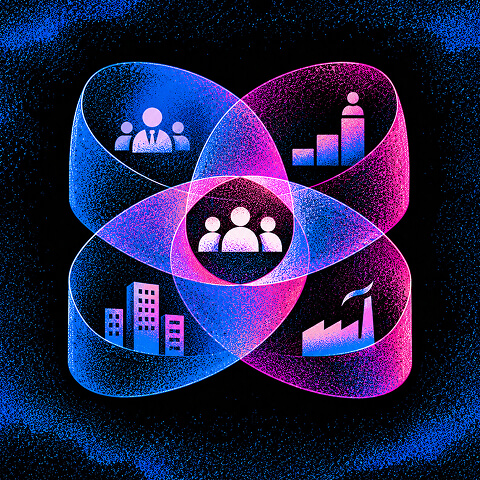
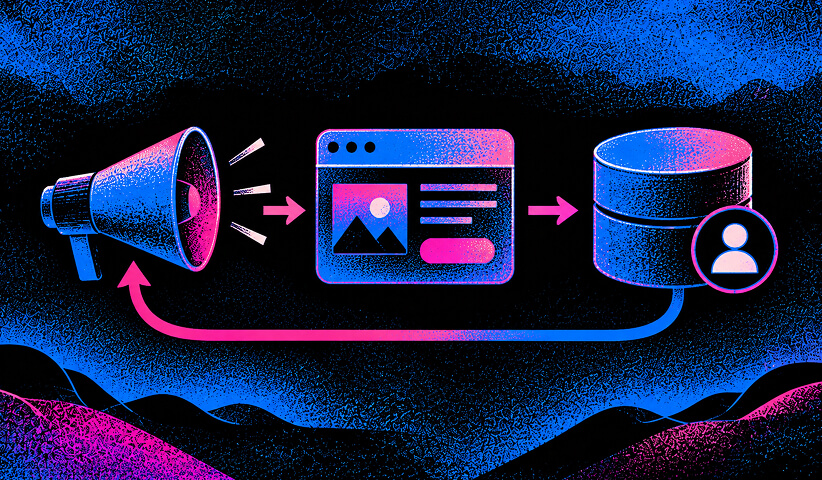
- Build stacked audiences and ABM lists. Layer job function, seniority, company size, and industry in LinkedIn Campaign Manager. Upload company lists via LinkedIn Matched Audiences with platform limits for account-based targeting.
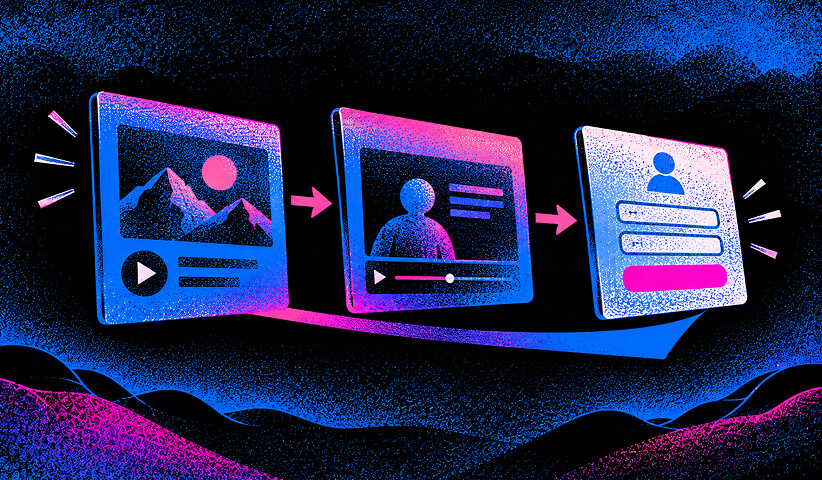
- Pick formats by funnel stage. Single-image Sponsored Content and Thought Leader Ads for TOFU, Document Ads and video for MOFU, Lead Gen Forms and Conversation Ads for BOFU.
- Set testing budgets and a bidding sequence. Start with Maximum Delivery for several weeks, then shift to Target Cost once you have a reasonable number of conversions. Budget at least a moderate amount per month to generate meaningful signal.
- Measure pipeline and feed conversions back. Install the LinkedIn Insight Tag on day one, define conversion rules (MQL, demo request, pricing page), and pipe SAL/SQL events back via Conversions API or CRM import.
Pro Tip: Install the LinkedIn Insight Tag before you build a single campaign. Without it, you cannot define conversion rules, run retargeting, or give the algorithm the downstream signals it needs to optimize toward pipeline rather than clicks.
Why LinkedIn is the right paid channel for B2B, and when it isn't
LinkedIn is the only paid channel where you can simultaneously target by job title, seniority, company size, and department. That combination makes it uniquely powerful for reaching verified decision-makers and buying committees, and uniquely expensive when the targeting is loose.
The case for LinkedIn is clearest when your average contract value is high enough to absorb a premium CPM. LinkedIn reported that companies advertising on the platform see stronger pipeline results and higher pipeline efficiency at sustained investment levels. Those numbers reflect what happens when a B2B brand consistently reaches the right buying committee rather than spraying impressions across a broad consumer audience.
Choose LinkedIn when:
- You need to reliably reach VP-level and C-suite decision-makers in specific industries.
- Your deal size or ACV justifies a $50-$120+ CPM.
- You're running an ABM program that requires account-level targeting and sequenced messaging.
- You want to influence a multi-stakeholder buying group, not just one contact.
Skip LinkedIn (or deprioritize it) when:
- Your ACV is under roughly $5,000 and the math on CPL doesn't close.
- Your goal is direct-response consumer conversion at volume.
- You haven't yet validated your offer, landing page, or sales follow-up process.
LinkedIn ads accelerate an existing funnel. They amplify strong offers and working nurture flows, but they will not fix a weak offer, a thin landing page, or a sales team that fumbles follow-up.
A useful framing: LinkedIn is a premium access fee. You pay it because the audience precision is unmatched in B2B paid media. When your B2B paid media strategy is built around pipeline quality rather than CPL minimization, that premium almost always pays back.
How do you map campaign objectives to funnel stages on LinkedIn?
The objective you choose in Campaign Manager determines which ad formats are available, how LinkedIn's algorithm bids, and what you can measure. Getting this wrong is the single most common reason LinkedIn campaigns underperform.
| Funnel Stage | Campaign Objective | Recommended Formats | Primary KPIs | Min. Data Threshold |
|---|---|---|---|---|
| TOFU | Brand Awareness / Reach | Single Image, Video, Thought Leader Ads | Impressions, Reach, Video Views | No conversion minimum |
| MOFU | Engagement / Website Visits | Document Ads, Carousel, Video | CTR, Engagement Rate, Page Views | 20-30 clicks/week for learning |
| BOFU | Lead Gen / Website Conversions | Lead Gen Forms, Conversation Ads, Single Image | CPL, Form Completion Rate, MQL Rate | ~50 conversions/month per campaign |
A few practical notes on this table. The BOFU row is where most B2B teams underinvest in setup. LinkedIn's algorithm needs enough conversions per campaign per month to exit the learning phase and optimize reliably. If your budget can't generate that volume, you're better off running a Website Visits objective and measuring downstream in your CRM rather than forcing a conversion campaign that never learns.
Lead Gen Forms vs. landing pages is a real strategic choice, not a default. Lead Gen Forms typically reduce CPL because they pre-fill member data and remove friction. The tradeoff: downstream SQL conversion from form-sourced leads is typically about half the rate of landing-page-sourced leads. Forms are right for volume-first MOFU offers (content downloads, webinar registrations). Landing pages are right for high-intent BOFU offers where you want prospects to self-qualify. For a deeper look at what makes those pages convert, the high-converting landing page checklist covers the 14 elements that matter most.
Before you launch any conversion campaign, two prerequisites must be met: the LinkedIn Insight Tag must be installed and firing correctly, and at least one conversion rule must be defined in Campaign Manager. Without both, LinkedIn cannot optimize toward your actual business goal.
Free Brand Health Audit
Make sure your brand is built to sell
Search has changed. Your customers aren't just Googling anymore. They're asking ChatGPT, Perplexity, Gemini and other AI platforms what to buy, who to trust and which brands they should consider.
If your brand isn't showing up clearly in those answers, you're already losing opportunities. Our free Brand Health Audit shows you where your brand stands across traditional search, AI search and brand positioning.

Sample brand audit
Live preview
Traditional search
72
AI search (GEO)
34
Brand positioning
58
Building Audiences on LinkedIn, and Choosing the Right Ad Format by Stage
How should you build audiences on LinkedIn for B2B campaigns?
Audience strategy is where most B2B LinkedIn programs either win or waste budget. The core principle: stack 3-4 targeting layers rather than relying on a single attribute like job title alone. LinkedIn's own targeting guidance recommends combining job function, seniority, and company size as a baseline, then adding industry or skills as a fourth layer to sharpen precision without collapsing audience size.
Audience size benchmarks matter. Keep your target audience between roughly 50,000 and 300,000 members for most B2B campaigns. When audience size drops below 50,000 members, CPMs can increase by 30%-60% because you're competing in a thin auction. Above 300,000, you're effectively running an awareness buy with limited precision. The 50k-300k range is where LinkedIn's algorithm has enough signal to learn and enough precision to matter.
LinkedIn Matched Audiences lets you upload company lists directly into Campaign Manager. The platform supports uploads of up to 300,000 company names, making it the backbone of any ABM program. For most mid-market ABM campaigns, a list of 500-5,000 target accounts is more practical than the maximum, because it keeps audience size manageable and messaging relevant.
Predictive Audiences use LinkedIn's machine learning to find members who resemble your best converters. Seed them with at least 300 matched contacts from your CRM (closed-won customers work best) before activating. Lookalike expansion from a weak seed list produces weak audiences.
Audience build recipes for common B2B use cases:
- ABM prospecting: Company list upload (Matched Audiences) + seniority filter (Director and above) + job function filter.
- Scale prospecting: Job function + seniority + company size (201-10,000 employees) + industry.
- Product-led growth / expansion: Website retargeting (Insight Tag visitors) + exclude existing customers.
- Competitive conquest: Skills targeting (competitor product names) + seniority + company size.
- Event-based activation: Engagement retargeting (video viewers, Lead Gen Form openers) + exclude converters.
Pro Tip: Always build an exclusion list before launch. Exclude current customers, employees, and junior-level members (individual contributors and entry-level) from prospecting campaigns. Mixing them in inflates impressions, skews CTR data, and wastes budget on people who will never buy.
Which LinkedIn ad formats should you use at each funnel stage?
Format selection is a direct function of funnel stage and audience temperature. The wrong format at the wrong stage produces low engagement and misleading performance data.
| Format | Best Funnel Stage | Strengths | Limitations | Key Specs |
|---|---|---|---|---|
| Single Image Sponsored Content | TOFU / MOFU | High reach, easy to test, broad placement | Lower engagement than video | Headline ≤150 chars |
| Thought Leader Ads | TOFU | High trust, personal voice, strong CTR | Requires employee or executive buy-in | Tied to personal posts; no direct CTA button |
| Video Ads | MOFU | Strong completion signal, emotional resonance | Higher production cost | Around 30 sec optimal; captions required |
| Document Ads | MOFU | High engagement, content consumption signal | No direct conversion path | PDF/PPT; 10-300 pages |
| Lead Gen Forms | BOFU | Low friction, pre-filled data, lower CPL | Lower downstream SQL rate | Up to 12 custom questions |
| Conversation Ads | BOFU / ABM | Personalized, multi-path messaging | Opt-out rates can reduce reach | Up to 5 CTA buttons per message |
| Carousel Ads | MOFU | Multi-frame storytelling, product showcase | More complex to produce | 2-10 cards |
LinkedIn's NewFronts presentations highlighted that authentic video and creator-aligned assets drove higher completion rates and stronger downstream lead intent. Video is consistently underused in B2B LinkedIn programs, particularly at MOFU where a 30-second explainer or customer story can move a prospect from awareness to consideration more efficiently than a static image.
Creative best practices that actually move pipeline:
- Lead with a human face in the first frame of video and in static images. Abstract brand visuals underperform.
- Put the value proposition in the first line of copy. LinkedIn truncates body text after roughly 150 characters in feed.
- Match your offer to funnel stage: thought leadership content for TOFU, comparison guides or case studies for MOFU, demo or trial offers for BOFU.
- Use employee posts as Thought Leader Ads when you have executives with established LinkedIn presence. The personal voice consistently outperforms brand page posts for TOFU reach.
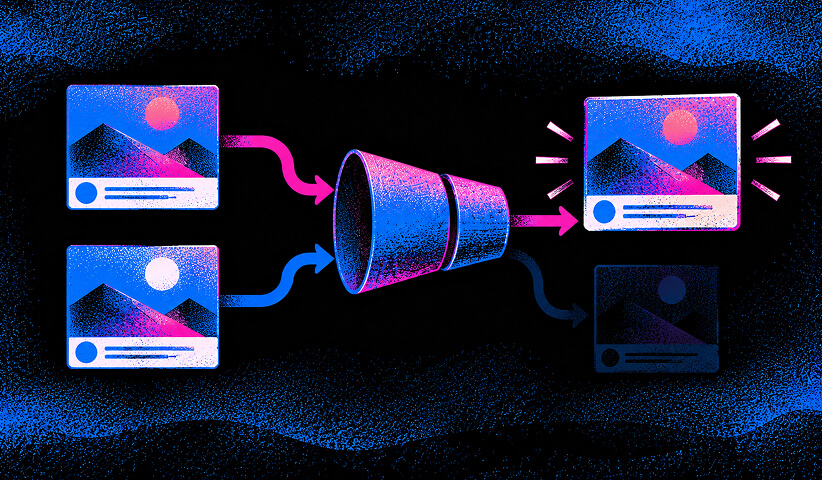
Pro Tip: Test one variable at a time: either the headline, the image, or the offer, never all three simultaneously. Running multi-variable tests on LinkedIn produces false positives because the platform's audience overlap means you can't isolate what drove the result. Run each creative test for at least two weeks before drawing conclusions.
Running LinkedIn ads but not seeing real pipeline? Keep reading!
If you need audience architecture and conversion tracking built for pipeline, not just form fills, contact us for a free custom quote.
Budgeting, Bidding, and Setting Up Measurement and Conversion Tracking
What budget and bidding approach works for LinkedIn B2B campaigns?
Budget and bidding decisions determine whether your campaigns ever exit the learning phase. Most B2B teams underfund LinkedIn tests and then conclude the channel doesn't work, when the real problem is insufficient signal.
The recommended sequence: start with Maximum Delivery for 2-3 weeks to gather baseline data, then transition to Target Cost after 30-50 conversions to control CPL. Manual CPC is useful in the early days of a new campaign when you want cost control before conversion data exists.
Bidding playbook:
- Maximum Delivery (automated): Use for awareness and engagement campaigns, and as the warm-up phase for conversion campaigns. LinkedIn spends your full budget but doesn't cap CPL. Good for learning; risky for scaling.
- Manual CPC: Use when you're testing new audiences or creatives and want to cap what you pay per click. Requires active monitoring. Best for the first 1-2 weeks of a new campaign.
- Target Cost: Use once you have 30-50 conversions per campaign per month. Set a target CPL and LinkedIn optimizes toward it. This is the right steady-state bid strategy for conversion campaigns.
- Maximum Delivery for conversion campaigns (pitfall): Leaving conversion campaigns on Maximum Delivery indefinitely causes LinkedIn to optimize for the cheapest conversion signal, which often means low-quality form fills rather than pipeline-relevant leads.
Budget floors that generate real signal:
A reasonable monthly budget per campaign is required to generate meaningful learning signal. For mid-market scaling with multiple campaigns running simultaneously, a higher budget is recommended. Below these thresholds, the algorithm doesn't accumulate enough data to optimize, and your results will be noisy.
Audience size directly affects CPM and bidding efficiency. Audiences below 50,000 members face a thinner auction, which drives up CPMs by 30%-60% and reduces the algorithm's ability to find your best prospects.
Daily budgets give you more control over pacing during the learning phase. Total budgets work well for fixed-duration campaigns (event promotions, product launches) where you want LinkedIn to pace spend across a defined window.
How do you set up measurement and conversion tracking for LinkedIn ads?
Measurement is where most LinkedIn programs lose accountability. Without the right tracking infrastructure, you're optimizing for platform metrics that don't connect to revenue.
Core tracking steps:
- Install the LinkedIn Insight Tag on every page of your website, not just the homepage. Verify it's firing in Campaign Manager before launching any campaign.
- Define separate conversion rules for each meaningful action: MQL form submission, demo request, pricing page view, and content download. Lumping all conversions into one rule makes optimization impossible.
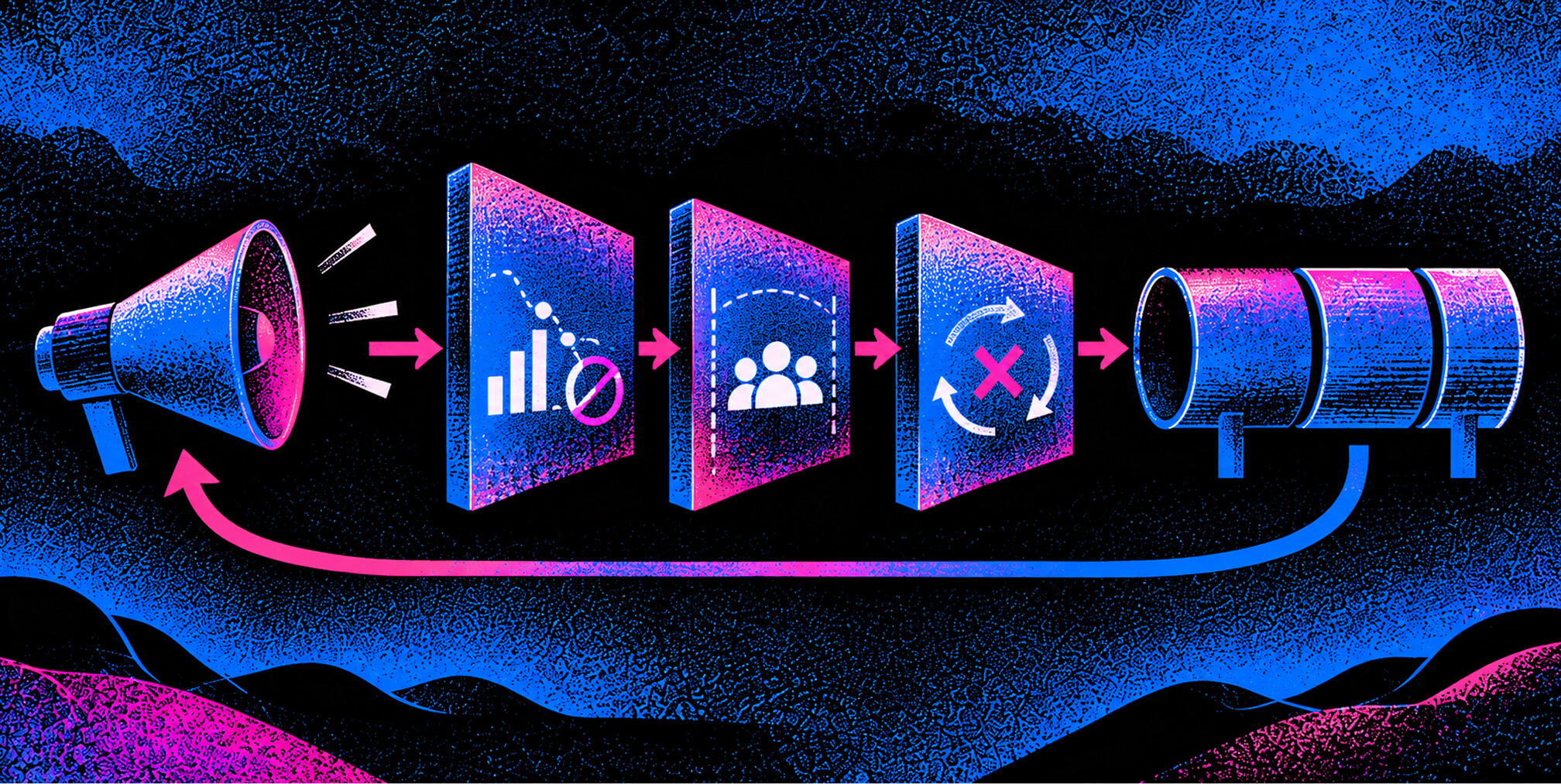
- Pipe SAL, SQL, and closed-won events back to LinkedIn via the Conversions API or a CRM integration (Salesforce, HubSpot). This is the step most teams skip, and it's the one that most directly improves bid quality.
- Use GA4 as your cross-channel source of truth for attribution. LinkedIn's in-platform attribution overstates its own contribution (as every ad platform does). GA4 gives you the honest multi-touch picture.
| Tracking Element | Purpose | Minimum Volume for Reliable Optimization |
|---|---|---|
| LinkedIn Insight Tag | Retargeting, conversion tracking, audience building | Must fire on all pages before campaign launch |
| Conversion Rules (MQL, demo, pricing) | Tells LinkedIn what to optimize toward | ~50 events/month per campaign |
| CRM Integration / Offline Import | Feeds SQL and pipeline data back to LinkedIn | 20+ events/month for meaningful signal |
| Conversions API | Server-side event matching, reduces data loss | Recommended for all conversion campaigns |
| GA4 Cross-Channel Attribution | Honest multi-touch view, prevents over-attribution | Ongoing; set up before first spend |
Accounts that implemented downstream event feedback (SAL/SQL signals back to LinkedIn) saw 25-40% lower SQL CPL within 60 days. That improvement comes from LinkedIn reweighting its bidding toward the audience segments that actually produce pipeline, not just the ones that click cheapest.
For post-lead nurture, integrating LinkedIn-sourced leads into a structured lead nurturing workflow is what converts form fills into qualified pipeline. The tracking infrastructure you build here feeds both the platform optimization and your CRM follow-up sequences.
Experiments, Common Mistakes, Advanced ABM Tactics, and Key Takeaways
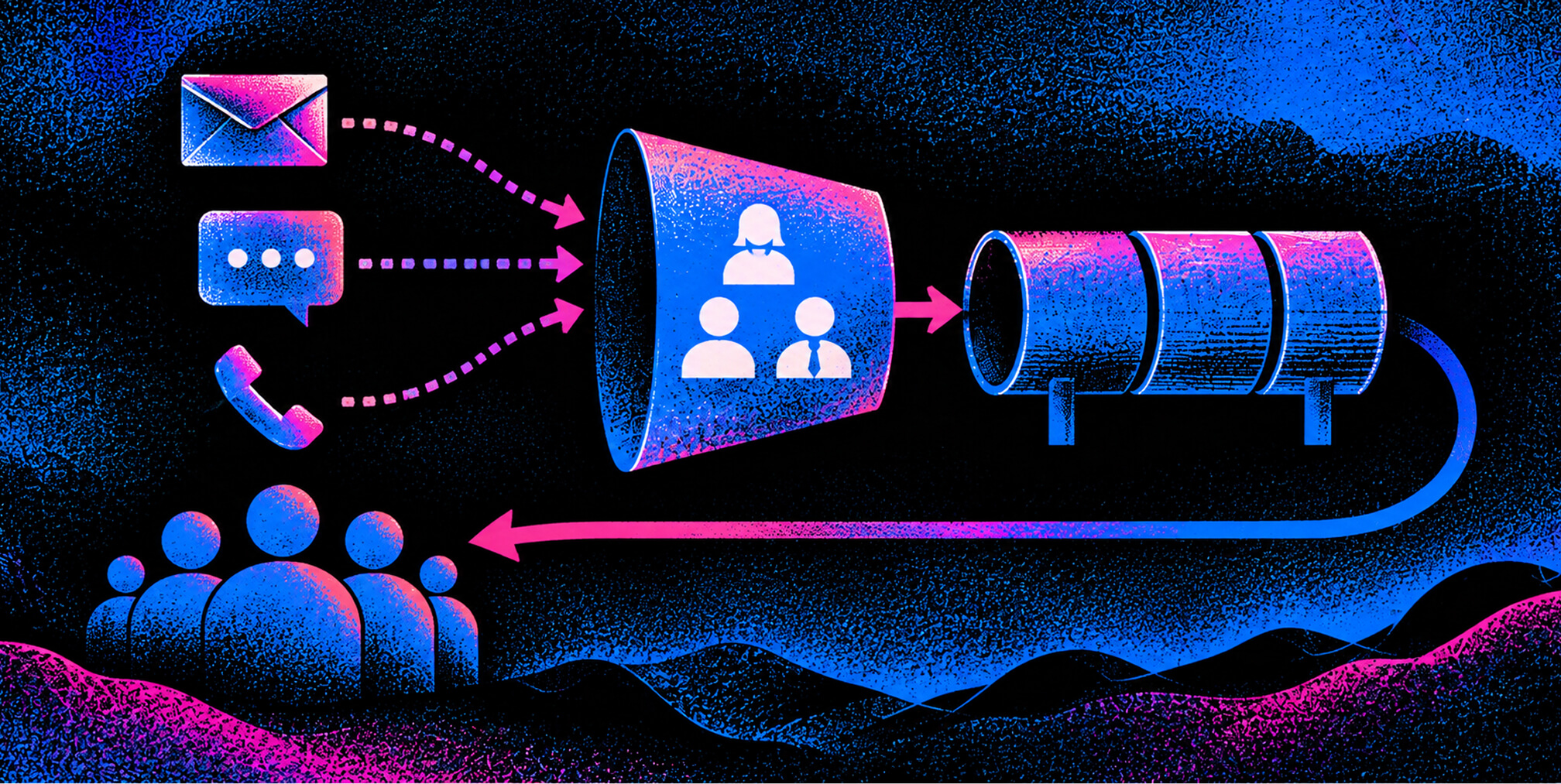
How do you run experiments and optimize LinkedIn campaigns over time?
Testing on LinkedIn requires patience that most teams don't give it. The platform's auction dynamics and audience sizes mean that meaningful results take longer to accumulate than on Google or Meta.
The framework: one variable per test, a 2-6 week learning window depending on conversion volume, and a clear decision rule before you start. Define what "winner" means (lower CPL, higher SQL rate, better pipeline influence) before you launch the variant, not after you see the results.
Experiment design steps:
- Isolate the variable (headline, image, offer, audience segment, or bid strategy). Never change two things at once.
- Set a minimum run time of two weeks and a minimum conversion threshold of 30-50 events before evaluating.
- Segment tests by funnel stage and audience type. A creative test running across cold prospecting and retargeting audiences simultaneously produces unreadable results.
- When a winner emerges, pause the loser immediately and allocate its budget to the winner. Don't run both indefinitely.
Optimization levers in priority order:
- Audience expansion via Predictive Audiences: Once you have 300+ matched contacts, activate Predictive Audiences to find similar members. This is the most efficient way to scale without sacrificing ICP quality.
- Bid strategy progression: Move from Manual CPC to Target Cost as conversion data accumulates.
- Creative refresh: Refresh creative every 4-6 weeks. LinkedIn audiences are smaller than Meta or Google, so ad fatigue arrives faster.
- Exclusion list maintenance: Add converters and disqualified accounts to exclusion lists monthly. Retargeting people who already converted wastes budget and skews CPL data.
Pro Tip: Never mix cold prospecting, website retargeting, and ABM audiences in the same campaign. LinkedIn's algorithm optimizes toward the cheapest engagement signal in the campaign, which is almost always the retargeting audience. Separate campaigns by audience type so each campaign's bidding is calibrated to its actual goal.
What mistakes kill LinkedIn campaigns before they start?
Most LinkedIn budget waste is preventable. The problems below appear in the first two weeks of almost every underperforming campaign.
Pre-launch checklist (copy this into your campaign brief):
- LinkedIn Insight Tag installed and verified firing on all website pages
- At least one conversion rule defined in Campaign Manager (MQL, demo, pricing page)
- Landing pages tested on mobile and desktop, with clear CTAs and fast load times
- Exclusion lists built: current customers, employees, and irrelevant seniority levels
- Audience size validated between 50,000 and 300,000 members
- Creative assets prepared in correct specs for each format
- Campaign structure organized by funnel stage and audience type (not by creative)
- Budget confirmed at $1,500+ per month per campaign for conversion objectives
The three mistakes that burn the most budget:
- Over-narrow targeting. Stacking five or more layers to reach a hyper-specific audience often collapses audience size below 50,000 members, triggering the 30%-60% CPM increase. Precision is good; a dead auction is not. When your audience is too small, remove an inclusion layer rather than adding more.
- Missing the conversion feedback loop. Running LinkedIn campaigns without piping SQL and pipeline events back to Campaign Manager means the algorithm optimizes for form fills, not revenue. This is the gap between a campaign that looks good in LinkedIn's dashboard and one that actually produces pipeline.
- Relying on Lead Gen Forms for all BOFU conversions. Forms are efficient for volume, but their downstream SQL rate is typically about half that of landing-page-sourced leads. For high-ACV deals, route BOFU traffic to a purpose-built landing page that forces self-qualification.
Pro Tip: If your audience size is under 50,000 after applying all your targeting layers, don't add more exclusions to fix it. Remove an inclusion layer first. Exclusions reduce an already-thin audience further and compound the CPM problem.
Campaigns that skip the pre-launch checklist above typically spend 30-60% of their first-month budget before discovering a tracking gap or an audience-size problem. The checklist takes 30 minutes. The budget recovery takes weeks.
Advanced tactics: buying-group design, audience stacking, and conversion feedback loops
The gap between a median LinkedIn program and a high-performing one usually comes down to three advanced practices: designing for buying groups rather than single personas, feeding downstream events back into Campaign Manager, and structuring audience stacks from closed-won data.
Buying-group design means mapping your campaign messaging to the multiple stakeholders involved in a B2B purchase decision. A CFO evaluating a $150,000 SaaS contract needs different messaging than the VP of Operations who will use the product daily. Run separate ad sets with role-specific creative, sequenced so that the CFO sees ROI-focused content while the practitioner sees workflow-focused content. Both are in the same target account; both need to be influenced.
Conversion feedback loops are the highest-leverage technical improvement most B2B teams haven't implemented. Accounts that piped SAL/SQL events back to LinkedIn via Conversions API saw significantly lower SQL CPL within a couple of months. The mechanism: LinkedIn reweights its bidding toward the audience segments that produced pipeline, not just the ones that produced clicks. Without this signal, the algorithm is optimizing blind.
Audience stacking from closed-won data produces the highest-quality Predictive Audiences. Export your last 12 months of closed-won contacts from your CRM, upload them as a Matched Audience, and use that list as the seed for Predictive Audience expansion. This is materially more effective than seeding from all leads or all website visitors, because the signal is calibrated to your actual buyers.
Accounts using Matched Audiences seeded from closed-won contacts consistently see higher ICP match rates in Predictive Audience expansion than those seeded from general lead lists.
Bullet playbook for advanced activation:
- Build a buying-committee campaign with separate ad sets for economic buyer, technical buyer, and champion roles within the same target accounts.
- Sequence messaging: TOFU thought leadership to all roles, MOFU case studies to champions, BOFU ROI calculators to economic buyers.
- Upload closed-won contacts monthly to keep Predictive Audience seeds fresh.
- Feed SAL and SQL events back to LinkedIn via Conversions API within the first 30 days of any conversion campaign.
- Exclude accounts that have already entered your pipeline from prospecting campaigns to prevent wasted impressions and skewed CPL data.
Pro Tip: Structure your account-based creative sequences so that each role in the buying committee sees messaging calibrated to their specific concern. A single generic ad served to the whole buying group produces generic results. The B2B brand positioning work you do upstream directly determines how credible and differentiated those role-specific messages feel.
Key Takeaways
A LinkedIn ads strategy that produces pipeline requires audience precision, staged creative, a conversion feedback loop, and enough budget to let the algorithm learn.
| Point | Details |
|---|---|
| Audience sizing is non-negotiable | Keep target audiences between 50,000 and 300,000 members; below 50k, CPMs rise 30%-60%. |
| Feed downstream events back | Accounts that piped SAL/SQL signals to LinkedIn saw 25-40% lower SQL CPL within 60 days. |
| Match format to funnel stage | Single Image and Thought Leader Ads for TOFU; Document Ads for MOFU; Lead Gen Forms for BOFU volume. |
| Budget for the learning phase | Plan $1,500-$3,000 per month per campaign minimum; conversion campaigns need ~50 events/month to optimize. |
| The Branded Agency | Offers managed LinkedIn programs, ABM campaign setup, and conversion-tracking integrations built around pipeline-first outcomes. |
The case for pipeline-first LinkedIn programs
The most persistent mistake we see in B2B LinkedIn programs isn't a targeting error or a creative failure. It's a measurement failure. Teams optimize for CPL because it's the number LinkedIn's dashboard surfaces most prominently, and then they're surprised when a campaign with a $45 CPL produces zero pipeline.
The real metric is SQL CPL, and the only way to see it is to close the loop between Campaign Manager and your CRM. That requires the Insight Tag, defined conversion rules, and downstream event imports. None of it is technically complex. All of it gets skipped when teams are in a hurry to launch.
The second thing we'd push back on is the instinct to narrow targeting aggressively. Precision matters, but a 20,000-member audience isn't precise, it's expensive and underserved by the algorithm. The 50k-300k range exists for a reason. Build a tighter ICP definition through your offer and your creative, not through targeting layers that collapse your auction.
LinkedIn rewards programs that are patient, structured, and connected to downstream revenue data. The teams that treat it as a direct-response channel and optimize for volume will consistently overpay for leads that don't close. The teams that treat it as a pipeline influence channel, invest in buying-group creative, and feed SQL signals back to the platform will see the 3x pipeline results the data supports.
The Branded Agency runs pipeline-first LinkedIn programs for B2B teams
Paid media that doesn't connect to pipeline is just spend. The Branded Agency builds LinkedIn programs where every campaign element, from audience architecture to creative sequencing to conversion tracking, is designed to produce qualified pipeline, not just form fills.
Our paid media management engagements cover the full stack: LinkedIn Campaign Manager setup and optimization, ABM list builds and Matched Audience uploads, Insight Tag and Conversions API implementation, role-specific creative for buying-committee campaigns, and CRM integration for downstream event feedback. We work with growth-stage B2B companies across North America on a retainer or project basis, depending on where you are in your program maturity.
If you're running LinkedIn ads today and not seeing pipeline influence, start with an audit. We'll identify the tracking gaps, audience-size problems, and bidding misconfigurations that are costing you. Book a paid media audit and we'll show you exactly where the budget is going and what to fix first.
Sources and Further Reading
The sources below support the specific claims and benchmarks in this guide. Each is worth reading in full if you're building or auditing a LinkedIn program.
- LinkedIn NewFronts coverage — Adweek — Primary source for the 3x pipeline results and 14.7x pipeline efficiency figures, plus LinkedIn's creative guidance on authentic video and creator-aligned assets.
- LinkedIn Ads Guide 2026 — Sprout Social — Practical benchmarks for CPL tradeoffs between Lead Gen Forms and landing pages, conversion thresholds for algorithm learning, budget floors, bidding sequence guidance, and downstream event feedback impact.
Recommended

Quincy Samycia
As entrepreneurs, they’ve built and scaled their own ventures from zero to millions. They’ve been in the trenches, navigating the chaos of high-growth phases, making the hard calls, and learning firsthand what actually moves the needle. That’s what makes us different—we don’t just “consult,” we know what it takes because we’ve done it ourselves.
Want to learn more about brand platform?
If you need help with your companies brand strategy and identity, contact us for a free custom quote.
We do great work. And get great results.
+2.3xIncrease in revenue YoY
+126%Increase in repurchase rate YoY


+93%Revenue growth in first 90 days
+144% Increase in attributed revenue




+91%Increase in conversion rate
+46%Increase in AOV


+200%Increase in conversion rate
+688%Increase in attributed revenue