LinkedIn Ads vs. Google Ads: Which Wins for B2B?
11/26/2026
Marketing Strategy
Choose the right B2B advertising mix with a practical comparison of LinkedIn and Google Ads, from buyer intent and targeting to qualified pipeline and revenue.
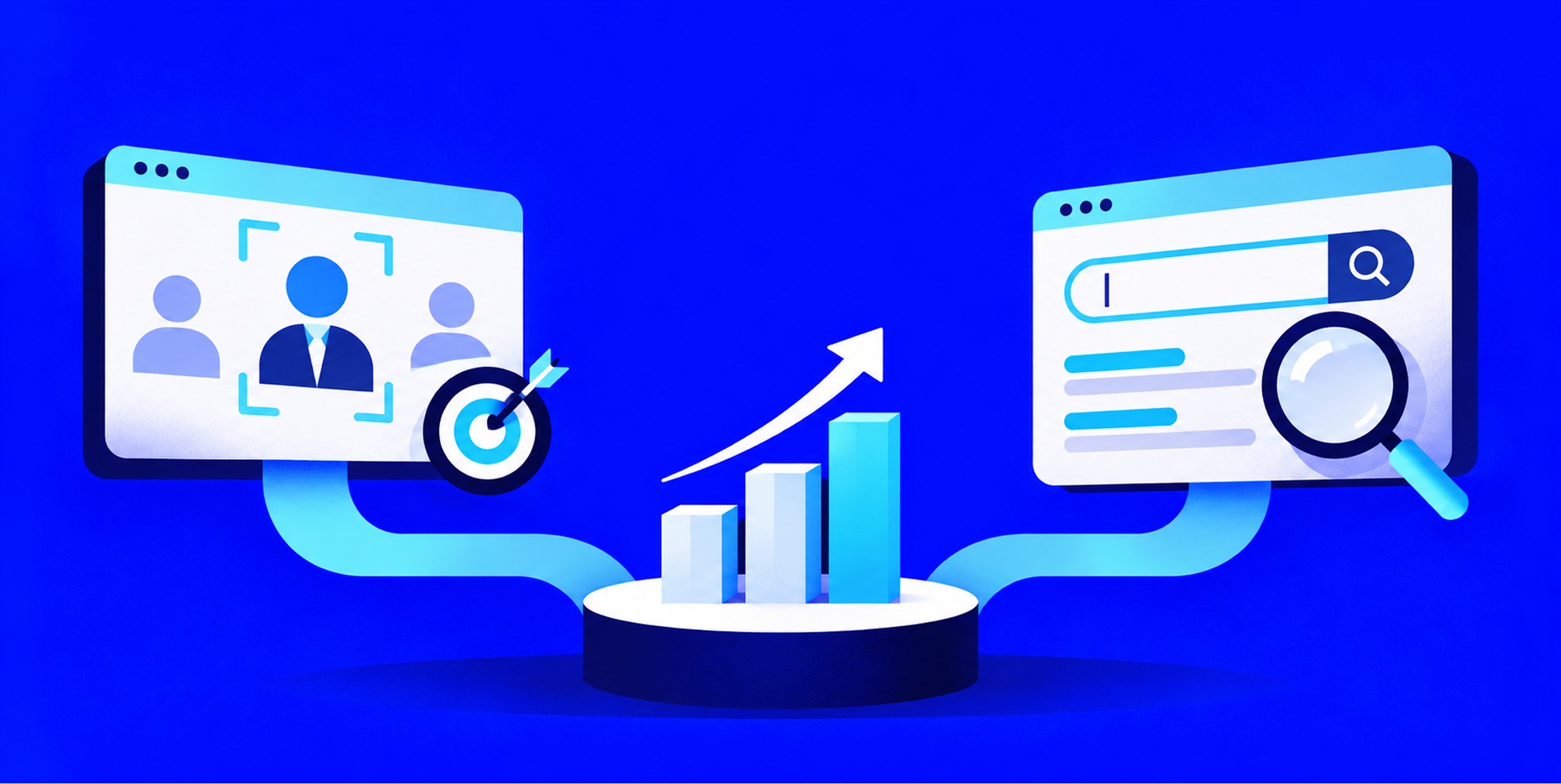
Google Ads wins when buyers already search for what you sell. LinkedIn Ads wins when you need to reach a specific job title, seniority or company size before anyone is searching. For most growth-stage B2B companies the real answer is a sequence: capture existing demand on Google, create new demand on LinkedIn, and judge both on pipeline and revenue instead of cost per click. At The Branded Agency we run paid media as part of a full-funnel growth system, so the question we ask first is never “which platform?” but “which job does each dollar need to do?”


The core difference: what versus who

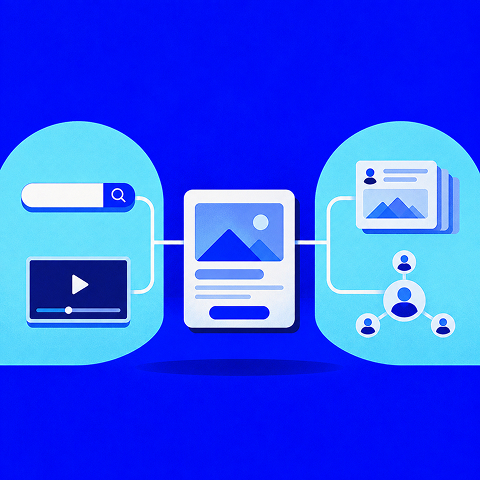

The two platforms answer different targeting questions. Search Engine Land’s framework describes it as demand capture versus demand generation. Google Search captures buyers who are already in market and use a defined search vocabulary. LinkedIn generates demand by targeting job title, function, seniority and company size when no such vocabulary exists.
In practice, that means:
• Google Search asks what the buyer is searching for right now; target relevant queries and deliver a page that answers that intent.
• LinkedIn asks who the buyer is; reach decision-makers and influencers at target companies even before the problem becomes a search.
• Use CRM-qualified pipeline to decide whether the two channels work, not surface-level CPC or form volume alone.
This is the first filter for any decision. If your category has a clear search vocabulary and people actively look for solutions, Google Search will almost always earn its place first. If you sell something new, or something where the buyer does not yet know the category exists, there are few searches to capture. Reaching the right people before they search is the job, and that is where LinkedIn fits.
Targeting, formats and reach side by side
Google offers a wider range of campaign types. Per Google’s own documentation, Search campaigns show text ads to people actively searching, Display reaches audiences across millions of sites and apps, Video runs on YouTube, and Shopping and Performance Max draw on product feeds. LinkedIn is narrower: sponsored posts in the feed, messaging and dynamic formats, all inside a professional context.
• Core targeting: Google Search uses search queries and keywords with audience signals; LinkedIn uses professional attributes including job title, function, seniority, company and industry.
• Intent signal: Google Search captures explicit query intent; LinkedIn generally infers relevance from professional role and audience membership.
• Reach: Google spans Search, Display and YouTube; LinkedIn concentrates on professional audiences inside its network.
• Best funnel role: Google Search typically captures existing buying demand; LinkedIn is useful for reaching and educating target accounts before they search.
• Typical offers: Google works well for demos, consultations and trials; LinkedIn can support ungated content, webinars, lead forms and demos.
• Main risk: Google can spend on irrelevant or low-quality queries; LinkedIn can overpay for overly narrow targeting or low-intent form fills.
For account-based B2B, the LinkedIn column has one decisive advantage: you can build an audience out of a named list of target companies and the titles that sign off on a purchase. Google cannot do that directly. For volume and measurable bottom-of-funnel conversions, Google has the advantage.
What the U.S. numbers show
Cost is where most comparisons go wrong, because the platforms are often compared on different metrics. Start with the cleanest data available.
Cost per click
In Search Engine Land’s June 2026 study of more than $700,000 in LinkedIn spend (May 2025 to May 2026, about 97% B2B SaaS), LinkedIn’s blended average CPC was $11.12, against $5.45 for Google across all campaign types. That headline favors Google, but the blend is misleading. Google’s figure includes low-cost Display clicks (averaging $0.89) and branded-search clicks (averaging $1.71), which are not comparable to cold LinkedIn prospecting.
The like-for-like comparison is high-intent prospecting. In the same study, Google non-branded search averaged $12.48 per click, while LinkedIn prospecting campaigns with lead-gen, conversion or website-visit objectives averaged $13.94. That is a gap of about $1.46 per click, not a 2x difference.
LinkedIn cost depends heavily on objective
The same study shows how much your campaign setup matters on LinkedIn:
• Engagement: $4.45 average CPC.
• Website conversions: $4.84 average CPC.
• Website visits: $6.75 average CPC.
• Brand awareness: $8.34 average CPC.
• Lead generation: $31.29 average CPC.
• Video views: $71.43 average CPC. For a video-view objective, cost per view is more relevant than CPC.
Industry also moves the number: B2B SaaS averaged $11.02 per click, versus $15.25 for professional services. Treat these as benchmarks from one data set, not promises. Your auction, audience size and creative will move them, and the figures are updated only when new studies publish.
Cost per lead and conversion
CM Beyer North America’s 2026 U.S. benchmarks (June 2026) report an average Google Search cost per conversion of $44 and a LinkedIn cost per lead of $68. The report presents these as reference points rather than targets, and it is worth remembering that a “conversion” on Google and a “lead” on LinkedIn are not always the same event. A form fill from a one-click LinkedIn lead gen form and a demo request from a landing page reached via search carry very different buying intent.
The lesson: use benchmarks to sanity-check, then judge your own account on your own funnel. Platform-reported cost per lead is the beginning of the analysis, not the end.
Free Brand Health Audit
Make sure your brand is built to sell
Search has changed. Your customers aren't just Googling anymore. They're asking ChatGPT, Perplexity, Gemini and other AI platforms what to buy, who to trust and which brands they should consider.
If your brand isn't showing up clearly in those answers, you're already losing opportunities. Our free Brand Health Audit shows you where your brand stands across traditional search, AI search and brand positioning.

Sample brand audit
Live preview
Traditional search
72
AI search (GEO)
34
Brand positioning
58
Lead quality: where the comparison is really decided
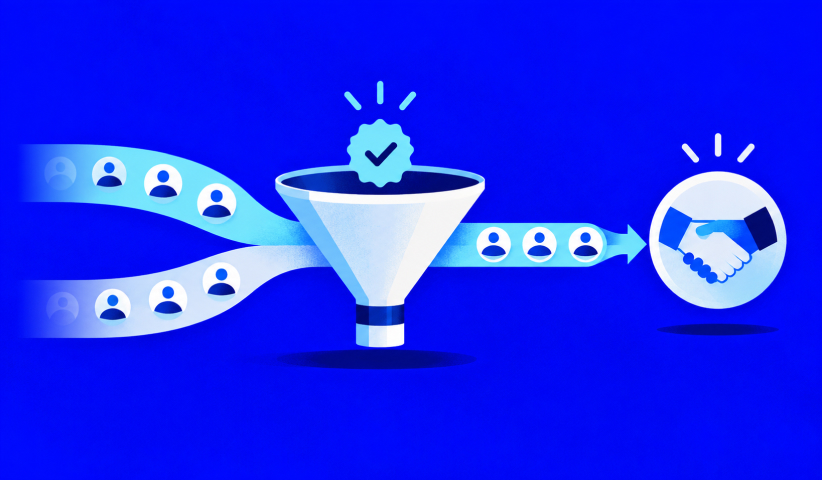


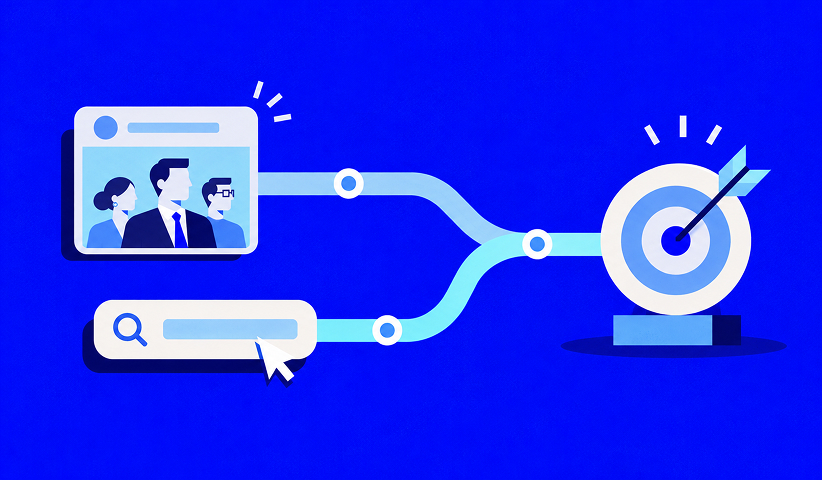
Cheaper leads that never close are the most expensive leads. The way to compare platforms is to follow each lead through your CRM to closed revenue. Rework’s guide to paid lead generation recommends comparing sales-acceptance rate, opportunity rate, close rate, cost per qualified lead, CAC, ROAS and time to conversion, noting that form fills alone do not show which campaigns produce customers.
A worked example with illustrative numbers (not benchmarks):
• Google Search: $10,000 spend ÷ 100 leads = $100 per lead. If 10 become opportunities, cost per opportunity is $1,000.
• LinkedIn: $10,000 spend ÷ 50 leads = $200 per lead. If 12 become opportunities, cost per opportunity is approximately $833.
• Interpretation: LinkedIn costs twice as much per lead but less per opportunity in this hypothetical example. Compare closed-won revenue and sales-cycle length before scaling either channel.
On cost per lead, Google looks twice as good. On cost per opportunity, LinkedIn edges ahead. Real accounts will differ, which is exactly why you need the CRM connection. If you are weighing how to connect ad clicks to revenue, our guide to GA4 B2B tracking and CRM data walks through the setup, and this piece on how to measure returns beyond clicks explains why headline metrics can mislead.
Two more habits keep the comparison honest:
• Use the same conversion stages for both sources: new lead, sales accepted, opportunity, closed-won; compare cohorts at the same maturity.
• Segment by audience temperature and intent. Branded Search and retargeting are not fair comparators for cold prospecting on LinkedIn.
When Google Ads should lead
Put Google first when:
• Prospects actively search for your product category, competitor alternatives, or a defined problem you solve.
• The offer can convert a ready buyer now, such as a demo, assessment, consultation or trial.
• You need faster evidence of purchase intent and can track qualified conversions from click to CRM.
• Your budget is constrained and bottom-of-funnel demand exists at sustainable acquisition costs.
• You can maintain relevant landing pages, search-term exclusions and conversion-value feedback.
The discipline here is query control: negative keywords, tight match types and landing pages that match the search intent. Our B2B Google Ads strategy guide goes deeper on structuring accounts for qualified leads rather than clicks.
When LinkedIn Ads should lead
Put LinkedIn first when:
• You sell a new category with little purchase-intent search volume but a clearly defined set of buyers.
• Your ideal accounts and buying-committee roles can be identified by employer, industry, job function or seniority.
• You need to build awareness or preference before a long buying process begins.
• You have useful educational assets, proof or a compelling point of view that gives a busy professional a reason to engage.
• You can measure influenced accounts and downstream pipeline rather than expecting every impression to become an immediate lead.
LinkedIn rewards creative that speaks to a role’s problem and offers something worth a click. Setup details matter: audience size, objective and form design all change cost. See our pipeline-first LinkedIn Ads playbook and our guide to LinkedIn lead gen forms for the specifics.
Using both: a practical budget split
Search Engine Land recommends combining the platforms for a multi-touch paid strategy, and the logic holds up. LinkedIn introduces your brand to the right people. Some of them later search for your category or your name, and Google captures that intent. Retargeting then keeps you present in between; our guide to cookieless B2B retargeting covers how to do that without third-party cookies.
There is no universal split. Use these starting points and adjust after a full sales cycle of data:
• Established category with strong search volume: allocate the larger test share to Google Search, then use LinkedIn for targeted account awareness.
• New or emerging category: emphasize LinkedIn education and thought leadership; run Google on branded, problem-aware and emerging category queries.
• Named-account ABM program: emphasize LinkedIn account and role targeting; use Google to capture the same buyers when they search for solutions.
• Limited budget or uncertain attribution: begin with one platform, one high-fit audience and one offer until tracking and qualified-lead reporting are reliable.
A few rules for the first 90 days:
• Days 1–30: agree on the ICP, target accounts, conversion definitions, CRM source fields and baseline; launch one clear offer per channel.
• Days 31–60: review search terms, negative keywords, LinkedIn audience delivery and creative; exclude poor-fit traffic and document lead quality.
• Days 61–90: compare cost per sales-accepted lead and opportunity by cohort, then adjust spend toward the channel producing qualified pipeline.
• Keep brand search separate from non-branded Search, and keep prospecting separate from retargeting; otherwise inexpensive warm clicks distort the comparison.
• Give both channels sufficient sales-cycle time before judging revenue outcomes; use leading indicators while deal data matures.
Is a LinkedIn ad worth it?
It is when the math at your deal size works and you can measure beyond the form fill. At the $68 cost per lead in the CM Beyer benchmark, a company with a five-figure average contract value and a reasonable close rate has room to profit. A company selling a low-priced product to a broad audience usually does not. Run the numbers against your own close rate and contract value, then test with a defined budget and a defined measurement window.
Want to learn more about Digital Marketing and Strategy? Keep reading!
If you need help with your company’s marketing, contact us for a free custom quote.
Our Perspective
Most of the paid media debates we hear are really brand debates in disguise. Google can only capture the demand your brand has already earned, and LinkedIn works best when the message reaching a buyer is clear, differentiated and consistent with everything else they see.
That is why we think of paid media as one part of a full-funnel growth system, a belief at the heart of what we call brand-backed performance. Positioning and creative decide how efficiently every dollar of media works. Landing pages, offers and retention decide what happens after the click.
So we do not ask clients to pick a side. We ask which role each channel plays at their stage, how it will be measured in the CRM, and how the findings feed the next quarter’s decisions. Platforms will keep changing their formats and prices. A system built on clear positioning and traceable results keeps compounding.
- Quincy Samycia
How we can help
If you want one team accountable for both channels, our Paid Media Management service starts at $5,500 per month. When the work extends to channel mix, positioning and go-to-market planning, Growth Strategy starts at $8,500 per month. We pair media with the creative, web development and conversion rate optimization that decide what happens after the click, so your spend is judged on pipeline, not on platform-reported leads.
To talk through your own LinkedIn and Google mix, start at The Branded Agency.
Frequently Asked Questions
Is LinkedIn Ads more expensive than Google Ads?
In blended averages, yes: $11.12 per click versus $5.45 in Search Engine Land’s 2026 study. For high-intent prospecting the numbers are close, at $13.94 for LinkedIn versus $12.48 for Google non-branded search. Cost per qualified opportunity is the fairer comparison.
Should a B2B startup use both platforms?
Usually, once tracking is reliable. Google captures people already searching, and LinkedIn reaches buyers who are not yet searching. Start with the platform that fits your category’s search demand, then add the other as a defined test with its own measurement plan.
What should I measure to judge LinkedIn Ads versus Google Ads?
Follow leads through your CRM to closed revenue. Compare sales-acceptance rate, opportunity rate, close rate, cost per qualified lead, CAC and time to conversion, as outlined in Rework’s lead generation guide. Form fills alone do not show which campaigns produce customers.
Which platform is better for brand awareness?
LinkedIn is built for reaching defined professional audiences by role and company, so it suits awareness among target buyers. Google Display and YouTube offer broader, cheaper reach. The right choice depends on whether your buyers can be defined by their job or by their interests and searches.
Sources
• Search Engine Land — LinkedIn Ads CPC benchmarks (June 26, 2026)
• LinkedIn Marketing Solutions — Advertising basics and targeting
• LinkedIn Marketing Solutions — Matched Audiences best practices
• Google Ads Help — Optimize Search campaigns with conversion metrics

Quincy Samycia
As entrepreneurs, they’ve built and scaled their own ventures from zero to millions. They’ve been in the trenches, navigating the chaos of high-growth phases, making the hard calls, and learning firsthand what actually moves the needle. That’s what makes us different—we don’t just “consult,” we know what it takes because we’ve done it ourselves.
Want to learn more about brand platform?
If you need help with your companies brand strategy and identity, contact us for a free custom quote.
We do great work. And get great results.
+2.3xIncrease in revenue YoY
+126%Increase in repurchase rate YoY




+93%Revenue growth in first 90 days
+144% Increase in attributed revenue




+91%Increase in conversion rate
+46%Increase in AOV



+200%Increase in conversion rate
+688%Increase in attributed revenue