Top Performance Marketing Agency: 2026 Selection Guide
09/11/2026
Marketing Services
A 2026 guide to selecting a top performance marketing agency — pricing models, evaluation criteria, and what separates the best firms from the rest.
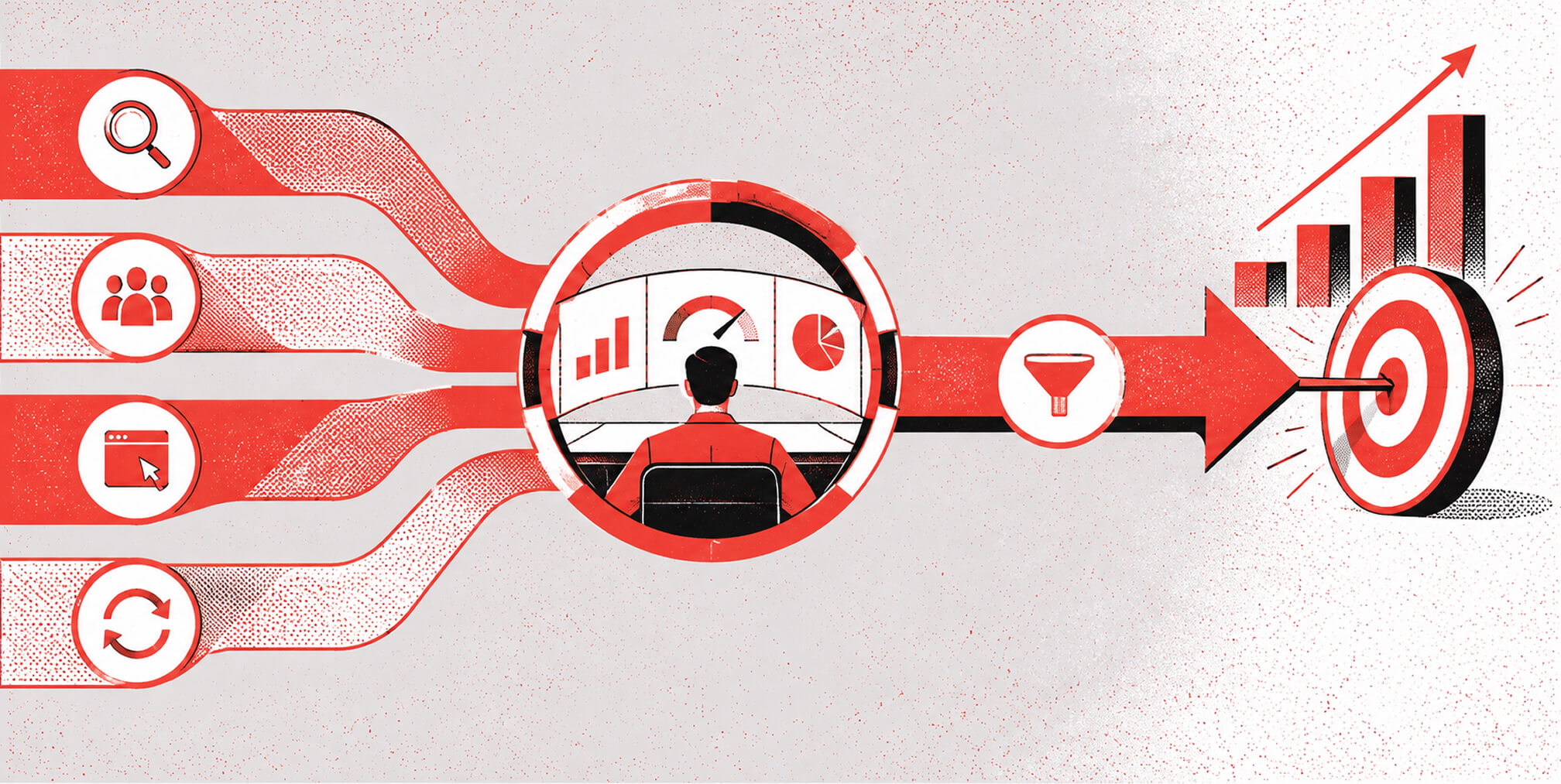
A top performance marketing agency is defined by one standard: every dollar spent ties directly to a measurable outcome. Performance marketing, the industry term for outcome-based digital advertising, covers paid search, paid social, affiliate programs, and conversion rate optimization. The best firms don't just run ads. They build full-funnel growth systems where every channel, creative asset, and budget decision connects to traceable revenue. This guide gives marketing professionals and decision-makers the criteria, pricing benchmarks, and agency profiles needed to make a confident choice in 2026.
.png)


What Makes a Top Performance Agency, and the Five Selection Criteria



1. What makes a top performance marketing agency?
The defining trait of a leading digital marketing agency is accountability. Every campaign metric, from cost per acquisition to return on ad spend, must be visible and reported in real time. Agencies that hide behind vanity metrics like impressions and clicks without tying them to revenue are not performance marketing firms. They are media buyers with a branding problem.
Top-rated digital advertising firms also operate across multiple channels. Multi-channel campaign management across Google Ads, Meta, YouTube, LinkedIn, and Instagram requires more strategic coordination than single-platform work. An agency that only runs Facebook ads cannot call itself a full-funnel performance partner.
Certifications matter. Google Premier Partner status signals that an agency has met Google's performance thresholds and maintained ongoing certifications. That credential justifies premium rates because it reflects proven expertise, not just claimed experience.
2. Key criteria for selecting a performance marketing agency
Choosing the right agency requires evaluating five areas: pricing structure, service scope, expertise, reporting transparency, and client portfolio fit.
Pricing structure shapes incentives. An agency paid purely on a percentage of ad spend has a financial reason to push your budget higher, regardless of returns. An agency on a flat retainer has no incentive to scale campaigns that are working. Understanding this dynamic before signing a contract protects your budget.
Service scope determines whether the agency can grow with you. A firm that manages only paid search will hit a ceiling when you need email retention, landing page optimization, or connected TV. Ask for a full list of managed channels before evaluating fit.
Expertise and certifications separate generalists from specialists, though credentials alone should never be the deciding factor — our guide to evaluating award-winning agencies covers how to weigh credentials against actual client outcomes. Google Premier Partner status, Meta Business Partner certification, and HubSpot accreditation are public, verifiable signals of competence. Ask for proof, not just claims.
Reporting transparency is non-negotiable. Weekly dashboards, attribution modeling, and clear cost-per-result breakdowns are the minimum standard. If an agency cannot show you exactly where every dollar went and what it produced, find another firm.
Client portfolio fit tells you whether the agency understands your industry and business size. An agency that specializes in enterprise e-commerce will likely underserve a Series A SaaS startup. Ask for case studies from clients at your revenue stage.
Pro Tip: Ask every agency candidate to walk you through a live dashboard from a current client. If they hesitate, their reporting is not as transparent as they claim.
Free Brand Health Audit
Make sure your brand is built to sell
Search has changed. Your customers aren't just Googling anymore. They're asking ChatGPT, Perplexity, Gemini and other AI platforms what to buy, who to trust and which brands they should consider.
If your brand isn't showing up clearly in those answers, you're already losing opportunities. Our free Brand Health Audit shows you where your brand stands across traditional search, AI search and brand positioning.

Sample brand audit
Live preview
Traditional search
72
AI search (GEO)
34
Brand positioning
58
Evaluating Pricing Models and Matching Agency Type to Your Business Size


3. How to evaluate agency pricing models
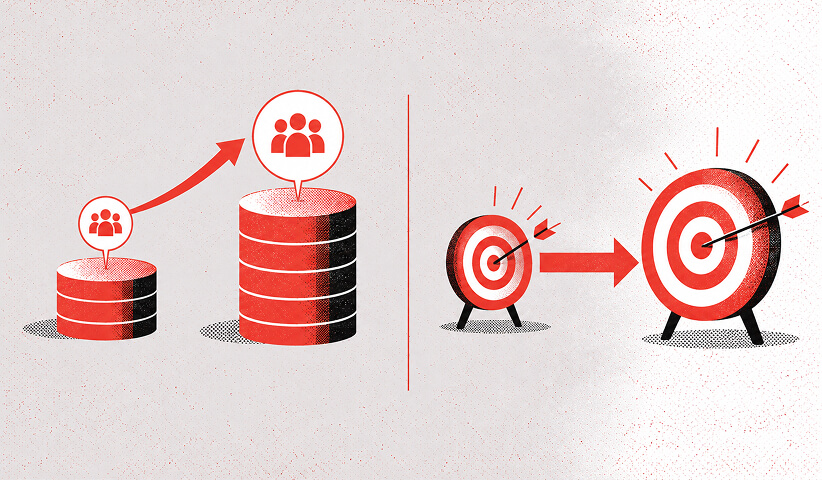
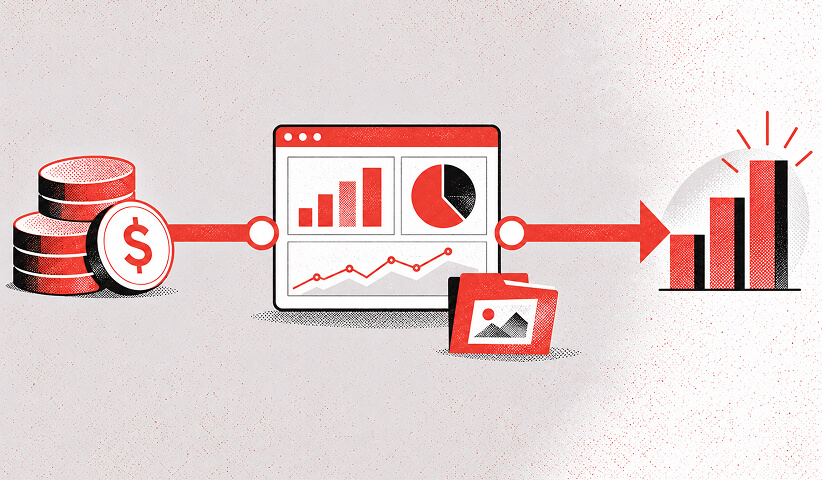
Agency fees typically range from $2,000 to $8,000+ monthly, depending on the pricing model, number of platforms managed, and campaign complexity. Three models dominate the market.
Flat monthly retainers run from $1,500 to $10,000+ depending on scope. They give you predictable costs and a clear scope of work. The drawback is that a flat fee does not reward the agency for outperforming targets.
Percentage of ad spend models typically charge 10-20% of your advertising budget. At scale, fees decrease. An agency managing $50,000 in monthly spend might charge 12% rather than 15%, paired with advanced attribution modeling. The risk is that the agency earns more simply by spending more, not by performing better.
Hybrid pricing represents 27% of the market and is growing because it aligns the agency's financial incentive with your results. Flat fees account for 42% of the market and percentage-of-spend for 31%. The trend toward hybrid reflects a market-wide push for incentive alignment.
| Pricing Model | Best For | Key Risk |
|---|---|---|
| Flat retainer | Predictable budgets, defined scope | No performance incentive |
| Percentage of spend | Fast-scaling campaigns | Agency incentivized to overspend |
| Hybrid | Aligned incentives, growth-stage firms | Requires clear KPI definitions upfront |
Pro Tip: Negotiate a hybrid structure where the base retainer covers account management and the bonus tier activates only when cost-per-acquisition drops below your target threshold.
4. Matching agency type to your business size
Small local businesses, growth-stage companies, and enterprises each need a different type of performance marketing partner. Matching agency type to your business stage prevents overpaying for services you don't need or underfunding campaigns that require more firepower.
Small businesses with monthly ad spend between $1,000 and $5,000 typically pay $500-$1,500 in agency fees. At this stage, a boutique agency or a specialized firm with a flat retainer model works best. The priority is a low cost-per-lead and a tight feedback loop between ad spend and sales.
Growing SMBs spending $5,000-$25,000 monthly typically pay $1,500-$4,000 in fees. These businesses need multi-channel management, conversion rate optimization, and retention marketing — similar to the growth-stage companies we cover in our SaaS marketing agency guide. A firm with both paid media and email capabilities delivers more compounding value than two separate vendors.
Enterprise clients with budgets above $50,000 monthly pay $5,000-$15,000+ in agency fees. At this level, senior-level strategic support, advanced attribution modeling, and cross-channel reporting are the baseline expectation, not a premium add-on.
- Prioritize specialized agencies when your category requires deep platform knowledge, such as healthcare compliance in paid search or app-install campaigns on Meta.
- Choose generalist firms when you need a single partner to manage brand, creative, and performance under one roof.
- Use industry benchmarks and third-party attribution tools to validate agency performance claims before renewing contracts.
Pro Tip: Finding the right agency fit starts with knowing your own KPIs. Define your target cost-per-acquisition before your first agency call, not after.
Tired of agencies that hide behind vanity metrics? Keep reading!
If you need paid media tied to real revenue and consistent brand equity, contact us for a free custom quote.
What Separates the Best Firms in 2026, Pricing Trends, and Key Takeaways
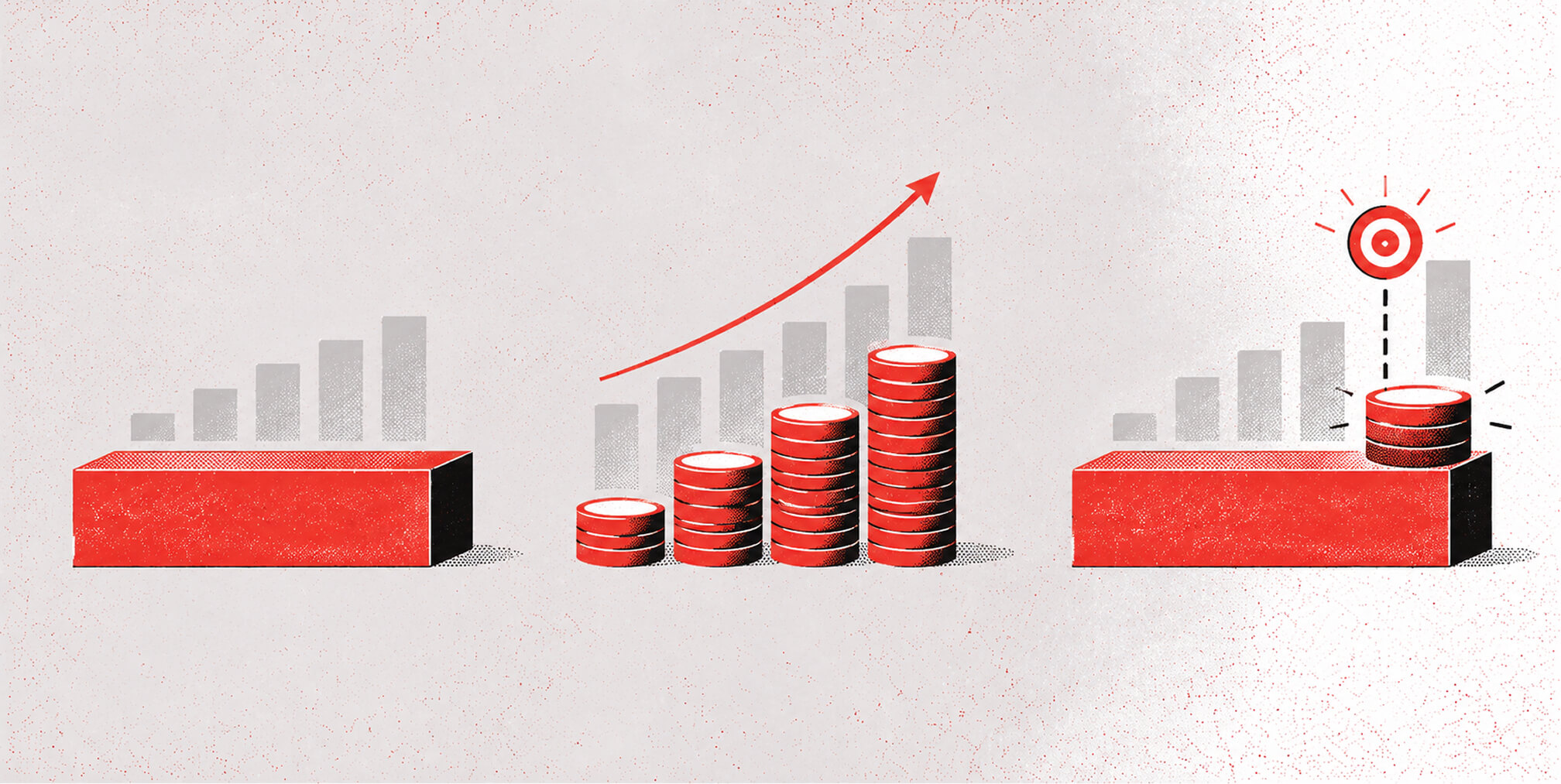
5. What separates the best performance marketing firms in 2026
The best performance marketing firms share four traits that separate them from average agencies.
Full-funnel ownership. Top agencies manage every stage from awareness to retention. They run paid acquisition, optimize landing pages, and build email and SMS flows that turn first-time buyers into repeat customers. Agencies that hand off at the conversion point leave significant revenue on the table.
Brand-backed creative. Performance without brand consistency produces short-term spikes and long-term erosion. The best firms integrate brand identity into every ad unit, landing page, and email sequence. The Branded Agency calls this approach brand-backed performance™, where creative assets and paid media work as a single system rather than separate departments.
Transparent attribution. Skilled agencies reduce wasted ad spend by up to 30% through better campaign management and attribution modeling. That figure represents real budget recovered and redirected toward channels that convert. Agencies that cannot show you a clear attribution model are guessing, not managing.
Proactive communication. The best firms send weekly performance summaries, flag anomalies before you notice them, and bring optimization recommendations to calls rather than waiting to be asked. Reactive agencies cost you time and money. Proactive ones compound your results.
6. Agency pricing trends shaping 2026 decisions
The shift toward hybrid pricing reflects a broader maturation in the performance marketing industry. Clients now demand that agency compensation connect directly to outcomes, not just activity. This pressure has pushed even traditional retainer-heavy firms to introduce performance bonus tiers.
Hybrid models now represent 27% of agency pricing structures and are growing faster than either flat fee or percentage-of-spend models. The growth signals that both clients and agencies recognize the alignment problem in pure flat-fee arrangements. Understanding agency fee structures helps you negotiate from a position of knowledge rather than assumption.
Budget scaling also changes the math. As ad spend grows, percentage-based fees become expensive fast. A company scaling from $10,000 to $50,000 in monthly spend at a 15% rate sees agency fees jump from $1,500 to $7,500 monthly. Negotiating a tiered percentage or transitioning to a hybrid model at a defined spend threshold protects your margin as you grow.
Key Takeaways
The best performance marketing agency aligns its compensation structure with your measurable outcomes, manages campaigns across multiple channels, and reports results with full attribution transparency.
| Point | Details |
|---|---|
| Pricing model shapes incentives | Hybrid models align agency pay with your results better than flat fees or percentage-only structures. |
| Certifications signal proven expertise | Google Premier Partner and Meta Business Partner status are verifiable indicators of agency competence. |
| Business size determines agency fit | Small businesses, SMBs, and enterprises each require different fee ranges and service scopes. |
| Transparent attribution recovers budget | Skilled agencies reduce wasted spend by up to 30% through proper attribution and campaign management. |
| Full-funnel ownership compounds results | Agencies that manage acquisition and retention together deliver more revenue than single-stage specialists. |
The Uncomfortable Truth, The Branded Agency's Approach, and FAQ
The Uncomfortable Truth About Agency Selection
I've watched marketing teams spend months evaluating agencies on price alone, then spend the next year recovering from poor campaign management. The math never works out. Choosing an agency on price rather than demonstrated capability is the single most expensive mistake a marketing leader can make.
The agencies I've seen deliver consistent results share one trait: they treat your KPIs as their own. They don't wait for your monthly review to flag a problem. They call you on a Tuesday because something in the data shifted and they want to act before it costs you. That level of ownership is not a function of agency size or brand name. It's a function of incentive alignment and culture.
Hybrid pricing models matter precisely because of this. When an agency earns a bonus only when your cost-per-acquisition drops below target, their team has a concrete reason to find the optimization that gets you there. Flat retainers remove that urgency. Percentage-of-spend models point it in the wrong direction entirely.
My honest recommendation: define your target KPIs before you talk to a single agency. Know your acceptable cost-per-acquisition, your target return on ad spend, and your retention rate goal. Then evaluate every agency on whether their pricing model and track record align with those specific numbers. The right partner becomes obvious quickly when you lead with outcomes instead of budgets.
The Branded Agency's Approach to Performance Marketing
The Branded Agency builds performance marketing programs where brand and paid media work as one system, not two separate budgets.
The firm's paid media management practice combines Google Ads, Meta, and multi-channel campaign management with brand-consistent creative that improves conversion rates at every funnel stage. For growth-stage companies that need both brand credibility and traceable revenue, The Branded Agency's brand-backed performance™ model delivers both. Their executive branding services integrate directly with paid media strategy so your campaigns build long-term brand equity while driving short-term results. If you're ready to connect your marketing spend to measurable growth, The Branded Agency is built for exactly that.
FAQ
What does a top performance marketing agency actually do?
A top performance marketing agency manages paid media campaigns across multiple channels, optimizes conversion rates, and reports results tied directly to revenue outcomes. The best firms also handle retention marketing through email and SMS to maximize customer lifetime value.
How much does a performance marketing agency cost in 2026?
Agency fees typically range from $2,000 to $8,000+ monthly. Small businesses pay $500-$1,500, growing SMBs pay $1,500-$4,000, and enterprise clients pay $5,000-$15,000+ depending on ad spend volume and service scope.
What is a hybrid pricing model for performance marketing agencies?
A hybrid model combines a flat base retainer with performance bonuses tied to specific KPIs like cost-per-acquisition or return on ad spend. Hybrid pricing now represents 27% of the agency market and aligns agency incentives with client outcomes more effectively than flat fees alone.
How do I know if an agency is actually a top-rated digital advertising firm?
Look for verifiable certifications like Google Premier Partner status, ask for case studies from clients at your revenue stage, and request a live reporting dashboard walkthrough. Agencies that cannot show real-time attribution data are not operating at a top-tier standard.
When should I choose a specialized agency over a full-service firm?
Choose a specialized agency when your category requires deep platform expertise, such as app-install campaigns or regulated industries like healthcare. Choose a full-service firm when you need brand development, paid media, and retention marketing managed under one strategy and one reporting structure.

Quincy Samycia
As entrepreneurs, they’ve built and scaled their own ventures from zero to millions. They’ve been in the trenches, navigating the chaos of high-growth phases, making the hard calls, and learning firsthand what actually moves the needle. That’s what makes us different—we don’t just “consult,” we know what it takes because we’ve done it ourselves.
Want to learn more about brand platform?
If you need help with your companies brand strategy and identity, contact us for a free custom quote.
We do great work. And get great results.
+2.3xIncrease in revenue YoY
+126%Increase in repurchase rate YoY




+93%Revenue growth in first 90 days
+144% Increase in attributed revenue




+91%Increase in conversion rate
+46%Increase in AOV




+200%Increase in conversion rate
+688%Increase in attributed revenue