Redesign Website Service: A 2026 Guide for Leaders
08/17/2026
Web Design
A practical 2026 guide to planning, budgeting, and executing a website redesign — without losing your SEO rankings along the way.

A redesign website service is a structured process that transforms your existing site to improve usability, align with your brand, and drive measurable digital performance. The industry term is "website redesign," and it covers everything from visual overhaul to technical migration and content restructuring. Most US companies spend between $35,000 and $65,000 on a full redesign, though scope determines where you land in that range. Done right, a professional website redesign delivers stronger conversion rates, preserved SEO rankings, and a digital presence that actually reflects where your business is headed. ADA and WCAG 2.1 AA compliance, when built in from the start, protects you legally and expands your audience reach from day one.
.png)


Before You Start: Prerequisites for a Successful Website Redesign

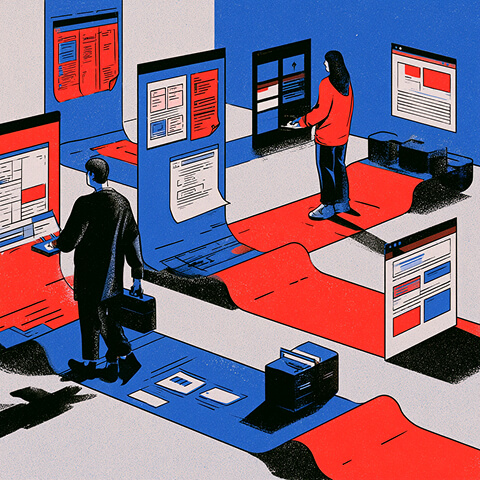

What are the essential prerequisites before starting a redesign website service?
Planning separates successful redesigns from expensive failures. Before any design work begins, you need clarity on three things: what the new site must achieve, what you already have, and who makes the final calls.
Define your business goals first
Start with outcomes, not aesthetics. Ask whether the site needs to generate more qualified leads, reduce support volume, support a new product line, or reflect a rebrand. Every design and technology decision flows from that answer. Without a defined goal, you will approve beautiful work that does not move the needle.
Audit your existing assets and technical ecosystem
Map your current content, analytics baselines, integrations, and hosting setup before you brief any agency. This audit reveals what to keep, what to cut, and what technical debt will affect the build. ADA and WCAG 2.1 AA compliance must be scoped at this stage, not added as an afterthought. Retrofitting accessibility after development costs significantly more than building it in upfront.
Establish stakeholder alignment
Identify who has approval authority at each phase. Redesigns stall when too many voices carry equal weight and no one has final say. Assign a single internal owner who coordinates feedback and signs off on deliverables.
Here is what your pre-kickoff checklist should cover:
- Documented business goals tied to measurable outcomes
- Full content inventory with quality ratings
- Analytics baseline (traffic, conversions, top pages)
- Technical ecosystem map (CMS, CRM, marketing tools)
- Accessibility and compliance requirements
- Defined approval chain and revision limits
Pro Tip: Ask any agency upfront how many rounds of revisions are included per phase. Unlimited revision promises almost always hide scope ambiguity that inflates your final invoice.
Most redesigns for small to midsize organizations take 8-16 weeks. Complex projects with heavy integrations or large content libraries can run 4-6 months. Content readiness is the single biggest driver of delays, so get your content team involved before the kickoff call.
Free Brand Health Audit
Make sure your brand is built to sell
Search has changed. Your customers aren't just Googling anymore. They're asking ChatGPT, Perplexity, Gemini and other AI platforms what to buy, who to trust and which brands they should consider.
If your brand isn't showing up clearly in those answers, you're already losing opportunities. Our free Brand Health Audit shows you where your brand stands across traditional search, AI search and brand positioning.

Sample brand audit
Live preview
Traditional search
72
AI search (GEO)
34
Brand positioning
58
Redesign Phases, Deliverables, and What Each Phase Really Costs


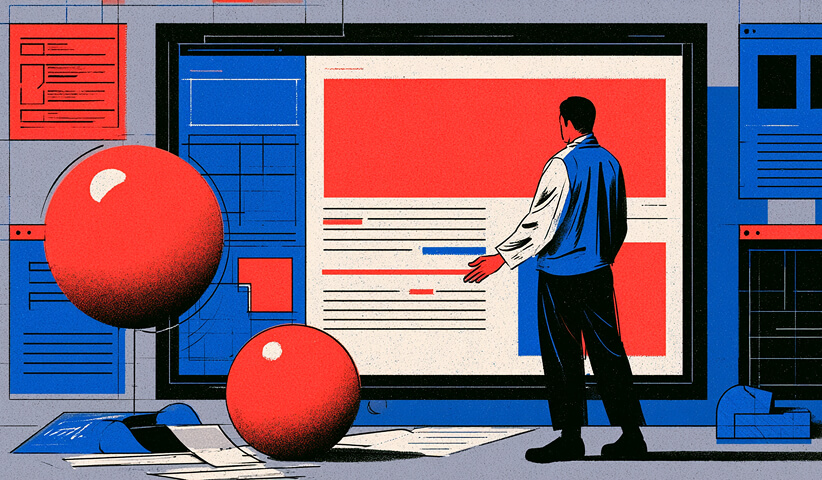
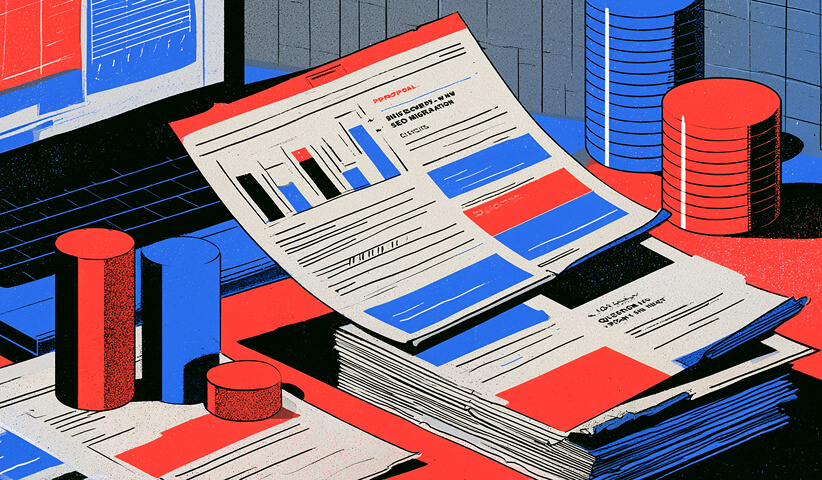
What are the key phases and deliverables in a professional website redesign?
A professional website redesign moves through six defined phases. Each phase has a cost range, and understanding them prevents sticker shock when you receive a proposal.
| Phase | Typical Cost Range | Key Deliverable |
|---|---|---|
| Discovery and research | $5,000-$15,000 | Competitive analysis, user interviews, content audit |
| Information architecture and wireframing | $8,000-$20,000 | Sitemap, user flows, low-fidelity wireframes |
| Visual design | $10,000-$25,000 | Mood boards, style guide, high-fidelity comps |
| Design specs and handoff | $2,000-$8,000 | Annotated designs for developers |
| Development | Varies by complexity | Functional, tested website |
| Project management | $3,000-$8,000 | Coordination, timelines, communication |
Source: Website Redesign Cost: 2026 Buyer's Guide
Discovery is where most leaders underinvest. Competitive analysis, user interviews, and content audits produce the strategic foundation that every downstream decision rests on. Skipping or rushing discovery is the fastest way to build a beautiful site that solves the wrong problem.
Visual design covers mood boards, style guides, and high-fidelity comps. A design system produced here pays dividends long after launch, giving your team reusable components that keep the brand consistent across future updates. The handoff phase translates those designs into annotated specs that developers can build from without guessing at intent.
Development costs vary the most. A simple brochure site runs $15,000-$30,000. A marketing site with lead capture and integrations lands in the $25,000-$45,000 range. Custom web apps start at $35,000 and climb past $75,000 depending on functionality. Enterprise builds regularly exceed $100,000.
Pro Tip: Project management is the most underestimated line item in any redesign proposal. Agencies that bundle it invisibly into other phases often deliver slower and communicate less. Ask for it as a named deliverable with a defined communication cadence.
Want a website redesign that protects your rankings and drives growth? Keep reading!
If you need a partner who treats UX design and SEO migration as one workstream, contact us for a free custom quote.
SEO Migration and the Mistakes That Sink Website Redesigns

How do you manage SEO during a website redesign?
SEO migration is an engineering and QA workstream, not a content task. Treating it as anything less is the most common cause of significant traffic loss after a redesign launch.
The foundation is a complete redirect map. Every URL on your current site needs a documented destination on the new site. That includes:
- Standard page URLs
- Blog post and resource URLs
- Image file paths
- XML sitemaps and robots.txt files
- Any URL patterns used in paid campaigns or backlinks
Redirect maps must be deployed before the DNS switch, not after. Redirect chains, where URL A sends to URL B which sends to URL C, dilute link equity and slow crawl speed. Every redirect should resolve in a single 301 hop.
Architecture decisions also affect long-term SEO performance. A subdirectory structure (example.com/blog) consolidates domain authority better than a subdomain setup (blog.example.com). If your blog or resource center moves during the redesign, keep it under the root domain.
React-based builds introduce a specific risk. Client-side rendering delays the point at which search engines can read your page content. Server-side rendering or static site generation solves this by delivering rendered HTML upfront, which crawlers can index immediately.
Pro Tip: Your staging site must mirror the live site's indexing settings. A staging robots.txt that blocks crawlers is standard practice, but accidentally pushing that file to production will make your entire site invisible to search engines. Run a crawl test on the staging environment before you flip the DNS switch.
What common mistakes should you avoid in a website redesign?
The most expensive redesign mistakes are not technical. They are organizational. Here are the pitfalls that derail projects most often:
- Scope ambiguity from the start. Vague briefs produce vague proposals. If the contract does not define revision rounds, page count, and custom functionality, you will pay for every clarification.
- Treating discovery as a formality. Skipping user research and competitive analysis means designing for assumptions. Assumptions cost more to fix after launch than research costs upfront.
- Making SEO migration an afterthought. Incomplete redirect mapping and staging mismanagement are the primary causes of organic traffic loss after a redesign. Build the redirect map before development starts.
- Changing too many variables at once. Switching your domain, CMS, and design simultaneously makes it impossible to diagnose what caused a performance drop. Sequence major changes when possible.
- Choosing the cheapest option without asking why it is cheap. Low-cost proposals often exclude discovery, custom design, or SEO planning. You pay for those gaps later in rework and lost rankings.
- Insufficient pre-launch testing. Missing redirects, broken forms, and incorrect status codes are caught in QA, not in production. Budget time for a full staging review before go-live.
"Big agency price ranges are often inflated as anchoring strategies. Buyers should focus on scope clarity more than price alone. A $40,000 proposal with a detailed scope is almost always a better investment than a $20,000 proposal with vague deliverables."
Scope clarity is the single most protective factor in any redesign engagement. Transparency on revision rounds and custom features separates credible agencies from those padding quotes with inflated anchor prices.
Key Takeaways, One Leader's Perspective, and How The Branded Agency Approaches Redesign
Key Takeaways
A successful website redesign requires upfront planning, phase-by-phase cost awareness, and SEO migration treated as a dedicated engineering workstream from day one.
| Point | Details |
|---|---|
| Define goals before design | Tie every design decision to a measurable business outcome before briefing any agency. |
| Budget by phase | Expect $35,000-$65,000 for most professional redesigns, with discovery and development as the largest variables. |
| Scope accessibility early | ADA and WCAG 2.1 AA compliance costs far less when built in from kickoff than retrofitted after launch. |
| Treat SEO as engineering | Build a complete redirect map and test staging indexing settings before the DNS switch. |
| Prioritize scope clarity | A detailed scope protects your budget more than a low headline price ever will. |
Why I think most redesigns fail before the first wireframe
After working with dozens of startups and scale-ups on website redesign projects, the pattern is consistent. Projects fail in the planning room, not the design studio. Leaders approve a budget and a timeline, then hand the project to a vendor without defining what success actually looks like. Six months later, they have a beautiful site that does not convert, and no one can explain why.
The uncomfortable truth is that discovery is the most valuable phase in any redesign, and it is the one most often cut when budgets tighten. User interviews, competitive analysis, and content audits feel slow. They feel like delay. But every hour spent in discovery saves three hours in revision cycles later. I have seen teams spend $15,000 fixing a navigation structure that a two-week discovery phase would have gotten right the first time.
The other thing I push hard on is SEO integration from day one. Most teams treat it as a checklist item at the end of development. That is exactly backwards. The redirect map, the architecture decisions, the rendering approach for JavaScript-heavy builds. These are engineering decisions that need SEO input at the wireframing stage, not the week before launch.
My honest advice: find a partner who treats your UX design and your SEO migration as equally weighted workstreams. The agencies that separate those two disciplines are the ones whose clients lose rankings after launch. The ones who integrate them are the ones whose clients grow.
How The Branded Agency approaches website redesign for growth-stage companies
Growth-stage companies need more than a new coat of paint on their website. They need a site that performs as hard as their sales team.
The Branded Agency delivers website redesign solutions that integrate brand strategy, UX design, accessibility compliance, and SEO-safe migration into a single coordinated workstream. Every project starts with discovery and ends with measurable performance benchmarks, not just a launched URL. The team brings together branding, creative design, and performance marketing expertise so your new site is built to convert from the moment it goes live. If you are leading a startup or scale-up and need a partner who connects brand development with digital performance, The Branded Agency is built for exactly that stage of growth.
FAQ
What does a website redesign service typically cost? Most professional website redesigns in the US cost between $35,000 and $65,000, with simple brochure sites starting around $15,000 and custom web applications exceeding $75,000 depending on scope and complexity.
How long does a professional website redesign take? Most redesigns for small to midsize organizations take 8-16 weeks. Complex projects with large content libraries or custom integrations can extend to 4-6 months, with content readiness being the primary driver of delays.
How do I protect my SEO rankings during a redesign? Build a complete redirect map covering all URLs before the DNS switch, test your staging site's indexing settings, and treat SEO migration as an engineering workstream rather than a post-launch task.
When should accessibility compliance be added to a redesign? ADA and WCAG 2.1 AA compliance must be scoped at project inception. Retrofitting accessibility after development is significantly more expensive than building it in from the start.
What is the biggest risk in a website redesign for rebranding? Changing your domain, CMS, and visual design simultaneously makes it nearly impossible to diagnose performance drops. Sequence major changes and treat each as a separate workstream with its own success metrics.
Recommended

Quincy Samycia
As entrepreneurs, they’ve built and scaled their own ventures from zero to millions. They’ve been in the trenches, navigating the chaos of high-growth phases, making the hard calls, and learning firsthand what actually moves the needle. That’s what makes us different—we don’t just “consult,” we know what it takes because we’ve done it ourselves.
Want to learn more about brand platform?
If you need help with your companies brand strategy and identity, contact us for a free custom quote.
We do great work. And get great results.
+2.3xIncrease in revenue YoY
+126%Increase in repurchase rate YoY




+93%Revenue growth in first 90 days
+144% Increase in attributed revenue




+91%Increase in conversion rate
+46%Increase in AOV




+200%Increase in conversion rate
+688%Increase in attributed revenue